In this article
- 1. Create a Landing Zone for Everyday Essentials
- 2. Give Frequently Used Items a Clearly Defined Home
- 3. Organize the Kitchen Around Your Daily Workflow
- 4. Use the Inside of Cabinet Doors
- 5. Divide the Closet into Practical Clothing Zones
- 6. Make Laundry Easier with a Simple Sorting System
- 7. Set Up a Small Home Paperwork Station
- 8. Make Open Shelving Look Organized, Not Crowded
- 9. Organize Shared Household Supplies by Location
- 10. Build a Short Weekly Reset into Your Routine
- How to Organize Your Home Without Buying Too Many Products
- Common Home Organization Mistakes to Avoid
- Frequently Asked Questions
- What is the first step to organizing a home?
- How can I organize my home on a small budget?
- How do I keep my home organized every day?
- What rooms should I organize first?
- Do I need matching baskets and containers for an organized home?
- Conclusion
A well-organized home is not necessarily one with matching baskets in every room. It is a home where everyday items have sensible places, useful surfaces stay clear, and the systems are simple enough to maintain.
The most effective home organization ideas start with the way you actually live. A busy entryway needs a different solution from a kitchen cabinet, a laundry area, or a bedroom closet. Instead of buying organizers first, look at where clutter gathers and what makes everyday tasks harder.
These ideas can help you create a home that feels calmer, works more smoothly, and still looks attractive.
1. Create a Landing Zone for Everyday Essentials
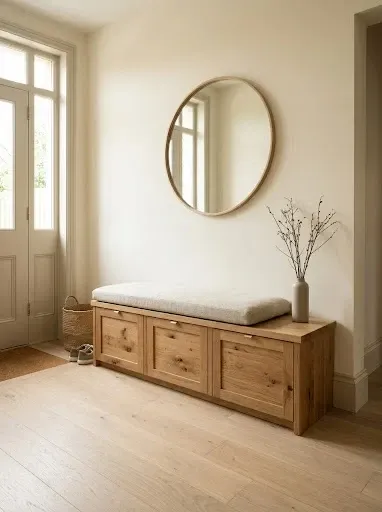
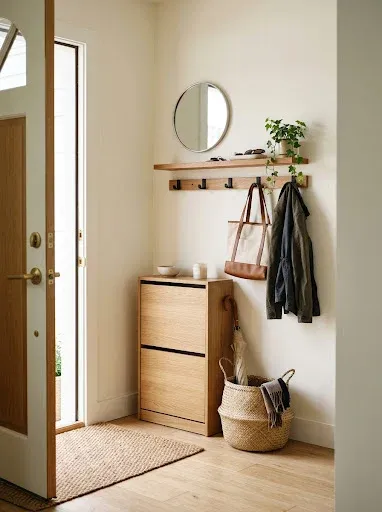
The entryway is often where clutter begins. Keys, bags, shoes, mail, sunglasses, and coats can quickly collect near the front door when there is no clear place for them.
Create a small landing zone with a few practical elements: hooks for frequently used bags, a tray for keys, a basket for smaller accessories, and a designated place for shoes. In a narrow entry, use wall-mounted storage rather than a deep cabinet.
Styling tip: Keep the setup visually simple. Choose a tray, hooks, and baskets that work with the existing colors and materials in your entryway.
Best for: Busy households where people leave and return home at different times.
For more vertical solutions, explore our entryway shelving ideas.
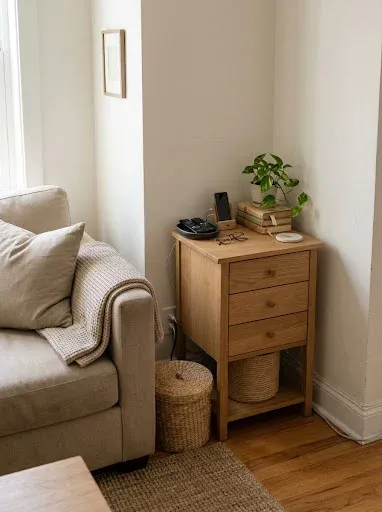
2. Give Frequently Used Items a Clearly Defined Home
One of the easiest ways to reduce everyday clutter is to decide where frequently used items belong. When an object has no obvious home, it tends to remain on the nearest countertop, chair, or table.
Group items by how they are used. Keep remotes near the seating area, charging accessories in one designated drawer, and everyday stationery in a small container near the place where household paperwork is handled.
Styling tip: Store the most frequently used items in the easiest-to-reach spots. Less-used items can go higher, deeper, or into labeled storage.
Practical note: Avoid creating too many categories. A system with a few broad groups is usually easier to maintain than one that requires sorting every small item separately.
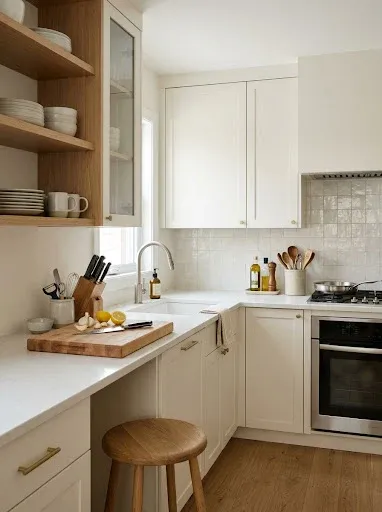
3. Organize the Kitchen Around Your Daily Workflow
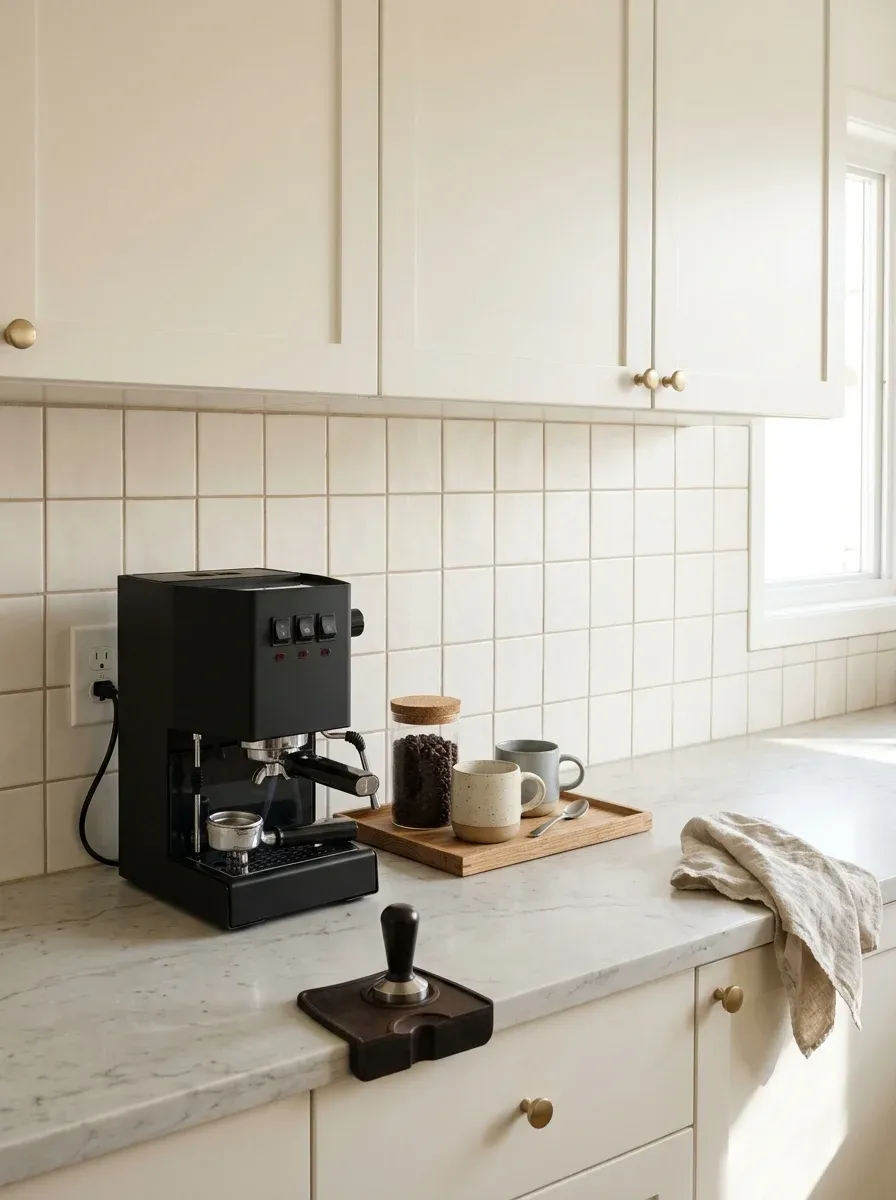
A kitchen becomes easier to use when items are stored near the activities they support. Keep cooking tools close to the cooking area, everyday plates near the dishwasher or dining area, and frequently used ingredients within convenient reach.
Start by observing how you move through the kitchen. Then group items into simple zones for preparation, cooking, serving, cleaning, and food storage.
Styling tip: Keep the most-used items accessible and reserve harder-to-reach cabinets for occasional appliances or seasonal pieces.
Best for: Kitchens where people repeatedly move between cabinets to complete simple tasks.
Our guide to small kitchen organization ideas offers more ways to arrange compact kitchen storage.
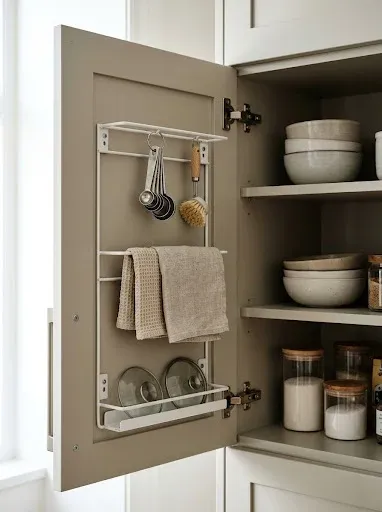
4. Use the Inside of Cabinet Doors
The inside of a cabinet door can provide useful storage without taking up another shelf. Slim racks, small hooks, and purpose-made organizers can hold items that otherwise create clutter inside drawers or cabinets.
This works especially well for cleaning supplies, measuring tools, pot lids, and small kitchen accessories. It can also be useful in bathroom or utility storage where the cabinet interior is not already full.
Styling tip: Check the door clearance before installing anything. The organizer should not interfere with shelves, hinges, or the items stored inside.
Practical note: Keep heavier items within the weight limits of the hardware and cabinet door.
For more examples, see our cabinet door storage ideas.
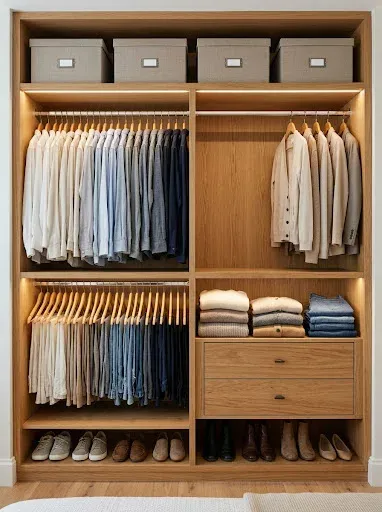
5. Divide the Closet into Practical Clothing Zones
A closet is easier to maintain when clothing is grouped by type and frequency of use. Create clear sections for everyday clothes, workwear, occasion pieces, shoes, bags, and accessories.
Use matching hangers where practical, but do not feel that every item needs an individual container. Shelf dividers, drawer organizers, and a few labeled boxes can keep categories separate without making the closet feel crowded.
Styling tip: Keep the most-used clothing at eye level and move seasonal or occasional pieces to higher shelves or less accessible areas.
Practical note: Leave some open space so clothes can be put away easily. A closet that is packed to capacity is harder to keep organized.
Our small closet organization ideas can help with tighter wardrobe spaces.
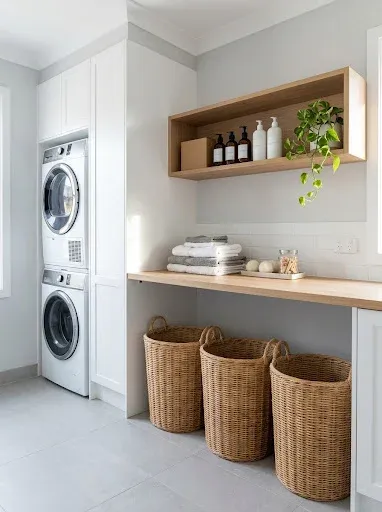
6. Make Laundry Easier with a Simple Sorting System
Laundry becomes less frustrating when sorting happens before wash day. Use separate baskets for lights, darks, and delicate items, or create categories that suit your household’s routine.
Keep detergent and essential supplies together in one easy-to-reach place. A small shelf or cabinet can help prevent bottles and packets from spreading across the room.
Styling tip: Choose baskets that fit the available floor or shelf space. Uniform containers can make the area look calmer, but clear labels are more important than matching finishes.
Best for: Shared households and compact laundry areas where clothes tend to accumulate.
See our laundry room shelving ideas for small spaces for more ways to make use of vertical space.
7. Set Up a Small Home Paperwork Station
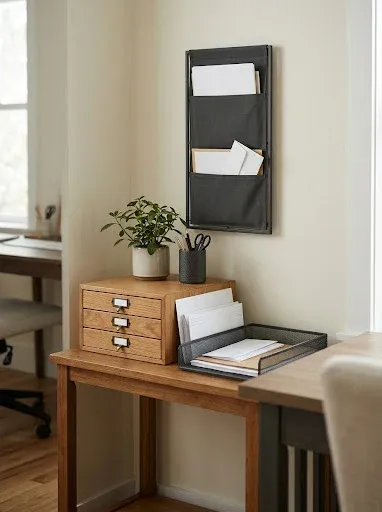
Mail, school papers, receipts, instruction manuals, and important documents can become a persistent source of clutter. A small paperwork station gives these items a consistent place instead of allowing them to spread across dining tables and kitchen counters.
Use a few clear categories, such as incoming mail, action needed, documents to file, and recycling. A slim wall organizer or a drawer with labeled folders may be enough.
Styling tip: Place the station where paperwork naturally arrives or gets handled, but avoid displaying every document in an open pile.
Practical note: Store sensitive documents securely rather than leaving them in an accessible open organizer.
8. Make Open Shelving Look Organized, Not Crowded
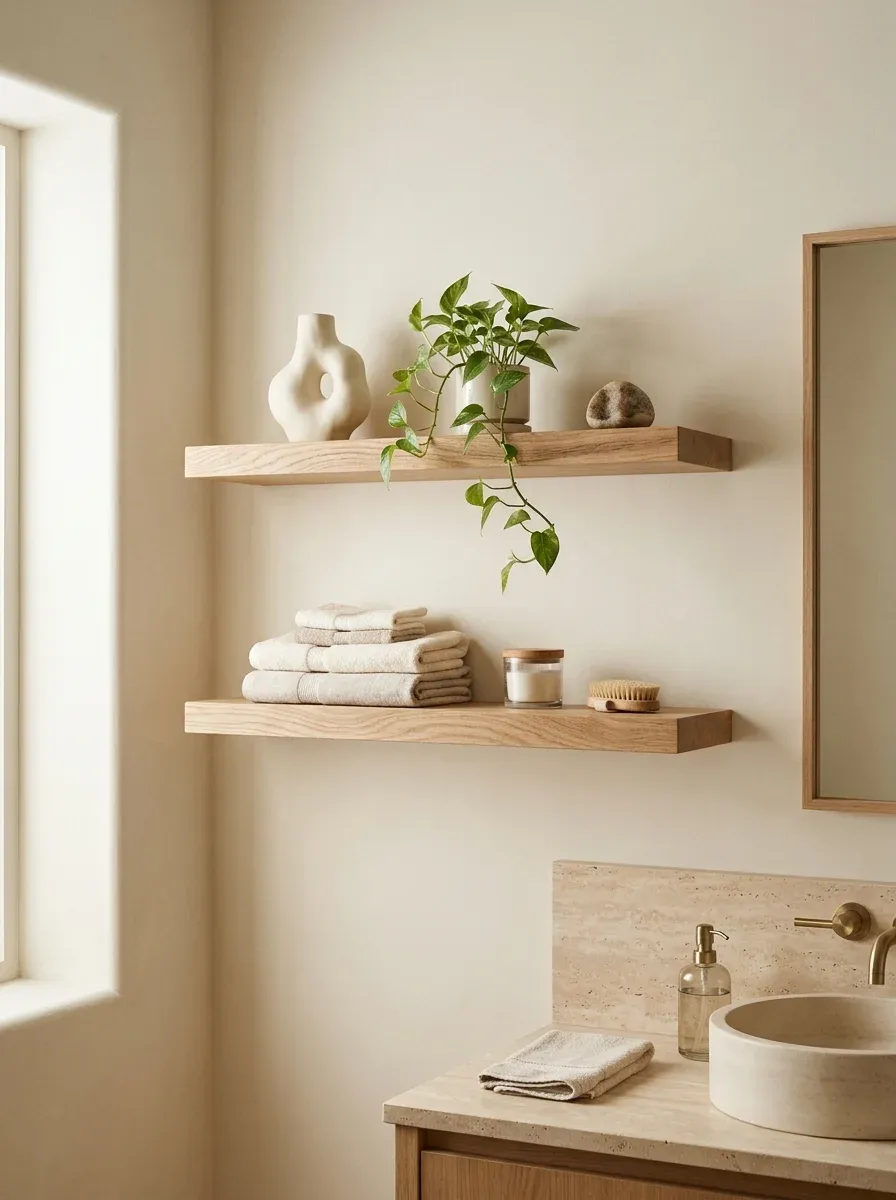
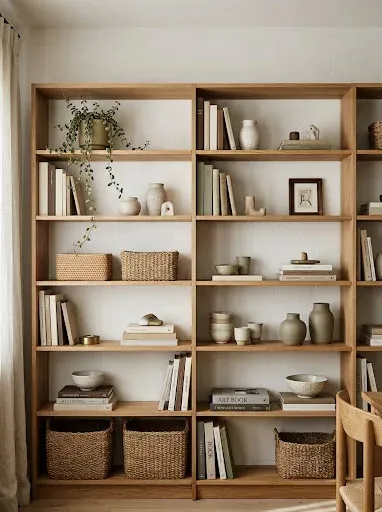
Open shelves can add useful storage while keeping everyday items visible. The challenge is deciding what deserves to be displayed and what should be stored out of sight.
Group books, baskets, ceramics, and useful objects in small collections. Vary their heights, but leave some empty space between groups. Everyday items can remain accessible without making the shelves look like overflow storage.
Styling tip: Repeat a few materials or colors across the shelves. This creates visual consistency even when the objects serve different purposes.
Best for: Living rooms, home offices, dining areas, and kitchens where closed storage is limited.
9. Organize Shared Household Supplies by Location
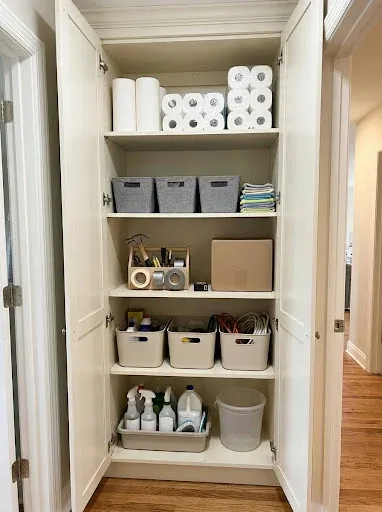
Household supplies become harder to manage when they are scattered across different rooms. Instead of keeping duplicates everywhere, group similar items by the place where they are needed.
For example, keep bathroom cleaning supplies in an appropriate bathroom or utility storage area, basic repair items together in a designated cabinet, and frequently used household essentials in one accessible location.
Styling tip: Use containers that fit the shelf dimensions and make the contents easy to identify. A small label can save time when several people use the same storage area.
Practical note: Store cleaning products safely, follow their labels, and keep them away from children and pets.
10. Build a Short Weekly Reset into Your Routine
Even a well-designed organization system needs occasional attention. A short weekly reset helps return misplaced objects to their homes before clutter becomes overwhelming.
Choose a few repeatable tasks: clear the main surfaces, return items to their zones, check the entryway, sort incoming paper, and remove anything that no longer belongs in the room.
Styling tip: Keep the reset realistic. A short routine that fits your schedule is more useful than an ambitious checklist that is difficult to repeat.
Best for: Homes where clutter tends to build up gradually during the week.
How to Organize Your Home Without Buying Too Many Products
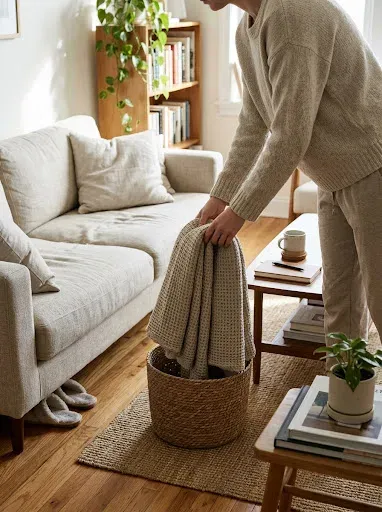
Start by removing items that are broken, unused, duplicated, or no longer needed. Organizing products cannot solve an overcrowded space on their own.
Next, group what remains by purpose and choose a storage location that makes sense for daily use. Measure shelves and drawers before buying baskets or organizers, and use containers only where they make a system easier to maintain.
For more inspiration across compact rooms, explore our best storage ideas for small rooms.
Common Home Organization Mistakes to Avoid
- Buying organizers before decluttering: Containers can become another layer of clutter when there are too many items to store.
- Creating complicated categories: A system that requires several steps for every object is difficult to maintain. Keep categories simple.
- Storing daily-use items out of reach: Frequently used items should be easy to access and return.
- Ignoring the way people move through the home: A storage solution is not practical if it blocks a doorway, narrows a walkway, or interrupts an everyday routine.
- Labeling without consistency: Labels help only when the category is clear and everyone who uses the space understands the system.
- Expecting the home to stay perfectly organized: Real homes are used every day. Plan for a simple reset rather than perfection.
Frequently Asked Questions
What is the first step to organizing a home?
Start with one area where clutter causes a daily inconvenience. Remove items you no longer need, group the remaining items by purpose, and assign them practical storage locations. Completing one manageable area can help you build a routine for the rest of the home.
How can I organize my home on a small budget?
Use containers you already own, repurpose suitable baskets, and make better use of existing shelves and drawers. Decluttering and assigning clear homes to items often make a bigger difference than buying new organizers.
How do I keep my home organized every day?
Return frequently used items to their designated places and use a short daily or weekly reset. The key is to keep the system simple enough that everyone in the household can follow it.
What rooms should I organize first?
Start with the areas that affect everyday routines most, such as the entryway, kitchen, and laundry area. Then move to closets, paperwork, and less frequently used storage spaces.
Do I need matching baskets and containers for an organized home?
No. Matching containers can create a cohesive look, but they are not essential. Choose practical sizes and materials that suit the space, and prioritize easy access and clear categories.
Conclusion
A more organized home begins with simple systems that support everyday life. Create a landing zone, group frequently used items, organize rooms around their main activities, and build a short reset into your routine. You do not need to organize everything at once. A few well-planned changes can make your home feel calmer, more useful, and easier to care for.
Looking for more ideas? Browse our storage & organization stories.
Save to Pinterest