In this article
- 1. Choose a Bench with Built-In Drawer Storage
- 2. Use an Open-Shelf Bench for Everyday Shoe Storage
- 3. Add an Upholstered Bench for a Softer Welcome
- 4. Pick a Slim Bench for a Narrow Hallway
- 5. Combine a Wooden Bench with Wall Hooks
- 6. Bring Warmth with a Rustic Wooden Bench
- 7. Create a Built-In Bench for a Custom Entryway Look
- 8. Use a Bench with Cubbies for a Family-Friendly Entrance
- 9. Make a Statement with a Freestanding Designer-Style Bench
- How to Choose the Right Entryway Bench
- Measure the available space
- Decide how the bench will be used
- Choose materials suited to daily use
- Consider the overall style
- Plan what goes above and below the bench
- Common Entryway Bench Decorating Mistakes to Avoid
- Frequently Asked Questions
- What is the best type of bench for an entryway?
- How do I style an entryway bench?
- What can I store under an entryway bench?
- How deep should an entryway bench be?
- Can I put an entryway bench in a narrow hallway?
- Is an upholstered entryway bench practical?
- How can I make a small entryway bench look stylish?
- Conclusion
An entryway is the first space you see when you come home, but it also has to handle a surprising number of everyday tasks. Shoes need a place to go, bags need somewhere to land, and having a comfortable spot to sit while putting on or taking off shoes can make the whole routine easier.
That is why an entryway bench can be such a useful addition. It provides practical seating while helping the entrance feel more organized and thoughtfully decorated. For additional foyer drop-zone inspiration, explore our dedicated guides on entryway shelving ideas and small entryway cabinets.
The best entryway bench ideas work with the available space rather than making the hallway feel crowded. A narrow wooden bench may suit a small apartment, while an upholstered design can make a larger entrance feel more welcoming. Benches with drawers, baskets, or open shoe storage offer additional function without requiring a separate storage unit. If you are dealing with tight architectural clearances, our narrow entryway ideas and modern entryway ideas offer tailored advice.
Whether you have a spacious foyer, a narrow hallway, or a small entrance beside your front door, these nine ideas will help you choose a bench that looks beautiful and works for everyday life.
1. Choose a Bench with Built-In Drawer Storage
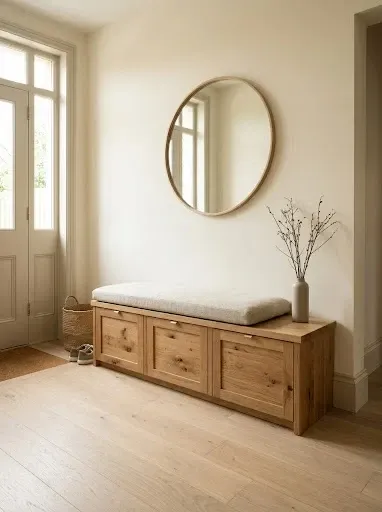
A bench with built-in drawers is a practical option when you want seating and concealed storage in one piece of furniture.
The drawers can hold smaller everyday items such as shoe-care supplies, reusable shopping bags, gloves, keys, and accessories that tend to collect near the front door. Keeping these belongings out of sight helps the entryway look more organized.
Choose a bench with a simple profile so it does not become visually heavy. Natural oak, painted cream, and muted sage are versatile finishes that work with many decorating styles.
A cushioned seat can make the bench more comfortable, while simple handles or finger-pull drawers keep the overall design understated.
How to style it:
- Position the bench against a suitable uninterrupted wall.
- Choose drawers deep enough for the items you intend to store.
- Add a neutral seat cushion for comfort.
- Hang a mirror or framed artwork above it.
- Keep the top surface lightly styled with one small tray or decorative object.
Best for: Families and busy homes that need a place to hide everyday accessories.
Budget tip: Look for a simple secondhand storage bench that can be refreshed with paint and updated hardware rather than buying a custom piece.
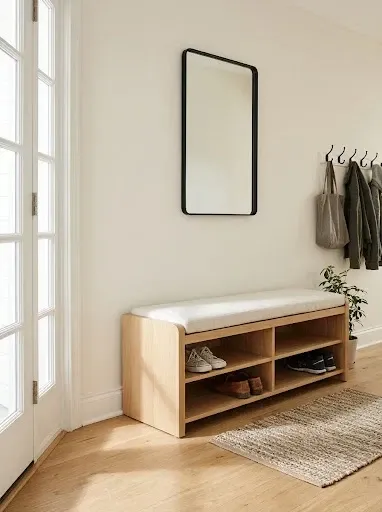
2. Use an Open-Shelf Bench for Everyday Shoe Storage
If shoes are the main source of entryway clutter, an open-shelf bench can make a big difference.
These benches usually have a flat seating surface with one or more open compartments underneath. They allow you to sit comfortably while keeping frequently worn shoes close to the front door.
Unlike fully enclosed storage, open shelves make it easy to see what is available. They also allow footwear to air out rather than being placed immediately into a closed compartment.
To keep the area attractive, avoid filling every opening with shoes. Use only the compartments for everyday pairs and store less frequently worn footwear elsewhere.
How to style it:
- Choose a bench with enough width for the household’s most-used shoes.
- Arrange footwear neatly in pairs.
- Use a removable cushion if the seat is hard.
- Add a small shoe mat underneath to protect the floor.
- Keep the wall above the bench simple and uncluttered.
Best for: Homes where shoes frequently accumulate near the entrance.
Budget tip: A basic wooden bench with a lower shelf can provide the same practical function as a more expensive entryway furniture set.
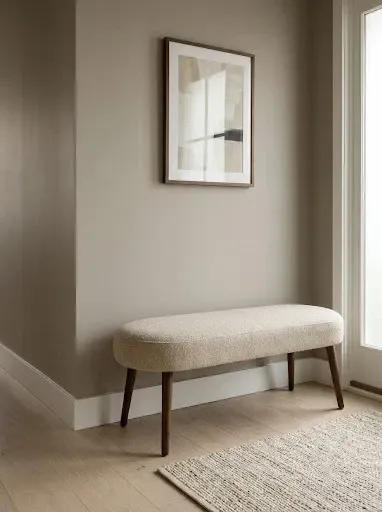
3. Add an Upholstered Bench for a Softer Welcome
An upholstered bench can make an entryway feel more comfortable and decorative. It introduces fabric and texture into a space that often contains hard surfaces such as tile, wood, and painted walls.
Choose an upholstery fabric that suits the way the entrance is used. Performance fabrics or other easy-care materials are useful where the bench receives frequent daily use.
For a soft, elegant appearance, consider oatmeal, warm beige, muted olive, or a subtle textured cream. If you prefer a little more personality, a small-scale stripe or understated pattern can make the bench stand out.
Pair it with a simple wood or metal base to create a balanced look.
How to style it:
- Choose a fabric that is practical to clean.
- Keep the upholstery color connected to the hallway palette.
- Add one small cushion if additional comfort is needed.
- Pair the bench with a slim wall mirror.
- Avoid placing delicate fabrics where wet shoes or outdoor clothing are likely to touch them.
Best for: Larger entrances, traditional foyers, and homes where comfort is a priority.
Budget tip: Add a fitted cushion to an existing wooden bench to introduce the upholstered look without replacing the entire piece.
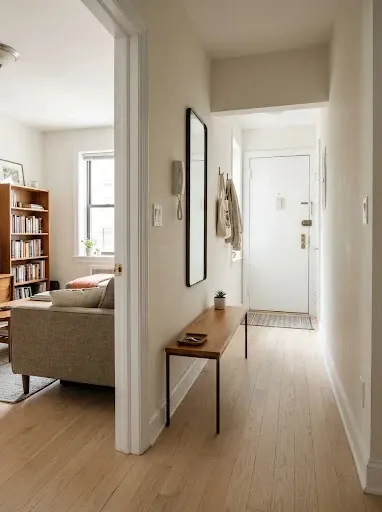
4. Pick a Slim Bench for a Narrow Hallway
A narrow hallway can benefit from a bench, but the size and depth matter. A bulky piece can interfere with the walking path, making the entrance uncomfortable to use.
A slim bench with a simple frame can provide a useful place to sit without taking up too much room. Look for designs with narrow legs, a compact seat, and an open base that keeps the floor visible.
A small hallway does not need a large furniture arrangement. The bench can be the main feature, with a mirror or a few wall hooks providing the remaining function.
Before purchasing, measure the full available area, including the clearance needed for doors to open and people to pass comfortably.
How to style it:
- Measure the hallway width and available wall length.
- Choose a shallow design suited to the walking space.
- Prefer an open base or narrow legs to keep the area visually light.
- Use wall-mounted hooks instead of a bulky coat stand.
- Keep the top of the bench mostly clear.
Best for: Narrow hallways, apartments, and compact front entrances.
Budget tip: A simple backless wooden bench can be a practical alternative to a larger entryway furniture set.
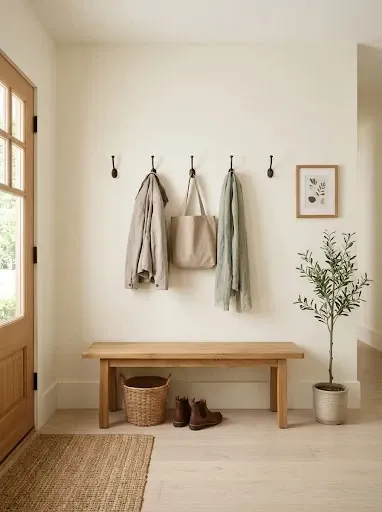
5. Combine a Wooden Bench with Wall Hooks
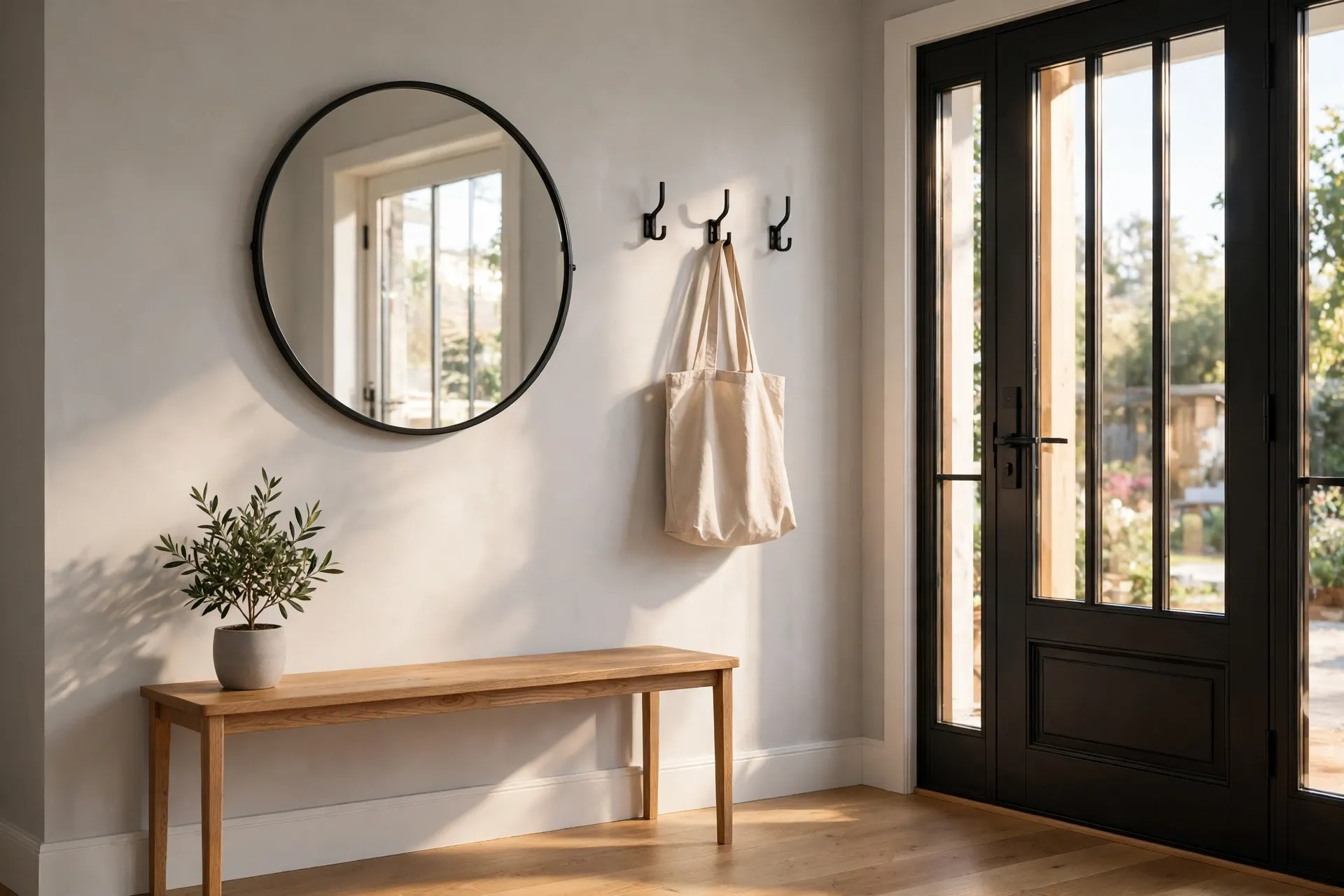
A wooden bench paired with wall hooks creates a practical mini drop zone near the front door.
The bench provides seating, while the hooks give coats, bags, scarves, and hats a convenient place to hang. This combination is especially useful in homes where the entrance does not have a separate closet.
Choose a bench with a finish that complements the rest of the hallway. Natural oak creates a light, welcoming appearance, while darker walnut gives the arrangement a richer character.
A short row of hooks above the bench is usually enough. Keep the number appropriate for the household so the area does not become overwhelmed with coats and bags.
How to style it:
- Choose a simple wooden bench with a comfortable seat.
- Install a suitable row of hooks above it.
- Keep heavy coats and frequently used bags within easy reach.
- Add a small basket underneath for scarves or other accessories.
- Use a simple wall print or mirror if there is room.
Best for: Busy family entrances and homes without a dedicated coat closet.
Budget tip: Combine a basic wooden bench with affordable individual wall hooks rather than buying a complete matching entryway unit.
6. Bring Warmth with a Rustic Wooden Bench
A rustic wooden bench adds natural character to an entryway. Its visible grain and simple construction can make the space feel more welcoming, especially when the rest of the hallway has a neutral or modern finish.
Look for a bench with a natural or lightly finished wood surface. A simple reclaimed-look design can work beautifully with cream walls, woven baskets, and understated metal hooks.
The key is to keep the rustic element controlled. A bench with natural texture can look attractive in a contemporary space, but too many distressed or heavily decorated pieces may make the entrance feel dated.
For a relaxed look, add a simple cushion in oatmeal or warm beige and leave the wood visible around it.
How to style it:
- Choose natural wood with visible grain.
- Pair it with warm white or beige walls.
- Add a textured neutral cushion.
- Use a woven basket underneath if extra storage is needed.
- Keep decorative accessories limited to a few practical pieces.
Best for: Cottage-inspired homes, organic modern interiors, and warm neutral hallways.
Budget tip: Consider a sturdy secondhand wooden bench. Cleaning, sanding, and applying a suitable finish can give it a fresh appearance.
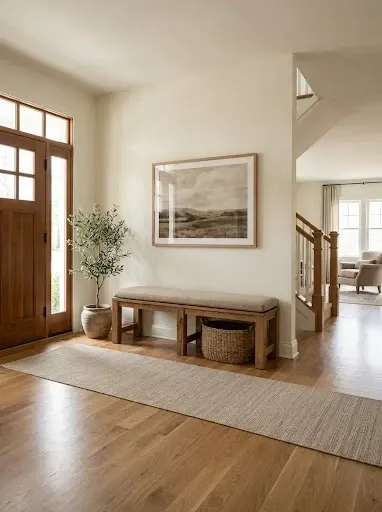
7. Create a Built-In Bench for a Custom Entryway Look
A built-in bench can make an entryway feel like a planned part of the home rather than a collection of separate furniture pieces. For larger projects, browse our collection of mudroom cabinet ideas to see integrated cabinetry examples.
It is particularly useful in a recessed wall area, an alcove, or a mudroom-style entrance where a standard freestanding bench may not fit well.
The design can be simple: a fitted seat, a comfortable cushion, and storage compartments beneath. You can also add hooks or a small upper section for coats and bags if the available wall allows it.
For a more refined appearance, paint the built-in structure to match the walls or use a soft contrasting color. A natural wood seat can add warmth and prevent the design from feeling too uniform.
A built-in needs careful planning, particularly around access, seating depth, and the space required for nearby doors and walkways.
How to plan it:
- Measure the recess or wall area accurately.
- Decide whether the bench will be open or include concealed storage.
- Choose a seat height and depth that feel comfortable.
- Select durable materials suitable for daily use.
- Plan any wall hooks or upper storage before installation.
Best for: Homes with a recessed entrance, dedicated mudroom, or available wall alcove.
Budget tip: A straightforward seat and under-seat storage design can look custom without requiring an elaborate full-wall installation.
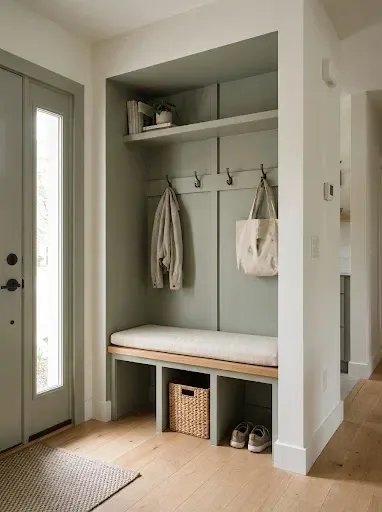
8. Use a Bench with Cubbies for a Family-Friendly Entrance
A bench with individual cubbies can make a shared entrance much easier to manage. Each compartment provides a defined place for shoes, bags, or small baskets, helping family members keep their belongings together.
This type of bench works particularly well when several people use the same entrance. Instead of having one large open area where everything gets mixed together, each person can have a designated section.
Choose a design that fits the household’s needs rather than automatically selecting the largest unit. A compact bench with two or three cubbies can be enough for a smaller family.
Baskets can be added to some compartments to make the arrangement look neater and keep smaller objects together.
How to organize it:
- Assign one compartment to each household member where practical.
- Use baskets for smaller belongings.
- Keep everyday shoes near the front.
- Add a washable cushion on top.
- Avoid storing too many pairs in each compartment.
Best for: Family homes, shared entrances, and mudroom-style spaces.
Budget tip: Use a simple open-cubby bench with affordable baskets instead of purchasing a complete custom organizer.
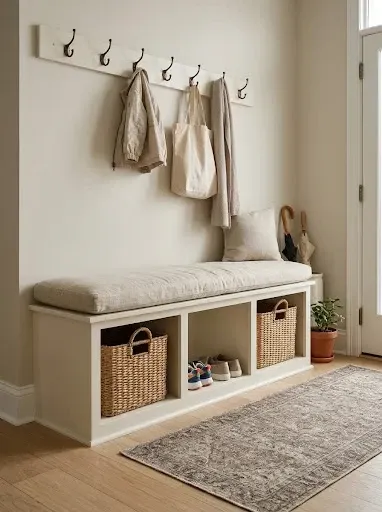
9. Make a Statement with a Freestanding Designer-Style Bench
An entryway bench does not always need to include storage. Sometimes a beautiful freestanding bench can make the entrance feel more welcoming simply through its shape, material, and styling.
A sculptural wooden bench, an elegant curved design, or a simple upholstered seat can become the main decorative feature of a larger entryway.
This approach works particularly well in homes where storage is already available elsewhere. The bench can be styled with a small cushion or a folded throw, while a mirror or piece of artwork above it completes the arrangement.
Choose a design that suits the proportions of the entrance. A statement bench should feel intentional rather than oversized or difficult to walk around.
How to style it:
- Choose a bench with an interesting shape or material.
- Leave enough clearance around it for comfortable movement.
- Add one cushion or a simple folded textile.
- Place a mirror or artwork above or nearby.
- Keep the rest of the entrance understated.
Best for: Larger foyers, decorative entrances, and homes that already have separate shoe storage.
Budget tip: A simple secondhand bench can become a statement piece with a fresh finish and carefully selected cushion.
How to Choose the Right Entryway Bench
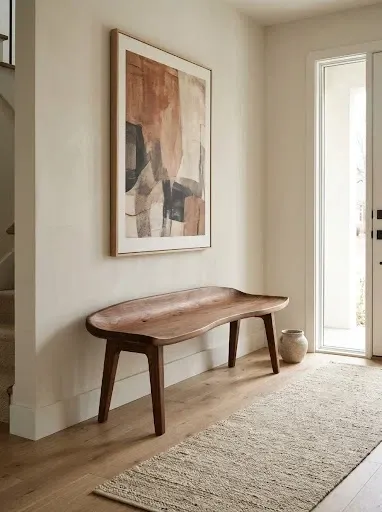
The best bench is one that fits the physical space and supports the way your household uses the entrance. Before buying, consider the following points.
Measure the available space
Measure the wall length, floor depth, and surrounding walking area. Include door swings and any nearby furniture. A bench should make the entrance more convenient, not obstruct movement.
Decide how the bench will be used
Do you mainly need a place to sit, somewhere to store shoes, or a convenient surface for everyday bags? The answer will help you choose between an upholstered seat, open shoe bench, drawer bench, or cubby design.
Choose materials suited to daily use
Entryway furniture receives regular contact with outdoor clothing, shoes, and bags. Choose finishes and fabrics that are easy to maintain and suitable for the amount of use they will receive.
Consider the overall style
A wooden bench works well in natural and traditional interiors, while upholstered designs feel softer. For contemporary spaces, simple silhouettes and restrained finishes can create a cleaner appearance.
Plan what goes above and below the bench
A mirror, a short row of wall hooks, or one framed print can help complete the wall. Underneath, baskets or open compartments may offer useful storage. Keep the arrangement balanced rather than adding every possible accessory.
Common Entryway Bench Decorating Mistakes to Avoid
- Choosing a bench that is too large: A bench that fills the available hallway width can make the entrance uncomfortable. Always measure before buying and allow enough room to move around it.
- Treating the bench as a dumping surface: The bench should remain useful for sitting. Avoid allowing bags, packages, and loose clothing to cover the entire seat.
- Overfilling the shoe storage: Open compartments can quickly become cluttered when they hold every pair of shoes in the house. Keep only everyday footwear nearby and store seasonal shoes elsewhere.
- Choosing upholstery that is difficult to maintain: An entrance is a high-use area. Delicate materials may not be practical if the bench is regularly used with outdoor clothing and shoes.
- Hanging hooks too close to the bench: Coats and bags should not make it uncomfortable to sit down. Plan the height and spacing of wall hooks so the seating area remains usable.
- Ignoring the wall above the bench: A bench can look unfinished when it sits alone against a large blank wall. A mirror, simple artwork, or a small row of hooks can create a more complete arrangement.
- Adding too many decorative accessories: The entrance needs to remain functional. Too many cushions, baskets, vases, and decorative objects can reduce useful space and make the area feel crowded.
Frequently Asked Questions
What is the best type of bench for an entryway?
The best type depends on your needs. A bench with drawers or cubbies is useful for concealed storage, an open-shelf bench works well for everyday shoes, and an upholstered bench provides a softer seating option. A slim wooden bench is often suitable for a narrow hallway.
How do I style an entryway bench?
Start with a comfortable seat and add one or two practical details. A cushion, a mirror above the bench, wall hooks, or a basket underneath can make the arrangement look complete without overcrowding it.
What can I store under an entryway bench?
Depending on the design, you can store everyday shoes, small baskets, reusable shopping bags, shoe-care supplies, scarves, or other frequently used accessories. Keep the items organized so the area does not become a cluttered storage space.
How deep should an entryway bench be?
A standard entryway bench is typically 14 to 18 inches deep. For narrow hallways, compact designs between 11 and 14 inches deep are ideal to prevent blocking the walking path. Measure the hallway carefully and ensure doors can swing open unobstructed.
Can I put an entryway bench in a narrow hallway?
Yes. Choose a slim or backless design with a small footprint. Keep the wall above it simple and avoid adding bulky furniture opposite the bench.
Is an upholstered entryway bench practical?
It can be, provided you choose a durable, easy-care fabric such as performance linen, leather, or tightly woven cotton. Consider a removable cushion or washable cover if the bench will receive frequent daily use.
How can I make a small entryway bench look stylish?
Use a simple design, keep the seat mostly clear, and choose a finish that connects with the rest of the home. A small mirror above the bench or one neatly placed basket underneath can complete the look.
Conclusion
An entryway bench can make a small but meaningful difference to the way your home works and feels. It provides a convenient place to sit, creates an opportunity for better organization, and gives the entrance a more welcoming appearance.
Whether you choose concealed drawer storage, a practical shoe bench, soft upholstery, or a simple freestanding wooden design, focus on proportions and everyday function first.
Start by measuring the space and deciding what your entrance needs most. With the right bench and a few thoughtful details, even a simple hallway can become a more organized and beautifully finished part of your home.
Looking for more ideas? Browse our storage & organization stories.
Save to Pinterest