In this article
- 1. Create a Dedicated Coffee Corner on the Kitchen Counter
- 2. Use Floating Shelves for a Vertical Coffee Bar
- 3. Turn a Cabinet or Small Hutch into a Coffee Station
- 4. Add a Slim Coffee Bar Cart for Flexible Storage
- 5. Create a Hidden Coffee Station Inside a Cabinet
- 6. Design a Built-In Coffee Nook
- 7. Add a Mug Rail and Hanging Storage
- 8. Create a Modern Minimalist Coffee Bar
- 9. Style a Warm Café-Inspired Home Coffee Bar
- How to Set Up a Coffee Station at Home
- Common Coffee Bar Decorating Mistakes to Avoid
- Frequently Asked Questions
- How do I make a coffee bar in a small kitchen?
- What should I put on a home coffee bar?
- How do I decorate a coffee bar on a budget?
- Where should a coffee bar be placed in the kitchen?
- Can I put a coffee machine inside a cabinet?
- How do I organize coffee mugs in a small space?
- Conclusion
A little coffee station can make everyday mornings feel more enjoyable. Instead of searching through kitchen cabinets for mugs, coffee filters, and your favorite beans, you can keep everything together in one thoughtfully arranged space.
The best coffee bar ideas are not necessarily the largest or most elaborate. A small section of kitchen counter, a narrow cabinet, or even a simple rolling cart can become a practical coffee corner with the right arrangement. For more styling inspiration across hard-working surfaces, explore our favorite kitchen counter decor ideas and smart small kitchen organization ideas.
Whether you have a spacious kitchen or a small apartment with limited counter space, creating a home coffee station is mostly about choosing a convenient location, organizing your essentials, and giving the area a style that works with the rest of your home.
Here are nine coffee bar ideas to help you create a station that looks beautiful while making your daily coffee routine easier.
1. Create a Dedicated Coffee Corner on the Kitchen Counter
A dedicated countertop coffee corner is one of the easiest ways to create a home coffee station. It does not require a separate piece of furniture or a kitchen renovation. You simply choose one section of the counter and arrange your coffee essentials together.
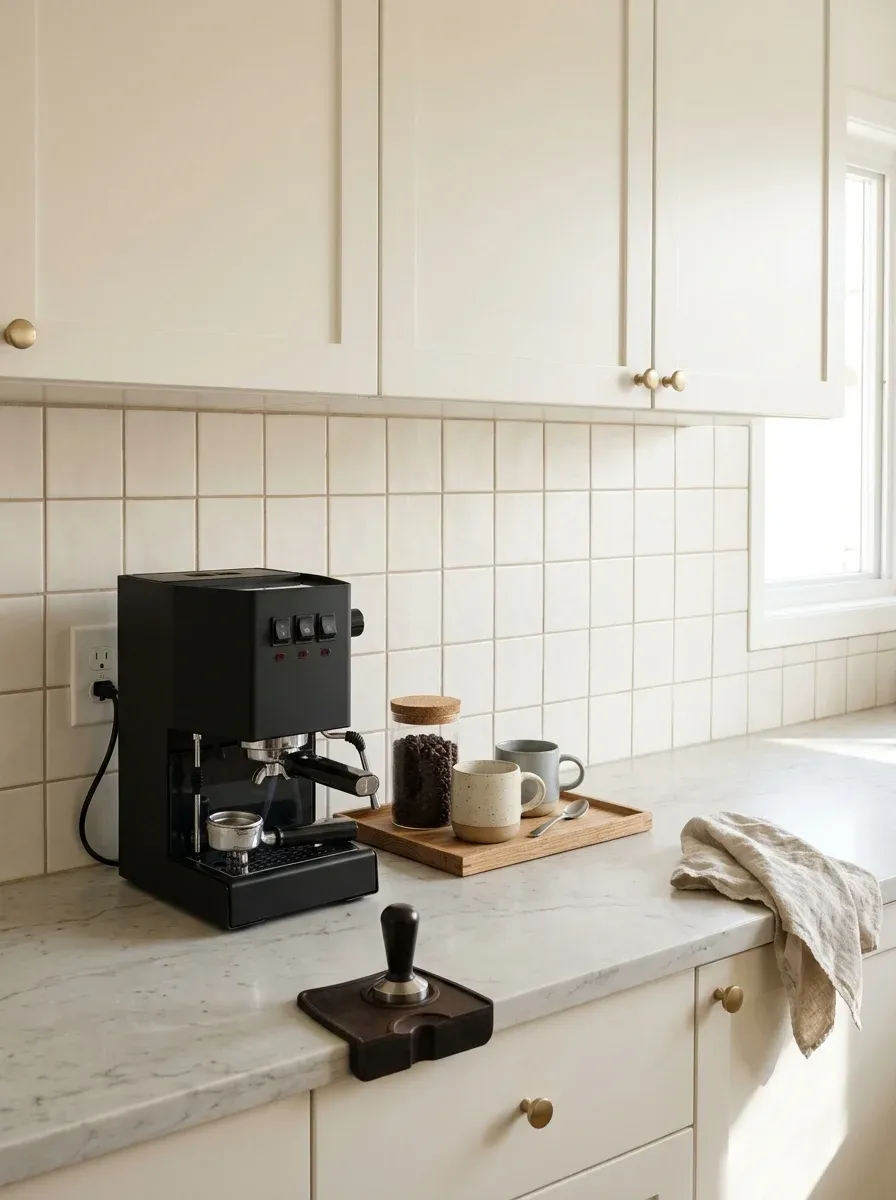
Start with your coffee machine as the main feature. Place it against the backsplash or in a convenient corner, leaving enough room to operate it comfortably. Add a small tray beside it to hold sugar, coffee pods, or a compact container of coffee beans.
Keep mugs within easy reach, either on a nearby shelf or in a small group beside the machine. A little framed print or a simple ceramic vase can make the area feel more intentional without taking up too much space.
How to style it:
- Choose a section of counter close to an electrical outlet.
- Place the coffee machine where you can use it without moving other appliances.
- Use a tray to group small accessories.
- Keep only your everyday mugs nearby.
- Leave enough open counter space for preparing drinks and cleaning the machine.
Best for: Kitchens with a small amount of unused counter space.
Budget tip: Start with a tray and the coffee accessories you already own. You do not need matching containers or a new coffee machine to create a coordinated corner.
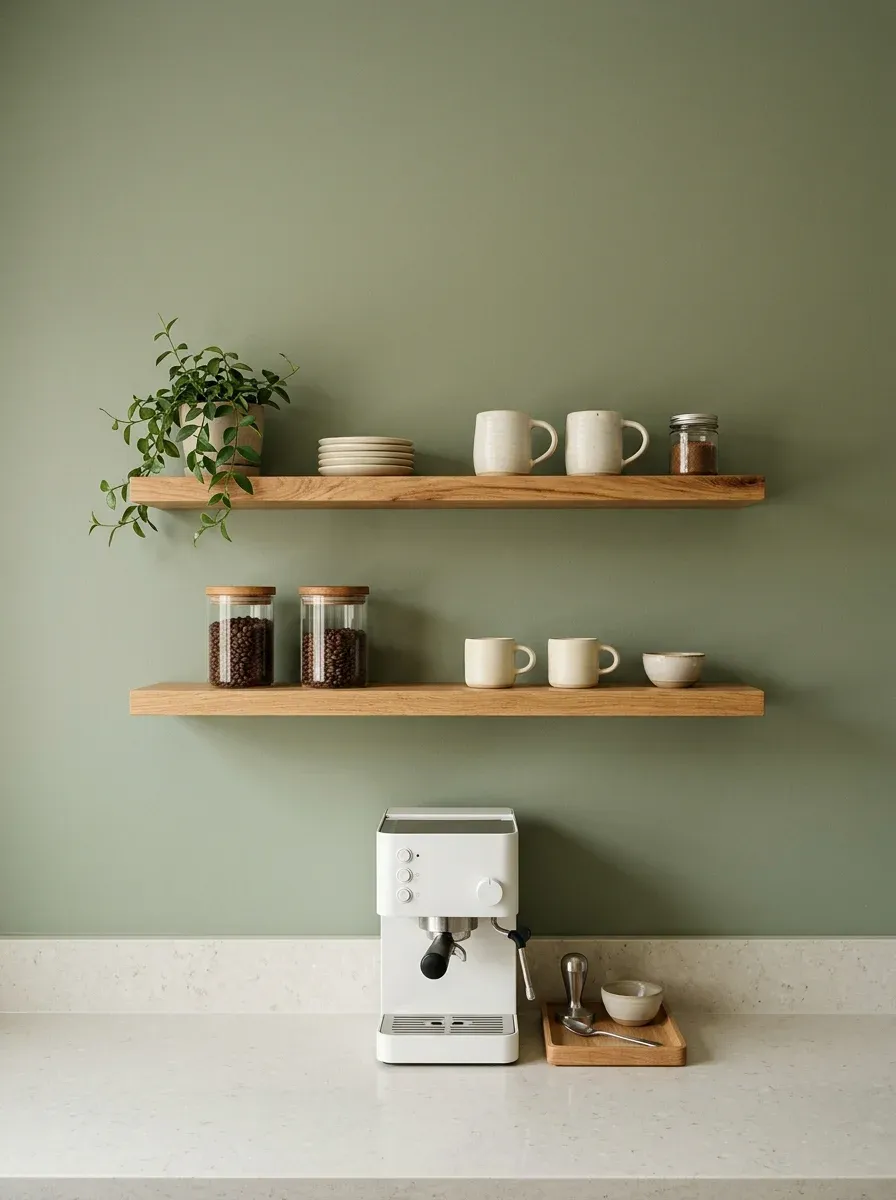
2. Use Floating Shelves for a Vertical Coffee Bar
When counter space is limited, look upward. Floating shelves can give your coffee station extra storage without using another section of the kitchen counter. For compact layouts, explore our small kitchen decor ideas for maximizing vertical space.
Install one or two shelves above the area where you prepare coffee. Use them for mugs, small jars, coffee beans, and a few decorative pieces. Keep heavier or frequently used items at a comfortable height, and make sure the shelves are properly secured for the weight they will carry.
A simple arrangement looks more polished when the objects have some connection in color or material. For example, white ceramic mugs, glass jars, and light wood accessories can create a calm, coordinated look.
Avoid filling every shelf with decorations. The aim is to make the coffee station practical, not create another crowded storage area.
How to style it:
- Choose shelves that fit the width of the coffee station.
- Arrange mugs and jars by height to create visual balance.
- Keep frequently used items on the lower shelf.
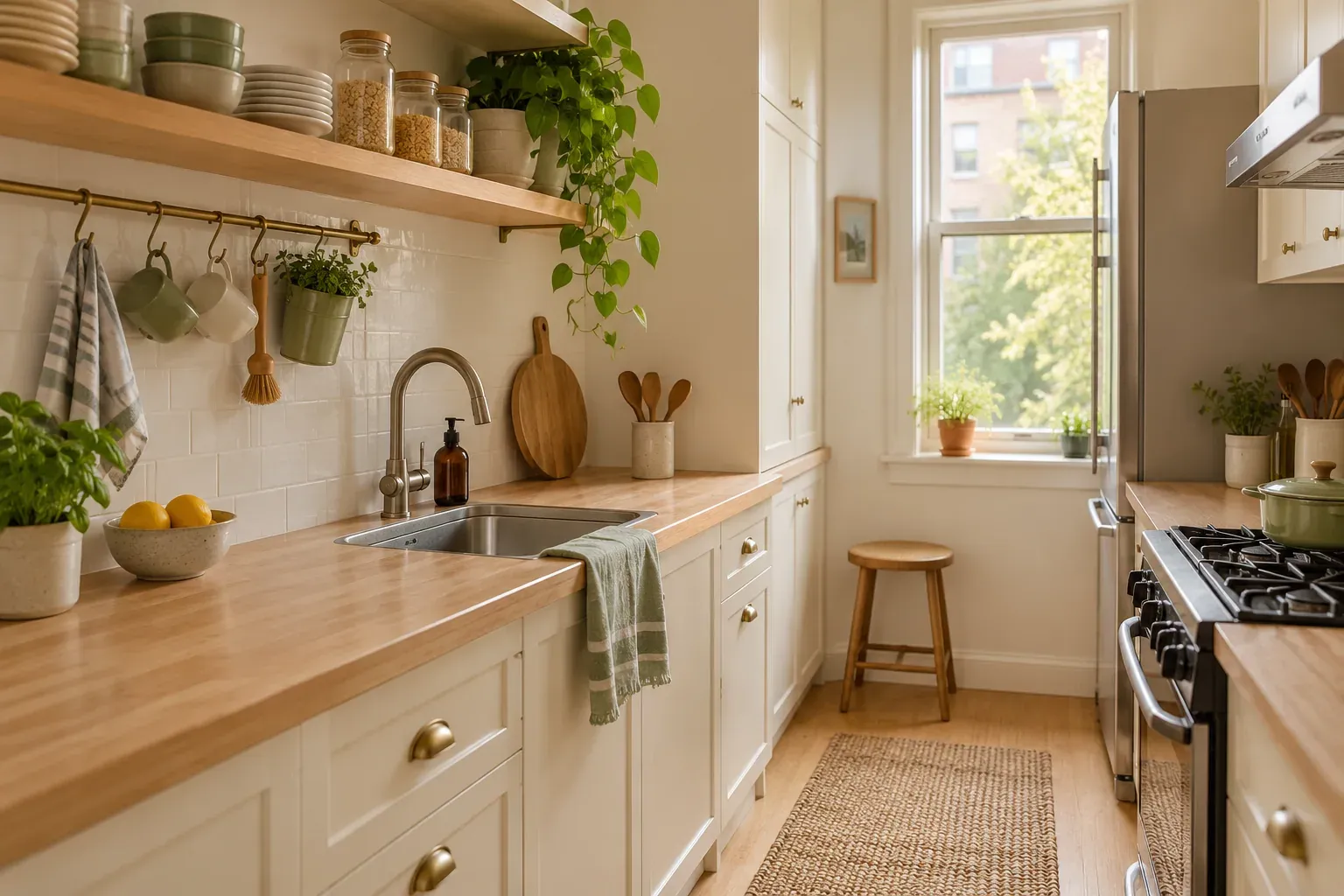
- Use a small hook rail beneath a shelf if you need additional mug storage.
- Leave some empty space so the display feels open.
Best for: Small kitchens that need storage without adding another cabinet or table.
Budget tip: A single well-placed shelf can make a difference. Add a second only when you genuinely need more storage.
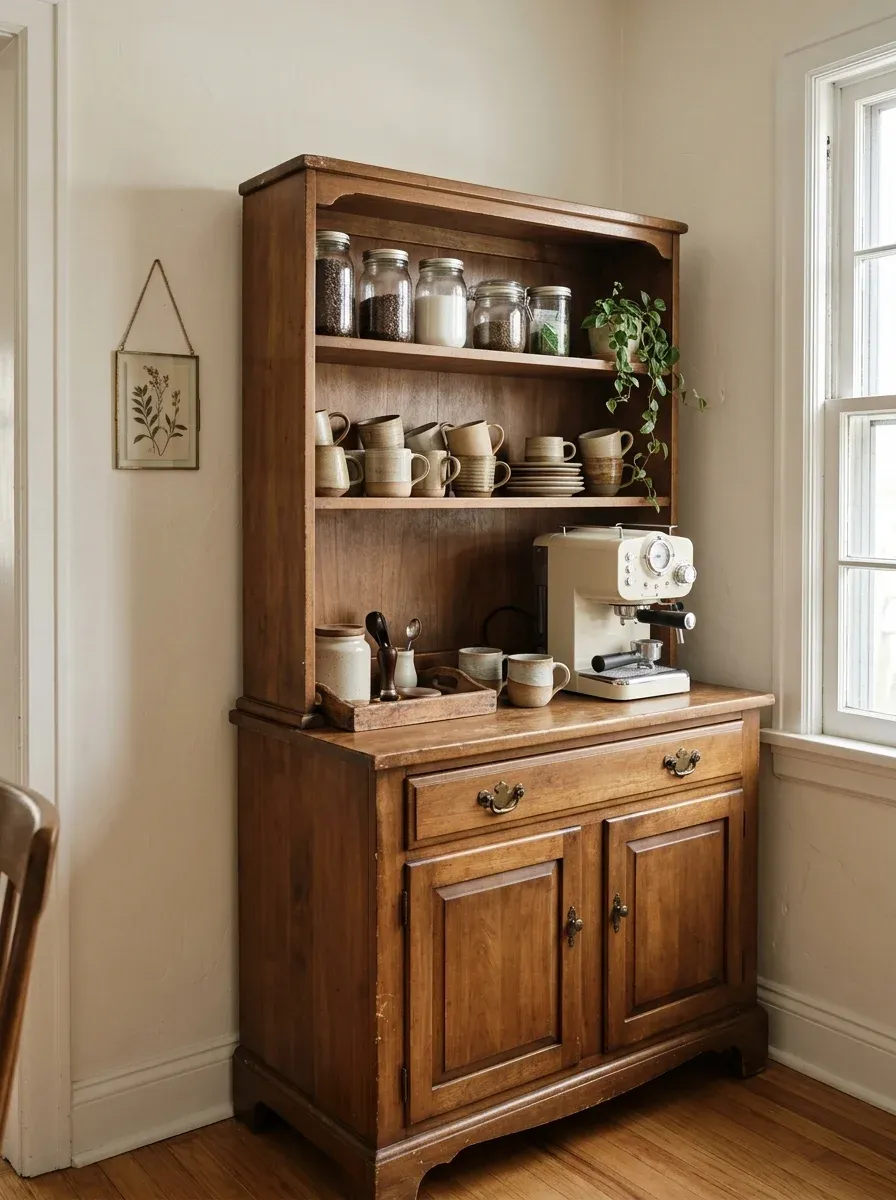
3. Turn a Cabinet or Small Hutch into a Coffee Station
A small cabinet or hutch can turn an unused kitchen corner into a dedicated coffee area. It is especially useful when you want the coffee supplies organized but do not want everything visible on the countertop.
Choose a cabinet with a flat surface that can safely support your coffee machine. The shelves or drawers below can hold mugs, coffee filters, tea bags, napkins, and other supplies.
A glass-front hutch can create a more decorative display with neatly arranged mugs and glass jars. A closed cabinet offers a cleaner appearance if you prefer to hide less attractive packaging and extra supplies.
For a cohesive look, choose a cabinet finish that works with the rest of your kitchen. Natural wood, painted cream, muted green, or black can all work depending on the existing cabinets and countertops.
How to style it:
- Place the coffee machine on the top surface.
- Store extra supplies inside drawers or cupboards.
- Use one shelf for everyday mugs.
- Keep decorative objects limited to a few pieces.
- Make sure the cabinet is stable and suitable for the weight of your appliances.
Best for: Homes that have an unused cabinet, compact hutch, or suitable furniture piece.
Budget tip: Repurpose a piece of furniture you already own before purchasing a new coffee station cabinet.
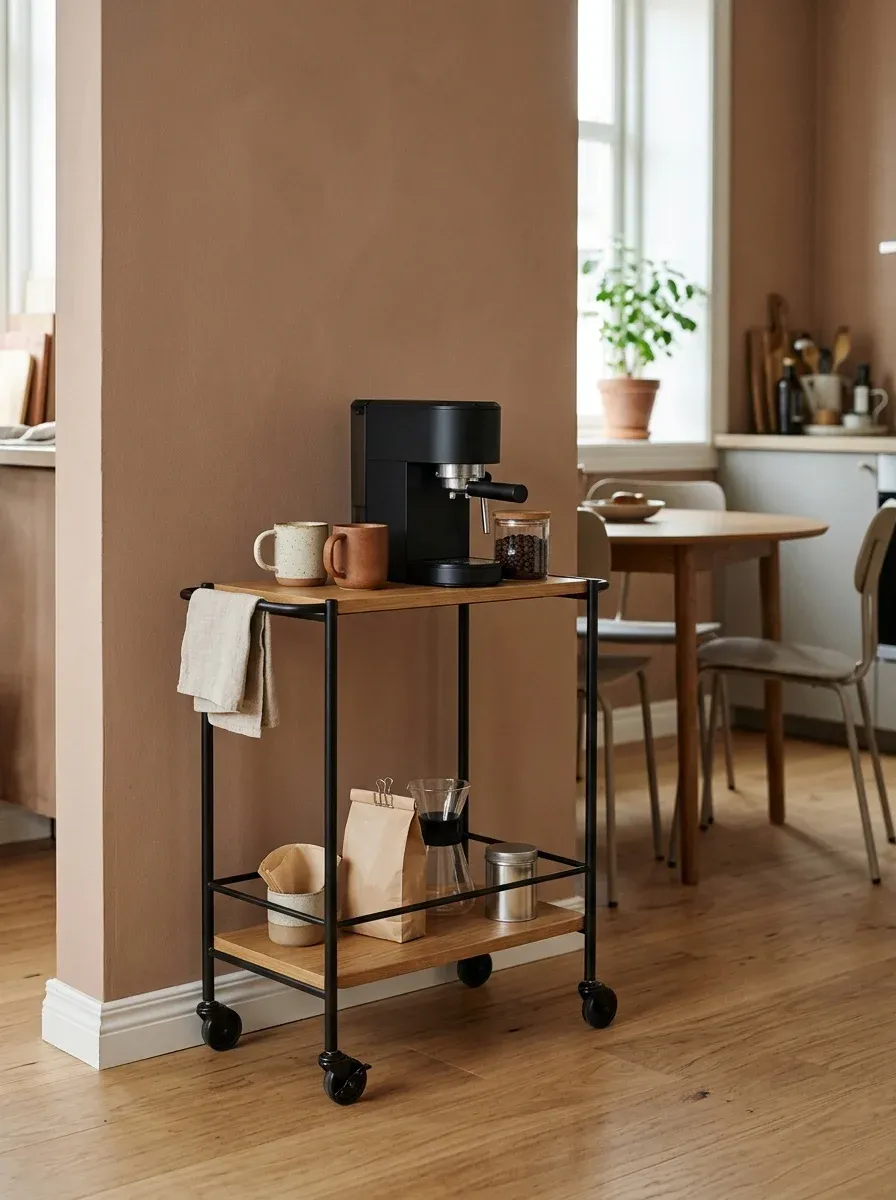
4. Add a Slim Coffee Bar Cart for Flexible Storage
A coffee bar cart is a useful option when you do not have a permanent area for a coffee station. It can fit into a narrow kitchen corner, beside a dining area, or along an unused wall.
Choose a cart with enough surface space for your coffee machine and a few essentials. Lower shelves can hold mugs, coffee beans, tea, and extra supplies.
A slim cart works particularly well in apartments because it can be moved when you need to clean or change the arrangement. Look for locking wheels and a stable frame, especially if you plan to keep an appliance on the top shelf.
The styling can be as simple or decorative as you like. A wooden cart creates a warm, casual appearance, while a black metal frame gives the station a more contemporary feel.
How to style it:
- Keep the coffee machine on the most stable surface.
- Use lower shelves for supplies and extra mugs.
- Store heavier items near the bottom where possible.
- Keep the cart away from narrow walkways and door openings.
- Lock the wheels while preparing drinks.
Best for: Small kitchens, rental homes, and flexible dining spaces.
Budget tip: A basic utility cart can work as a coffee station when it has a stable surface and enough room for your essentials.
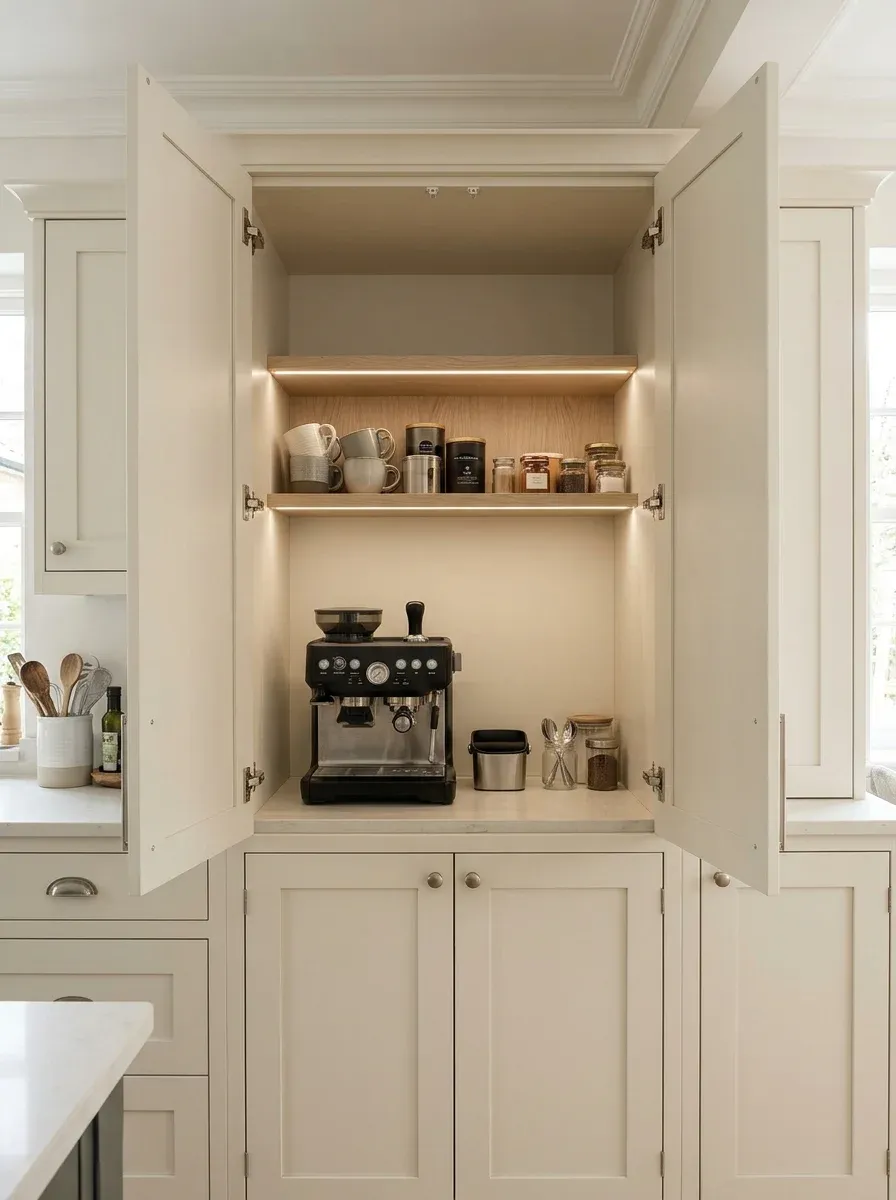
5. Create a Hidden Coffee Station Inside a Cabinet
If you prefer a clean kitchen counter, consider creating a hidden coffee station inside a suitable cabinet or appliance nook.
This setup keeps the coffee machine and accessories out of sight when they are not being used. It can be especially attractive in kitchens where you want uninterrupted countertops and a more streamlined appearance.
A cabinet with doors that open fully can reveal a dedicated coffee area. Arrange the machine on a sturdy surface, with mugs and supplies stored on nearby shelves. Make sure there is enough room to operate the appliance comfortably.
Before setting up a coffee machine inside a cabinet, check the appliance manufacturer’s ventilation, heat-clearance, and operating instructions. Some machines should not be used in enclosed spaces or directly beneath low shelves. The station should never be closed up while an appliance is operating if its instructions require open space.
How to organize it:
- Measure the appliance before choosing the cabinet.
- Check ventilation and clearance requirements carefully.
- Keep coffee supplies in separate containers.
- Use a small tray to catch loose grounds or drips.
- Leave space for cleaning and refilling the machine.
Best for: Kitchens with suitable cabinets and homeowners who prefer concealed appliances.
Budget tip: Repurpose an existing appliance nook where the dimensions and ventilation make it suitable rather than building a new cabinet.
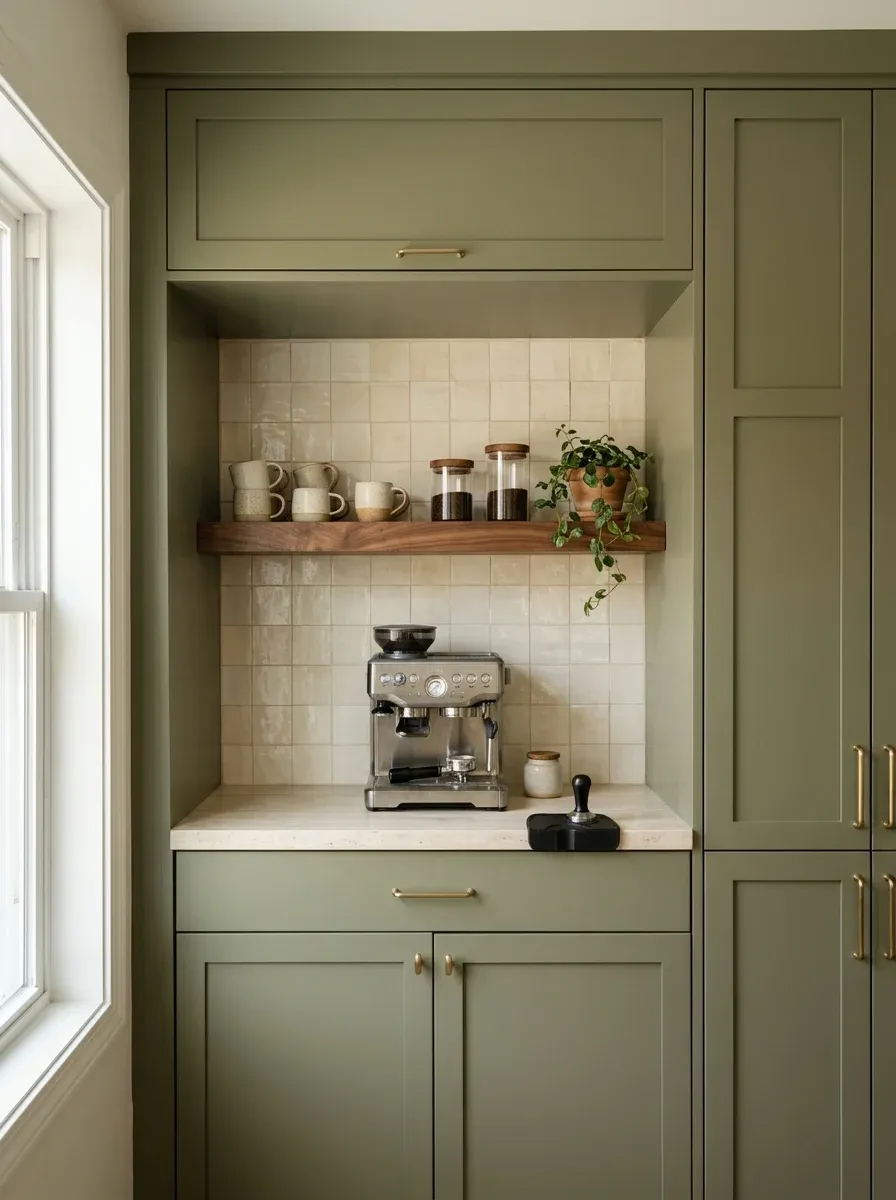
6. Design a Built-In Coffee Nook
A built-in coffee nook can make a coffee station feel like a natural part of the kitchen. It works particularly well in a recessed area, a section between cabinets, or an unused wall space that can accommodate a compact counter.
The design can be simple. Use a small countertop, a backsplash that complements the kitchen, and one or two shelves above the machine. Add a drawer or cabinet below for mugs and supplies. For layout strategies, see our ideas for kitchen design for small kitchens.
For a modern look, try a combination of warm wood, stone-look surfaces, and understated hardware. If you prefer a softer kitchen, painted cabinetry in cream or muted sage can create a welcoming coffee nook.
The most important consideration is practical planning. The coffee machine needs suitable electrical access, enough counter depth, and sufficient clearance for daily use. Any new electrical work should be handled by a qualified professional.
How to plan it:
- Measure the available wall or recess before deciding on the layout.
- Choose a counter depth that accommodates your machine.
- Include convenient storage for mugs and supplies.
- Select a backsplash that connects visually with the main kitchen.
- Plan electrical access and appliance clearance before installation.
Best for: Homeowners planning a kitchen update or working with an existing recessed space.
Budget tip: A small, simple nook can look intentional without custom cabinetry covering an entire wall. Use the space you already have before considering major changes.
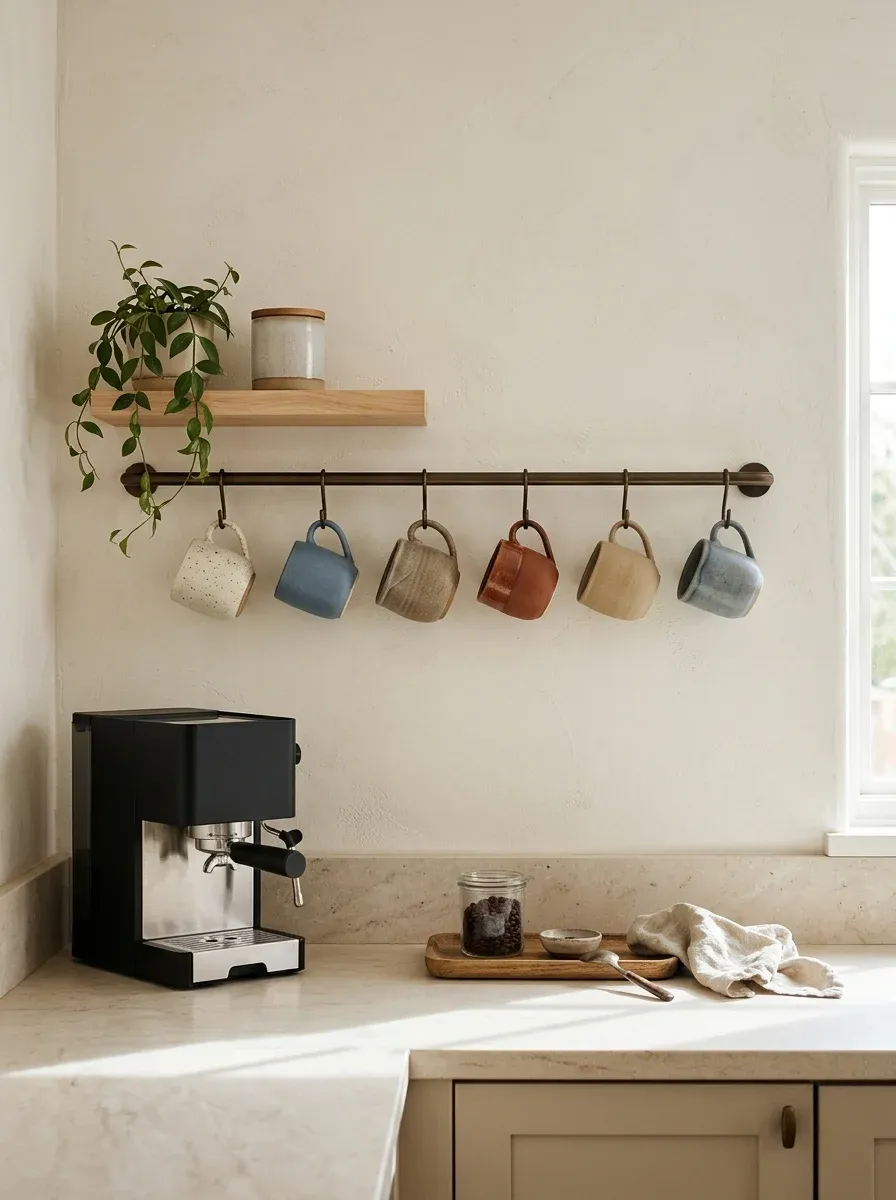
7. Add a Mug Rail and Hanging Storage
A mug rail is a simple way to add personality and practical storage to a coffee station. It allows you to display your favorite cups while keeping the main counter and shelves less crowded.
Install a suitable rail or row of hooks on a wall or beneath a shelf, where the mugs can hang without interfering with the coffee machine or your workspace.
For a relaxed, collected appearance, mix a few ceramic mugs in coordinating colors. For a more uniform look, use matching cups and a simple black or brass rail.
You can also use a small wall-mounted shelf above the rail for coffee jars or decorative items. Keep the display restrained so the mugs remain the main feature.
How to style it:
- Choose hooks that suit the size and weight of your mugs.
- Leave enough space between cups so handles do not overlap.
- Position the rail where mugs are easy to reach.
- Coordinate the rail finish with your kitchen hardware.
- Avoid hanging mugs over areas where water or hot liquids could spill.
Best for: Small coffee stations that need a little extra storage and decorative character.
Budget tip: A basic rail and a few hooks can create a useful display without adding another shelf or cabinet.
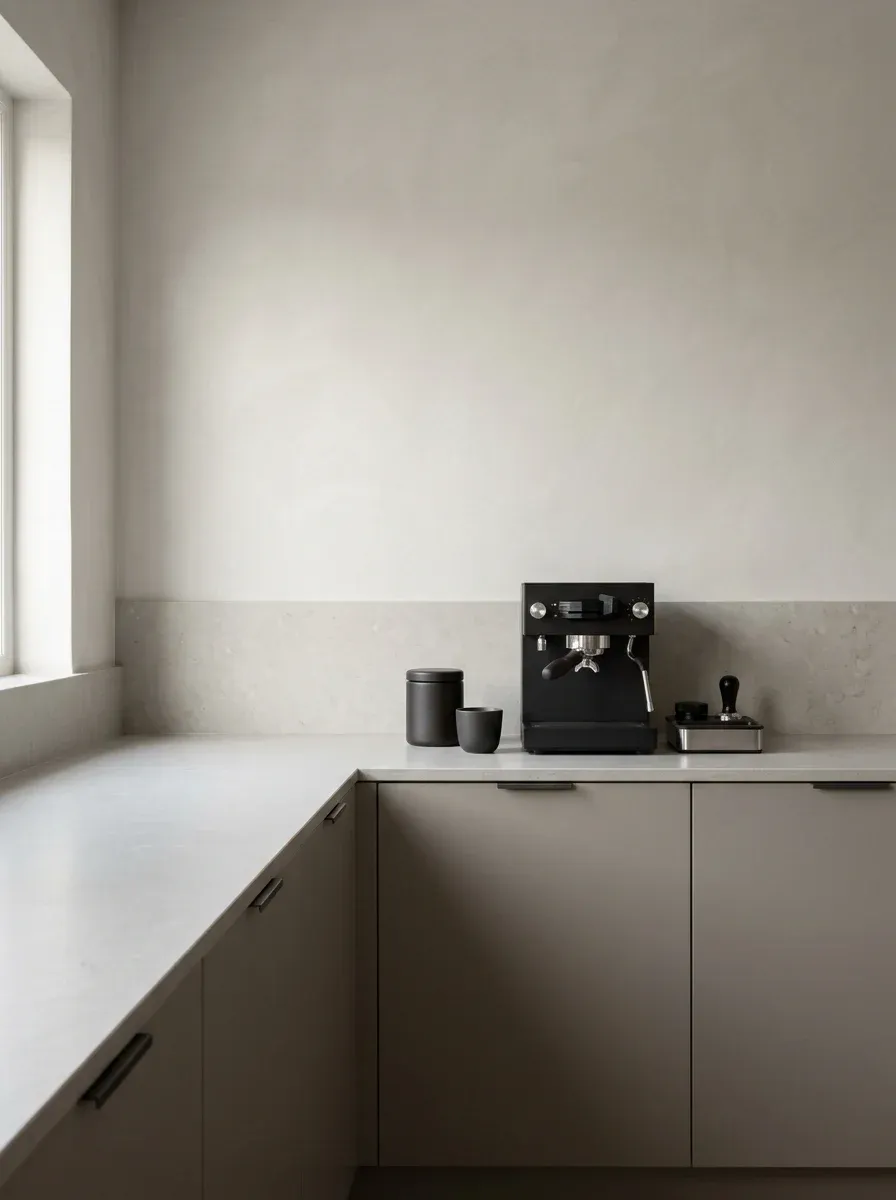
8. Create a Modern Minimalist Coffee Bar
A minimalist coffee bar is ideal if you like a clean, uncluttered kitchen. Instead of filling the station with decorative accessories, focus on a few useful items and a consistent color palette.
Start with a coffee machine that fits the space. Add a matching canister for coffee beans, a simple mug set, and a small tray for everyday accessories. Keep extra supplies in a drawer or nearby cabinet.
Black, white, warm gray, and natural wood are easy colors to combine. You can also introduce one subtle accent, such as brushed metal, dark green, or warm beige.
The key is to make the station feel complete without overcrowding it. Leave some visible counter space around the machine and avoid keeping every coffee-related item on display.
How to style it:
- Choose two or three main colors.
- Keep the coffee machine and accessories visually coordinated.
- Use matching jars or containers for the essentials.
- Hide packaging and supplies that are not used daily.
- Keep the countertop clear enough for preparing drinks.
Best for: Modern kitchens and people who prefer simple, organized surfaces.
Budget tip: Edit what you already have before purchasing matching accessories. A minimalist setup often looks better with fewer objects.
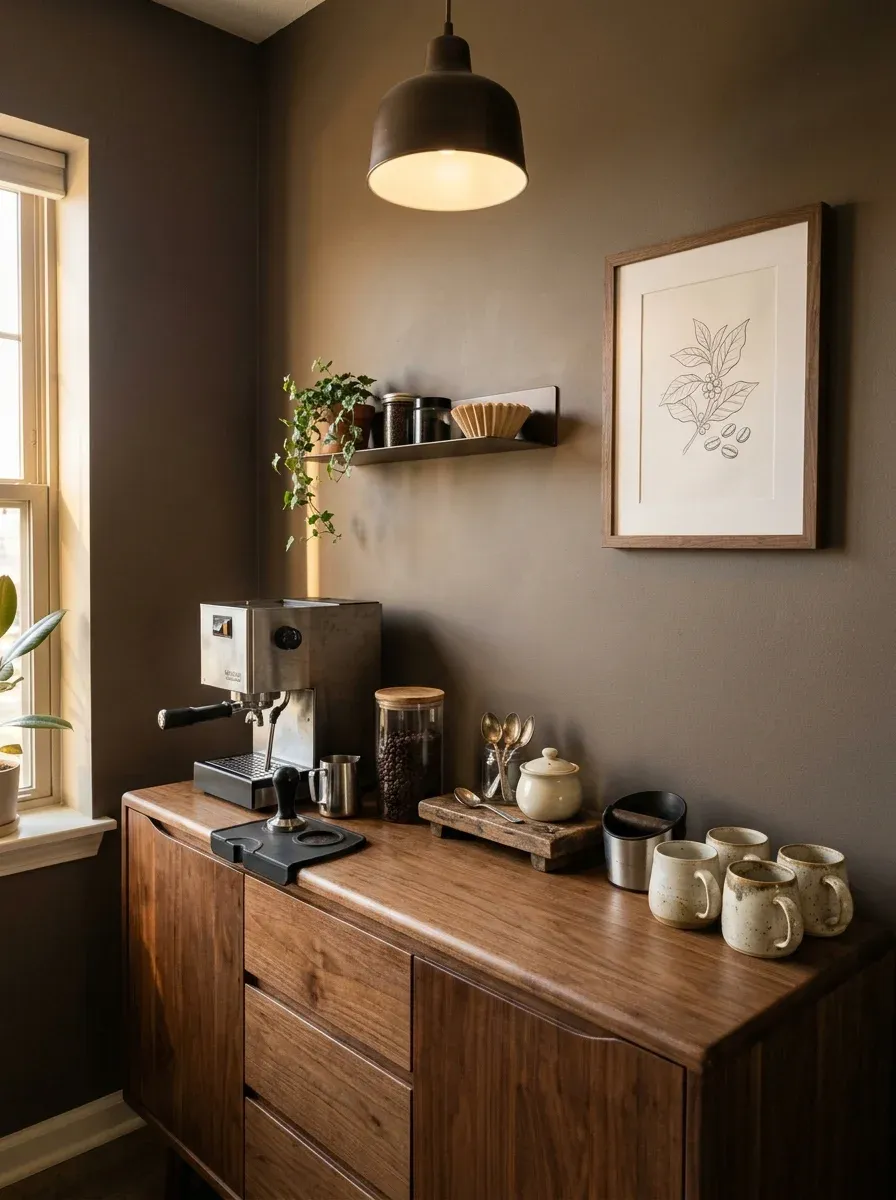
9. Style a Warm Café-Inspired Home Coffee Bar
For a more inviting look, create a coffee station inspired by a small neighborhood café. Use warm materials, thoughtful details, and a little contrast to make the area feel special.
A wood countertop or wooden tray can create warmth. Pair it with ceramic mugs, glass jars, a small framed coffee-themed print, and a simple container for spoons or stirrers.
You can bring in darker accents through black metal shelving, dark wood, or espresso-colored accessories. If you prefer a lighter café look, use cream ceramics, natural wood, and warm neutral textiles.
Keep the practical setup at the center. The machine should be easy to reach, mugs should be accessible, and the decorative details should not interfere with the preparation area.
How to style it:
- Use wood or wood-look surfaces to add warmth.
- Choose ceramic mugs with interesting but coordinated shapes.
- Keep coffee beans and supplies in attractive containers.
- Add one framed print or a small decorative object.
- Use a tray to keep loose accessories together.
Best for: Anyone who wants their coffee station to feel like a small, personal café at home.
Budget tip: A wooden tray, a few favorite mugs, and one framed print can create the café-inspired look without purchasing a complete coffee bar set.
How to Set Up a Coffee Station at Home
A beautiful coffee station should make your routine easier. Before styling it, decide what you actually use and how much space you can dedicate to it.
- Choose the right location: Look for a convenient place near your usual kitchen workflow. A countertop corner, a suitable cabinet, or a small cart can all work. Make sure there is suitable electrical access and enough room to operate and clean your machine.
- Measure before arranging anything: Measure the coffee machine, available counter depth, and the space needed to open cabinet doors or drawers. Remember to allow the clearance recommended by the appliance manufacturer.
- Group your everyday supplies: Keep the items you use most often together. These may include coffee beans or pods, filters, mugs, spoons, and sugar. Extra supplies can stay in a nearby cabinet.
- Choose a simple color scheme: Use your existing kitchen as a guide. If your kitchen has warm wood and cream cabinetry, natural wood accessories and neutral ceramics may fit naturally. For a darker kitchen, black or brushed-metal accessories can create a coordinated look.
- Add storage without overcrowding: Use a tray, small jars, a shelf, or a mug rail to organize essentials. Avoid adding storage simply to fill empty space. The station should still have enough room for everyday use.
- Keep cleaning supplies and maintenance in mind: Coffee machines need regular cleaning and maintenance. Leave enough room to remove parts, refill water, empty grounds, and wipe the surrounding surface.
Common Coffee Bar Decorating Mistakes to Avoid
- Putting too many items on the counter: A coffee station can quickly become cluttered when every mug, syrup bottle, jar, and accessory is displayed together. Keep daily essentials nearby and store the rest out of sight.
- Choosing a location without considering electrical access: A coffee machine needs a suitable power source. Avoid using an awkward cable arrangement across the counter or placing appliances where cords create a safety or trip hazard.
- Ignoring appliance clearance: Some coffee machines need space around them for ventilation, heat, and operation. Always check the manufacturer’s instructions before placing a machine beneath a shelf or inside a cabinet.
- Using shelves that are too high: Open shelves look attractive, but they are less useful when everyday mugs and supplies are difficult to reach. Keep frequently used items at a comfortable height.
- Buying accessories before planning the station: Matching jars and decorative trays are appealing, but the coffee machine and essentials should determine the layout first. Add accessories only after you know what the space needs.
- Making a small coffee bar too decorative: A coffee station still needs to function as a preparation area. Too many signs, plants, containers, or decorative objects can take away the usable surface.
Frequently Asked Questions
How do I make a coffee bar in a small kitchen?
Use an unused section of counter, a narrow cart, or a small cabinet. Keep the coffee machine and everyday supplies together, use vertical storage where appropriate, and store extra items in nearby drawers or cupboards.
What should I put on a home coffee bar?
Start with your coffee machine, mugs, coffee beans or pods, filters, and a few basic accessories. Depending on your routine, you may also want sugar, tea, a spoon container, or a small tray. Keep only the items you regularly use on display.
How do I decorate a coffee bar on a budget?
Use a tray, existing mugs, simple storage jars, and a few accessories you already own. A small framed print or a mug rail can add character without requiring a complete furniture setup.
Where should a coffee bar be placed in the kitchen?
A coffee bar works best in a convenient area with suitable electrical access and enough counter space. A countertop corner, an unused cabinet area, or a section near the dining space can work, provided the appliance has the clearance it needs.
Can I put a coffee machine inside a cabinet?
Some coffee machines may be used in a suitable appliance cabinet, but others require more open space for ventilation and heat clearance. Always check the manufacturer’s instructions before using a machine inside an enclosed cabinet.
How do I organize coffee mugs in a small space?
Use a small shelf, a properly mounted mug rail, or a nearby cabinet. Keep everyday mugs accessible and store less frequently used cups elsewhere to prevent the coffee area from becoming crowded.
Conclusion
A home coffee station can be as simple or as detailed as you like. A small countertop corner may be enough for everyday essentials, while a cabinet, cart, or built-in nook can provide more dedicated storage.
The best coffee bar ideas combine convenience with a style that suits your kitchen. Start with the space you already have, choose the storage that makes your routine easier, and add a few thoughtful details to give the station its own personality.
You do not need a large kitchen or a professional café setup to create a coffee corner you enjoy using every day.
Looking for more ideas? Browse our kitchen & bathroom stories.
Save to Pinterest