In this article
- 1. Float shelves above a bench
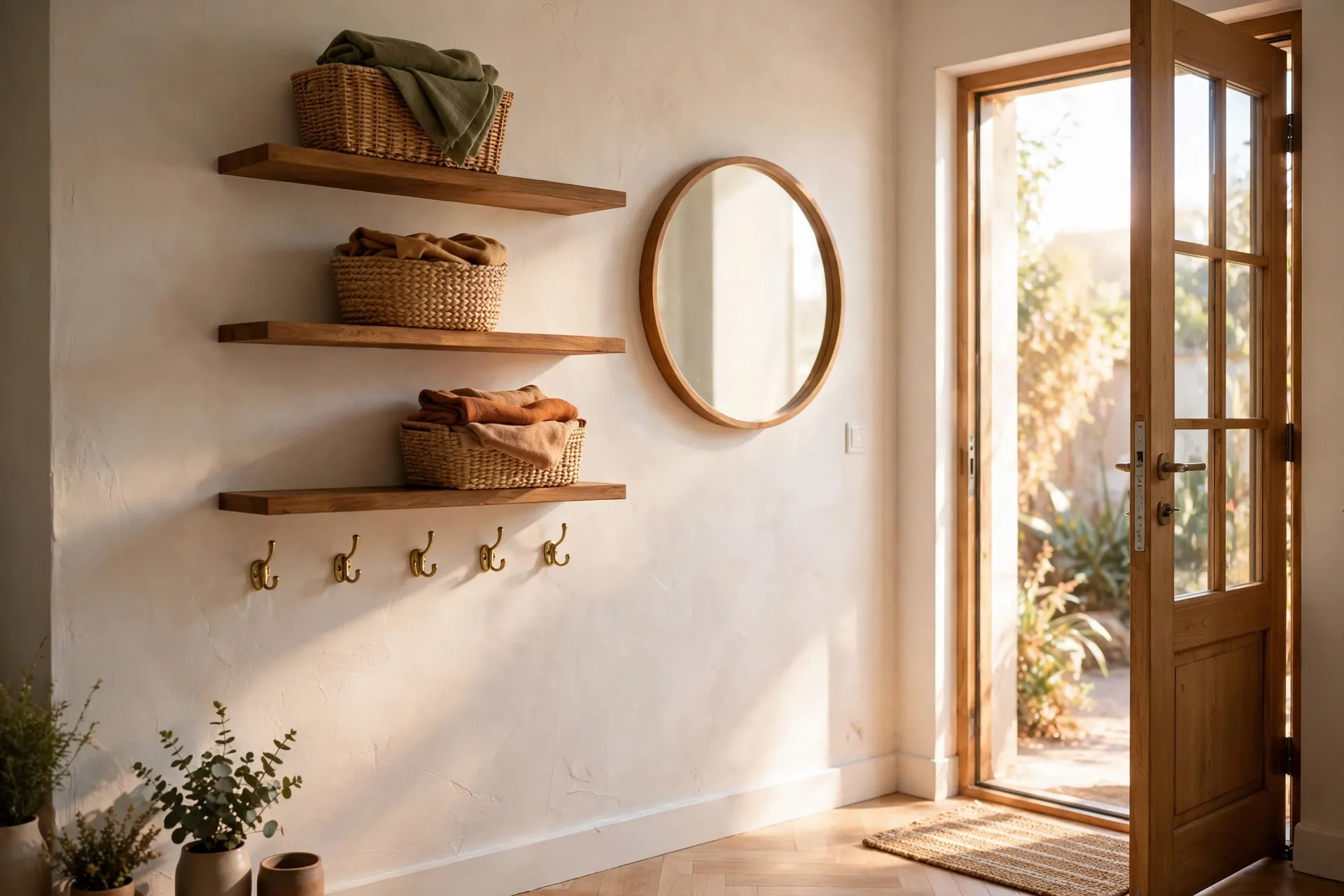
- 2. Pair one shelf with a row of hooks
- 3. Build a cubby tower
- 4. Lean a ladder shelf in a corner
- 5. Shelve the space above the door
- 6. Hang baskets as shelves
- 7. Pick a mirror with a built-in ledge
- 8. Mount a shallow wall cabinet
- 9. Run a peg rail under a shelf
- 10. Add a narrow ledge just for keys and mail
- 11. Stack crates for freestanding shelving
- 12. Wrap shelves around a corner
- 13. Hang hooks under the lowest shelf
- 14. Reserve the top shelf for off-season gear
- 15. Let shelves work with a hall tree
- How to Choose Entryway Shelving for Your Space
- Entryway Shelving Mistakes to Avoid
The entryway has to catch everything you carry in and everything you grab on the way out, usually on a single wall and a few square feet of floor. Shelves for entryway walls solve this better than furniture because they store upward without blocking the door swing or the walkway. These 15 entryway shelving ideas cover tiny rentals and roomier foyers alike, with real measurements and notes on what actually gets used.
1. Float shelves above a bench
A bench with two floating shelves above it is the entryway workhorse. The bench handles shoes and sitting; the shelves hold baskets for scarves, sunglasses and dog gear. Mount the lower shelf about 48 inches from the floor so there is clearance to sit, and keep shelf depth to 8 or 10 inches so nobody clips a shoulder walking past.
Use closed baskets on the shelves rather than open piles. Open entry shelves collect visual clutter fast, and the entry is the first thing you see coming home. Label-free is fine if the baskets are opaque; matching baskets look calmer than a rainbow of storage bins.
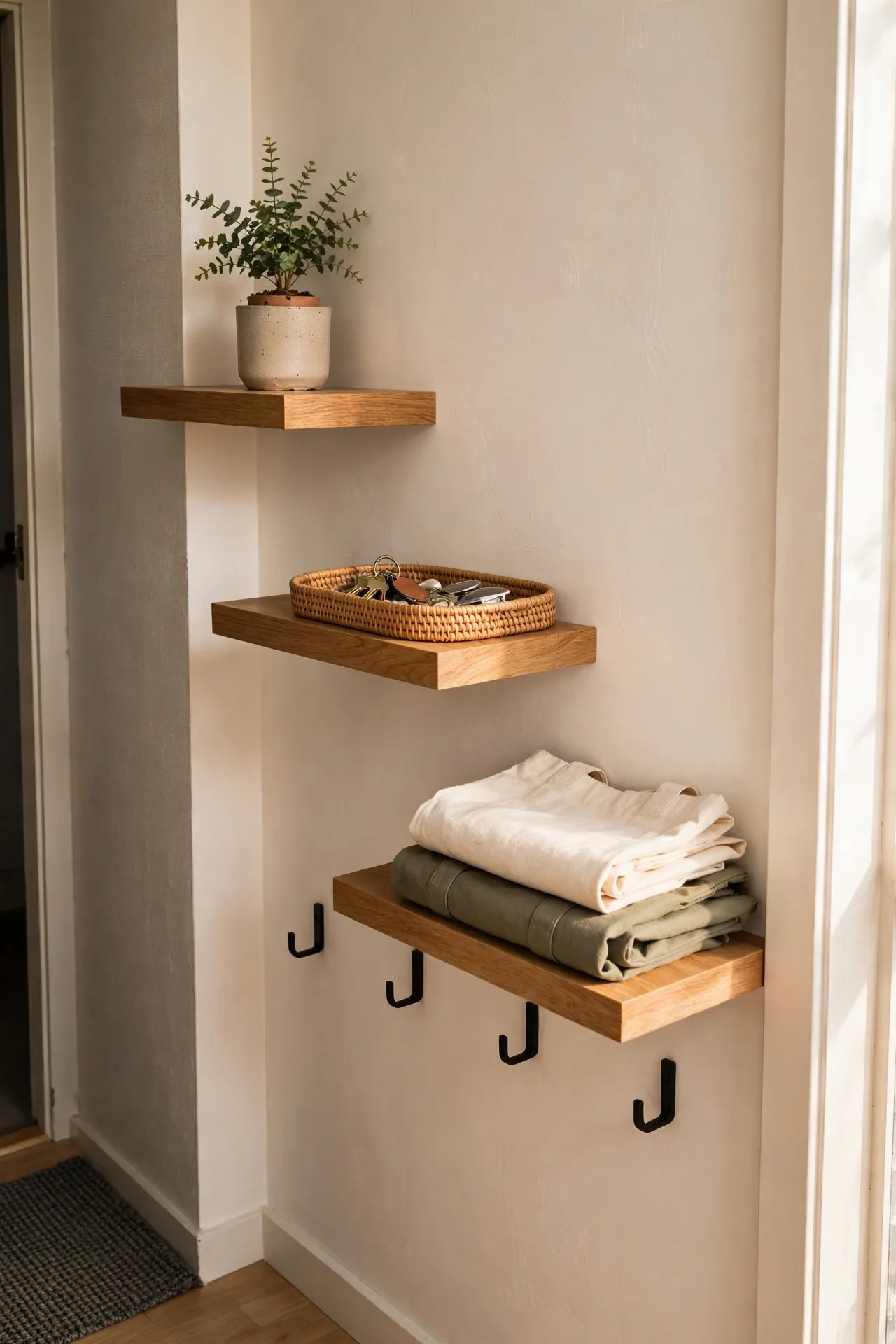
2. Pair one shelf with a row of hooks
If you only install one thing, make it a shelf with hooks underneath. The shelf catches keys, mail and a small tray; the hooks take coats, bags and the dog leash. A 36-inch board with four or five hooks serves one or two people; go 48 inches for a family. Mount hooks at 60 to 66 inches high so coats hang clear of the bench or floor.
Choose hooks rated for real weight, not decorative ones that bend under a winter coat. Double hooks, one high and one low on the same mount, effectively double capacity without widening the board. This single piece replaces a coat rack, a key bowl and a mail pile, which is why it appears in so many small entries.
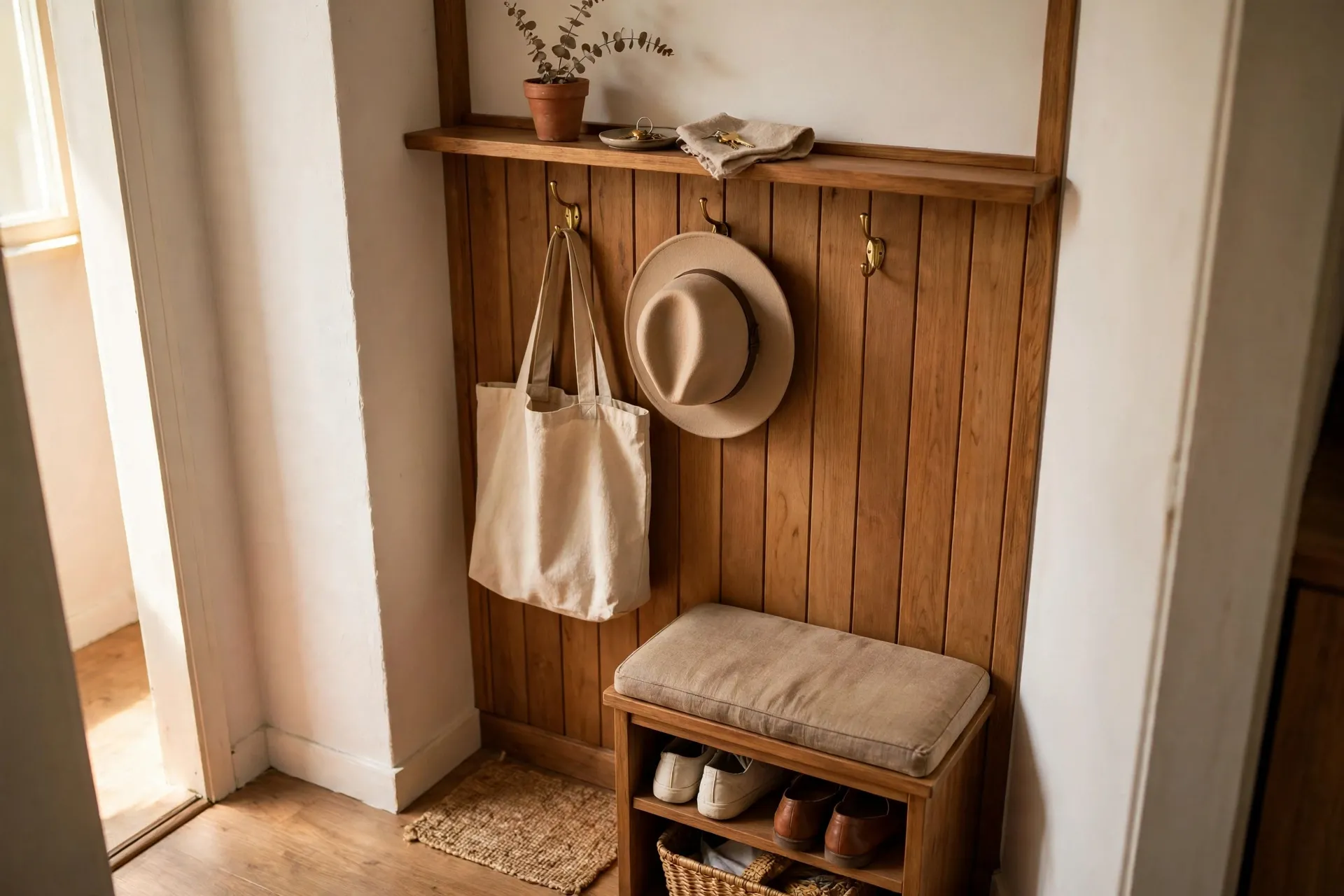
3. Build a cubby tower
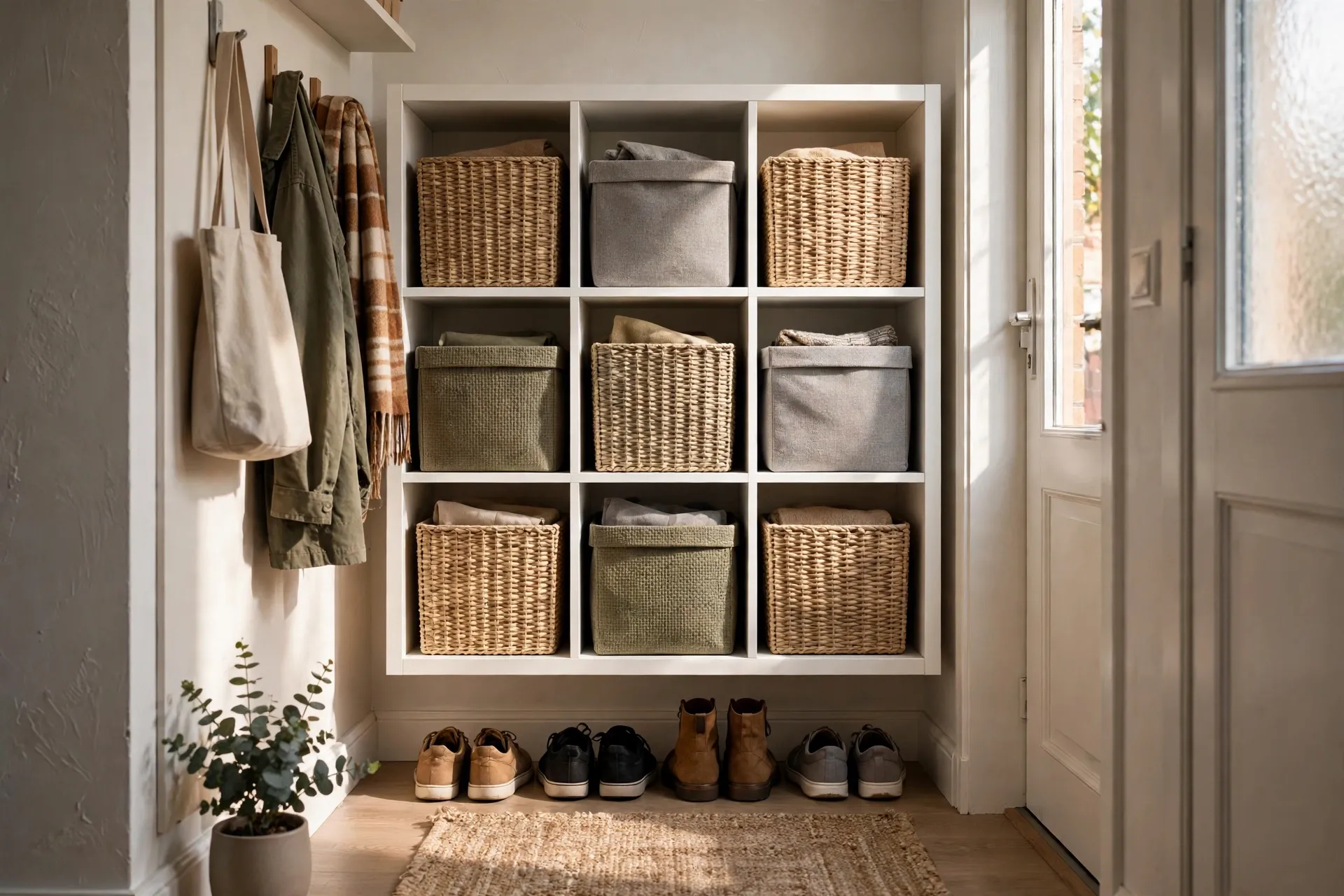
Cube storage units make excellent entry shelving because each cube becomes a person’s zone. A 2x4 cube unit turned vertically fits a narrow wall and holds shoes, bags and bins in tidy compartments. Add fabric bins for the messy categories, gloves, hats, reusable shopping bags, and leave a few cubes open for shoes that need air.
Anchor tall cube units to the wall, always. A loaded 5-foot cube tower can tip if a child climbs it or a heavy bag yanks a side. In entries that open straight into the living room, the back of a cube unit can face the room as a subtle divider; see our best storage ideas for small rooms for more double-duty pieces like this.
4. Lean a ladder shelf in a corner
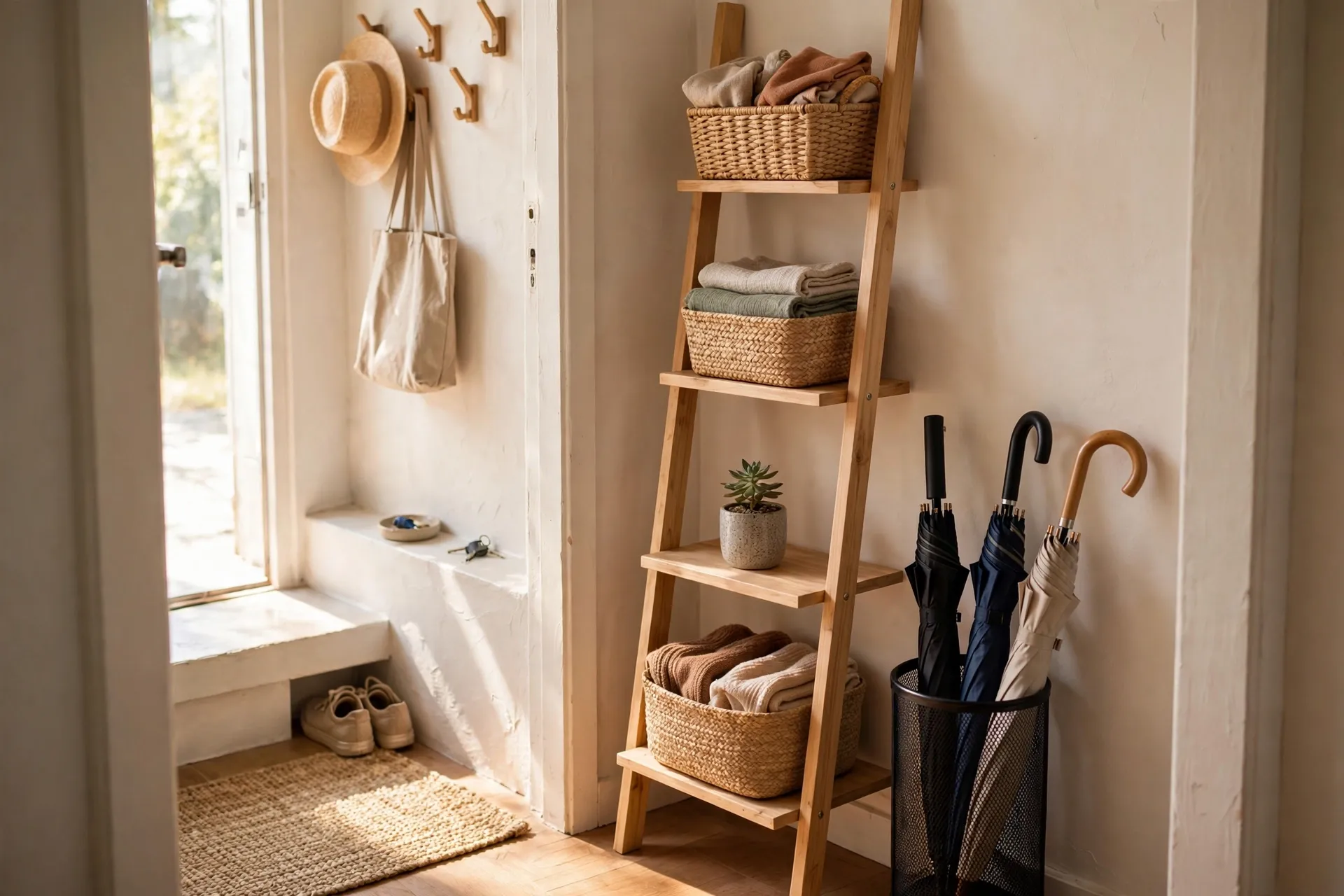
A leaning ladder shelf needs no mounting, which makes it the lowest-commitment entry shelving of all. The deep bottom shelf holds shoes or baskets, the middle shelves take folded scarves and small bins, and the top is perfect for a plant or a bowl for keys. It fits corners that are too awkward for a bench and costs less than most wall-mounted systems.
The lean is the limitation: ladder shelves wobble if bumped and cannot hold heavy items up top. Keep the heaviest storage low, and do not use one as a coat rack substitute; hanging heavy coats on the sides will tip it. For narrow entries where every inch matters, our narrow entryway ideas cover leaner options.
5. Shelve the space above the door
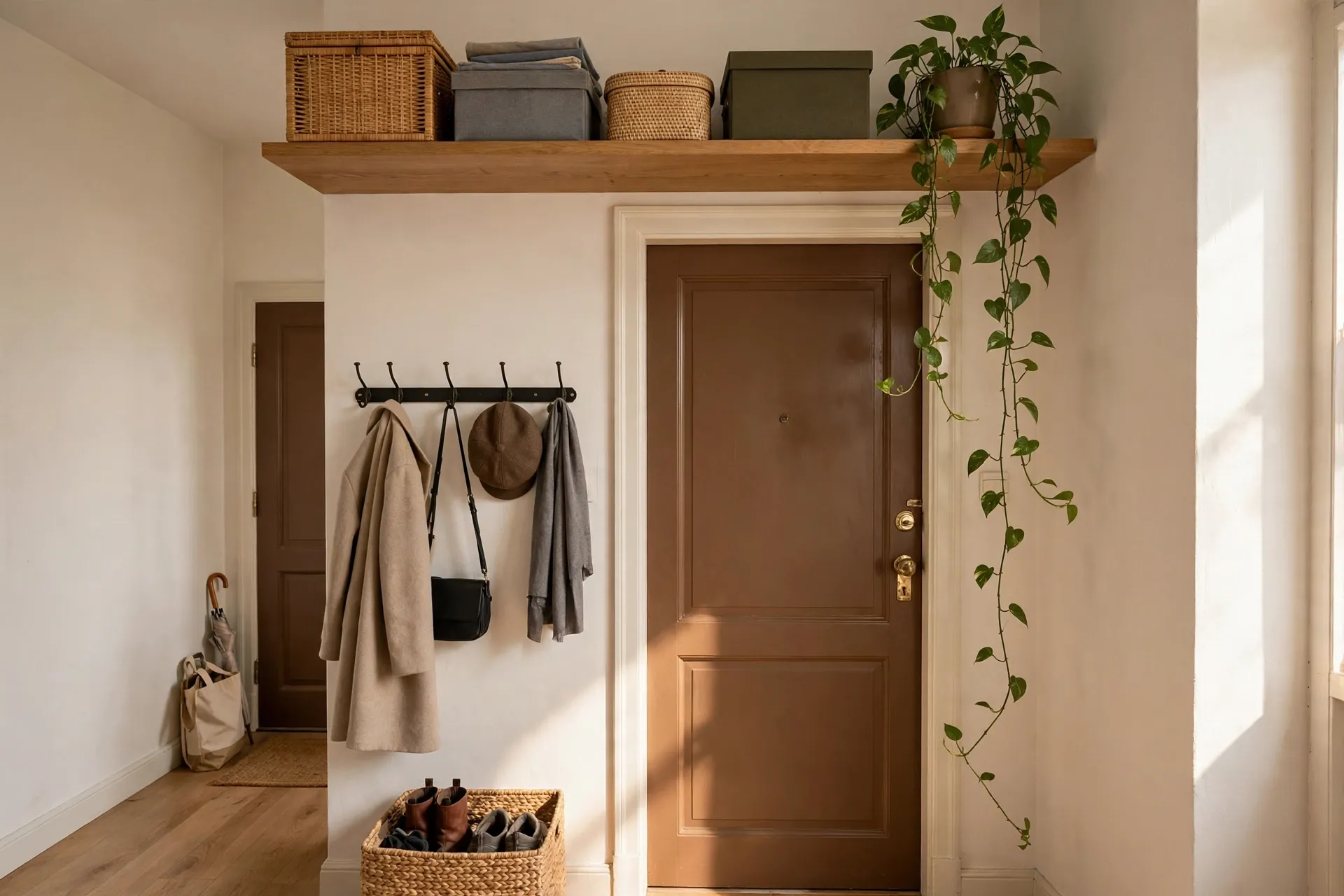
The wall above the entry door is dead space in most homes, and a single long shelf there is ideal for things you need rarely but want nearby: gift wrap, off-season hats, the box of lightbulbs. Mount it high enough that the door clears it, usually starting around 80 inches, and keep the depth to 10 or 12 inches.
This shelf is for storage, not display; nobody admires things at that height. Use matching boxes with labels facing down or forward so you can identify them from below. Do not store anything heavy enough to hurt if it falls, and check the shelf’s brackets twice, because a high shelf is the one you will inspect least.
6. Hang baskets as shelves
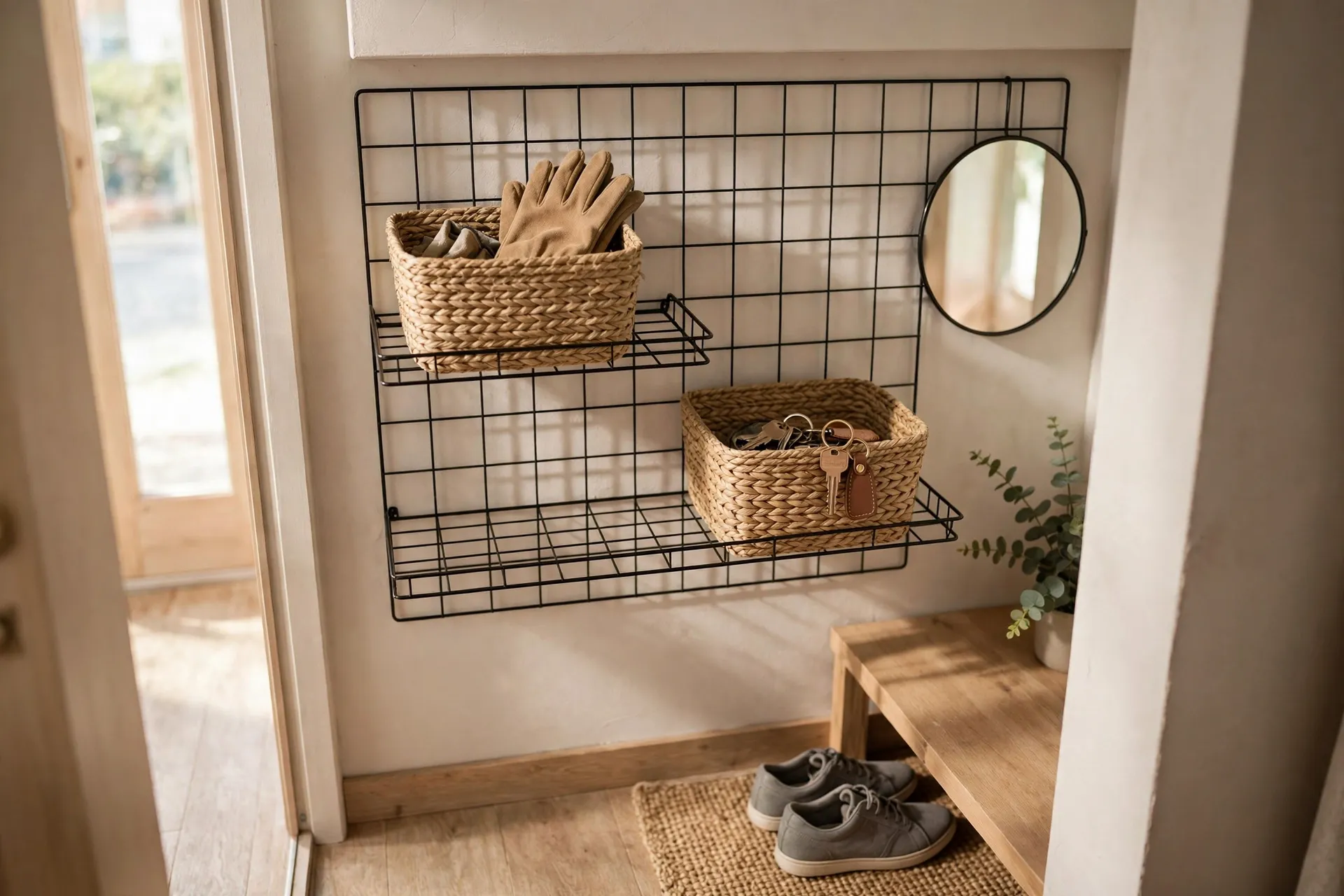
Wall-mounted baskets act as open shelves with built-in sides, so nothing slides off. Two or three wire or seagrass baskets in a vertical line hold gloves, mail, sunscreen and the endless small things that migrate to entry tables. They suit farmhouse and boho entries especially well and cost very little.
Baskets show their contents, so this only works if you edit ruthlessly. One basket per category, and when a basket overflows, something leaves the house. Mount them at reachable heights; a basket you need a step stool to reach becomes decoration within a month.
7. Pick a mirror with a built-in ledge
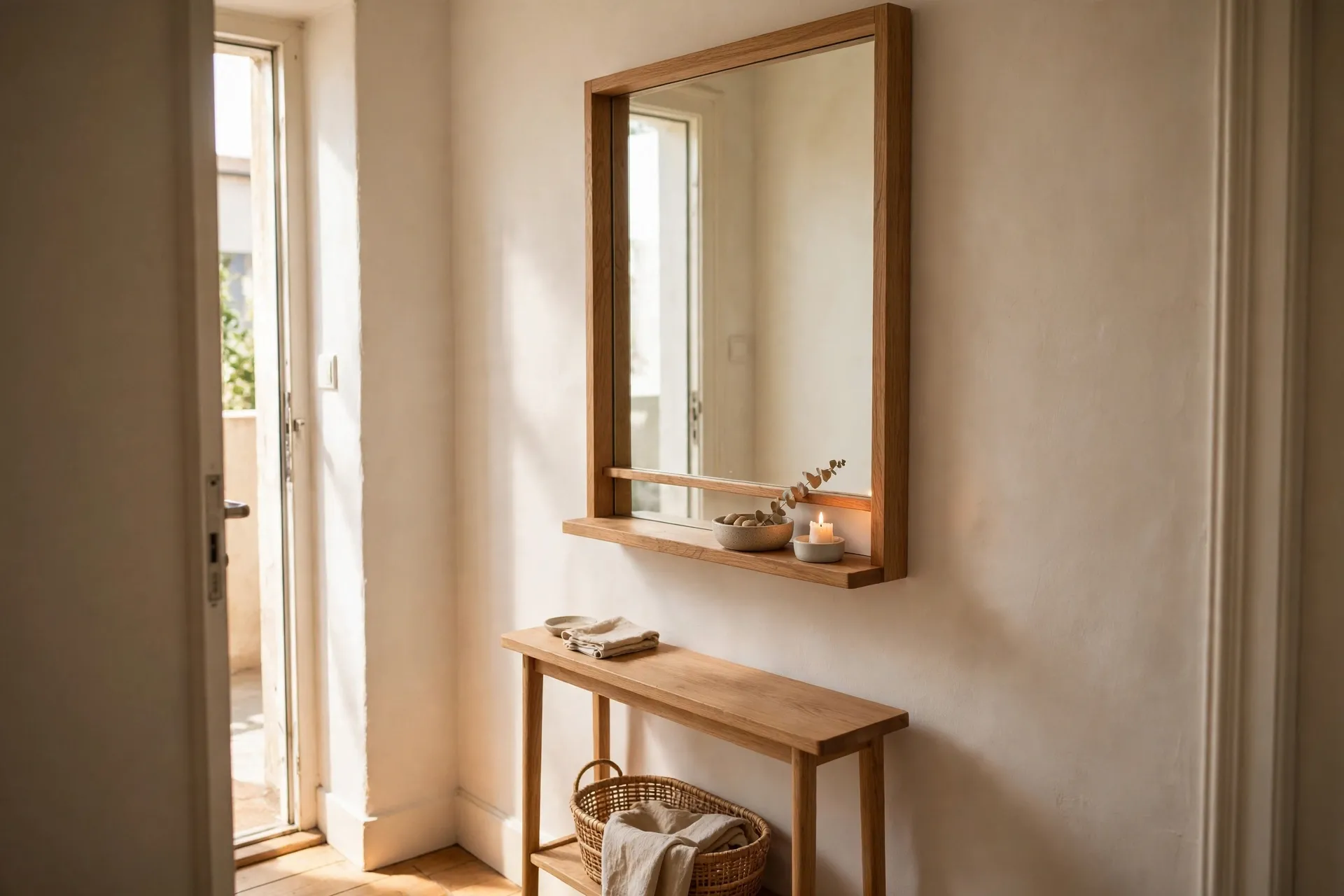
A mirror with a shelf ledge does two entry jobs at once: the last look before leaving, and a landing spot for keys and sunglasses. The ledge is usually only three or four inches deep, which is enough for a small tray and nothing more, and that constraint is actually useful. It forces the entry to stay minimal.
Hang it at a height where the mirror is useful, center around 60 inches, not where the shelf is convenient. If the household has big height differences, a tall narrow mirror with a ledge serves everyone better than a small round one. Keep the ledge to daily items only; mail that needs action belongs in a tray on a real shelf, not balanced on a mirror ledge.
8. Mount a shallow wall cabinet
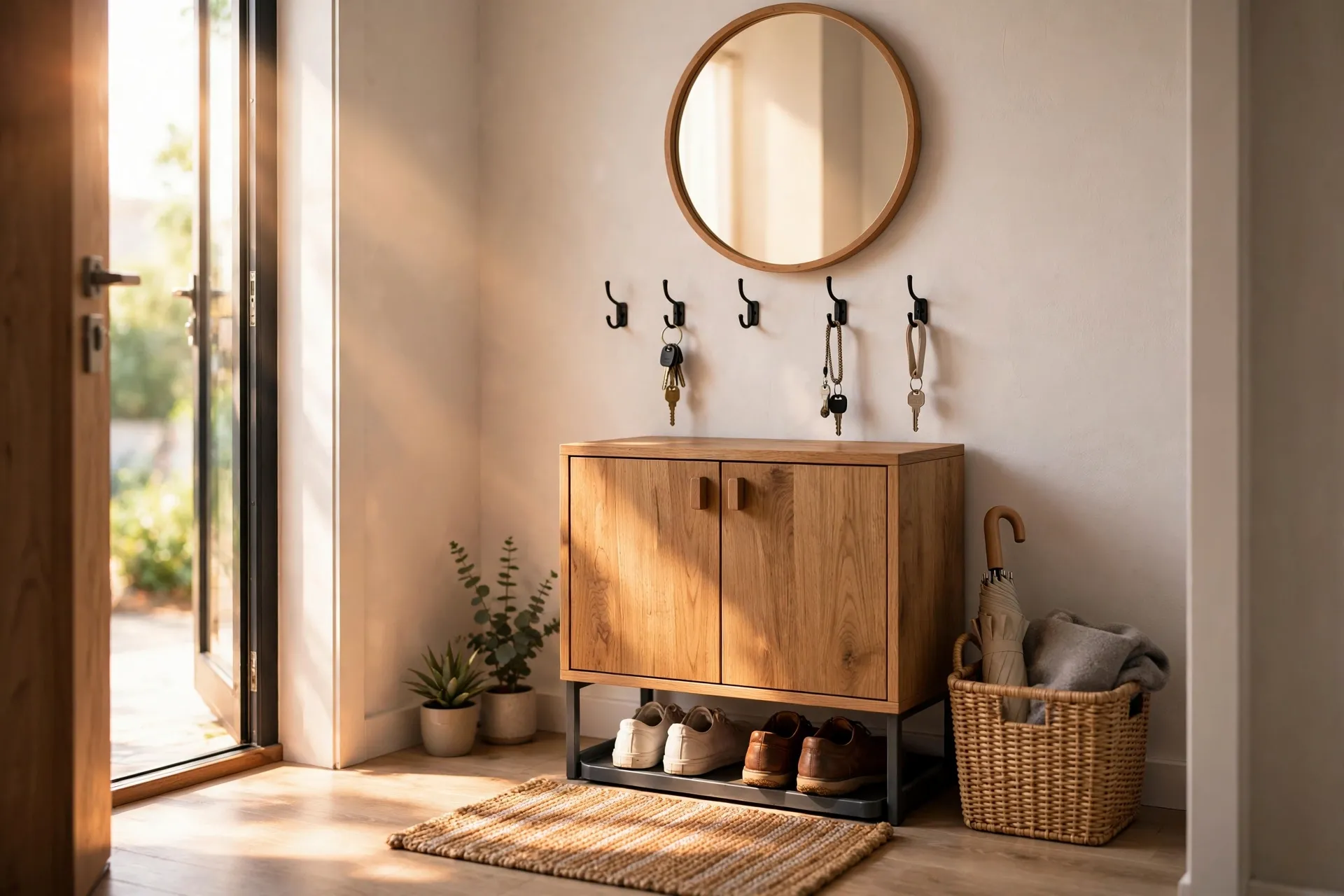
A shallow wall cabinet, 6 to 8 inches deep, hides the clutter that open shelves display: medicine, spare keys, the router, charging cables. Mounted at eye level, it works like a medicine cabinet for the entry. Inside the door, add small hooks or a magnetic strip for keys so the interior stays organized.
The tradeoff is depth: anything deeper than 8 inches starts to feel like a wall protrusion in a narrow entry. Measure the walkway after marking the cabinet’s footprint with tape; you need at least 36 inches of clear passage. Paint it the wall color and it visually disappears while swallowing a surprising amount of stuff.
9. Run a peg rail under a shelf
A peg rail, a board with evenly spaced wooden pegs, under a floating shelf gives you flexible hanging that hooks cannot match. Pegs hold hats, tote bags and headphones, and you can slide items along or add more pegs as needs change. It suits Scandinavian and minimalist entries, and a DIY version costs little more than a pine board and dowels.
Space pegs at least six inches apart so hung items do not overlap into a tangle. The shelf above should be deep enough, 8 inches minimum, to hold a basket or two; a peg rail under a too-narrow shelf looks unfinished. This combination is especially good for kids’ gear because you can mount the whole thing lower, at 48 inches, where small hands reach.
10. Add a narrow ledge just for keys and mail
Sometimes the entry does not need storage; it needs a landing strip. A four-inch-deep ledge, basically a picture ledge repurposed, mounted right by the door at 48 to 54 inches high, catches keys, a wallet and the day’s mail and nothing else. Its narrowness is the point: it cannot become a clutter shelf because nothing fits on it.
Mount it on the wall you face when you walk in, not behind the door swing. Pair it with a small wall-mounted mail sorter or a single tray, and empty the mail weekly. This tiny intervention prevents the entry-table avalanche more effectively than any large organizer, because it was never designed to hold much.
11. Stack crates for freestanding shelving
Wooden crates stacked on their sides make sturdy, characterful entry shelving with zero mounting. Two or three crates hold shoes, bags and baskets, and you can rearrange or take them with you when you move. Sand and seal them, or line them with fabric, so they do not snag clothes or shed splinters.
Crates are bulky for what they hold, so this suits entries with floor space to spare rather than tight hallways. Stack no more than three high without fastening them together; a tall unsecured stack beside a door is a tipping hazard. L-brackets between crates make the tower solid without visible hardware.
12. Wrap shelves around a corner
Corner entries waste their best wall space. L-shaped corner shelves or two short shelves meeting at the corner turn that dead angle into storage for plants, baskets and decor. Corner shelving works best for lighter items and display; save the heavy shoe storage for a sturdier unit.
Measure the corner carefully, since few corners are perfectly square. Adjustable shelf brackets forgive a lot of imperfection. Keep the corner shelves shallower than the main wall shelves, 6 to 8 inches, so the corner does not jut into the walkway. A plant on the corner shelf softens the whole entry.
13. Hang hooks under the lowest shelf
The underside of a shelf is free real estate. Screw-in hooks or adhesive hooks under the lowest entry shelf hold dog leashes, reusable bags, umbrellas and headphones exactly where you grab them. This is a five-minute upgrade to shelves you already have, and it keeps floor-level clutter off the floor.
Do not overload them. Under-shelf hooks suit light, grab-and-go items; a heavy backpack will stress the shelf brackets. If the shelf is a floating shelf with hidden brackets, check its weight rating before adding hanging load underneath. For heavier gear, hooks belong on a dedicated rail mounted into studs.
14. Reserve the top shelf for off-season gear
Every entry accumulates seasonal stuff that is useless nine months a year: heavy scarves in May, sunscreen in January. Designate the highest shelf as the off-season shelf and rotate its contents twice a year. Labeled bins keep it tidy, and the rotation forces a regular declutter of the working shelves below.
This only works if the top shelf is reachable with a small step stool kept nearby, ideally tucked under the bench. If reaching it requires dragging a chair across the apartment, the rotation will not happen and the shelf becomes a junk archive. Be honest about your own habits when assigning shelf heights: daily items at hand height, weekly items at eye level, seasonal items up top.
15. Let shelves work with a hall tree
In entries big enough for a hall tree, shelves and the tree should be planned together, not bought separately. Flank a hall tree with narrow floating shelves for the overflow: extra baskets, a plant, the items that do not fit the tree’s hooks. Or mount a long shelf above the hall tree for the off-season and rarely used items, keeping the tree itself for daily gear.
Keep the composition balanced: a bulky hall tree with one tiny shelf beside it looks accidental. Match wood tones or finishes between the tree and shelves so they read as a set. The styling rules that make an entry console look intentional carry over to the dining room too; see how to style a dining table for the everyday version of the same instincts.
How to Choose Entryway Shelving for Your Space
Start with the wall, not the catalog. Measure the available width, note the door swing arc, light switches and thermostats, and mark the clear walkway you must preserve, 36 inches minimum in a main path. Then list what the entry must hold for your household: two people’s daily gear is a different brief from a family of five plus a dog.
Match the shelving to the load. Daily grab-and-go items need open, reachable storage; occasional items can go high and behind doors; ugly-but-necessary items need closed storage. One open shelf plus one closed cabinet beats three open shelves for most households, because every entry has things nobody wants to look at. Buy the closed storage first if you can only afford one piece.
Entryway Shelving Mistakes to Avoid
The classic error is mounting shelves too high to use. Anything above comfortable reach becomes decoration, and decoration in an entry quickly becomes clutter. Keep daily shelves between 40 and 66 inches. The second error is shelves too deep for the walkway; a 12-inch shelf in a 40-inch hallway leaves no comfortable passing room and gets bumped constantly.
Avoid open shelving for everything. An entry of all open shelves looks like a store display and demands constant tidying. Mix open and closed, and give every shelf a job before you buy it: keys, shoes, bags, off-season. A shelf without a job fills with whatever is nearest, which is the definition of clutter.
Good entryway shelving disappears into routine: keys land in the same tray, coats on the same hooks, shoes in the same cubbies, without thinking. Pick the two or three ideas here that match your wall and your household’s actual habits, mount them at reachable heights, and the entry will start working instead of just existing.
Looking for more ideas? Browse our storage & organization stories.
Save to Pinterest