In this article
- Install Floating Shelves Above the Machines
- Add Closed Cabinets for the Ugly Supplies
- Use a Pegboard for Tools and Small Items
- Build a Folding Station Over Front-Loaders
- Mount a Wall Drying Rack
- Squeeze a Narrow Rolling Cart Between Machines
- Use Corner Shelves in L-Shaped Nooks
- Keep Guest Linens on One Dedicated Shelf
- Pair Shelves with Cabinet Door Organizers
- How to Plan Shelf Heights That Work
- Mistakes to Avoid with Laundry Shelving
- Keeping Small Laundry Shelves Tidy
A small laundry room has one advantage: everything is within reach. The problem is that reach includes the floor, the top of the machines, and every flat surface, because there is nowhere else for things to go. Laundry room shelving fixes that by moving storage up the walls, where the space is free.
The best setups combine two or three types: open shelves for daily supplies, closed storage for the ugly stuff, and one slim solution for the gaps. You do not need a renovation. Most of these ideas install in an afternoon with basic tools.
Install Floating Shelves Above the Machines
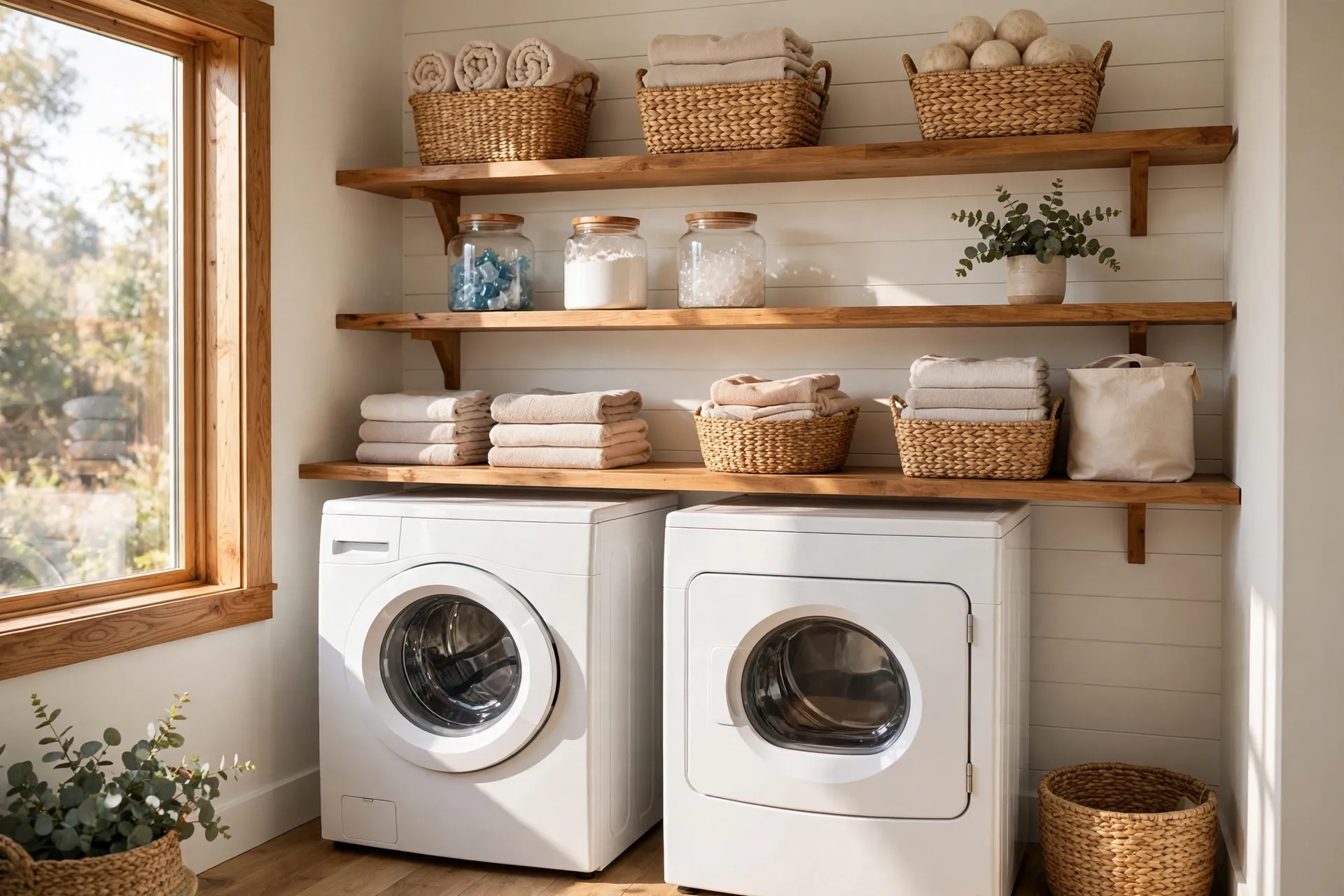
The wall above the washer and dryer is usually empty, and it is the single best shelving spot in the room. Two floating shelves, each 24 to 36 inches wide depending on your machines, hold detergent, stain treatments, and baskets. Mount them 18 to 24 inches above the machine lids so you can still open top-loaders fully.
Use brackets rated for at least 25 pounds per shelf; detergent is heavy. If you are renting, heavy-duty removable strips are not enough for loaded shelves, so look for shelves that mount with a French cleat and two screws, which leaves minimal holes to patch later.
Add Closed Cabinets for the Ugly Supplies
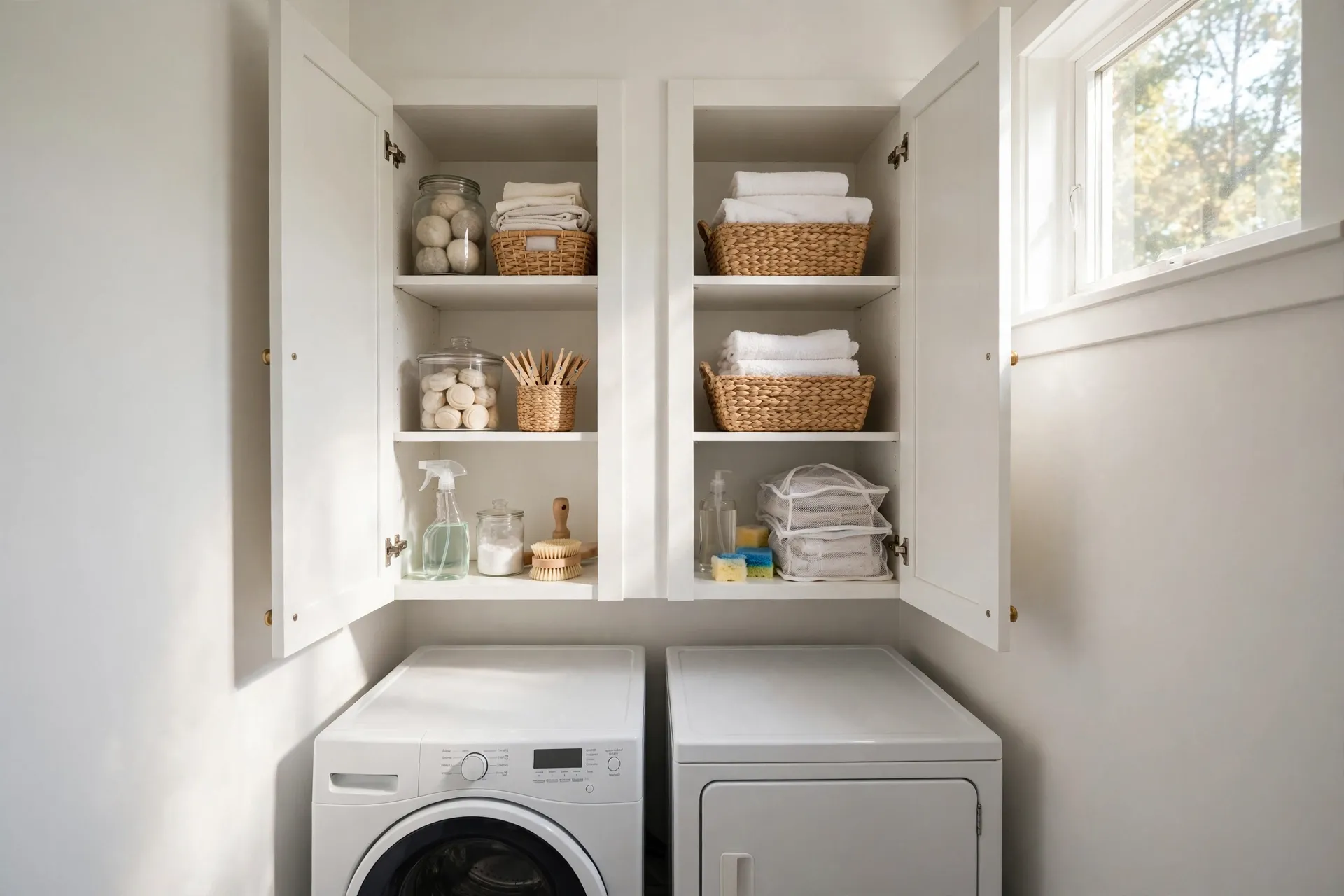
Open shelves look great until they hold bleach bottles and spare parts. One closed cabinet, even a single 24-inch wall cabinet above the shelves, hides everything you do not want to look at. Stock cabinets from a home center cost far less than custom and come in standard widths that fit most laundry walls.
Keep the cabinet shallow, 12 inches deep is plenty, so it does not loom over the machines. If your laundry closet is very narrow, skip the cabinet and use lidded baskets on the top shelf instead; they hide just as well and weigh less.
Use a Pegboard for Tools and Small Items
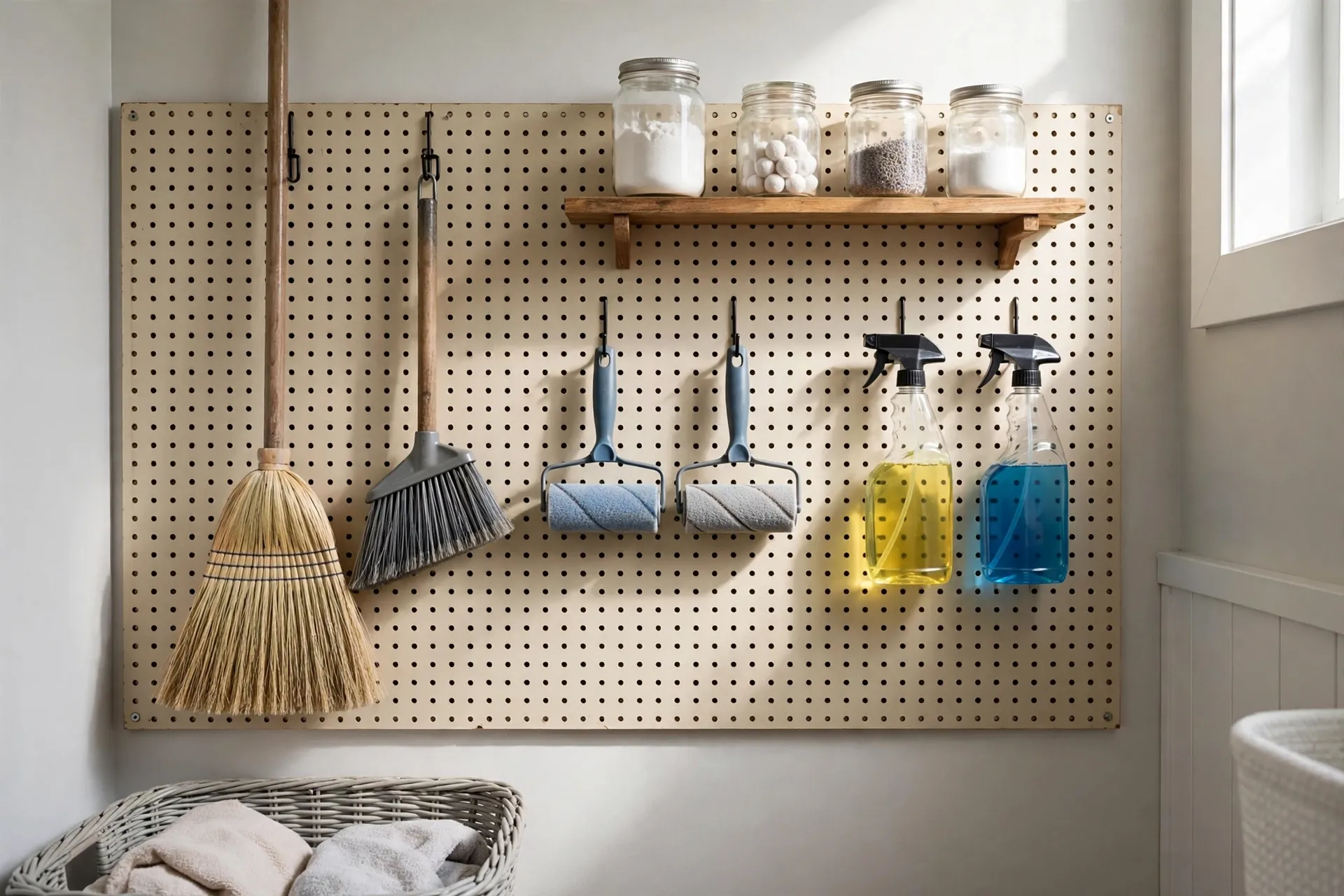
A pegboard panel on a side wall holds the things that never fit on shelves: brooms, lint rollers, spray bottles, and the iron. A 2x4 foot panel with hooks costs under thirty dollars and installs with four screws. Everything hangs visible, so you stop buying duplicates of tools you already own.
Plan the layout on the floor first. Hang the heaviest items lowest and keep daily tools at arm height. In a humid laundry room, choose a metal pegboard or seal a hardboard one; raw hardboard swells and warps.
Build a Folding Station Over Front-Loaders
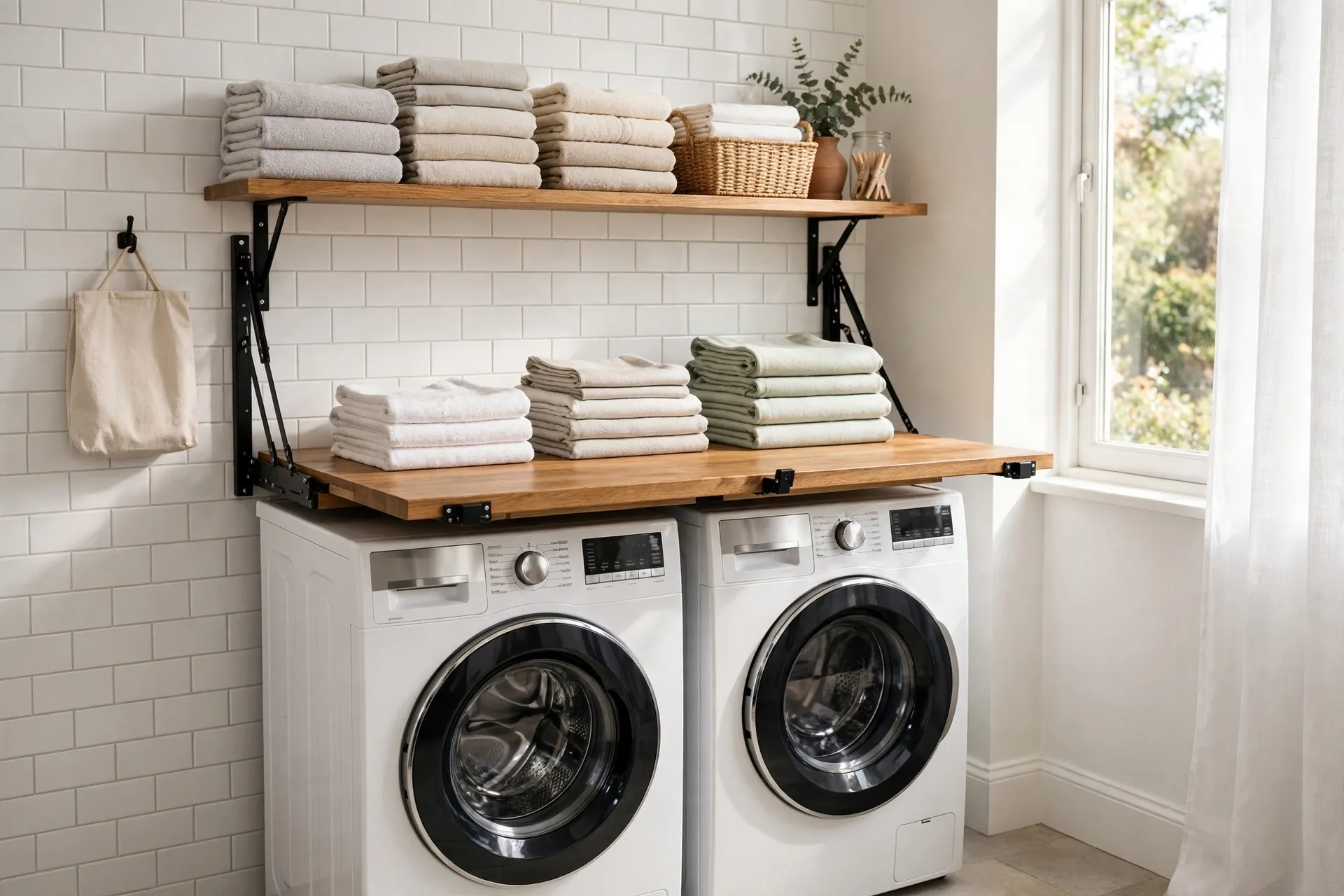
Front-load machines give you a continuous flat top, which is wasted as a shelf. A better move: mount a shelf or a fold-down counter at 36 inches above the floor, spanning both machines, and use it as a dedicated folding surface. Below it, the machine tops stay clear for the current load.
A simple melamine shelf on brackets works, but round the front edge or add edge banding; sharp melamine corners at hip height are unpleasant. Leave a one-inch gap at the wall for the machines’ vibration so the shelf does not rattle.
Mount a Wall Drying Rack
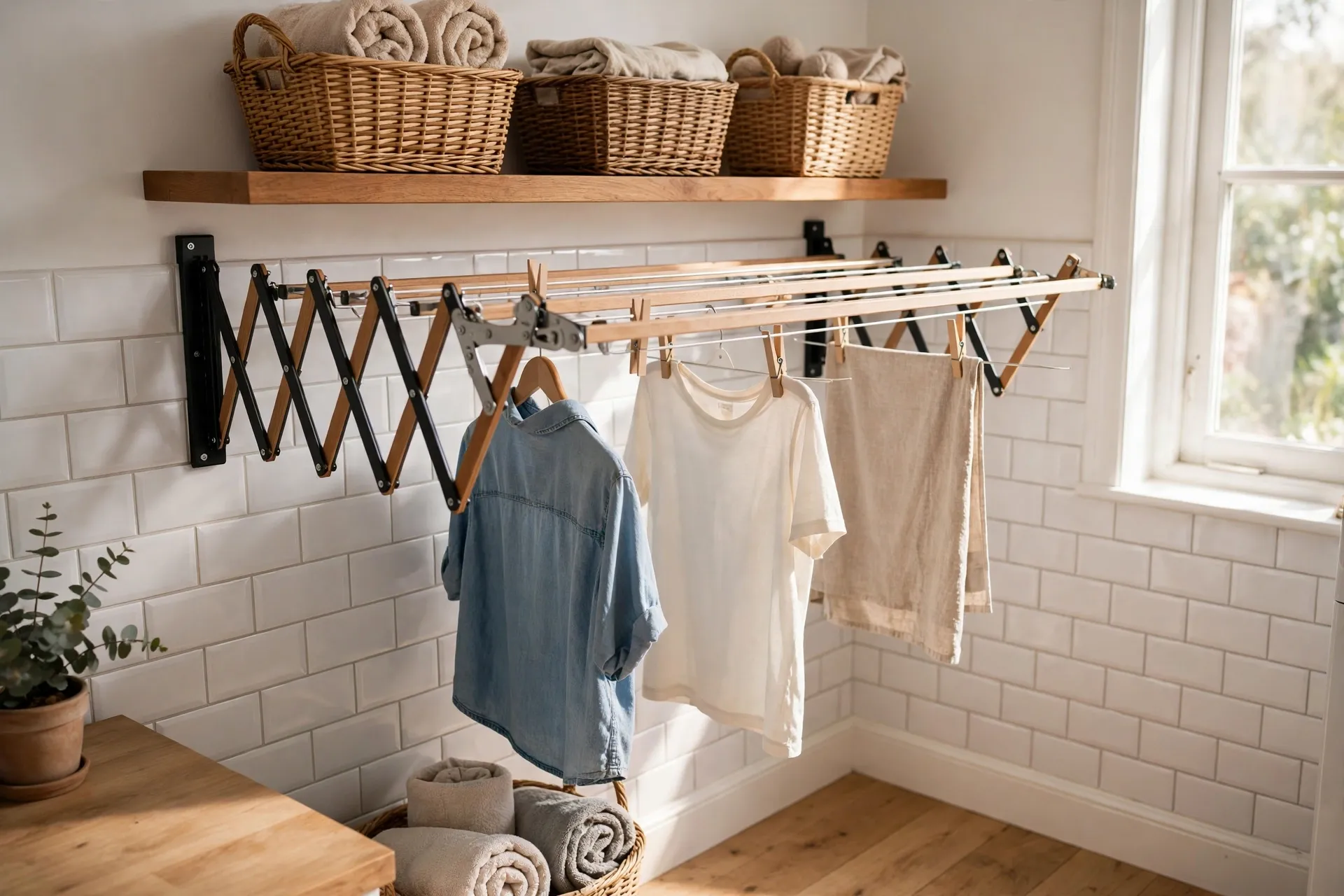
A wall-mounted accordion rack folds flat when not in use and holds a full load of delicates when extended. Mount it on the wall opposite the machines at about 60 inches high so hanging clothes clear the floor. It beats a freestanding rack that eats two square feet permanently.
Do not mount it above the machines where dripping clothes soak the lids, and keep it away from the dryer vent’s heat. In rentals, look for racks that mount with two screws into a stud; the loaded weight needs real support.
Squeeze a Narrow Rolling Cart Between Machines
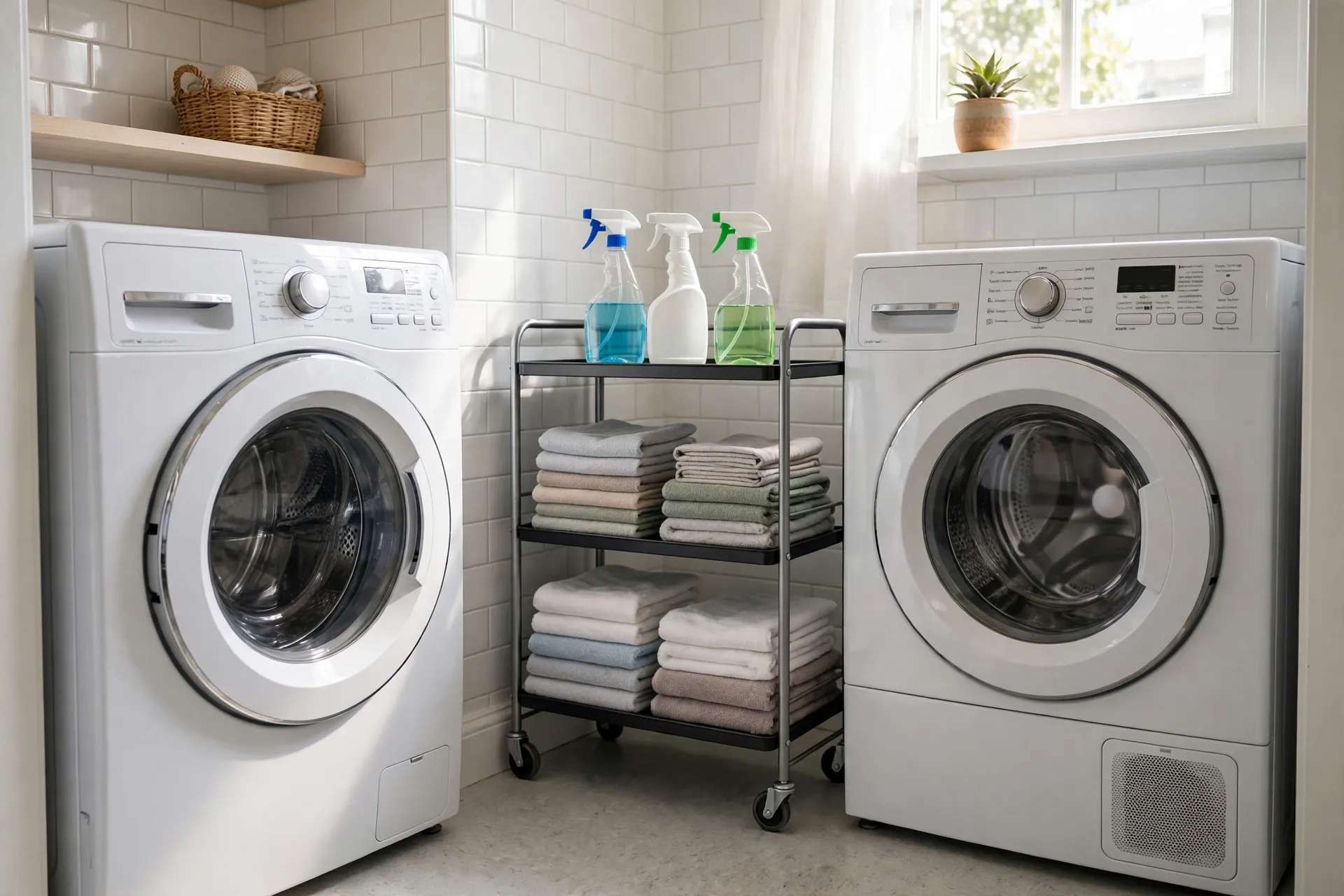
The three to six inch gap between the washer and dryer is not wasted space if you own a slim rolling cart. Three-tier carts in this width hold spray bottles, dryer sheets, and folded cloths, and they roll out for full access. Measure the gap before buying; carts come in 5, 7, and 10 inch widths.
Keep the cart’s contents light on top and heavier below so it does not tip when rolled out. This is also the best spot for the stain treatment kit, since it lives right where the sorting happens.
Use Corner Shelves in L-Shaped Nooks
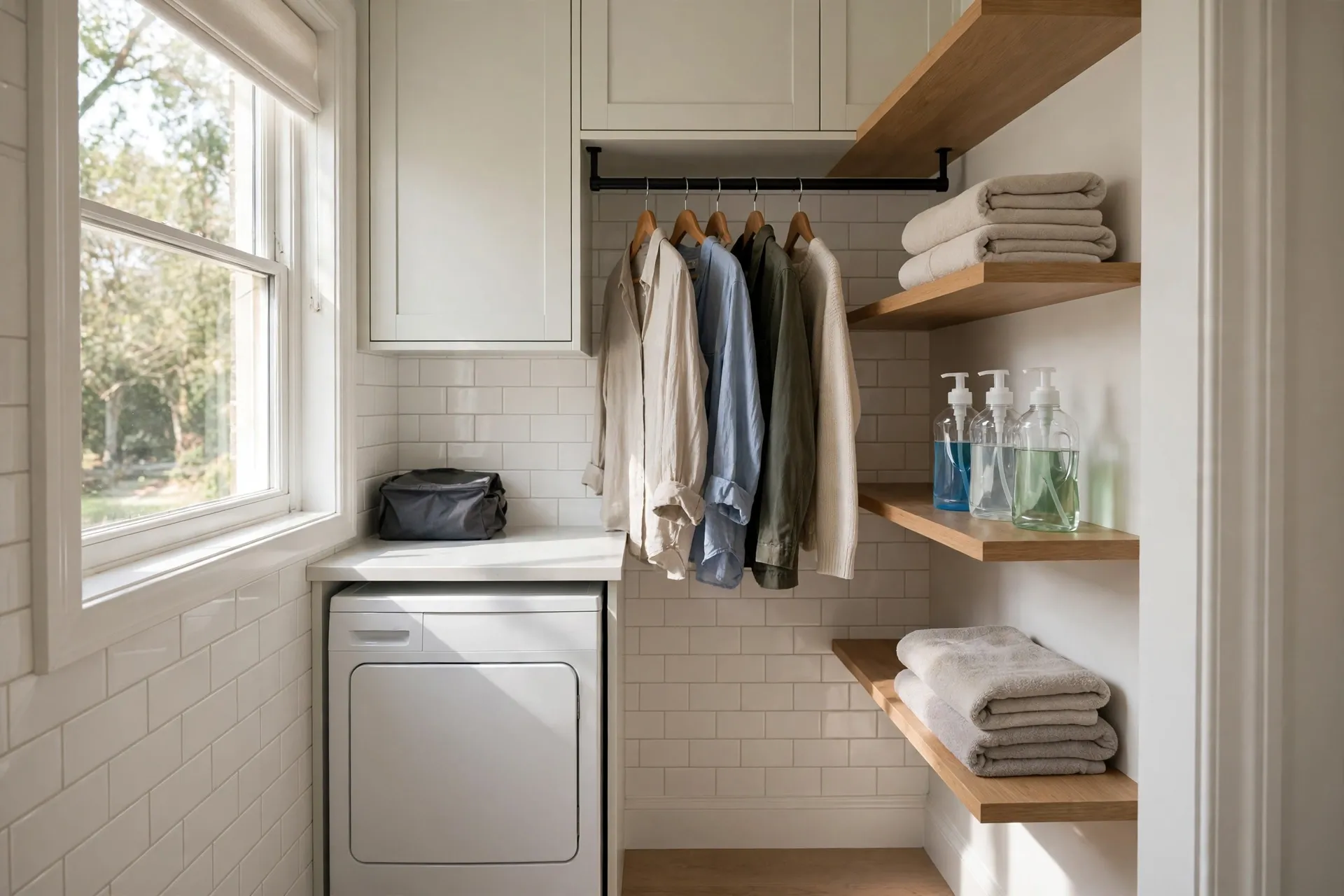
If your laundry nook turns a corner, standard shelves leave the corner dead. Corner-mounted triangular shelves or a small corner tower use it. Two or three corner shelves hold folded towels, spare hangers, and the ironing supplies that otherwise migrate to the dining table.
Corner shelves need solid mounting on both walls; a shelf anchored to drywall on one side only will sag. If the corner is truly awkward, a tall narrow bookcase turned sideways into the corner works as a freestanding alternative.
Keep Guest Linens on One Dedicated Shelf
If guests stay over, the laundry room often becomes the linen staging area by default. Make it deliberate: one shelf or basket holds a full set of guest sheets, two towels, and a spare blanket. When visitors come, you grab one basket instead of hunting through closets.
For the rest of the guest setup, our guide on how to organize a guest room covers keeping the room itself ready. The laundry shelf handles the textiles; the guide handles everything else.
Pair Shelves with Cabinet Door Organizers
The insides of laundry cabinet doors are prime real estate for slim items: dryer sheets, stain sticks, and measuring cups. A wire rack that hooks over the door needs no screws and adds a full extra shelf of storage. The same organizers work in kitchens, which our cabinet door storage ideas cover in detail.
Check the door’s closing clearance before buying; a loaded rack that stops the door from shutting is worse than no rack. In humid rooms, choose coated wire over raw steel to slow rust.
How to Plan Shelf Heights That Work
Measure twice, mount once. Daily supplies belong between 40 and 65 inches, the comfortable reach zone. Bulk refills and seasonal items go above 65 inches. Anything below 30 inches in front of machines becomes a shin hazard, so keep low storage to the side walls.
Write the measurements on painter’s tape stuck to the wall and live with them for a day before drilling. Open the machine lids, swing the doors, and pull out the lint trap with the tape in place. Adjusting tape is free; patching holes is not.
Mistakes to Avoid with Laundry Shelving
The classic error is mounting shelves too high to reach comfortably, which turns them into decoration. Another is overloading: a shelf sagging under detergent bottles is a collapse waiting to happen, so respect the bracket ratings and distribute weight.
Do not block the dryer vent, the water shutoffs, or the electrical panel with shelving. Service access matters, and a shelf you have to remove for a repair is a shelf in the wrong place. For the rest of the house, the same vertical thinking applies; see our best storage ideas for small rooms.
Keeping Small Laundry Shelves Tidy
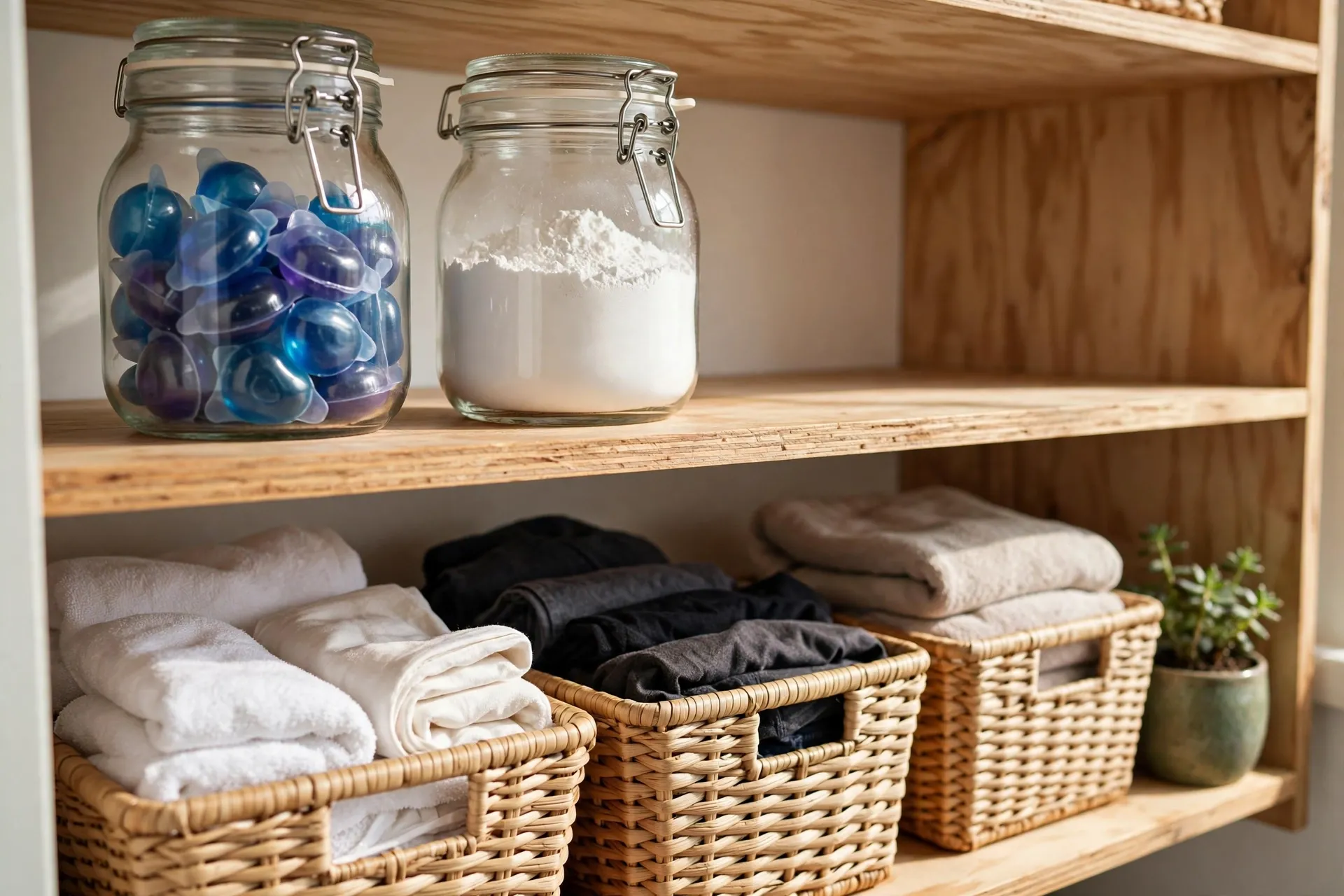
Open shelves stay tidy only if everything has a container. Baskets for categories, jars for pourables, and a small tray for the daily-use items keep the shelves looking intentional instead of cluttered. Decant detergent into a nice dispenser; the original jug is the fastest way to make shelves look messy.
Do a two-minute reset when you move laundry to the dryer: put caps back on, return the stain stick, and fold the cloths. Shelves that get a daily reset never need a weekend overhaul.
Looking for more ideas? Browse our storage & organization stories.
Save to Pinterest