In this article
- 1. Mount a spice rack on a pantry door
- 2. Add an under-sink door organizer
- 3. Build a pantry door can rack
- 4. Store pot lids on the door
- 5. Organize the bathroom vanity door
- 6. Hang cutting boards and measuring tools
- 7. Create a wrap and foil station
- 8. Mount a paper towel holder inside
- 9. Store cleaning caddies on a closet door
- 10. Add a door-mounted knife strip (with caution)
- 11. Corral plastic containers and lids
- 12. Hang a small trash or compost bin
- 13. Store baking sheets vertically on the door
- 14. Mount a spice rack in the bathroom for small bottles
- 15. Use the laundry room cabinet doors too
- How to Choose Between Screw-Mounted and Over-Door
- Mistakes to Avoid with Door Storage
- Furnishing Small Rooms to Match
Every cabinet door has an inside face doing nothing. Mount a rack there and you gain a shelf of storage without losing a single inch of cabinet interior, without drilling into walls, and usually without any tools beyond a screwdriver. These cabinet door storage ideas work in kitchens, pantries, bathrooms, and laundry rooms, and most of them are renter-friendly.
Before buying anything, measure the door’s inside dimensions and check the closing clearance: the depth available between the door’s inner face and the cabinet frame. Most organizers need two to four inches. Close the door on a stack of books of that depth to test before you order.
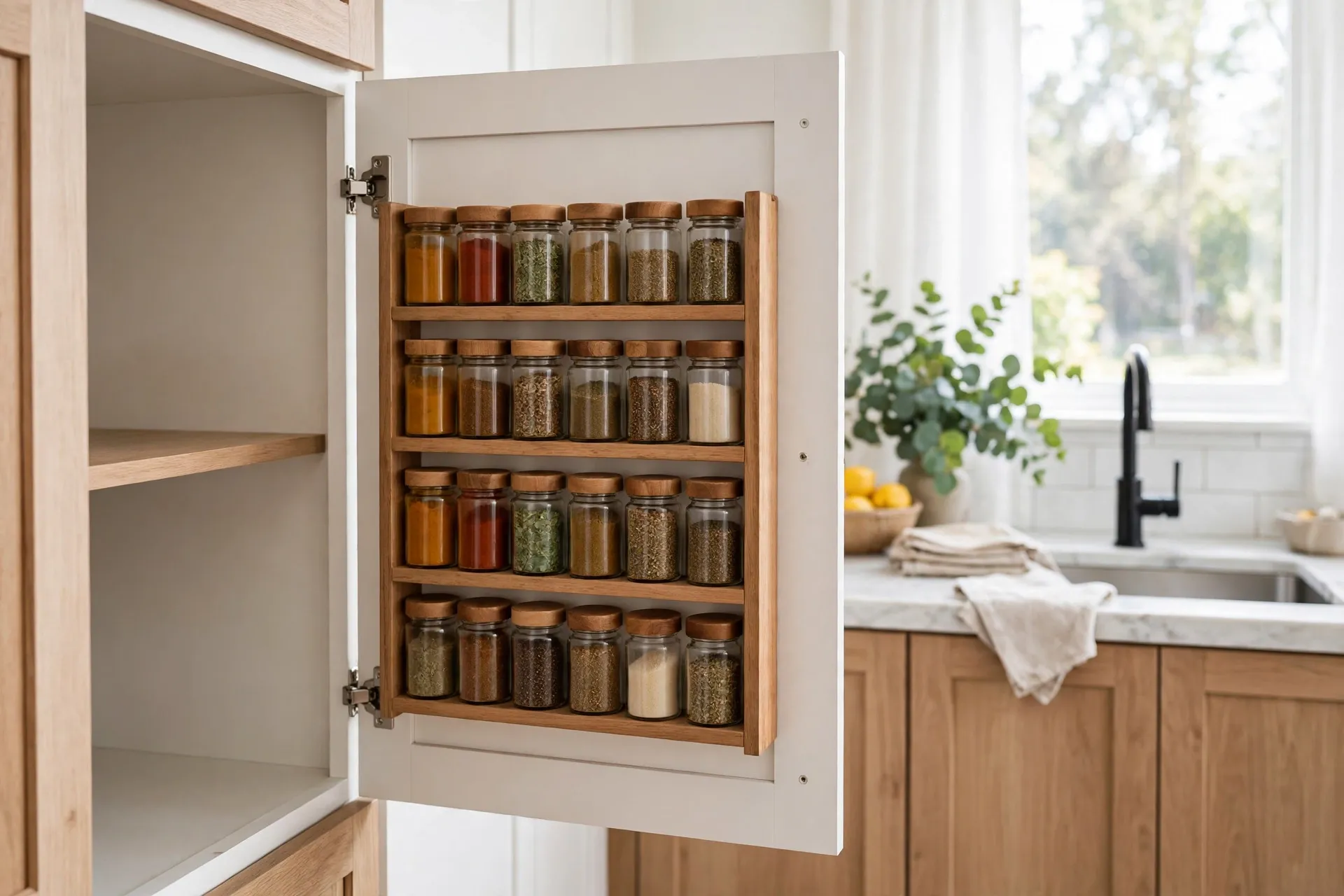
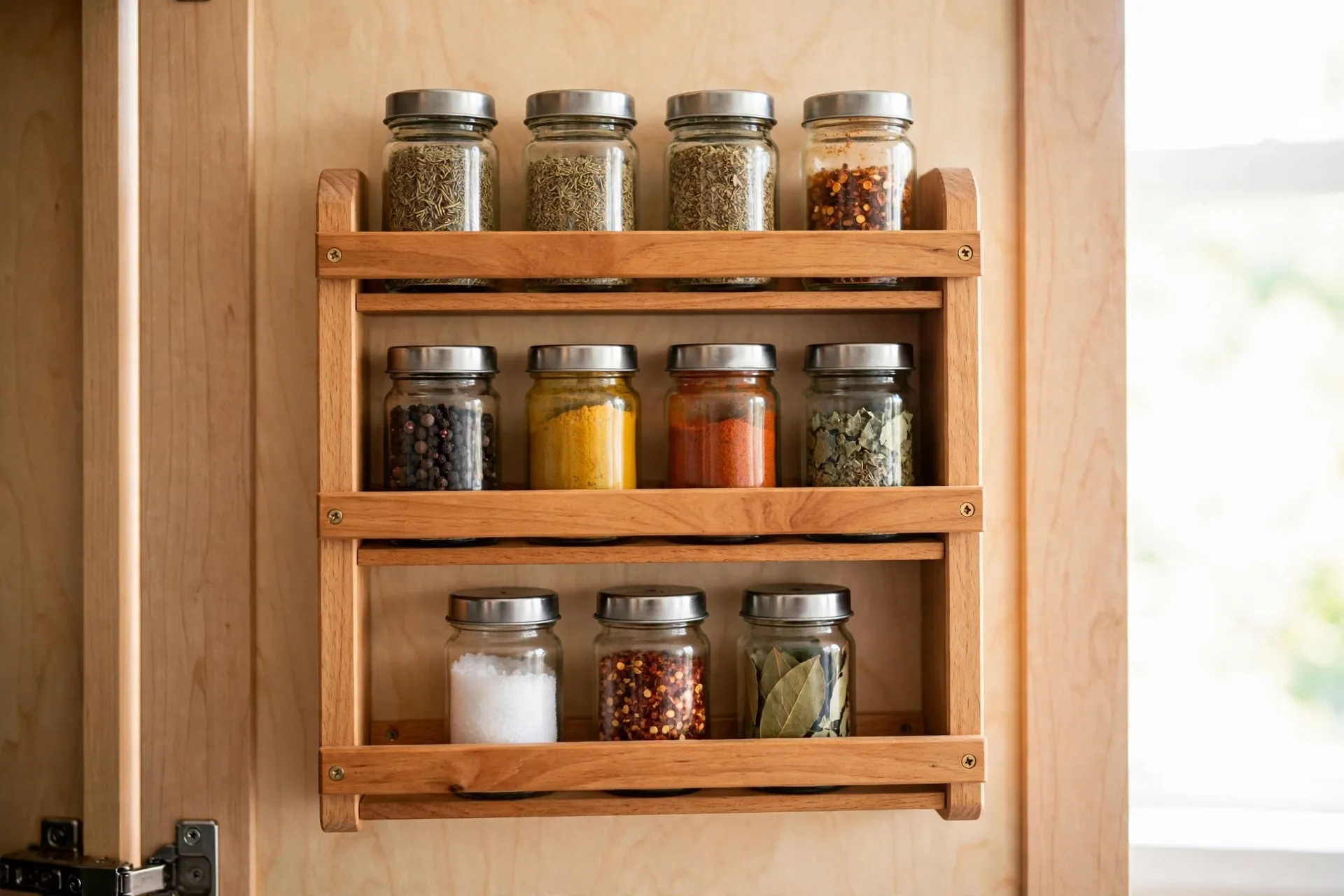
1. Mount a spice rack on a pantry door
Spices are the classic door-storage win because the jars are light, uniform, and used daily. A three-tier rack on the inside of a pantry or upper cabinet door holds twenty to thirty jars at eye level. You stop digging through a deep cabinet and stop buying duplicates of cumin.
Choose a rack with a front rail on each tier; doors swing and jars slide. If your doors are narrow, two single-tier racks stacked vertically work better than one wide one. Keep the heaviest jars on the lowest tier to protect the hinges.
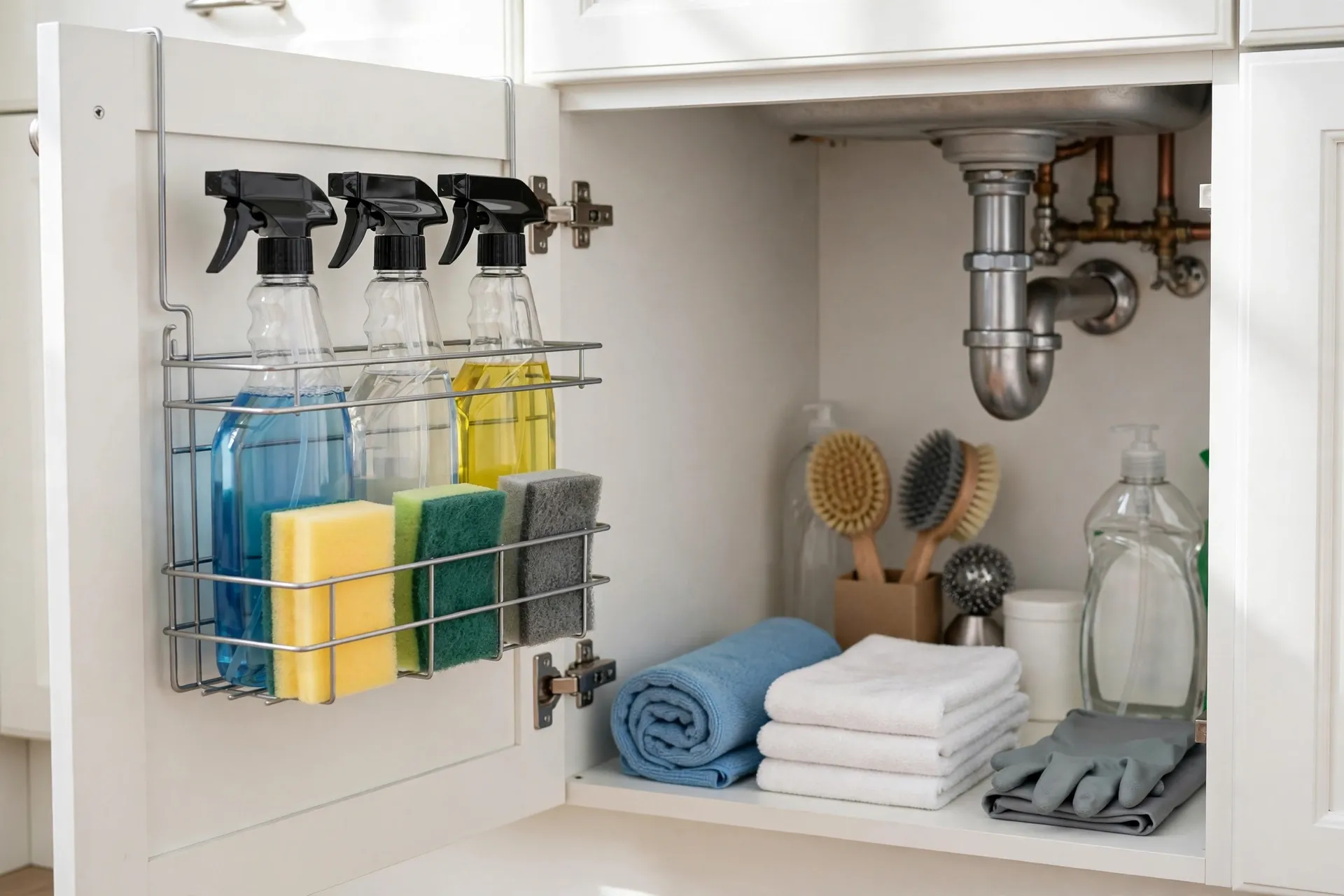
2. Add an under-sink door organizer
The cabinet under the sink is dark, damp, and full of pipes, which makes its door the best storage surface in it. A wire rack that hooks over the door holds spray bottles, sponges, and gloves where you can actually see them. No more kneeling and reaching into the dark.
Pick a coated-wire rack to resist rust in the humidity. Leave clearance around the pipes and the garbage disposal switch; the rack should not press against plumbing. This is also the right spot for the trash bags, hung on a small hook at the door’s top.
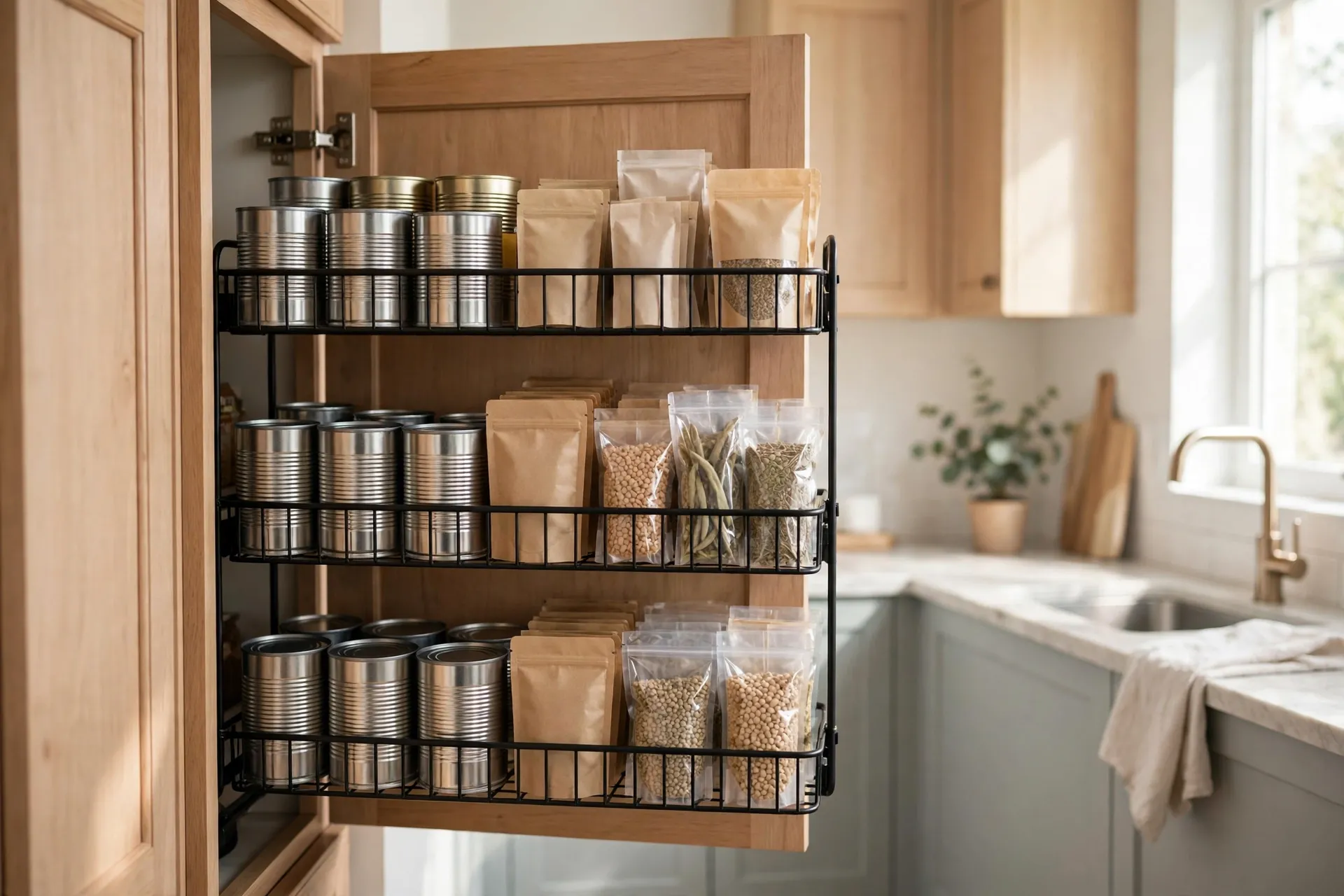
3. Build a pantry door can rack
Canned goods are heavy, so a pantry door rack needs solid mounting, but the payoff is huge: two dozen cans visible at a glance instead of stacked three deep on a shelf. Use a rack rated for the weight and mount it with screws into the door, not adhesive, for anything holding cans.
Organize cans by category and face the labels out. The visibility is the point; a door rack you still have to dig through has failed. Check the door hinges after the first month of loaded use and tighten if they have loosened.
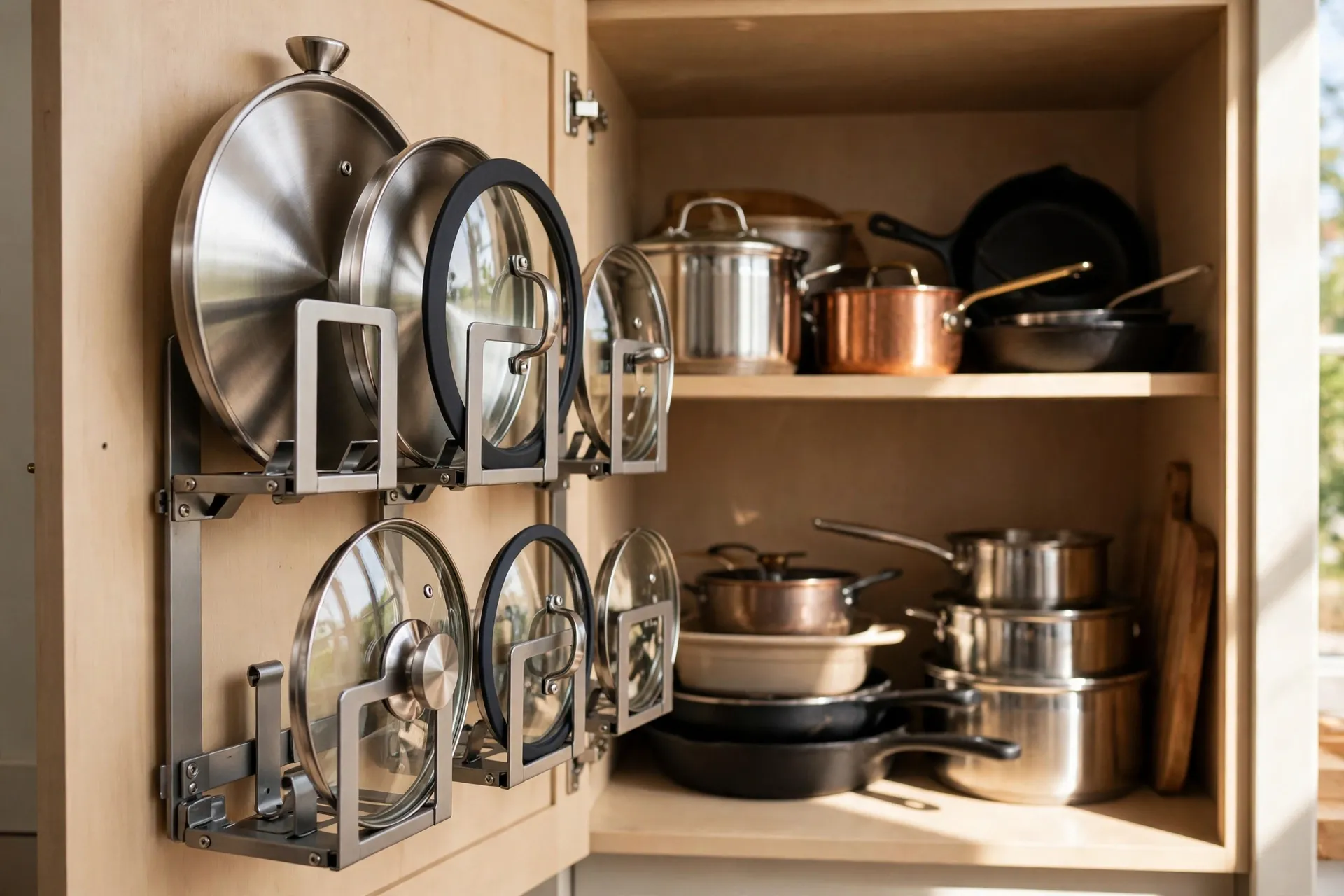
4. Store pot lids on the door
Pot lids are awkward everywhere: they do not stack, they slide, and they eat cabinet space. Lid holders mounted on the inside of a deep cabinet door keep them upright, visible, and out of the way. Measure your largest lid’s diameter before buying; holders come in fixed sizes.
Mount the holders low on the door so the lids’ weight sits near the hinges. If you have more lids than door space, keep the everyday two on the door and store the rest with their pots. In a studio where the kitchen is the whole apartment, every door like this counts double; if you are weighing layouts, our studio vs 1-bedroom comparison covers the storage tradeoffs.
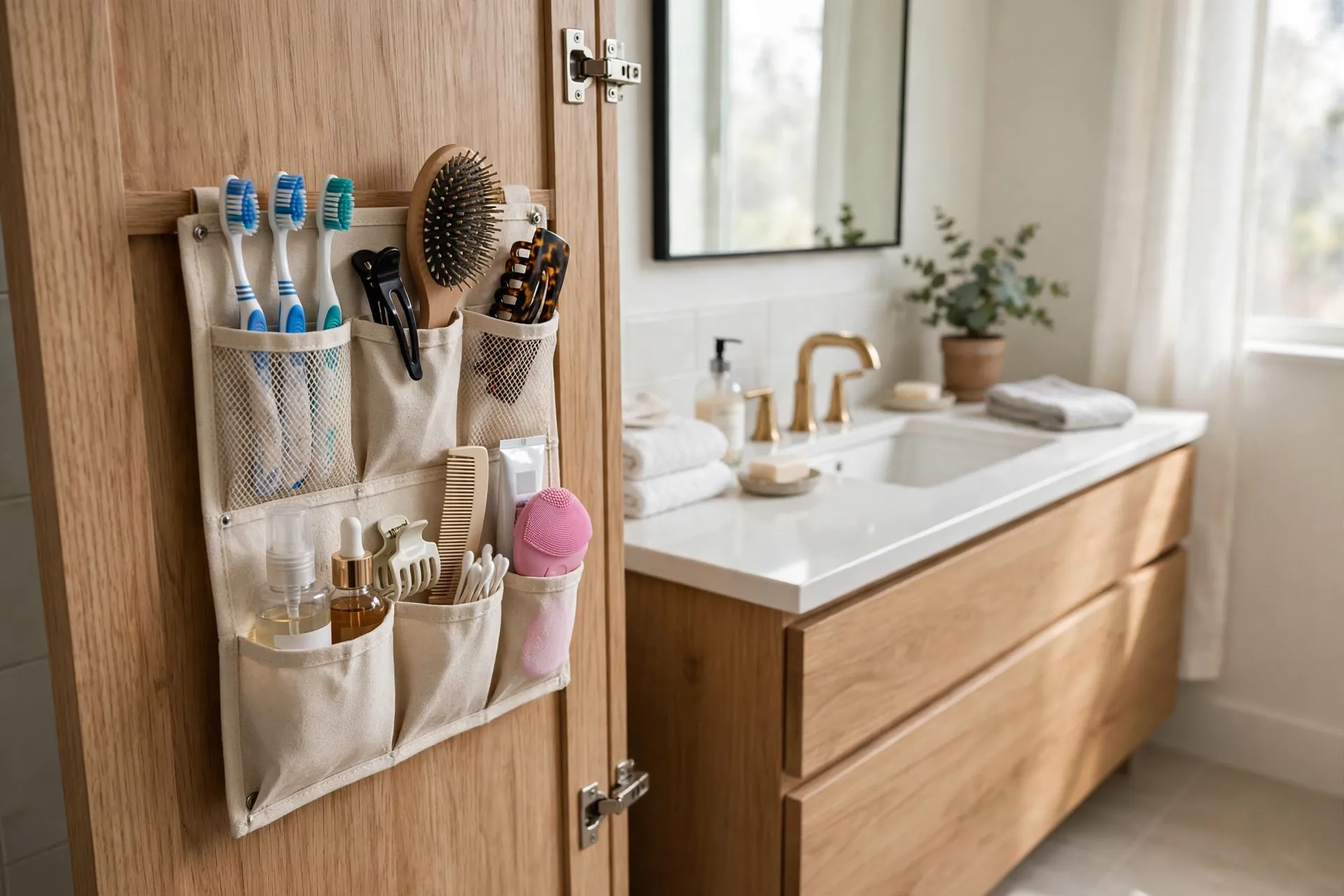
5. Organize the bathroom vanity door
The inside of a bathroom vanity door is perfect for the small things that clutter the counter: toothbrushes, hair tools, and daily toiletries. A narrow mounted organizer or a set of adhesive cups keeps them off the counter and behind a closed door.
Use rust-proof materials; bathrooms are humid and raw metal corrodes fast. Keep electrical styling tools unplugged when stored on the door, and never store anything that could leak onto the door’s finish.
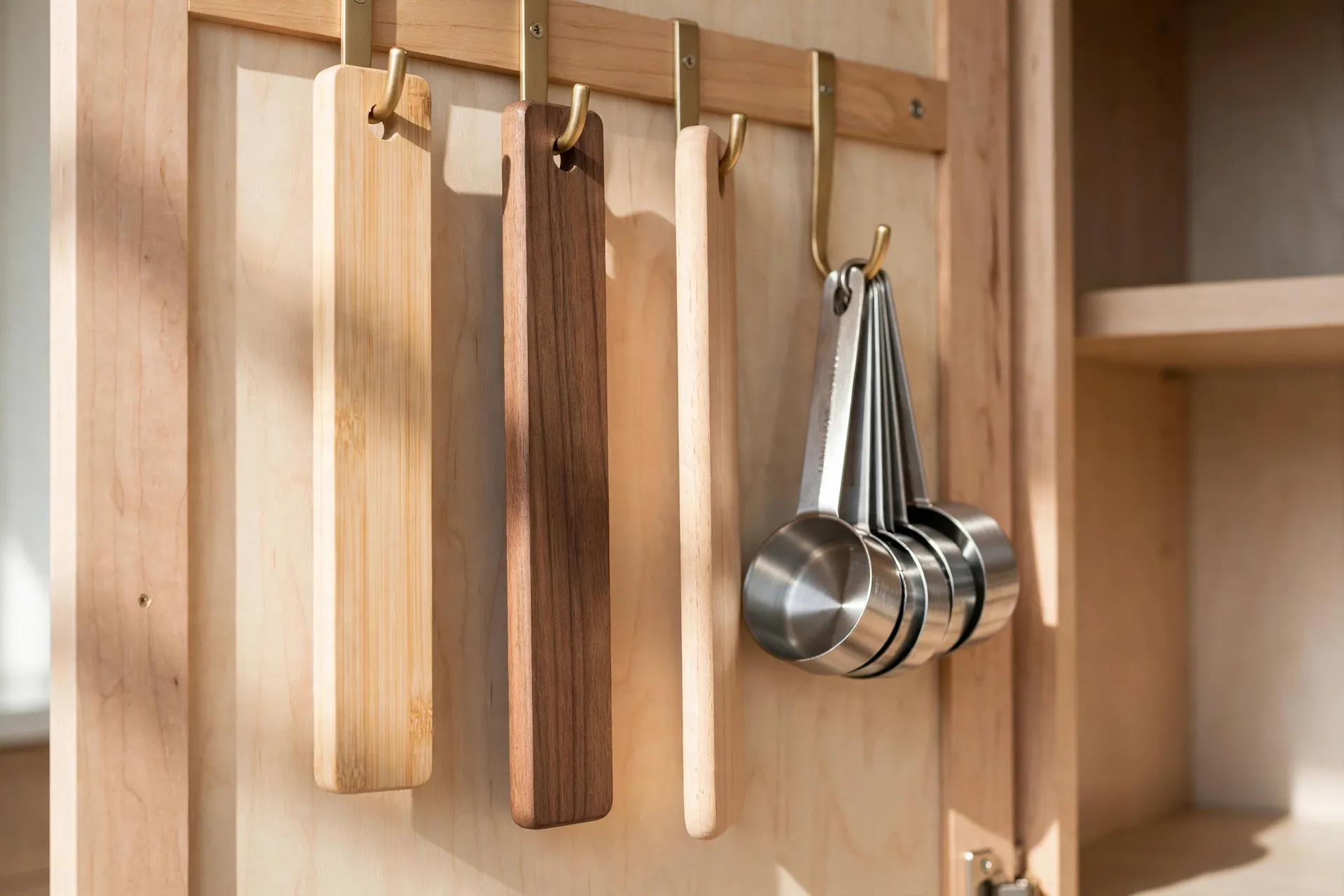
6. Hang cutting boards and measuring tools
Slim cutting boards, measuring cup sets, and trivets hang beautifully on door-mounted hooks. They are flat, light, and used often enough to deserve prime placement. Two or three sturdy hooks on the inside of the cabinet nearest the prep area put them within arm’s reach.
Keep the hooks’ weight rating honest; a thick wooden board is heavier than it looks. Space hooks so boards do not bang together when the door closes, which chips edges over time.
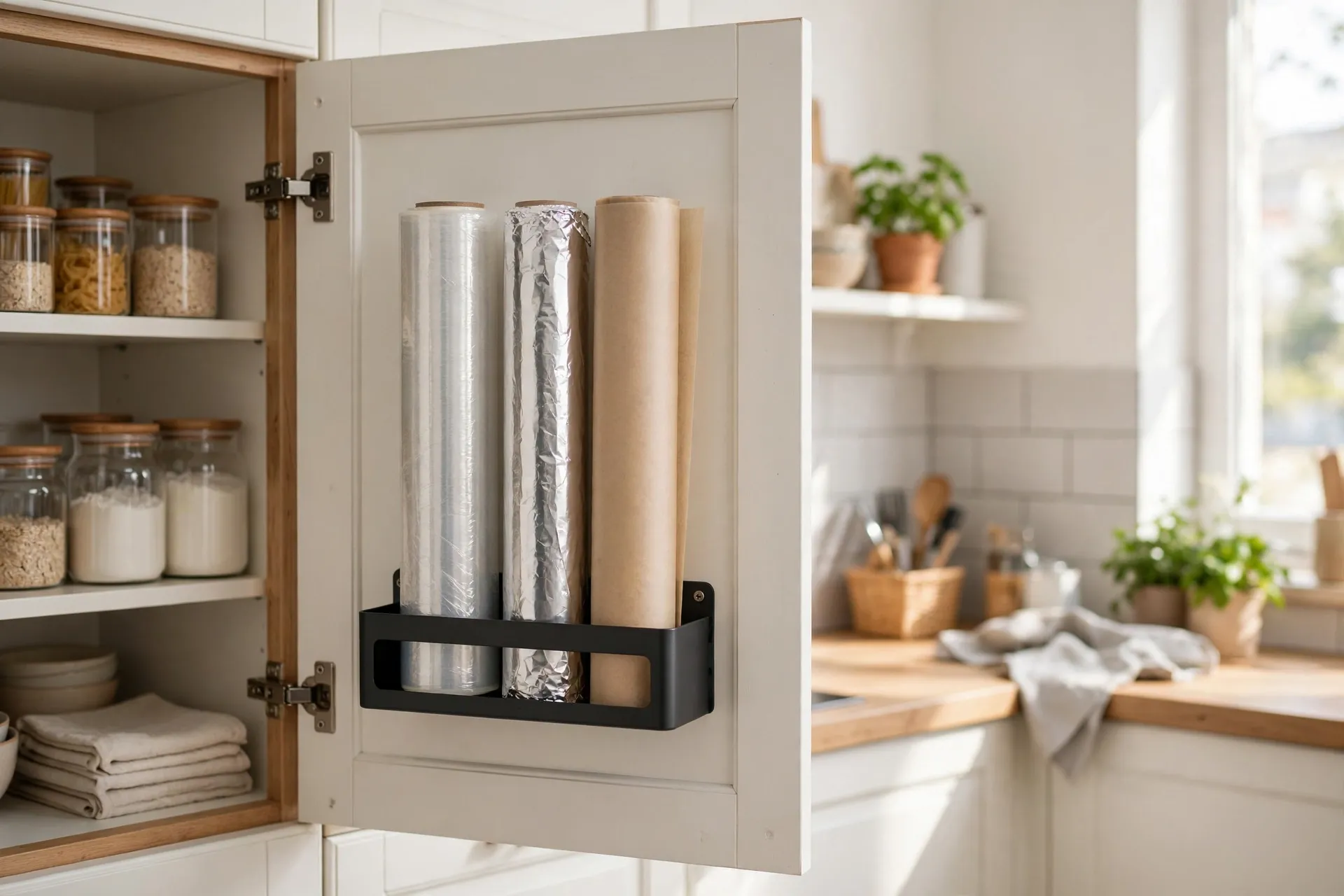
7. Create a wrap and foil station
Cling wrap, foil, and parchment boxes are long, light, and annoying on shelves. A door-mounted dispenser or a simple pair of brackets holds them horizontally on the inside of the cabinet nearest the prep zone. Pull, tear, done, without opening a drawer.
Mount it at a height where you can tear with one hand while holding food with the other. If the boxes slide in their brackets, a strip of grip liner underneath stops the drift.
8. Mount a paper towel holder inside
A paper towel holder on the inside of the under-sink door keeps the roll accessible and invisible. It is the best placement in a small kitchen: no counter space used, no wall holes, and the roll is right where the messes happen.
Use a holder with a tension arm so the roll does not unravel when the door swings. Keep it clear of the pipes and the cleaning supplies on the same door; a damp paper towel roll is useless.
9. Store cleaning caddies on a closet door
If your cleaning supplies live in a hall or utility closet, the closet door’s inside face holds the caddy, the duster, and the spray bottles. A couple of broad hooks carry a full caddy, keeping the closet floor clear for the vacuum and mop.
This works best on a solid door; hollow-core doors need anchors rated for the weight, and a loaded caddy is heavier than it looks. Check the door’s swing clearance so the caddy does not hit the frame.
10. Add a door-mounted knife strip (with caution)
A magnetic knife strip on the inside of a cabinet door frees a countertop knife block and keeps blades away from drawer rummaging. This only suits households without small children and doors that close securely; a knife strip on a door that swings open freely is a hazard.
Mount it high on the door, handles down, and test the magnet’s hold with your heaviest knife before trusting it. If the door does not latch firmly, skip this idea entirely.
11. Corral plastic containers and lids
The plastic container cabinet is a universal mess. A door-mounted rack sized for lids, paired with nested containers on the shelf, ends the avalanche. Lid racks with adjustable dividers fit the odd sizes that never match.
Purge first: recycle anything without a matching lid and anything stained or warped. A door rack organizes what remains; it cannot fix a collection three times bigger than the cabinet.
12. Hang a small trash or compost bin
A small bin hung on the inside of the under-sink door collects vegetable scraps or trash without taking floor space. Look for bins designed for door mounting with a secure hook; a regular bin will slide off.
Empty it often; a hidden bin gets forgotten and then it is a smell problem. Line it with compostable bags if your area collects food waste, and wipe the door area weekly.
13. Store baking sheets vertically on the door
Baking sheets and cooling racks store best vertically, and a door-mounted file-style organizer does exactly that. It beats stacking them flat, where you always need the bottom one. Two vertical dividers on a deep cabinet door hold a full set.
Measure your largest sheet pan; half-sheet pans need about 18 inches of vertical clearance. Keep the organizer near the oven for the shortest carry with hot pans.
14. Mount a spice rack in the bathroom for small bottles
The same tiered racks that hold kitchen spices hold nail polish, essential oils, and small toiletry bottles in the bathroom. Mount one inside a linen cabinet door or on the vanity door’s upper section, away from direct shower spray.
Decant nothing; keep original bottles with their labels. The rack’s job is visibility, and labels are part of that. Wipe the tiers monthly; bathroom humidity leaves a film on everything.
15. Use the laundry room cabinet doors too
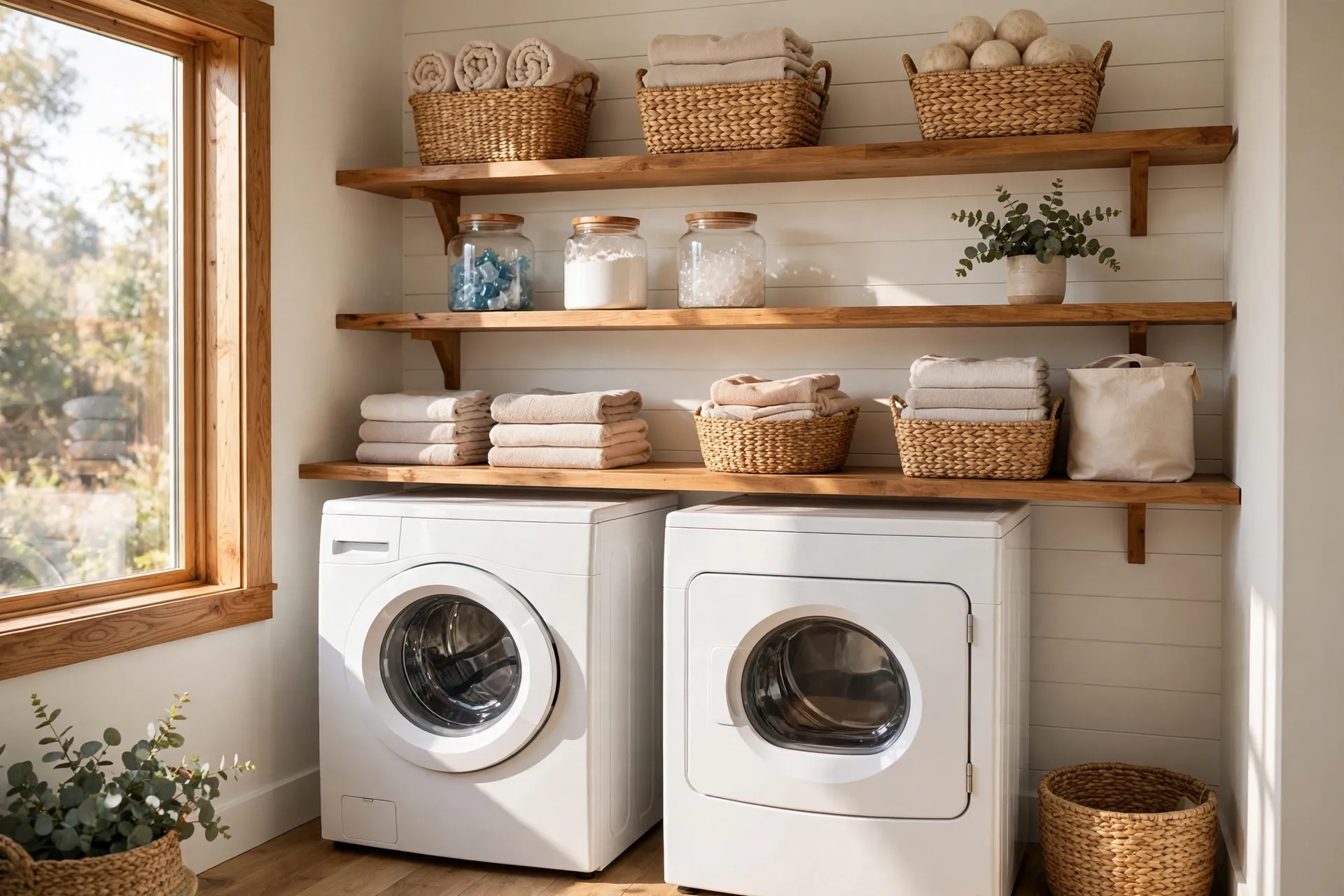
Laundry cabinets have doors with the same unused inner faces. A wire rack on the inside holds dryer sheets, stain sticks, and measuring cups right where the sorting happens. It pairs naturally with wall shelving; our laundry room shelving ideas cover the full setup.
The same renter-friendly approach, hooks over the door, no screws, works in every room. Once you start seeing door backs as storage, you will find them everywhere.
How to Choose Between Screw-Mounted and Over-Door
Over-door hooks and racks need no tools and leave no marks, which makes them the renter default. Their weakness is weight capacity and door clearance; thick doors or tight frames rule them out. Test with the actual product if possible, because published clearance numbers are optimistic.
Screw-mounted organizers hold more and sit flusher, at the cost of small holes. In your own home, screws are almost always the better choice for anything heavy. Fill and touch up the holes when you move; a dab of wood filler makes them disappear.
Mistakes to Avoid with Door Storage
Overloading is the big one. A door carrying twenty pounds of cans will sag on its hinges within months, and then it does not close properly. Respect weight ratings and keep heavy items low and near the hinges.
The other mistake is blocking the cabinet’s contents. A door rack so deep you cannot reach past it into the cabinet has traded one problem for another. Measure the clearance with the rack loaded, not empty, because contents add depth.
Furnishing Small Rooms to Match
Good storage only goes so far if the room’s furniture fights it. The same low-impact, renter-friendly thinking applies to furnishing spare rooms; our guide on how to choose furniture for a guest room shows how to pick pieces that work with your storage instead of against it.
Looking for more ideas? Browse our kitchen & bathroom stories.
Save to Pinterest