In this article
- How to plan a narrow entryway layout
- 1. Choose a shallow shoe cabinet
- 2. Mount hooks at a usable height
- 3. Swap a deep console for a narrow shelf
- 4. Add a mirror where it earns its place
- 5. Choose a runner that stays put
- 6. Use vertical storage with restraint
- 7. Pair hooks with one compact shelf
- 8. Give keys a tiny, reliable drop zone
- 9. Improve lighting without crowding the floor
- 10. Pick furniture that looks and feels light
- 11. Add greenery on a small scale
- 12. Stop shoes accumulating by the door
- 13. Keep the styling simple and purposeful
- What furniture to avoid in a narrow entrance
- Renter-friendly entryway ideas
An entryway has to do several jobs in a space you mostly walk through. It catches shoes, coats, keys and bags, yet it also needs to let people enter, turn and pass without dodging furniture. The best narrow entryway ideas begin with that movement. Choose shallow storage and wall space for the things you use every day, then add only a few details that make arriving home feel pleasant. You do not need a grand foyer. A clear route, a reliable place to drop your keys and a manageable shoe system can make even a short apartment hallway feel finished.
How to plan a narrow entryway layout
Open the entrance and nearby interior doors fully before placing anything. Measure the wall length, any recess and the depth available once doors, bags and people are in the space. Walk the route while carrying shopping or a laundry basket; that is a better test than looking at an empty floor plan. Clearance needs vary by home and local accessibility or building requirements, so check those where relevant rather than relying on a universal hallway number. Put your daily drop zone nearest the door, keep bulky storage outside the main path, and leave access to switches, vents and utility panels.
1. Choose a shallow shoe cabinet
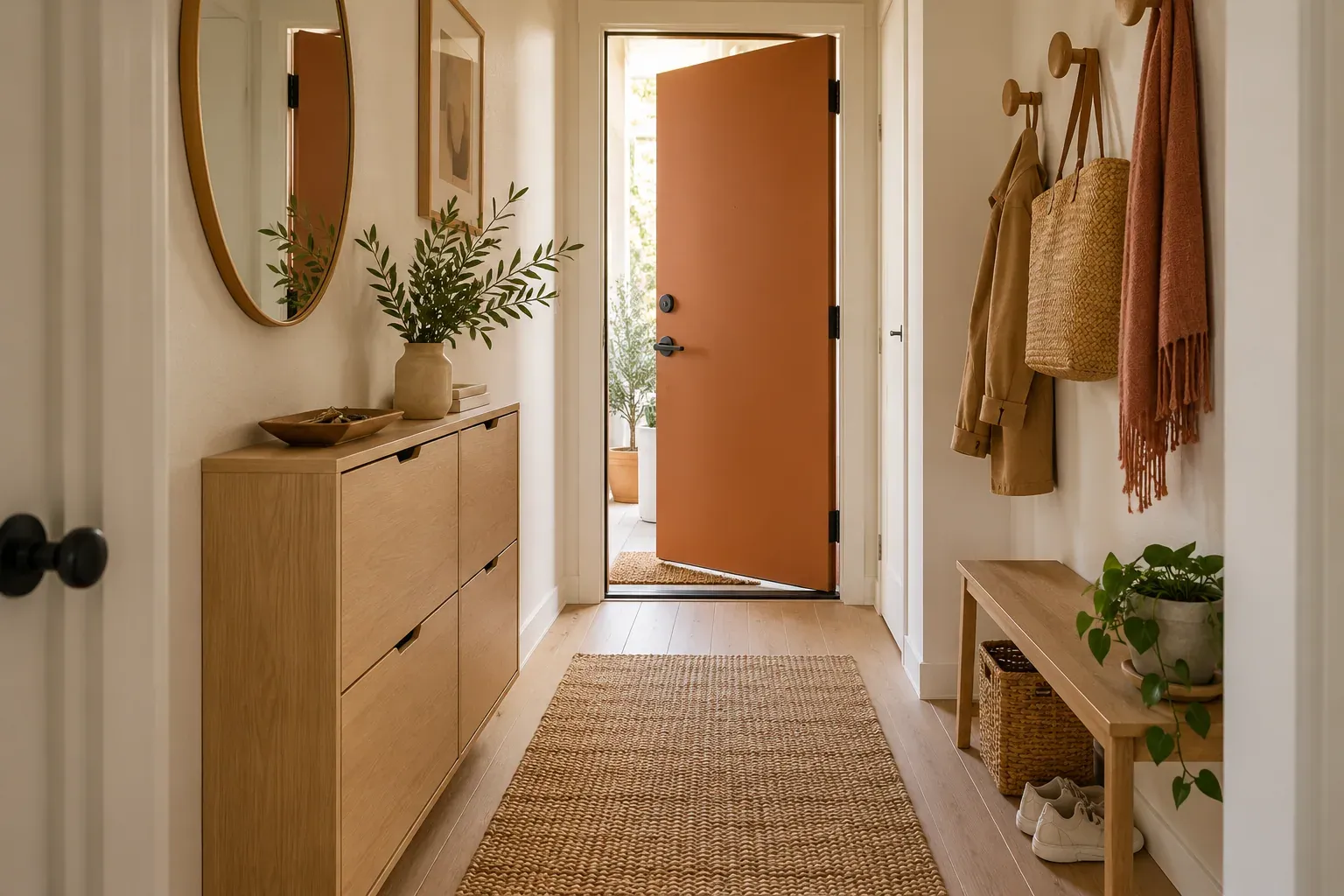
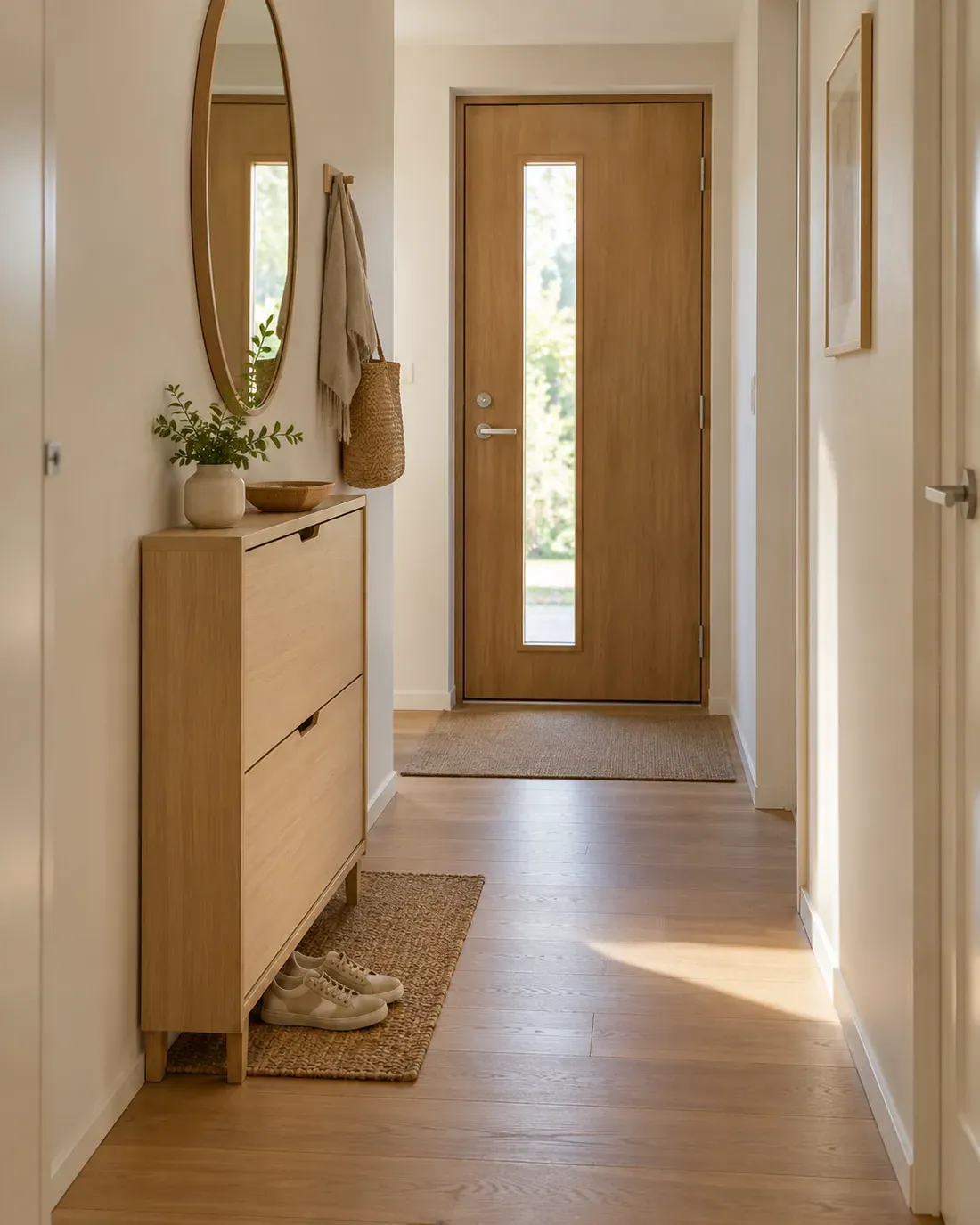
A slim shoe cabinet can hide daily pairs without taking the depth of a bench or chest. Look for a model whose doors or tilt-out compartments can open while someone stands in front of it. Measure its depth both closed and in use. If the entrance is very tight, a cabinet along a side wall may work better than one directly opposite the door.
Follow the maker’s instructions for securing tall or tip-prone furniture. Put the shoes you actually wear near the top or front; occasional pairs can live in a closet. If the cabinet cannot hold the household’s daily shoes, a limited tray may be more useful than an overflowing cabinet.
2. Mount hooks at a usable height
Wall hooks give coats and bags a home without a floor-standing rack. Space them far enough apart that a winter coat does not cover the next hook. Put children’s hooks lower if they are expected to put their own things away. Limit each person to the outerwear in current use so the wall does not become a bulky layer of fabric.
Hooks holding heavy bags need secure mounting into suitable backing or anchors. Check door swing before installing. In a rental, a carefully chosen over-door hanger may be possible, but only where it allows the door to close and can support the load.
3. Swap a deep console for a narrow shelf
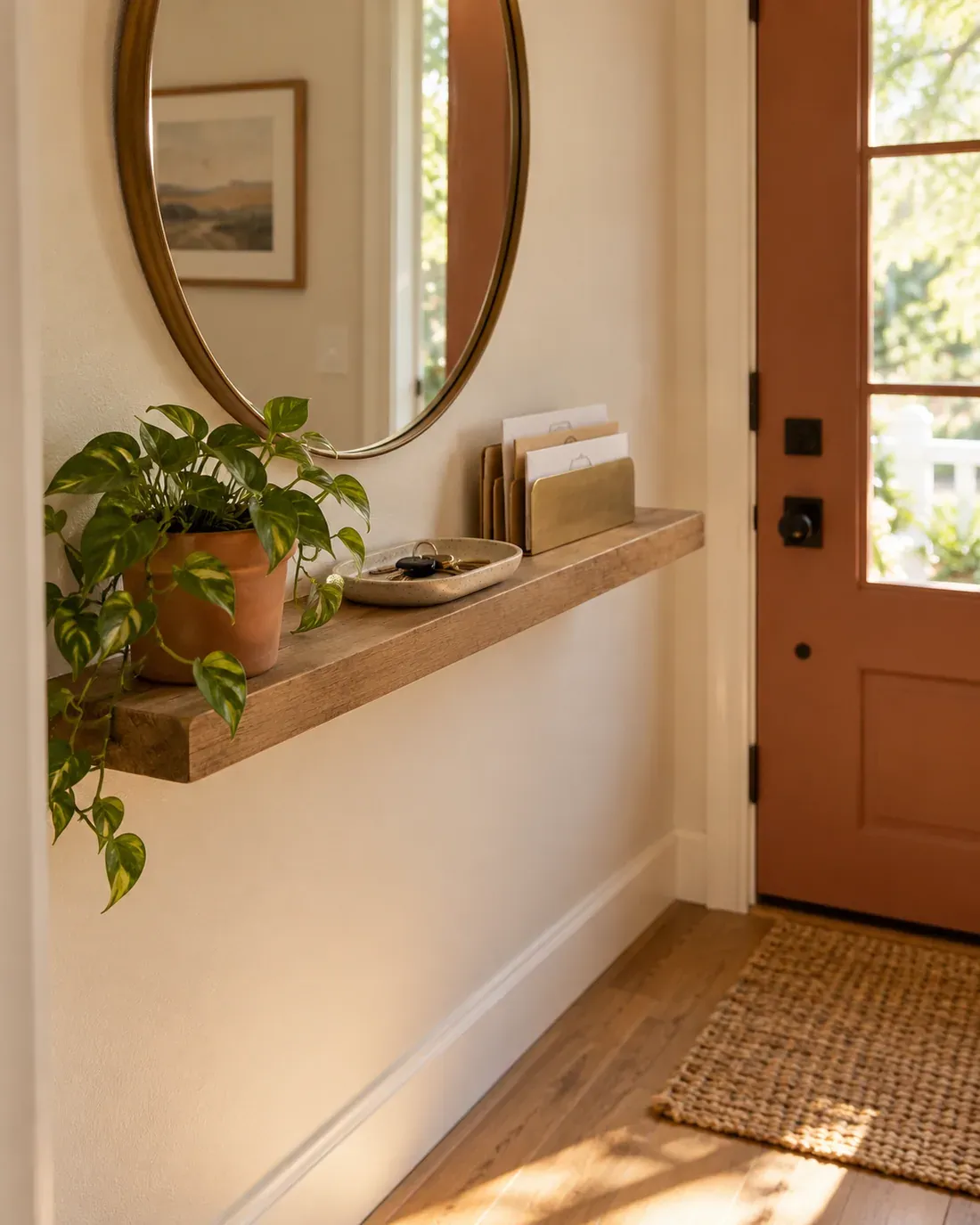
A short wall shelf can hold a key dish and a little mail without occupying much floor area. Choose a depth that accommodates those actual objects, not a broad display surface that invites clutter. Mount it where shoulders and bags will not brush against sharp corners as people pass. A shelf close to the door is most useful if it does not interfere with the handle or switch.
If wall mounting is not possible, a very shallow freestanding console can work where the path allows it. Tape the footprint to the floor first and test the route for a day. Furniture that looks narrow in a product photo can feel large in a real hallway.
4. Add a mirror where it earns its place
A wall mirror gives you a last look before leaving and can reflect daylight into a dim entrance. Place it at a height useful to the people in the home, then check the reflection from the main approach. It is more effective when it reflects light or a calm wall than when it doubles the view of an overflowing coat rack.
Choose a secure mounting method appropriate to the mirror’s weight and wall. A narrow vertical mirror often fits between doors; a wider one may balance a shallow cabinet. Avoid a freestanding mirror if its feet would interrupt the walkway or make it easy to knock over.
5. Choose a runner that stays put
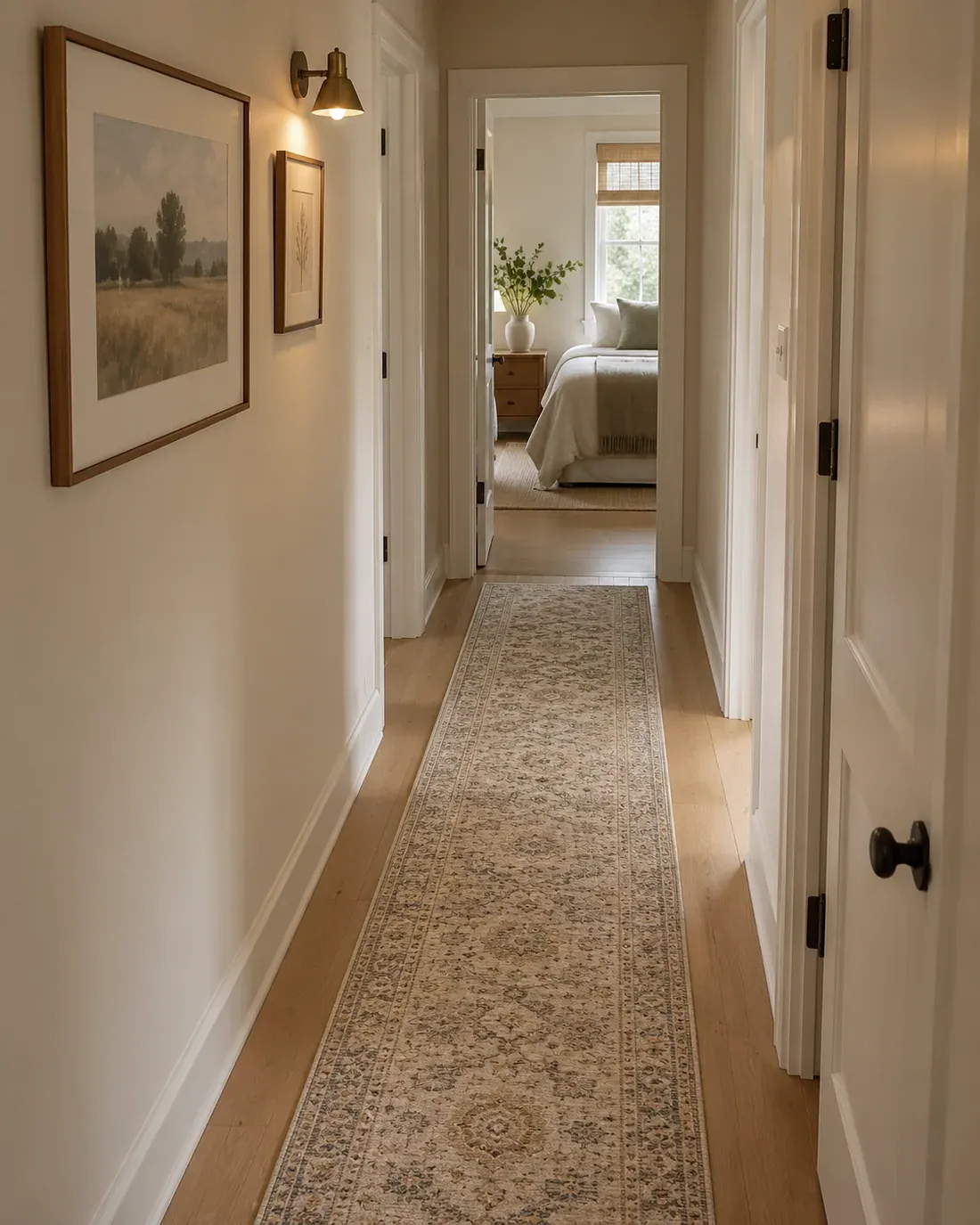
A runner can define the path and catch some dirt before it spreads through the home. Select a length that suits the actual hall rather than running into a door swing. A low-profile rug is less likely to catch the bottom of a door or become an obstacle. Use a suitable non-slip backing and keep the edges flat.
For a very short entry, a washable doormat may be all you need. Dark patterns can disguise everyday marks, while a lighter, simpler design can make the hall feel calmer. Whatever the style, choose something you can clean often; a dirty runner undermines the whole entrance.
6. Use vertical storage with restraint
An entrance may have enough height for a narrow wall cabinet, stacked hooks or a shelf above the coat area. Reserve higher spots for things you reach less often, such as spare umbrellas or seasonal accessories. Keep daily items at a height you can use without a stool. A storage plan that requires climbing every morning will not last.
Check that anything overhead is safely mounted and does not project into the route. Leave breathing room between shelves and hooks so a hanging coat can be lifted off easily. Vertical storage works best when it reduces floor clutter rather than simply moving a jumble into view.
7. Pair hooks with one compact shelf
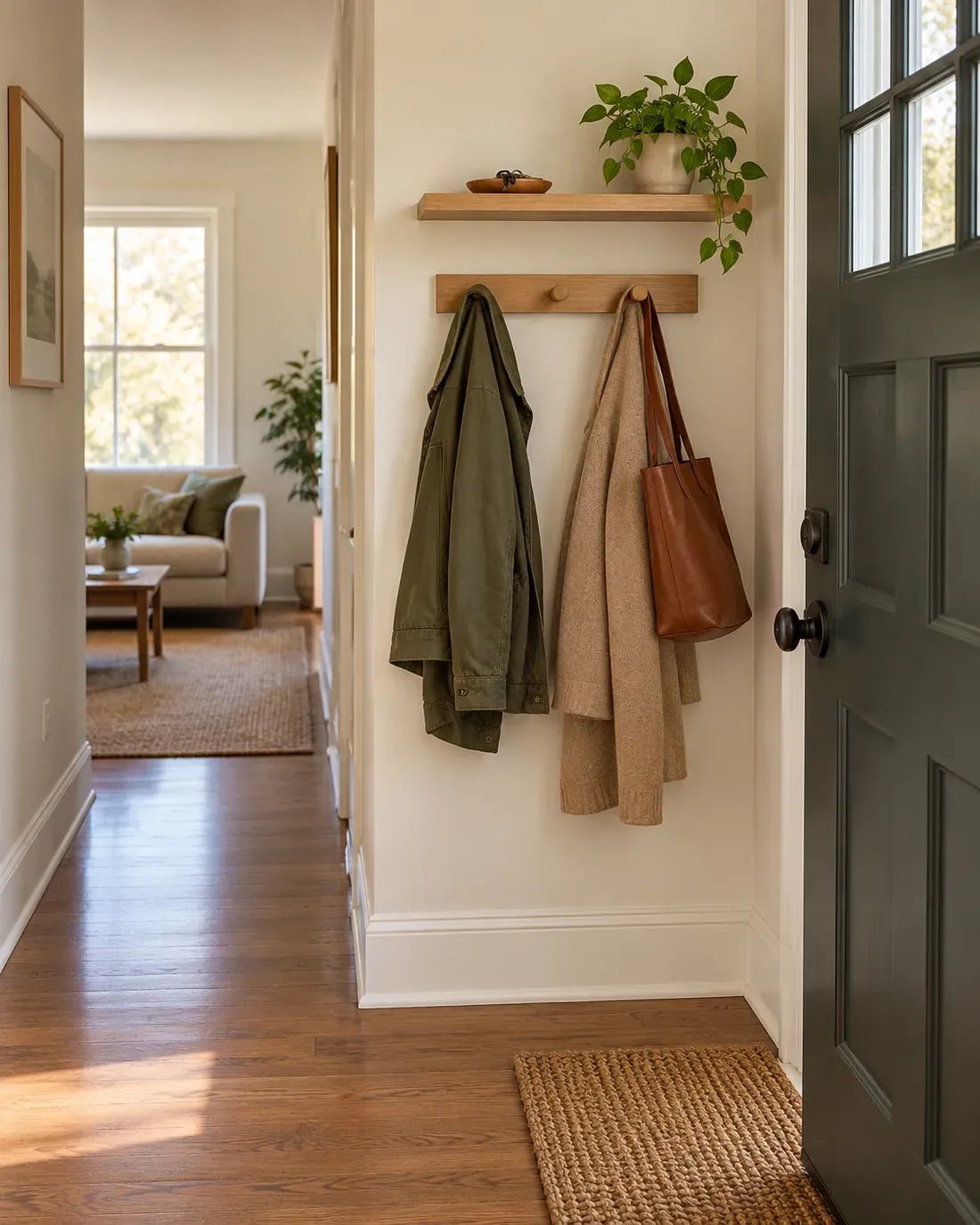
Combining a short hook rail and a shelf creates a complete landing spot on a single wall. Put the shelf above the hooks if it will not be hidden by coats, or beside them if you need to reach keys quickly. Keep the shelf contents simple: a small tray, perhaps a letter holder, and little else.
This arrangement is especially useful when there is no room for a console. Measure the width of a coat hanging on the outer hooks, not just the rail. A design that fits on paper can still crowd a door or another piece of furniture once it is in use.
8. Give keys a tiny, reliable drop zone
Keys, transit cards and sunglasses need a place that takes no thought at the end of the day. A small tray, wall pocket or hook beside the door can handle them. Choose one that is easy to empty and easy to reach without stepping around shoes. If mail also lands here, give it a separate slot so important items do not disappear beneath envelopes.
The drop zone should match your routine. Someone who enters carrying a bag may prefer a shelf; someone who immediately hangs a coat may prefer hooks. A compact setup beats several decorative bowls that gradually collect unrelated objects.
9. Improve lighting without crowding the floor
Good light makes the entrance safer and more welcoming, especially when there is no nearby window. A wall sconce or suitable plug-in light can brighten the area without needing a floor lamp. Position it so faces and the key area are lit, but the fixture does not project into the walking path or collide with the door.
Renters can consider a compact table lamp only where a shelf is deep and stable enough, with cords safely managed. Battery lights may help in a dark cupboard, but check their intended use and maintenance needs. Keep switches accessible so the entry is easy to use when your hands are full.
10. Pick furniture that looks and feels light
Open-leg furniture, pale finishes and simple profiles can make a narrow hall feel less crowded. But visual lightness cannot compensate for a piece that is physically too deep. Measure its widest point, including handles and legs, then check how it behaves when drawers or doors open. A wall-mounted cabinet can show more floor, though it must be installed securely.
One useful piece usually looks calmer than several small ones. If you need a seat to put on shoes, test whether a slim bench can sit out of the main route. Where it cannot, bring a chair from another room when needed rather than forcing permanent furniture into the path.
11. Add greenery on a small scale
A little greenery can soften a hard-working entrance. Try a small plant on a secure shelf or a single stem in a stable vessel. Choose a location with the light the plant needs; a windowless hall may call for a realistic faux branch instead. Keep leaves and pots out of the path of bags and shoulders.
The goal is one fresh-looking detail, not a row of plants that require moving to access the storage. If the shelf already holds daily essentials, a wall picture or a small wreath may provide the same welcoming effect without taking usable surface space.
12. Stop shoes accumulating by the door
Decide how many pairs may remain in the entry at one time. A tray or shallow cabinet works only when it has a clear limit. Move occasional footwear to a bedroom closet and return wet shoes to their proper place after they dry. A washable mat under the daily pairs makes cleanup easier.
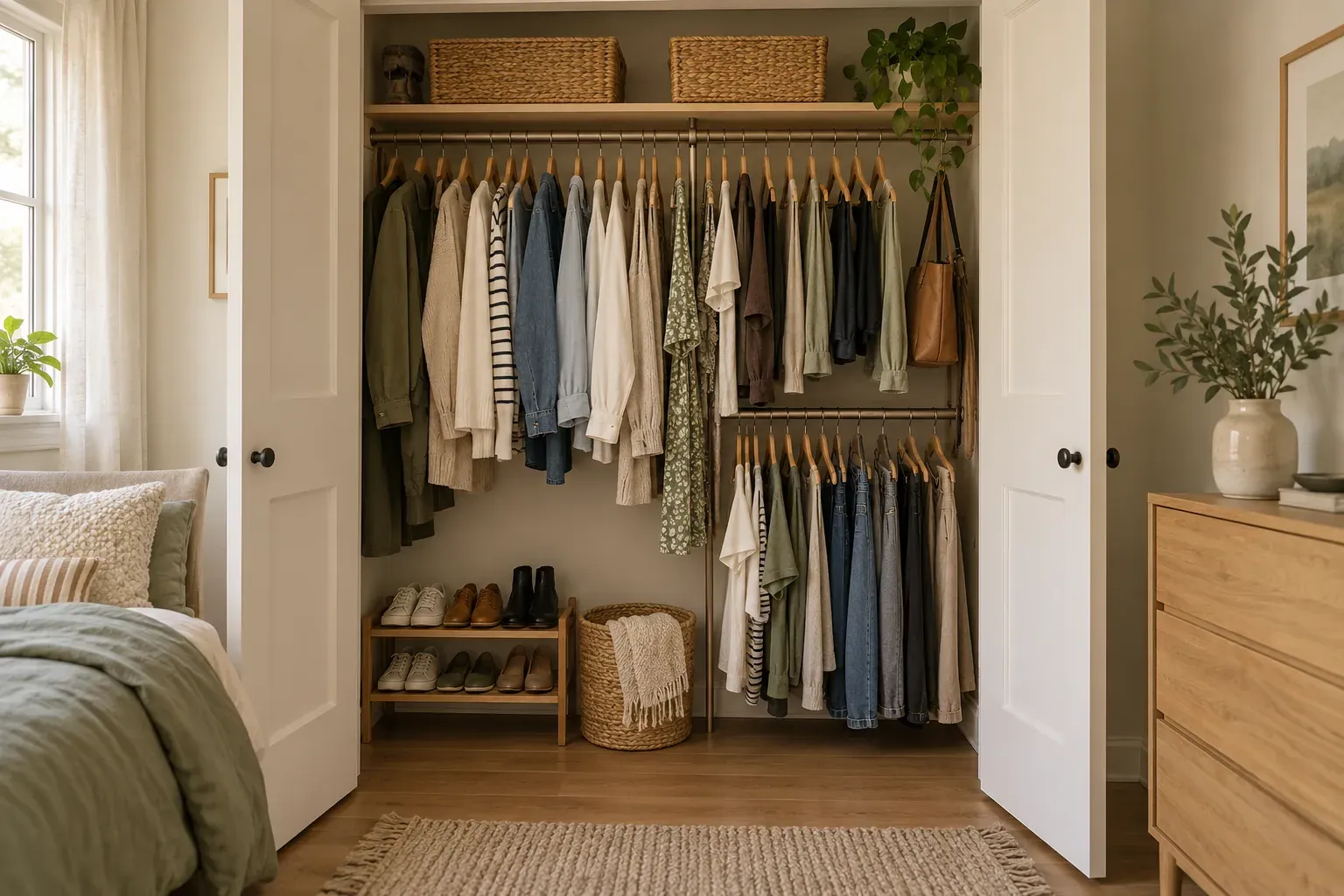
For households with several people, assign a small section to each person instead of hoping one shared pile will stay tidy. If shoe storage is overflowing, revisit the category rather than adding another rack into the hall. Our small closet organization ideas include ways to keep less-used pairs elsewhere.
13. Keep the styling simple and purposeful
An entryway already contains moving visual elements: coats, shoes, bags and mail. Choose one or two lasting details, such as a mirror and a runner, then leave enough blank wall and clear surface for the space to breathe. Repeat a restrained color or material from the adjoining room to make the entrance feel connected rather than separate.
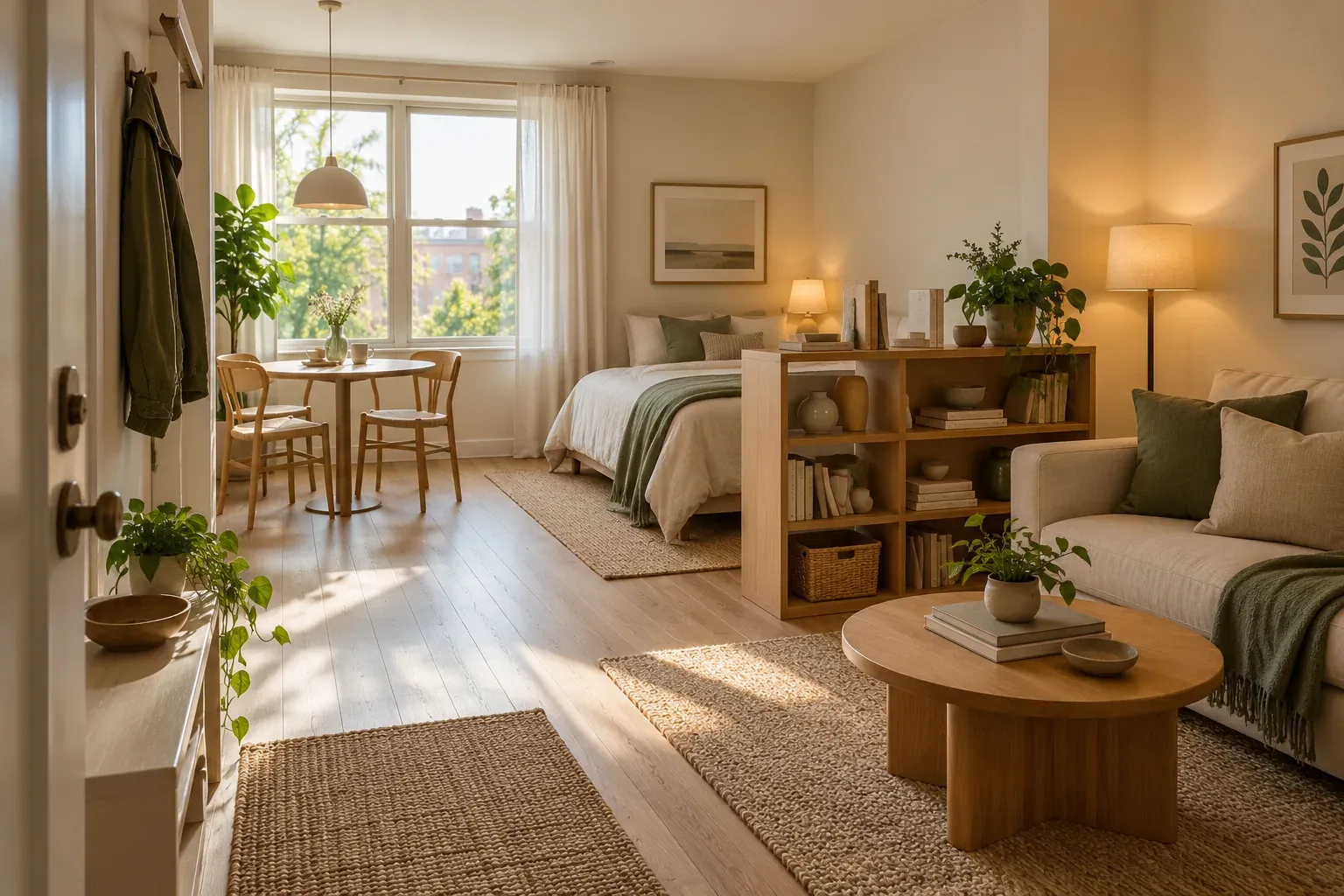
Edit the display as seasons change. A decorative basket is helpful if it has a job; otherwise it may become another obstacle. In a compact home, this calm approach can carry through the studio apartment layout so the entrance flows naturally into the main room.
What furniture to avoid in a narrow entrance
Deep consoles, broad benches and free-standing coat trees often consume the very space you need to walk through. They may still work in a recess, but test their full footprint and the extra space needed to use them. Watch for drawers that open into the route and furniture corners at hip height. A piece that forces guests to turn sideways is usually the wrong piece for that location.
Avoid filling both sides of a narrow hall with storage. Concentrating the essentials on one wall often leaves a clearer line of travel. Do not block a door, window, vent or building access point for the sake of symmetry.
Renter-friendly entryway ideas
A floor tray for shoes, a shallow freestanding cabinet and a portable key dish can establish the main zones without permanent work. If you use removable hooks, follow their load and surface instructions and check that the door still moves freely. Secure tip-prone freestanding furniture as its maker directs, even in a rental; ask the property manager about suitable fixings if needed.
Start with the path and the daily objects. Once coats have a home, shoes have a limit and keys have a landing spot, a mirror or runner can finish the space. The most successful narrow entryway is one that looks welcoming while you are actually living in it.
Looking for more ideas? Browse our storage & organization stories.
Save to Pinterest