In this article
- 1. Give everyone their own locker cabinet
- 2. Put storage under the bench seat
- 3. Run tall cabinets to the ceiling
- 4. Hide shoes in tilt-out cabinets
- 5. Repurpose a hutch as a mudroom cabinet
- 6. Float cabinets off the floor
- 7. Combine entry and mudroom in one unit
- 8. Add overhead cabinets above the hook rail
- 9. Choose pull-out drawers for base cabinets
- 10. Build a pet station into a cabinet
- 11. Add a charging drawer for devices
- 12. Set cabinets on a boot tray base
- 13. Convert a coat closet into cabinet storage
- How to Choose Mudroom Cabinets for Your Space
- Mudroom Cabinet Mistakes to Avoid
- Keeping Mudroom Cabinets Clean
Hooks hold coats, but they show every coat. A mud room cabinet hides the visual noise, which is why even a small entry feels calmer with closed storage. These mudroom cabinet ideas range from full locker walls to single narrow cabinets that fit a hallway, with options for renters who cannot drill and budgets that start around fifty dollars. Measure your wall first, then pick the cabinet that matches how your household actually comes and goes.
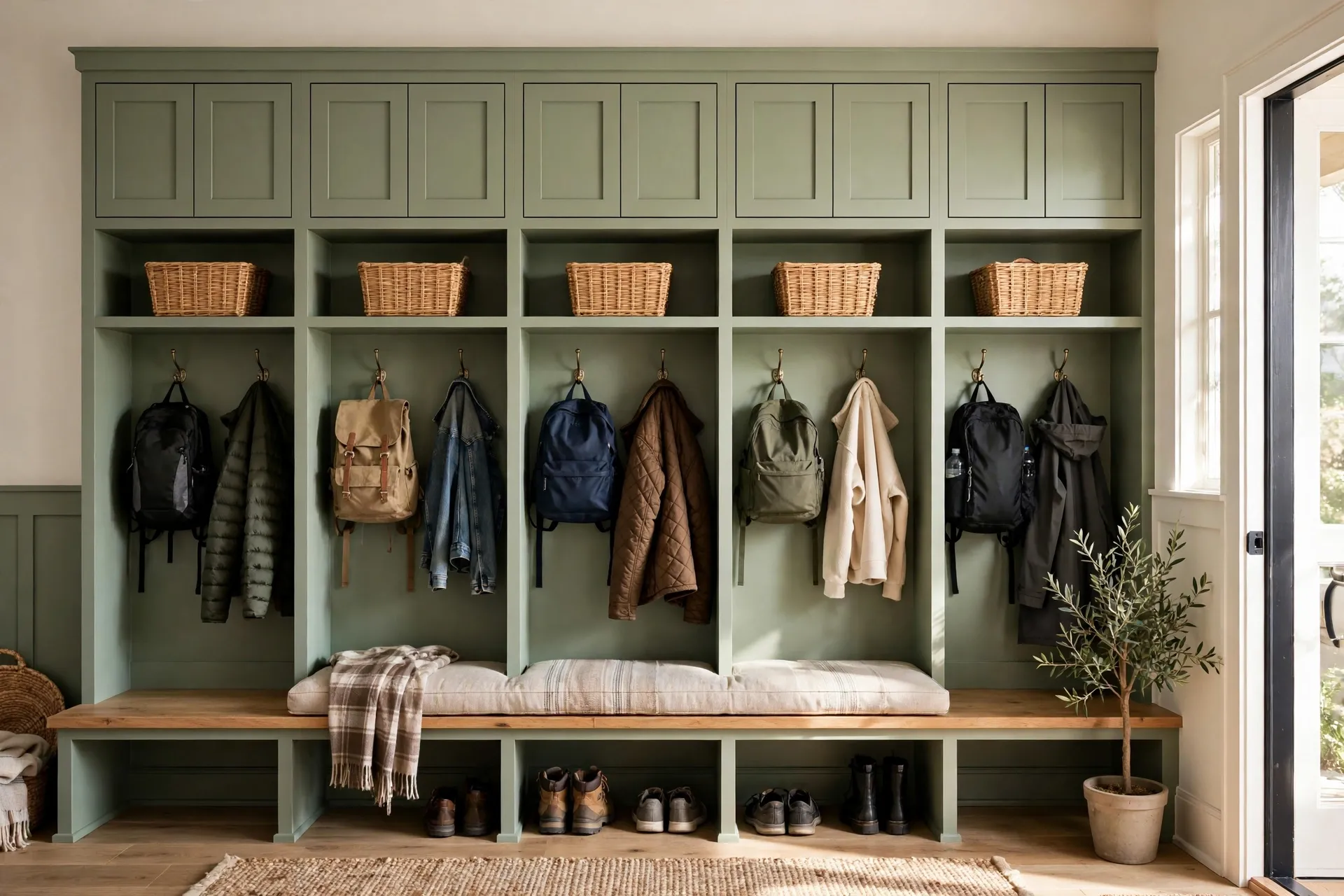
1. Give everyone their own locker cabinet
A row of tall, narrow locker cabinets ends the morning scramble. Each person gets a cubby for a coat, a hook for a bag, and a basket for gloves and hats. For a family of four, four 18-inch-wide lockers fill a 6-foot wall exactly, which is a common mudroom width.
Keep the lockers open at the top for airflow so damp jackets dry instead of mildewing. Label each cubby at kid height; labels cut the “whose is this” arguments in half. Stock flat-pack lockers run 100 to 250 dollars per unit, and a weekend with a drill assembles the whole wall.
2. Put storage under the bench seat
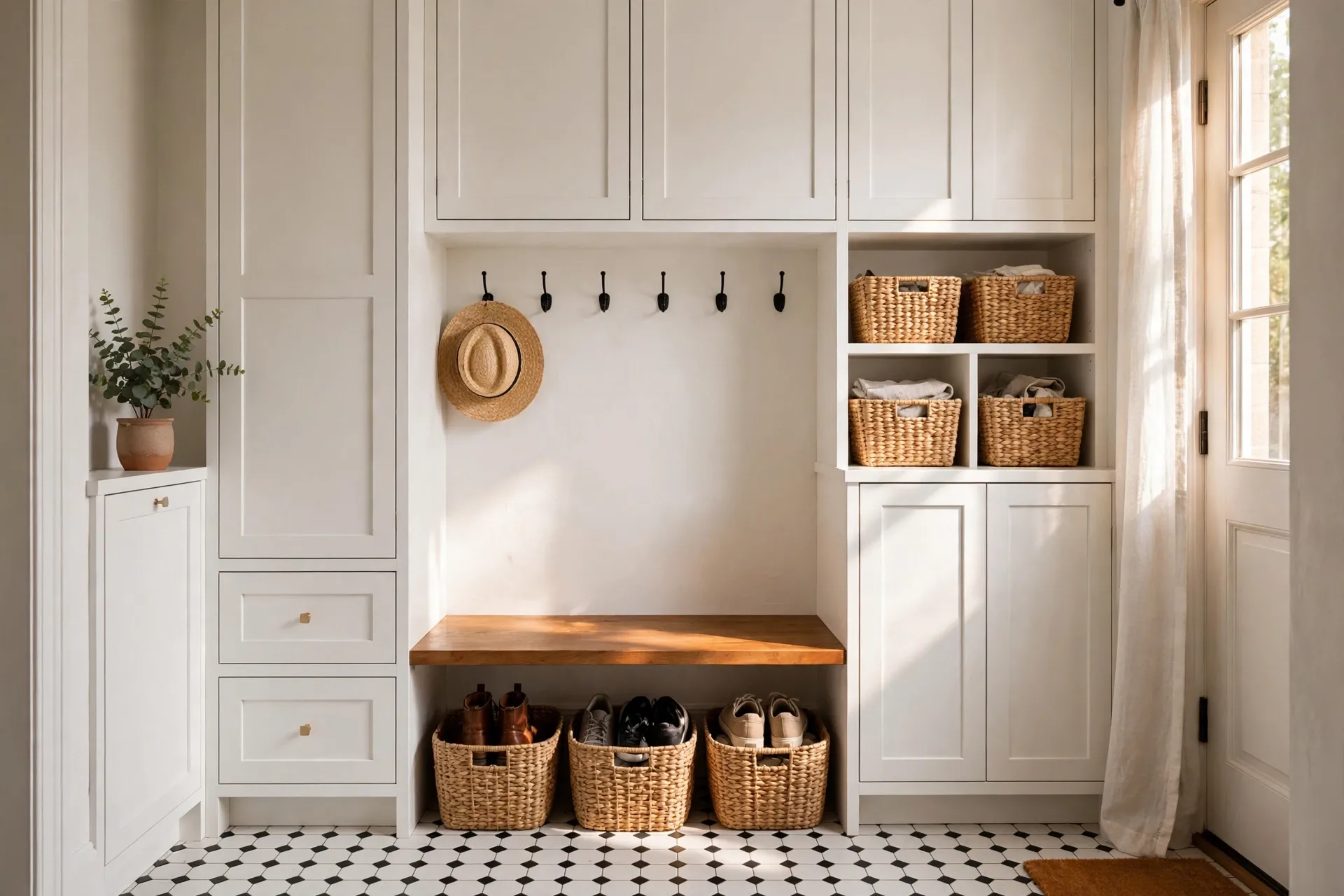
A bench with cabinet doors or drawers underneath doubles seating and storage in one footprint. Lift-up seats work for bulky items like sports gear; drawers suit shoes and umbrellas better since you can see everything. A 48-inch bench holds two people’s daily shoes comfortably.
Hinged lids need clearance above them, so skip lift-up seats if hooks hang right overhead. Soft-close hinges, about 5 dollars a pair, stop the lid from slamming on fingers. For narrow rooms, a bench only 14 inches deep still seats an adult and holds two rows of shoes.
3. Run tall cabinets to the ceiling
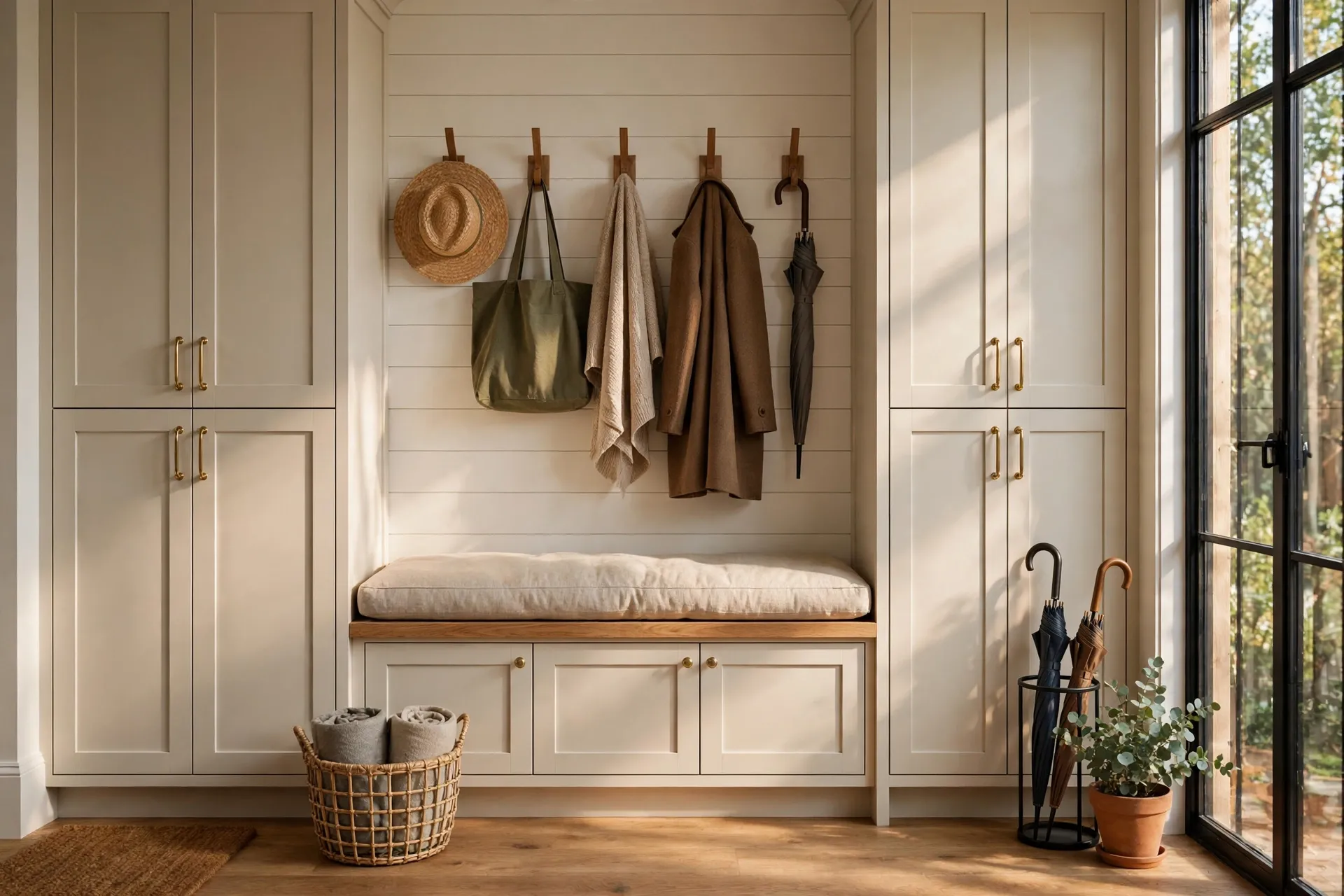
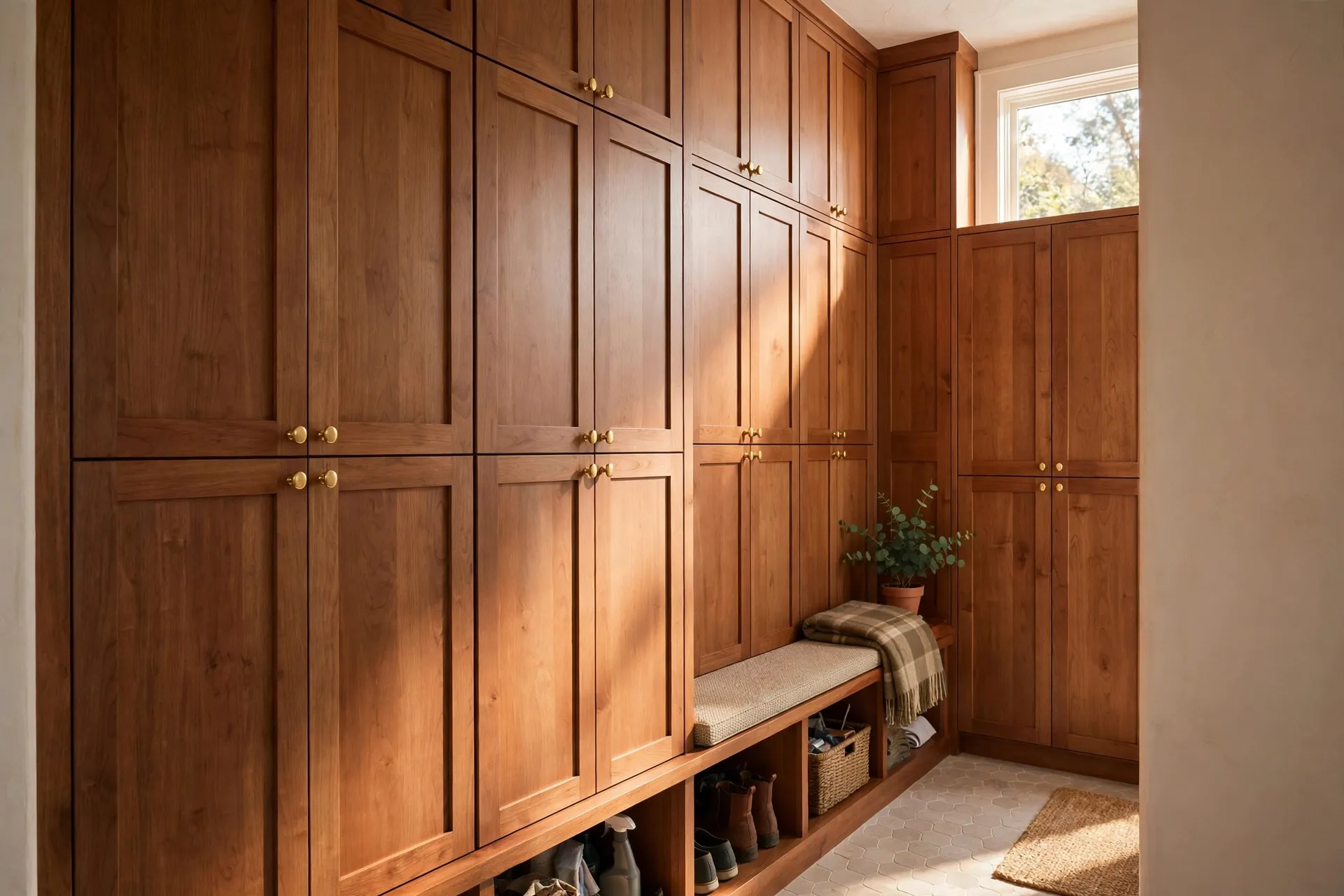
Floor-to-ceiling cabinets turn dead air into storage for seasonal gear, cleaning supplies, and the vacuum. The top shelf, reachable with a small step stool, is perfect for things you touch twice a year. Two 24-inch-wide pantry cabinets side by side fit most mudroom alcoves.
Anchor tall cabinets to studs; a loaded 7-foot cabinet tips dangerously. Keep daily items between knee and shoulder height and relegate the top shelf to true storage, not overflow. Paint them the wall color and they visually disappear.
4. Hide shoes in tilt-out cabinets
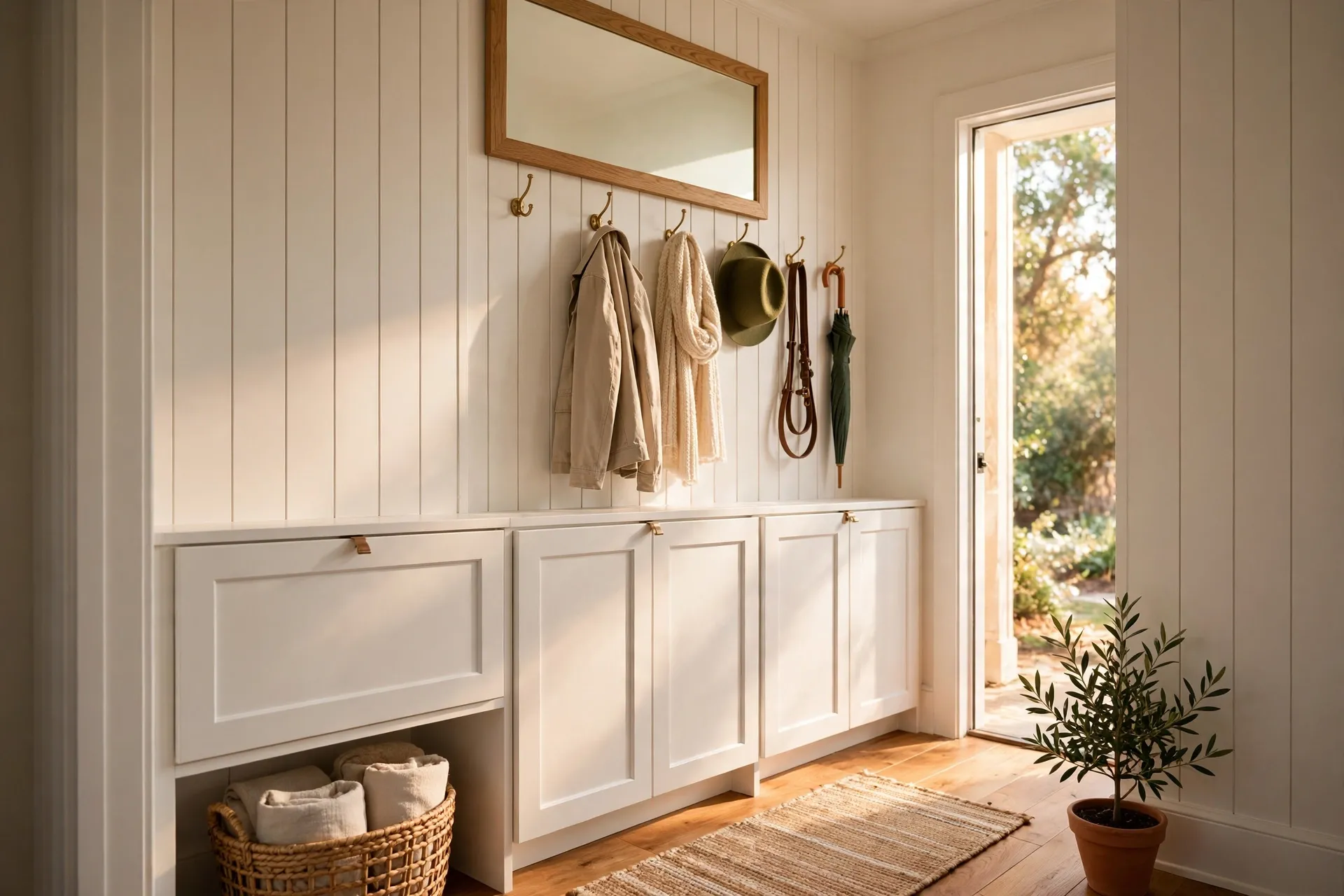
Tilt-out shoe cabinets store three pairs per compartment behind a door that looks like paneling. A 30-inch-wide unit hides nine pairs in 7 inches of depth, which beats any shoe rack for looks. They work especially well in hallways too narrow for a bench.
Measure your largest shoes first; tall boots will not fit standard tilt compartments and need a separate tall cabinet. Wipe the inside monthly, since shoe cabinets trap odors. A sachet of baking soda in each compartment handles most of it.
5. Repurpose a hutch as a mudroom cabinet
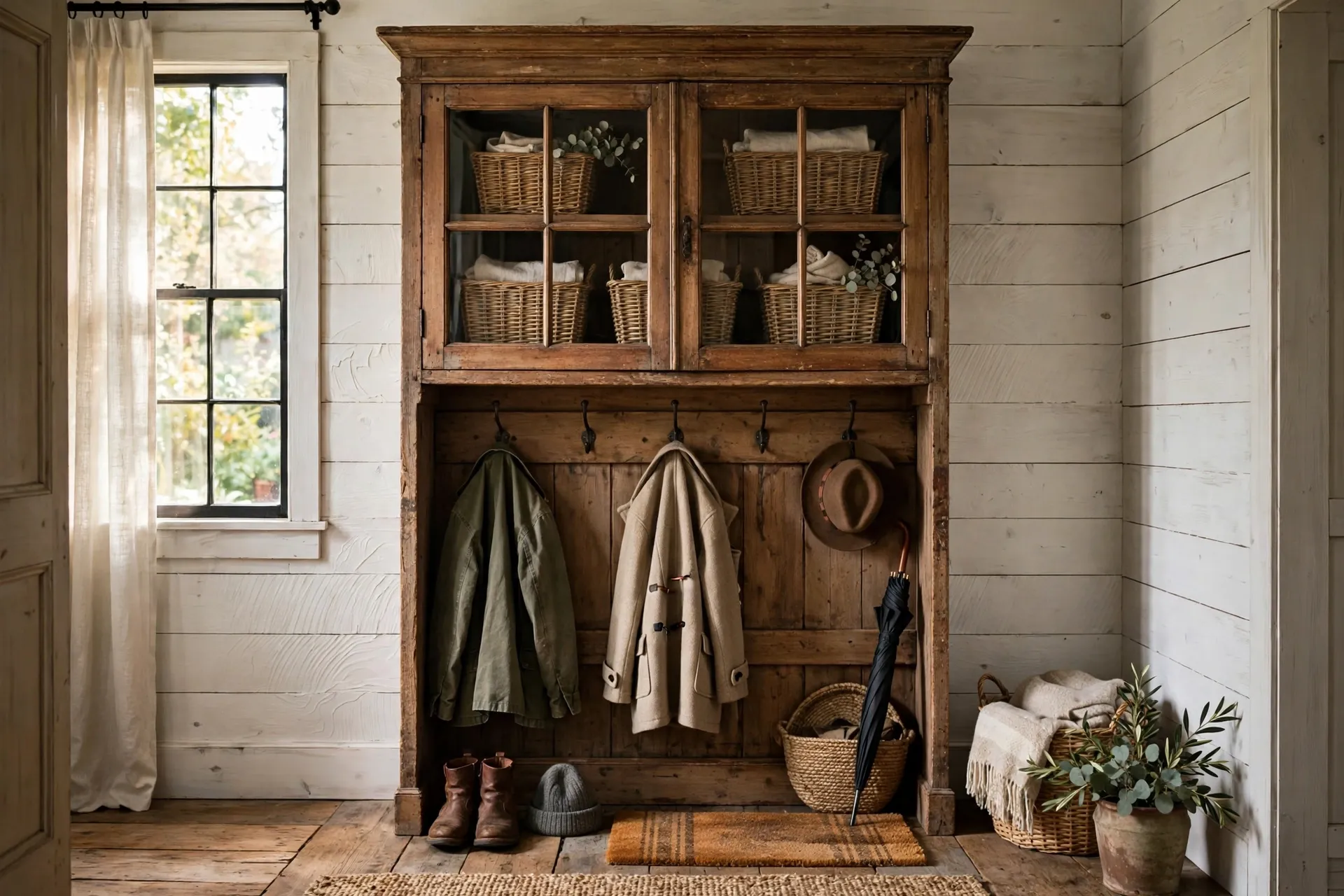
A secondhand hutch gives you enclosed storage below, display or baskets above, and character no flat-pack can match. Thrift stores sell solid wood hutches for 50 to 150 dollars, far less than new mudroom furniture. The glass upper doors are ideal for the pretty baskets you want to see.
Check that the piece is not deeper than 20 inches or it will crowd a small entry. Remove the back panel if it smells musty, then seal the raw wood. A coat of exterior-grade paint on a hutch used near a wet entry survives muddy boots far longer than interior paint.
6. Float cabinets off the floor
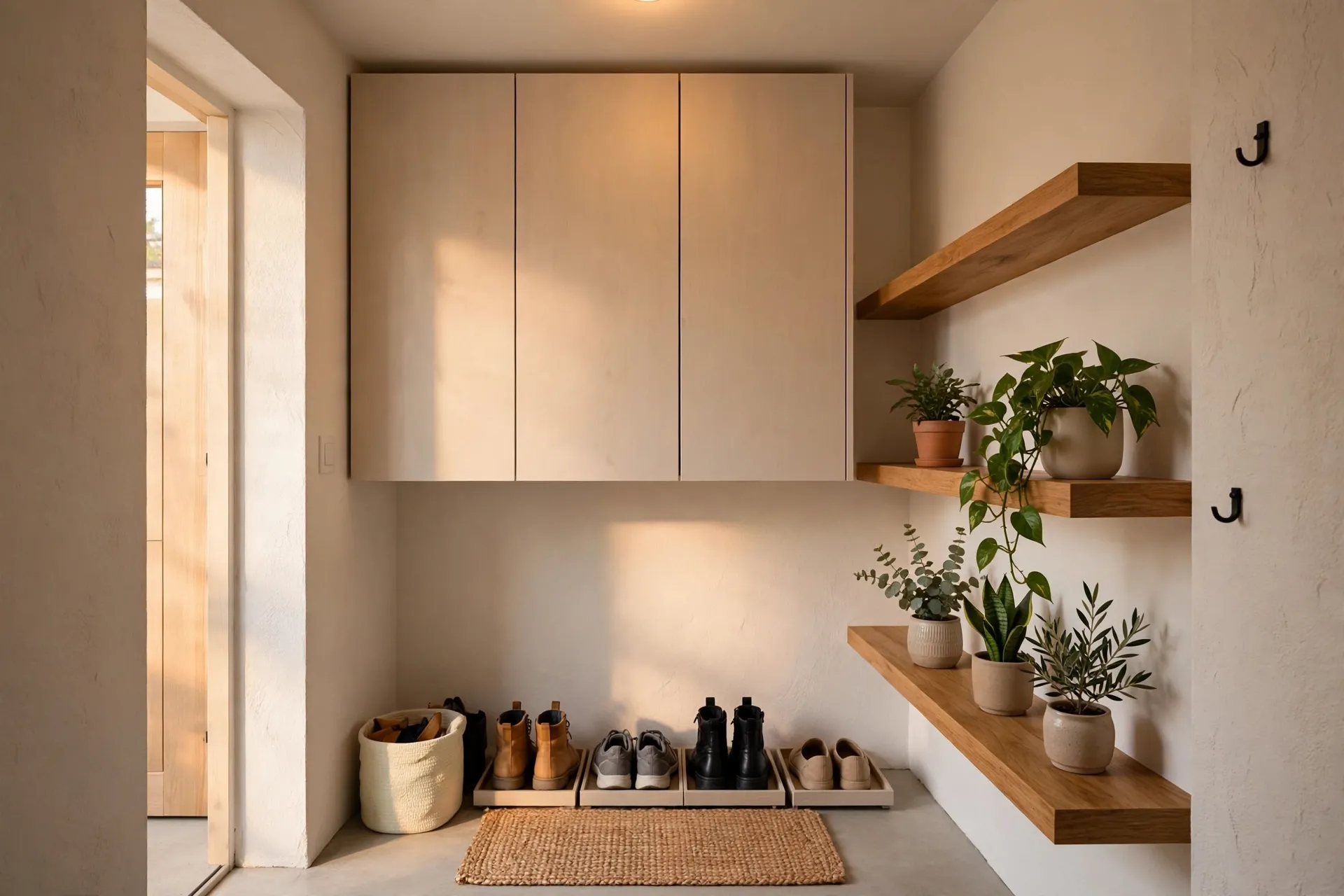
Wall-mounted cabinets leave the floor clear for shoe trays, a robot vacuum, and mopping. They also make a small mudroom feel bigger because you see continuous flooring. Mount them 12 to 18 inches off the floor, high enough for a tray but low enough to reach.
This is not a renter-friendly move unless your landlord approves, since floating cabinets need serious wall anchors or studs. Keep the load light; floating units sag if you fill them with paint cans. Pair them with a wall-mounted folding bench for the full floating effect. Renters who cannot drill at all should browse our renter-friendly apartment wall ideas for damage-free ways to dress the same wall space.
7. Combine entry and mudroom in one unit
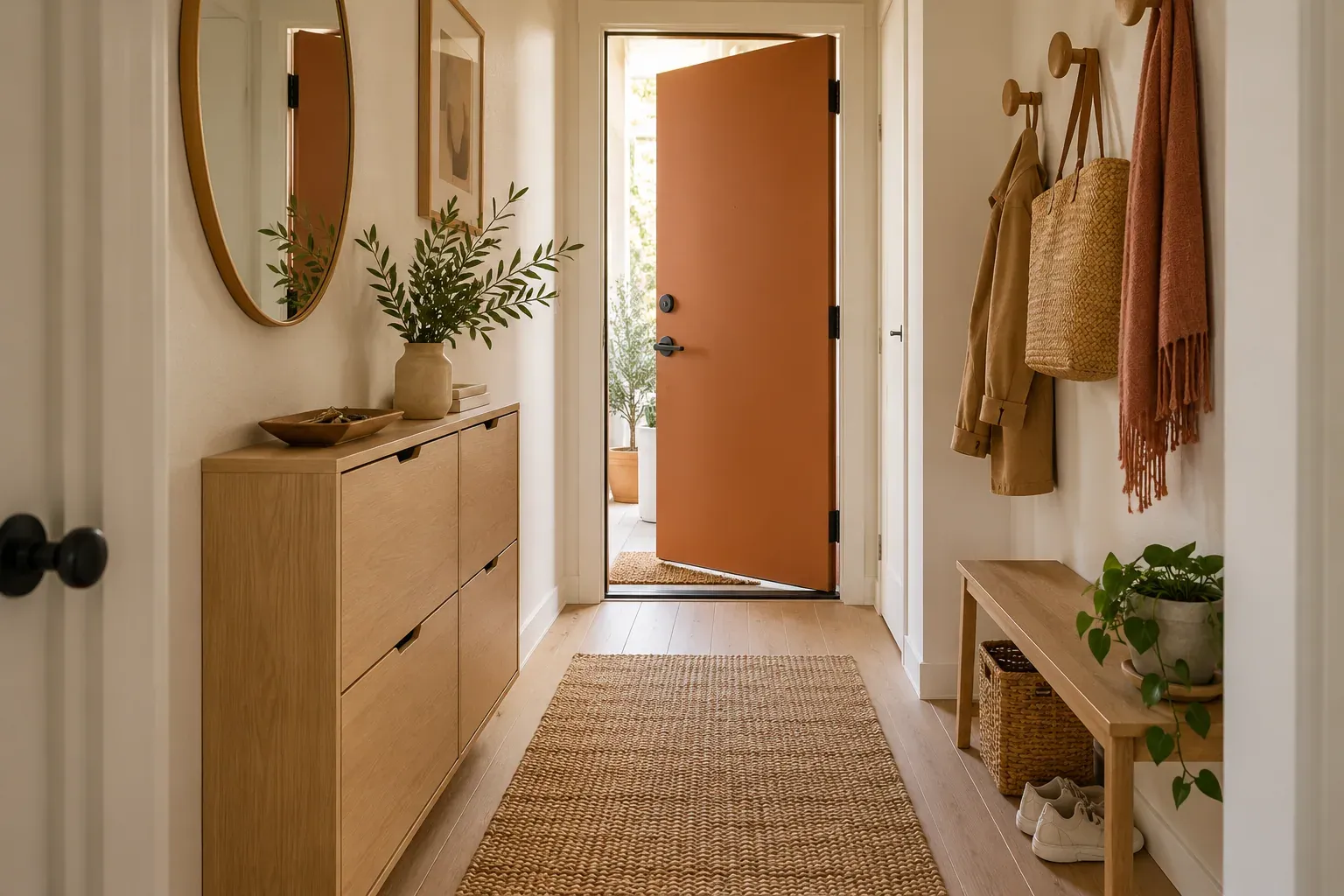
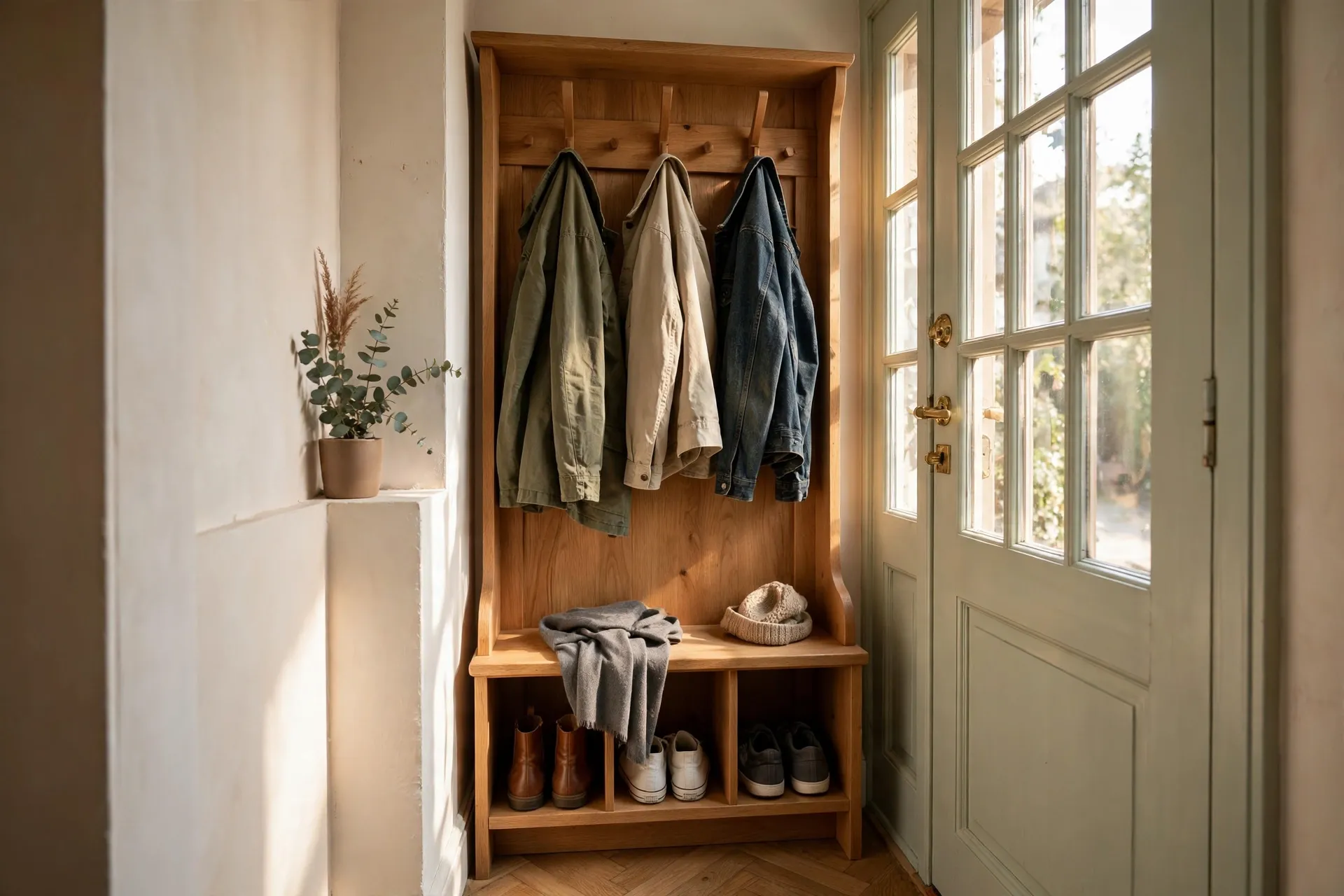
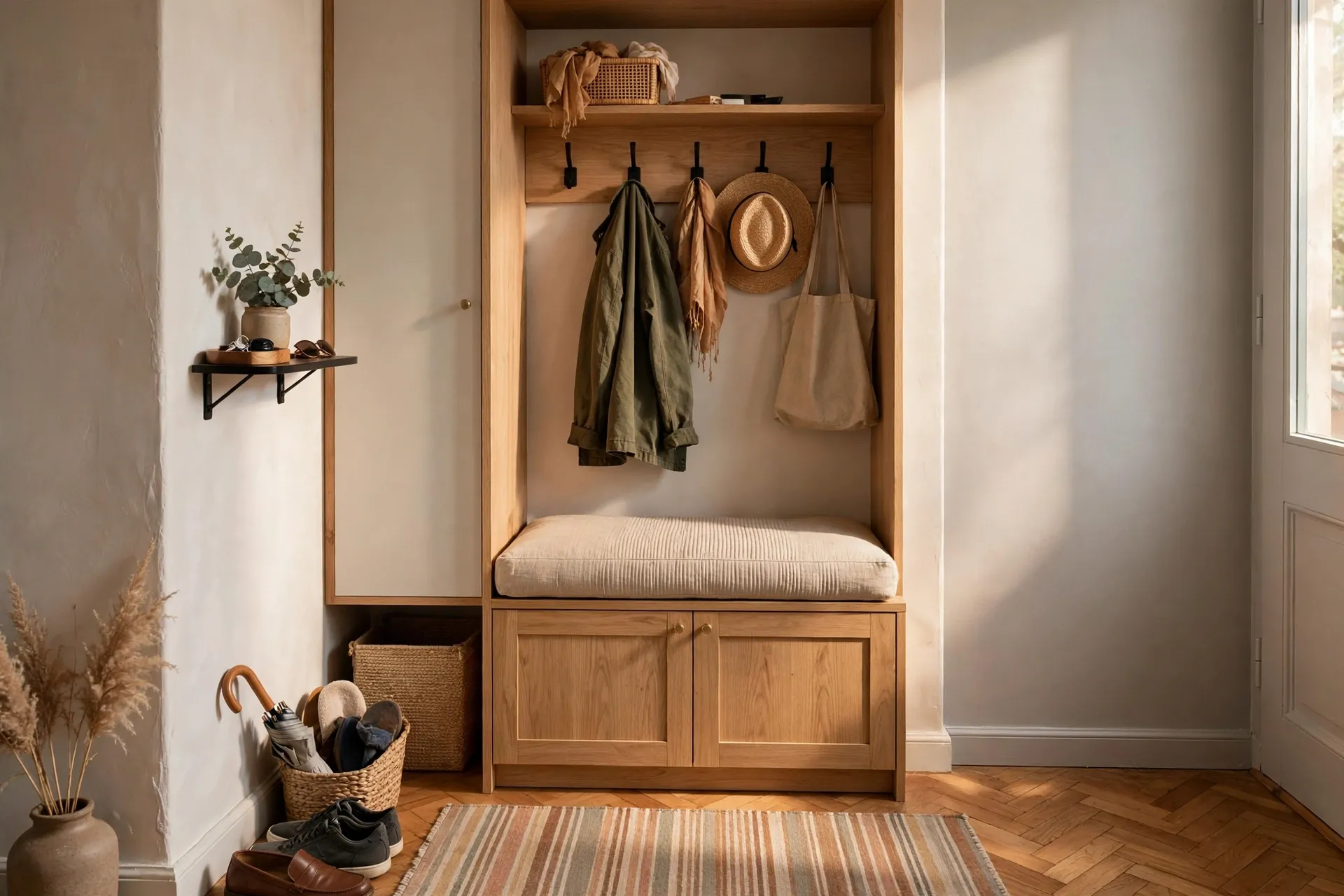
When the front door opens straight into the living space, one compact cabinet with a bench, hooks, and shoe storage creates a mudroom zone without walls. A 36-inch-wide hall tree with lower cabinets handles one or two people’s daily gear. Add a runner rug in front to define the zone visually.
Position the unit on the hinge side of the door so the door swings away from it. This keeps the walkway clear and stops the door from knocking baskets off. For more ways to carve function from tight entries, see our narrow entryway ideas.
8. Add overhead cabinets above the hook rail
The wall above coat hooks, usually 5 feet up and higher, holds shallow cabinets perfectly. Twelve-inch-deep uppers store hats, sunscreen, and dog-walking gear without jutting into the room. This is the cheapest built-in look: two stock wall cabinets and a coat rail below.
Mind head clearance in low hallways; cabinet bottoms should clear 66 inches from the floor. Paint uppers the same color as the wall and they read as architecture rather than furniture. Keep a small step stool nearby, since the top shelf is out of daily reach.
9. Choose pull-out drawers for base cabinets
Drawers beat doors in a mudroom because you see everything without crouching into a dark cabinet. Deep drawers hold shoes upright; shallow top drawers swallow keys, sunglasses, and the permission slips. A bank of three wide drawers replaces a whole shoe rack.
Full-extension slides, worth the extra 10 dollars per drawer, let you reach the back. Line drawer bottoms with washable shelf liner; mudroom drawers get gritty. If you are retrofitting, many cabinet lines sell drawer inserts that fit standard door cabinets.
10. Build a pet station into a cabinet
A low cabinet with a cutout for food bowls, plus an upper cabinet for leashes, treats, and waste bags, contains the pet mess in one spot. The bowl cutout keeps dishes from sliding and protects floors from splashes. A 24-inch-wide base cabinet fits two large bowls side by side.
Elevate bowls for large dogs to reduce strain, following your vet’s guidance. Keep food in the sealed inner container, not the bag, to deter pests. This cabinet earns its keep fast if you currently trip over bowls in a walkway.
11. Add a charging drawer for devices
One drawer fitted with a power strip and cable organizers becomes the home for phones, earbuds, and the kids’ tablets. Drill a small grommet hole in the drawer back for the strip’s cord, and use a strip with a flat plug so the drawer closes. This ends the nightly hunt for chargers.
Use only a UL-listed strip and never daisy-chain strips. Keep the drawer ventilated; charging devices generate heat, so avoid stuffing the drawer with fabric. A 15-dollar drawer organizer with dividers keeps cables from tangling into a nest.
12. Set cabinets on a boot tray base
In wet climates, set lower cabinets back 4 inches on a recessed base and slide a boot tray into the gap. Melt and mud land on the tray, not the cabinet bottoms, which is what rots cheap cabinetry. A metal or heavy rubber tray rinses clean in seconds.
Size the tray to the cabinet run before buying; custom-cut trays cost more than standard 36-inch ones. Empty the tray weekly in winter, since standing salty water stains floors. This small detail doubles the life of mudroom cabinetry in snowy regions.
13. Convert a coat closet into cabinet storage
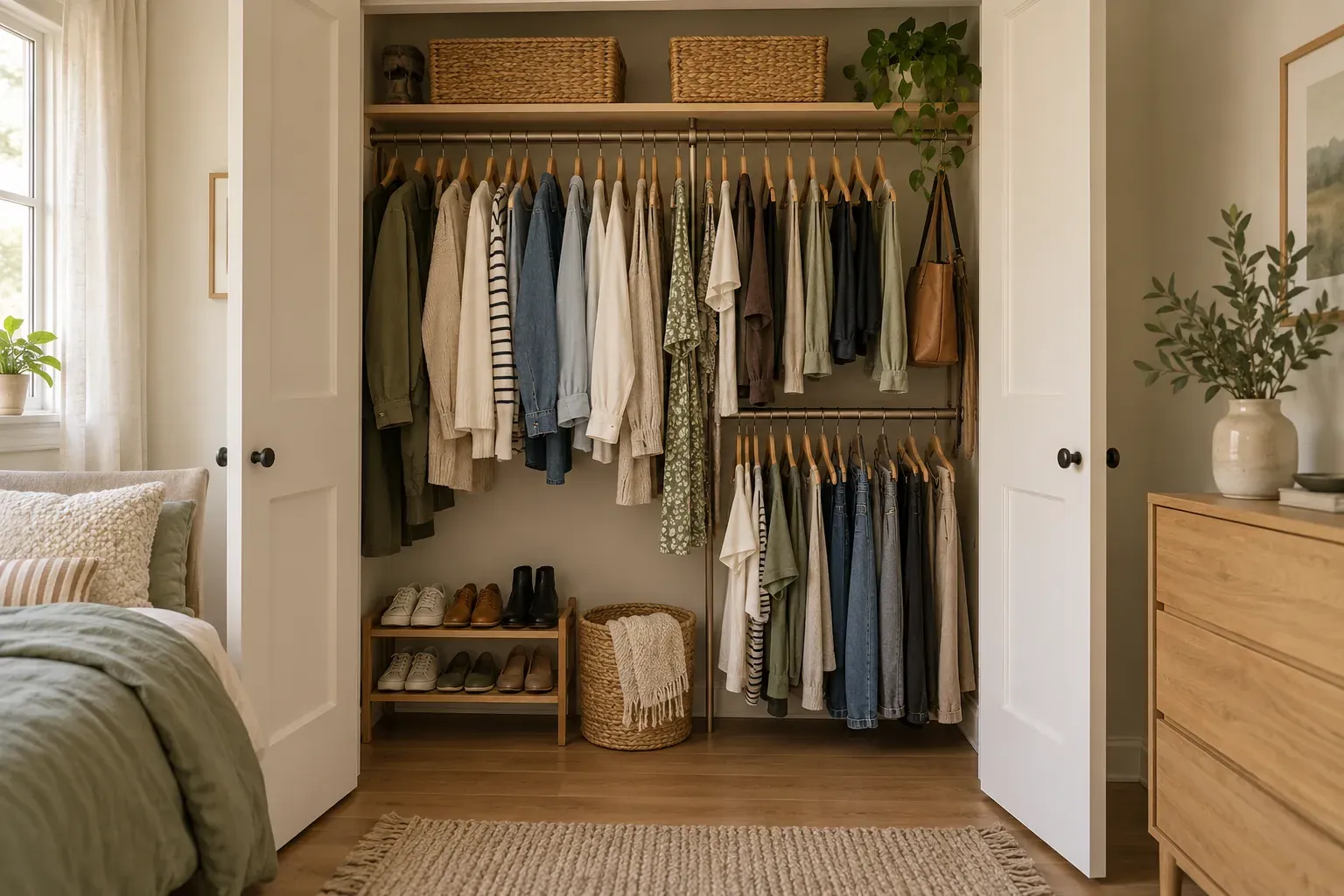
If your entry has a shallow coat closet, replace the single rod with a cabinet tower: drawers below, double-hang or shelves above, and a shoe cabinet on one side. You gain three times the usable storage in the same footprint. Closet-depth cabinets, 14 to 16 inches, fit without stealing hallway space.
Remove the closet doors for daily access or keep them to hide everything; bifolds that open fully work best. Add a motion-sensor puck light inside, since closet conversions go dark. This is the highest-impact upgrade here if you already have the closet. For the closet itself, our small closet organization ideas cover the interior layout.
How to Choose Mudroom Cabinets for Your Space
Start with the walkway. You need at least 36 inches of clear passage, 42 is better, so subtract that from the room width before choosing cabinet depth. Standard base cabinets are 24 inches deep; in tight entries, 12- to 18-inch-deep options keep the path usable.
Next, list what actually lives in your mudroom for a week. Count coats, shoes, bags, and gear, then buy storage for that inventory plus twenty percent. Most people underestimate shoes; count pairs per person honestly. Buy the cabinets last, after you know the numbers, and the result fits your life instead of a catalog photo. The same closed-storage logic works in the kitchen; our kitchen island ideas for small kitchens show islands that hide clutter behind doors and drawers.
Mudroom Cabinet Mistakes to Avoid
The classic mistake is all open shelving and no doors. Open storage looks great empty and terrible lived-in; reserve open shelves for baskets and keep the messy reality behind doors. Another is cabinets too deep for the room, which turns the mudroom into a hallway you sidle through.
Do not skip ventilation in closed cabinets that hold damp gear. A few discreet holes in the cabinet back or a gap under the doors prevents mildew. And anchor everything tall to the wall; a mudroom full of kids and dogs is no place for a freestanding tower.
Keeping Mudroom Cabinets Clean
Mudrooms collect grit, so build cleaning into the design. Washable shelf liner in every drawer and cabinet base wipes clean in seconds. A handheld vacuum stored in the tallest cabinet gets used; one stored in the garage does not.
Wipe cabinet fronts monthly with a damp cloth; salt and mud etch finishes if left all winter. Tighten hinges and drawer slides once a year, since mudroom hardware takes more abuse than kitchen hardware. Ten minutes a season keeps the whole system working.
Looking for more ideas? Browse our storage & organization stories.
Save to Pinterest