In this article
- 1. Start with a storage bench
- 2. Hang an oversized mirror
- 3. Style a slim console table
- 4. Mount a row of matte hooks
- 5. Lay a runner rug
- 6. Hang a sculptural pendant
- 7. Bring in one tall plant
- 8. Paint the door or one wall bold
- 9. Install floating wall cabinets
- 10. Choose a round rug for a square entry
- 11. Add a small stool instead of a bench
- 12. Hang floating shelves for display and storage
- 13. Mount a slim mail organizer
- 14. Corral keys with a dedicated tray
- 15. Finish with art at eye level
- How to Plan a Modern Entryway
- Modern Entryway Mistakes to Avoid
A modern entryway is not about a style label; it is about an attitude. Clean lines, honest materials, everything with a place, nothing shouting. The modern entry welcomes you, stores your daily gear out of sight, and sets the tone for the whole home in about thirty square feet. These 15 modern entryway ideas work in rentals and owned homes, tiny halls and proper foyers.
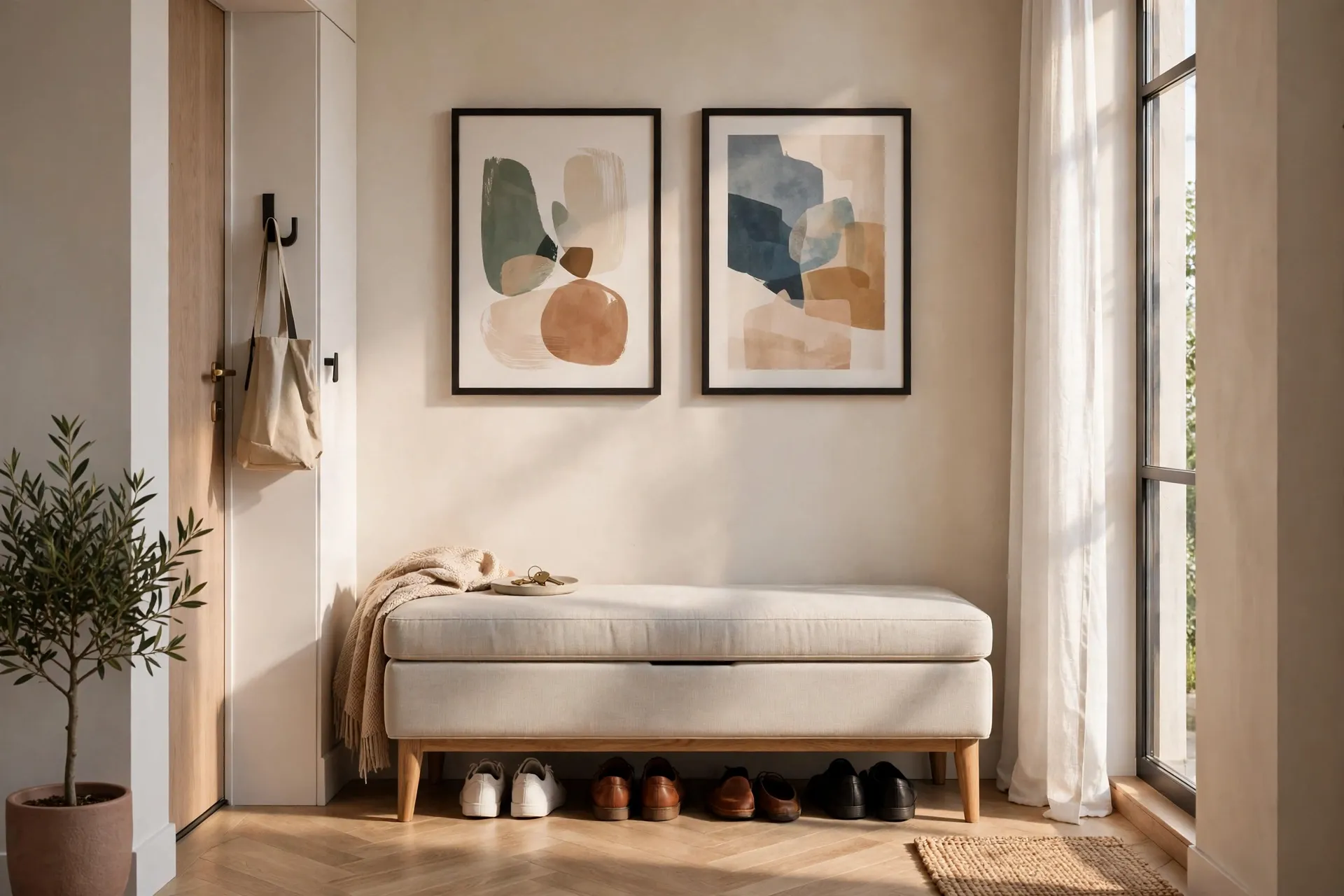
1. Start with a storage bench
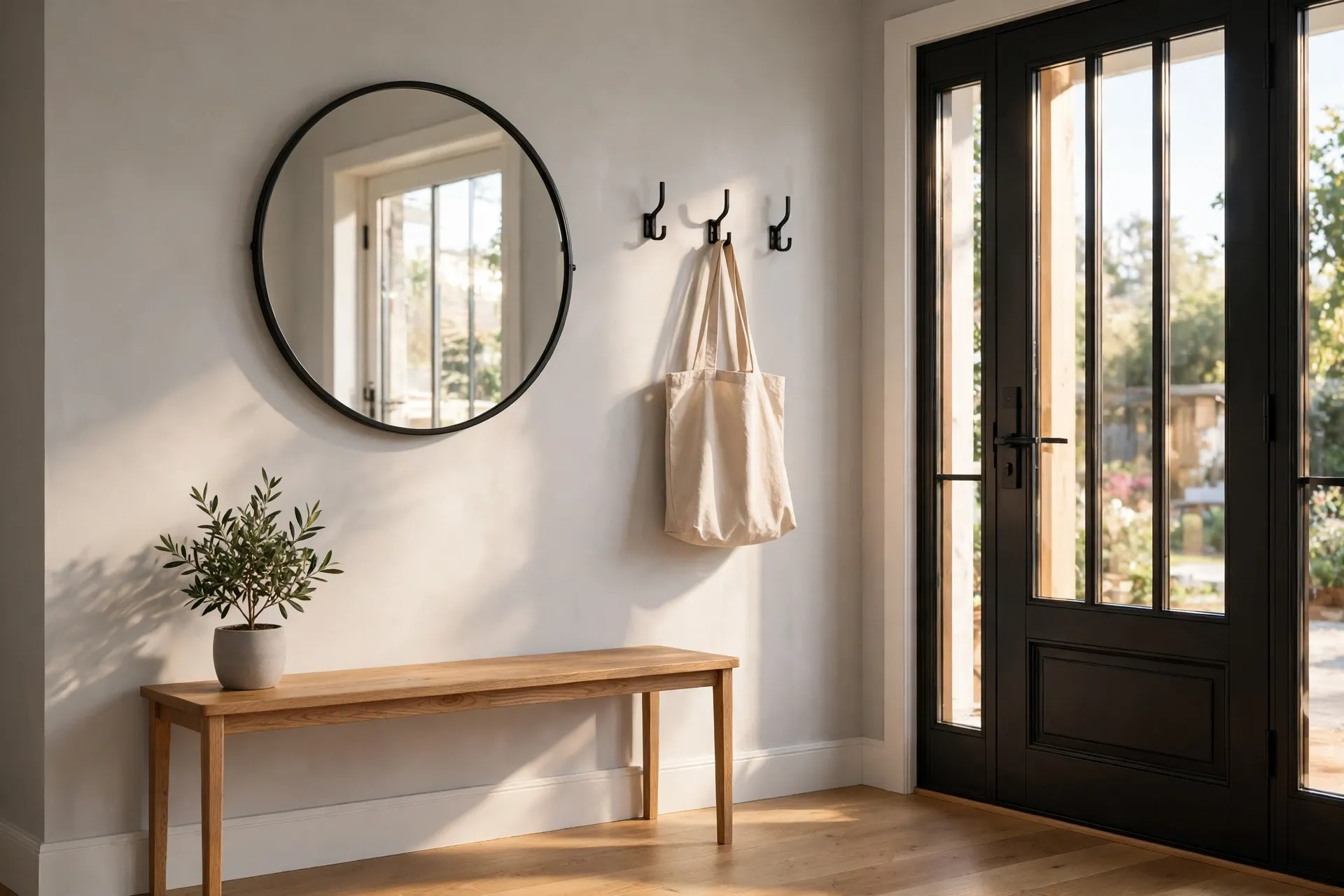
The storage bench is the modern entry’s foundation piece: seating for shoes, hidden storage for the things you grab daily, and a clean horizontal line that anchors the wall. Choose one 36 to 48 inches wide with a lift-up seat or deep drawers; open cubbies underneath work for shoes but collect visual noise. Keep the bench height at 17 to 19 inches for comfortable sitting.
Upholstered tops are kinder to sit on but harder to clean; wood or leather tops wipe down easily and suit the modern look. If the entry is truly tiny, a 24-inch bench still earns its footprint. The bench defines the entry’s zone even in an open-plan space, which is half its value.
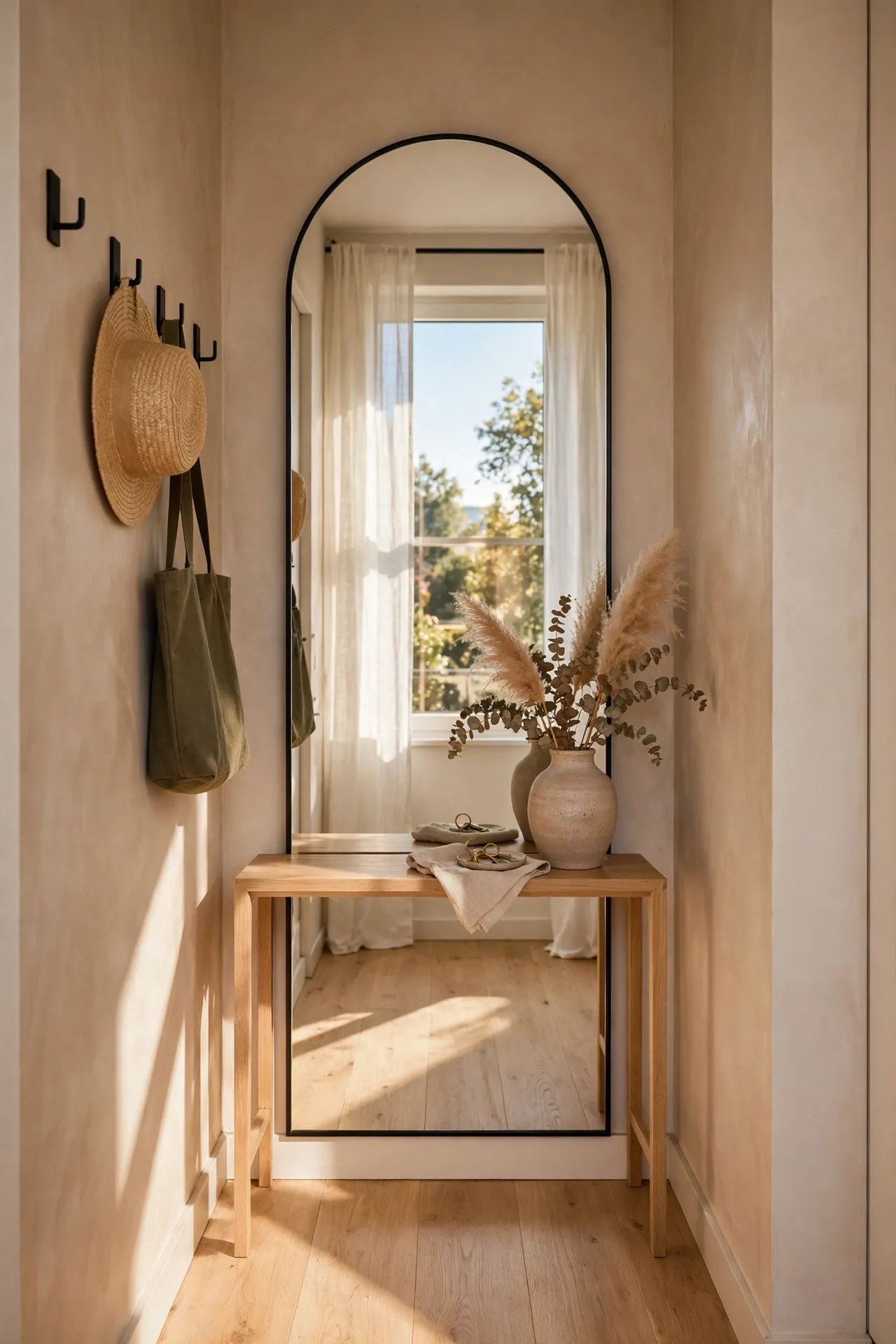
2. Hang an oversized mirror
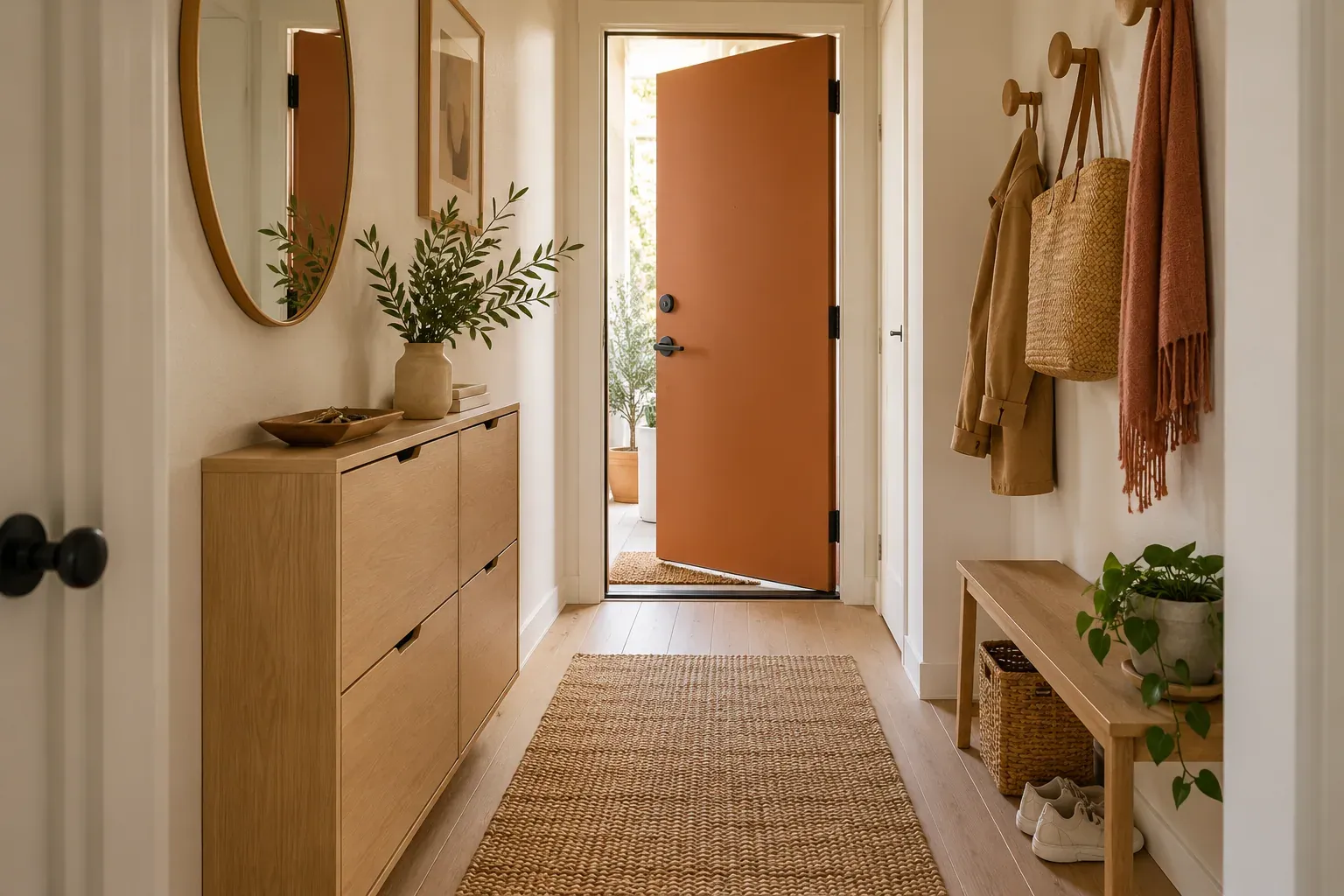
A large mirror is the single most transformative object in a small modern entry. It doubles the light, doubles the perceived space, and gives you the last look before leaving. Go big: a mirror that spans two-thirds the width of the bench or console below it. Round and arched shapes soften modernism’s hard lines; rectangular mirrors feel more architectural.
Hang the center at about 60 inches, and make sure it reflects something pleasant: a window, a plant, art. A mirror reflecting a blank wall or a messy room doubles the wrong thing. Lean-to floor mirrors work in entries with the floor space, but wall mounting is safer and keeps the floor clear.
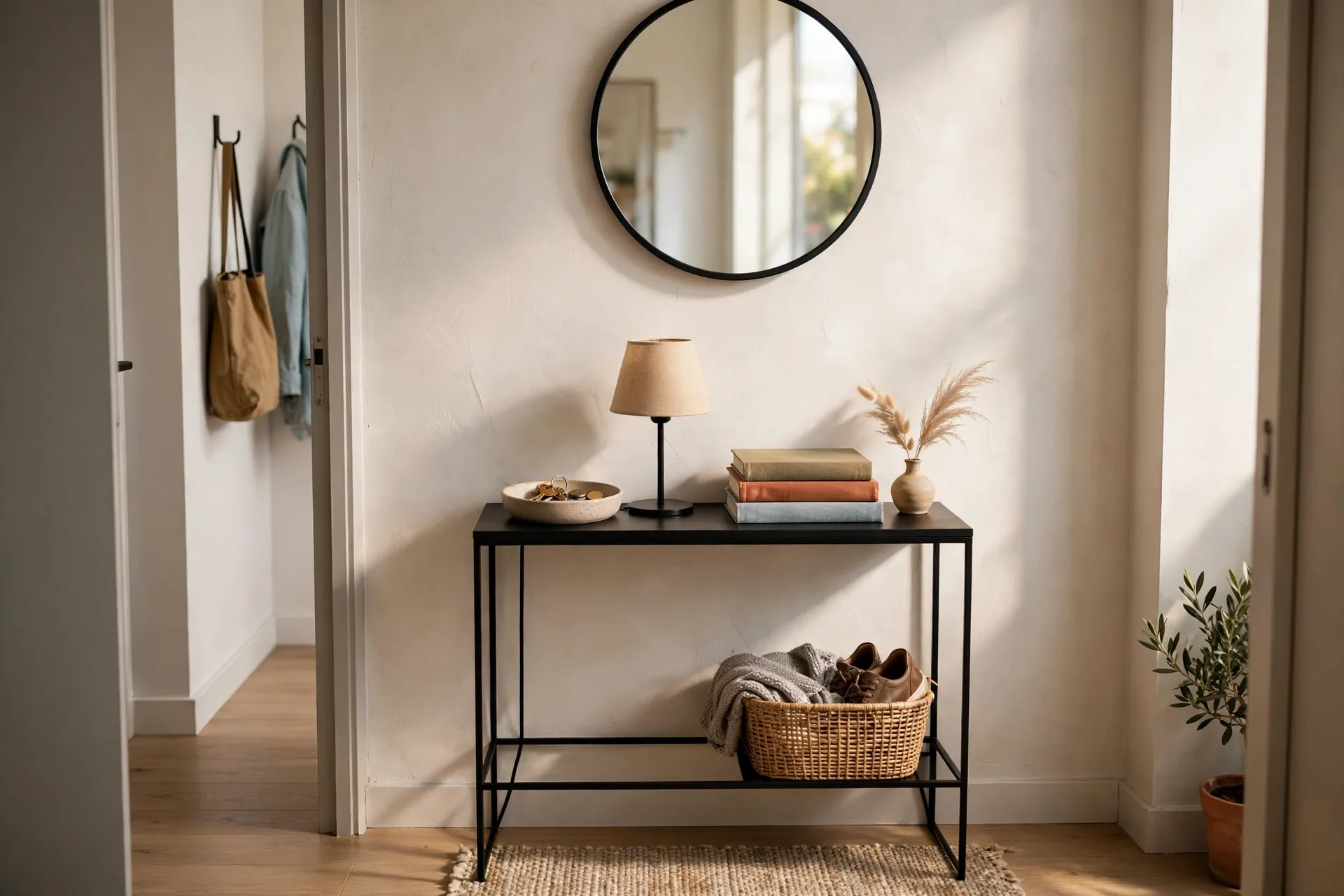
3. Style a slim console table
Where a bench does not fit, a slim console does the same job vertically: a surface for the key tray, a lamp and a small stack of books, with baskets or bins below. Keep it 10 to 12 inches deep and style it sparsely; a modern console with clutter is just a shelf of mess. Three objects of varying heights is the formula.
The console’s real value is the lamp. Entries rarely have good overhead light, and a small lamp on the console makes the whole space feel intentional at night. Choose a lamp with a warm bulb and a shade that directs light up and down, not straight into eyes at the door.
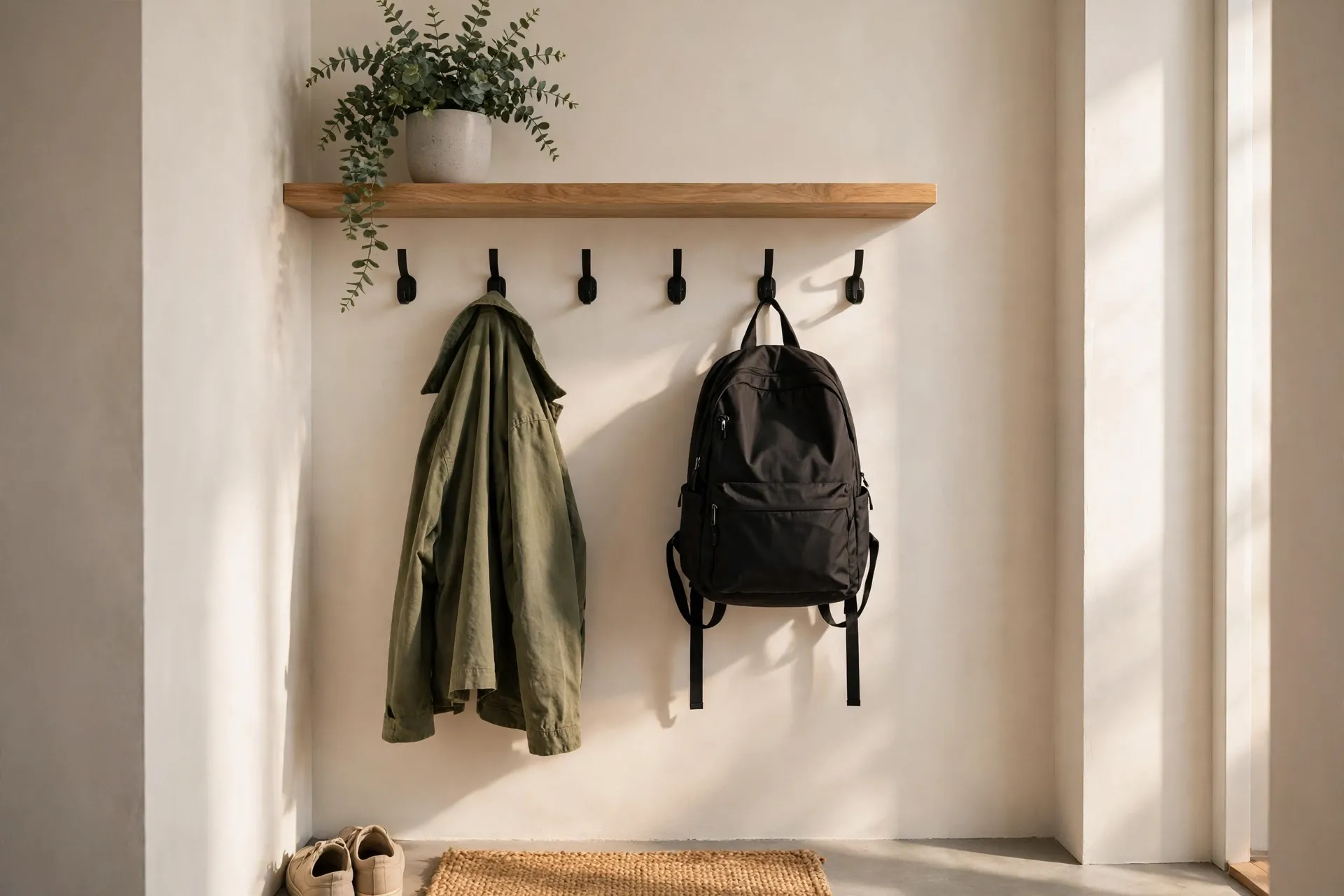
4. Mount a row of matte hooks
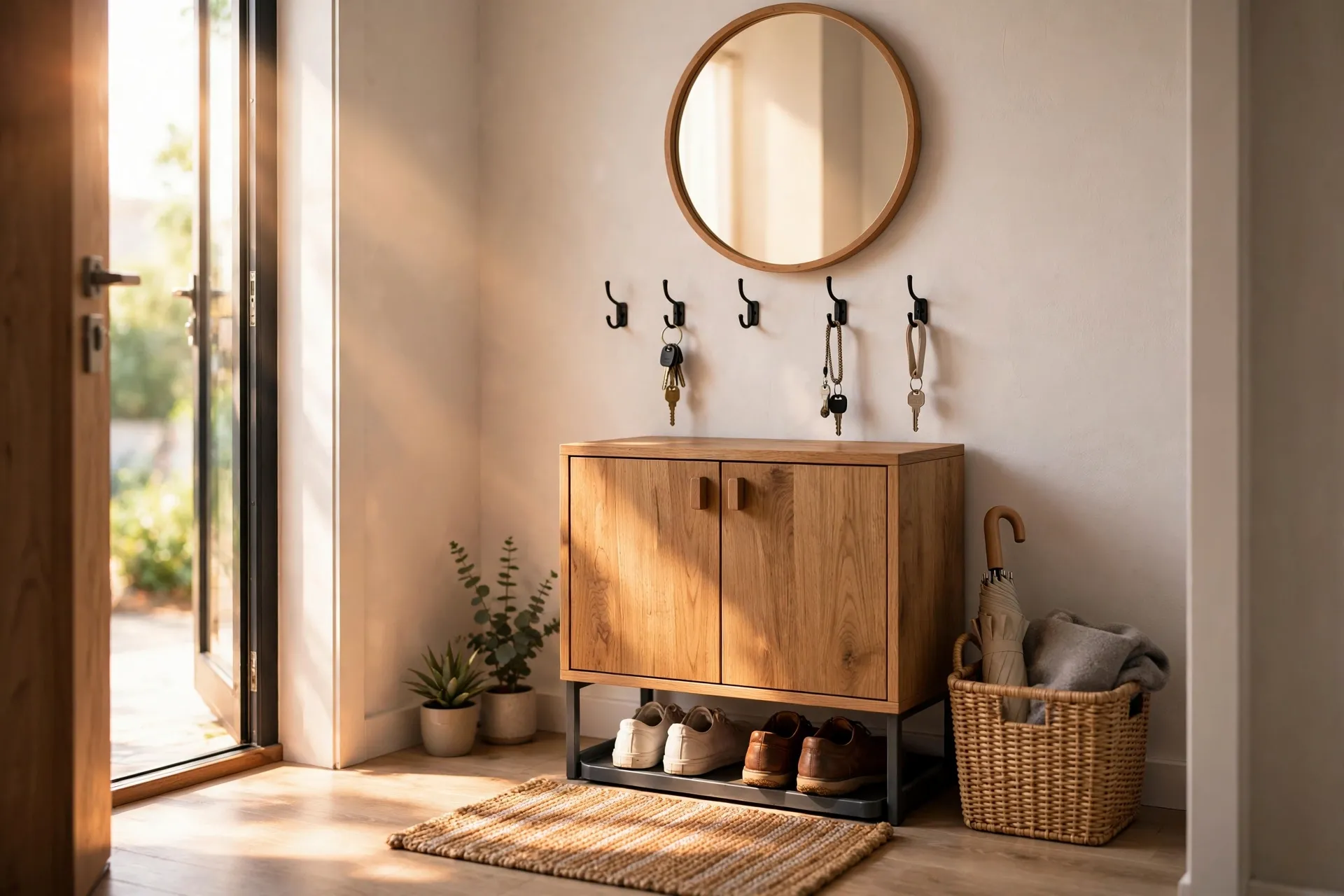
Modern entries favor hooks over bulky coat racks: a row of matte black, brass or wood hooks on a slim rail or directly on the wall. Space them 8 to 10 inches apart so coats do not overlap into a single mass. Four hooks serve a couple; six handle a family if each person gets one and guests get the rest.
Mount into studs or use proper anchors, because hooks carry real weight and cheap anchors pull out of drywall within a year. Keep one hook low for kids or for the bag you grab daily. The modern look demands restraint here: hooks with nothing on them should still look good, which means choosing simple, well-made hardware.
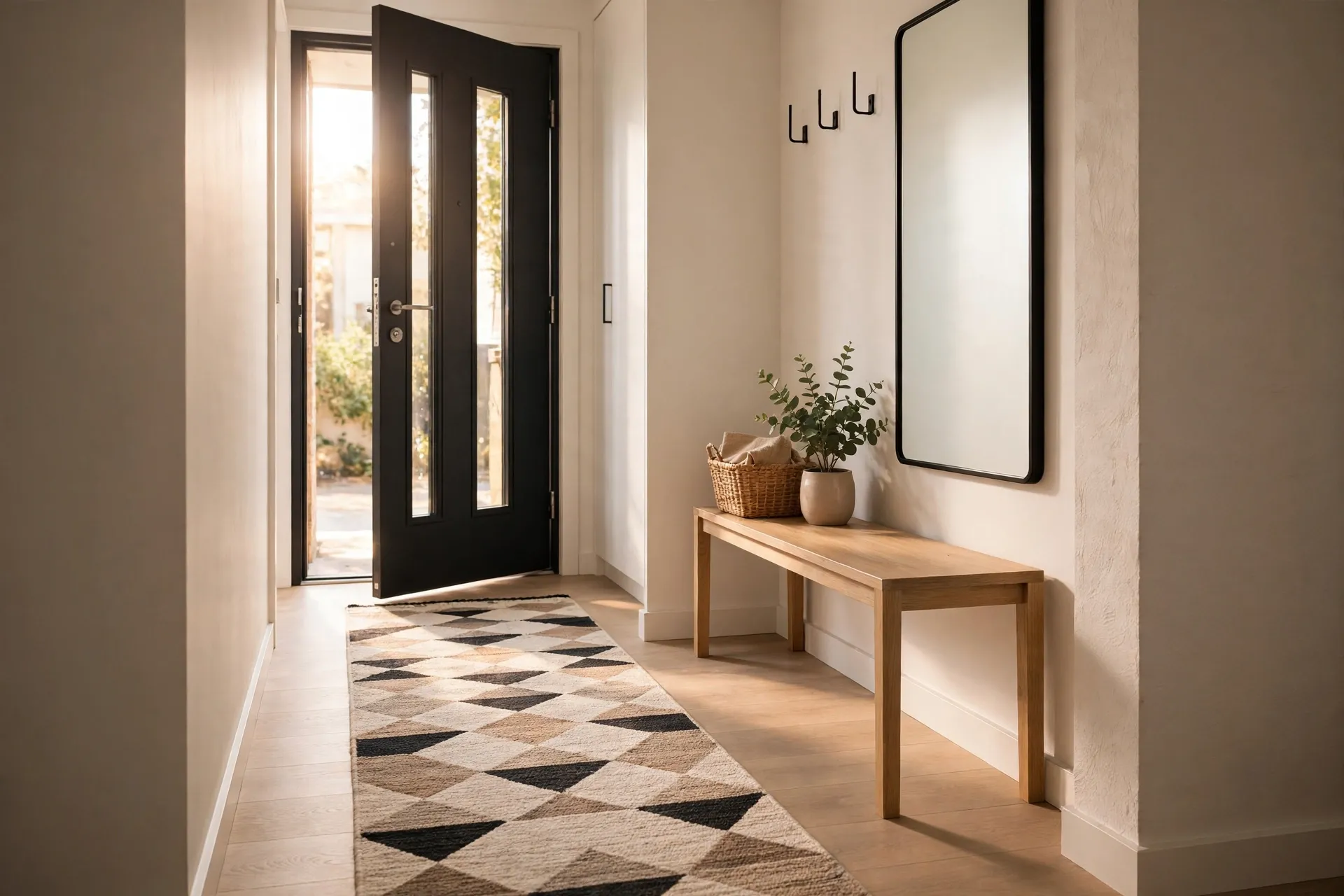
5. Lay a runner rug
A runner defines the entry’s path, protects the floor and adds the texture that modern spaces need to avoid feeling cold. Choose a low-pile, washable rug; entries take the most abuse of any floor in the home. The runner should span most of the walkway’s length but stop short of the door swing.
Pattern hides dirt, which is the practical argument for a graphic or vintage-style rug over a solid one. Darker tones and busy patterns forgive muddy shoes; pale minimal rugs demand constant cleaning. A rug pad underneath prevents slipping and adds the cushioning that makes the entry feel finished.
6. Hang a sculptural pendant
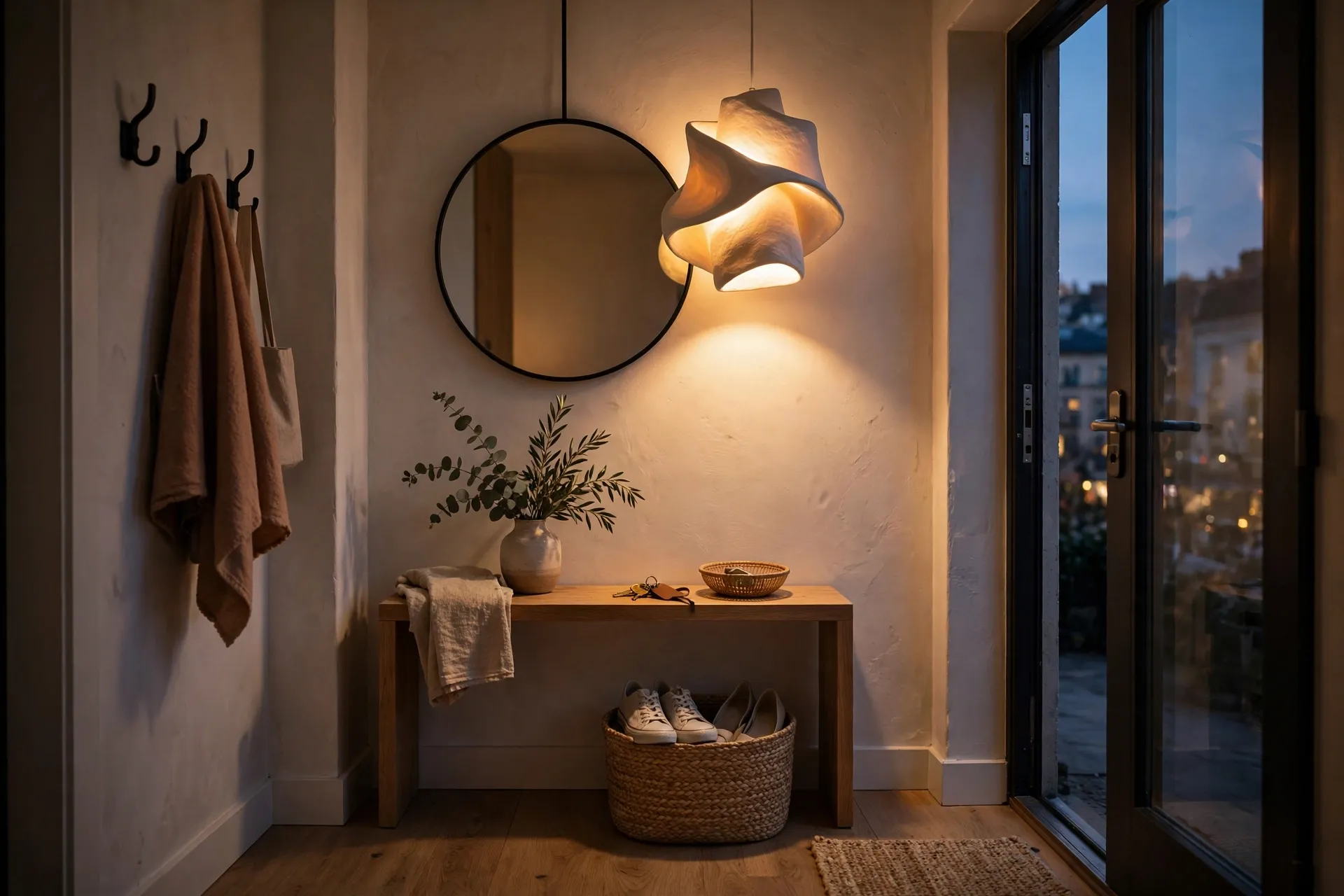
Overhead lighting is where modern entries earn their style points. A sculptural pendant, a paper globe, a brass dome, a black cage, hung at the right height becomes the entry’s jewelry. Hang it 7 feet from the floor minimum so tall visitors do not duck, and center it on the entry zone rather than the geometric room center.
If the entry has no ceiling fixture box, plug-in pendant kits with long cords and ceiling hooks achieve the look without an electrician. Put it on a dimmer or smart bulb; entries need bright light for finding things and soft light for evening ambiance, and one fixture should do both. For more on layering entry light, the same principles shape our narrow entryway ideas.
7. Bring in one tall plant
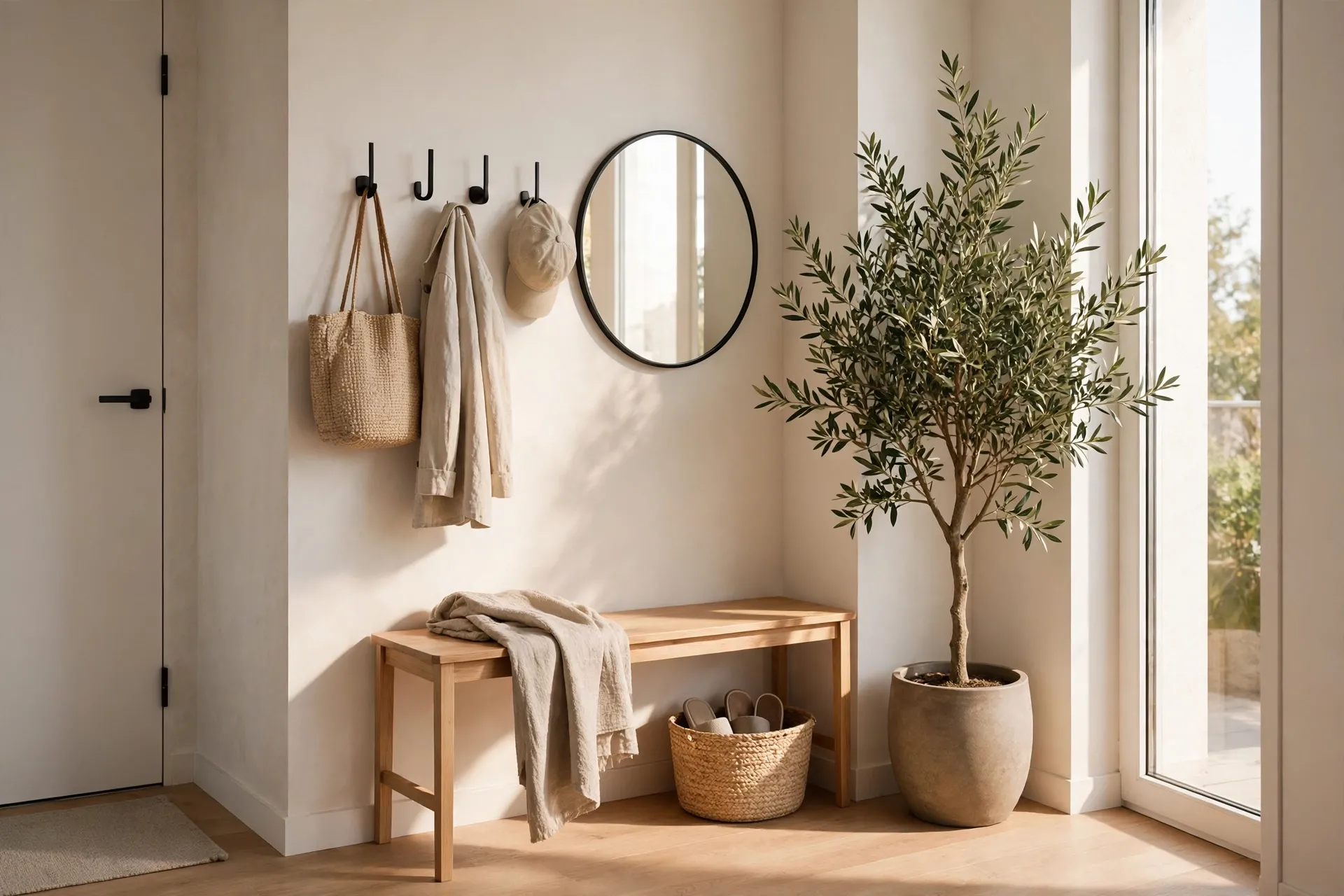
A single tall plant softens modernism’s hard edges and adds life to the entry’s first impression. Snake plants and ZZ plants tolerate the low light and neglect that entries dish out; olive trees and fiddle-leaf figs want the bright entries near glass doors. One confident plant beats a cluster of struggling small ones.
Choose a pot that suits the palette: matte ceramic, woven basket, simple concrete. The pot is visible furniture in a small entry, so it should look intentional. Keep the plant where it does not block the walkway or the mirror, usually the corner opposite the door swing. If the entry is truly dark, a good faux plant is better than a dead real one.
8. Paint the door or one wall bold
A modern entry can carry one bold move: a black front door interior, a deep green accent wall, a terracotta nook. The bold surface becomes the entry’s identity and lets everything else stay quiet. Interior door paint is renter-reversible with permission and a weekend; one accent wall is the smallest paint commitment with the biggest payoff.
Keep the bold choice to one surface. A black door plus a black accent wall plus black hooks is a theme park; a black door with light walls and wood hooks is modern. If you go bold on the wall, keep the art minimal and let the color do the work.
9. Install floating wall cabinets
Floating cabinets bring the kitchen’s clean storage logic to the entry: closed storage that hovers off the floor, making the space feel larger while hiding shoes, bags and the vacuum. A pair of 24-inch floating cabinets at bench height replaces a bulky shoe cabinet with something far lighter visually.
Mount into studs, since floating cabinets carry cantilevered weight. Keep the tops clear or style them minimally; the point is hidden storage, not display. Handleless push-to-open cabinets read most modern, but small children will open them endlessly, so households with toddlers may prefer simple pulls.
10. Choose a round rug for a square entry
Square entries and foyers suit round rugs, which soften the box and create a natural gathering point. A 4- to 6-foot round jute or wool rug under a small round table, or simply centered in the space, gives the entry a finished feeling that a rectangular rug cannot. Round rugs also forgive awkward door swings better than cornered ones.
Keep the rug’s edge at least 6 inches from walls so it reads as a defined island. In a square entry, the round rug plus a round mirror is a combination that never fails: circles calm the geometry. Washable round rugs exist now and are worth seeking out for entries.
11. Add a small stool instead of a bench
When a full bench will not fit, a single sculptural stool does half the job in a quarter of the footprint. It gives you a perch for shoes, a surface for the bag, and a design object in its own right. Wooden stools, upholstered cubes and concrete forms all suit modern entries; choose one that looks good empty, since it will be empty most of the day.
The stool cannot store, so pair it with wall storage: hooks above, a floating shelf beside. Think of the stool as the seating half of the bench equation and give the storage half to the wall. A 16- to 18-inch stool tucks under a console when guests arrive.
12. Hang floating shelves for display and storage
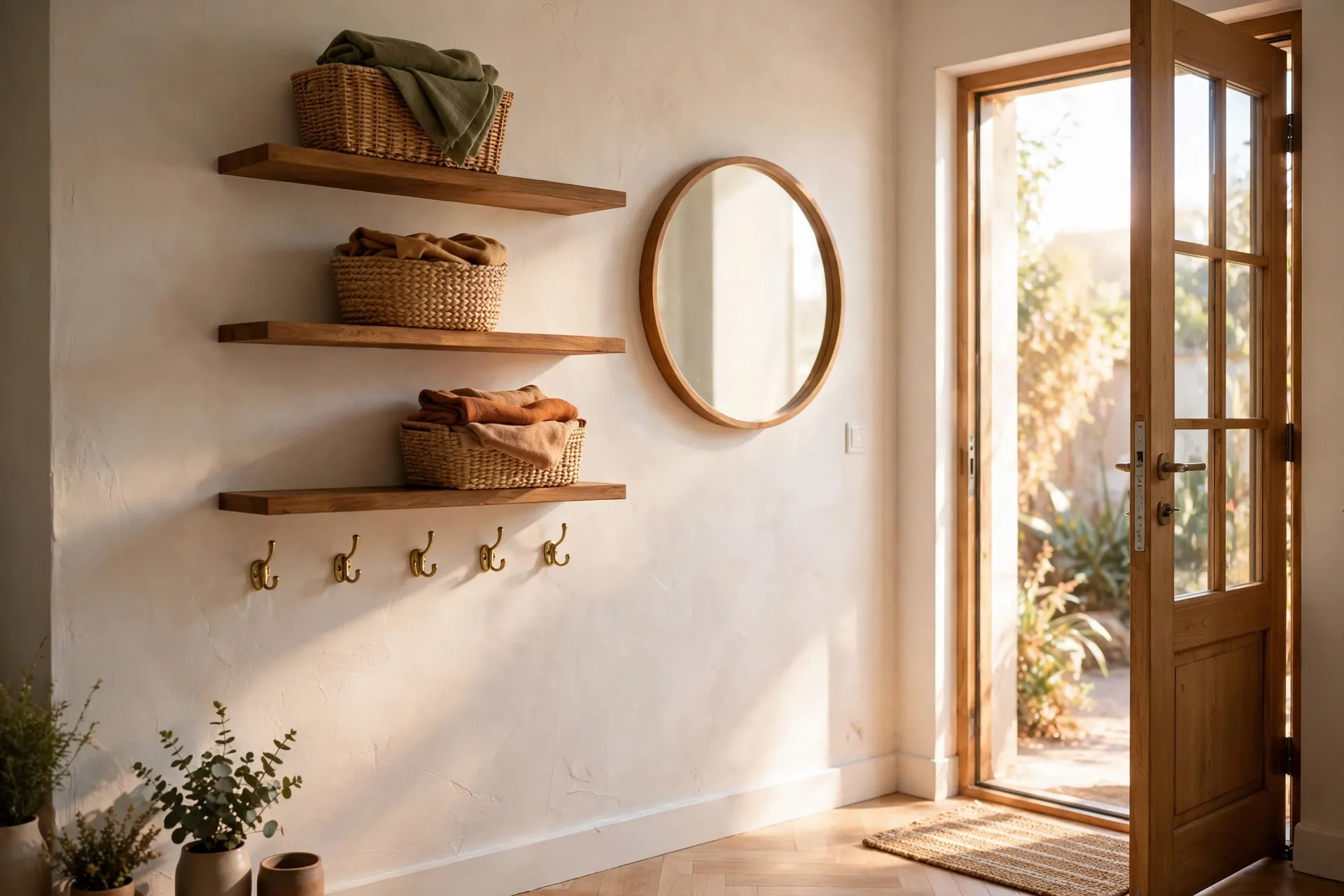
Two floating shelves in a modern entry hold the beautiful and the useful: a small plant and a framed print up top, baskets for gloves and hats below. Keep shelf styling minimal, three to five objects per shelf, since the modern entry’s calm depends on restraint. Matching baskets keep the useful half looking intentional.
Mount shelves at 60 and 72 inches for the classic stacked pair, or run one long shelf at 66 inches for a cleaner line. Depth of 8 to 10 inches suits most entry items. If the household needs serious coat and shoe storage beyond what shelves offer, consider stepping up to a small hall tree rather than adding more shelves; hooks and cubbies handle daily gear better.
13. Mount a slim mail organizer
Mail is the modern entry’s nemesis: it piles on every flat surface within days. A slim wall-mounted organizer with two or three slots, incoming, outgoing, action, contains it. Mount it by the door at eye level, next to the key tray, so sorting mail becomes part of the arrival routine.
The organizer only works if you process it weekly. Set a day: recycle the junk, file the keepers, act on the action slot. An organizer full of three-month-old mail is just vertical clutter. Go paperless where you can; the best mail organizer is an empty one.
14. Corral keys with a dedicated tray
Every modern entry needs one obvious home for keys, and a small tray or wall-mounted key holder by the door is it. The tray should be the first thing you touch arriving and the last thing leaving. Ceramic, stone or wood all suit the modern palette; choose something with a lip so keys do not slide off.
If multiple people share the entry, give the tray zones or get a holder with enough hooks for everyone. Keys that live “somewhere near the door” live nowhere. This tiny habit, keys in the tray, every time, does more for entry calm than any furniture purchase.
15. Finish with art at eye level
One piece of art at eye level tells visitors the entry is a designed space, not a corridor. Choose something that sets the tone: abstract, calm, personal. Size it to the wall segment, roughly two-thirds the width of the furniture below it, and hang the center at 57 to 60 inches.
In a narrow entry, art on the wall opposite the mirror creates a pleasing dialogue. Avoid gallery walls in tiny entries; one confident piece suits the modern restraint better. And keep art away from the door swing’s arc; a door handle through a canvas is a special kind of heartbreak.
How to Plan a Modern Entryway
List the entry’s jobs before buying anything: shoes for how many people, coats, keys, mail, bags, the dog leash. Then measure the wall and the walkway, noting the door swing and any switches. Assign each job to a piece: bench for shoes, hooks for coats, tray for keys, organizer for mail. Anything without an assigned home will live on the floor.
Choose a palette of three materials maximum: wood, black metal and one textile, for example. Modern entries stay calm through restraint, and restraint is easier when every new piece has to match the existing three. Buy the storage pieces first and the decor last; a beautiful entry that cannot hold your coats is a failed entry.
Modern Entryway Mistakes to Avoid
The classic mistake is styling before storing: the pretty console with no place for shoes, the art wall above a pile of boots. Function first, always. The second mistake is blocking the path; entries are circulation first, and every piece must preserve a clear 36-inch walkway. Measure the walkway after placing furniture, not before.
Avoid too many small objects. Five tiny decor pieces on a console read as clutter; one tray, one lamp and one plant read as design. And do not forget lighting: a modern entry with a single harsh ceiling light feels like a hallway, while the same entry with a pendant and a lamp feels like a welcome. The same light-and-bright thinking that opens up a kitchen applies here; see our guide on how to make a small kitchen look bigger for the shared principles.
A modern entryway is a system, not a style: a place for shoes, a place for coats, a place for keys, good light, and one thing of beauty. Build the system first and the style follows on its own.
Looking for more ideas? Browse our storage & organization stories.
Save to Pinterest