In this article
- 1. The slim console cabinet with doors
- 2. The tilt-out shoe cabinet
- 3. The compact hall tree cabinet
- 4. The floating wall cabinet
- 5. The mirrored-door cabinet
- 6. The corner cabinet
- 7. The cane-front cabinet
- 8. The bench cabinet with lift-up seat
- 9. The apothecary drawer cabinet
- 10. The converted bar cabinet
- 11. The coat closet cabinet tower
- 12. The over-door cabinet
- 13. The radiator cover cabinet
- How to Choose an Entryway Cabinet
- Entryway Cabinet Mistakes to Avoid
- Keeping It Tidy
The entryway is the smallest room with the biggest job: it has to catch shoes, coats, keys, mail, and bags in about fifteen square feet. A small entryway cabinet does this without the visual chaos of open hooks and shoe piles. These thirteen picks all fit entries under 40 inches wide, with real dimensions so you can check your own wall. Setting up your first place? Our first apartment checklist puts the entryway cabinet in the right buying phase so it arrives before the clutter does.
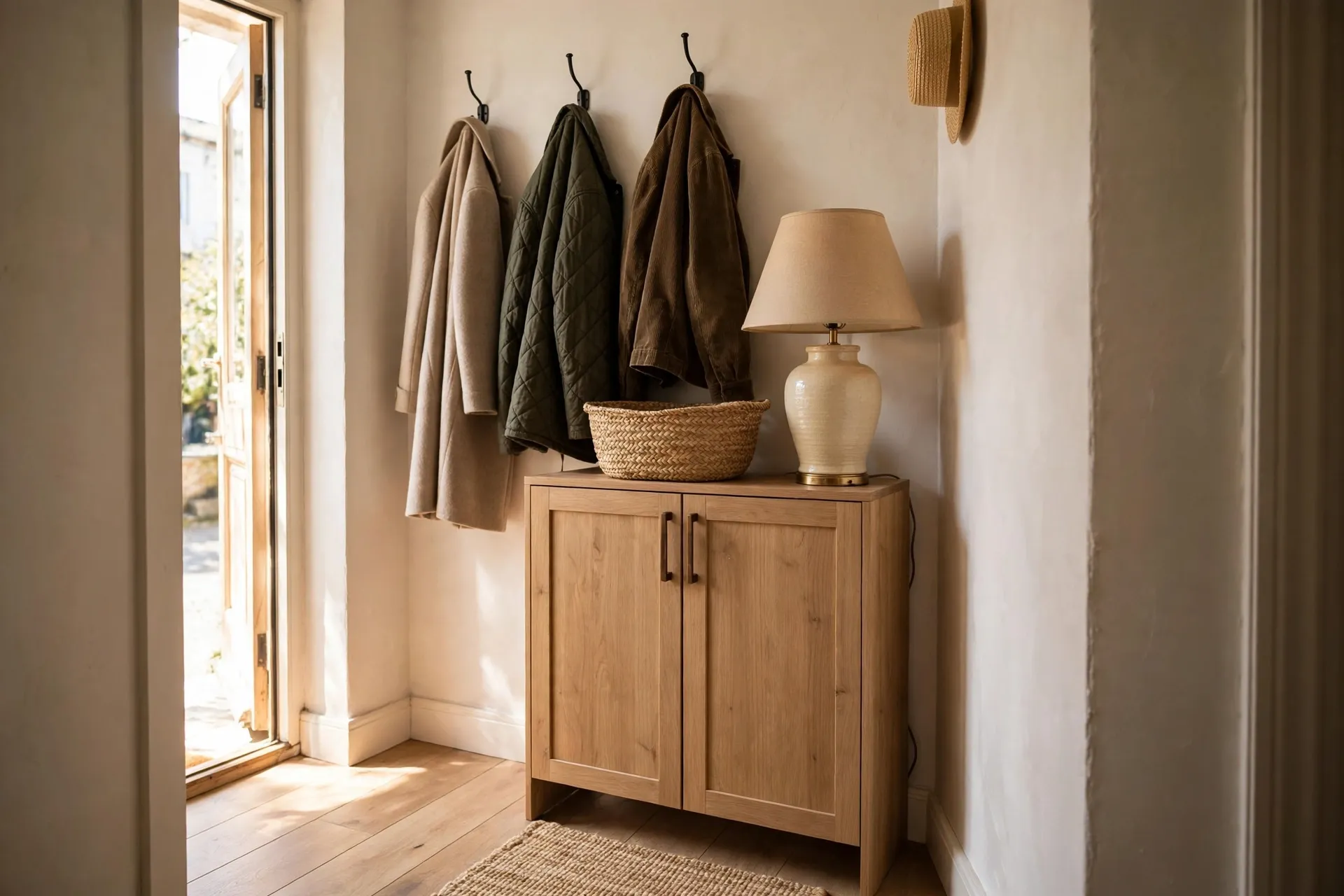
1. The slim console cabinet with doors
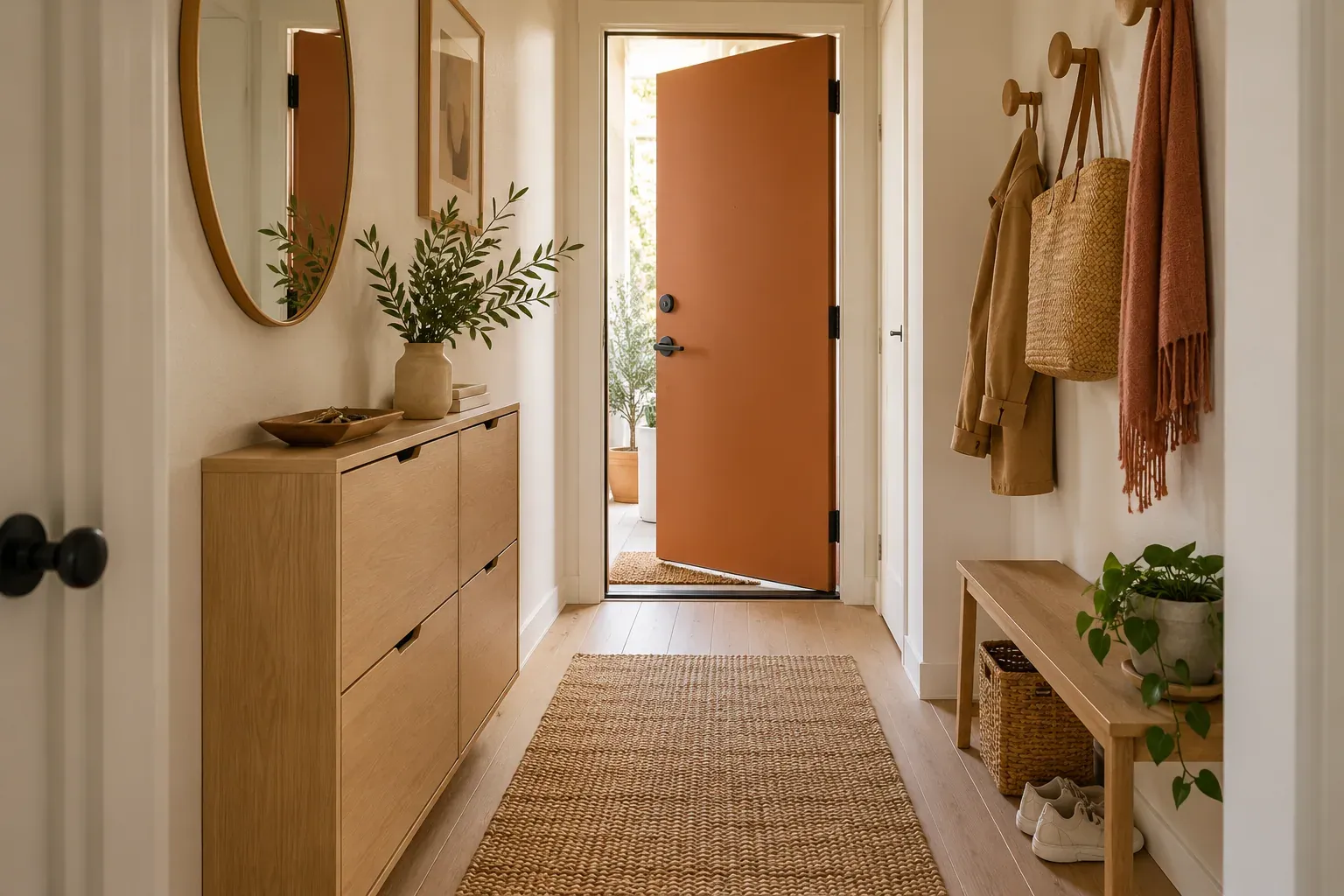
A console cabinet 10 to 14 inches deep and 30 to 36 inches wide fits hallways where a standard 18-inch-deep piece would block traffic. Doors hide the mess; a drawer catches keys and sunglasses. Top it with a small lamp and a tray, and the entry looks finished.
Keep the styling to three objects so the surface stays usable for mail and bags. Anchor it to the wall if it is tall and narrow, since entry cabinets get bumped daily. For more ways to work with tight entries, see our narrow entryway ideas.
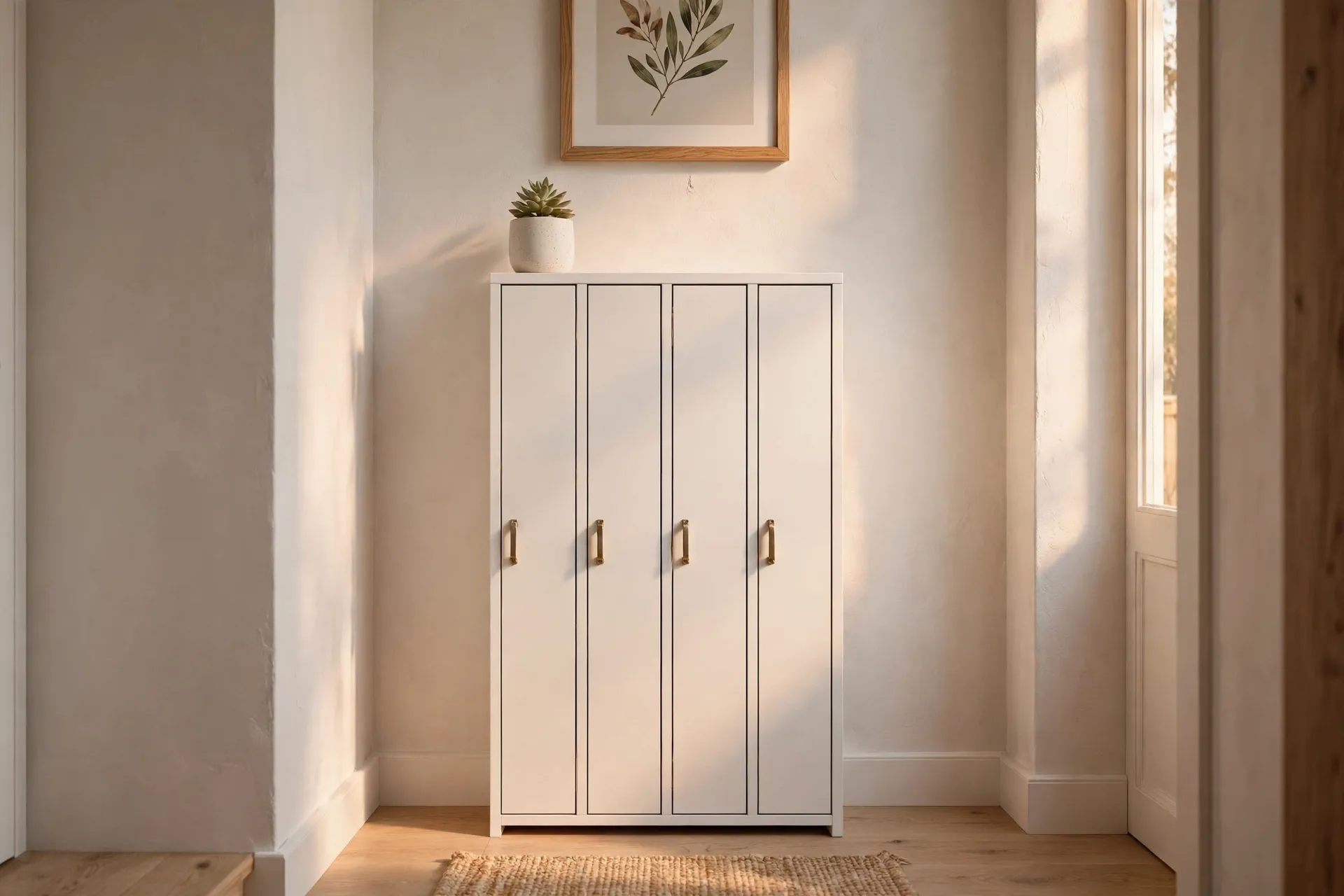
2. The tilt-out shoe cabinet
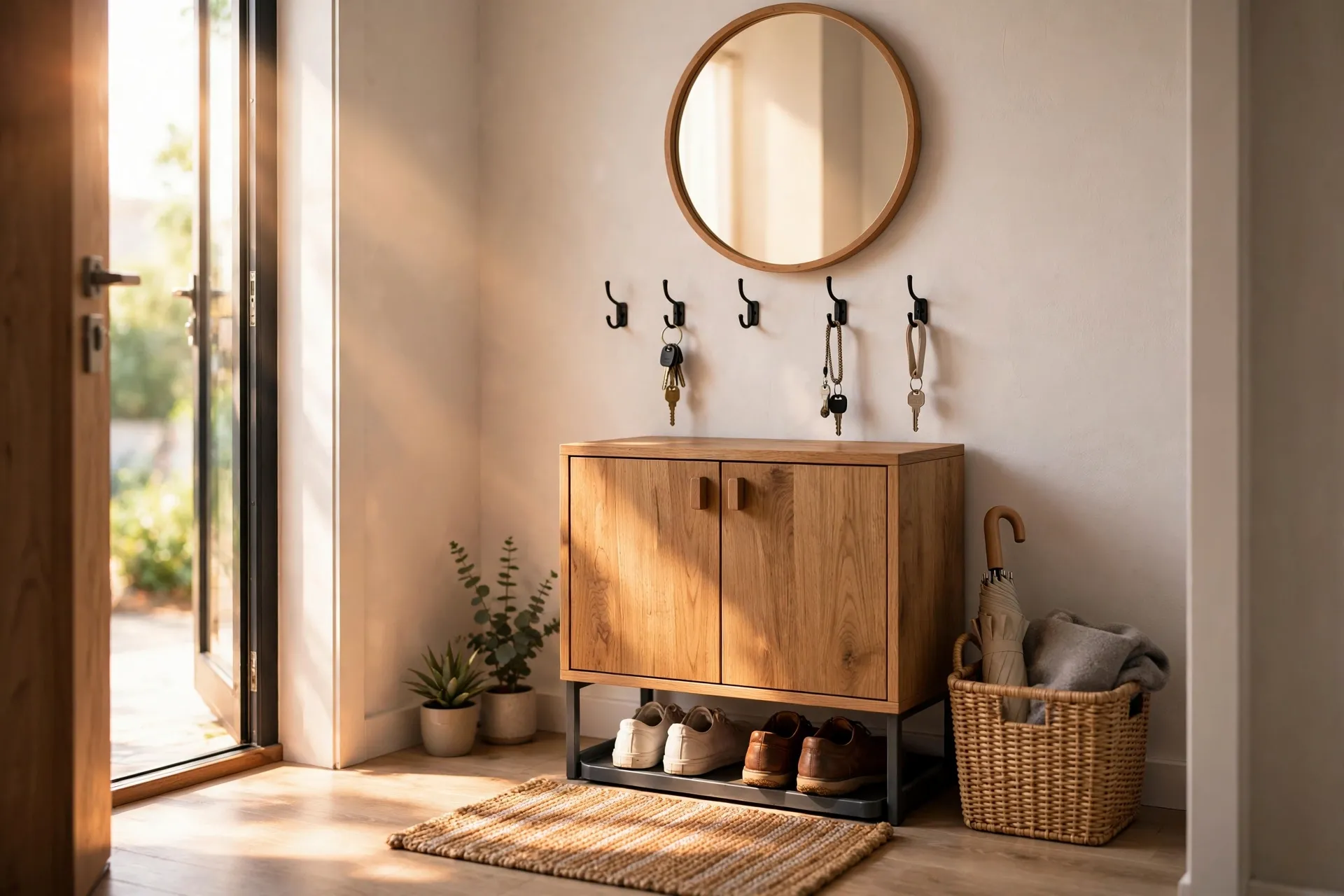
Tilt-out cabinets hide three pairs of shoes per compartment behind doors that look like wall paneling. At 7 inches deep, they fit behind any door swing. A 30-inch-wide unit swallows nine pairs, which covers most couples.
Measure your tallest shoes first; boots need a separate solution. Ventilate by leaving compartments slightly ajar overnight once a week, or odors build up. Wipe the interiors monthly; shoe cabinets are the one place where a baking soda sachet earns its keep.
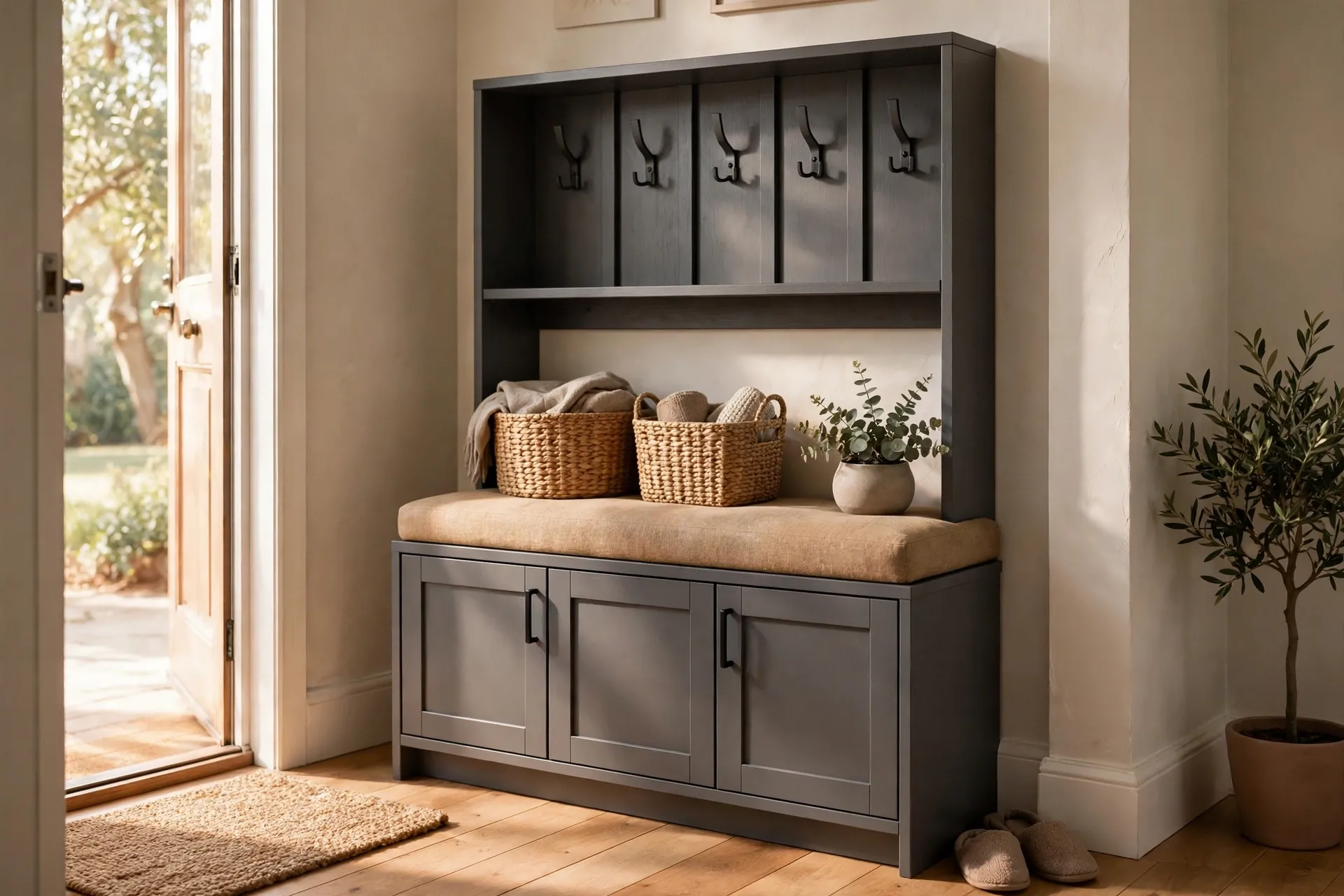
3. The compact hall tree cabinet
A hall tree combines bench, hooks, and cabinets in one 36-inch-wide unit. The bench handles sitting to tie shoes; lower cabinets hide the shoes themselves; upper hooks take coats. It is the most storage per square foot on this list.
Check ceiling height before buying; hall trees run 70 to 80 inches tall. Position it on the door’s hinge side so the swing never hits it. For households over three people, one hall tree is not enough; add a second shoe cabinet rather than cramming.
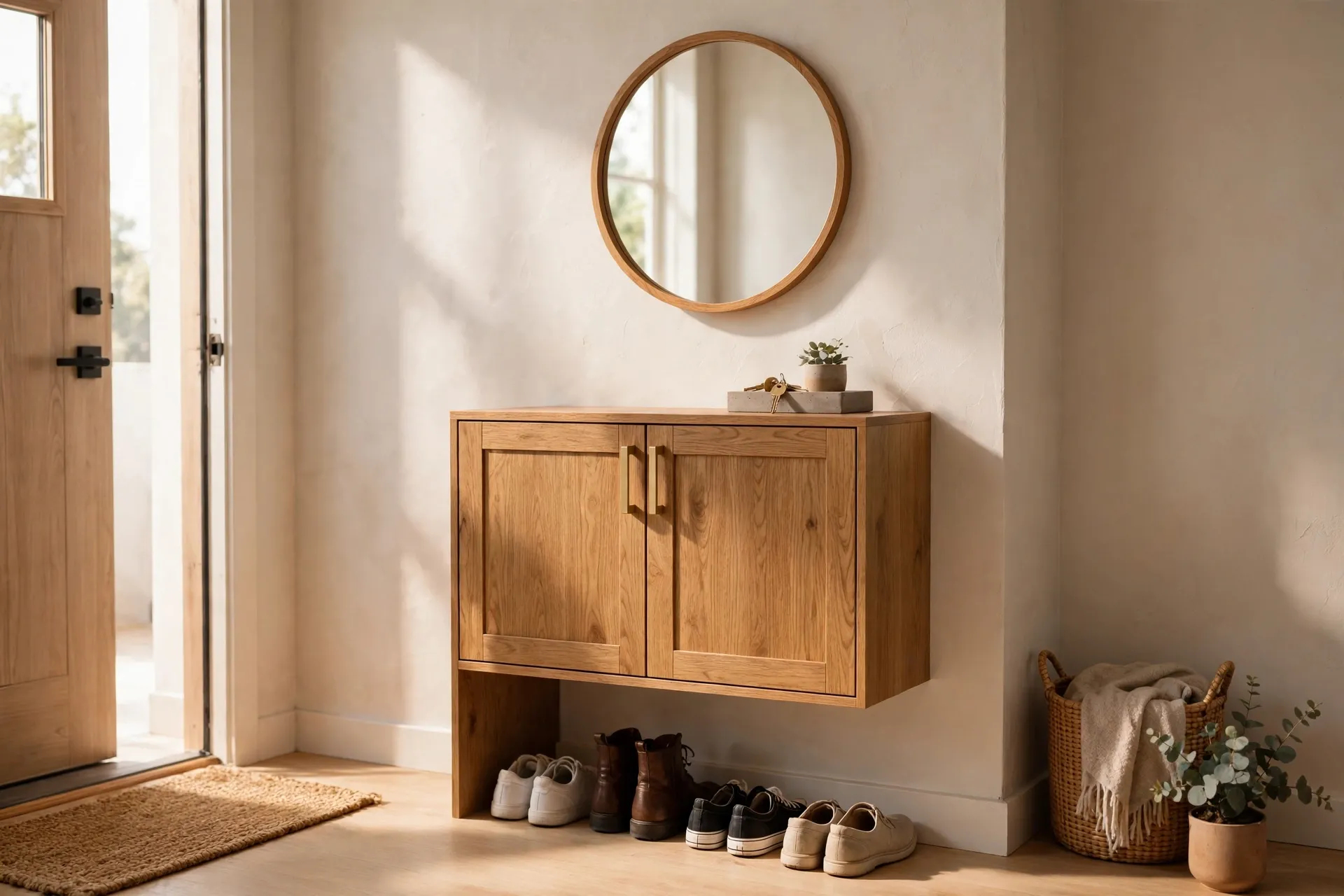
4. The floating wall cabinet
Wall-mounted cabinets leave the floor visible, which makes a tiny entry feel larger and lets a robot vacuum pass underneath. Mount 12 to 16 inches off the floor in a finish that matches the trim. The floating look reads modern and intentional.
This needs studs or serious anchors, so confirm with the landlord first. Keep the load modest; floating cabinets sag under heavy contents. Pair with a wall-mounted folding seat for the full floating entry that never touches the floor.
5. The mirrored-door cabinet
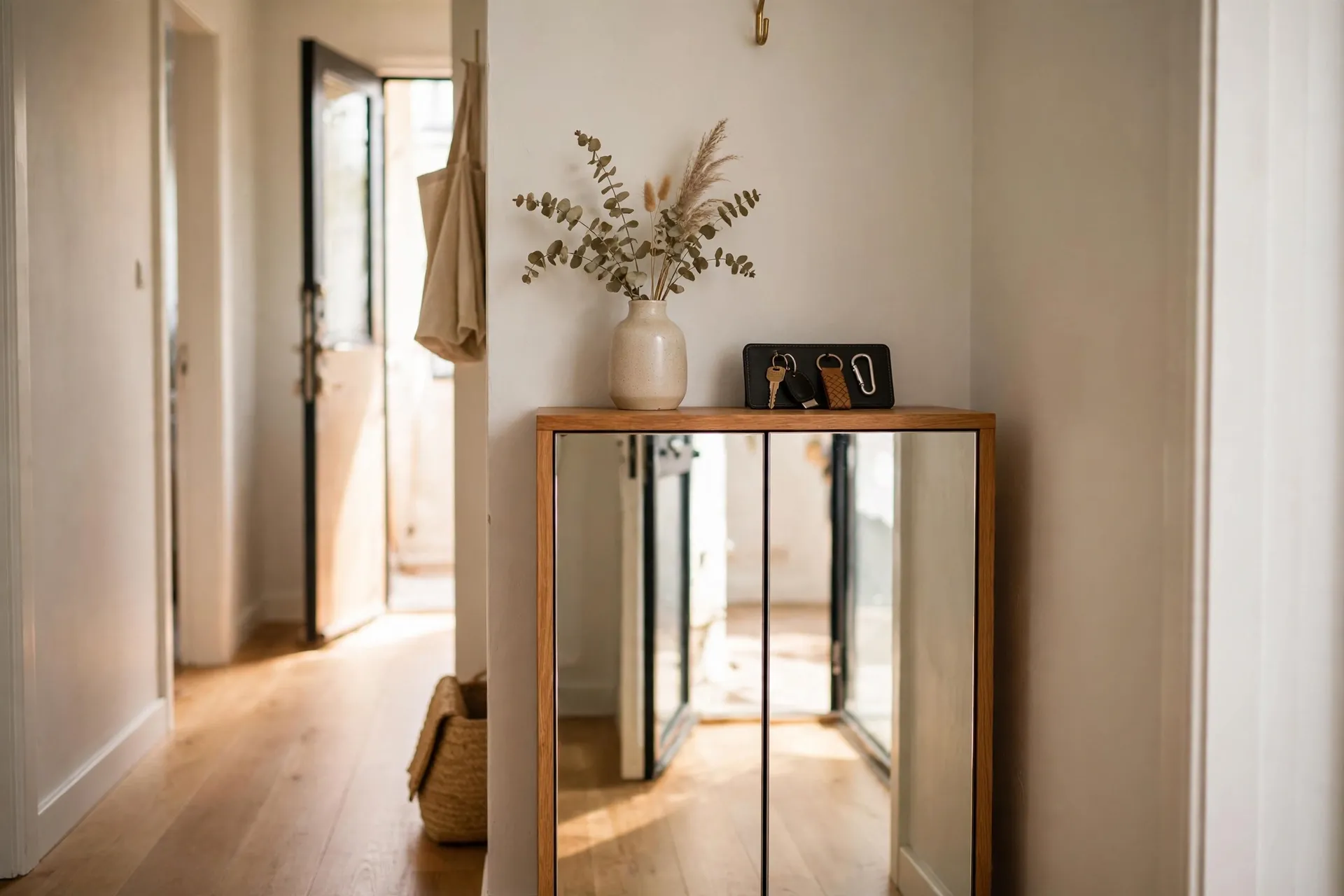
Mirrored doors do double duty: hidden storage plus a last-look mirror before you leave. The reflection also bounces light into dark hallways, which windowless entries desperately need. A 24-inch-wide mirrored cabinet suits the narrowest foyers.
Keep a microfiber cloth in the cabinet; fingerprints show on mirrors daily. A black frame makes a small cabinet look deliberate rather than bulky, and dark finishes can sharpen a whole room; see black bedroom decor ideas for how deep tones work in compact spaces. Check that the doors clear any adjacent door swing before mounting.
6. The corner cabinet
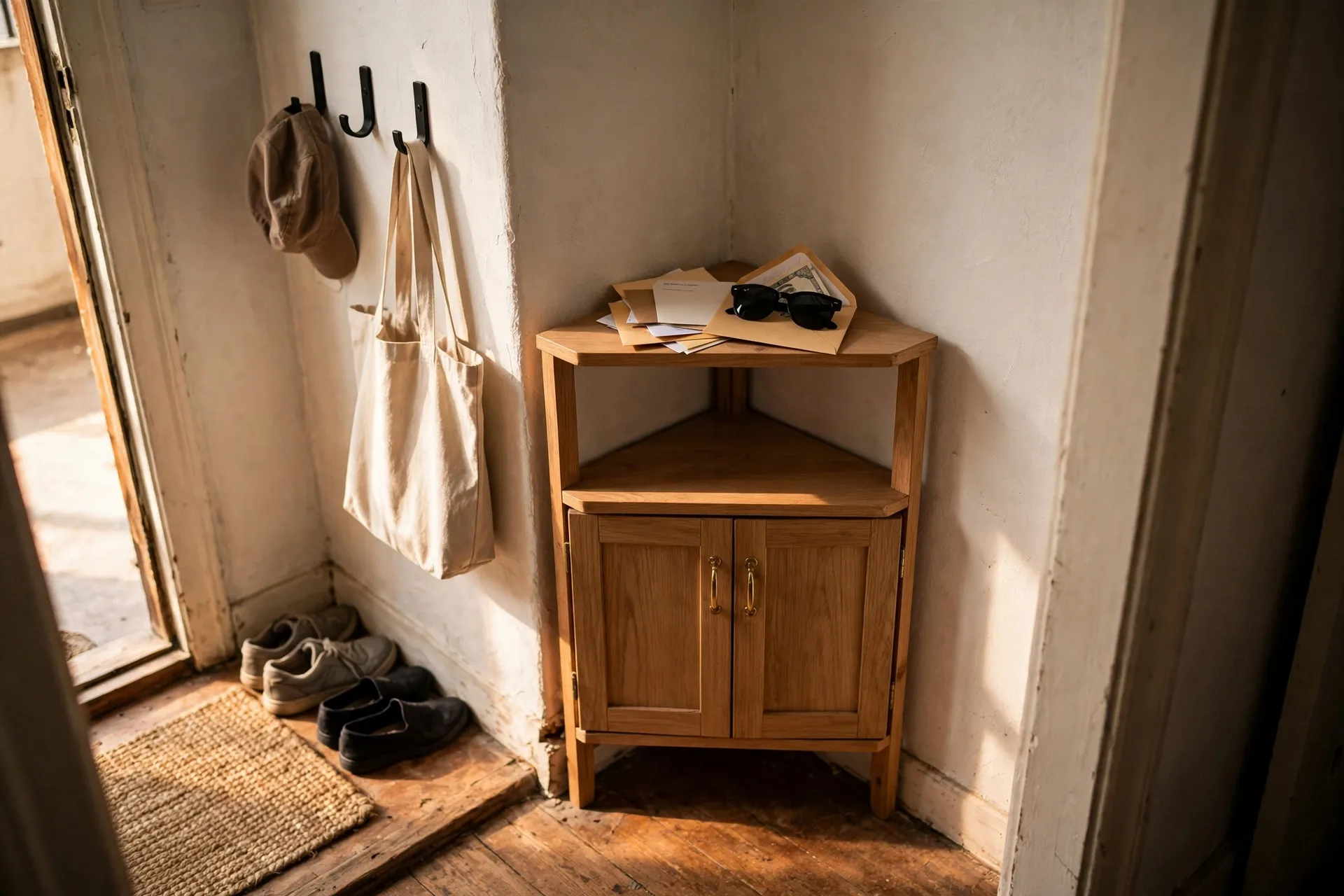
Awkward entry corners, the 18-inch dead space beside the door, fit a triangular or narrow corner cabinet perfectly. It holds mail, sunglasses, and hand sanitizer right where you need them. This is found space; it costs zero walkway.
Measure the corner’s actual angle; not all corners are square, especially in old buildings. A small round-top corner table with a cabinet below is easier to fit than a true triangular piece. Keep it low enough that it never blocks the light switch.
7. The cane-front cabinet
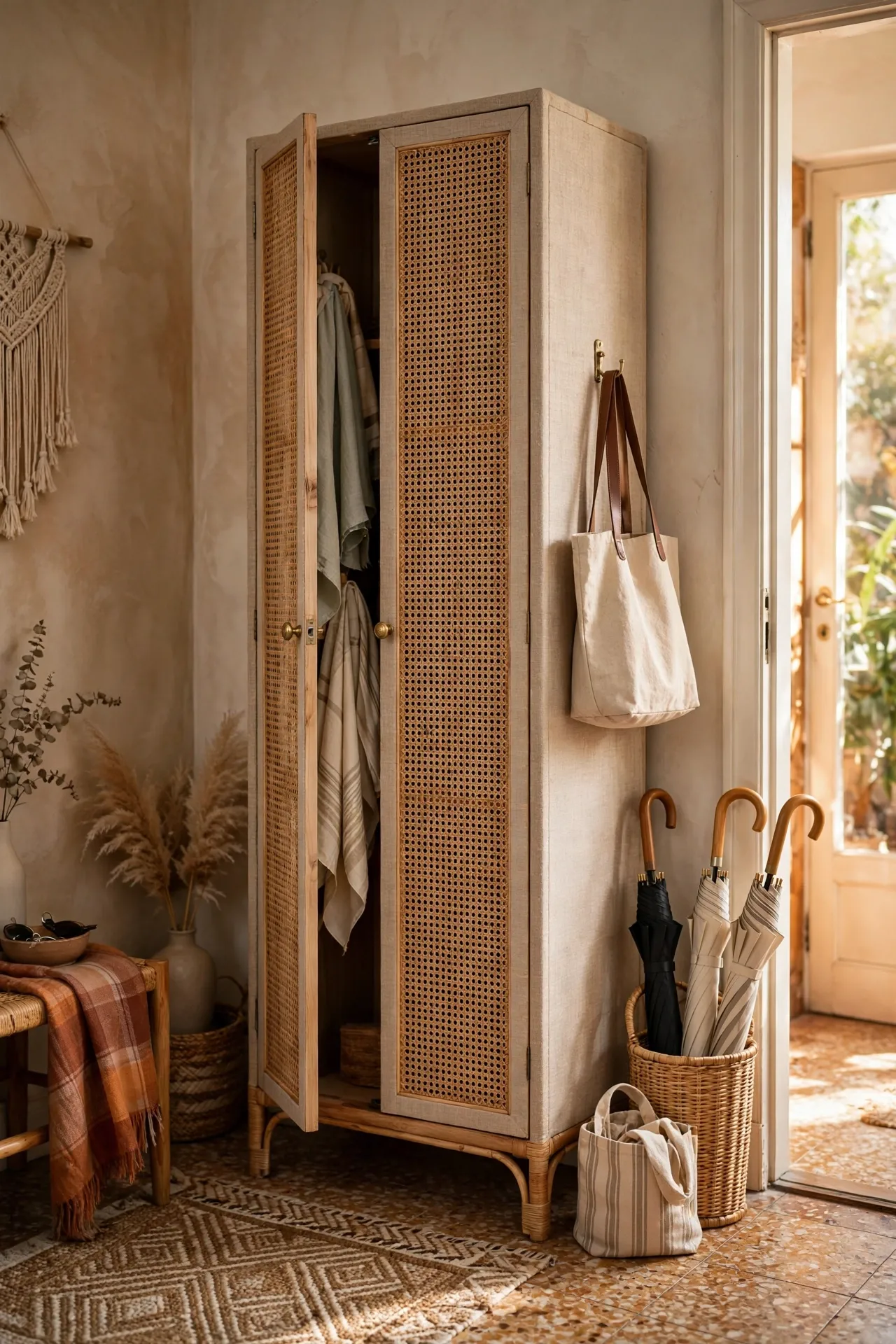
Cane webbing doors ventilate, which matters for a cabinet holding damp scarves and umbrellas. The texture adds warmth that flat doors lack, and the look suits boho, coastal, and modern rooms alike. A narrow cane cabinet, 16 inches deep, breathes where solid doors would trap moisture.
Dust cane with a soft brush; vacuum crevices gently. Keep it out of direct sun or the cane dries and splits. This is the prettiest ventilation solution on the list, and it hides clutter while letting air move.
8. The bench cabinet with lift-up seat
A storage bench with a hinged top seats one adult and swallows sports gear, reusable bags, and the shoe overflow. At 14 inches deep it still fits narrow halls. Add a cushion and it becomes the most-used seat in a small apartment.
Hinged lids need overhead clearance, so skip this if hooks hang directly above. Soft-close hinges stop slammed fingers. This is the best pick for families; kids can manage a lift-up lid years before they manage cabinet doors neatly.
9. The apothecary drawer cabinet
Many small drawers beat one big cabinet for entry clutter: each drawer gets a category, keys, dog gear, batteries, tape, first aid. A 12-drawer apothecary-style cabinet, 30 inches wide, organizes the small things that otherwise colonize every surface.
Label each drawer; unlabeled drawers become junk drawers within a month. Shallow drawers, 3 to 4 inches deep, force the discipline. This cabinet suits people who lose things; everything small finally has an address.
10. The converted bar cabinet
A secondhand bar cabinet, with its drop-down serving shelf and interior storage, converts beautifully to an entry cabinet. The drop-down shelf becomes a package-opening station; the interior holds shoes and bags. Thrift stores sell them for 40 to 100 dollars.
Check the drop-down mechanism; vintage hinges wear out. Repaint in a satin finish that wipes clean, since entry furniture takes abuse. The compact footprint, usually 16 inches deep, was designed for small dining rooms and fits entries just as well.
11. The coat closet cabinet tower
If your entry has a shallow closet, install a cabinet tower inside: drawers below, shelves above, shoe cabinet on one side. You triple the storage without touching the hallway. Closet-depth units, 14 to 16 inches, fit standard reach-in closets.
Remove the closet doors or replace them with a curtain for daily access. Add a battery motion light inside; closet conversions go dark. This is the highest-capacity option here for the footprint, since it uses full closet height.
12. The over-door cabinet
The wall above the entry door, usually dead space, fits a shallow 12-inch-deep cabinet for out-of-season gear: sunscreen, hats, holiday doormats. It is out of the daily sightline, which is exactly right for rarely used items.
Keep a folding step stool in the nearest closet; without it, the cabinet becomes a black hole. Do not store anything heavy overhead near a door people walk under daily. Two small cabinets flanking the door frame work when one wide unit will not fit.
13. The radiator cover cabinet
In older apartments, the entry radiator eats a whole wall. A radiator cover cabinet with a slatted top turns it into a console surface while letting heat through. The top holds keys and mail; the enclosure hides an ugly radiator.
Never fully enclose a radiator; slats or mesh on the front and top are mandatory for airflow and safety. Keep the cover 2 inches clear of the radiator on all sides. This only suits hot-water radiators, never electric baseboards, which need full clearance.
How to Choose an Entryway Cabinet
Measure the walkway first: you need 36 inches of clear passage, so subtract cabinet depth from the hall width. Then inventory what the entry must hold: count shoes, coats, and bags honestly. Pick the cabinet type that matches the inventory, then the finish that matches the home.
One cabinet that fits beats two that crowd. If the entry still overflows after the cabinet, the problem is volume, not furniture; a seasonal purge of coats and shoes fixes what no cabinet can.
Entryway Cabinet Mistakes to Avoid
Buying too deep is the classic error; a 20-inch cabinet in a 48-inch hallway leaves a 28-inch squeeze. The second is open storage for messy reality; open cubbies look great empty and terrible with actual shoes. Doors hide the truth.
Do not block the door swing, the light switch, or the thermostat. And anchor anything tall; entry cabinets take bumps from bags, kids, and dogs, and a freestanding tower in a high-traffic pinch point is a tipping accident waiting to happen.
Keeping It Tidy
The cabinet only works if things go back in it. Institute a nightly two-minute reset: shoes in, mail sorted, bags hung. Seasonal purges, spring and fall, keep the inventory matched to the weather.
Wipe cabinet fronts monthly; entry furniture collects hand grime faster than any other piece. Tighten hardware yearly. A small entryway cabinet that stays organized makes the whole apartment feel calmer, because it is the first and last thing you see every day.
Looking for more ideas? Browse our storage & organization stories.
Save to Pinterest