In this article
- 1. Start with a Cohesive Color Palette
- 2. Make a Statement with a Well-Proportioned Pendant Light
- 3. Mix Dining Chairs for a Collected Look
- 4. Define the Dining Area with a Properly Sized Rug
- 5. Add a Sideboard for Storage and Visual Balance
- 6. Soften the Room with Thoughtful Window Treatments
- 7. Bring in Warmth with Natural Materials
- 8. Give the Room More Character with Architectural Detail
- 9. Introduce Greenery and Natural Shapes
- 10. Balance the Furniture Around the Way You Use the Room
- How to Decorate a Dining Room Without Overdoing It
- Common Dining Room Decorating Mistakes to Avoid
- Frequently Asked Questions
- How can I make my dining room look more stylish?
- What should I put on a dining room sideboard?
- What kind of rug works best in a dining room?
- How do I decorate a small dining room?
- How do I make a formal dining room feel more inviting?
- Conclusion
A well-decorated dining room should feel inviting on an ordinary weekday, not just when the table is set for guests. The right lighting, comfortable seating, a considered color palette, and a few well-chosen furnishings can make the space feel finished without filling it with unnecessary accessories.
Whether your dining room is a separate room or part of an open-plan living area, thoughtful decorating can help it feel like its own destination. These dining room decorating ideas focus on details that add warmth, balance, and everyday function.
1. Start with a Cohesive Color Palette
A clear color palette helps the dining room feel connected from the walls to the furniture and smaller details. Warm white, soft beige, muted green, clay, and natural wood create a relaxed foundation. For a more dramatic look, consider deep blue, olive, or charcoal balanced with lighter upholstery and warm finishes.
You do not need to use every shade equally. Choose one main neutral, one supporting color, and one accent tone that appears in smaller details.
Styling tip: Repeat the same color in two or three places, such as the dining chairs, curtains, and artwork. This creates a sense of continuity without making the room look too coordinated.
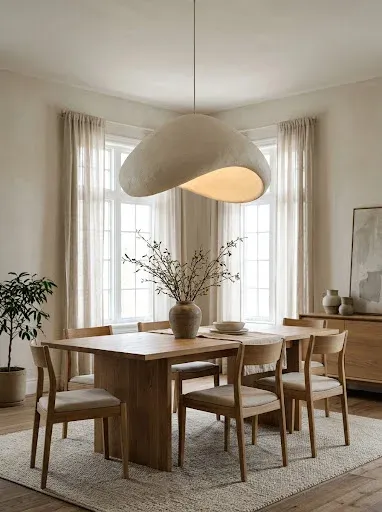
2. Make a Statement with a Well-Proportioned Pendant Light
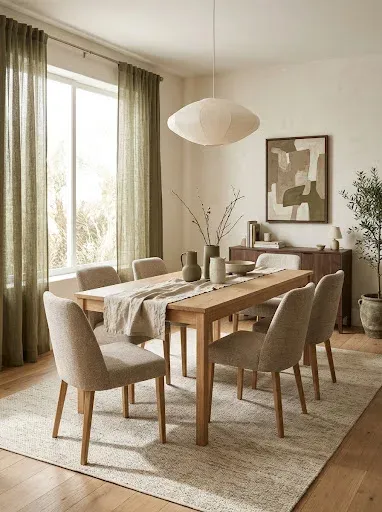
A dining room pendant can act as the room’s main visual anchor. A sculptural shade, a simple linen drum, or a pair of understated pendants can give the area a finished look while providing useful light.
Consider the table’s shape when selecting the fixture. A linear pendant can suit a long rectangular table, while a single rounded or sculptural fixture often works well over a round table.
Styling tip: Hang the fixture at a height that provides good illumination without obstructing views across the table. Check the fixture manufacturer’s installation guidance and adjust for ceiling height.
Best for: Dining rooms that feel plain or lack a clear focal point.
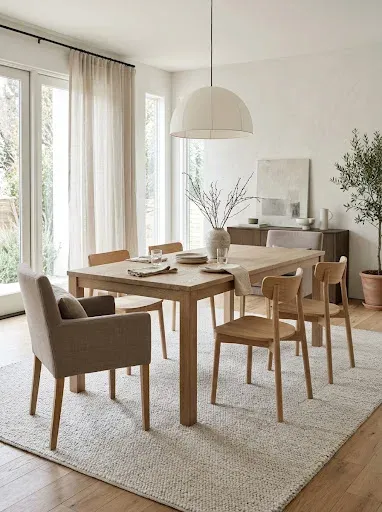
3. Mix Dining Chairs for a Collected Look
Matching dining chairs create a formal, uniform appearance, but a thoughtful mix can make the room feel more personal. You might combine upholstered end chairs with simpler wood side chairs, or pair a bench on one side with individual chairs on the other.
The pieces should share a common feature, such as finish, seat height, material, or color. This gives the arrangement a connected look even when the designs differ.
Styling tip: Keep the dining table as the visual anchor and avoid combining too many unrelated chair styles. Comfort matters as much as appearance, especially when the dining room is used every day.
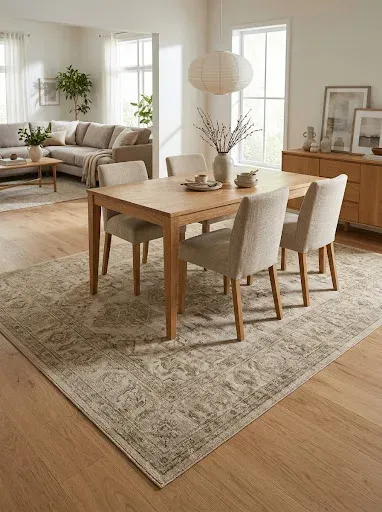
4. Define the Dining Area with a Properly Sized Rug
A rug adds softness underfoot and helps distinguish the dining area from nearby living spaces. It is especially useful in open-plan homes where there is no wall or doorway separating the dining zone.
Choose a rug large enough for dining chairs to remain on it when pulled away from the table. A low-pile, flatwoven, or easy-clean design is often more practical than a thick shag rug.
Styling tip: Use the rug to introduce pattern or texture, but keep its colors connected to the rest of the room.
Practical note: Before purchasing, measure the table and allow enough extra space on all sides for chairs to move comfortably.
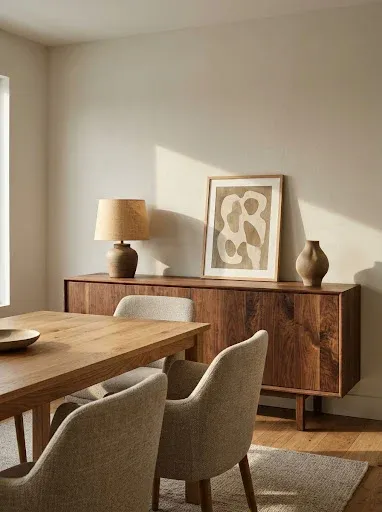
5. Add a Sideboard for Storage and Visual Balance
A sideboard can make a dining room more functional while adding a strong piece of furniture to the space. Use it to store serving pieces, table linens, and everyday dining accessories, keeping the main table free for meals and gatherings.
Choose a design that suits the room’s proportions. A long, low sideboard works well on a wide wall, while a narrower cabinet may be a better fit in a compact dining area.
Styling tip: Keep the top surface simple. A lamp, a framed artwork leaning against the wall, and one sculptural vessel can make the sideboard feel finished without crowding it.
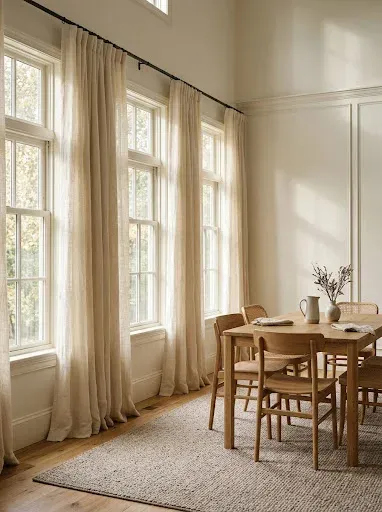
6. Soften the Room with Thoughtful Window Treatments
Window treatments make a dining room feel complete and help control glare during meals. Linen curtains bring a relaxed texture, while tailored Roman shades can suit rooms where floor space is limited.
Choose a fabric weight that suits the amount of natural light. Light-filtering fabrics keep the room bright, while lined curtains offer more privacy and light control.
Styling tip: Repeat a color or texture from the chairs, rug, or sideboard so the window treatment feels part of the overall design.
Practical note: Make sure curtains clear dining chairs and do not interfere with doors or radiators.
7. Bring in Warmth with Natural Materials
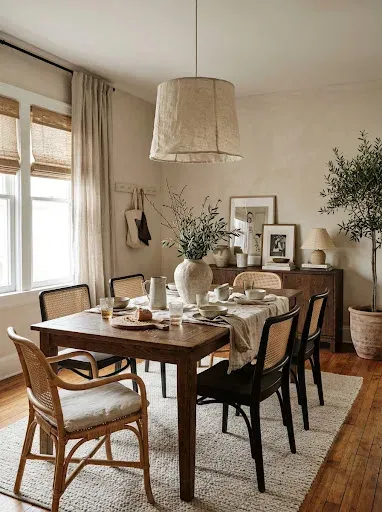
Natural materials help a dining room feel less formal and more comfortable. Wood, woven cane, linen, stone, ceramic, and rattan each introduce a different surface texture.
Try a wood dining table with upholstered chairs, a woven pendant shade, or a stone sideboard top. You can also introduce natural materials through smaller pieces such as a ceramic lamp or woven storage baskets.
Styling tip: Mix contrasting finishes rather than matching everything. A dark wood table can look beautiful with light linen seating and a pale textured rug.
8. Give the Room More Character with Architectural Detail
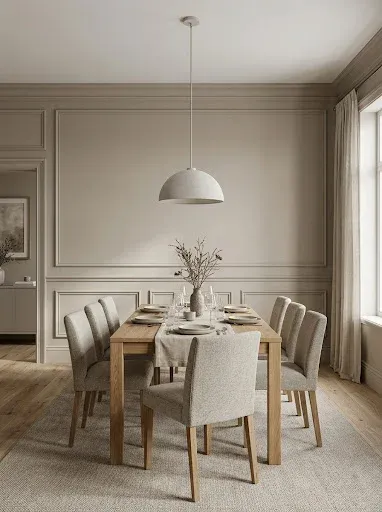
Architectural details can make a dining room feel more considered, even when the furniture is simple. Picture-frame molding, board-and-batten, subtle wall paneling, or a painted lower wall can add definition.
Choose one treatment that suits the proportions of the room. In a compact dining space, slim trim and a restrained color often work better than oversized panels or heavy detailing.
Styling tip: Paint the wall and molding in the same shade for a subtle, unified finish, or use gentle contrast to make the detail more visible.
For additional ideas for larger blank walls, see our long wall decorating ideas.
9. Introduce Greenery and Natural Shapes
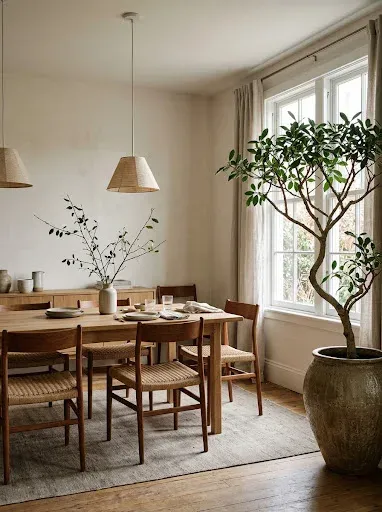
A little greenery can soften the straight lines of dining furniture and bring life to the room. A large indoor plant in an empty corner, a simple branch arrangement, or a small potted plant on a sideboard can be enough.
Consider the light conditions before choosing a plant, and leave enough room for dining chairs and walking paths. If the room receives little natural light, choose a suitable low-light plant or use a carefully selected faux arrangement.
Styling tip: Look for natural, sculptural shapes rather than adding many small plants across every surface.
10. Balance the Furniture Around the Way You Use the Room
A beautiful dining room needs to work in everyday life. Leave enough space for chairs to move, ensure the table is accessible, and avoid placing storage furniture where it narrows the main path.
In an open-plan home, use a rug, pendant, sideboard, or change in wall color to define the dining area. In a separate room, make sure the table remains the natural center of the layout.
Styling tip: Measure the room before buying furniture. A table that looks attractive in a showroom may feel too large once chairs are pulled out.
For compact spaces, our guide to small dining room ideas offers more layout-conscious inspiration. You can also explore how to style a dining table for ideas focused specifically on the tabletop.
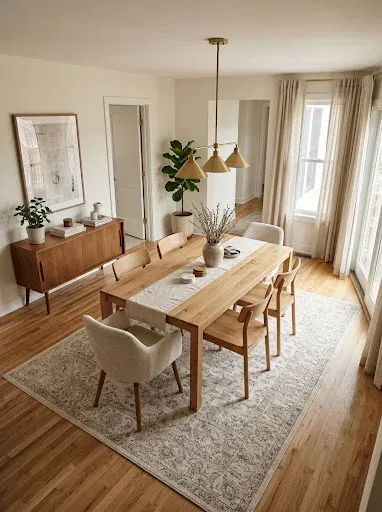
How to Decorate a Dining Room Without Overdoing It
Start with the largest elements: the table, chairs, lighting, and rug. These pieces establish the room’s overall look and should feel balanced in scale.
Next, introduce softer details such as curtains, artwork, and a few natural materials. Keep the sideboard and other surfaces edited rather than filling every available space. The goal is to create a welcoming room that can transition easily from everyday meals to a special gathering.
Common Dining Room Decorating Mistakes to Avoid
- Choosing a light fixture that is too small: A tiny pendant can look lost above a large table. Consider the table length and room proportions before selecting a fixture.
- Using a rug that does not fit the table: Dining chairs should remain on the rug when pulled out. A rug that is too small can become frustrating in daily use.
- Crowding the room with furniture: A sideboard, display cabinet, and large table may not all fit comfortably. Leave room for movement.
- Matching every finish: Too many matching pieces can make the room feel flat. Introduce subtle differences in wood tones, fabric textures, and materials.
- Ignoring practical lighting: A beautiful pendant should still provide enough light for meals and everyday tasks. Consider dimming options where appropriate.
- Decorating only for special occasions: The room should feel inviting when the table is not set. Comfortable chairs, warm lighting, and useful storage matter every day.
Frequently Asked Questions
How can I make my dining room look more stylish?
Start with a cohesive color palette, a well-sized light fixture, and comfortable seating. Add a rug, curtains, and one or two decorative details that connect the materials and colors across the room.
What should I put on a dining room sideboard?
A sideboard can hold a table lamp, a ceramic vase, framed artwork, or a small collection of serving pieces. Leave some open surface so it remains useful for everyday dining.
What kind of rug works best in a dining room?
A low-pile or flatwoven rug is often practical because chairs can move more easily across it. Choose a size that allows the chairs to remain on the rug when pulled out from the table.
How do I decorate a small dining room?
Use appropriately scaled furniture, a well-positioned pendant, light-reflecting finishes, and a limited color palette. A rug can define the dining zone, while a slim sideboard can provide storage without taking up too much room.
How do I make a formal dining room feel more inviting?
Introduce natural textures, softer lighting, comfortable chairs, and a warmer color palette. You can keep elegant furniture while making the room feel more relaxed through linen, wood, ceramics, and gentle layered lighting.
Conclusion
A welcoming dining room is built from more than a beautiful table. Lighting, seating, rugs, storage, window treatments, and natural materials all contribute to how the space looks and feels. Start with the pieces that make the biggest difference, keep the layout practical, and add personality through a few well-chosen details.
Looking for more ideas? Browse our small space living stories.
Save to Pinterest