In this article
- How to Decorate an Empty Living Room Corner
- 8 Living Room Corner Ideas to Try in Your Home
- 1. Create a Cozy Reading Corner with an Accent Chair
- 2. Add a Tall Indoor Plant for Natural Height
- 3. Install Floating Corner Shelves for Stylish Display
- 4. Style a Slim Console Table in an Unused Corner
- 5. Turn an Empty Corner into a Small Home Office
- 6. Create a Beautiful Gallery Corner with Framed Artwork
- 7. Add a Floor Lamp and Side Table for a Warm Evening Corner
- 8. Create a Built-In Look with a Corner Bookcase
- How to Choose the Right Living Room Corner Furniture
- Living Room Corner Decorating Ideas for Small Spaces
- Common Mistakes to Avoid When Decorating Living Room Corners
- Frequently Asked Questions
- What should I put in an empty living room corner?
- How do you decorate a small living room corner?
- How can I make a living room corner look cozy?
- What furniture works best in a living room corner?
- How do I decorate a living room corner without furniture?
- How do I make an awkward living room corner look intentional?
- Final Thoughts
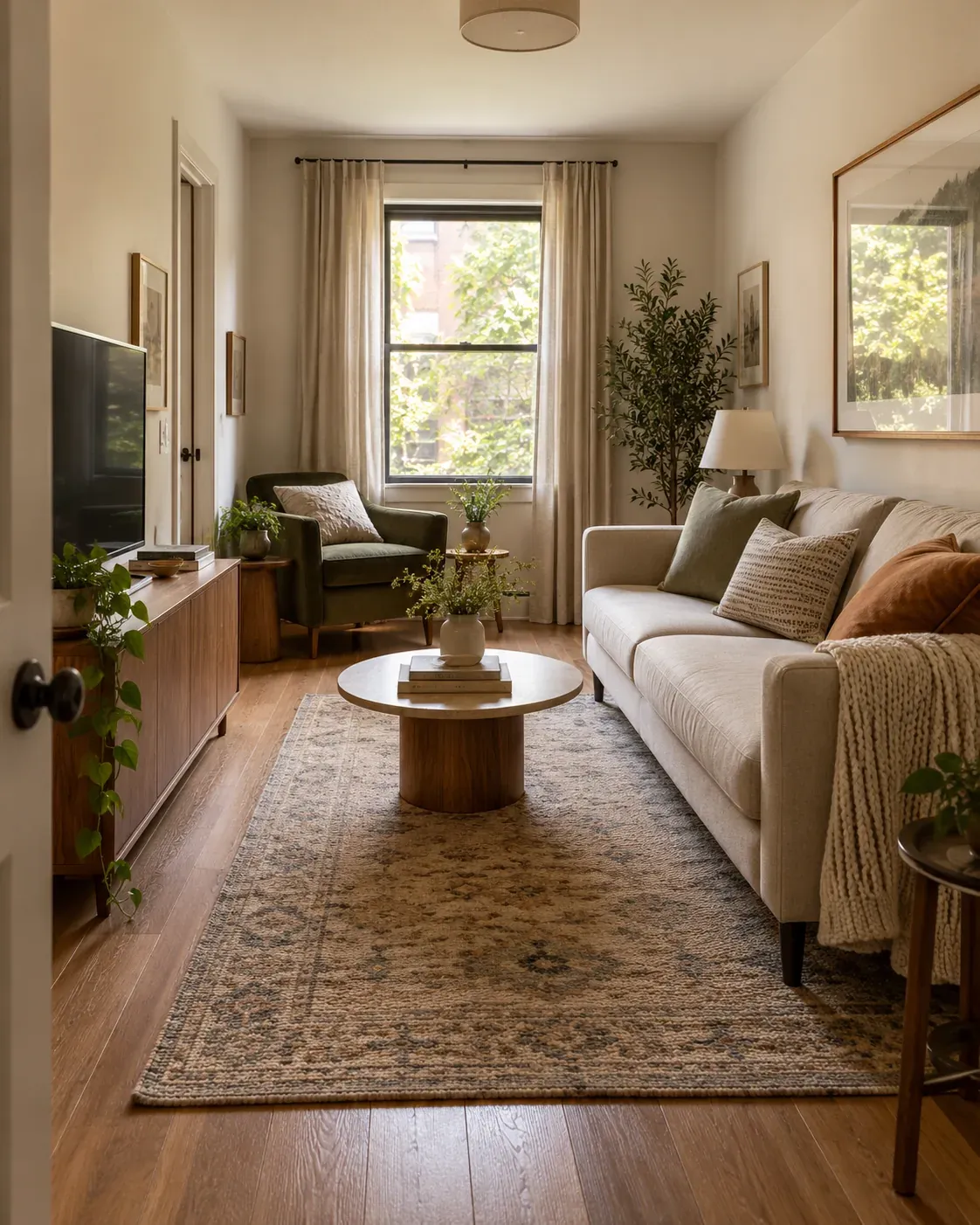
An empty corner can make an otherwise beautifully decorated living room feel unfinished. You might have the perfect sofa, a lovely coffee table, and carefully chosen wall art, yet one awkward corner still looks bare or disconnected from the rest of the space.
The good news is that you do not need to fill every empty corner with furniture. Sometimes a comfortable chair, a slim floor lamp, a few floating shelves, or even one beautiful decorative arrangement is enough to make the room feel more complete.
The best living room corner ideas combine appearance with purpose. A neglected corner can become a cozy reading spot, a small home office, a place to display favorite objects, or simply a beautiful decorative feature that adds personality to the room.
Whether you have a spacious living room or a compact apartment, these eight ideas will help you make better use of those overlooked spaces without making the room feel crowded.
How to Decorate an Empty Living Room Corner
Before choosing furniture or accessories, think about what the corner needs.
Some corners need additional seating, while others would benefit from vertical storage or a little decorative interest. Consider how people move through the room, where natural light enters, and whether the corner has enough space for the furniture you want to introduce.
A few simple principles can help:
- Choose furniture that suits the available floor space.
- Use vertical elements when floor space is limited.
- Repeat colors and materials already present in the room.
- Avoid filling corners simply because they look empty.
- Give each corner one clear purpose or focal point.
- Keep walkways and access to windows unobstructed.
Once you understand what the space needs, it becomes much easier to choose a decorating approach. For more space planning tips, check our guides on small living room layout ideas and how to make a small living room feel bigger.
8 Living Room Corner Ideas to Try in Your Home
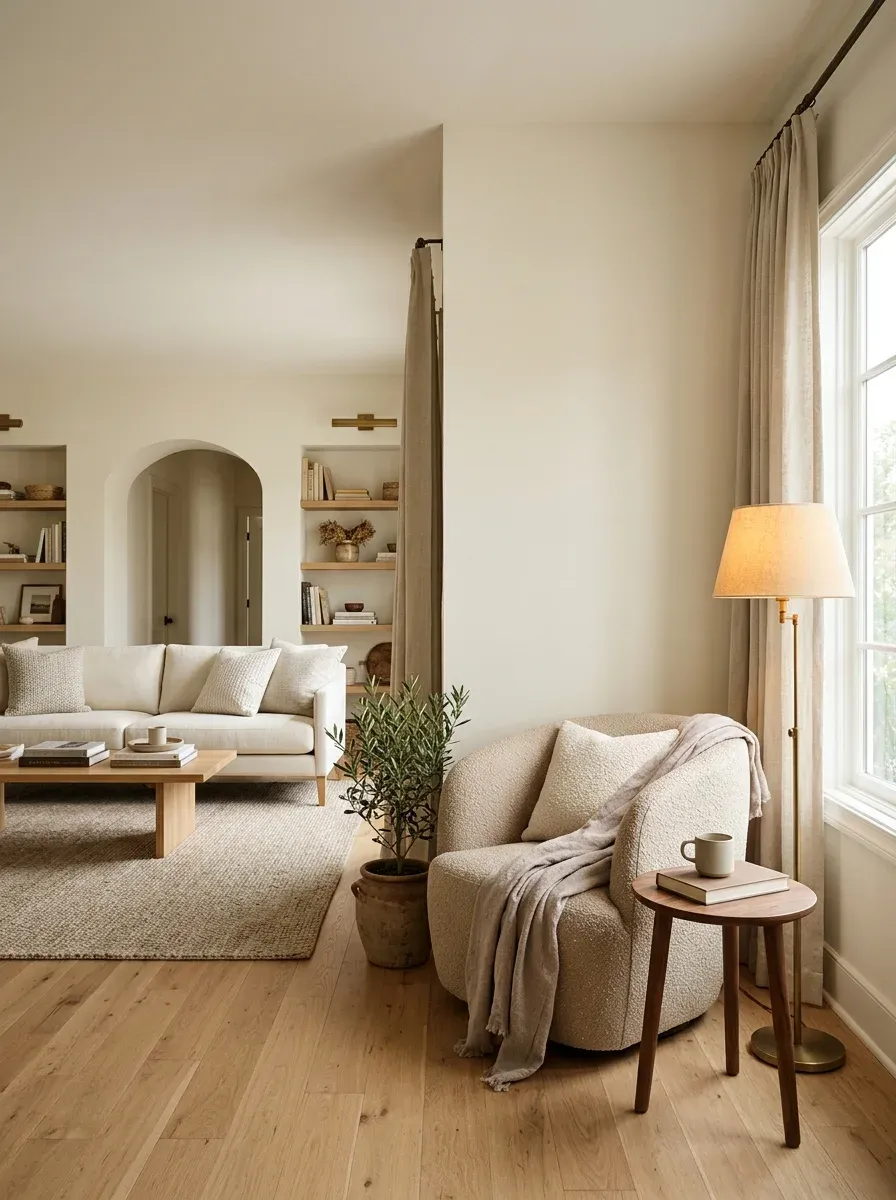
1. Create a Cozy Reading Corner with an Accent Chair
An empty corner beside a window is an excellent place to create a small reading nook.
Start with a comfortable accent chair that fits the available space. A curved upholstered chair, a compact armchair, or a classic linen reading chair can all work beautifully.
Add a small round side table where you can place a book, a cup of coffee, or a decorative object. A slim floor lamp beside the chair provides useful reading light while also making the corner feel more intentional.
To make the arrangement comfortable, introduce a textured cushion and a soft throw blanket. Choose fabrics that complement the rest of your living room rather than introducing an entirely different decorating style.
What to include:
- Compact upholstered accent chair
- Small side table
- Slim floor lamp
- Decorative cushion
- Soft throw blanket
Best for: Empty corners near windows, unused spaces beside sofas, and living rooms that need an additional seating area.
Styling tip: Leave enough room around the chair to move comfortably. A reading corner should feel inviting, not squeezed into an awkward gap.
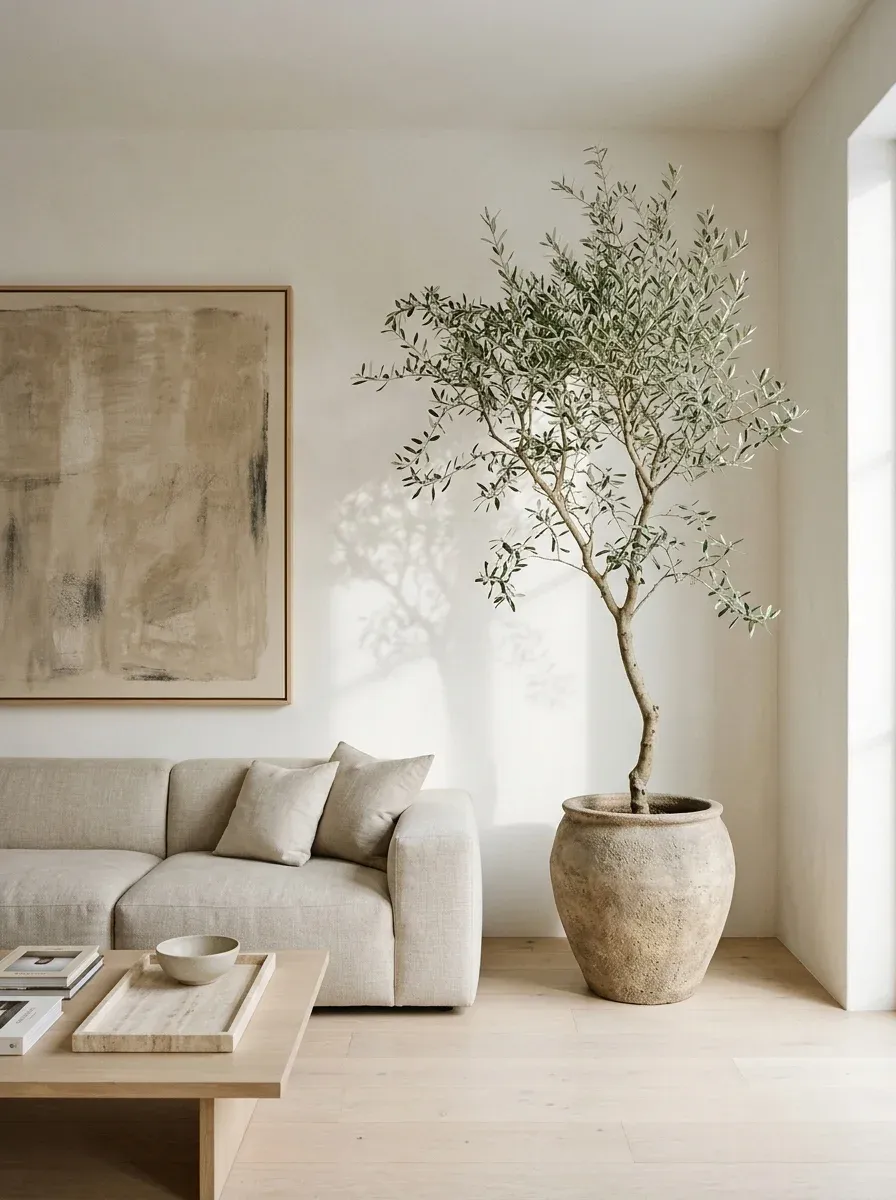
2. Add a Tall Indoor Plant for Natural Height
If you want to decorate a corner without introducing additional furniture, a tall indoor plant can be a simple solution.
A large plant adds height, softens straight architectural lines, and introduces natural texture into the room. Depending on your decorating style, you could choose an olive tree, a rubber plant, a fiddle-leaf fig, or another indoor plant suited to the available light.
Place the plant in a decorative ceramic, stone, or woven planter that connects with the colors and materials already used in your living room.
For a particularly empty corner, choose a plant with an attractive natural silhouette rather than several small plants that may make the space feel cluttered.
What to include:
- One appropriately sized indoor plant
- Decorative planter
- Optional low-profile plant stand
Best for: Minimalist living rooms, neutral interiors, and corners that need a little visual softness.
Styling tip: Check the natural light conditions before choosing a plant. The most attractive placement will only work if the plant can thrive there.
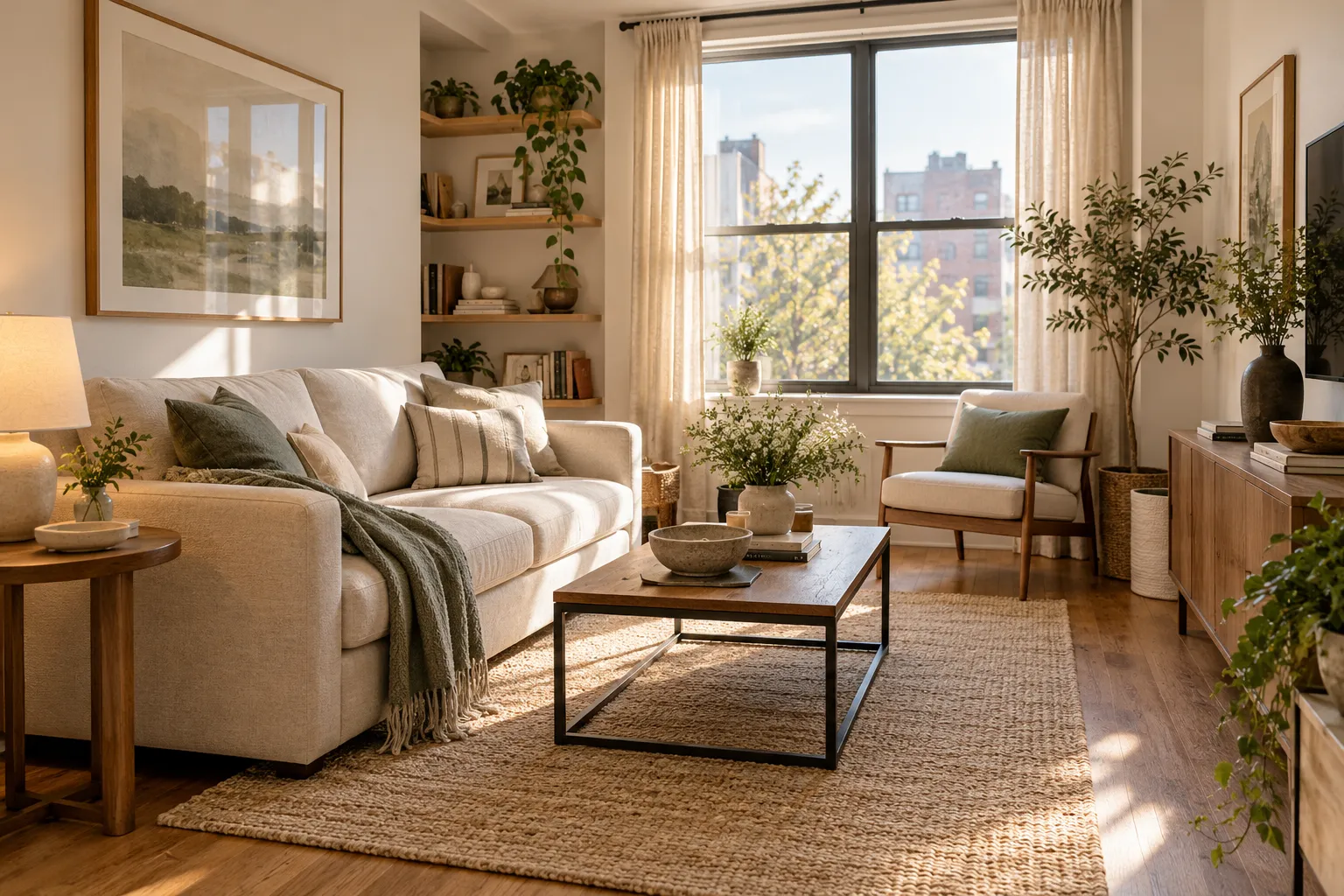
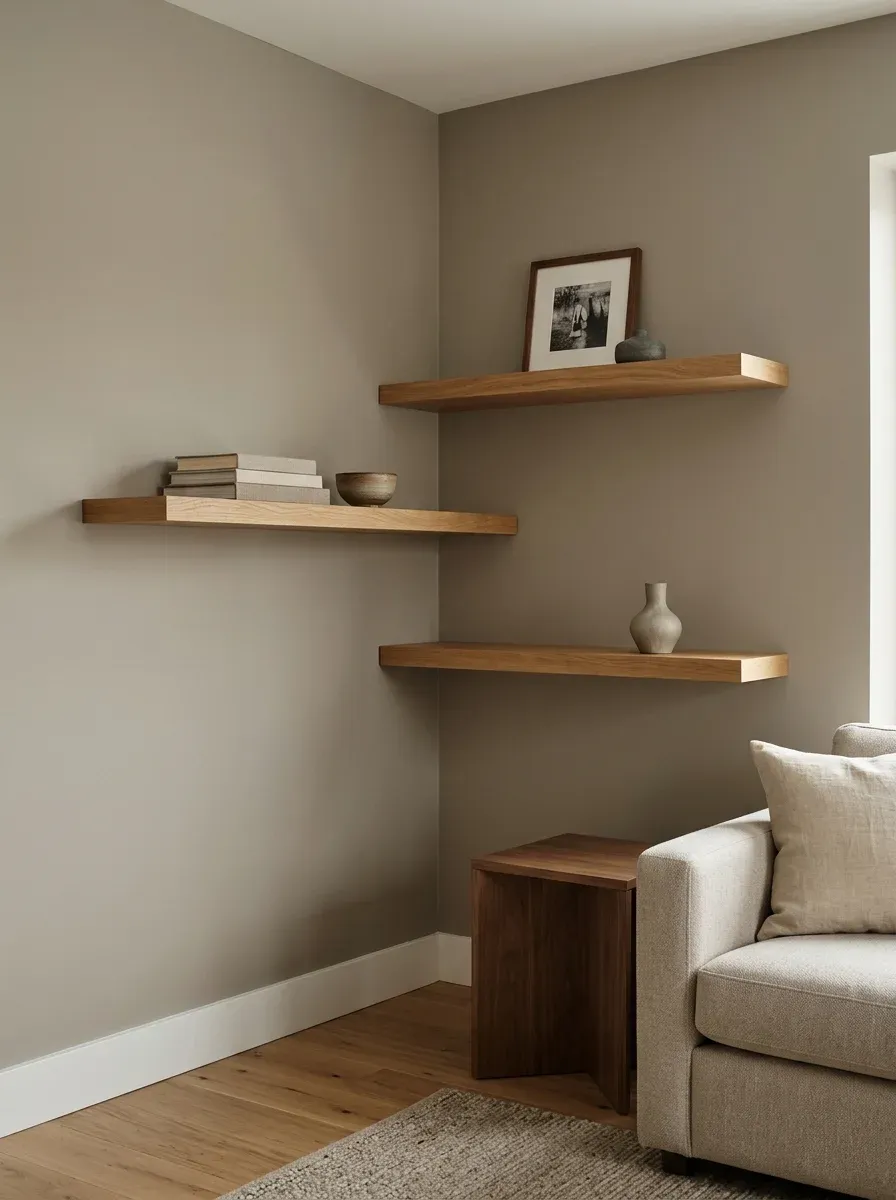
3. Install Floating Corner Shelves for Stylish Display
Corner shelves are a practical way to use vertical space without taking up much floor area.
Install two or three floating shelves in an empty corner and use them to display a carefully selected collection of books, framed photographs, small ceramic objects, or decorative accessories.
You can choose natural wood shelves for a warm appearance, white shelves for a subtle minimalist look, or dark finishes for a more dramatic interior.
The secret is to avoid treating the shelves like extra storage for everything you own. A few thoughtfully arranged objects will create a more attractive display. Mix different heights and shapes, leaving some open space between the decorations.
What to include:
- Two or three floating shelves
- Small framed artwork
- Decorative ceramics
- A few books
- One sculptural accessory
Best for: Small living rooms, apartment interiors, and corners where floor space is limited.
Styling tip: Keep heavier items on properly supported shelves and use suitable wall fixings for your wall type. Avoid overloading floating shelves.
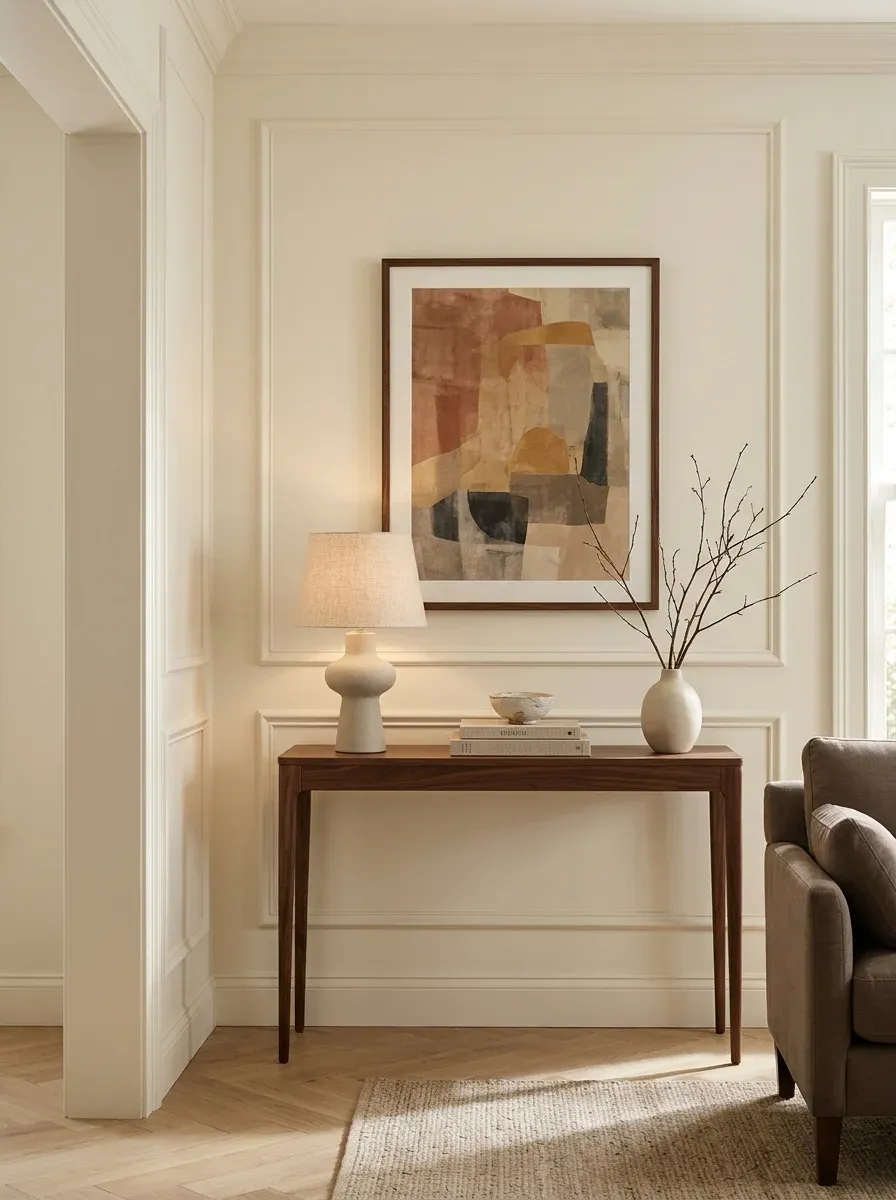
4. Style a Slim Console Table in an Unused Corner
A narrow console table can turn an awkward empty corner into a useful decorative feature.
Look for a slim table with a small footprint, preferably in a material that complements your existing furniture. Warm wood, black metal, or a simple painted finish can all work depending on the room.
Style the surface with a table lamp, a small framed picture, a decorative bowl, and perhaps a few books. If there is enough wall space above it, hang one piece of artwork or a small mirror to create a more complete arrangement.
A console table is particularly useful when you want to introduce practical surface space without bringing in another large cabinet. If you are decorating extended surfaces, see our ideas for long wall decorating.
What to include:
- Slim console table
- Small table lamp
- Framed artwork or mirror
- Decorative bowl
- A few coffee-table books
Best for: Corners beside living room entrances, empty wall sections, and spaces between larger furniture pieces.
Styling tip: Choose a table that leaves enough room for doors, curtains, and nearby walkways to function comfortably.
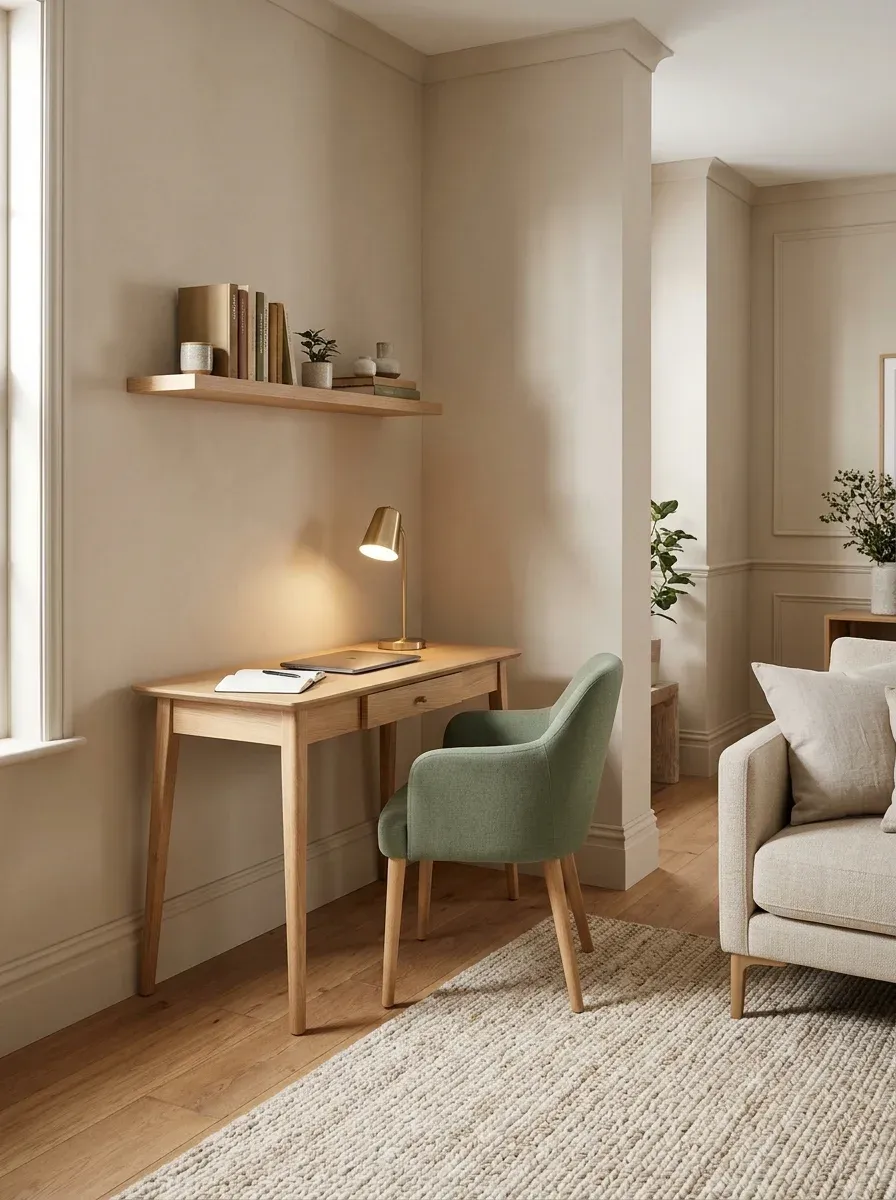
5. Turn an Empty Corner into a Small Home Office
An unused living room corner can become a practical work area when you need a desk but do not have a separate room.
Choose a compact desk that fits neatly against the available wall. A small writing desk or wall-mounted desk can provide enough space for a laptop, notebook, and desk accessories without overwhelming the living room.
Add a comfortable chair with a small footprint and introduce a desk lamp for focused lighting. A narrow shelf above the desk can provide extra storage for books and everyday essentials. For compact apartment layouts, review our living room design ideas for small apartments.
To help the workspace feel connected to the rest of the room, repeat materials or colors from your existing furniture.
What to include:
- Compact writing desk
- Small comfortable chair
- Desk lamp
- Wall shelf
- Simple organizer
Best for: Apartments, small homes, and living rooms that need a flexible work area.
Styling tip: Use a small rug or a coordinated desk accessory to visually define the work zone without creating a separate enclosed space.
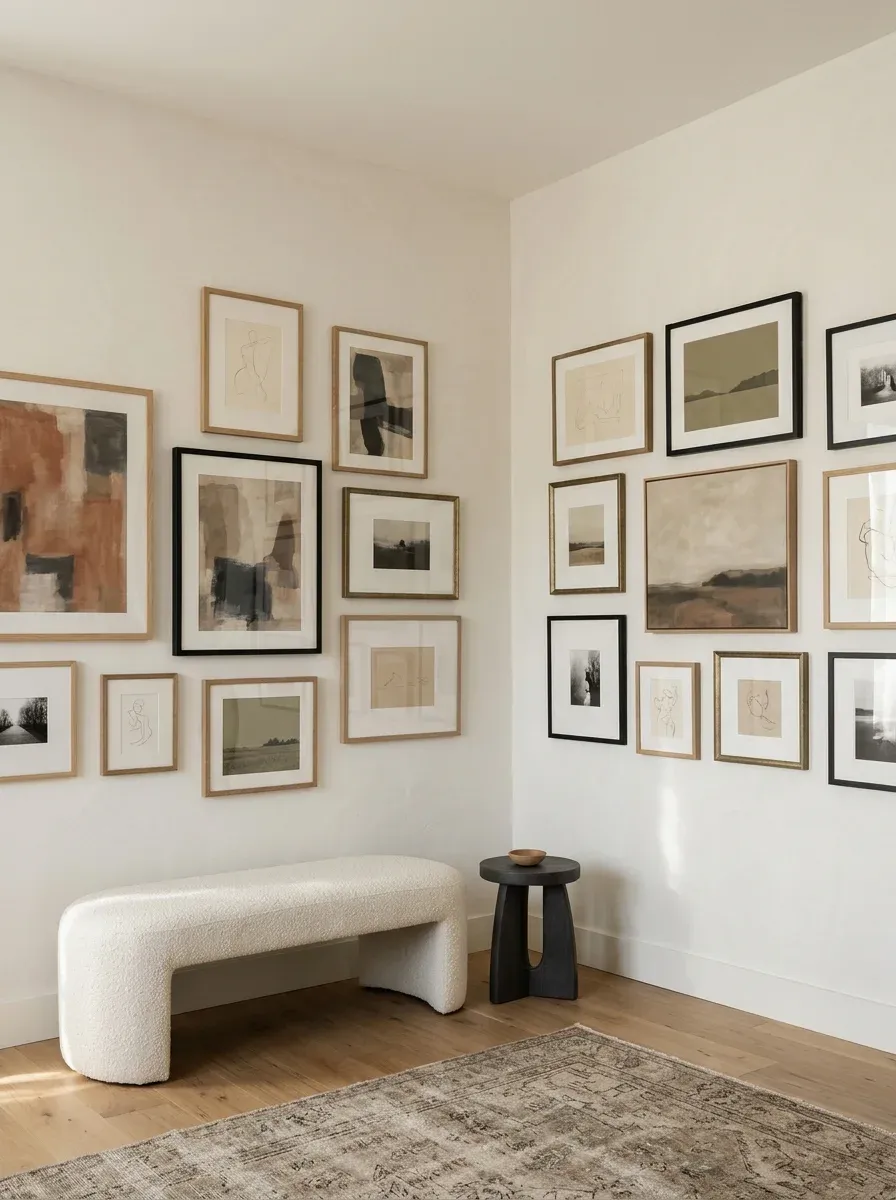
6. Create a Beautiful Gallery Corner with Framed Artwork
An empty corner does not always need furniture. Sometimes the walls themselves offer the best decorating opportunity.
A gallery corner can be created by arranging framed artwork across two adjoining walls or by using a single larger artwork piece as the focal point.
Choose a consistent frame finish, such as natural wood, black, or muted brass. You can combine photographs, abstract prints, illustrations, and small decorative artwork as long as the colors work together. Read our overview of interior design and decorating styles to match artwork style to your aesthetic.
If you prefer a more relaxed arrangement, lean a framed artwork piece on a narrow picture ledge instead of hanging several frames.
The result is a corner that feels personal and decorative without taking up valuable floor space.
What to include:
- Three to five coordinating framed prints
- Consistent or complementary frame finishes
- Optional picture ledge
- Small decorative object
Best for: Minimalist living rooms, narrow spaces, and corners where furniture would interfere with movement.
Styling tip: Plan the arrangement on the floor first. This makes it easier to balance frame sizes and spacing before putting anything on the walls.
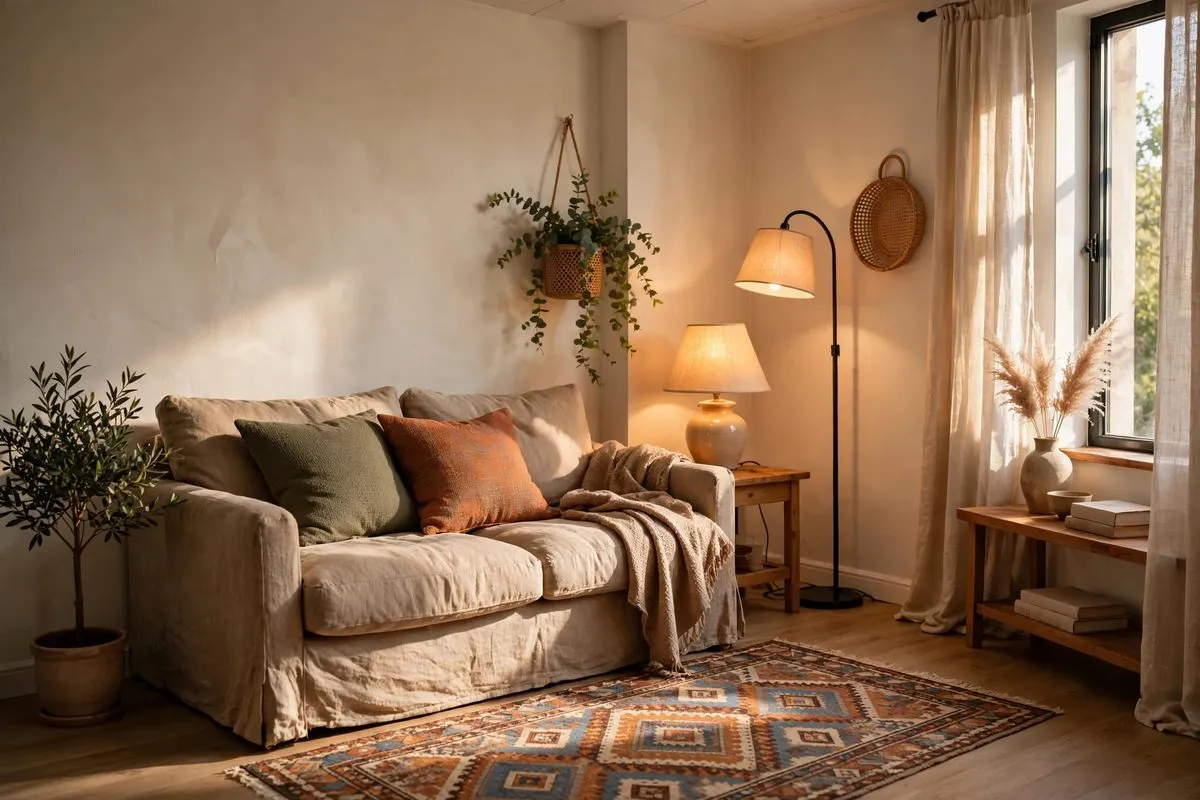
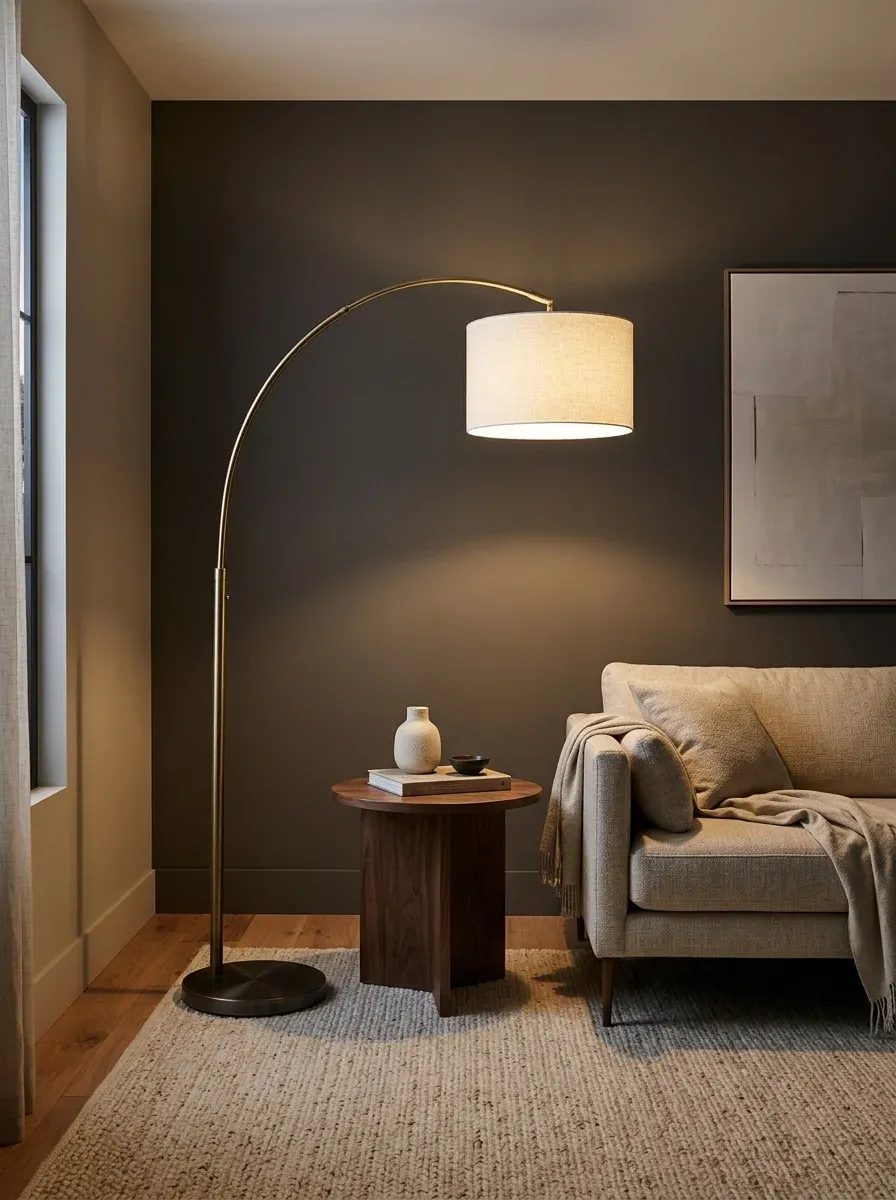
7. Add a Floor Lamp and Side Table for a Warm Evening Corner
Sometimes an empty corner simply needs better lighting.
A beautiful floor lamp can create a cozy atmosphere while giving the room another layer of illumination. Choose an arched lamp for a more sculptural appearance, a slim metal lamp for a modern interior, or a fabric-shaded lamp for a softer traditional look.
Place a small side table beside it and add one or two carefully selected decorative objects.
This arrangement works especially well near a sofa or accent chair, where the additional lighting can make the space feel more comfortable in the evening.
What to include:
- Sculptural or slim floor lamp
- Small round side table
- Decorative book
- Small vase or ceramic object
Best for: Corners beside sofas, dark areas of the living room, and spaces that need additional ambient lighting.
Styling tip: Choose a warm light color for a comfortable evening atmosphere. Make sure lamp cables are safely positioned away from walking paths.
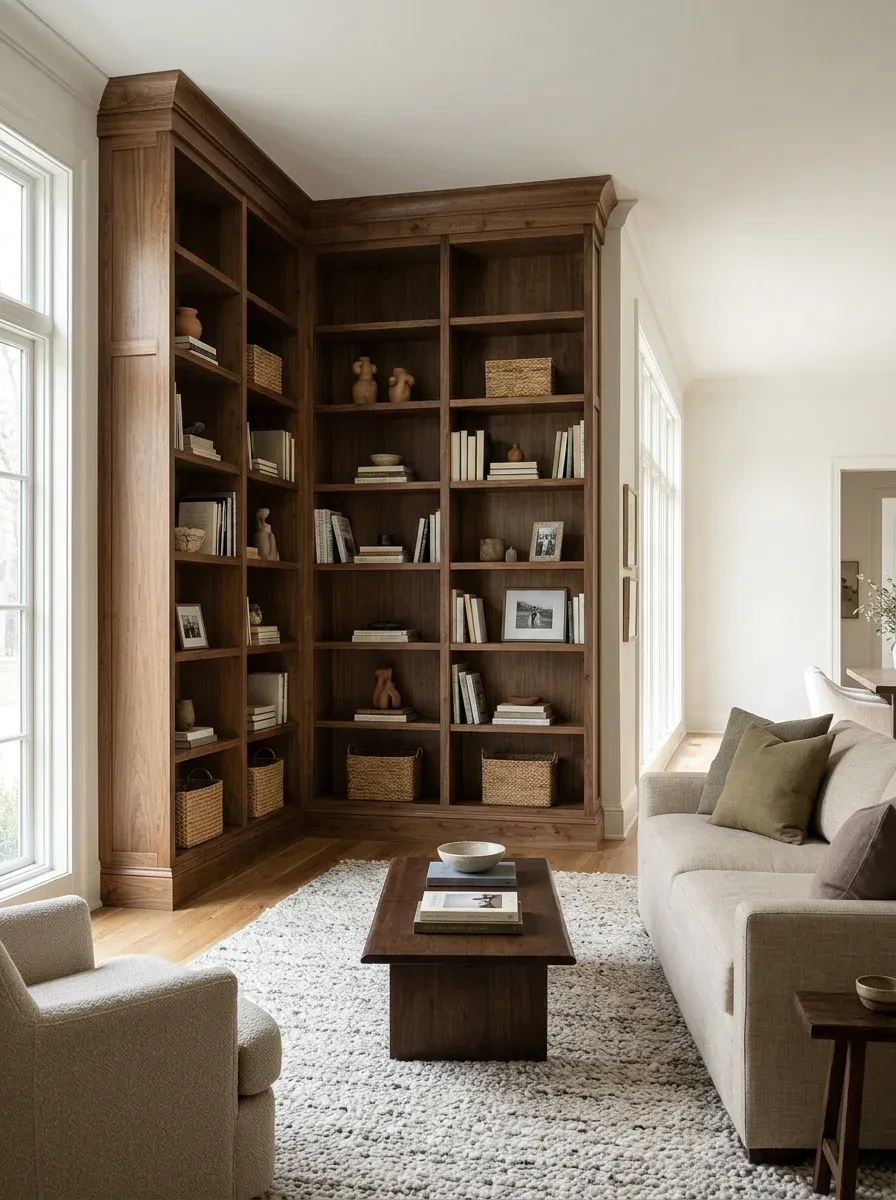
8. Create a Built-In Look with a Corner Bookcase
If you have an unused corner that can accommodate a taller piece of furniture, consider a corner bookcase.
A slim corner shelving unit makes use of vertical space and offers room for books, decorative objects, framed photographs, and small storage baskets.
Choose a finish that blends with your existing interior. Natural oak works well in warm modern spaces, while dark wood can add depth to traditional living rooms.
Arrange books in a mixture of horizontal and vertical stacks, leaving room for a few decorative objects. This creates a more balanced display than filling every shelf completely.
If you want a more custom appearance, consider a floor-to-ceiling shelving arrangement that visually connects with the surrounding walls.
What to include:
- Tall corner bookcase
- Favorite books
- Decorative baskets
- Small framed photographs
- A few ceramic accessories
Best for: Book lovers, larger living rooms, and corners that need both storage and decoration.
Styling tip: Keep heavier books on lower shelves and secure tall furniture appropriately to prevent tipping.
How to Choose the Right Living Room Corner Furniture
Not every corner needs the same type of furniture. The available dimensions, existing layout, and purpose of the space should guide your decision:
| Corner Type | Suitable Furniture | Main Purpose |
|---|---|---|
| Window corner | Accent chair and side table | Reading and relaxation |
| Narrow corner | Floating shelves | Vertical display |
| Empty wall corner | Slim console table | Decorative styling |
| Larger unused corner | Corner bookcase | Storage and display |
| Dark corner | Floor lamp | Ambient lighting |
| Work-from-home corner | Compact desk | Functional workspace |
Before purchasing anything, measure the width and depth of the available space. Remember to account for nearby doors, curtains, furniture, and walking routes.
A corner that looks large in a photograph may be surprisingly small in a real home.
Living Room Corner Decorating Ideas for Small Spaces
Decorating a small living room requires a little more attention to scale.
The goal is to make the corner feel intentional without introducing furniture that competes with the main seating area:
- Use vertical space: Floating shelves and tall narrow bookcases provide storage without requiring a large footprint.
- Choose furniture with visible legs: Accent chairs and side tables with open bases can help a compact corner feel less visually heavy.
- Use one main decorative feature: A large artwork piece, a sculptural floor lamp, or a beautiful plant can be enough.
- Choose multifunctional pieces: A small storage table or an accent chair with a compact profile can make the corner more useful.
- Keep the floor visible: Avoid adding several small accessories and furniture pieces when one well-chosen item would work better.
Common Mistakes to Avoid When Decorating Living Room Corners
Even attractive furniture can look out of place when it is not suited to the corner.
- Choosing furniture that is too large: A bulky armchair or oversized cabinet can make an otherwise comfortable room feel cramped. Measure the available space before purchasing furniture.
- Filling every empty corner: Not every corner needs to be decorated. Leaving some open space can help a room feel calmer and more balanced.
- Using too many small decorations: A collection of tiny accessories can look cluttered when they are scattered without a clear arrangement. Choose a few objects with different heights and shapes instead.
- Ignoring lighting: A dark corner may remain visually disconnected even after adding furniture. Consider a floor lamp or another appropriate light source.
- Forgetting the rest of the room: A corner arrangement should connect with the wider interior. Repeat materials, colors, or finishes from the existing furniture to make the design feel intentional.
- Blocking walkways and windows: Always consider how people move through the room. Furniture should not obstruct doors, window access, or everyday movement.
Frequently Asked Questions
What should I put in an empty living room corner?
You can use an accent chair, floor lamp, indoor plant, floating shelves, slim console table, corner bookcase, or a small desk. Choose something that suits the size and purpose of the space.
How do you decorate a small living room corner?
Use slim furniture, vertical shelves, compact accent chairs, or one attractive decorative feature. Avoid large furniture and too many small accessories.
How can I make a living room corner look cozy?
Combine comfortable textures, warm lighting, and a few personal accessories. An upholstered chair, soft throw, cushion, and floor lamp can create a welcoming corner.
What furniture works best in a living room corner?
Accent chairs, small side tables, corner bookcases, slim console tables, and compact desks are useful options. The right choice depends on the available dimensions and how you want to use the space.
How do I decorate a living room corner without furniture?
Use framed artwork, floating shelves, a tall indoor plant, or a sculptural floor lamp. These options add visual interest without requiring a large furniture footprint.
How do I make an awkward living room corner look intentional?
Give the corner one clear purpose. A small reading nook, a decorative display, or a functional lighting arrangement can help it feel like a planned part of the room rather than leftover space.
Final Thoughts
An empty living room corner does not have to remain an overlooked part of your home. With the right combination of furniture, lighting, and decorative details, it can become one of the most useful and attractive areas in the room.
You might prefer a comfortable reading nook, a vertical shelving display, a small work area, or a simple arrangement with artwork and lighting. The best solution is the one that works naturally with your room and everyday routine.
Start by understanding what the corner needs, choose one main feature, and build the arrangement around it. A thoughtful change is often all it takes to make an empty space feel complete.
Looking for more ideas? Browse our living room & bedroom stories.
Save to Pinterest