In this article
- Start With the Table’s Real Job
- Lay a Foundation: Runner, Cloth or Bare Wood
- Build One Everyday Centerpiece
- Set Places You Actually Use
- Add Candlelight Without the Fuss
- Keep a Bowl in Play
- Layer Linens for Texture
- Swap One Thing With the Seasons
- Style Around Daily Life
- Dining Table Styling Mistakes to Avoid
- A Simple Styling Formula to Remember
Most dining tables spend their lives as homework desks, laptop stations and mail sorters, then get frantically cleared when guests come. Styling a table for every day flips that: the table looks good on a random Tuesday, and clearing it for dinner takes thirty seconds because everything on it has a home. Here is how to style a dining table that survives real life.
Start With the Table’s Real Job
Before buying a single linen, be honest about what happens on your table. Laptop work all day means the styling must move in one sweep; small kids mean nothing breakable at the edges; a table that seats two on weeknights and eight at holidays needs a centerpiece that splits apart. Style for the Tuesday reality, not the Thanksgiving fantasy.
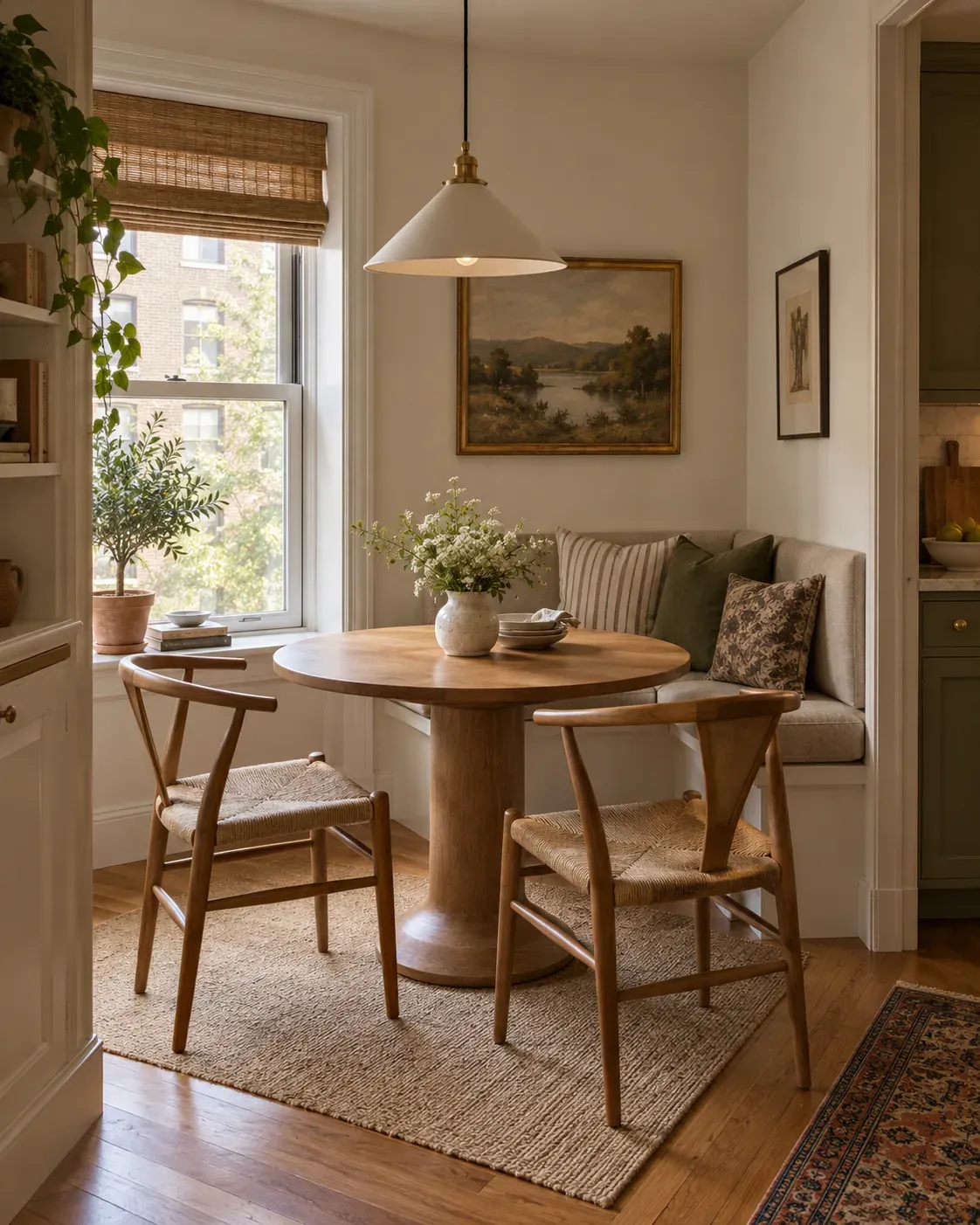
This also settles the size question. A 30-inch round table gets one centerpiece, not three. A 72-inch rectangle can carry a runner plus a low arrangement with breathing room at both ends. Measure the table and leave at least 24 inches of clear width for actual dining; styling that eats into elbow room gets resented fast. For the room around the table, see our small dining room ideas.
Lay a Foundation: Runner, Cloth or Bare Wood
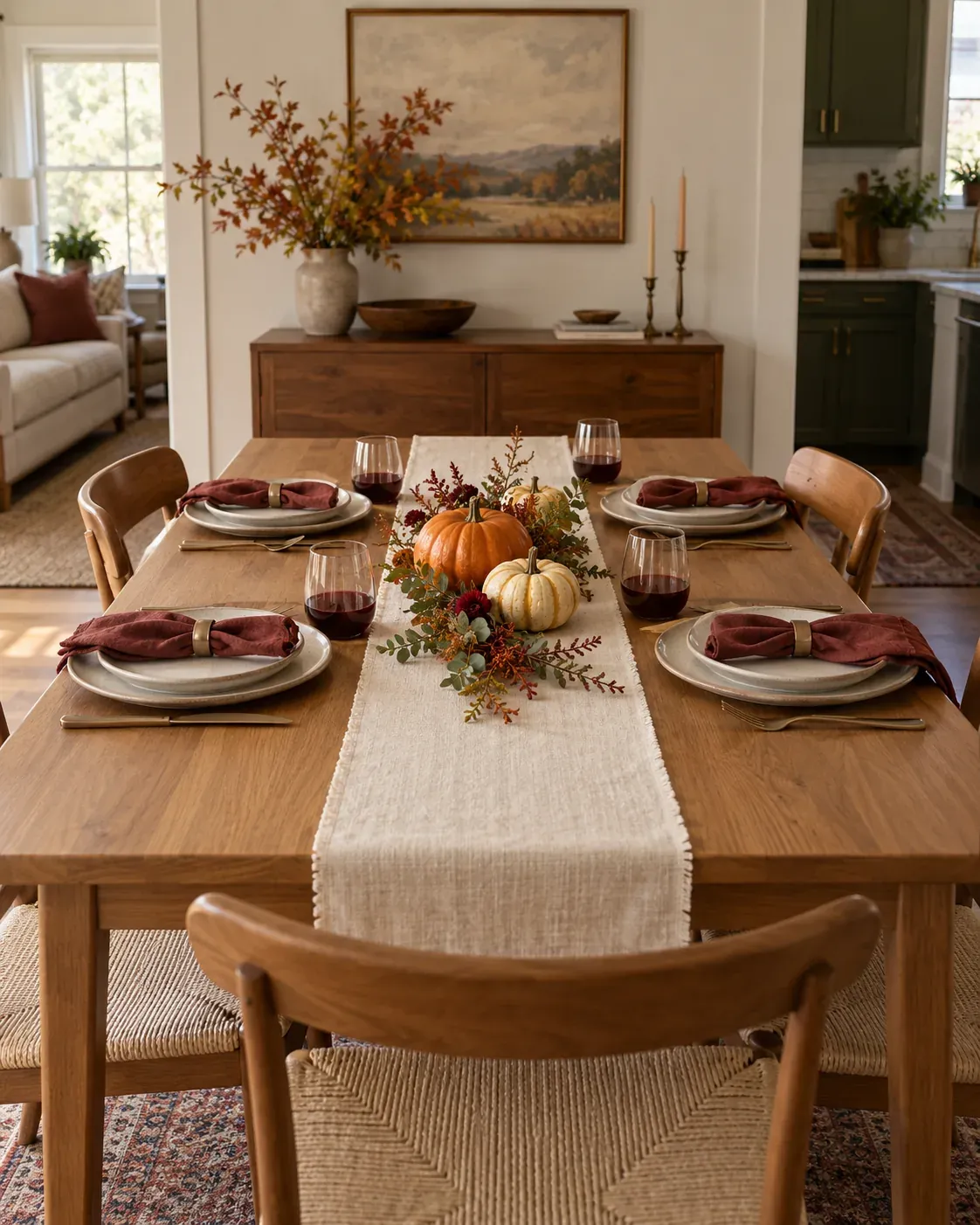
Every styled table starts with a decision about the surface. A runner is the most forgiving choice: it adds color and texture down the center, protects against heat and scratches, and lifts off in seconds. Choose one that overhangs the table ends by 6 to 12 inches; a runner that stops exactly at the edge looks unintentional.
A full tablecloth is dressier but fussier, and in daily life it slides, stains and needs ironing. Bare wood with placemats is the lowest-maintenance styled look and suits modern tables, but the wood takes the wear directly, so use trivets religiously. There is no wrong answer, only the one you will maintain. A washable cotton runner survives real life best.
Build One Everyday Centerpiece
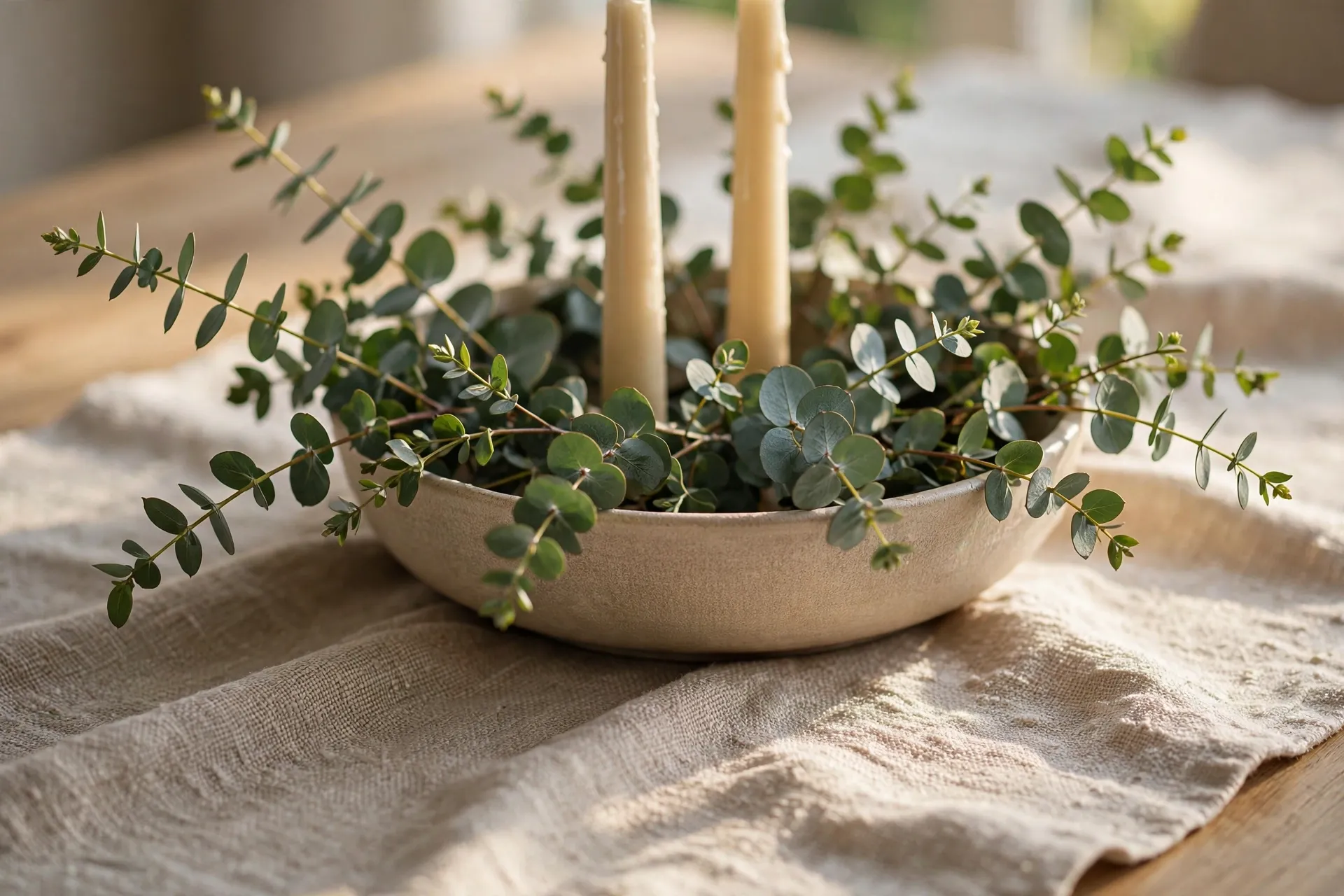
The everyday centerpiece has three requirements: low enough to see over, sturdy enough to survive daily life, and movable in one hand. A small vase with fresh greenery, a low bowl with seasonal fruit, or a tray with candles all qualify. What does not qualify: tall flower arrangements that block conversation, anything with shedding petals over food, and collections of tiny objects that scatter.
Change the water or wipe the bowl weekly as part of a routine, not as a project. A eucalyptus bunch lasts two to three weeks; a bowl of lemons lasts longer and looks intentional even as it shrinks. The centerpiece is the one styled element that should never require a special trip: grocery-store flowers, backyard clippings or fruit you were buying anyway.
Set Places You Actually Use
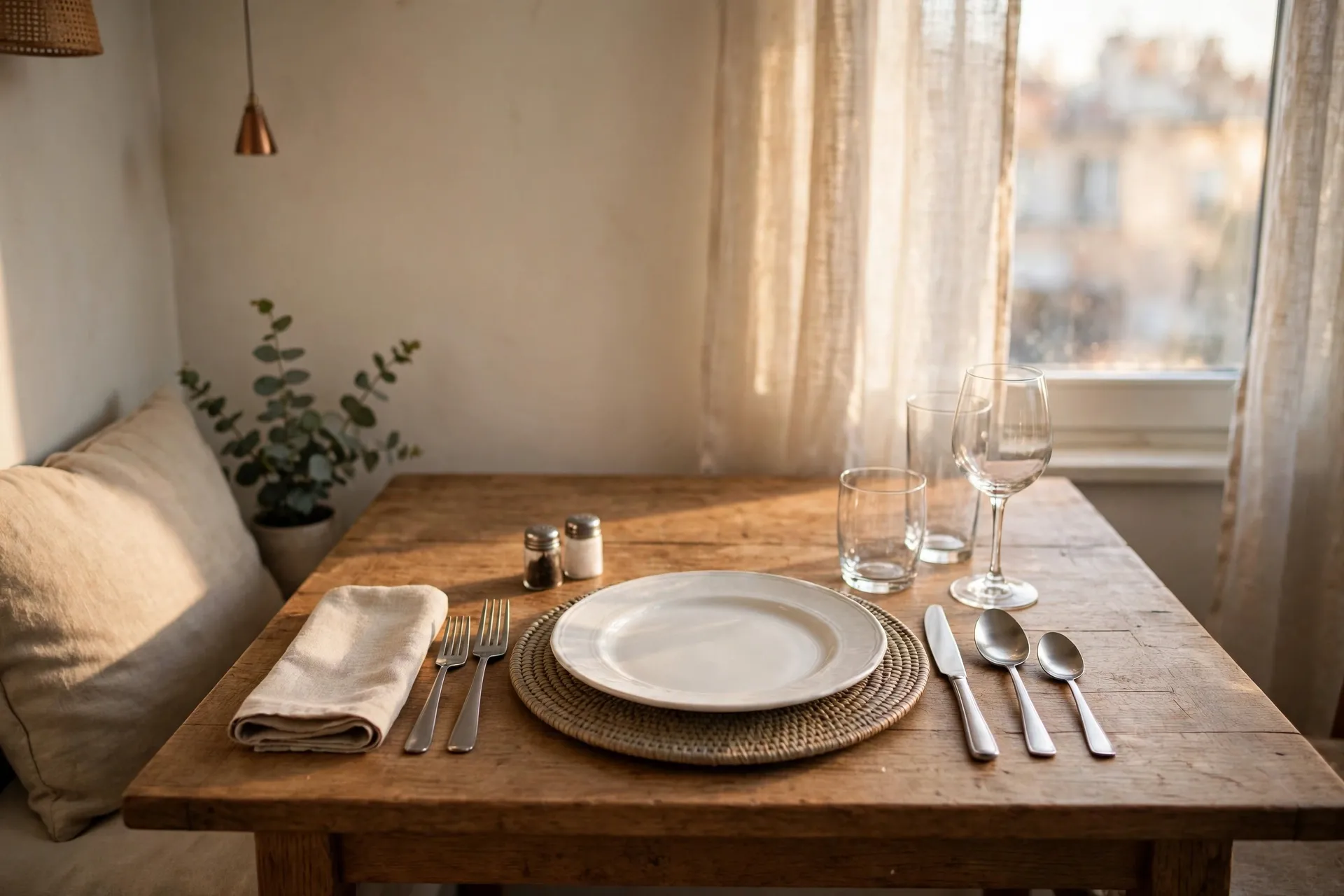
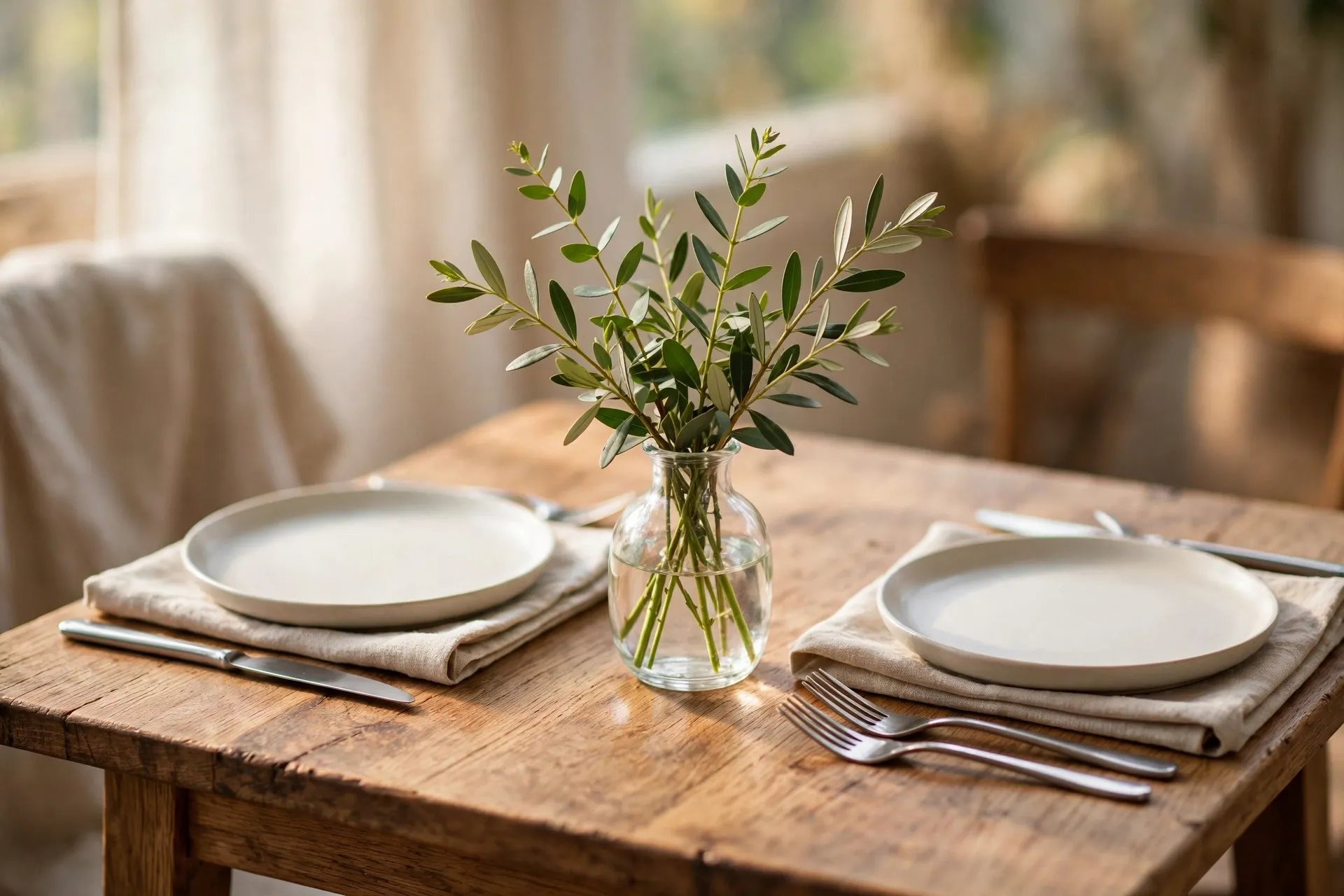
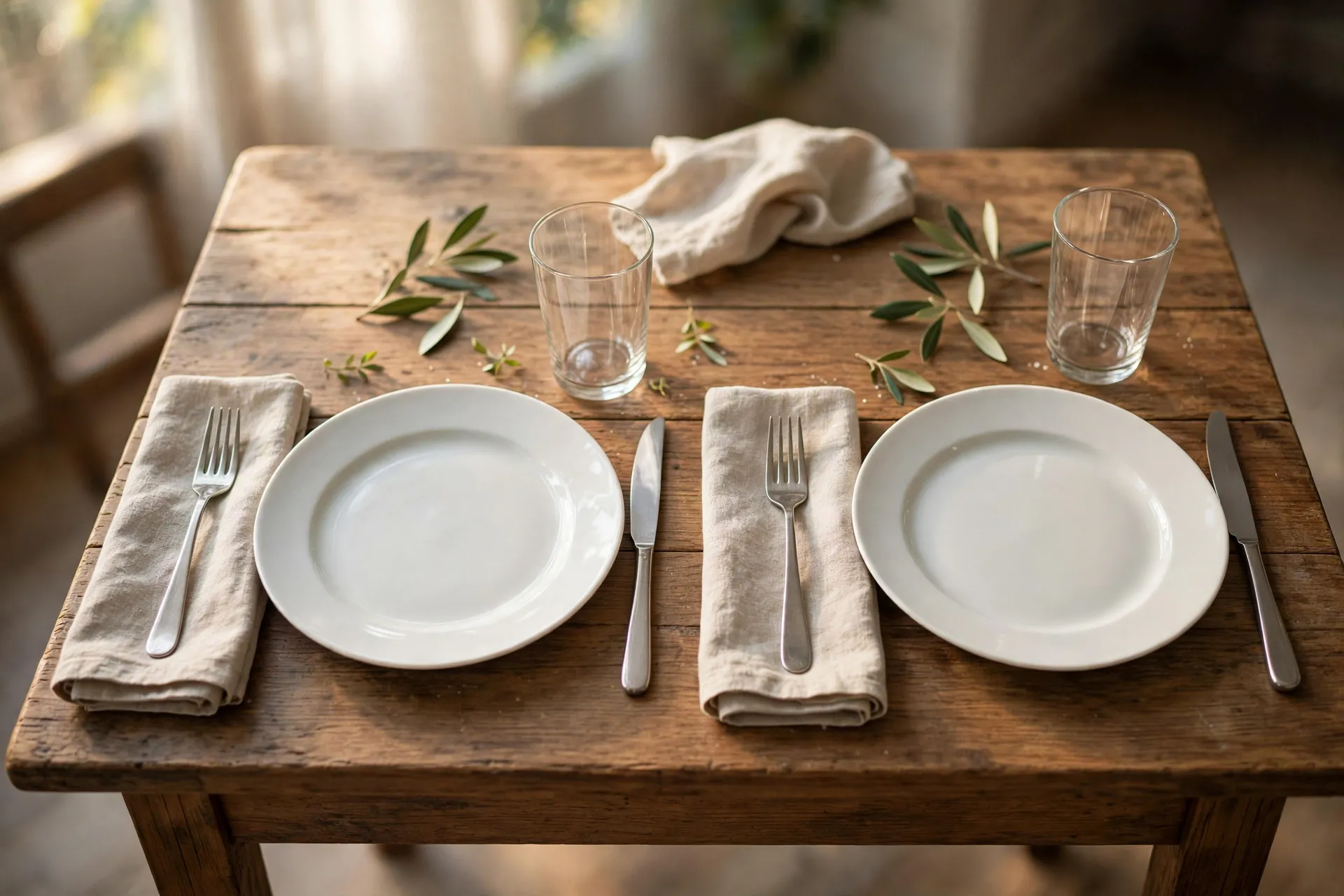
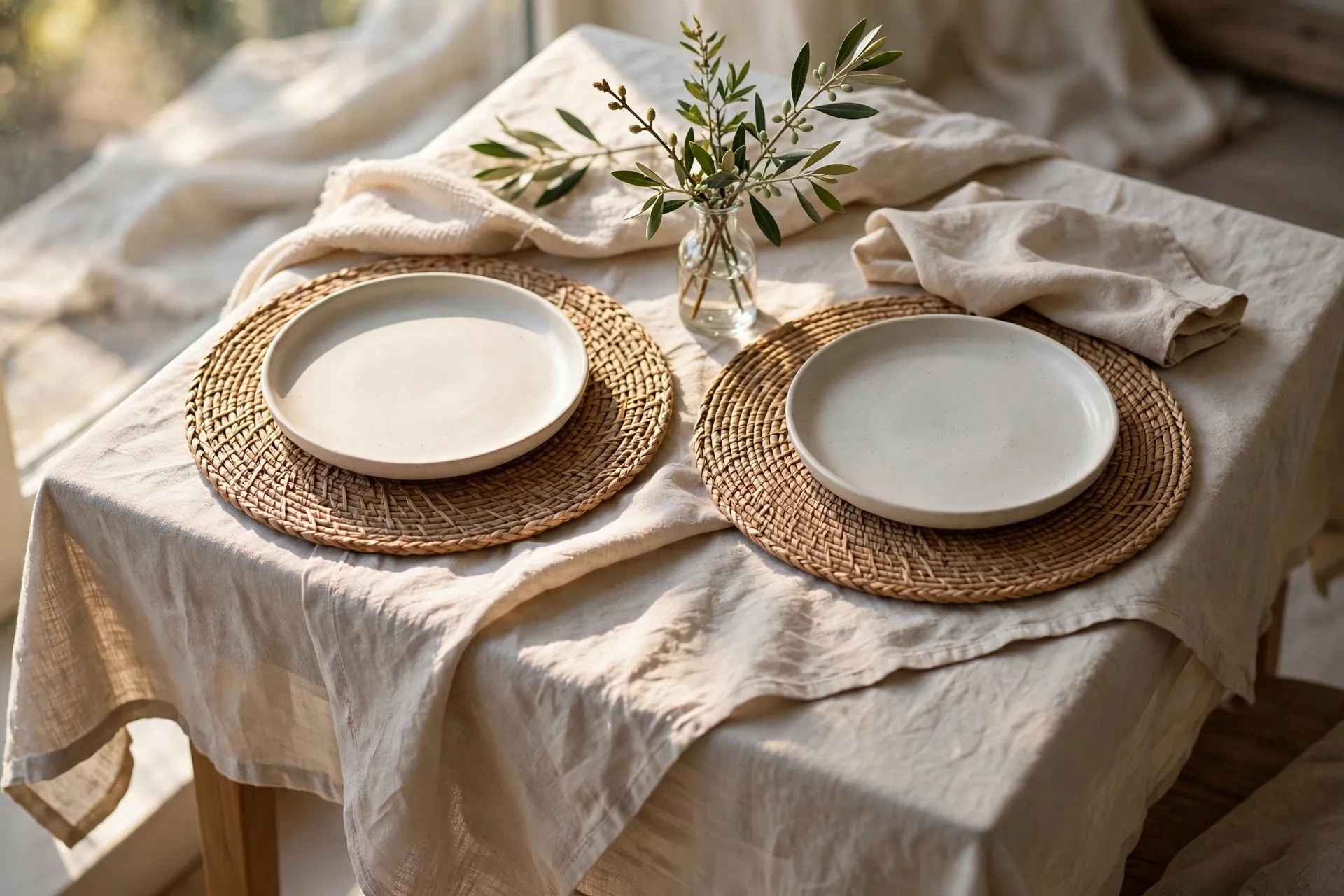
A styled table with zero place settings looks like a showroom; a table with two simple settings looks like a home. Keep two everyday settings on the table if you eat there daily: plate, folded napkin, glass. It takes ten seconds to add more and the table never looks abandoned. Use your real dishes, not special ones; special dishes live in a cabinet and the table looks bare.
Placemats earn their keep here. They define each place, protect the surface and add the layered look with almost no effort. Woven or wipeable placemats survive daily use; cloth ones need washing. Stack the plates you are not using in the kitchen, not in a tottering pile at the table’s end.
Add Candlelight Without the Fuss
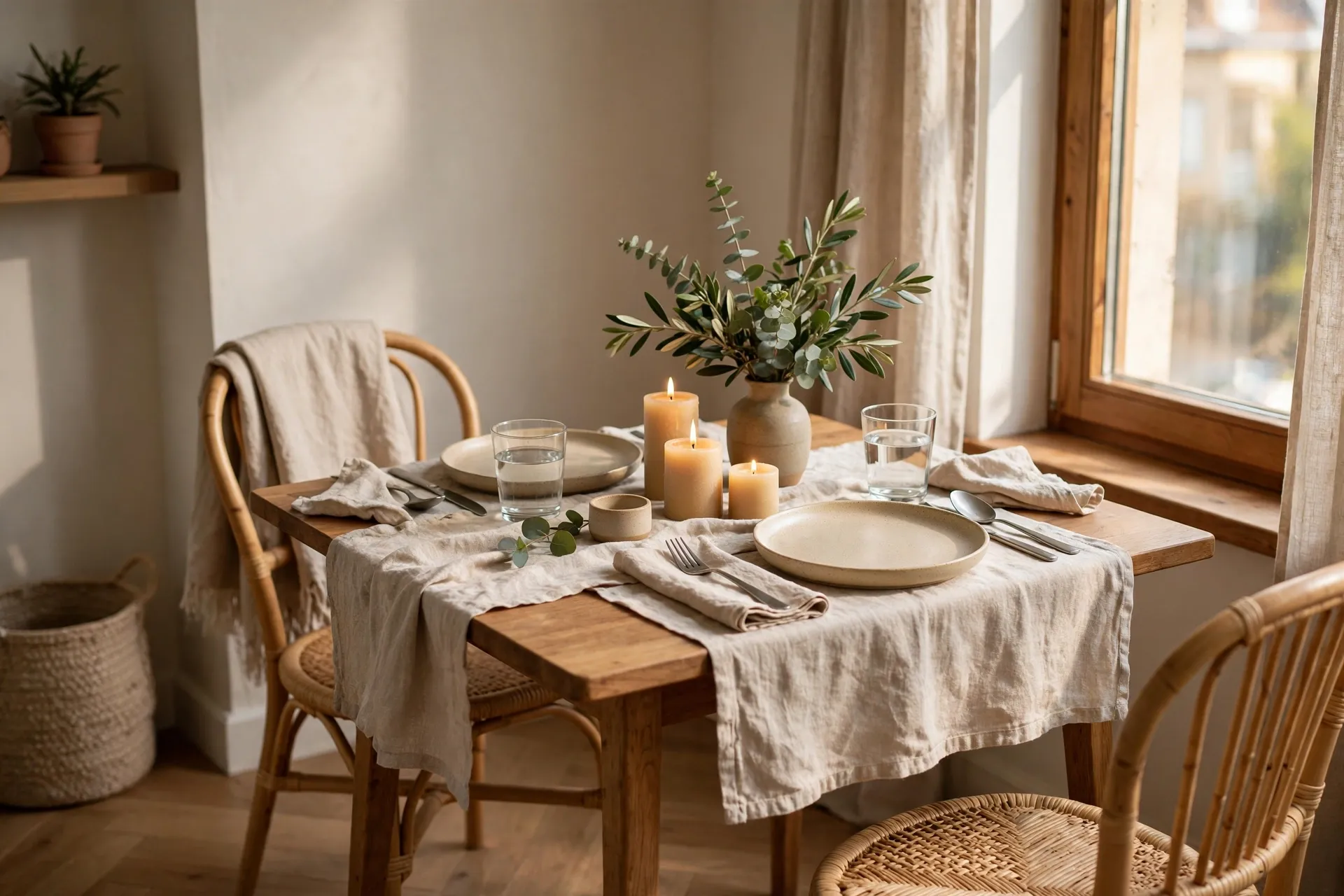
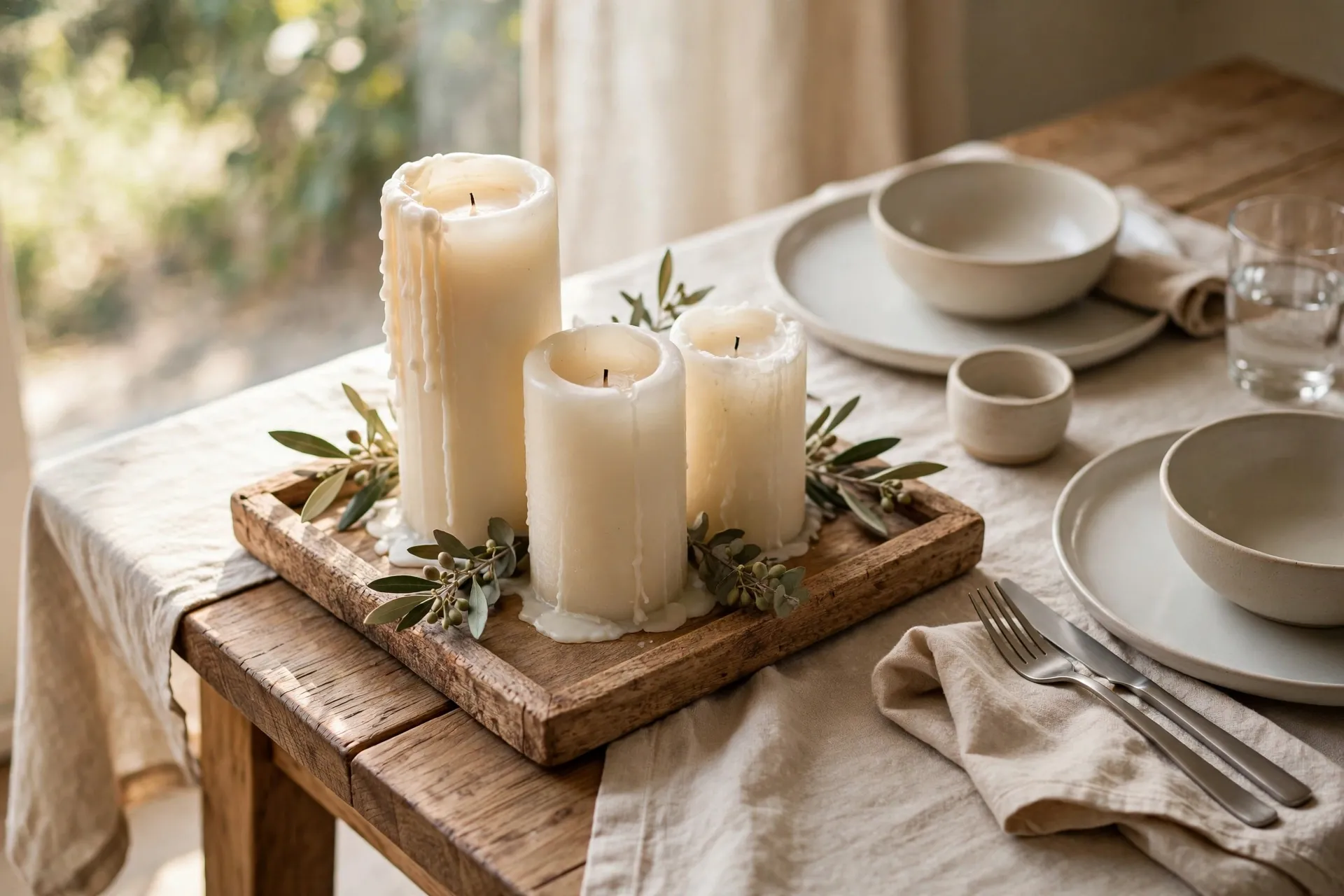
Candles make an everyday dinner feel considered, but only if lighting them is effortless. A cluster of pillar candles on a tray, or two taper candles in stable holders, stays on the table permanently; you just light them. Flameless candles with a timer are the honest choice for households with kids, pets or forgetfulness, and good ones look convincing at dinner distance.
Keep candles unscented at the table. Scented candles compete with food, and strong fragrance plus dinner is a headache, literally. Trim wicks to a quarter inch so they burn cleanly without soot marks on the wall or ceiling above. A tray under the cluster catches wax and lets you move the whole arrangement one-handed.
Keep a Bowl in Play
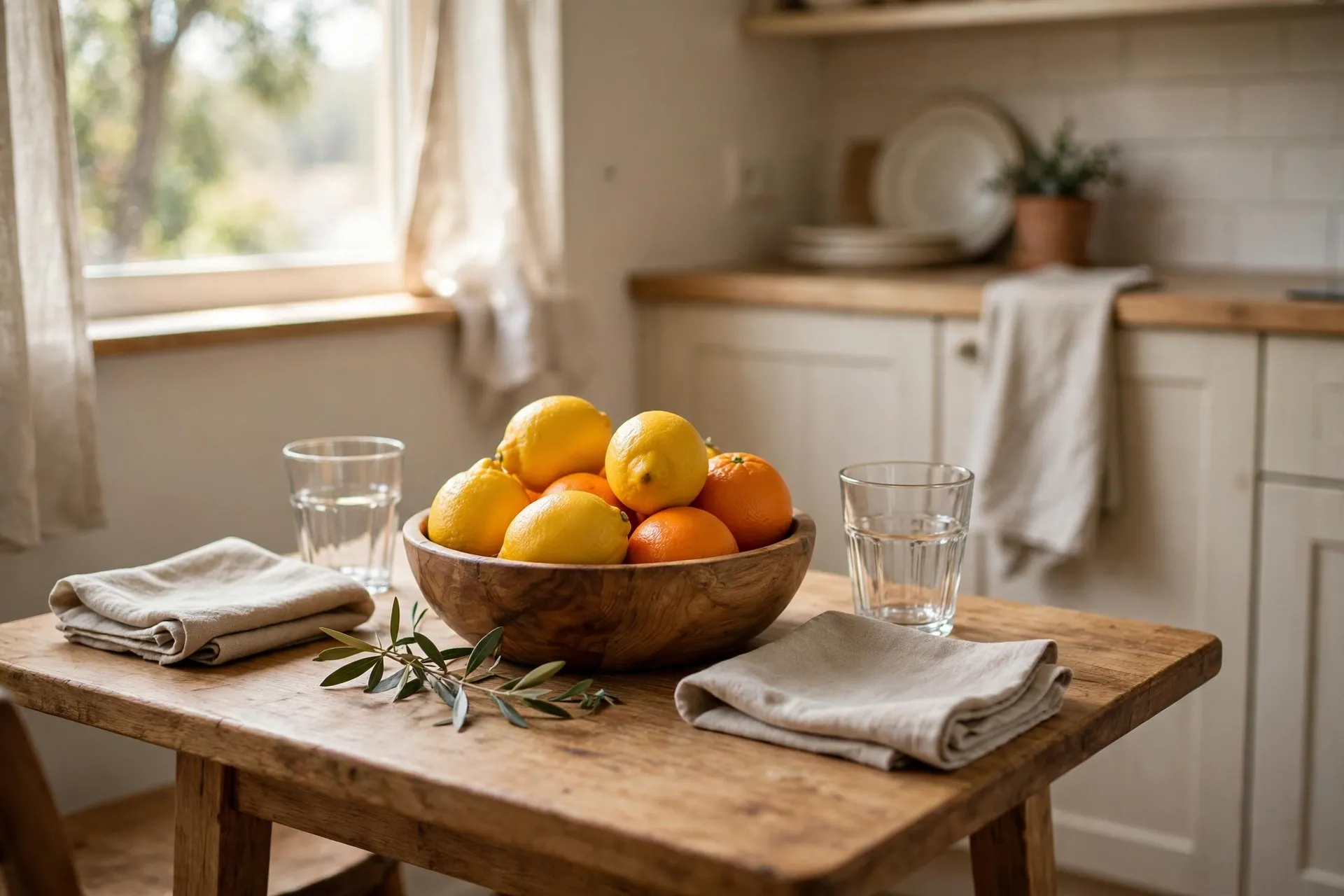
A bowl is the hardest-working styling object on a dining table. A wooden or ceramic bowl holds the fruit that would otherwise clutter the counter, anchors the center of the table, and looks good empty or full. It is also the designated home for the small things that migrate to tables: the sunglasses, the spare keys, the packet of sauce.
Rotate the bowl’s contents with the seasons without overthinking it: citrus in winter, stone fruit in summer, small pumpkins in fall, empty with a linen napkin inside in spring. One bowl, one job, endless variation. If the table is small, the bowl can be the entire centerpiece; it does not need companions to look finished.
Layer Linens for Texture
Linens are what make a table look styled rather than merely set. A runner plus cloth napkins, or placemats plus a folded throw at one end, adds the softness that hard tables lack. Natural fibers, linen, cotton, jute, photograph well and age gracefully; shiny synthetics look cheap quickly and show every crumb.
Keep a small stack of everyday napkins in a drawer or basket near the table so using cloth napkins is actually convenient. If they live across the kitchen, paper wins and the styling suffers. Washable, darker or patterned napkins hide the stains of real life; white napkins are for people who enjoy laundry as a hobby.
Swap One Thing With the Seasons
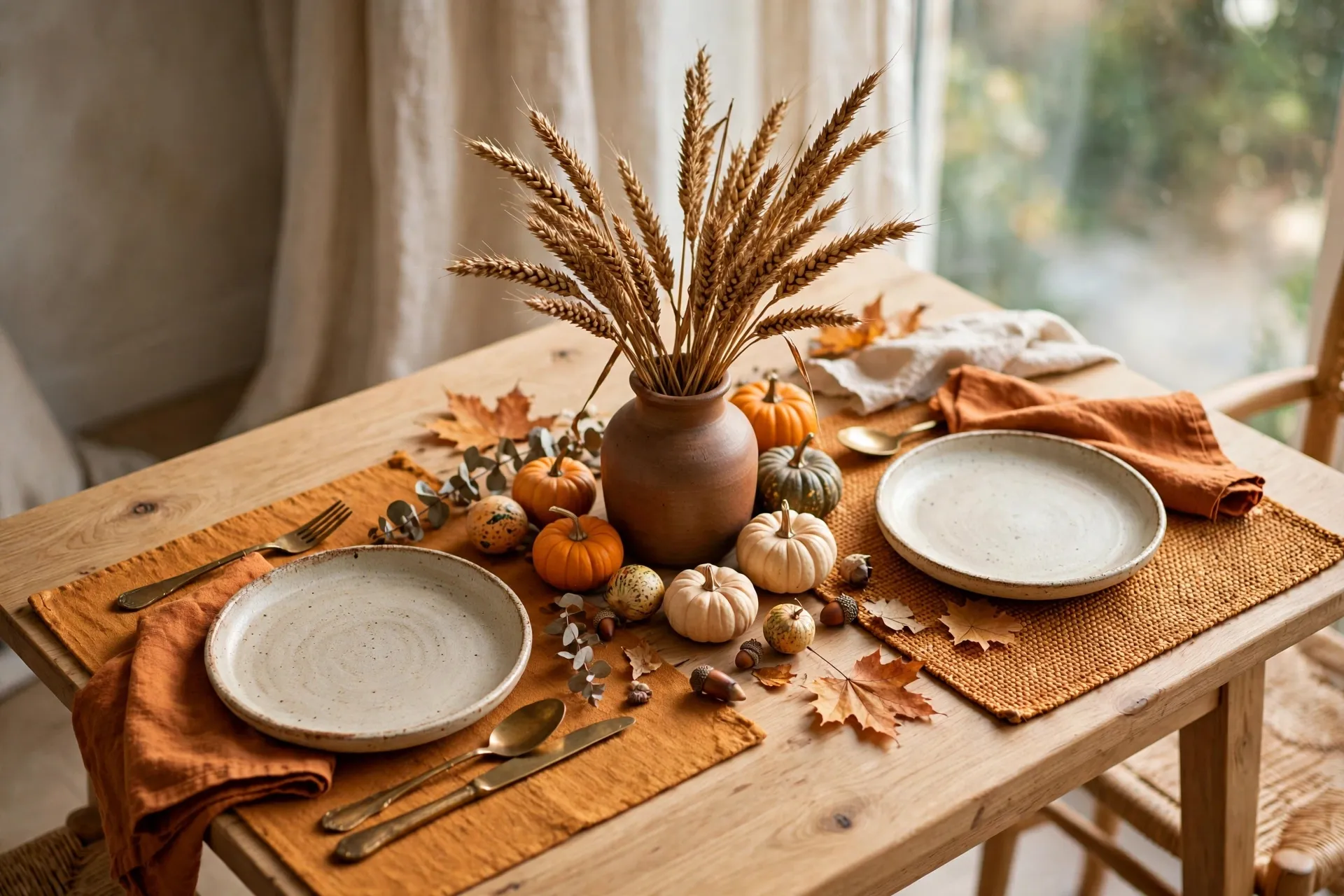
An everyday table stays fresh if you change exactly one element with the seasons, not the whole setup. The runner stays; the bowl’s contents change. The candles stay; the greenery in the vase changes. This keeps styling a five-minute refresh instead of a redecorating project, and it marks time in a way that feels good.
Store the seasonal swaps in one small box: fall leaves and mini pumpkins, winter pinecones, spring buds. When the box comes out, the previous season’s items go back in. If an item does not fit the box, it does not belong in the rotation. Constraint keeps this joyful instead of turning the dining table into a seasonal storage unit.
Style Around Daily Life
The final test of dining table styling is whether it survives your household. Kids mean unbreakable centerpieces and wipeable surfaces; shift the candles to high shelves and let the bowl hold the fruit they actually eat. A work-from-home table needs a styling kit that clears in one sweep: tray for the candles, basket for the linens, and the laptop takes the middle.
Pets claim tables too. A runner with a washable, textured weave hides paw prints better than a flat pale one, and a heavy bowl centerpiece survives tail clearance better than a tall vase. Style for the life you have and the table stays styled; style for a magazine and you will be clearing it daily with resentment.
Dining Table Styling Mistakes to Avoid
The most common mistake is height: a centerpiece you cannot see over turns dinner into a shouting match around a flower arrangement. Keep everyday centerpieces under 12 inches. The second is preciousness: styling so fussy that the family eats at the counter to avoid disturbing it. If people avoid the table, the styling failed.
Avoid matching sets of tiny decor objects lined down the runner; they read as clutter and each one needs dusting. One confident centerpiece beats five hesitant ones. And do not style the table in isolation from the room: a dark, dramatic wall behind the dining table makes simple styling look intentional, as our guide to moody paint colors that work in small rooms explains. If the table shares a long open room with the sofa, our rectangle living room layouts show how to zone the two areas so the table holds its own.
A Simple Styling Formula to Remember
When in doubt, use the formula: foundation plus one centerpiece plus light. Foundation is the runner or placemats; the centerpiece is the bowl, vase or candle cluster; light is the candles or the pendant above. Three elements, each with a job, nothing extra. This formula scales from a 30-inch bistro table to an eight-seat dining table; only the sizes change.
Build it once, then maintain it with the weekly wipe-down and the seasonal single swap. A styled everyday table is not a project you finish; it is a system you run. Get the system right and the table takes care of itself, looking good on Tuesdays and ready for guests with thirty seconds of clearing.
Looking for more ideas? Browse our small space living stories.
Save to Pinterest