In this article
- 1. Build a salon-style gallery wall
- 2. Run floating picture ledges
- 3. Hang one oversized piece
- 4. Try an asymmetric mirror cluster
- 5. Add picture lights above the art
- 6. Cover the wall in peel-and-stick wallpaper
- 7. Anchor the wall with a console table vignette
- 8. Paint a horizontal color band
- 9. Hang a large textile or wall hanging
- 10. Line up identical frames in a row
- 11. Add wall-mounted planters
- 12. Try a removable wall mural
- 13. Install picture-frame molding
- 14. Line the wall with plug-in sconces
- 15. Combine open shelves with books and art
- How to Plan a Long Wall Before You Hang Anything
- Long Wall Mistakes to Avoid
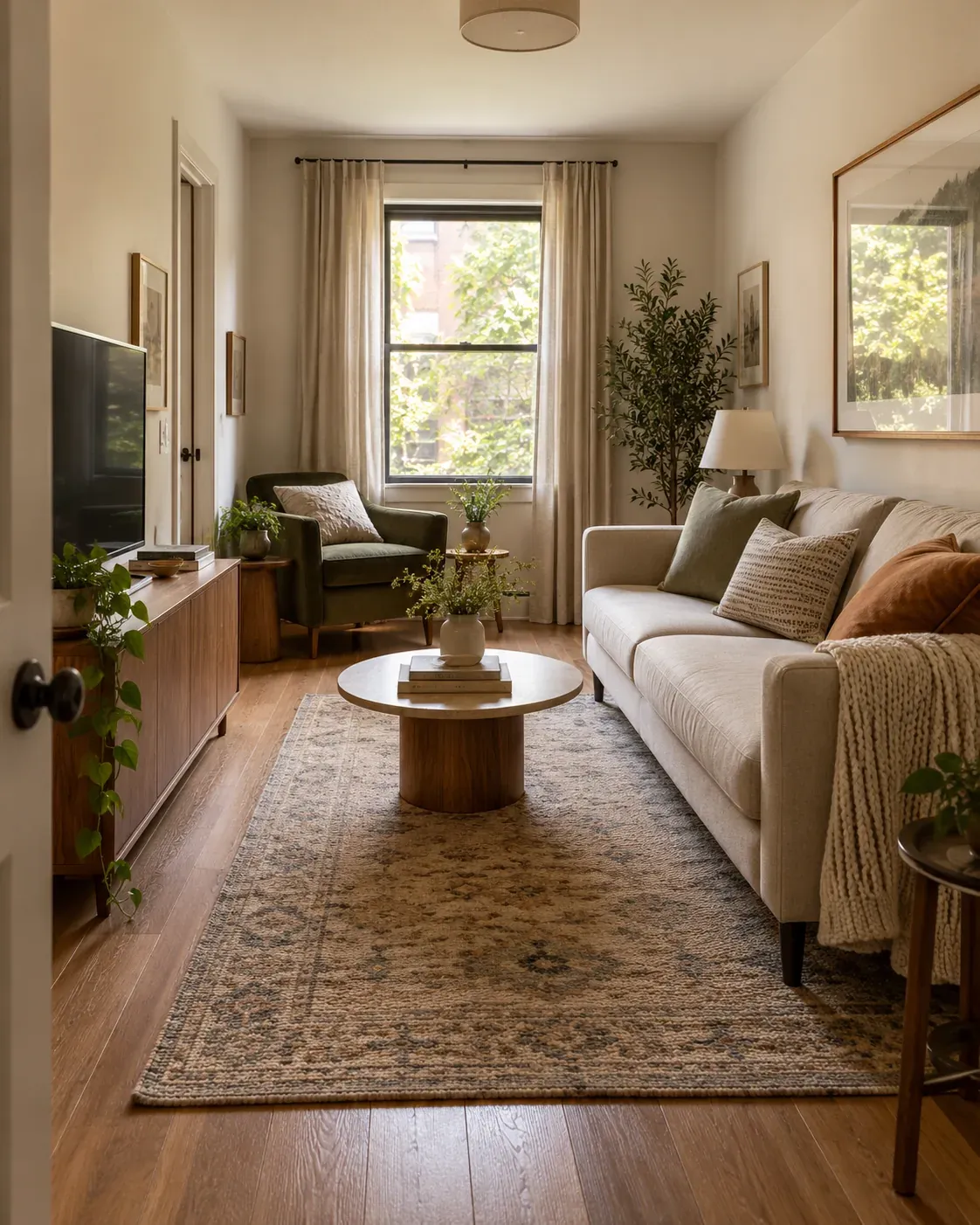
A long, empty wall is one of the trickiest surfaces in a small home. Leave it bare and the room feels like a corridor; hang one small frame in the middle and it looks like an afterthought. The fix is rhythm: repeated shapes, consistent spacing, and pieces sized to the wall instead of the furniture. These long wall decorating ideas range from a full gallery wall to simple paint tricks, with notes on cost, rental-friendliness and what tends to go wrong.
1. Build a salon-style gallery wall
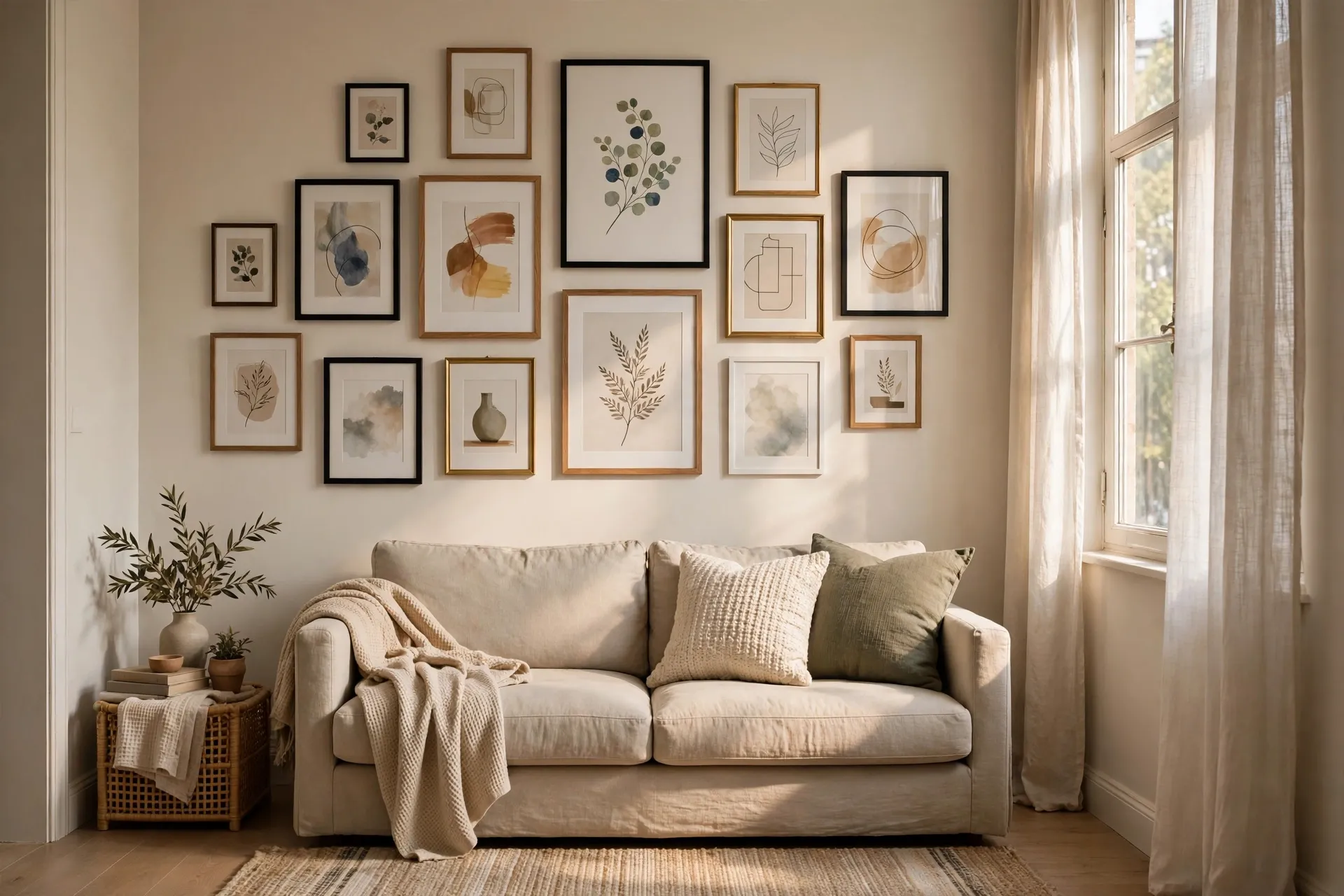
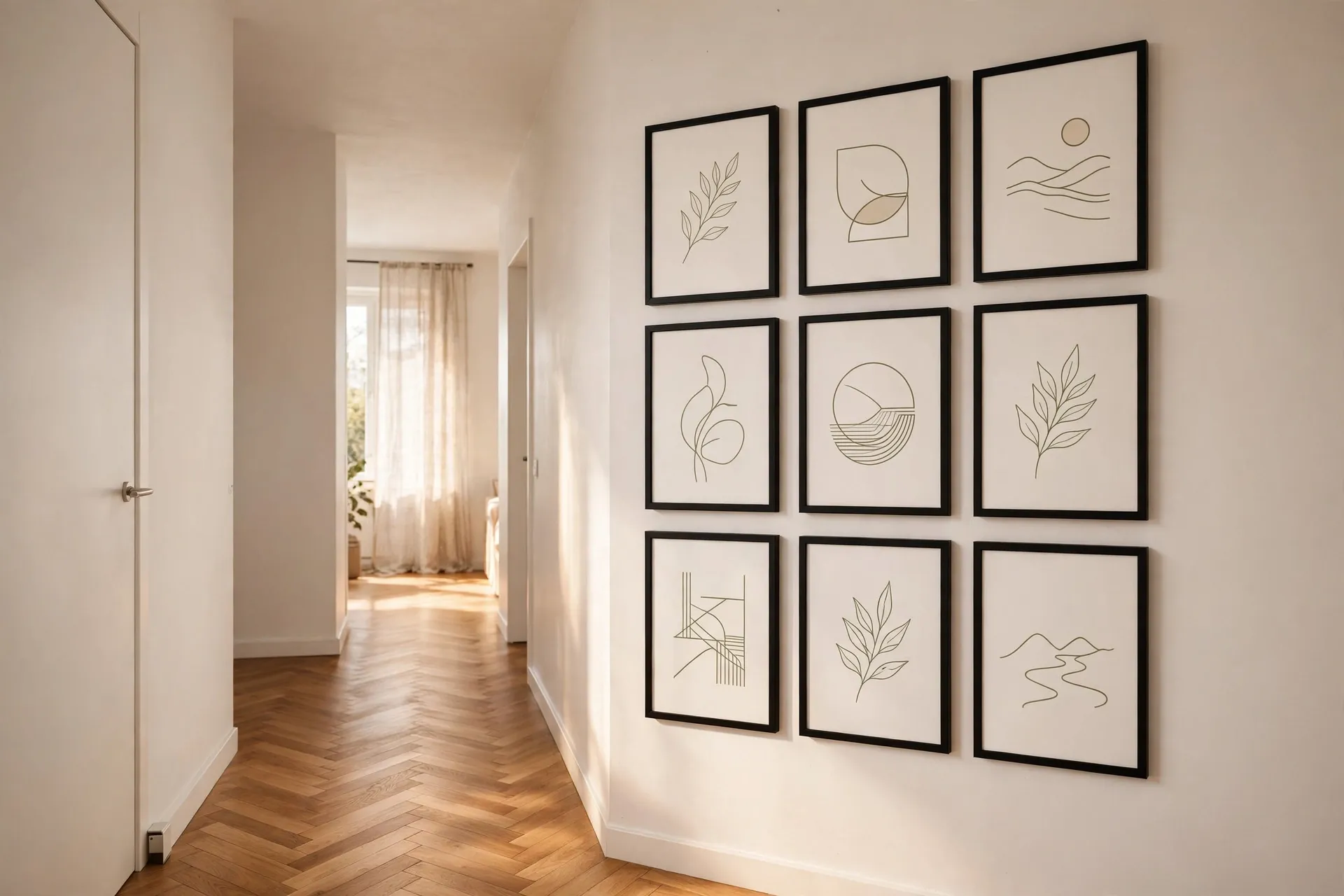
A gallery wall is the classic answer to how to decorate a long wall because it turns length into an advantage. Start by laying your frames on the floor and arranging them into a rough rectangle. Keep two to three inches between every frame, and aim for the center of the whole arrangement to sit around 57 inches from the floor, which is average eye level. An 8- to 10-foot wall usually needs 9 to 15 frames to look full rather than scattered.
The tradeoff is holes: a gallery wall means a lot of them. Renters can use picture-hanging strips rated for the frame weight, though heavy frames with glass still belong on nails. Take a phone photo of the floor layout before you start hanging so you can recreate the spacing on the wall without second-guessing every piece.
2. Run floating picture ledges
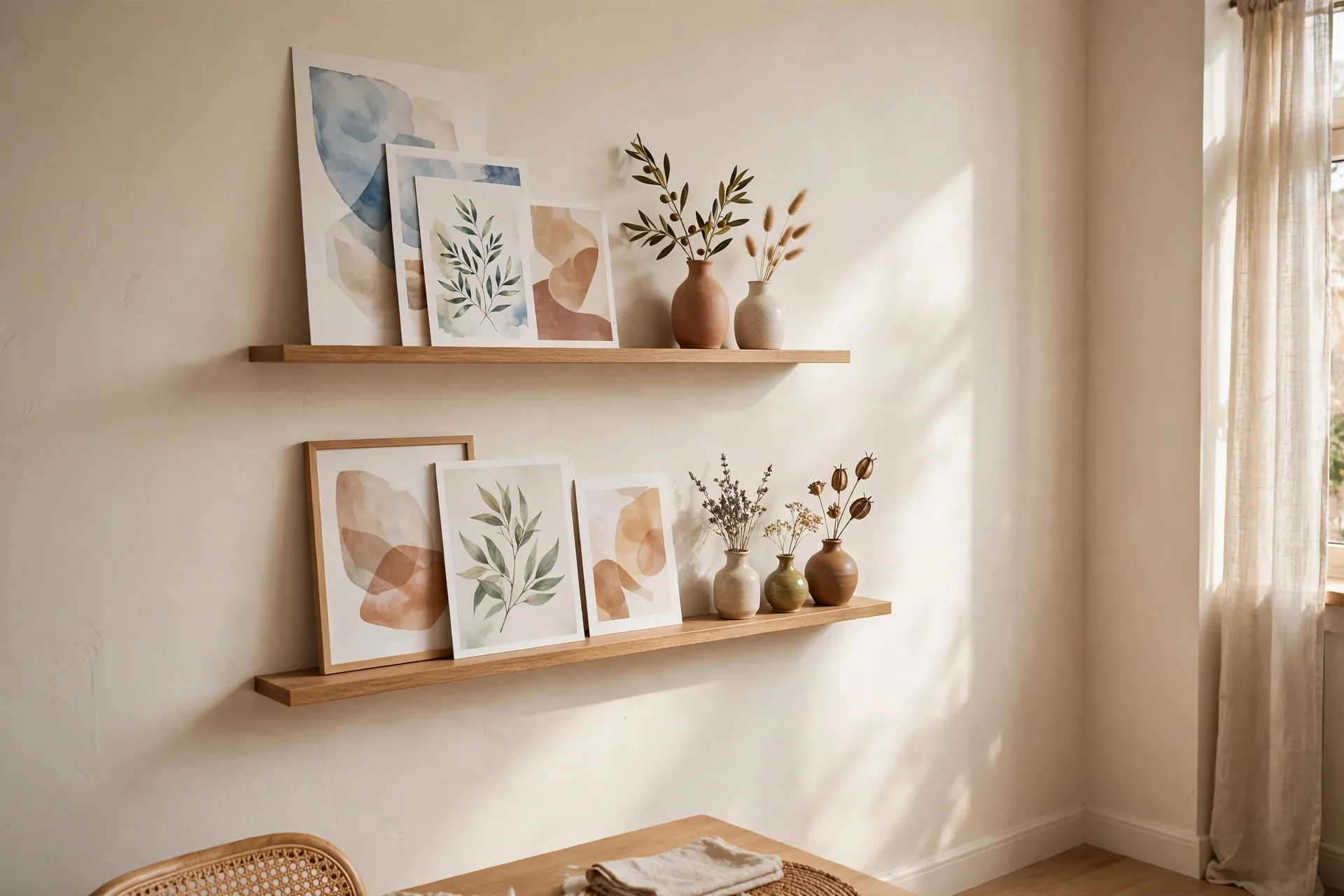
Picture ledges are the renter’s gallery wall. Two or three long ledges let you layer framed prints, small canvases and objects, and you can swap the arrangement in minutes without new holes. Choose ledges at least three and a half inches deep so frames lean securely, and space parallel ledges ten to twelve inches apart vertically. A six-foot ledge pair covers most of a long wall above a sofa or console.
The catch is dust and wobble. Leaned frames collect dust along the ledge, and a bumped frame can slide. Put a small adhesive bumper dot behind the bottom corners of each frame, and keep the heaviest pieces in the middle where the brackets carry them best. Ledges hold prints and canvases well but are a poor choice for heavy framed mirrors.
3. Hang one oversized piece
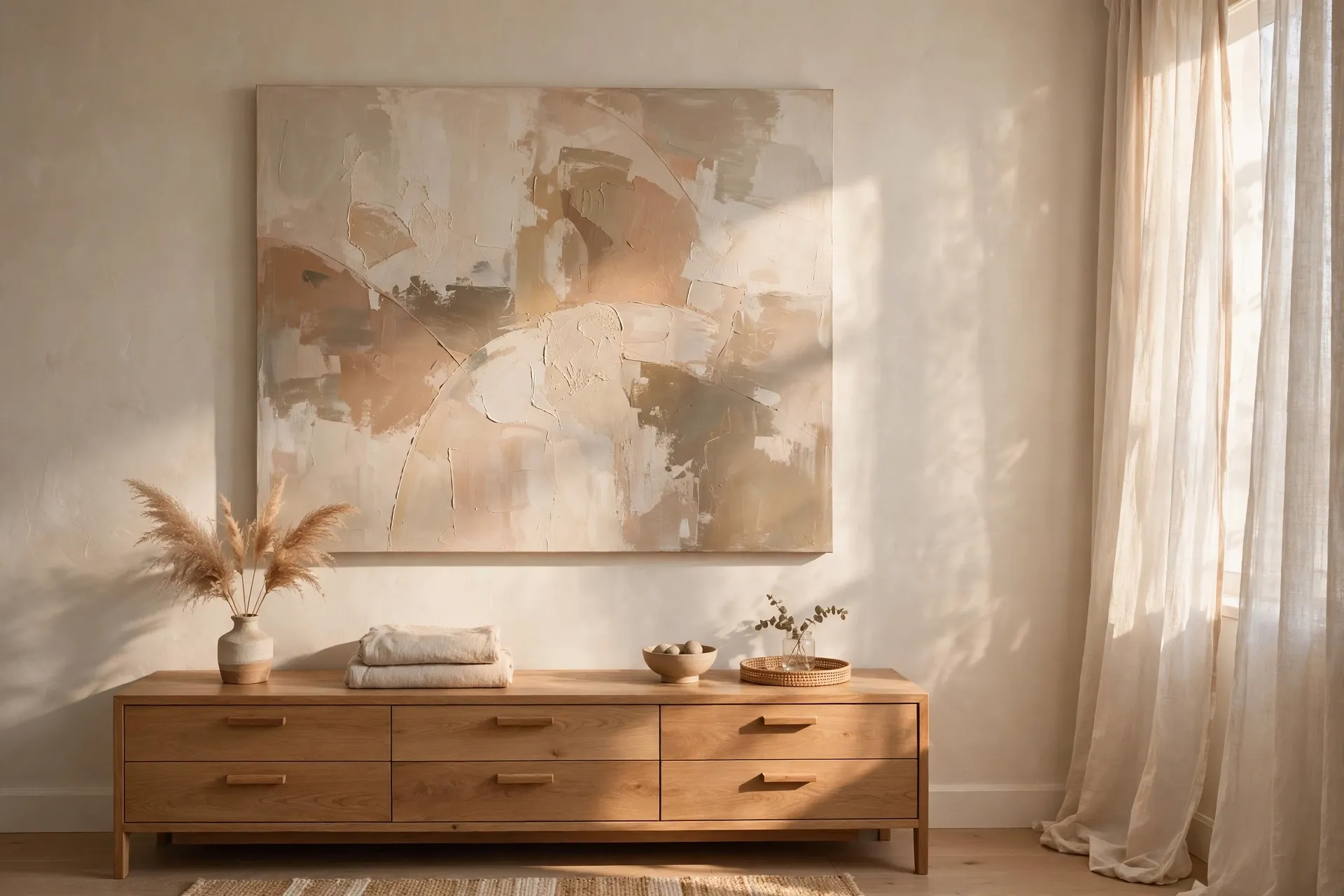
When a wall feels too long to decorate piecemeal, one big piece can simplify everything. The rule of thumb: the artwork should span roughly two-thirds to three-quarters of the width of the furniture below it, or about two-thirds of the bare wall segment. On a 10-foot wall, that means a canvas 60 to 80 inches wide. Large-format prints from online print shops cost far less than original art and look convincing at that scale.
Oversized art has a real risk, though: at that size, a piece you only sort of like becomes something you resent daily. Live with a taped paper template at the planned size for a few days before ordering. If the wall gets direct sun, choose a canvas or acrylic print rather than paper under glass, which can fade and glare.
4. Try an asymmetric mirror cluster
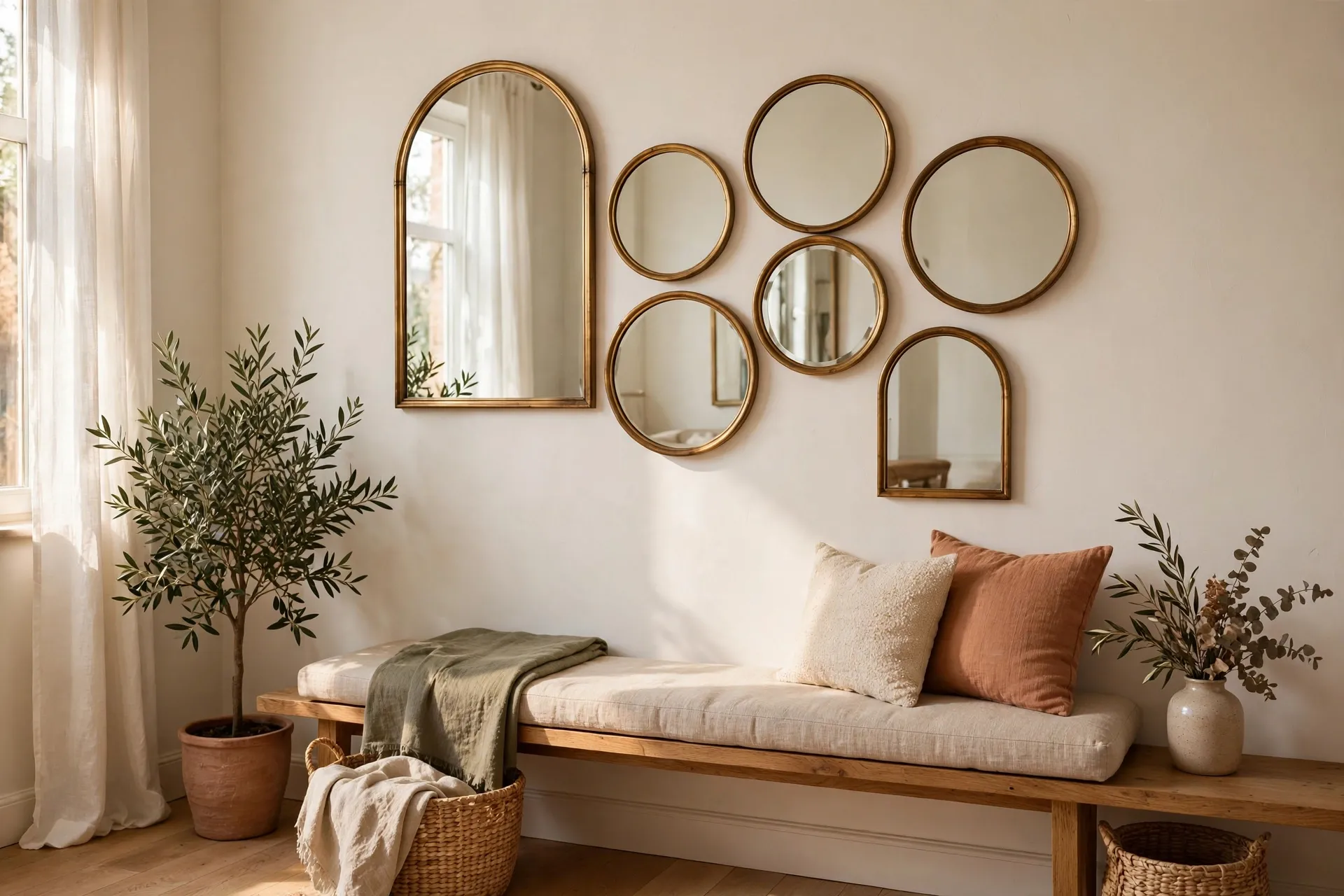
Mirrors are especially useful on long walls in small rooms because they bounce light and visually double the space. A cluster of three to five round or arched mirrors in mixed sizes feels softer than one giant rectangle and is easier to hang. Keep the cluster within a defined zone, roughly four to six feet wide, so it reads as one composition instead of mirrors scattered down the wall.
Hang mirrors with proper anchors, not just strips, because even a small mirror is heavy and a falling one is dangerous. Avoid placing a mirror directly opposite clutter, since it will double whatever it reflects. Opposite a window or a plant is ideal; opposite an open closet door is not.
5. Add picture lights above the art
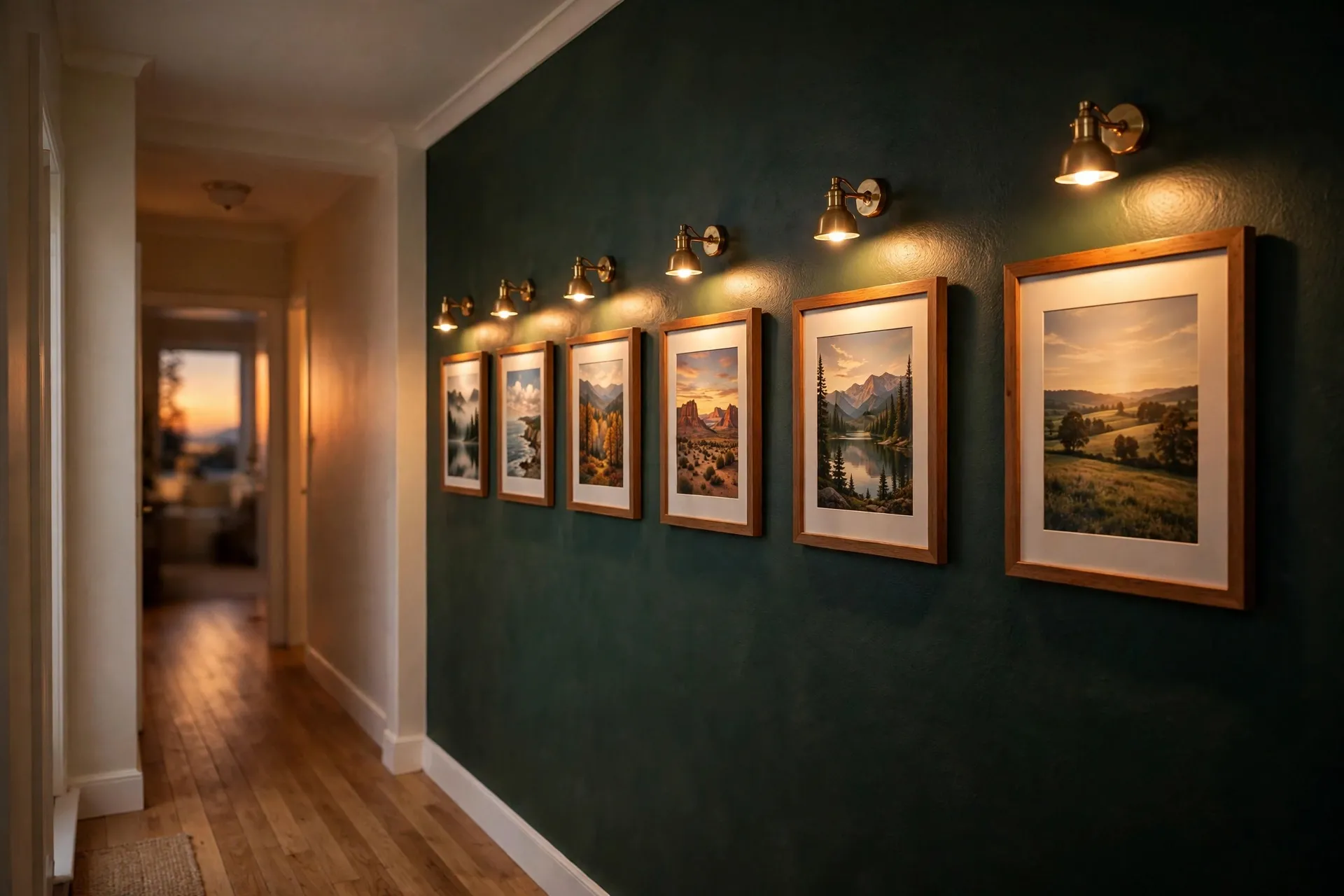
Picture lights turn a long wall into a gallery after dark. Slim brass or black picture lights mounted above frames create warm pools of light that draw the eye along the wall. Battery-operated versions with a remote avoid wiring entirely, which matters in rentals; hardwired ones look cleaner but need an electrician. Choose warm 2700K light so the art looks inviting rather than clinical.
Measure before buying: a picture light should span about half to two-thirds of the frame’s width. One common mistake is a tiny light centered over a huge frame, which creates an odd hotspot. On a long wall, repeating the same light over several frames gives the rhythm the wall needs. For layout help in the rest of the room, see our small living room layout ideas.
6. Cover the wall in peel-and-stick wallpaper
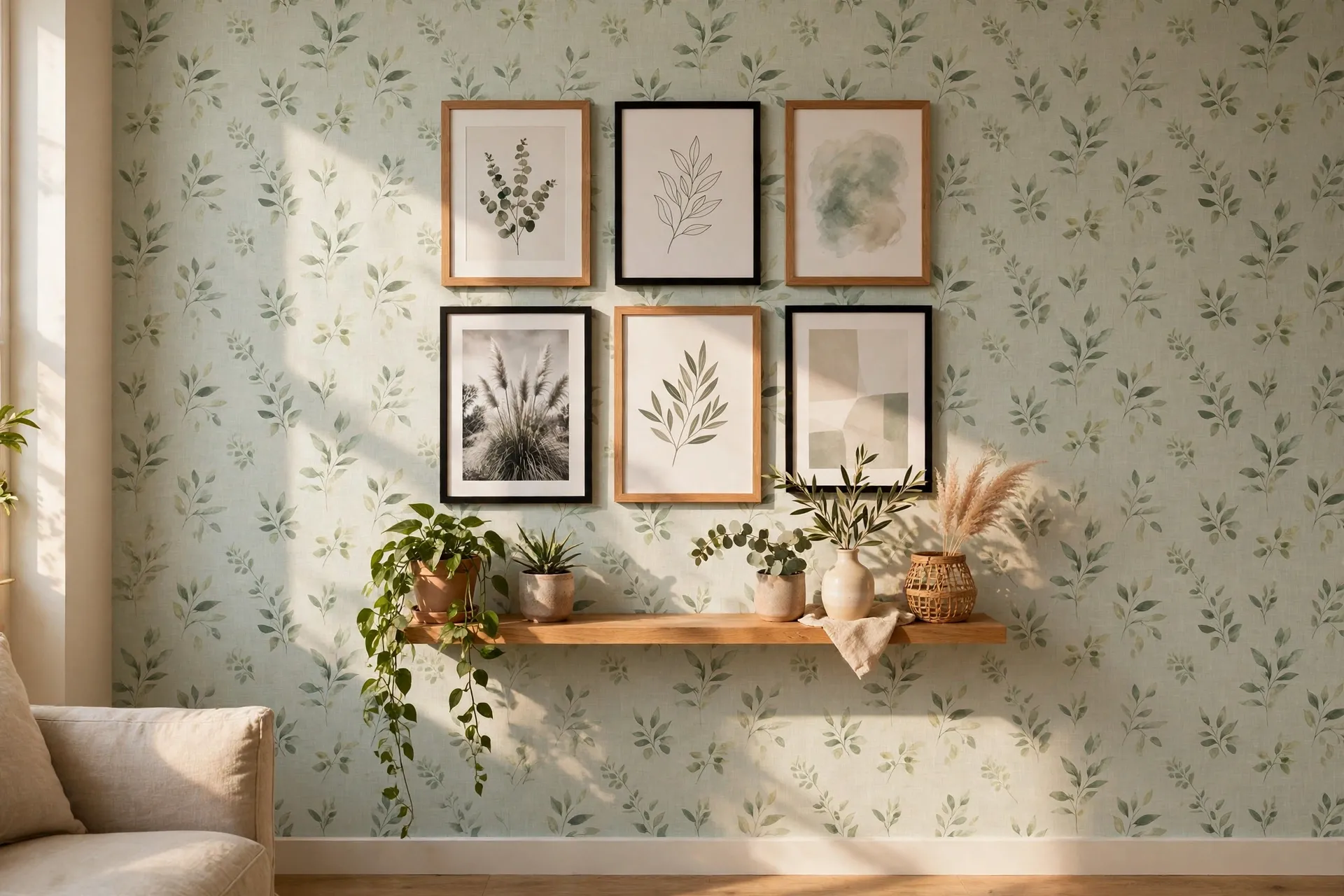
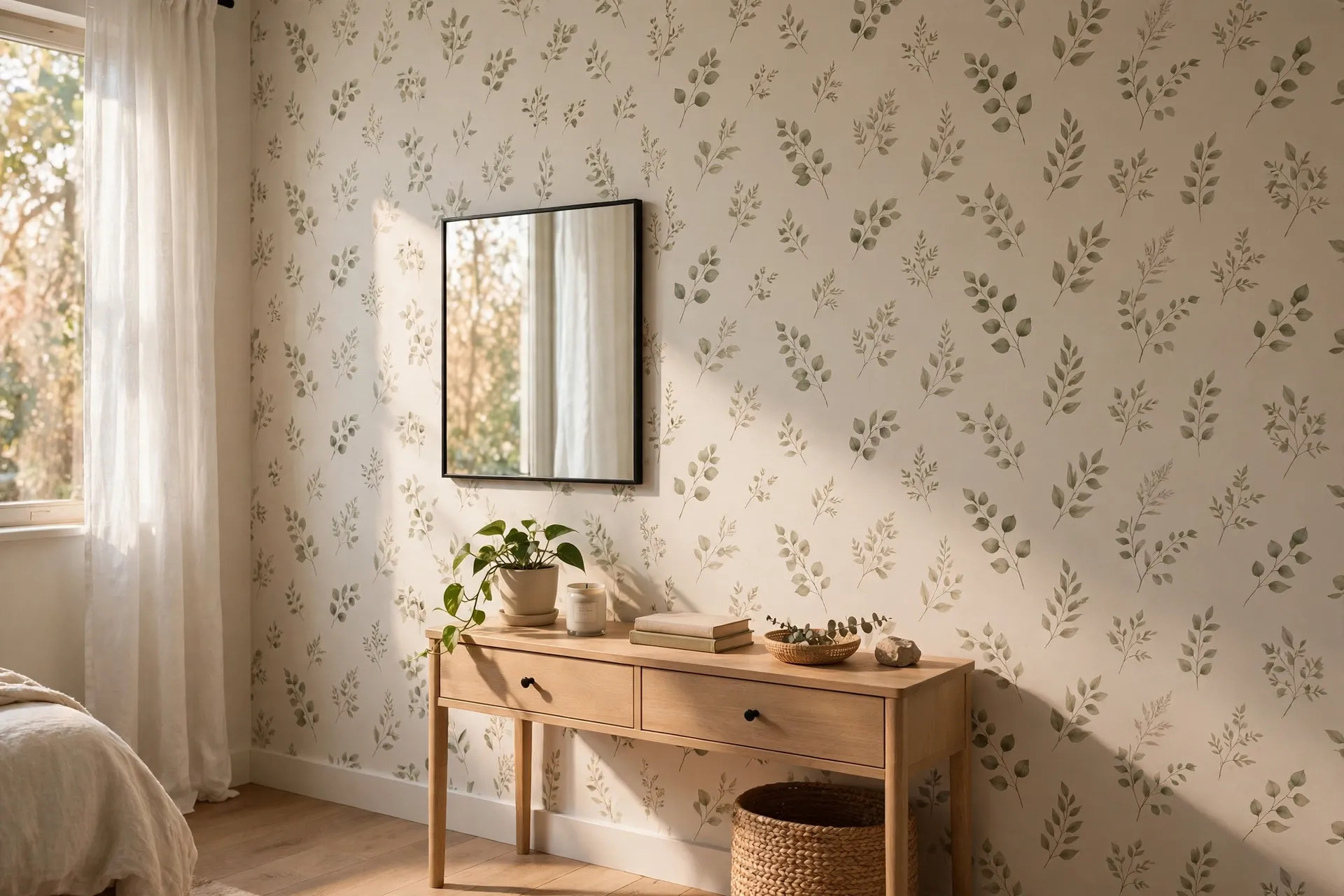
When art alone is not enough, wallpaper can carry the whole wall. Peel-and-stick wallpaper has become genuinely renter-friendly, and a single long wall is the ideal place to try a bold pattern without overwhelming the room. Choose a pattern with a large repeat for a long wall; small busy prints can look restless at that scale. Most rolls cover about 28 square feet, so measure the wall and buy one extra roll for pattern matching.
Application takes patience more than skill. Start at one end, work with a partner, and smooth with a plastic smoother as you go. The honest downside is removal: even “removable” wallpaper can pull paint on walls that were not primed well, so test a hidden corner first and photograph the wall before you start for your move-out records.
7. Anchor the wall with a console table vignette
A long wall often looks bare because there is nothing at its base. A slim console table, ten to twelve inches deep, gives the wall a foundation and a place for a lamp, stacked books and a vase. Style it in odd numbers: three objects of different heights read better than a matched pair. Then hang art above it so the table and the wall read as one composition.
Keep the console genuinely slim. A 16-inch-deep table on a wall beside a walkway will get bumped daily. If the wall is in a hallway, skip the console entirely and use the wall-mounted ideas below; a hallway needs its full width for passing. Our narrow entryway ideas cover that constraint in more detail, and if the entry needs real storage, pair the console with our entryway shelving ideas for coats, bags and keys above the vignette.
8. Paint a horizontal color band
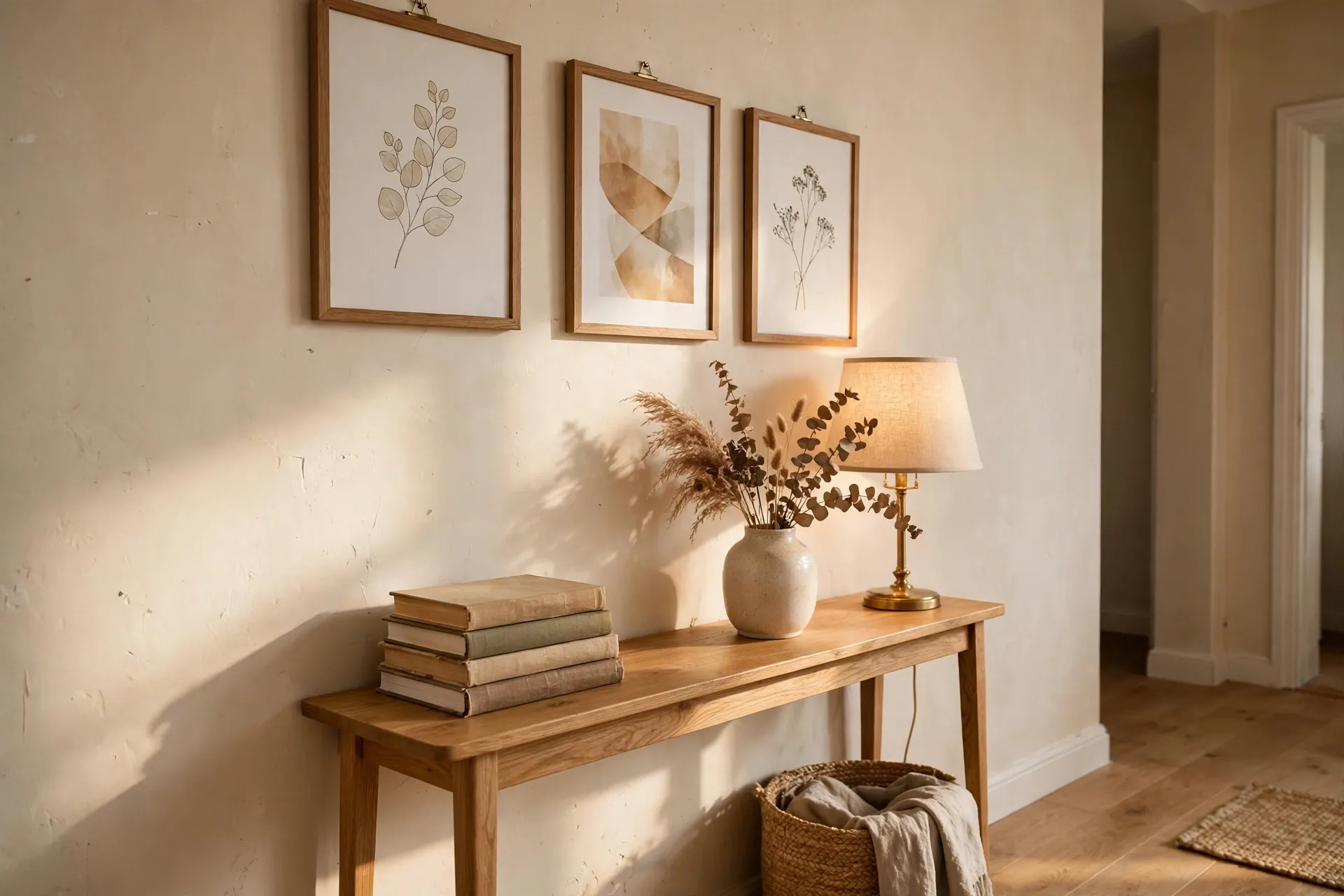
Paint is the cheapest way to break up a long wall. A horizontal band of color, roughly chair-rail height at 32 to 36 inches, or a wide arch behind a key piece of furniture, gives the wall structure for the cost of a quart of paint. Use painter’s tape and a level; a wavy line will bother you more than the color choice will.
This is a commitment for renters, so check the lease first. Some landlords allow paint if you return the wall to white, which means keeping the exact paint name for touch-ups or repaints. On textured walls, expect the tape edge to bleed slightly; a second thin coat usually cleans it up.
9. Hang a large textile or wall hanging
A woven wall hanging, quilt or large fabric panel softens a long wall in a way frames cannot. Textiles absorb sound, which is a genuine bonus in small apartments with hard floors and long echoing walls. Hang from a wooden dowel or a slim curtain rod mounted with two brackets, or use clip hangers for lighter pieces.
Fabric fades in direct sun, so reserve textiles for walls that do not get harsh afternoon light, or rotate them seasonally. Dust is the other maintenance item: take the piece down twice a year and shake it outdoors. Heavy rugs-as-art need serious anchors into studs; a falling eight-pound textile is no joke.
10. Line up identical frames in a row
If mixed gallery walls feel chaotic to you, go uniform: a row of identical frames with two-inch gaps creates a calm, hotel-like line down a long wall. The frames match but the art inside can vary, which keeps it from feeling corporate. This works especially well above a long sofa or bed where the furniture already defines the width.
Count carefully before buying frames. Measure the total span, subtract the gaps, and divide by the number of frames so you buy the right size once. Identical frames in slightly different sizes look like a mistake, so check the SKU on every box. Black or natural oak frames are the safest long-term choice; trendy colors date faster than you expect.
11. Add wall-mounted planters
Trailing plants break up a long wall with living texture. Wall-mounted planters or a simple shelf with pothos, philodendron and spider plants add green at eye level where floor space is tight. Hang planters where you can actually reach them to water; a plant you need a chair to water will die within two months.
Every planter needs a drip tray or a waterproof liner, because water will find the wall otherwise. Start with three planters spaced along the wall rather than ten; you can add more once you know your watering rhythm. Faux trailing plants are a legitimate fallback for dark walls, but buy good ones: cheap plastic reads as cheap plastic from across the room.
12. Try a removable wall mural
A large-scale mural, a misty forest, an abstract gradient, a city skyline, can fill a long wall in one move. Removable mural panels work like oversized wallpaper and are sized for full walls, which solves the piecemeal problem entirely. Measure the wall height and width precisely and order the mural to fit; trimming a photographic mural mid-scene looks bad.
Install with a partner and a felt smoother, working panel by panel. Air bubbles are the main frustration; small ones can be pricked with a pin and smoothed flat. Murals dominate the room, so keep the rest of the wall decor minimal: one mural plus a console is plenty, a mural plus a gallery wall is a fight.
13. Install picture-frame molding
Applied molding, thin paint-grade trim arranged in rectangles and painted the same color as the wall, gives a long wall architectural interest with zero art required. The molding casts subtle shadows that add depth, and on a long wall the repeated rectangles supply the rhythm automatically. A basic kit of trim, adhesive and caulk costs less than most large art.
This is semi-permanent, so it suits owners more than renters. The work itself is straightforward: measure equal rectangles, miter or butt-joint the corners, glue and pin, then caulk and paint. Uneven rectangles are the giveaway of a rushed job, so measure twice and use a laser level if you can borrow one.
14. Line the wall with plug-in sconces
Sconces wash a long wall with light and create a rhythm of bright pools and soft shadows. Plug-in sconces with fabric cord covers are the renter-friendly route; no wiring, and the cord becomes part of the look. Space them six to eight feet apart, centered at about 60 inches high, and use matching shades for a pulled-together feel.
Bulb choice matters more than the fixture. Warm 2700K bulbs at modest brightness make the wall glow; cool or overly bright bulbs turn it into an interrogation room. Put them on a plug-in dimmer or smart plugs so you can drop the level in the evening. In a hallway, check that the sconce projection leaves the walkway clear.
15. Combine open shelves with books and art
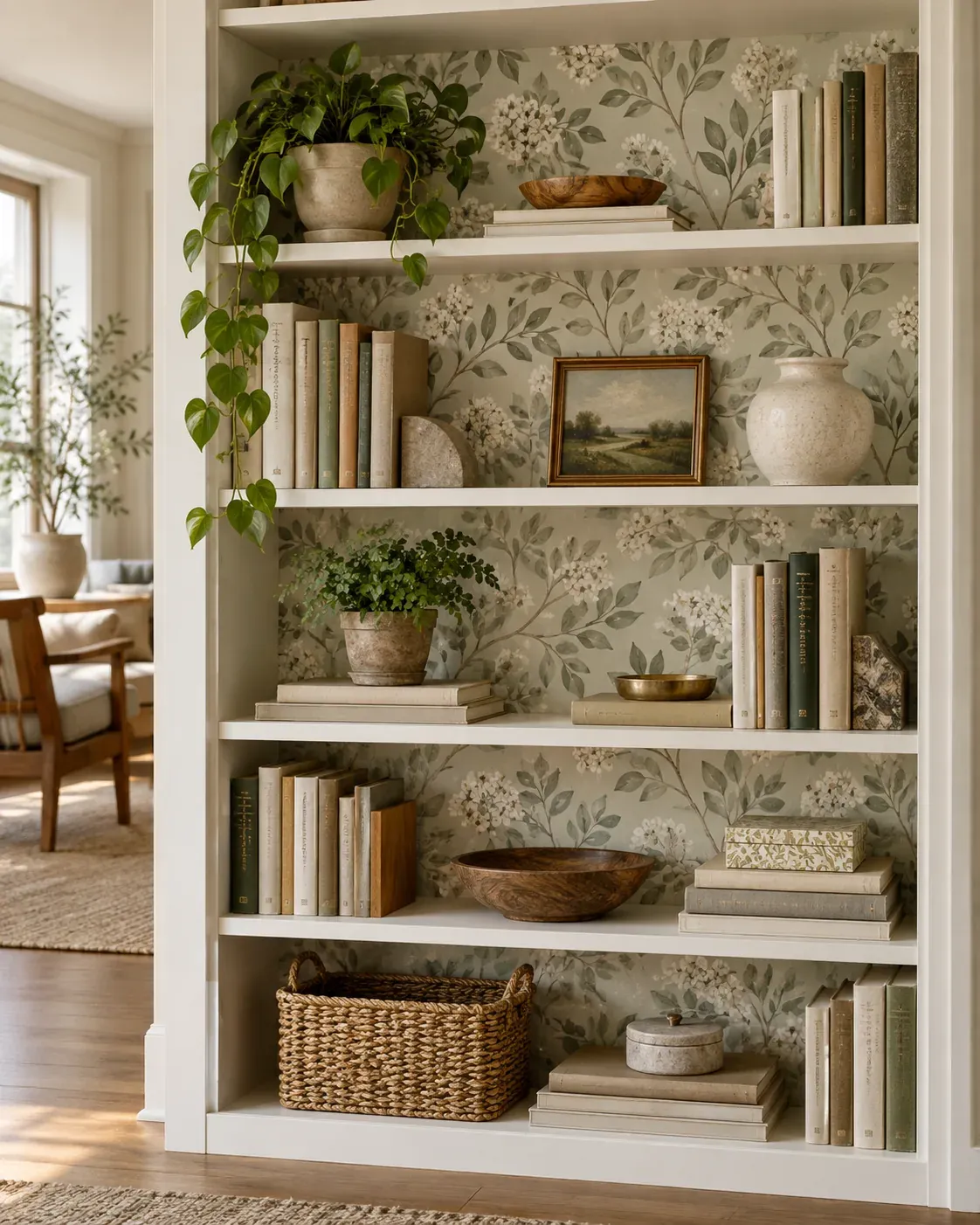
A long run of open shelves styled with books, small art and objects fills a wall while adding storage, which small rooms always need. Style in groups: stack books horizontally, lean a small frame, add a plant, and repeat the pattern down the shelf with variations. Leave breathing room; a shelf crammed edge to edge reads as clutter no matter how pretty the objects are.
Dust is the honest price of open shelves, so this idea suits rooms you tidy regularly. In a kitchen-adjacent space, grease will settle on everything, so keep open shelves out of the cooking zone. Anchor every shelf into studs or use proper drywall anchors; a shelf of books is far heavier than it looks. In a studio, a long shelving run can even act as a room divider; see how to furnish a studio apartment for zoning the rest of the space around it.
How to Plan a Long Wall Before You Hang Anything
Start with measurements, not shopping. Measure the wall’s full width and height, note windows, doors, switches and thermostats you must work around, and mark the furniture that sits against it. Cut paper templates to the size of your planned frames or shelves and tape them up; live with them for two or three days. This step feels slow, but it prevents the two most common regrets: art hung too high and pieces too small for the wall.
Think in sightlines. A long wall is usually seen from one main viewpoint, the sofa, the dining table, the hallway entrance. Stand there and decide what the composition should do: pull the eye along the wall, create a focal point at one end, or frame the furniture below. One clear intention beats five competing ones, and it tells you when to stop adding pieces.
Long Wall Mistakes to Avoid
The most common error is scale: frames that would suit a powder room hung on a twelve-foot wall. If in doubt, go bigger or add more pieces; small lonely frames make a long wall feel longer and emptier. The second error is height: art centered for a standing adult in a hallway, but hung at standing height above a sofa where everyone sits, which leaves an awkward gap. Above furniture, the bottom of the frame should sit six to eight inches above the furniture’s top.
Avoid centering one small piece in the middle of a vast wall, the “postage stamp” effect. Either build outward into a composition or move the piece to a smaller wall where it can shine. And resist filling every inch: a long wall with one calm zone and one decorated zone often looks better than a wall decorated end to end. Negative space is part of the design.
A long wall rewards planning more than spending. Pick one main idea from this list, size it to the wall with paper templates first, and let the rest of the room stay quiet. The wall will feel intentional, the room will feel larger, and you will not be patching a dozen extra holes next year.
Looking for more ideas? Browse our small space living stories.
Save to Pinterest