In this article
- 1. Add Warmth with Natural Wood Slat Panels
- 2. Create a Soft, Layered Look with Limewash Paint
- 3. Frame the Wall with Decorative Picture Molding
- 4. Make a Statement with Large-Scale Wallpaper
- 5. Give a Plain Wall Definition with Board-and-Batten
- 6. Introduce Natural Texture with Stone or Brick
- 7. Use a Painted Arch to Highlight a Favorite Corner
- 8. Add Depth with a Two-Tone Painted Wall
- 9. Bring Personality with a Hand-Painted Mural
- 10. Create a Refined Focal Point with Textured Wall Panels
- How to Choose the Right Accent Wall
- Common Accent Wall Mistakes to Avoid
- Frequently Asked Questions
- Which wall should I choose for an accent wall?
- What is the easiest accent wall to create?
- Do accent walls make a small room look smaller?
- Are accent walls still a good decorating choice?
- Can I create an accent wall in a rental?
- Conclusion
An accent wall can change the entire feeling of a room without requiring a full renovation. It gives the eye a natural focal point, introduces texture or color, and helps an otherwise plain space feel considered and complete. The best accent walls do more than stand out. They connect with the room’s furniture, lighting, and overall style.
You do not need an oversized room or a large budget to create one. A carefully painted section, a layer of subtle wallpaper, or a few architectural details can make a noticeable difference. These accent wall ideas offer options for different rooms, decorating styles, and budgets.
1. Add Warmth with Natural Wood Slat Panels
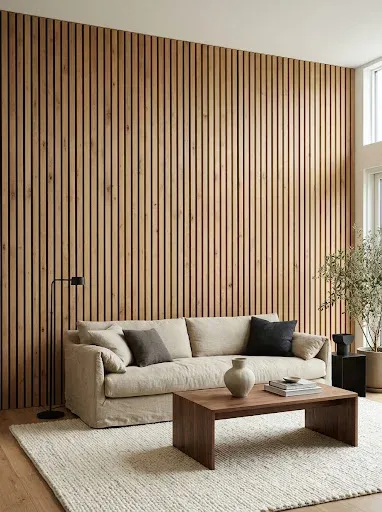
Wood slat panels bring warmth, rhythm, and architectural interest to a plain wall. Their narrow vertical lines can make a room feel taller, while the natural wood grain softens modern furniture and clean-lined interiors.
Use them behind a sofa, along the wall behind a bed, or in a dining area where you want a defined focal point. Light oak creates an airy Scandinavian look, while walnut gives the room a richer, more dramatic character.
Styling tip: Keep surrounding furniture simple so the repeated lines remain the main feature. A slim console, understated artwork, or a pair of warm wall lights is usually enough.
Budget-friendly alternative: Install narrow timber battens over a painted wall instead of covering the entire surface with commercial paneling. Measure carefully and keep the spacing consistent.
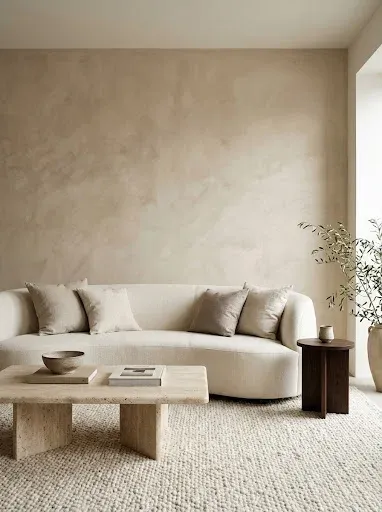
2. Create a Soft, Layered Look with Limewash Paint
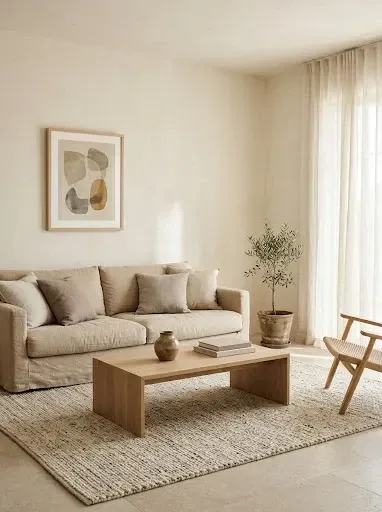
Limewash paint gives walls a gentle, cloud-like movement that feels more natural than a flat painted finish. Its subtle tonal variation works especially well in relaxed, warm interiors where you want texture without introducing a busy pattern.
Try warm beige, muted clay, soft mushroom, or dusty olive. These shades add depth while remaining easy to combine with linen curtains, natural wood, woven accents, and neutral upholstery.
Styling tip: Use limewash on one uninterrupted wall and allow the finish to remain visible. Too many competing textures can make the space feel visually crowded.
Best for: Living rooms, bedrooms, reading corners, and dining spaces that need a calm focal point.
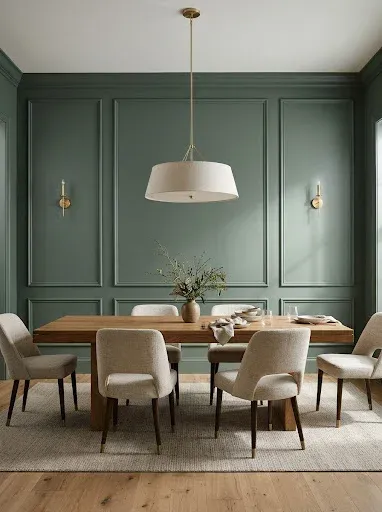
3. Frame the Wall with Decorative Picture Molding
Picture-frame molding creates the impression of custom architecture, even in a relatively simple room. The narrow trim outlines rectangular panels and adds structure without taking up floor space.
For a classic look, paint the molding and the wall in the same color. Deep green, muted blue, warm white, and soft taupe all work beautifully. In a more contemporary space, use fewer, larger panels with clean proportions.
Styling tip: Plan the panel sizes around the furniture. In a bedroom, align the central panels with the bed. In a living room, consider the sofa width before deciding where the frames should begin and end.
Budget note: Lightweight molding can be more affordable and easier to install than traditional millwork. Smooth the joins and paint carefully for a polished finish.
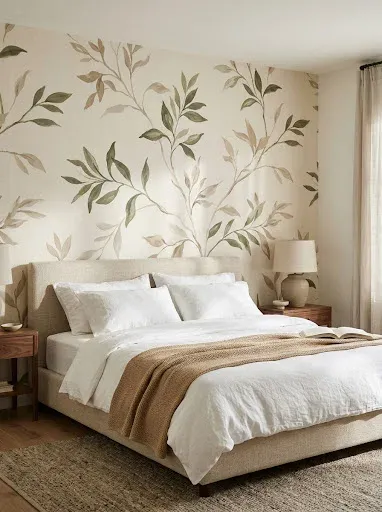
4. Make a Statement with Large-Scale Wallpaper
Wallpaper is one of the quickest ways to introduce pattern, color, and personality. Oversized botanicals, painterly abstracts, subtle stripes, and textured grasscloth can all create a strong focal point without changing the furniture.
Choose a pattern that supports the room’s palette rather than competing with every other element. A dramatic wallpaper can work beautifully behind a bed or sofa, while a quieter design may be better for a dining room or home office.
Styling tip: Order samples and view them at different times of day. Natural and artificial light can change how a wallpaper color appears.
Renter-friendly option: Consider removable wallpaper, but test a small section first and follow the manufacturer’s surface-preparation instructions.
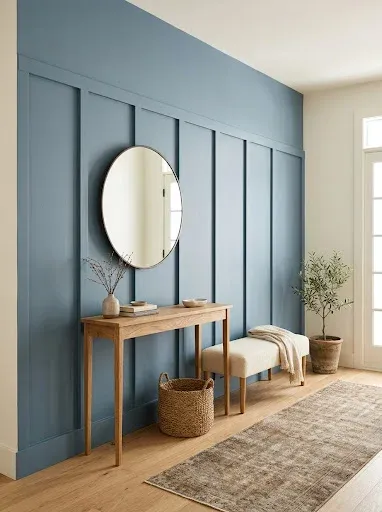
5. Give a Plain Wall Definition with Board-and-Batten
Board-and-batten adds simple vertical framing and a little architectural depth. It can make an ordinary wall look more finished, particularly in entry areas, bedrooms, dining rooms, and hallways.
Traditional versions often use white or cream, but the treatment also looks fresh in muted sage, warm greige, charcoal, or dusty blue. A half-wall installation can provide visual interest while leaving the upper portion open for artwork or a contrasting paint color.
Styling tip: Choose a board height that suits the ceiling and the furniture nearby. A very high treatment in a low-ceilinged room can feel heavy.
Budget-friendly alternative: Use slim battens and paint the entire feature wall in one color, including the trim, for a cohesive built-in appearance.
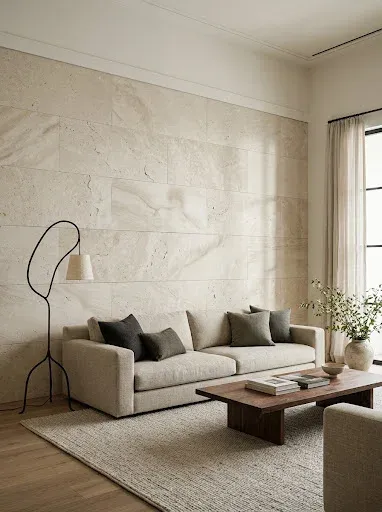
6. Introduce Natural Texture with Stone or Brick
Stone and exposed brick give an accent wall a grounded, tactile quality. They are particularly effective when the room needs a stronger material contrast against smooth plaster, painted cabinetry, or soft furnishings.
A pale limestone-style finish can keep a room bright and relaxed. Traditional brick adds warmth and character, while darker stone can create a more dramatic backdrop.
Styling tip: Let the material lead. Avoid placing too many decorative objects in front of a textured wall, and use lighting to reveal its natural surface.
Practical note: Check the wall structure, installation requirements, and weight of the material before choosing real stone or brick. Quality lightweight veneer can be an option where a full masonry installation is unsuitable.
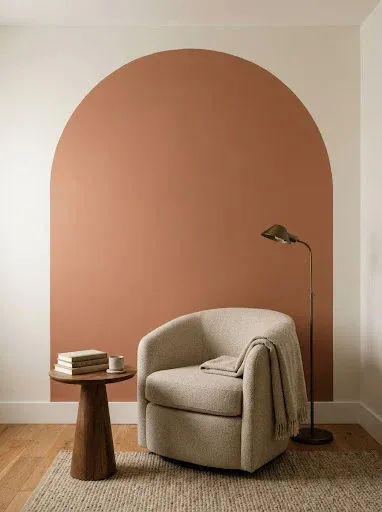
7. Use a Painted Arch to Highlight a Favorite Corner
A painted arch is a simple way to give a small part of a room a sense of purpose. It can frame a reading chair, define a desk area, highlight a console, or create a gentle backdrop behind a small dining nook.
Use a curved outline in a contrasting shade, or choose a tone only slightly darker than the surrounding wall for a subtle effect. Warm terracotta, muted blue, olive, and caramel are attractive choices.
Styling tip: Make the arch wide enough to frame the furniture rather than looking like a narrow stripe. Keep its height and curve visually balanced with the object beneath it.
Budget note: Paint is often all you need. A pencil, string, and careful measuring can help create a smooth curved guide.
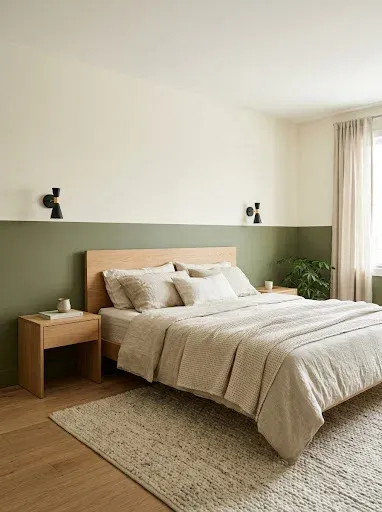
8. Add Depth with a Two-Tone Painted Wall
A two-tone wall introduces color and structure without requiring wallpaper or decorative panels. You can divide the wall horizontally, create a broad color block behind a bed, or use a vertical painted section to define a specific zone.
For a calm combination, pair warm white with muted sage or dusty blue. For more contrast, try clay with a pale neutral or deep green with soft cream.
Styling tip: Think about the furniture and artwork before deciding where the color division should sit. A horizontal line can look awkward if it cuts directly through the main furniture arrangement.
Best for: Apartments, rented rooms where paint is permitted, children’s rooms, and spaces that need a little definition without major work.
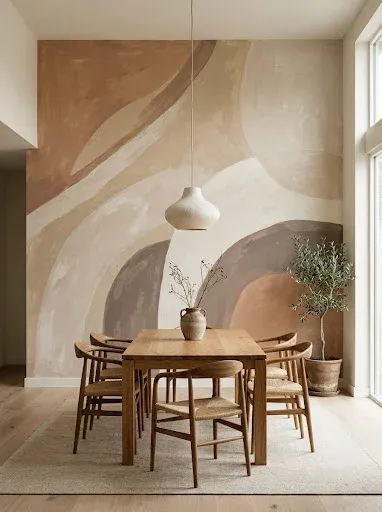
9. Bring Personality with a Hand-Painted Mural
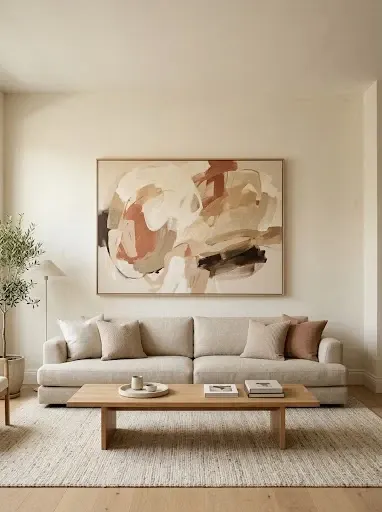
A hand-painted mural can turn a blank wall into a personal feature. It might be a soft abstract composition, a loose botanical pattern, an architectural landscape, or a simple arrangement of curved shapes.
The key is to choose a design that suits the room’s purpose. A quiet, tonal mural can work behind a bed, while a more expressive composition may bring energy to a creative workspace or dining room.
Styling tip: Limit the palette to a few connected colors. This helps the mural feel integrated with the rest of the room rather than like a separate decoration.
Budget-friendly approach: Start with simple geometric shapes or a repeating motif instead of a complex, detailed illustration.
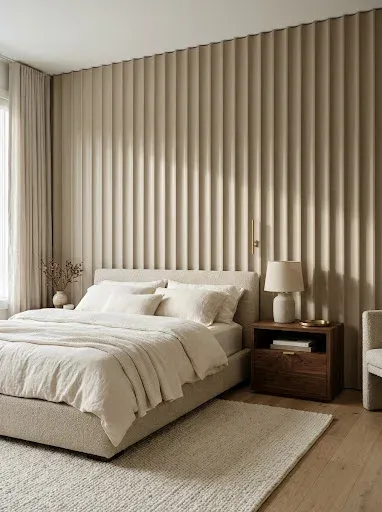
10. Create a Refined Focal Point with Textured Wall Panels
Textured wall panels add depth through raised lines, fluted surfaces, shallow relief patterns, or softly rounded forms. They create a more understated statement than a strong wallpaper print while still giving the wall a distinctive finish.
Use vertical fluted panels for a sense of height, gently curved panels for a softer look, or a subtle geometric design for a more contemporary room. Finish them in a tone that complements the furniture and flooring.
Styling tip: Use integrated or nearby lighting to bring out the panel texture. Soft side lighting can make shallow details more noticeable.
Practical note: Check panel thickness and installation requirements, especially in narrow rooms where bulky treatments could reduce usable space.
How to Choose the Right Accent Wall
Before buying paint, wallpaper, or panels, decide what the wall needs to do. A successful accent wall should have a clear purpose.
- Choose the focal point first: The wall behind a bed, sofa, dining table, or reading chair is often a natural starting point.
- Consider the room’s light: Dark shades can feel rich in a bright room but may look heavier in a room with limited natural light.
- Repeat existing colors: Borrow a shade from a rug, artwork, upholstery, or curtains so the accent wall feels connected to the rest of the space.
- Think about scale: Large patterns and wide panels need enough visual breathing room. In a smaller room, a subtle finish may be more effective.
- Test before committing: Paint samples and wallpaper samples can look different once they cover a larger area.
For more inspiration, explore our long wall decorating ideas and renter-friendly apartment wall ideas.
Common Accent Wall Mistakes to Avoid
- Choosing a wall without considering the furniture: An accent wall should support a focal point, not compete with a doorway, window, or awkward furniture arrangement.
- Using too many statement finishes: Strong wallpaper, decorative paneling, bold paint, and elaborate artwork can overwhelm one room when used together. Choose one leading feature.
- Ignoring color temperature: A cool gray accent wall may feel disconnected in a room full of warm wood and creamy textiles. Compare samples with the finishes already in the space.
- Making the feature too small: A narrow strip of color or a tiny panel arrangement can look accidental. Give the feature enough width and height to feel intentional.
- Forgetting the edges and finishing details: Uneven paint lines, visible adhesive, poorly aligned trim, and unfinished corners can make an otherwise beautiful design look incomplete.
Frequently Asked Questions
Which wall should I choose for an accent wall?
Choose a wall that naturally draws attention, such as the wall behind a bed, sofa, dining table, or fireplace. Avoid selecting a wall simply because it is empty. Consider how the wall works with the room’s layout and existing focal points.
What is the easiest accent wall to create?
A painted accent wall is usually the simplest and most budget-friendly option. A single color, a painted arch, or a two-tone design can make a noticeable difference without specialist materials.
Do accent walls make a small room look smaller?
Not necessarily. A well-proportioned accent wall can create depth and make a room feel more intentional. Very dark colors or oversized patterns may feel heavy in a poorly lit room, so consider the scale and lighting before choosing.
Are accent walls still a good decorating choice?
Yes. The most versatile designs rely on thoughtful materials, considered color, and architectural detail rather than a trend-specific pattern. Choose a finish that suits the room and your long-term preferences.
Can I create an accent wall in a rental?
Often, yes, but the best approach depends on your lease and the wall surface. Removable wallpaper, freestanding screens, fabric panels, and carefully positioned artwork can introduce a feature without permanent alterations. Always check the product instructions and rental conditions first.
Conclusion
The best accent wall ideas give a room a focal point while still feeling connected to the rest of the home. Wood slats, limewash, decorative molding, wallpaper, and simple paint treatments each offer a different way to introduce character. Start with the wall that matters most, choose one finish that suits your style, and let the surrounding furniture and details support it.
Looking for more ideas? Browse our small space living stories.
Save to Pinterest