In this article
- 1. The narrow freestanding hall tree
- 2. The corner hall tree
- 3. The bench-style hall tree
- 4. The wall-mounted hall tree
- 5. The hook-panel hall tree
- 6. The shoe-cubby hall tree
- 7. The micro hall tree for hallways
- 8. The mirrored hall tree
- 9. The rustic wood hall tree
- 10. The white hall tree for bright entries
- 11. The industrial metal hall tree
- 12. The DIY hall tree from a bookshelf
- 13. The kids’ low hall tree
- How to Choose a Hall Tree for a Tiny Entryway
- Hall Tree Mistakes to Avoid
A hall tree combines the three things a tiny entryway needs, a bench, coat hooks and shoe storage, into a single piece of furniture. In a small space that means one purchase, one footprint, one style decision instead of three. The catch is sizing: hall trees are traditionally built for suburban mudrooms, so finding a small hall tree that fits a tiny entry takes some hunting. These 13 do, with real dimensions and honest tradeoffs.
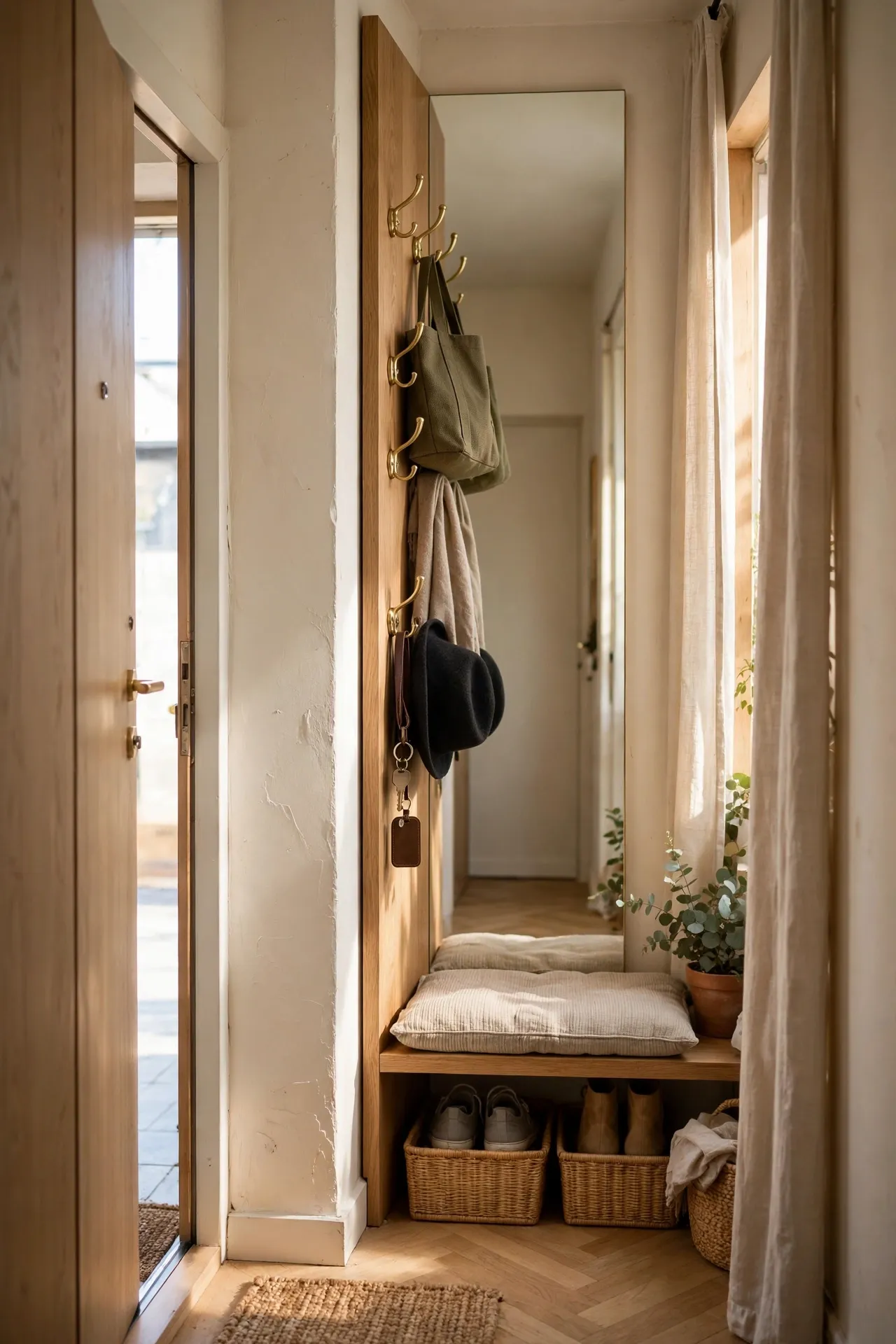
1. The narrow freestanding hall tree
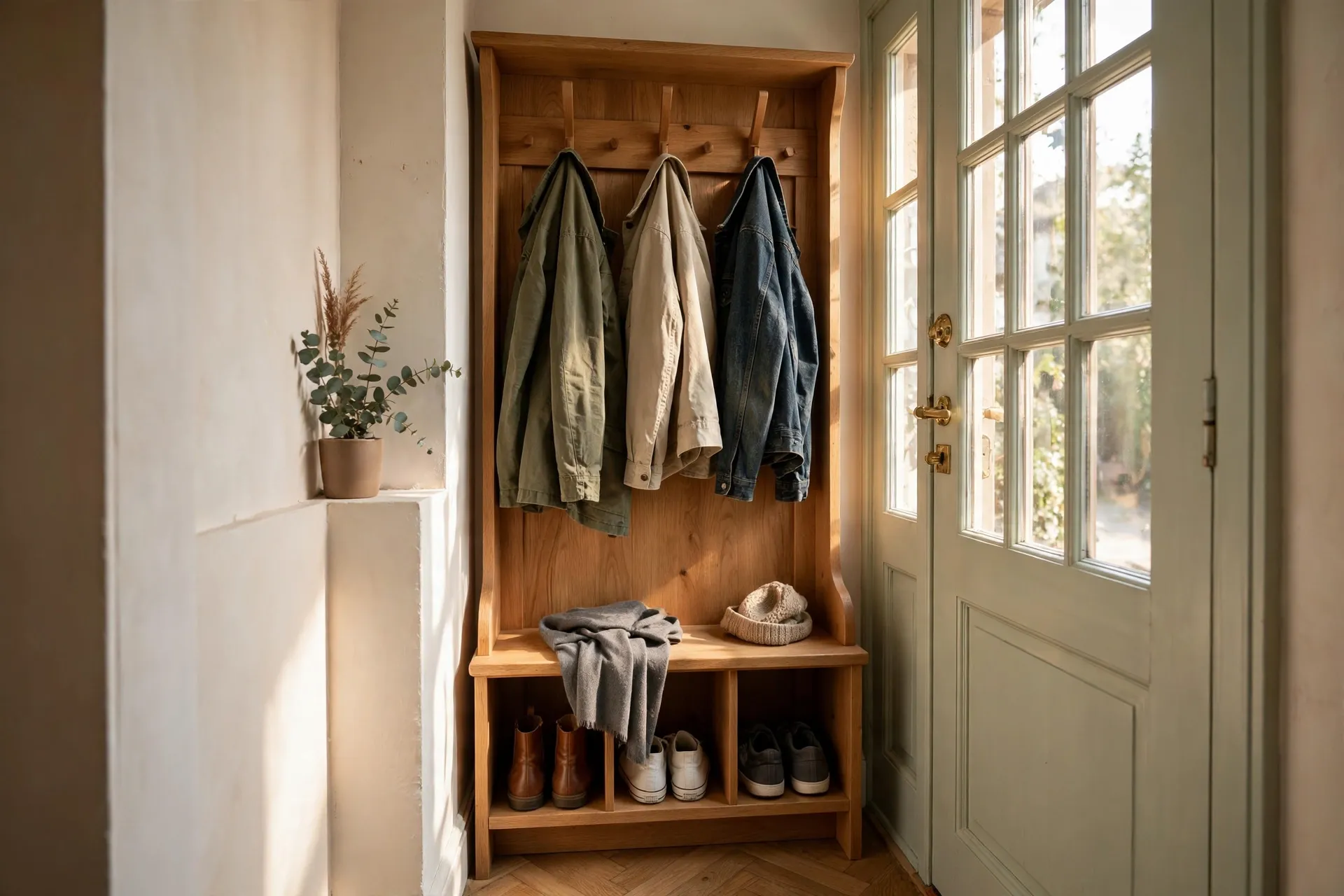
The classic small hall tree is a narrow tower: roughly 24 to 32 inches wide, 12 to 16 inches deep, around 6 feet tall, with hooks up top, a bench or shelf in the middle and cubbies below. It leans against the wall and needs no mounting, which renters love. Look for solid wood or metal construction; particle-board hall trees wobble under real coat weight within a year.
Anchor it anyway. Even freestanding units should be tethered to the wall with the included strap, because a loaded hall tree is top-heavy and a climbing toddler or a yanked backpack can tip it. The narrow format suits one or two people; a family of four needs the wider options below or two narrow units side by side.
2. The corner hall tree
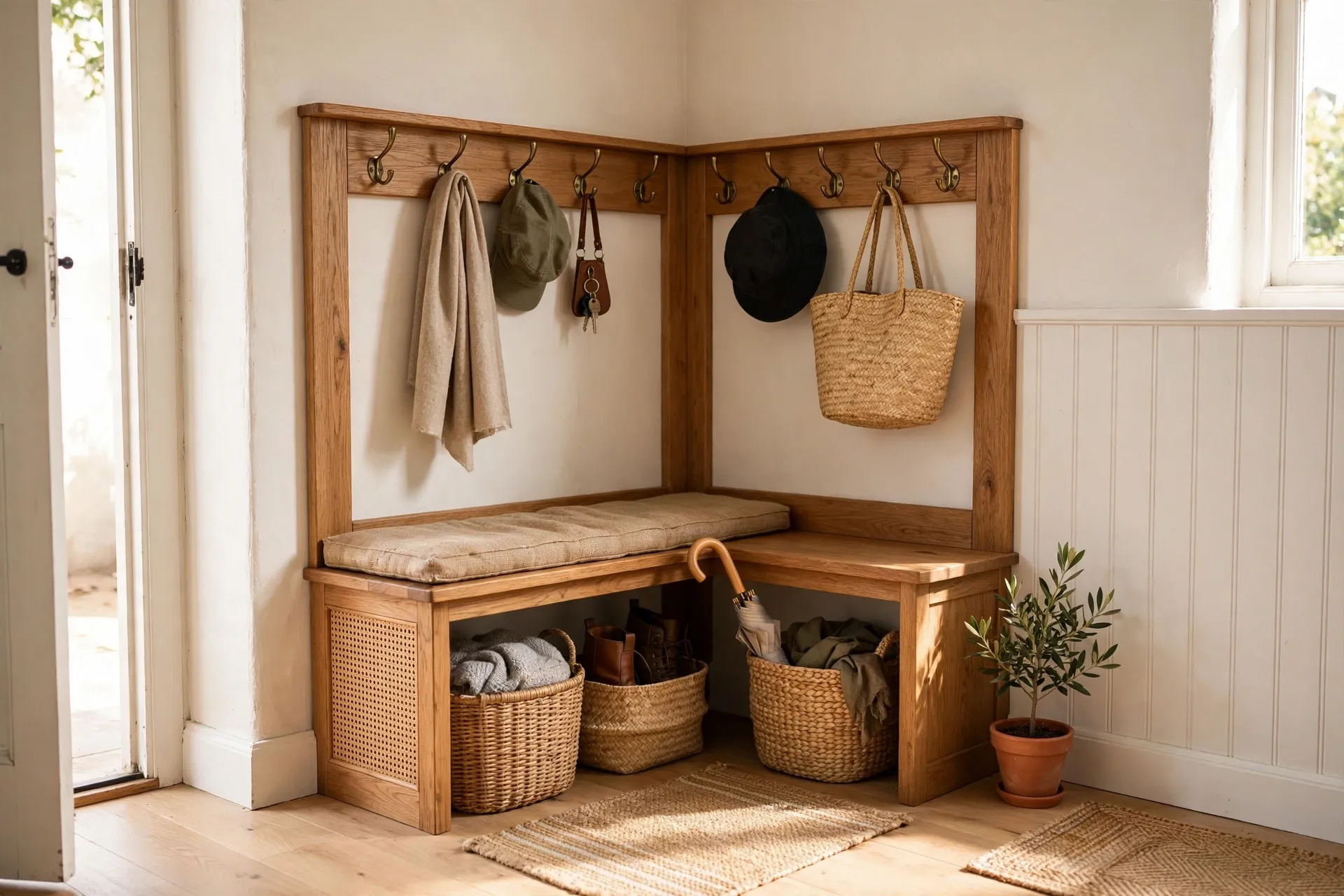
Corner hall trees turn the entry’s most awkward angle into its hardest-working spot. The L-shaped design wraps two walls, offering hooks on both faces and a triangular bench seat. It suits square foyers and entries where the only free space is a corner beside the door.
Measure both walls, since corner units need clearance on each side and few corners are perfectly square. The bench seat is smaller than a standard hall tree’s, so this is better for perching than for leisurely shoe-tying. But for using dead space, nothing beats it; the corner was holding nothing before.
3. The bench-style hall tree
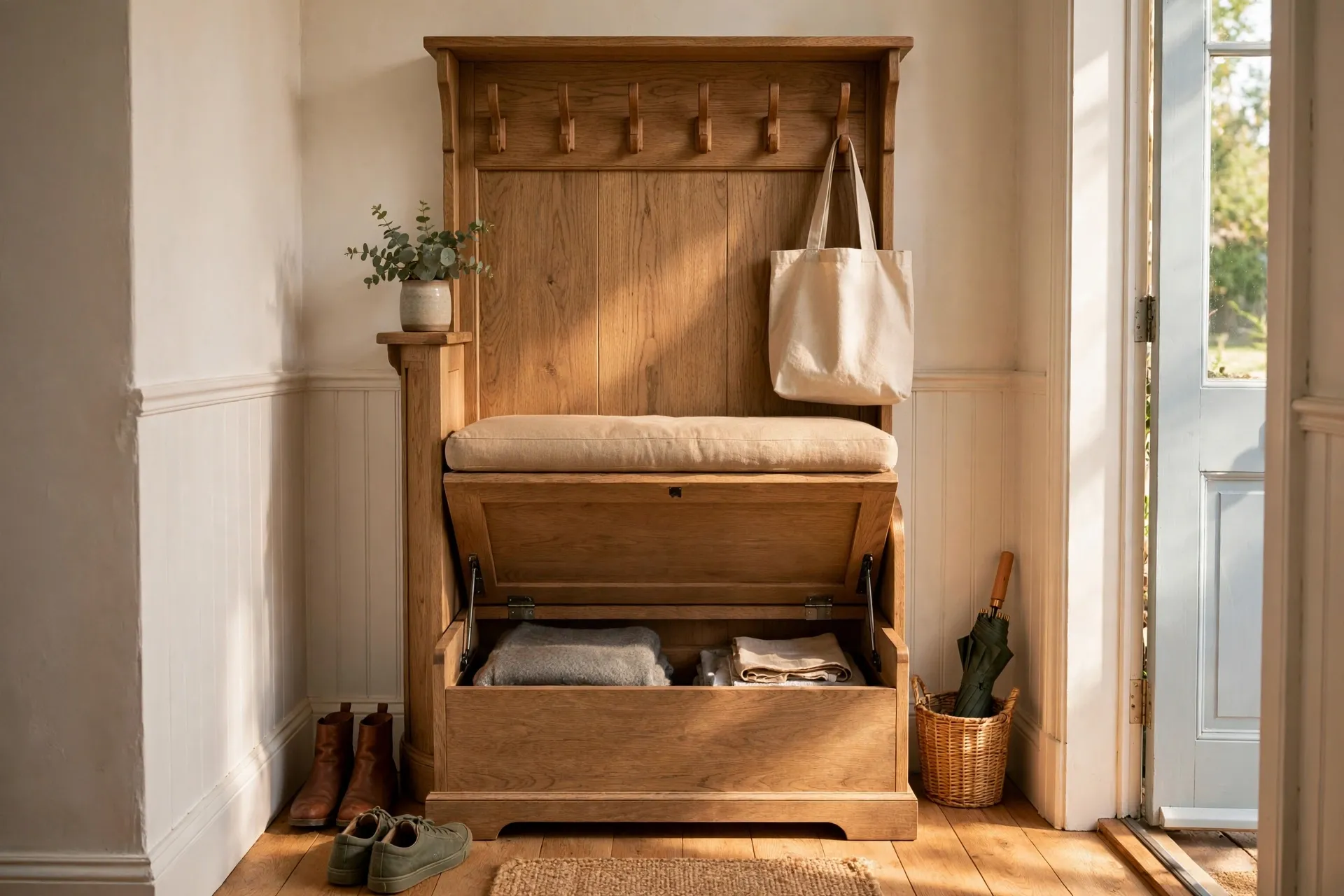
Bench-style hall trees lead with seating: a proper bench 36 to 48 inches wide with a tall hook panel rising behind it. The bench lifts for storage inside or sits over open cubbies. This is the most comfortable format for actually sitting to put on shoes, and the wide bench top doubles as a landing spot for bags.
It needs the most wall width of the small formats, so measure honestly. The bench should sit 17 to 19 inches high; lower looks sleek but is hard to rise from, higher feels like a bar stool. If the bench has a lift-up lid, check that it stays open on its own and does not slam; soft-close hinges are worth the premium with kids around.
4. The wall-mounted hall tree
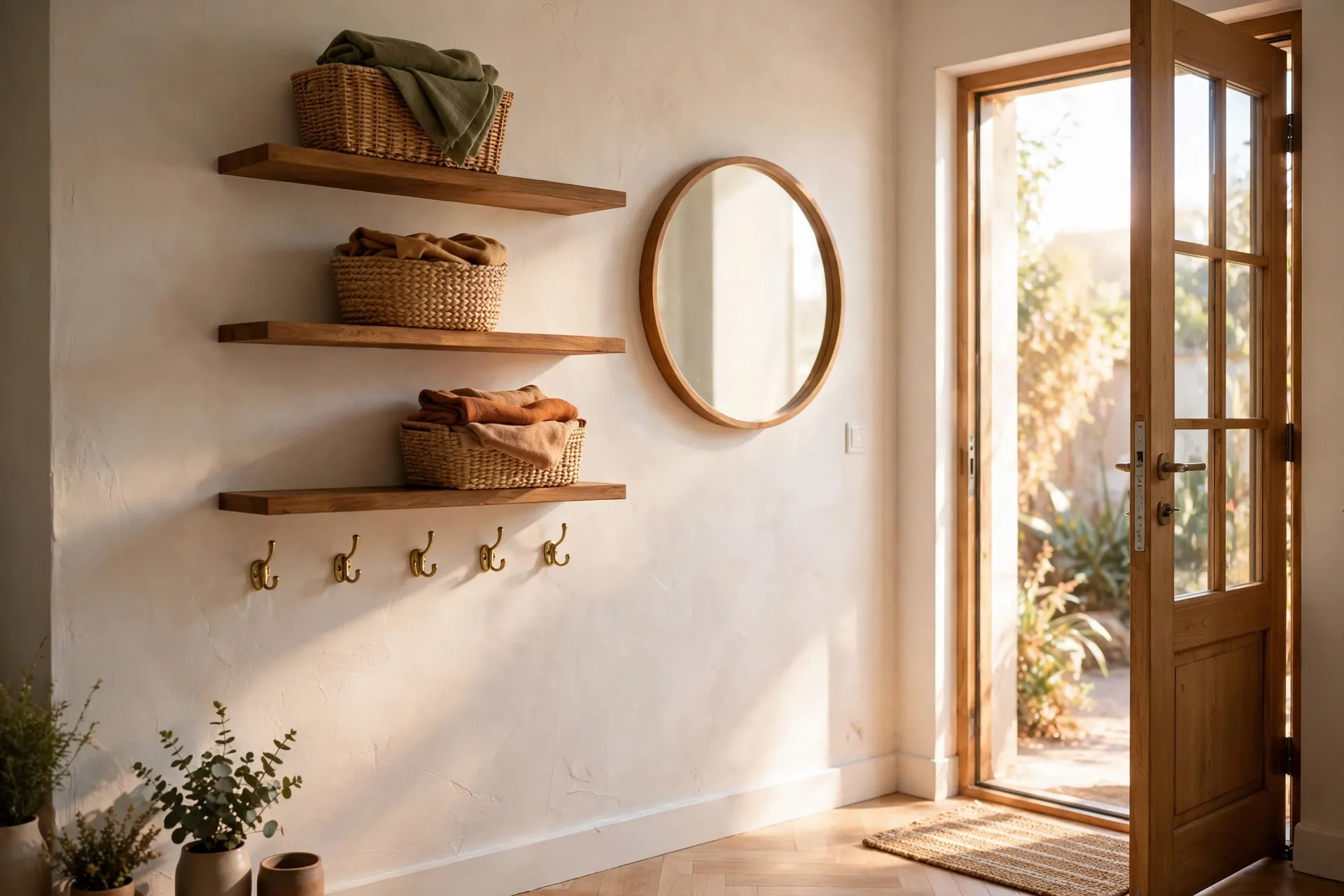
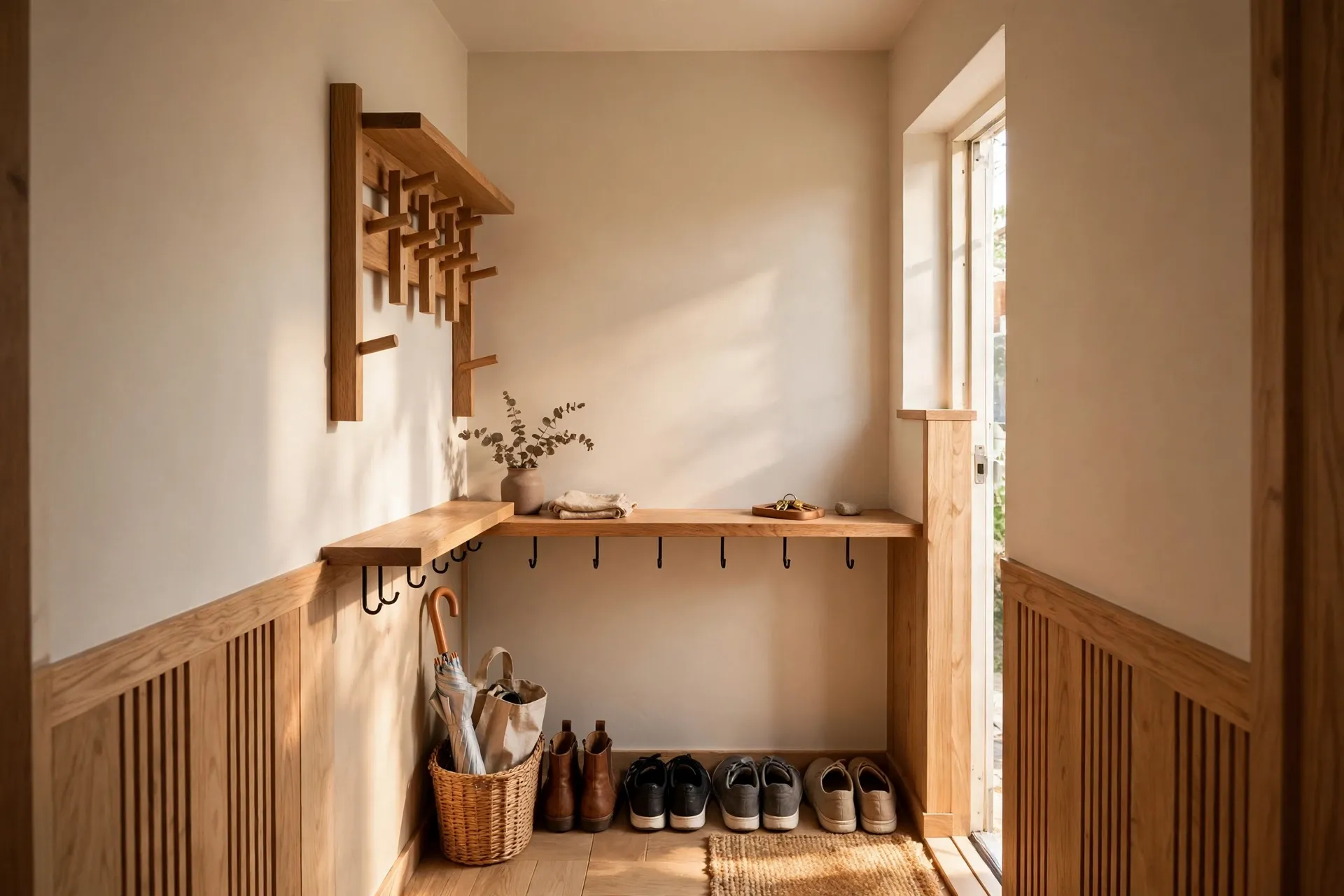
Wall-mounted hall trees skip the legs entirely: a hook panel and floating shelf or bench mounted to the wall, with the floor clear beneath. Shoes line up underneath in the open space, which is easy to clean around, and the floating look keeps a tiny entry feeling airy. This is the best format for truly minimal footprints.
Everything depends on the mounting. This is not a drywall-anchor job; the panel must hit studs to hold coats, bags and the occasional leaning human safely. Renters need landlord approval for this level of mounting, and the patch job on move-out is bigger than a few nail holes. But for owned small homes, it is the sleekest solution here.
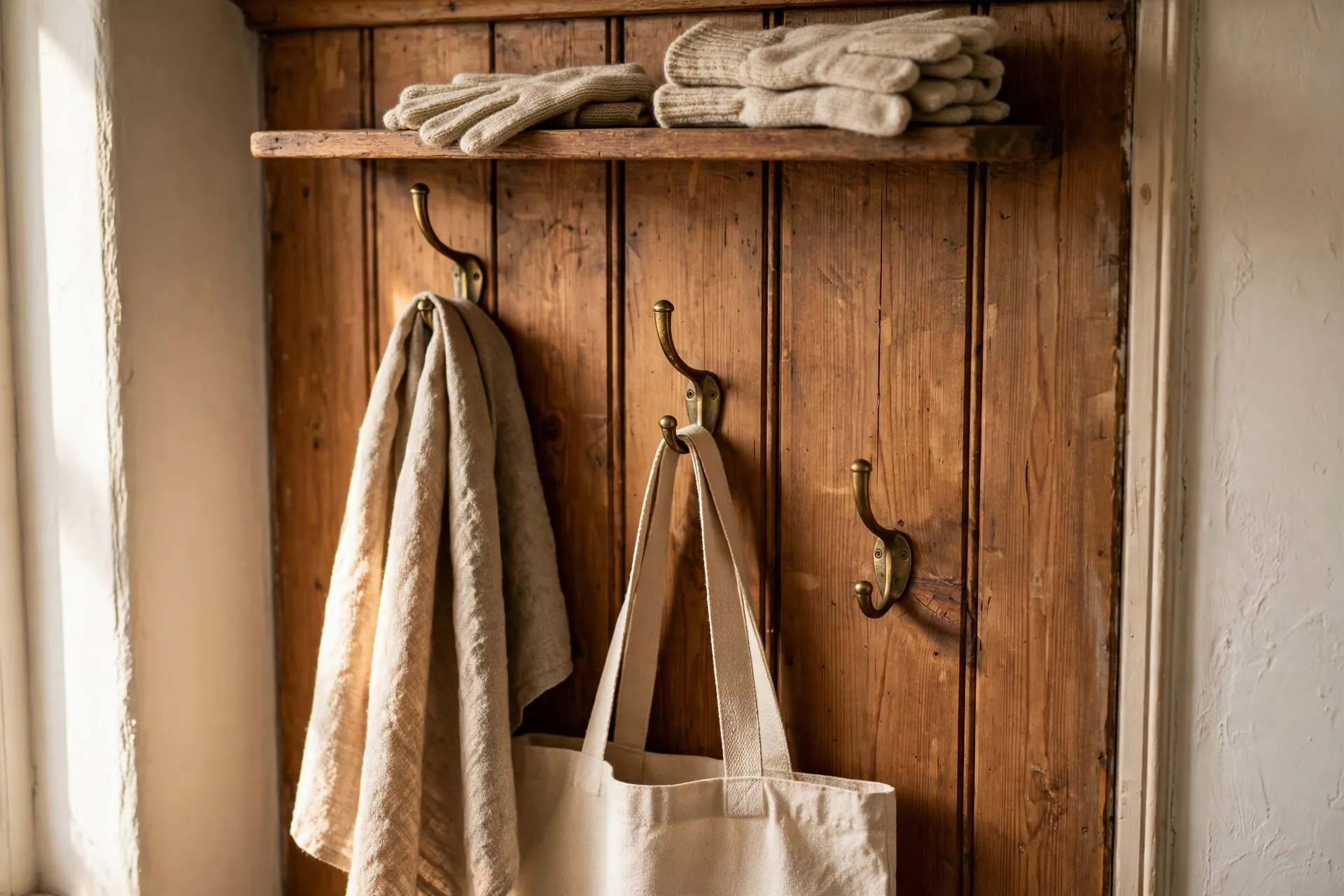
5. The hook-panel hall tree
Some tiny entries do not need a bench or cubbies; they need hooks, done well. A hook-panel hall tree is essentially a tall, handsome board with staggered hooks and a top shelf, 24 inches wide and 8 inches deep. It holds coats, bags, hats and the dog leash on a footprint barely bigger than the coats themselves.
This is the right choice when shoes already have a home elsewhere, or when the entry is a hallway too narrow for any bench. Stagger the hooks at two heights so long coats and short bags do not collide. The top shelf, at about 6 feet, is for the off-season: the sun hats in winter, the beanies in summer.
6. The shoe-cubby hall tree
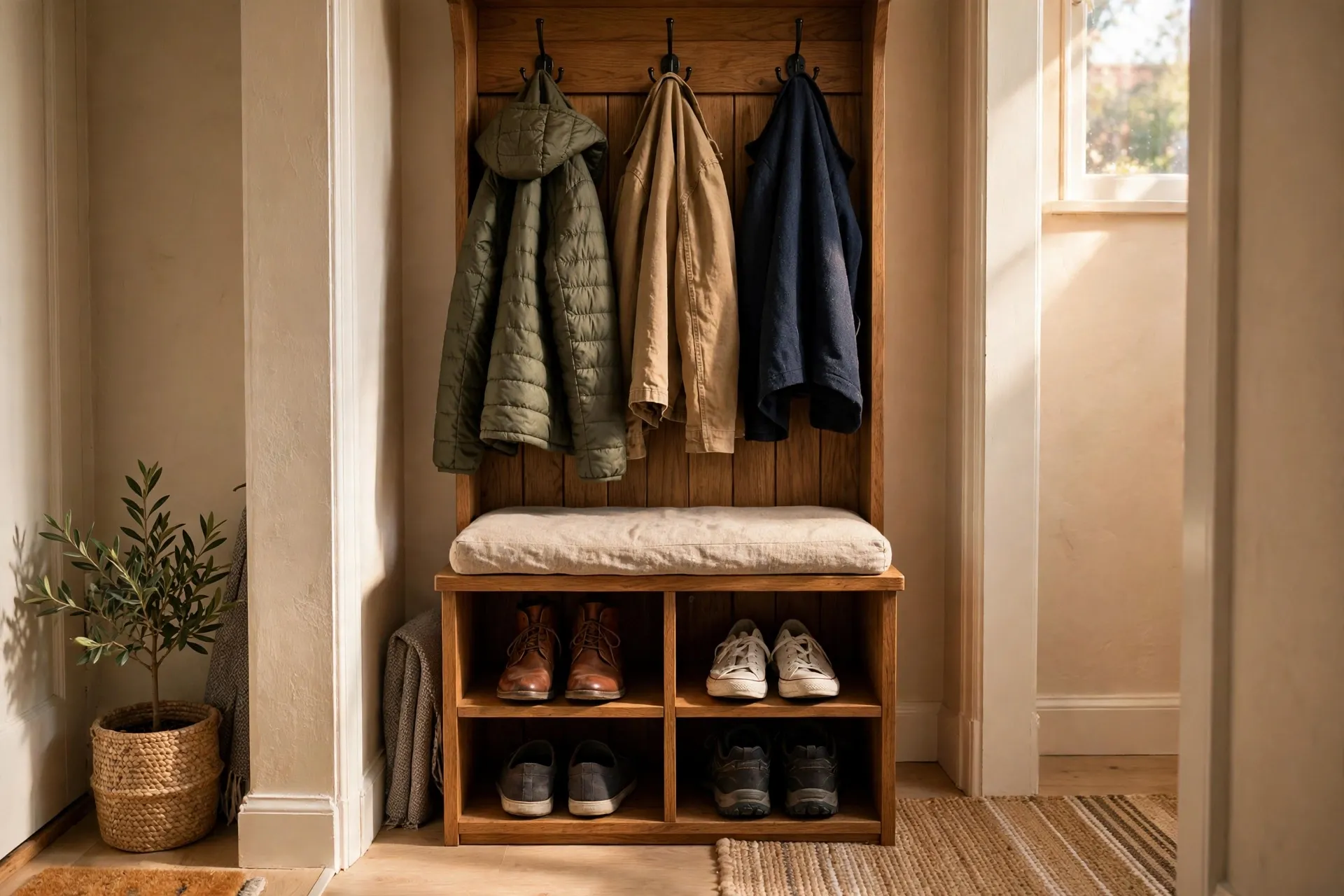
If shoes are the entry’s main problem, choose the hall tree that leads with cubbies: open compartments at the base sized for pairs, typically 8 to 12 cubbies in a 36-inch unit. Each person gets their cubbies, shoes stay visible and aired, and the “shoe pile by the door” disappears.
Open cubbies show the shoes, so this suits households whose footwear is presentable and whose discipline is good. For everyone else, cubbies with fabric bins hide the chaos while keeping the organization. Measure your largest shoes; winter boots need taller cubbies than the standard 6-inch openings, so look for units with varied compartment heights.
7. The micro hall tree for hallways
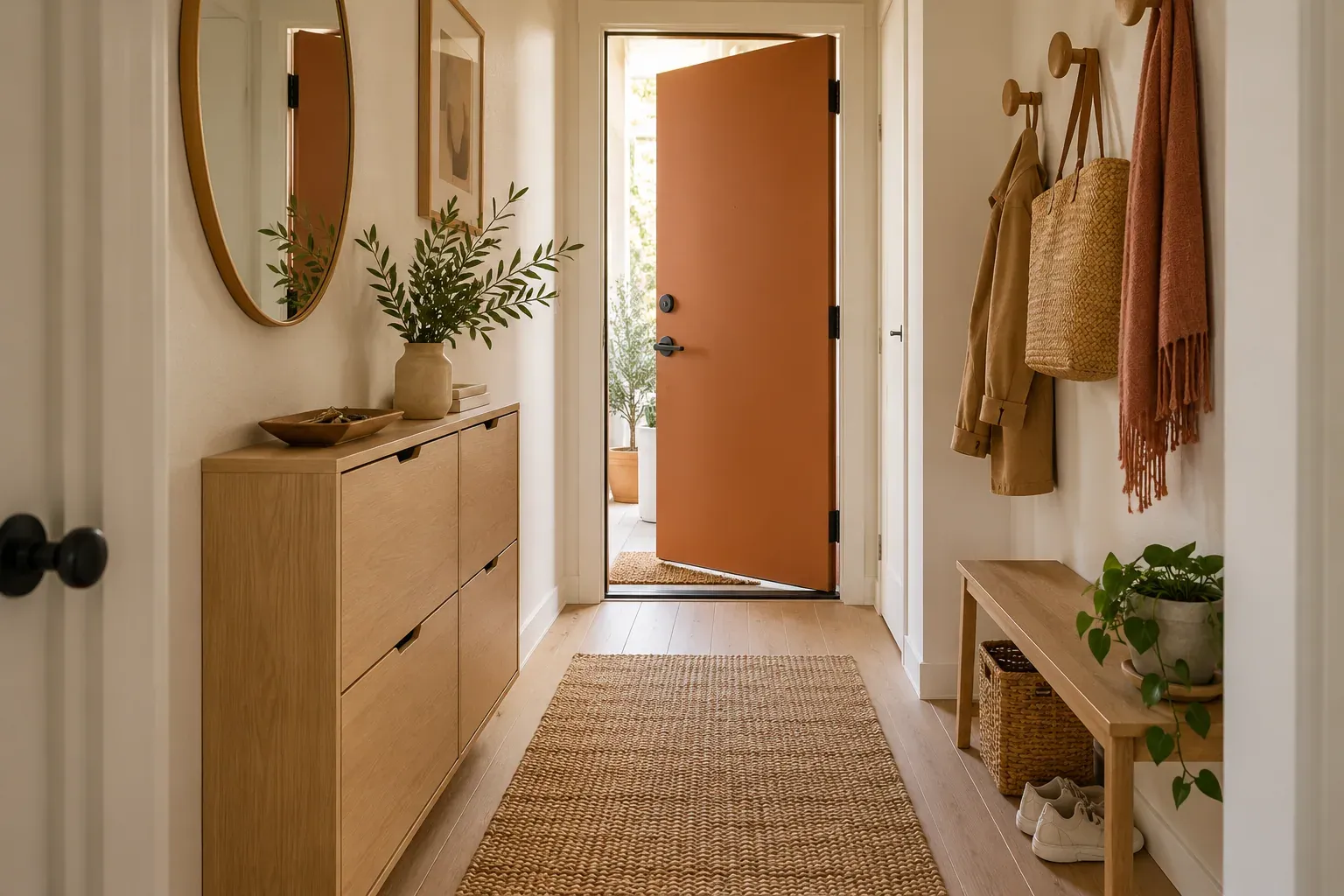
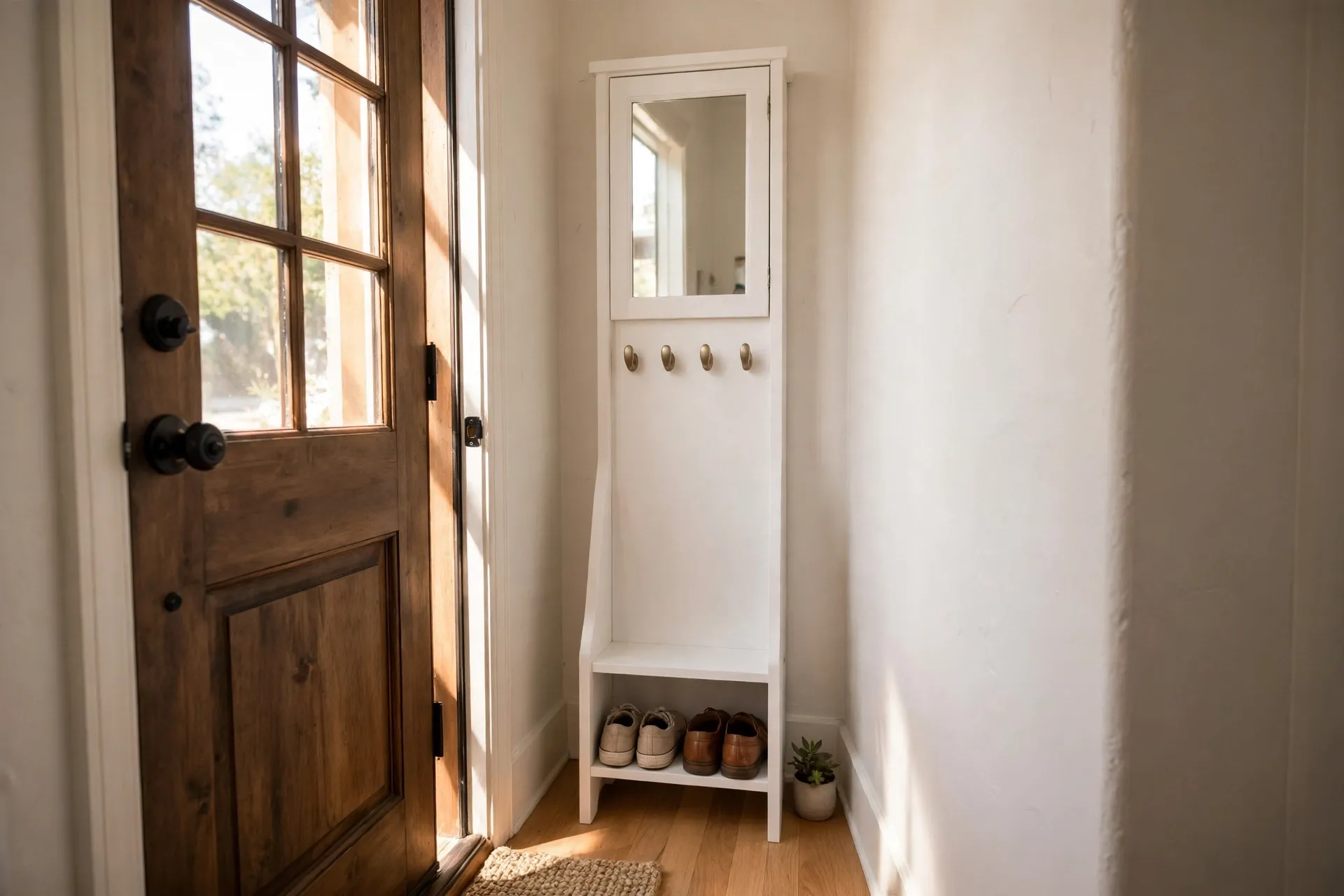
Hallway entries, the door opens straight into a corridor, need the shallowest hall trees made: 10 to 12 inches deep, sometimes just a tall mirror panel with hooks and a single shoe shelf. These micro units look more like furniture art than storage, which is exactly right for a space everyone walks through.
The tradeoff is capacity: a micro hall tree holds one person’s daily gear, not a family’s. Be realistic about the household; a micro unit plus a closet for the overflow beats a standard unit blocking the hallway. If even 10 inches is too deep, fall back to a flat hook rail and a wall-mounted shoe rack, covered in our narrow entryway ideas.
8. The mirrored hall tree
A mirrored back panel makes a small hall tree do visual double duty: storage plus the light-bouncing, space-doubling effect of a mirror. In a dark tiny entry, this can be transformative, effectively adding a window’s worth of brightness. The mirror also serves the last-look check on the way out.
Mirrors in high-traffic entries need safety backing or tempered glass, since coats, bags and elbows hit them daily. Keep the mirror clean; a spotted mirror in the entry is worse than no mirror. And position the unit so the mirror reflects the room’s light source, not the inside of a closet.
9. The rustic wood hall tree
Rustic wood hall trees, reclaimed-look pine, visible grain, black metal hooks, bring warmth to entries that feel cold or rental-beige. The style hides wear beautifully: scuffs and dings blend into the distressed finish instead of standing out. This is the forgiving choice for households with kids, dogs and heavy use.
The style commits the entry to a look, so make sure the rest of the nearby space can live with it. Rustic beside ultra-modern reads as confused. Also check the finish: genuinely rough reclaimed wood snags knit scarves and tights, so look for pieces that are distressed in appearance but smooth to the touch.
10. The white hall tree for bright entries
White hall trees keep tiny entries feeling open and bright, and they disappear against light walls in the best way. White shows dirt, which is the honest downside; entry furniture takes abuse, and white needs wiping. But the visual lightness is unmatched in a small dark hall, and white pairs with every accent color when you redecorate.
Choose a washable finish, satin or semi-gloss, not flat paint, which marks permanently. White hall trees in humid climates can yellow near the door; a quick annual wipe with a gentle cleaner prevents it. For the brightness-maximizing mindset applied elsewhere, the same principles open up a cramped kitchen in our guide on how to make a small kitchen look bigger.
11. The industrial metal hall tree
Metal-frame hall trees with wood shelves suit modern and industrial entries and are nearly indestructible. The open metal frame keeps the piece visually light despite its strength, and the wood shelves warm it up. These handle heavy winter coats and overloaded bags without complaint.
Check the welds and the weight rating before buying; cheap metal hall trees flex alarmingly under load. The industrial look is polarizing, so this is for committed modern spaces. Add felt pads to every floor contact point, since metal legs on hard floors are loud and scratchy.
12. The DIY hall tree from a bookshelf
A narrow bookshelf plus a board of hooks makes a perfectly good hall tree for under $100. Mount a 12-inch-deep bookcase to the wall, screw a pine board with hooks above it at 60 inches, add baskets to the shelves, and you have bench-height storage, hooks and cubbies. Paint everything one color and it looks built-in.
This is the best budget path and the most customizable: cut the bookcase down, add the exact number of hooks, size the baskets to your shoes. The work is a weekend, and the result fits your entry exactly because you built it for that wall. Anchor the bookcase to the studs; a loaded bookcase is exactly as tippy as a store-bought hall tree.
13. The kids’ low hall tree
Households with small children need a hall tree at kid height: hooks at 36 to 42 inches, a low bench they can climb onto alone, cubbies for their shoes at floor level. When kids can hang their own coats, the entry stays tidy without nagging, which is worth more than any style consideration.
Mount a second rail of hooks at adult height above for parents’ things, or give the adults the closet and the kids the hall tree. Round every corner and check stability obsessively; kids climb furniture, and a hall tree is irresistible. This is the one format where function so completely beats form that style barely matters.
How to Choose a Hall Tree for a Tiny Entryway
Measure the wall width, the depth you can spare, and the door swing, then subtract the walkway you must keep: 36 inches minimum. The hall tree must fit what remains. List the household’s actual gear: how many coats in winter, how many pairs of shoes daily, bags, kid stuff. A hall tree that cannot hold the real load becomes an expensive coat rack with a bench nobody uses.
Choose the format that matches the constraint. Depth is the limit: go wall-mounted or micro. Width is the limit: go narrow tower or hook panel. Nothing is the limit except budget: go DIY bookshelf. And always anchor it, whatever the format. A hall tree that tips is worse than no hall tree.
Hall Tree Mistakes to Avoid
The biggest mistake is buying for the showroom entry instead of your entry: the 48-inch solid oak tree for a 30-inch wall. Measure first, fall in love second. The second mistake is skipping the anchor; every year furniture tip-overs injure people, and hall trees are top-heavy by design. The strap takes five minutes.
The third mistake is letting the hall tree become the junk drawer of furniture. Purge it seasonally: the broken umbrella, the single glove, the bag you never use. A hall tree works when everything on it is current-season and daily-use. When the holidays roll around and guests start arriving, the entry sets the first impression and the table finishes it; our guide on how to set a table picks up where the entryway leaves off.
A small hall tree earns its footprint every single day: the shoes contained, the coats hung, the keys somewhere findable. Pick the format that fits your wall, anchor it properly, and the tiniest entry starts working like a proper mudroom.
Looking for more ideas? Browse our storage & organization stories.
Save to Pinterest