In this article
- Start with a Clean, Level Surface
- Put Down Placemats or a Tablecloth
- Center a Dinner Plate at Each Seat
- Set Forks to the Left of the Plate
- Place the Knife and Spoons on the Right
- Position Glasses Above the Knife
- Fold and Place the Napkin
- Leave Space for Serving Dishes
- Keep the Centerpiece Low and Narrow
- Match the Formality to the Meal
- Mistakes to Avoid When Setting a Table
- Storing Your Extras Between Dinners
Nobody is born knowing which fork goes where, and most of us learned by watching someone else do it slightly wrong for years. A proper table setting follows one simple logic: utensils are arranged in the order you use them, from the outside in. Once you see the pattern, you can set a table for a Tuesday dinner or a holiday feast without second-guessing yourself.
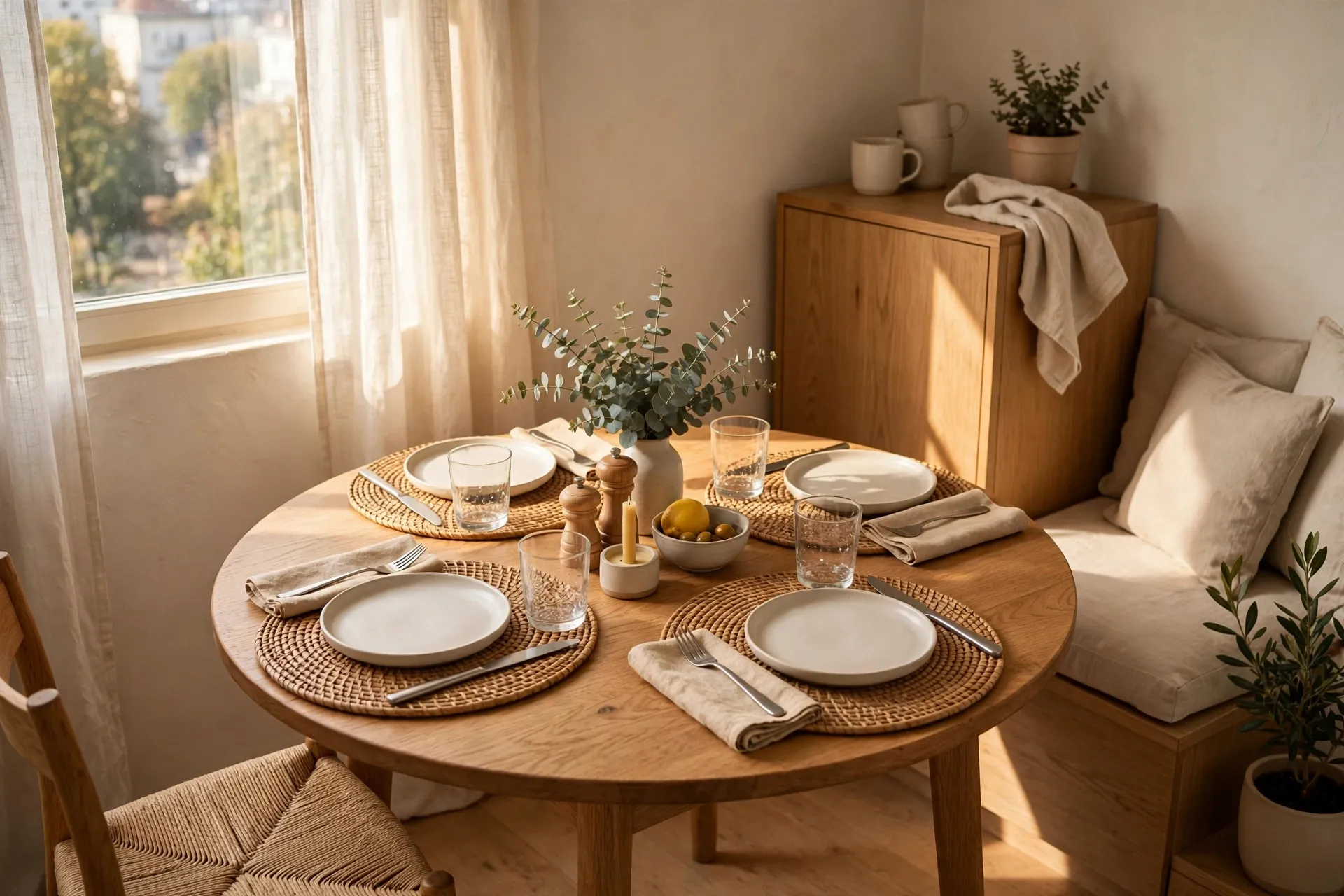
This guide walks through the standard American table setting piece by piece, with the actual measurements that keep everything looking even. It works for a four-top in a small apartment just as well as a long dining room table, because the rules are about each place setting, not the size of the room.
Start with a Clean, Level Surface
Wipe the table down before anything else, because crumbs under a tablecloth or placemat are felt even when they are not seen. If the table wobbles, fold a piece of cardboard under the short leg now; a rocking table makes glasses walk and guests nervous. A tablecloth or runner goes on next, smoothed flat with any center crease running lengthwise down the middle.
Check that chairs are pushed in evenly and that each seat has about 24 inches of elbow room. On a small table that seats four, this usually means the settings sit close to the corners, and that is fine. Crowded but comfortable beats spacious and cold every time.
Put Down Placemats or a Tablecloth
A tablecloth gives the most polished look and hides a worn tabletop, while placemats are more practical for daily use and easier to wash. If you are using both, lay the cloth first and center a placemat at each seat. A placemat should sit about an inch from the table’s edge, aligned with the chair.
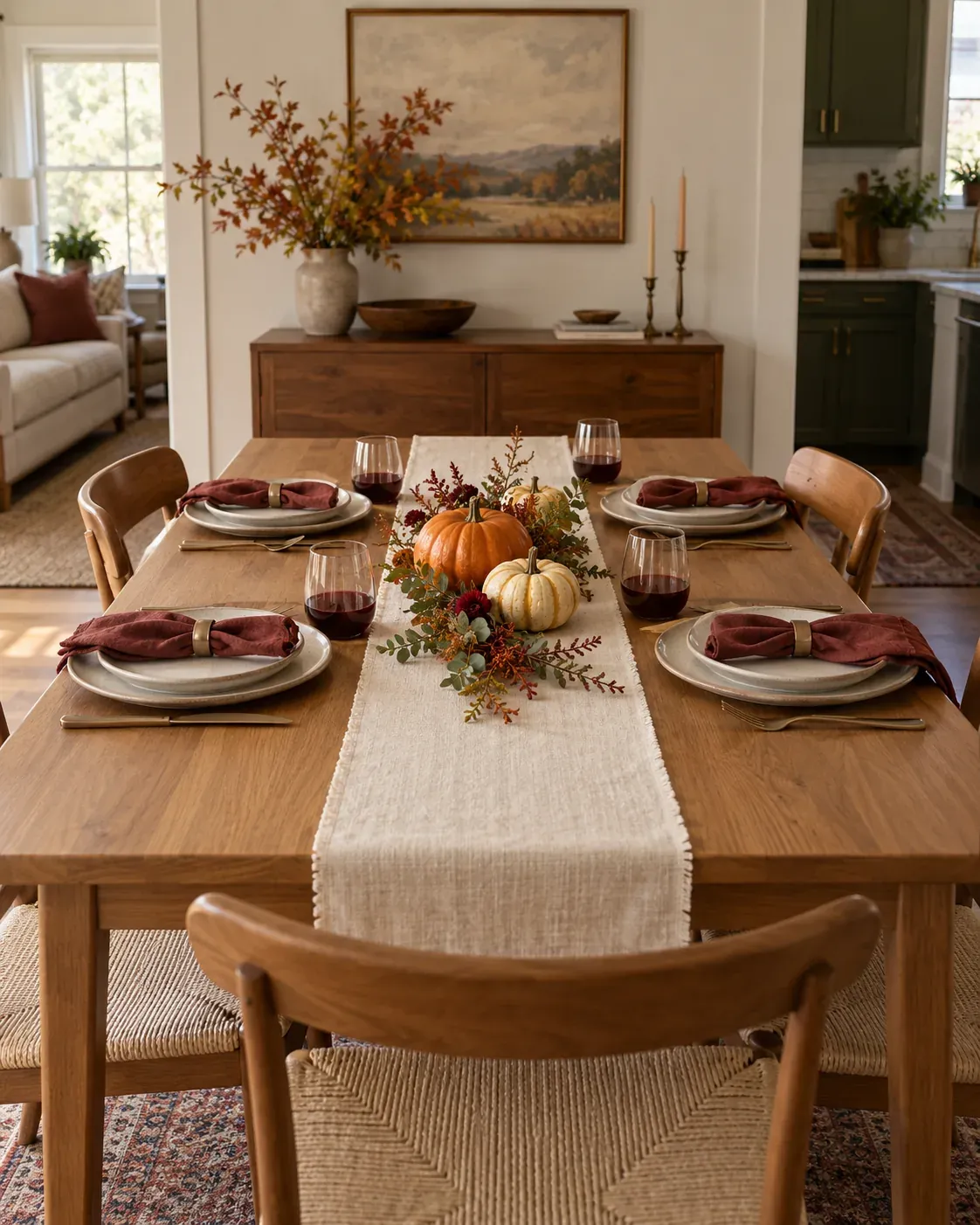
For a casual dinner, a runner down the center plus placemats is plenty. For Thanksgiving or Christmas, a full cloth sets the tone before a single dish appears. Our Thanksgiving tablescape ideas for small tables show how linens do most of the decorating work.
Center a Dinner Plate at Each Seat
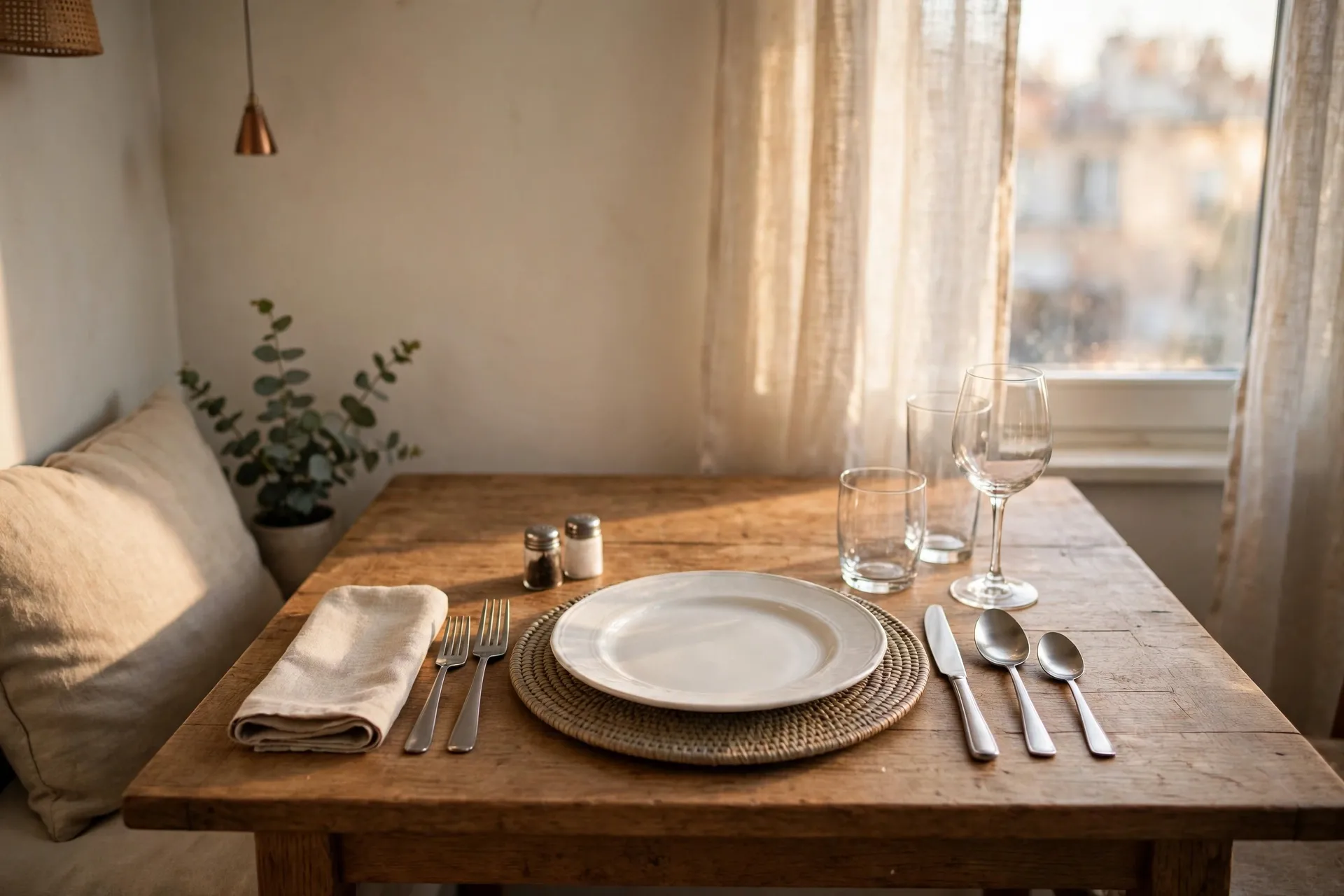
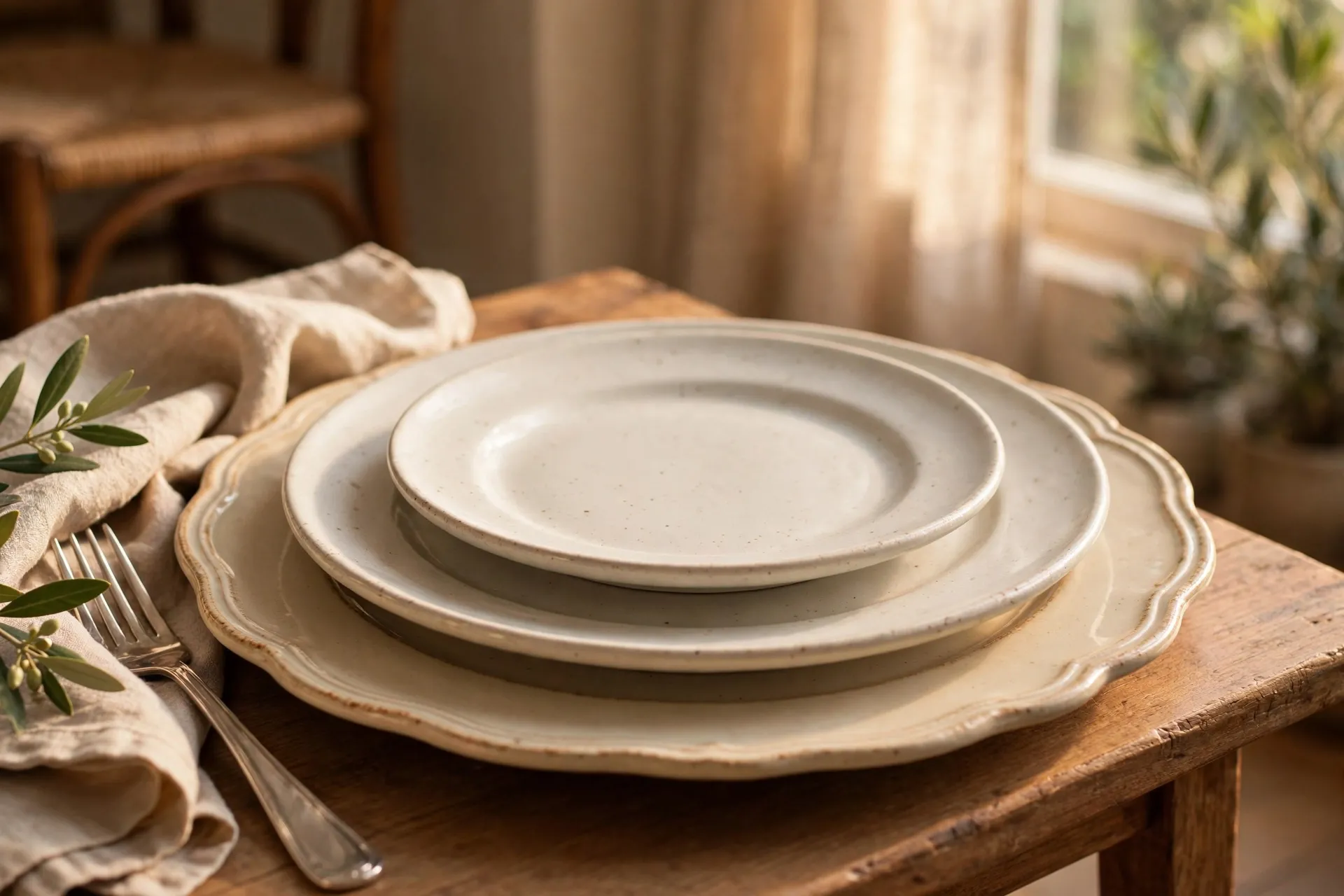
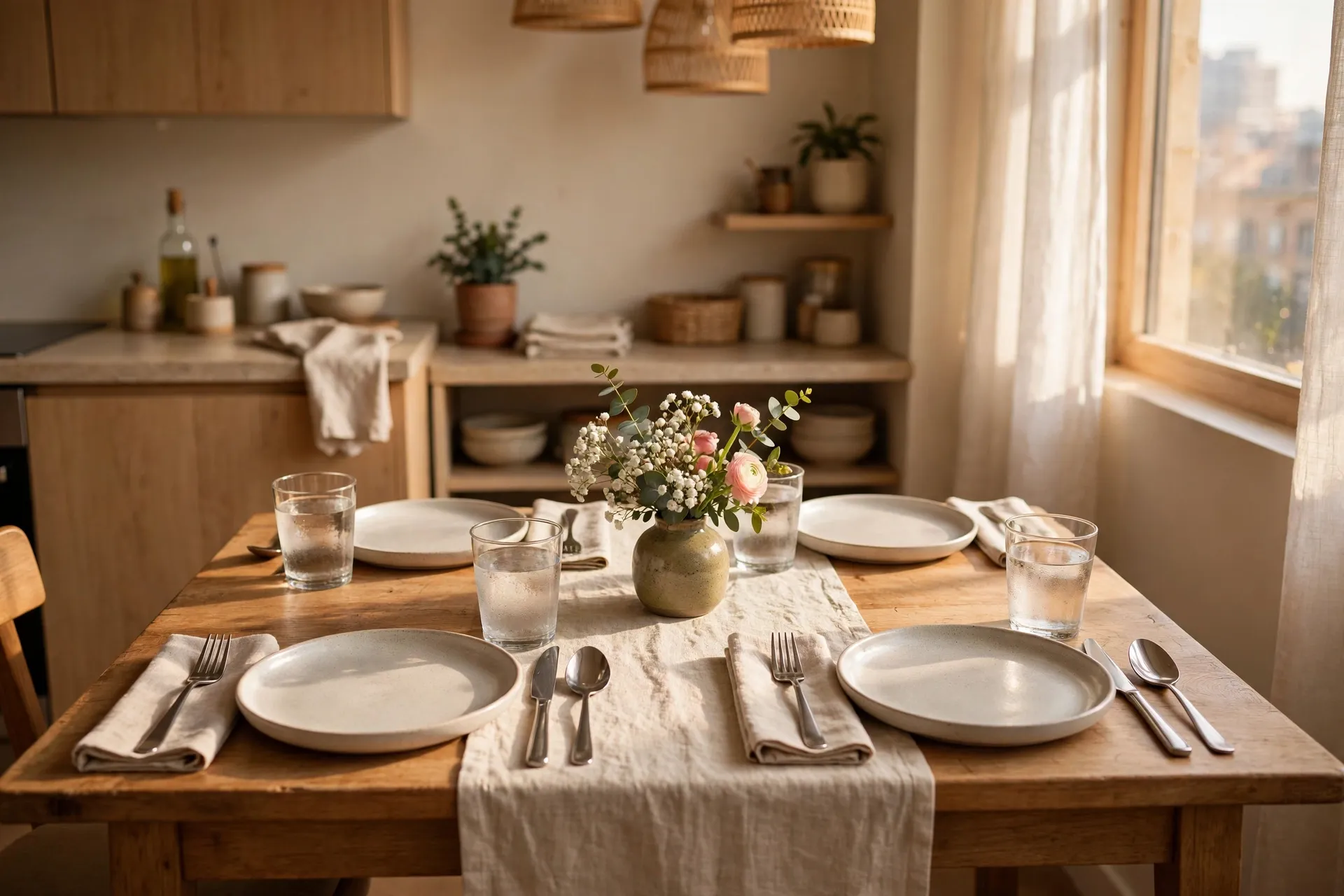
Place a dinner plate in the center of each setting, about one inch from the edge of the table. Use a ruler or the width of your thumb the first few times until your eye learns the spacing. The plate should be centered on the chair, not on the placemat, if the two disagree.
If you own chargers, those large decorative plates, they go down first with the dinner plate on top. A standard charger is about 13 inches across, which frames a 10 or 11 inch dinner plate nicely. Salad plates or soup bowls stack on top of the dinner plate, never beside it.
Set Forks to the Left of the Plate
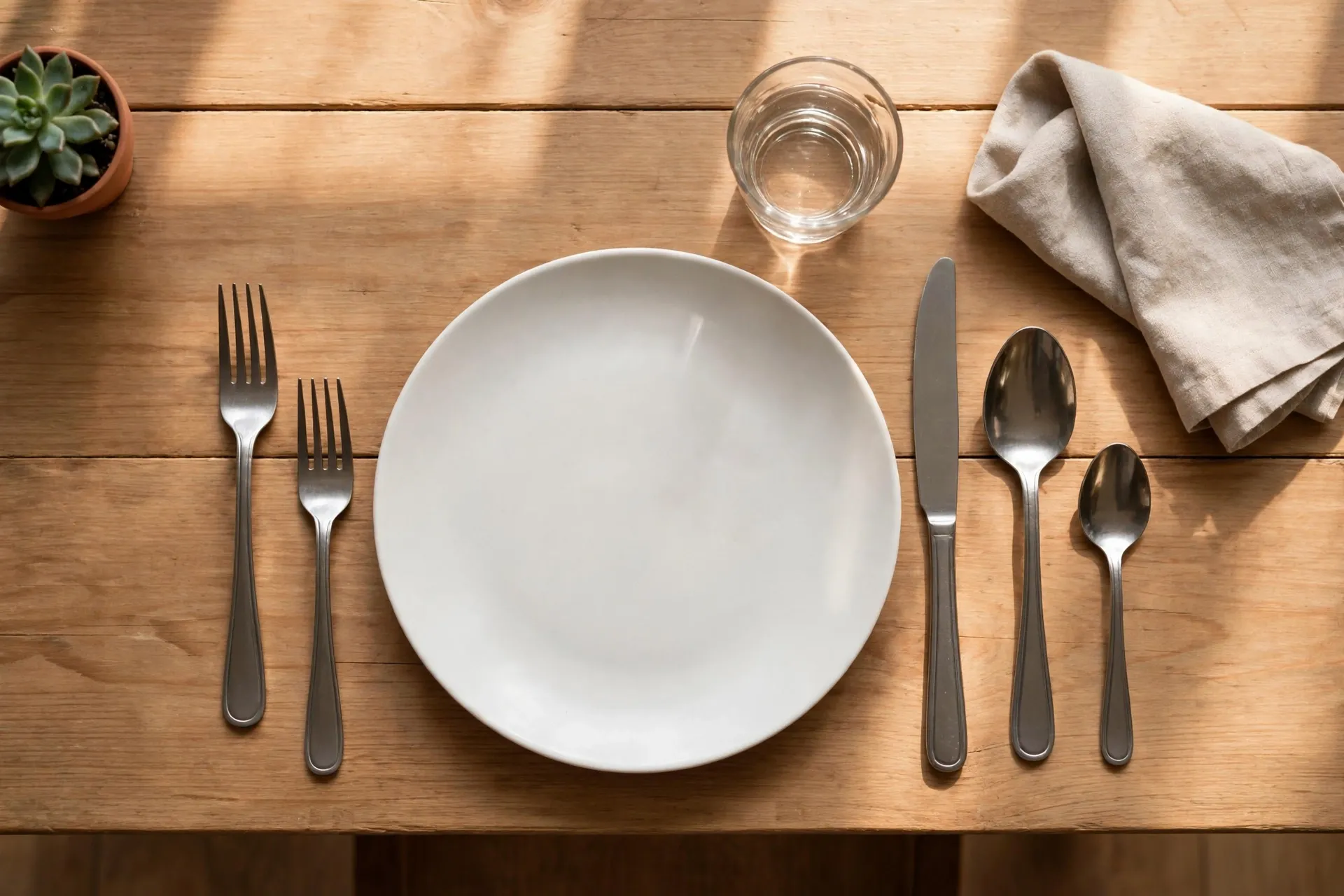
All forks go on the left side of the plate, tines facing up. The dinner fork sits closest to the plate, and if you are serving a salad course, the smaller salad fork goes to its left. This outside-in rule is the whole system: guests start with the outermost utensil for the first course and work inward.
Space the forks about half an inch apart and keep them even with the bottom edge of the plate. When you step back, the row of fork handles should form a straight line. If a fork handle is noticeably longer than the others, it is probably a serving piece, not a dinner fork.
Place the Knife and Spoons on the Right
The dinner knife goes immediately to the right of the plate with the blade facing the plate. This is the one rule people remember from childhood, and it exists so the sharp edge never points at a neighbor. Spoons go to the right of the knife: a teaspoon for coffee or dessert, and a soup spoon on the far right if soup is served.
Like the forks, these follow outside-in order, so the soup spoon sits farthest from the plate when soup comes first. Keep the bottoms of the handles aligned with the plate’s bottom edge. A full formal setting can look intimidating, but it is just this same row repeated.
Position Glasses Above the Knife
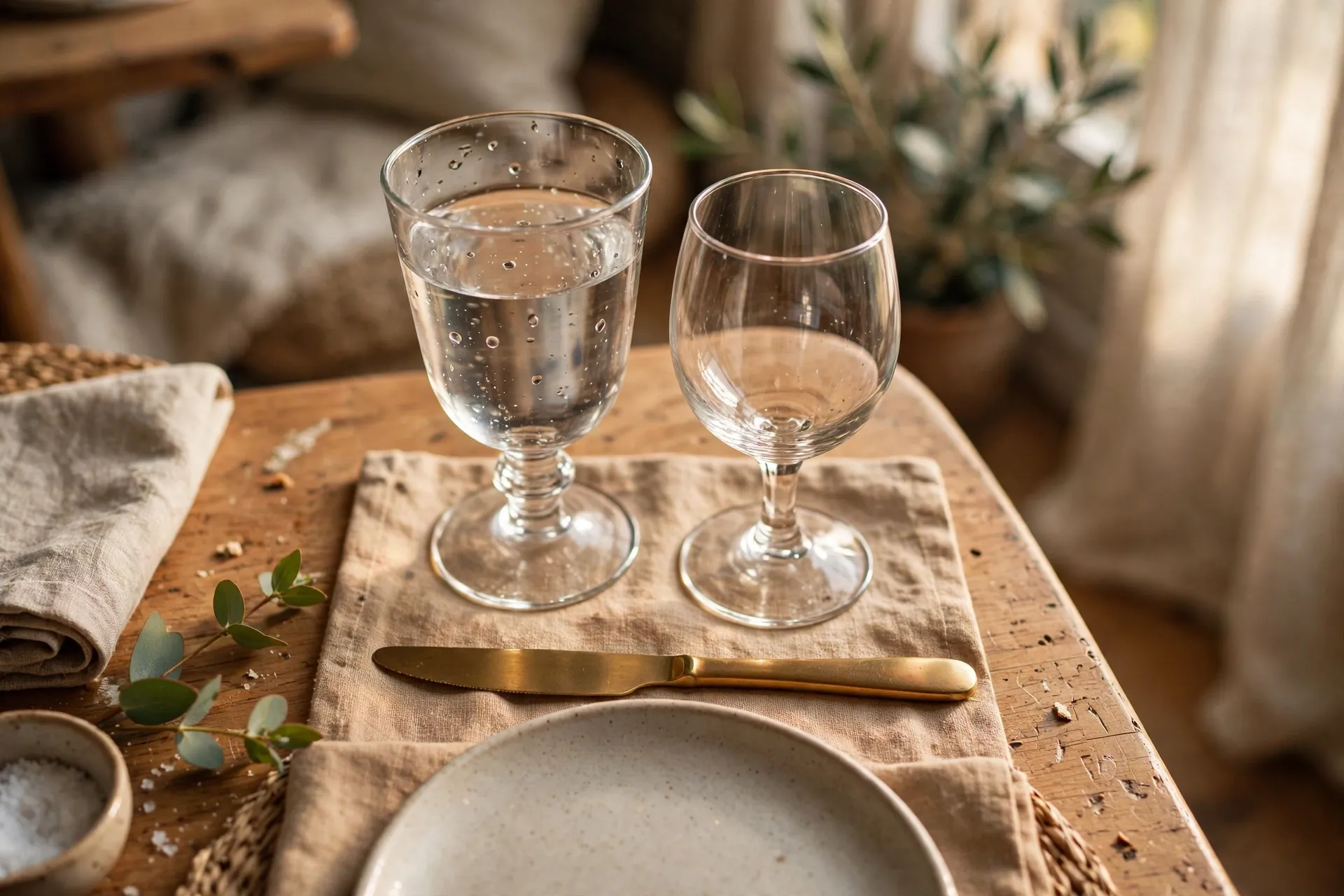
Glasses sit in the upper right of the setting, above the knife and spoons. The water glass goes closest to the plate, roughly an inch above the tip of the knife. A wine glass sits just to its right and slightly forward, and a second wine glass for white wine angles off to the right of that if you are pouring both.
Only set out glasses you will actually fill. Three empty glasses at a casual dinner look like you are expecting a wine tasting, not company. One water glass and one all-purpose wine glass cover nearly every home dinner.
Fold and Place the Napkin
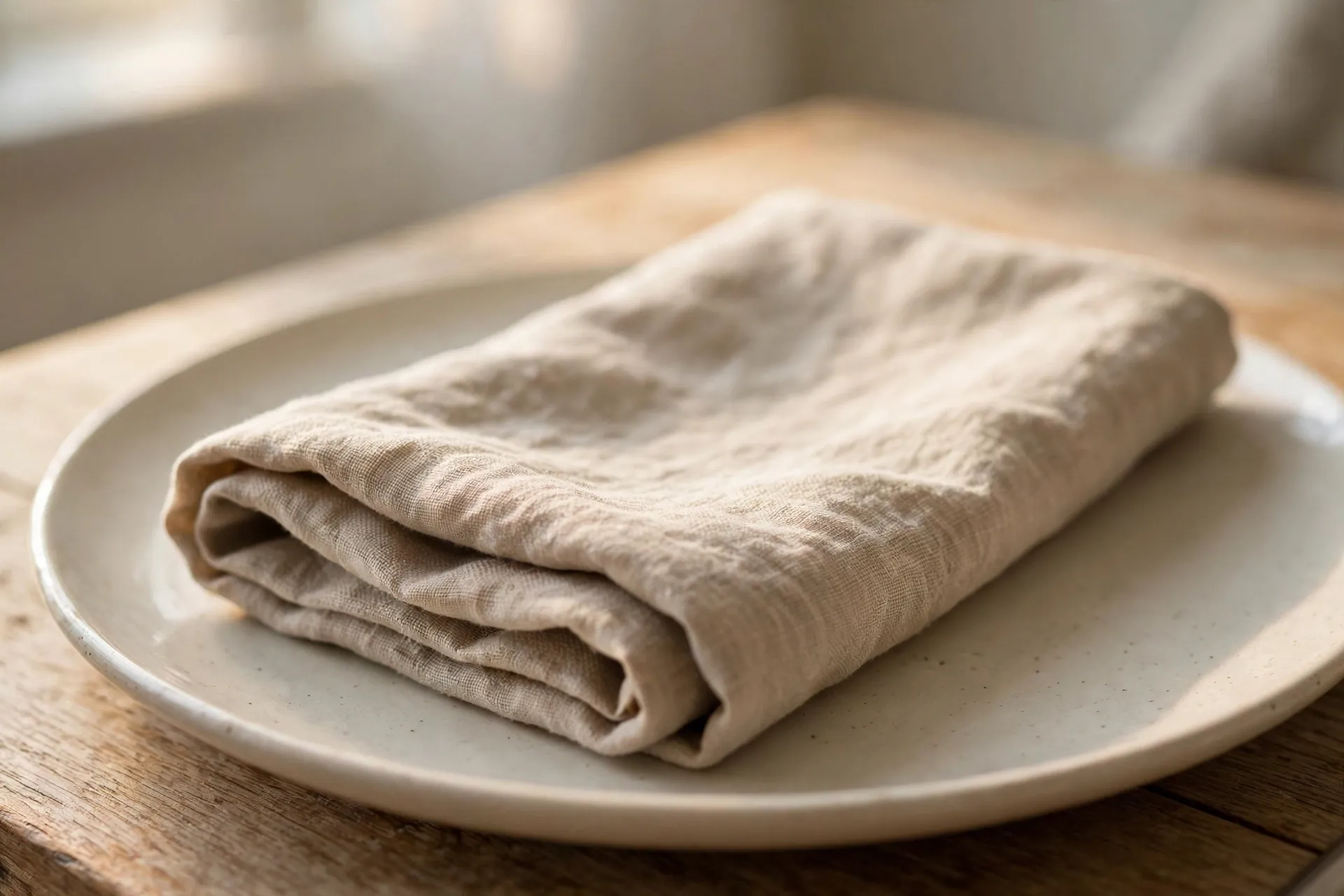
The classic placement is folded flat on the left of the forks or centered on the dinner plate. A simple rectangle fold takes ten seconds and looks clean; the napkin should be roughly the width of the plate. For a dressier look, fold it into a pocket that holds the flatware, which also saves table space.
Cloth napkins elevate any meal and cost little if you buy a basic cotton set. Paper napkins are perfectly fine for casual dinners and kids’ tables, and nobody worth impressing will judge you for them. If you are deciding between the two for a holiday, our paper vs cloth napkin guide breaks down the real costs.
Leave Space for Serving Dishes
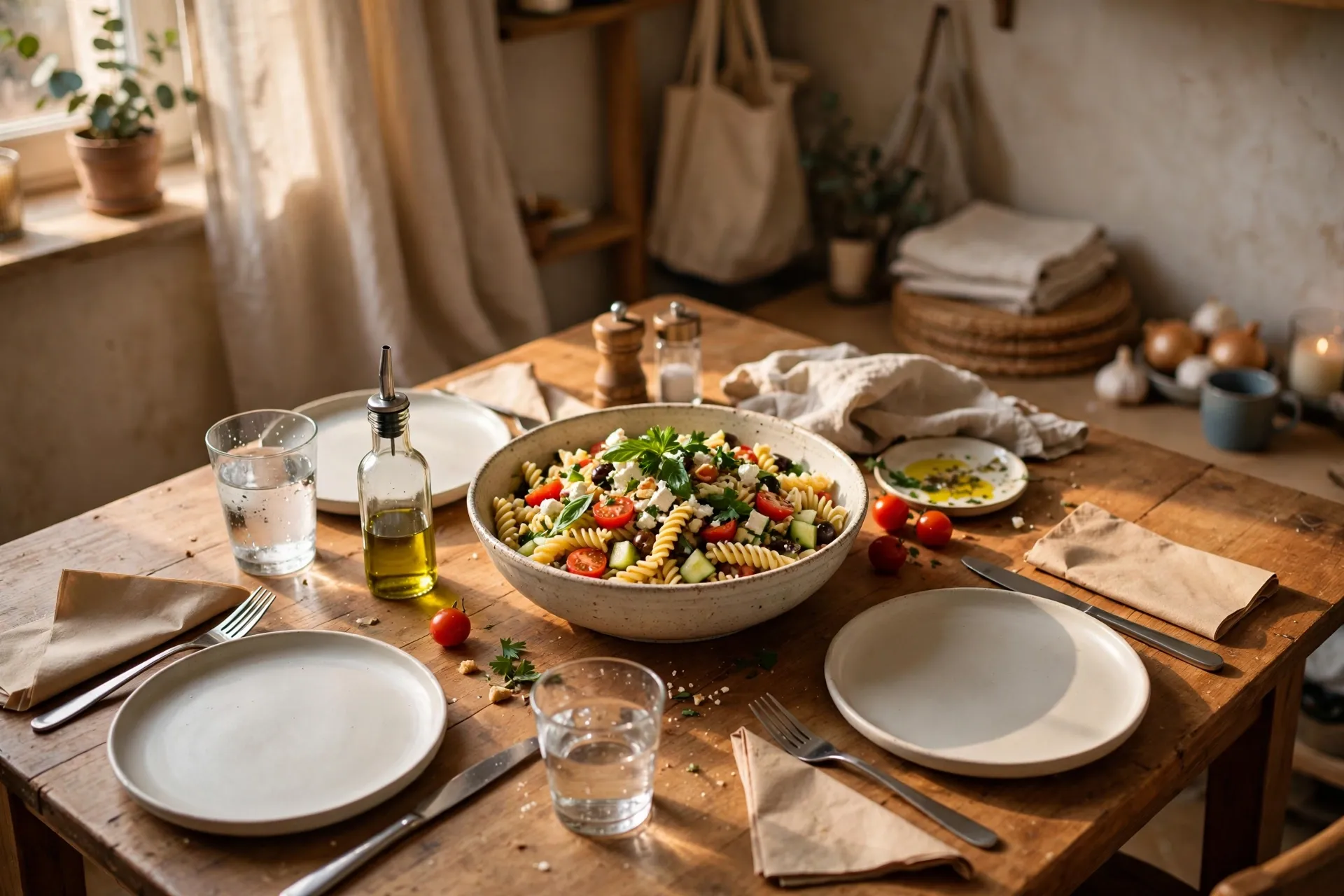
The most common beginner mistake is setting a beautiful table with nowhere to put the food. Before guests arrive, set out your serving dishes empty and confirm there is room between place settings. On a small table, this often means serving from a sideboard or the kitchen counter instead.
A good rule is that the center third of the table belongs to serving pieces and the centerpiece. If your casserole dish forces a wine glass off the table, the menu needs editing or the serving plan needs to move. Buffet-style serving is not a compromise; it is how most small homes host well.
Keep the Centerpiece Low and Narrow
Guests should be able to see each other across the table without leaning. Keep centerpieces under 12 inches tall, or use something tall but narrow like a single candlestick that eyes can look past. A low bowl of fruit, a short garland, or three small candles in a row all work.
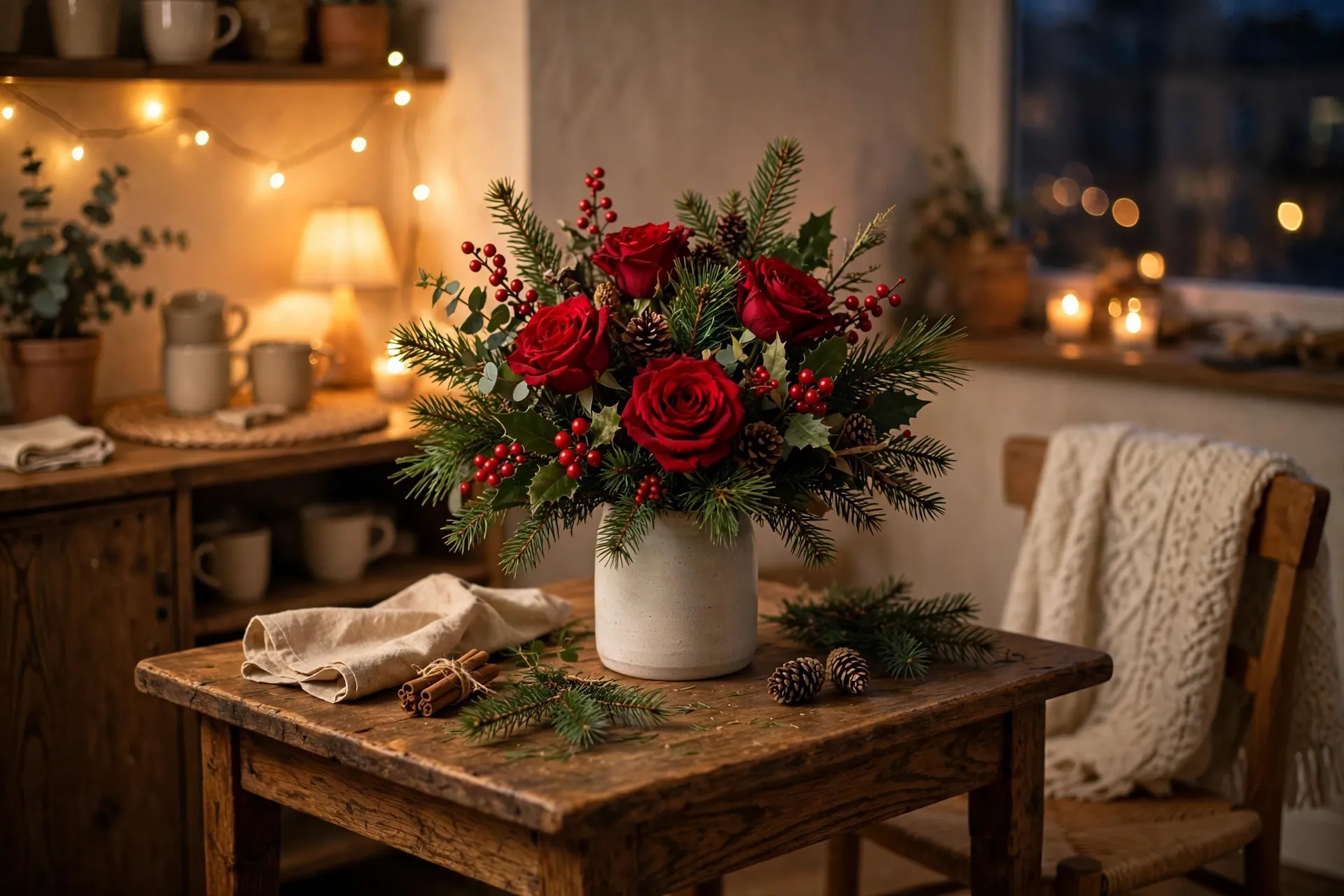
Leave at least a few inches of clear table between the centerpiece and the nearest plate. On a narrow table, a runner with small scattered elements beats one wide arrangement that eats the middle. Our holiday centerpieces for small tables are built around exactly this constraint, and once the table is set, fresh DIY Christmas flower arrangements make a centerpiece that costs less than a store bouquet.
Match the Formality to the Meal
A weeknight dinner needs a plate, a fork, a knife, and a glass. That is a complete table setting, and there is no rule that says every meal requires the full lineup. Add pieces only when the menu calls for them: soup spoon for soup, wine glass for wine, salad fork for a first-course salad.
Matching the setting to the meal also relaxes your guests, because nobody wonders which of the four forks to use for takeout. When in doubt, set fewer pieces. An uncluttered table with room to eat beats an impressive-looking one that confuses people. For the holidays, pair the finished table with Christmas mantel ideas for small apartments so the whole room feels coordinated.
Mistakes to Avoid When Setting a Table
The fastest way to make a table look off is uneven spacing, so step back and sight down the table after setting it. Plates should form a straight line, and flatware rows should mirror each other across the table. A second common slip is the knife blade facing outward; it always faces the plate, no exceptions.
Do not forget the practical pieces: a trivet under hot dishes, a small plate for bread if you are serving it, and a water pitcher within reach. And resist the urge to pre-fill wine glasses long before guests sit down; wine warms and water glasses sweat rings into the wood.
Storing Your Extras Between Dinners
Chargers and serving pieces earn their keep a few times a year, so store them where they are reachable but not in the way. Felt dividers or a cloth between stacked chargers prevent scratches, and a single labeled bin keeps holiday pieces together. Flatware rolls or a divided drawer tray keep everyday sets tidy.
Wash cloth napkins promptly after a dinner party; stains set fast on cotton and linen. A quick soak in cold water before the regular wash handles most food stains. If your dining space is tight, a sideboard with a drawer for linens doubles as storage and a serving station.
Looking for more ideas? Browse our seasonal decor stories.
Save to Pinterest