In this article
- 1. Divide the Backyard into Simple, Useful Zones
- 2. Grow Upward with a Vertical Garden
- 3. Use Gravel and Planting Beds for a Low-Maintenance Garden
- 4. Add Built-In Perimeter Seating
- 5. Create Privacy with Slatted Screens and Layered Planting
- 6. Make a Beautiful Lawn-Free Backyard
- 7. Fit a Small Dining Corner into an Underused Area
- 8. Add Shade with a Compact Canopy or Pergola
- 9. Use Layered Outdoor Lighting to Extend the Evening
- How to Plan a Small Backyard Before Decorating
- Common Small Backyard Mistakes to Avoid
- Frequently Asked Questions
- How can I make a small backyard look bigger?
- What is the best layout for a small backyard?
- How can I make a small backyard look nice on a budget?
- What can I put in a small backyard instead of grass?
- How do I add privacy to a small backyard?
- Conclusion
A small backyard can still feel like a proper outdoor retreat. The secret is to give the space a clear purpose, use the boundaries thoughtfully, and choose features that work with its proportions instead of filling every corner.
A compact backyard might need a place to sit, a little greenery, room for outdoor meals, or simply a peaceful spot to enjoy fresh air. With smart zoning, vertical planting, comfortable seating, and carefully chosen materials, even a narrow outdoor area can feel welcoming and well designed.
These small backyard ideas focus on practical improvements that help the space feel more useful without making it crowded.
1. Divide the Backyard into Simple, Useful Zones
A small backyard often works better when each area has a clear purpose. You might create one seating zone, a narrow planting area, and a small open section for movement or access.
Use changes in paving, gravel, outdoor rugs, or planting borders to separate the zones without building full walls. Keep the main route through the yard open so the layout remains easy to use.
Styling tip: Start by deciding how you want to use the backyard. A space for outdoor meals needs a different arrangement from one designed mainly for gardening or quiet relaxation.
Best for: Narrow or rectangular backyards that feel like one long, unused strip.
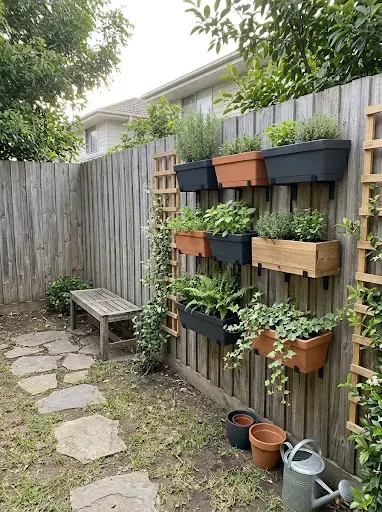
2. Grow Upward with a Vertical Garden
When ground space is limited, vertical planting makes use of walls and fences. Wall-mounted planters, narrow trellises, hanging containers, and tiered plant stands can bring greenery into the yard while leaving more floor space open.
Choose plants based on the amount of sunlight the wall receives. Herbs may suit a bright area near the kitchen, while shade-tolerant foliage can work better along a less sunny fence.
Styling tip: Repeat a small number of planter styles or colors so the vertical garden feels intentional. Leave enough space between containers for watering and plant growth.
Practical note: Check that the wall or fence can support the planters and that water can drain without damaging the structure.
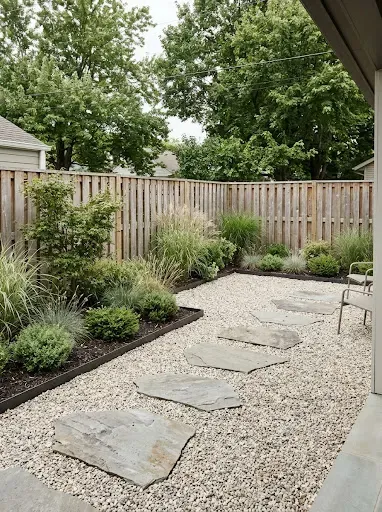
3. Use Gravel and Planting Beds for a Low-Maintenance Garden
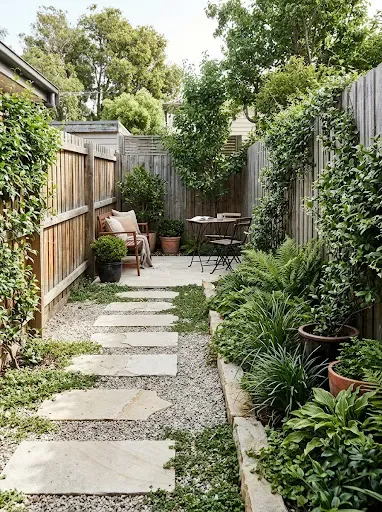
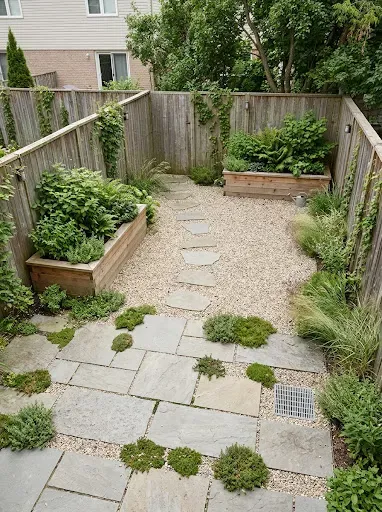
A gravel garden can create a clean, structured look without requiring a large lawn. Combine compact planting beds with stepping stones, gravel, and a few larger plants to give the backyard texture and definition.
Choose gravel that suits the home’s exterior and use edging to keep it from spreading into planting areas. Drought-tolerant plants may reduce watering needs where they are suitable for your local climate.
Styling tip: Use a limited plant palette and repeat a few shapes. A simple combination of grasses, evergreen structure, and seasonal flowers can look more considered than many unrelated varieties.
Practical note: Prepare the ground properly and consider drainage before installing gravel or changing the surface.
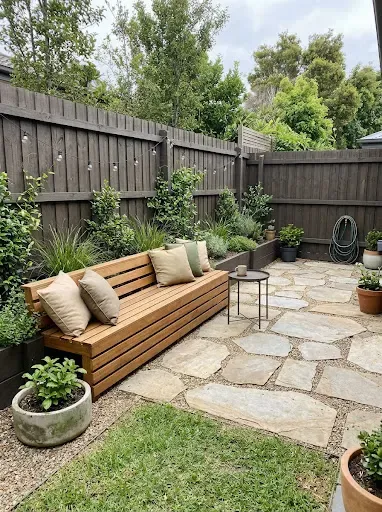
4. Add Built-In Perimeter Seating
A built-in bench can turn an awkward edge into useful seating. Position it along a fence or garden boundary to keep the center of the backyard open, especially when the space is too narrow for several separate chairs.
A simple timber bench can provide a warm natural finish. Add outdoor cushions and a few compact pillows for comfort, and consider a hinged storage base only if it can be built to stay dry and ventilated.
Styling tip: Keep the seat depth comfortable and leave enough room for a clear walking path.
Budget-friendly alternative: A simple freestanding bench placed against the boundary can give a similar visual effect without a custom build.
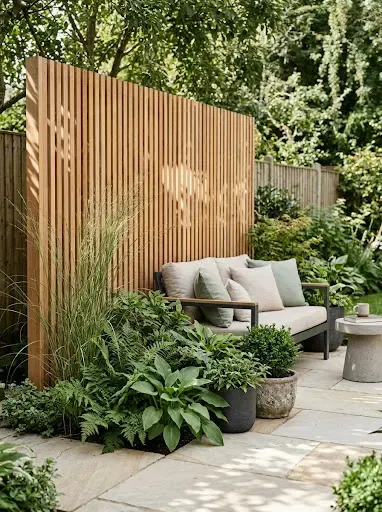
5. Create Privacy with Slatted Screens and Layered Planting
A backyard feels more relaxing when the seating area has some visual privacy. A slim slatted screen, trellis, tall planter, or carefully placed evergreen can soften views from neighboring spaces without enclosing the whole yard.
The best solution depends on the backyard’s light, boundary conditions, and local rules. A partial screen often feels more open than a tall, solid fence.
Styling tip: Layer a screen with plants at different heights. This adds depth and creates a natural transition between seating and garden areas.
Practical note: Before installing a permanent structure, check property boundaries and any local height or installation requirements.
6. Make a Beautiful Lawn-Free Backyard
A lawn is not essential for a welcoming backyard. In a compact space, a lawn-free design can leave more room for planting, seating, and practical movement.
Consider a combination of gravel, large-format paving, ground cover, raised planters, and stepping stones. Use plants that fit the available light and space, and leave enough access for maintenance.
Styling tip: Combine two or three surface materials at most. Too many changes in paving and texture can make a small yard look fragmented.
Best for: Backyards where a traditional lawn would be difficult to maintain or would take up most of the usable area.
7. Fit a Small Dining Corner into an Underused Area
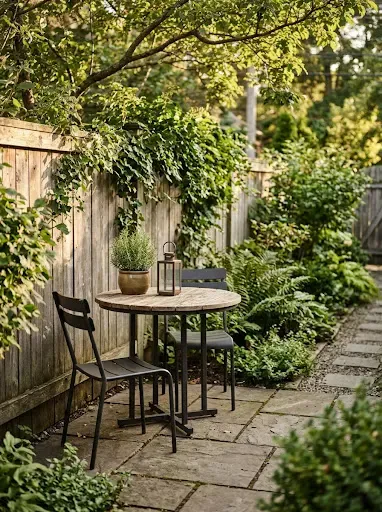
You do not need a full outdoor dining set to enjoy meals outside. A compact round table with two chairs can fit into a corner, while a narrow rectangular table may suit a longer backyard.
Look for foldable furniture or stackable chairs when the area needs to serve several purposes. Position the dining corner where chairs can be pulled out without blocking doors or the main path.
Styling tip: Add one outdoor pendant-style lantern or a simple tabletop planter to make the dining area feel distinct from the rest of the yard.
Practical note: Measure the table and chair clearance before buying. The space needed to sit comfortably is larger than the table footprint alone.
8. Add Shade with a Compact Canopy or Pergola
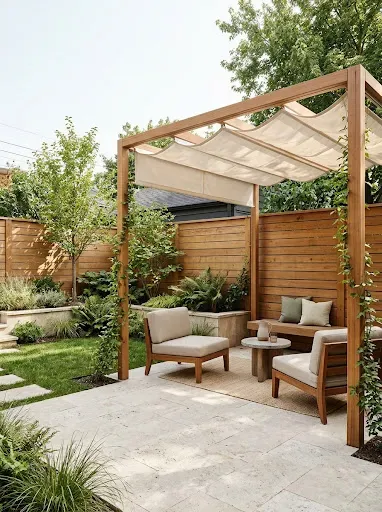
A little shade can make a backyard more comfortable during warmer parts of the day. A small pergola, retractable canopy, shade sail, or large outdoor umbrella can help define the seating area while offering protection from direct sun.
Choose a solution suited to the size of the yard and the way wind moves through it. A light canopy can feel less visually heavy than a large permanent roof.
Styling tip: Keep the structure simple and repeat its finish in another element, such as a bench, planter, or outdoor table.
Practical note: Use outdoor-rated hardware and follow the manufacturer’s installation requirements. A shade sail or umbrella needs secure anchoring and suitable wind precautions.
9. Use Layered Outdoor Lighting to Extend the Evening
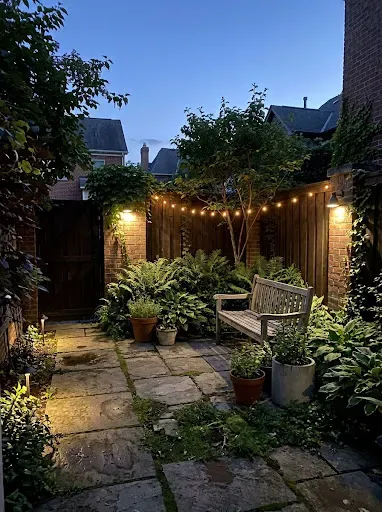
Thoughtful lighting can make a small backyard feel inviting after sunset. Combine a few low-level pathway lights, warm wall lights, and outdoor-rated string lights where suitable.
Avoid placing bright lights everywhere. Focus on the seating area, steps, and main walking route, leaving some darker areas so the lighting feels gentle rather than harsh.
Styling tip: Warm light works well with wood, stone, and greenery. Choose fixtures rated for outdoor use and position cables safely away from walkways.
Best for: Backyards used for evening relaxation or outdoor meals.
How to Plan a Small Backyard Before Decorating
Before purchasing furniture or plants, measure the backyard and note fixed features such as doors, drains, steps, outdoor taps, and existing trees. These affect where seating, paths, and planting can go.
Then choose the main purpose of the space. You may want a small dining area, a low-maintenance garden, or a quiet seating corner. Trying to fit every possible feature into a compact backyard can make it feel less useful.
For an apartment patio rather than a ground-level backyard, see our guide to small patio ideas for small apartments.
Common Small Backyard Mistakes to Avoid
- Filling every corner: Leaving some open ground makes a compact backyard feel easier to move through and visually calmer.
- Choosing oversized furniture: A deep sofa or large dining set can take over the entire space. Measure the furniture and its clearance before buying.
- Ignoring drainage: New paving, gravel, and raised beds can affect how rainwater moves through the yard. Plan surface changes carefully.
- Using too many materials: A small palette of paving, gravel, timber, and planting often feels more cohesive than several unrelated finishes.
- Planting without checking sunlight: A plant that needs full sun may struggle in a shaded corner. Match planting choices to the actual conditions.
- Forgetting maintenance access: Leave room to reach planters, outdoor taps, drains, and boundary areas.
Frequently Asked Questions
How can I make a small backyard look bigger?
Use a simple layout, repeat a limited palette of materials, and keep the main walkway open. Vertical planting and carefully positioned seating can create interest without taking up too much ground space.
What is the best layout for a small backyard?
The best layout depends on the shape and intended use. A narrow yard may benefit from zones arranged along its length, while a square yard can support a compact seating area with planting around the edges.
How can I make a small backyard look nice on a budget?
Start by clearing unnecessary items, defining a simple seating area, and improving the planting. Gravel, a few well-chosen containers, a simple bench, and outdoor lighting can make a noticeable difference without a complete redesign.
What can I put in a small backyard instead of grass?
Options include gravel, paving, stepping stones, ground-cover plants, raised planting beds, or a mix of surfaces. Choose based on drainage, sunlight, maintenance, and how you plan to use the space.
How do I add privacy to a small backyard?
Try a partial slatted screen, trellis, tall planter, or layered planting. A combination of screening and greenery can offer privacy while keeping the yard from feeling completely enclosed.
Conclusion
A small backyard can feel useful and relaxing when the layout has a clear purpose. Define a few zones, use vertical space for planting, choose furniture that fits, and add just enough privacy and lighting to support the way you want to spend time outdoors. A thoughtful plan will make the space feel more generous without requiring a major makeover.
Looking for more ideas? Browse our small space living stories.
Save to Pinterest