In this article
- 1. Start with a compact bistro set for two
- 2. Use folding chairs and a fold-down table
- 3. Lay a renter-friendly outdoor rug and deck tiles
- 4. Add a bamboo privacy screen
- 5. Grow a vertical plant wall
- 6. Hang string lights overhead
- 7. Line up potted herbs in a row
- 8. Set out a small fire bowl for evenings
- 9. Pile on outdoor cushions and a throw
- 10. Mount planters on the wall
- 11. Choose a narrow bench with hidden storage
- 12. Line lanterns along the edge
- 13. Carve out a small grill corner
- 14. Shade it with an umbrella on a compact base
- 15. Add wind chimes and small decor accents
- 16. Add a tiny water feature
- 17. Arrange furniture for conversation in a tight footprint
- How to plan a small patio that feels bigger
- What to buy first on a small budget
A small patio is the hardest outdoor space to decorate, because every inch has to earn its place and one wrong piece of furniture eats the whole floor. The trick is to think in layers: a seat for two, something green at eye level, light overhead, and a surface that folds away when you are done. These small patio ideas are built for balconies and patios under 100 square feet, the kind of space where a full dining set will never fit. Each one costs little, most are renter friendly, and together they turn a bare concrete slab into a spot you actually use every day.
1. Start with a compact bistro set for two
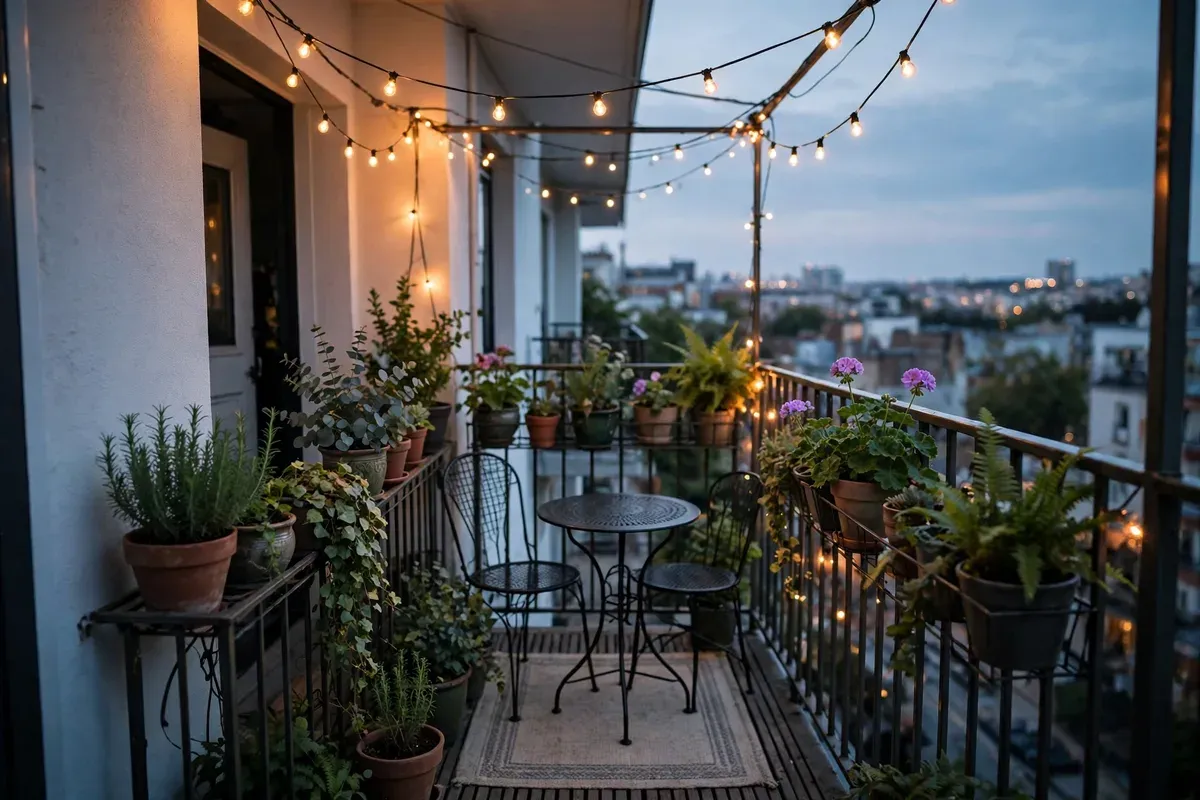
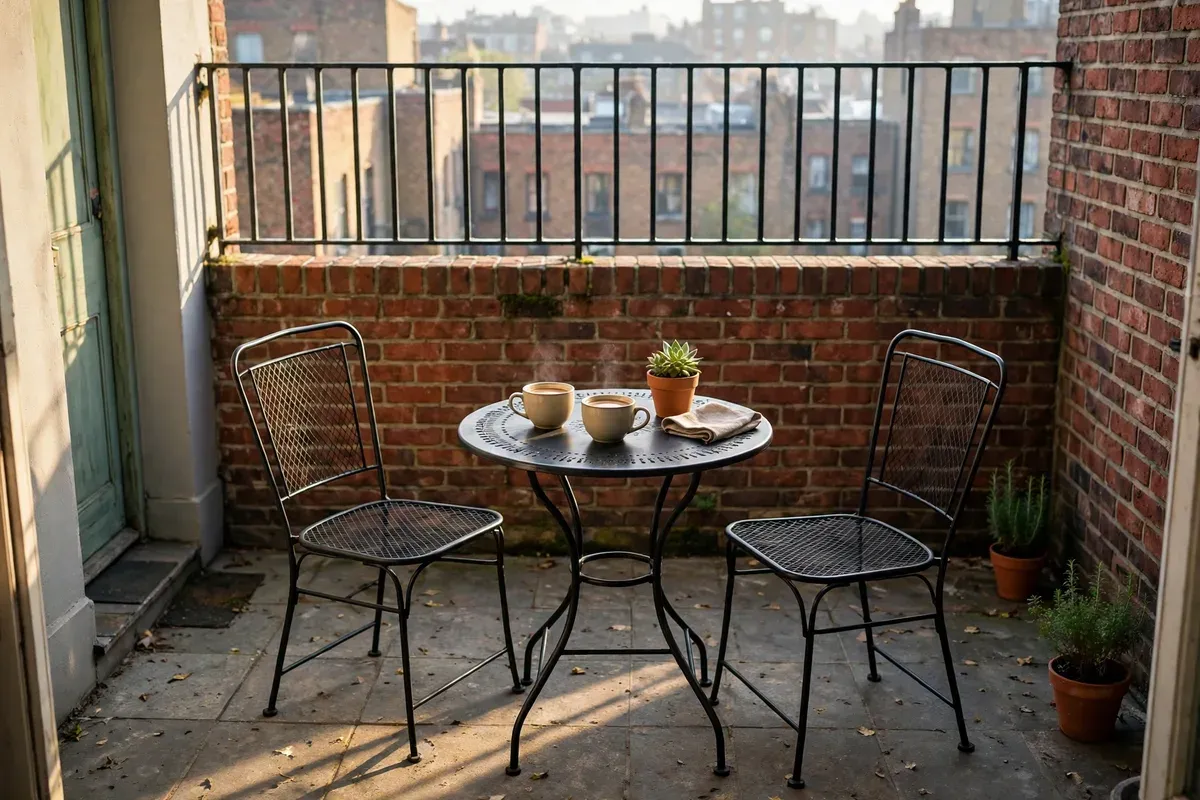
A round bistro table about 24 inches across with two matching chairs is the single best purchase for a small patio, because it gives you a real place to eat breakfast and drink coffee without crowding the floor. A round top works better than a square one here, since it has no corners to catch your hip when you squeeze past, and two chairs tuck neatly under the table when you are done. Look for a folding metal set, which costs 60 to 120 dollars and survives rain far better than wood at the same price.
Measure before you buy: a 24 inch table plus two chairs needs a patch about 4 by 4 feet, which leaves room to walk on a 6 by 8 foot patio. The tradeoff is that a bistro set seats two and only two, so it is not the pick if you host dinner parties. For daily use by one or two people, though, nothing else gives you as much patio for as little floor. A small patio starts with a seat and a surface, and this is both in one purchase.
2. Use folding chairs and a fold-down table
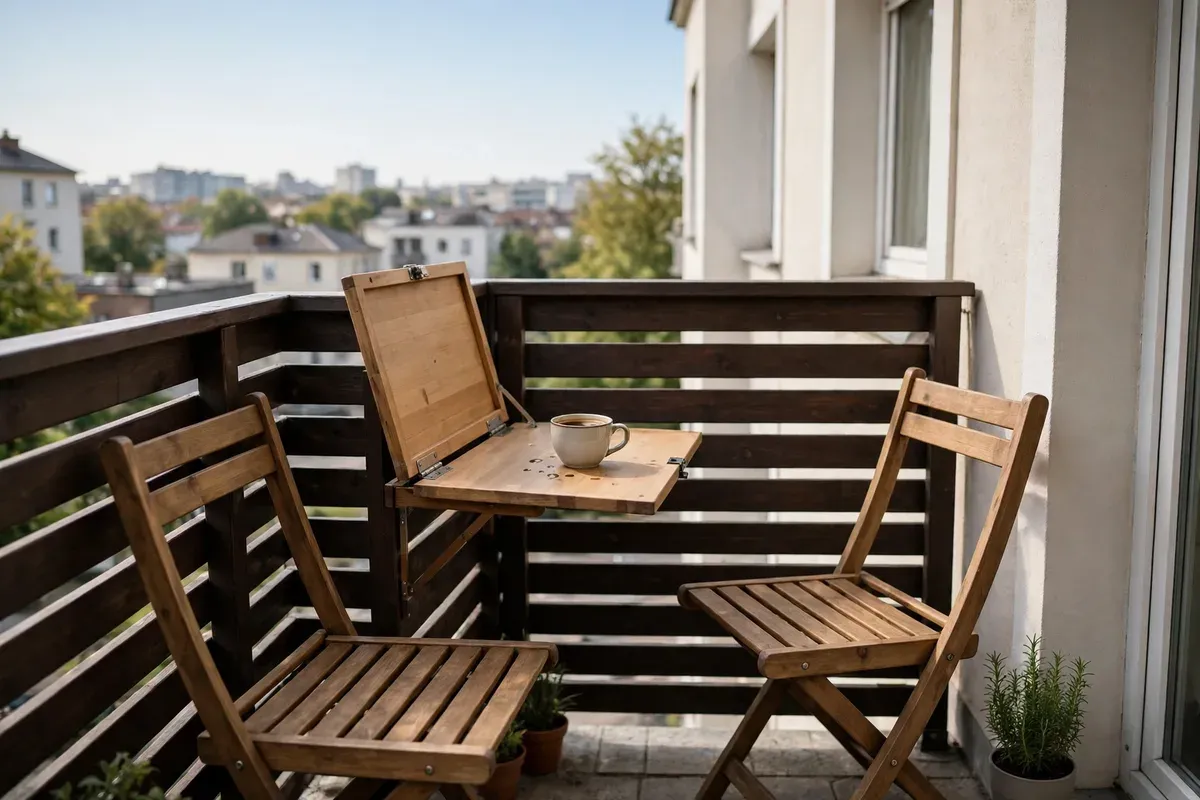
When even a bistro set feels too permanent, folding chairs and a fold-down table give you a patio that appears when you need it and disappears when you do not. A wall-mounted fold-down table, about 24 by 16 inches, bolts to the railing or the wall and drops flat when it is not in use, and two folding chairs hang on hooks beside the door. The whole setup costs 50 to 90 dollars, and it frees the full floor for yoga, plant watering, or just standing outside with a coffee in your hand.
The tradeoff is setup time: you unfold the table and chairs every time you sit down, which takes about a minute, and the table surface is small, so it holds two mugs and a plate, not a full meal. Buy chairs with a weight rating over 250 pounds and a table bracket rated for at least 30 pounds, since cheap brackets sag after one season. For renters, a railing-mounted table that clamps on needs no drilling at all, which makes it one of the most renter-friendly small patio ideas in this list.
3. Lay a renter-friendly outdoor rug and deck tiles
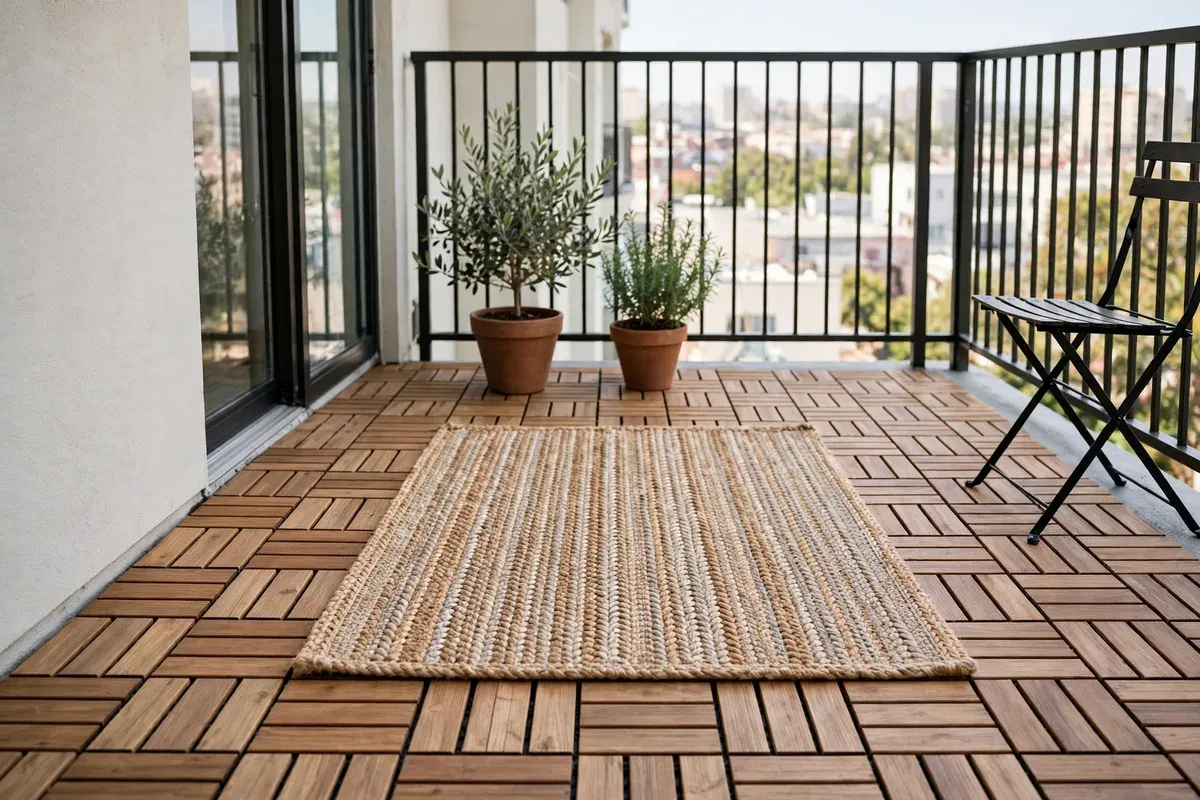
Bare concrete makes a small patio feel like a storage area, and a rug plus interlocking deck tiles fix that in one afternoon with no tools and no landlord permission. Interlocking wood or composite deck tiles snap together by hand, cost about 25 to 40 dollars for a 10 tile pack that covers 10 square feet, and lift off cleanly when you move out. An outdoor rug on top, about 3 by 5 feet for a small patio, costs 20 to 45 dollars and hides the tile seams while adding the color and softness the concrete lacks.
The tradeoff is maintenance: deck tiles trap leaves and dirt underneath, so lift a corner and sweep under them once a month, and a rug in a rainy climate needs to dry out or it smells. Choose a rug made from polypropylene, not cotton, since it dries fast and does not fade in sun. Together the tiles and rug do more for the feel of a small patio than any single piece of furniture, because they change what your feet touch, and that changes how the whole space reads.
4. Add a bamboo privacy screen
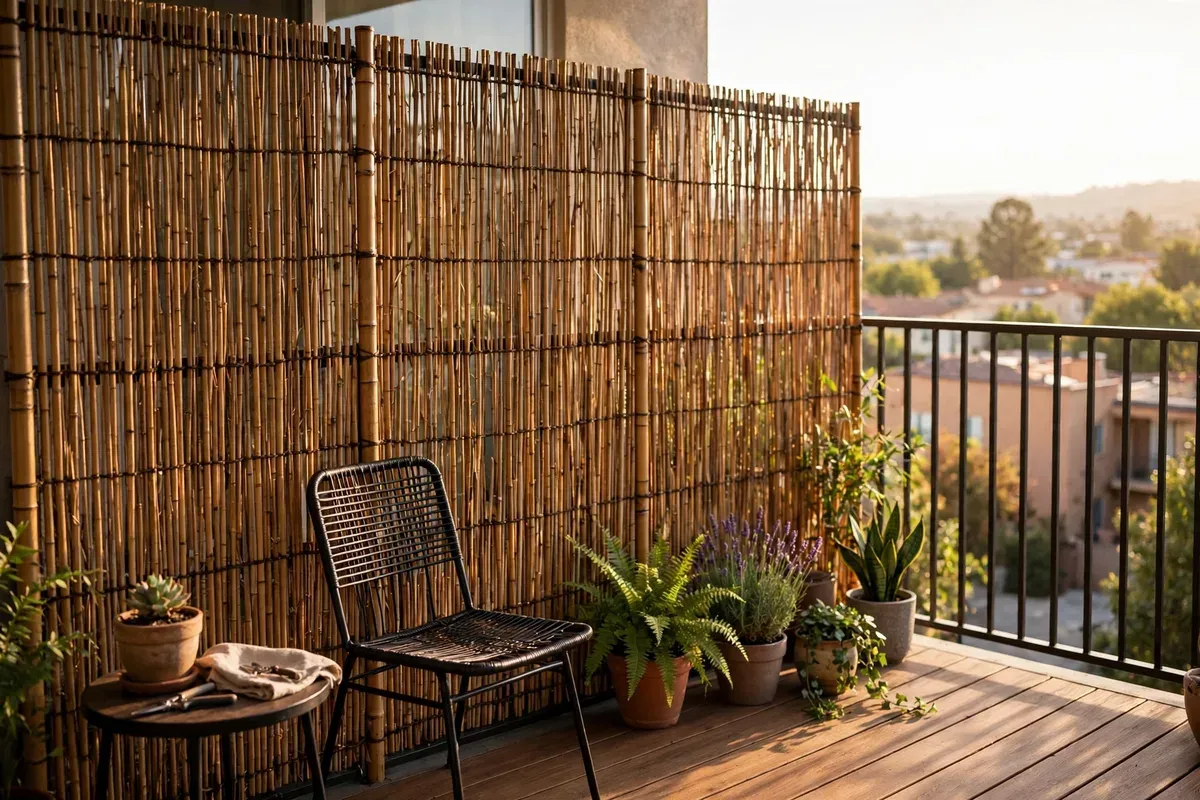
A small patio only feels relaxing when you are not on display to every neighbor, and a bamboo privacy screen is the fastest way to get that feeling. A roll-up bamboo screen, 6 feet tall and 10 feet wide, costs 25 to 50 dollars, ties to the railing with zip ties or hooks, and blocks the sightline without blocking the breeze. It also softens the look of a metal railing, which is the single ugliest feature on most apartment patios.
The tradeoff is wind: a tall screen catches gusts, so tie it at the top, middle, and bottom, and roll it up during storms. Bamboo fades to grey after a season in full sun, which some people like and some do not, so seal it with a clear outdoor spray if you want to keep the honey color. For a patio that faces another building at close range, this one change does more for comfort than any chair or cushion, because privacy is what turns a balcony into a room.
5. Grow a vertical plant wall
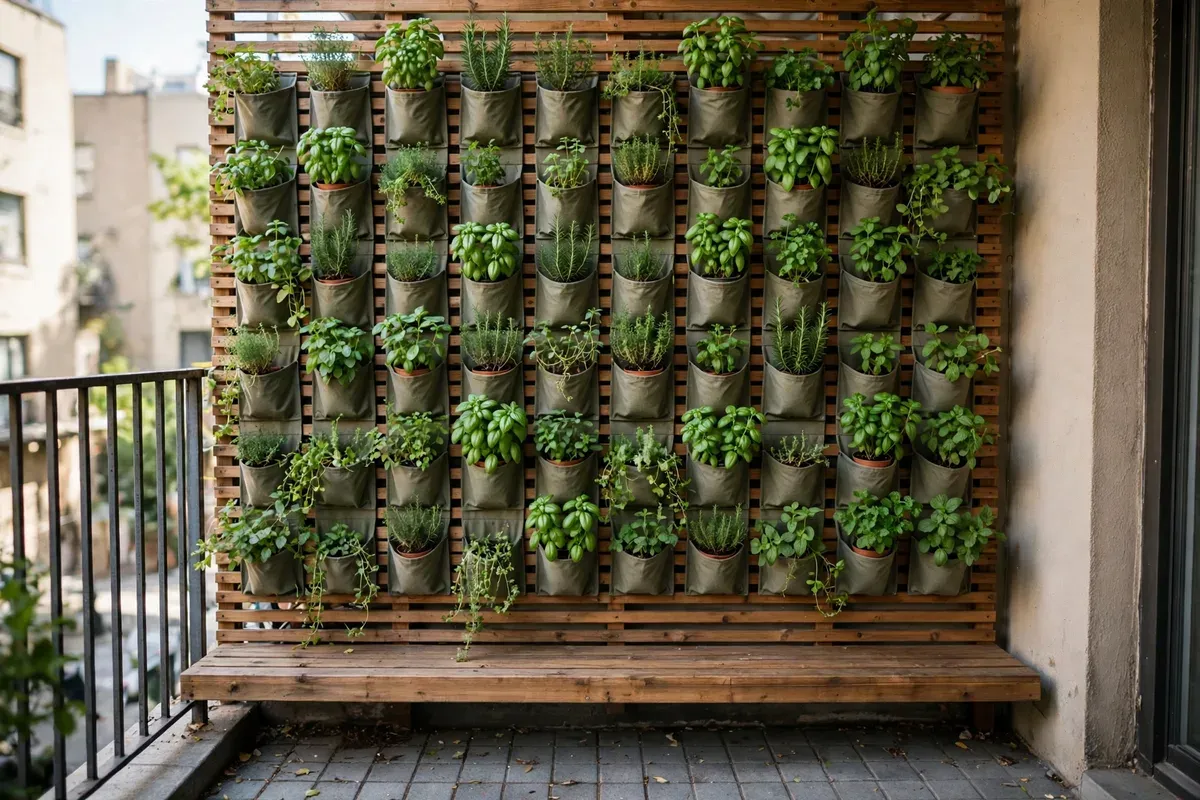
Floor space is the scarcest thing on a small patio, so the smart move is to grow upward. A vertical plant wall on a slatted wood panel or a pocket planter holds 12 to 20 small plants on a patch of wall about 3 by 5 feet, and it costs 30 to 70 dollars depending on whether you buy a ready-made pocket system or build one from a pallet. Herbs, trailing pothos, and small ferns all work, and the green wall becomes the backdrop for the whole patio, which is far prettier than a bare wall or a railing.
The tradeoff is watering: a vertical garden dries out faster than pots on the floor, so check it every day in summer, and use a drip tray or a liner behind the pockets so water does not stain the wall. Start with hardy plants like rosemary, mint, and pothos, since they forgive missed watering, and add fussy plants later once you know the routine. A vertical plant wall is one of the best small patio ideas for tiny outdoor spaces because it adds a garden without taking a single square foot of floor.
6. Hang string lights overhead
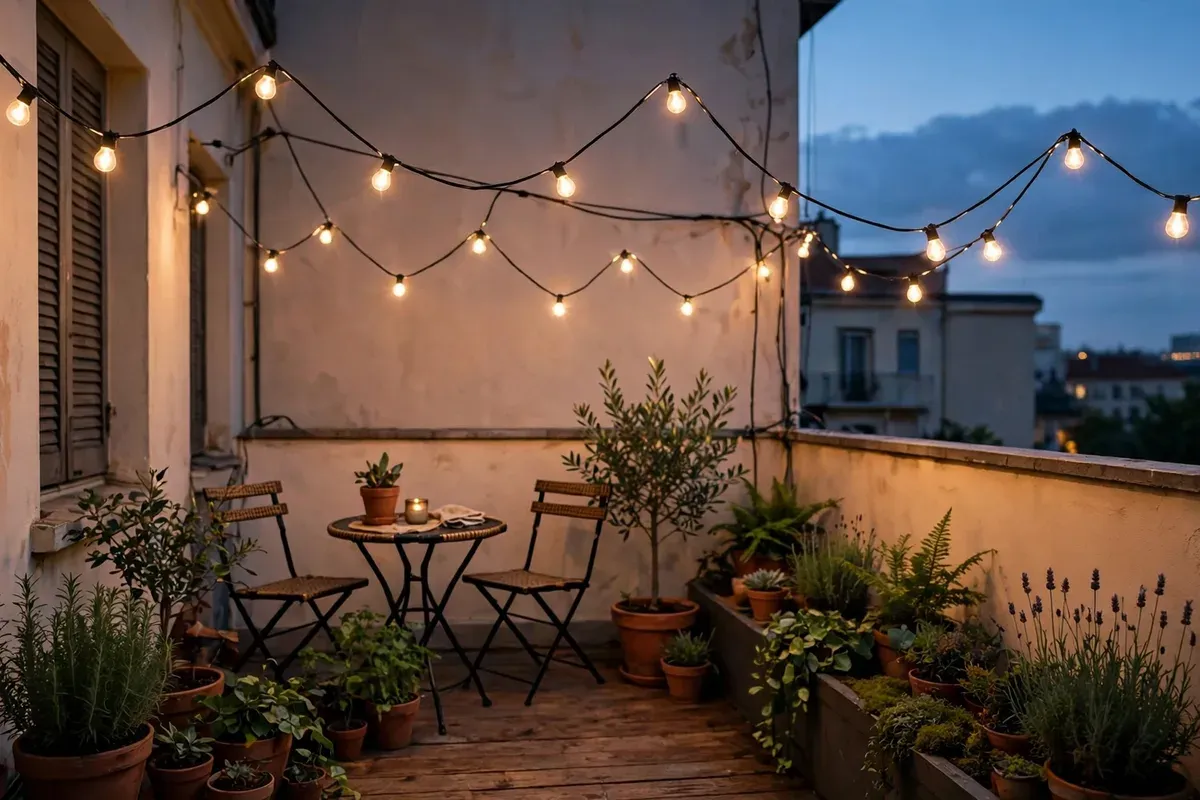
String lights are the cheapest way to make a small patio feel magical after dark, and they cost less than dinner out. A 25 foot strand of outdoor globe lights costs 15 to 30 dollars, and one strand is enough to zigzag across a 6 by 8 foot patio. Hang them from the ceiling, the railing, and a wall hook in a loose zigzag about 7 feet up, so they clear your head but still feel close. Warm white bulbs, around 2700K, give a soft glow that flatters skin and plants, while cool white bulbs feel like a parking lot.
The tradeoff is that string lights need a power source, so check where your nearest outdoor outlet is before you buy, and plan on a weatherproof extension cord if it is more than a few feet away. Solar string lights skip the cord entirely and cost about the same, but they dim on cloudy days and die by midnight in winter. Either way, lights overhead do something no furniture can: they pull your eye up, which makes a small patio feel taller and bigger than it is.
7. Line up potted herbs in a row
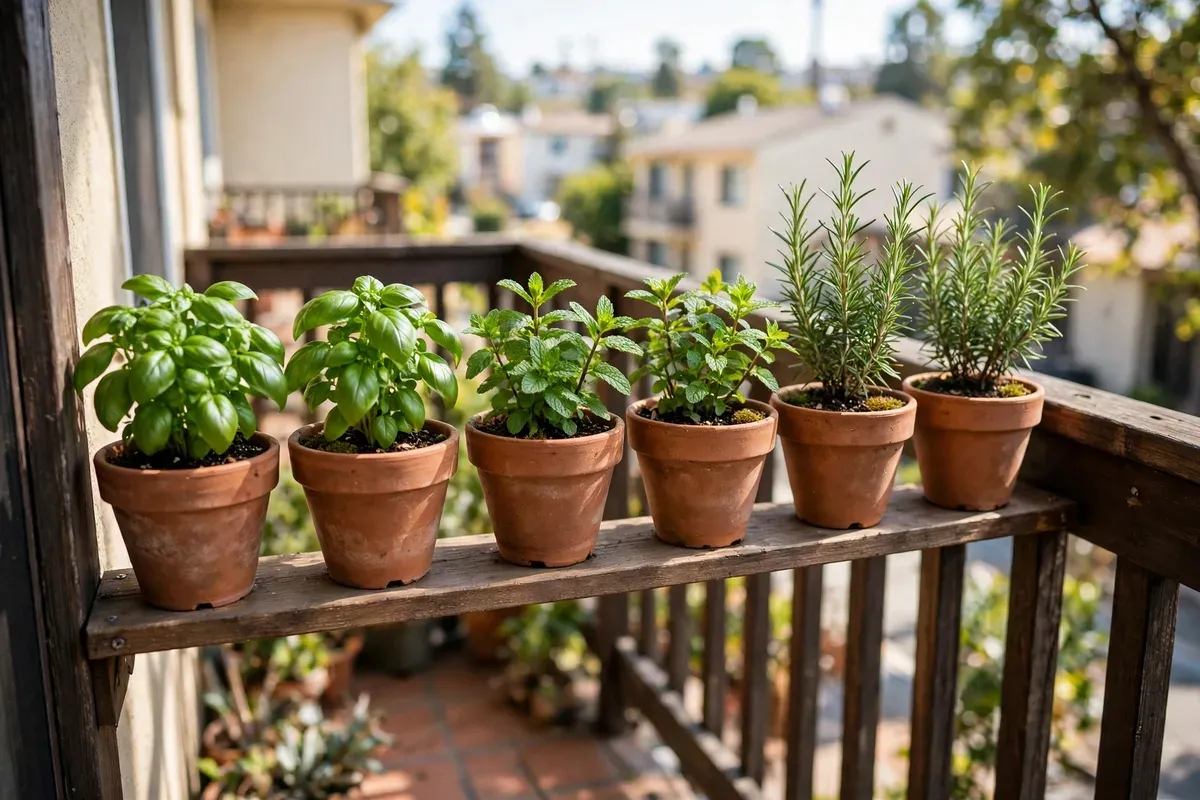
A row of potted herbs is the smallest garden that still earns its keep, because you cook with it. Six terracotta pots, 6 inches each, lined up on a narrow shelf along the railing, hold basil, mint, rosemary, thyme, parsley, and chives, and the whole row costs 20 to 35 dollars including soil and plants. The pots sit on a shelf about 6 inches deep, so they use no floor at all, and the scent hits you every time you step outside.
The tradeoff is that herbs in small pots dry out fast, so water them in the morning in summer and move the basil inside when nights drop below 50 degrees. Terracotta looks better than plastic but dries faster, so soak the pots in water for an hour before planting to slow that down. A herb row also gives a small patio a purpose beyond sitting: you step out to snip basil for dinner, and suddenly the patio is part of the kitchen, not a separate space you forget about.
8. Set out a small fire bowl for evenings
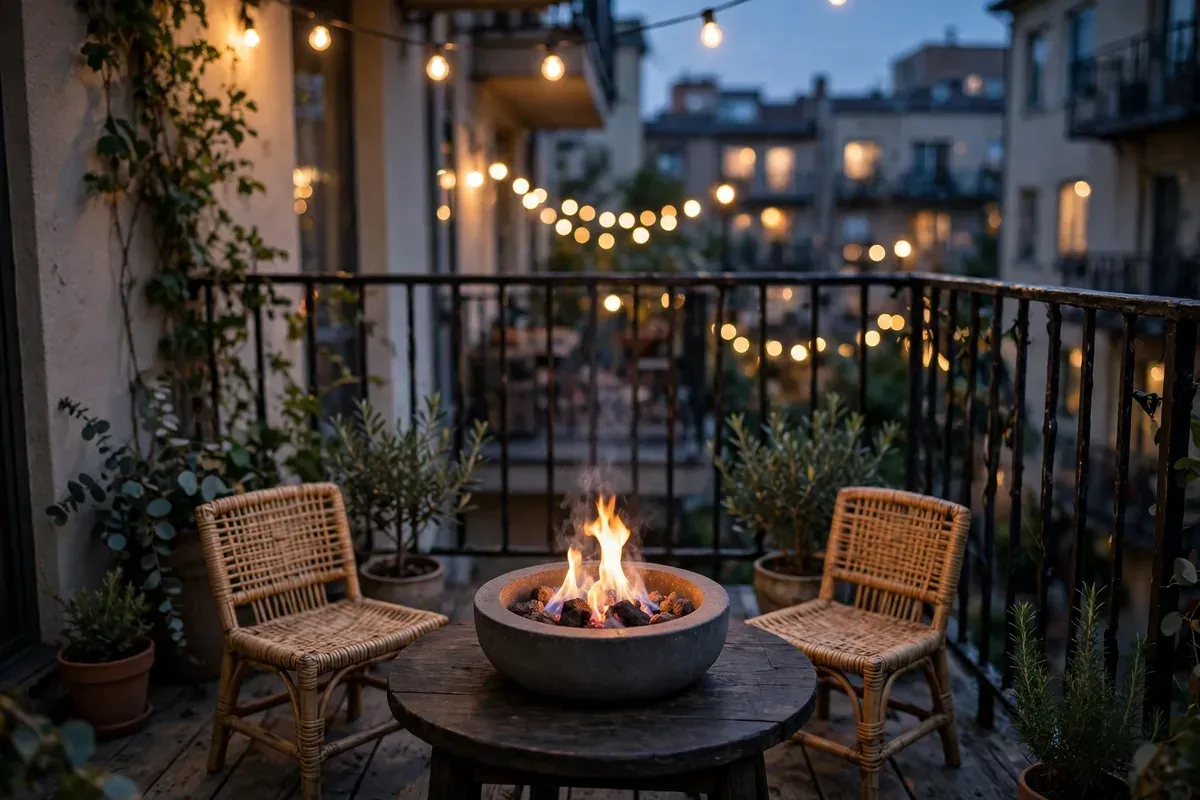
A tabletop fire bowl brings the campfire feeling to a patio that is far too small for a real fire pit. A tabletop ethanol or gel-fuel fire bowl, 12 to 16 inches across, costs 40 to 80 dollars, sits on a side table or a heat-safe tray, and burns for 1 to 2 hours per fill. The flame is small and contained, it gives off real warmth for two people sitting close, and it turns an ordinary evening into a reason to stay outside after dark.
The tradeoff is safety and rules: many apartment buildings ban open flames on balconies, so check your lease and local rules first, and never leave the bowl burning unattended. A safer alternative is a flameless LED fire bowl, which gives the glow with no flame at all, for about the same price. If flames are allowed, keep the bowl at least 2 feet from the railing, the wall, and anything fabric, and store the fuel inside. A fire bowl is the one small patio idea that changes how long you stay outside, not just how the space looks.
9. Pile on outdoor cushions and a throw
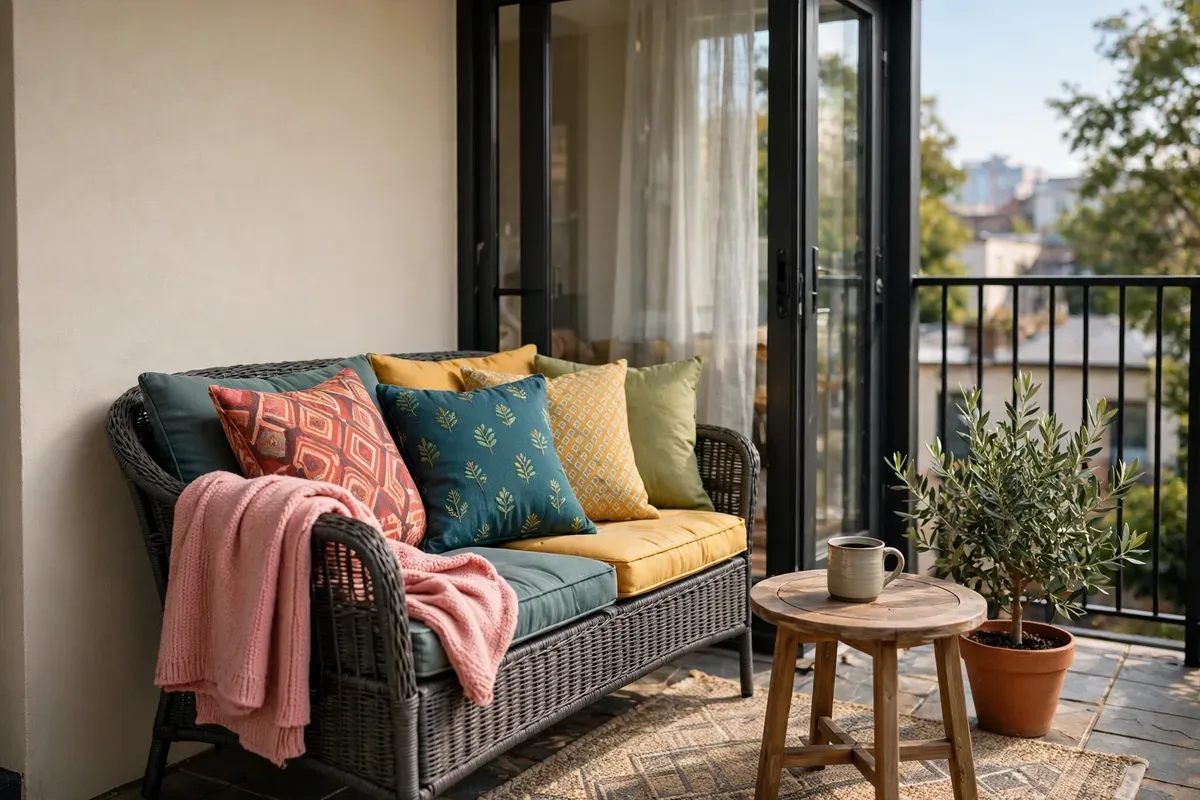
Hard outdoor chairs are the reason most patios go unused, and cushions fix that for less than the cost of a new chair. Two weatherproof seat cushions, 18 inches square, plus a lumbar pillow and a folded throw, cost 40 to 70 dollars total, and they turn a metal bistro chair into a seat you can sit in for an hour. Choose cushions with removable, washable covers in a fade-resistant fabric like solution-dyed acrylic, since cheap polyester cushions fade to grey in one summer.
The tradeoff is storage: cushions left out in rain take a day to dry and grow mildew if they stay damp, so bring them inside when it rains, or keep them in a storage bench. A throw in a washable cotton blend is the finishing touch, since it makes the patio usable on cool evenings and doubles as a picnic blanket. Comfort is the difference between a patio you photograph and a patio you use, and cushions are the cheapest way to buy it.
10. Mount planters on the wall
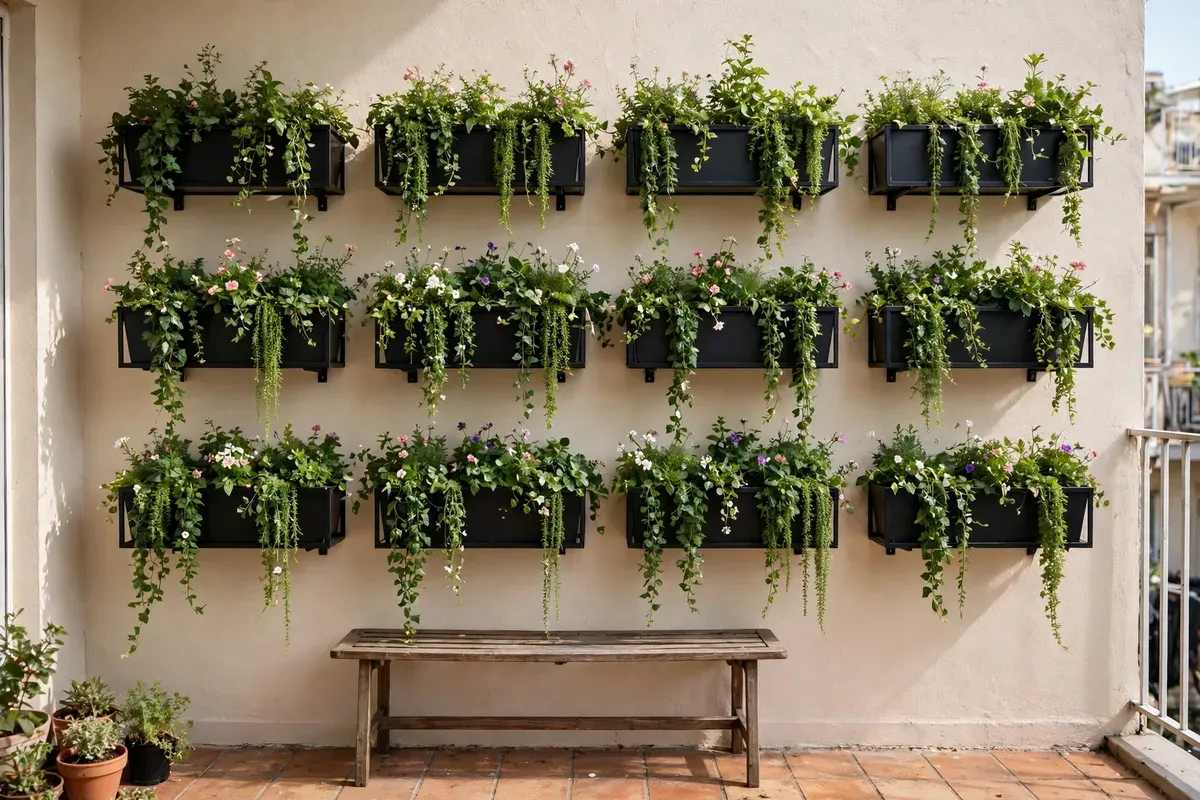
Wall-mounted planters are the second way to grow upward, and they work where a full plant wall feels like too much. A set of three or four metal or resin planters, each about 12 inches wide, mounts on the wall with two screws each and costs 25 to 50 dollars for the set. Fill them with trailing plants like ivy or string of pearls, which spill down the wall and soften the hard edges of the patio, and keep the floor clear for furniture.
The tradeoff is weight: a watered planter weighs 5 to 8 pounds, so mount into a stud or use wall anchors rated for at least 15 pounds each, and renters should use heavy-duty adhesive hooks or a railing-mounted version instead of drilling. Drainage matters too, so pick planters with a drainage hole and a small tray, or water lightly and empty the tray weekly. Wall planters are one of the simplest small patio ideas because they add green at eye level, exactly where you look when you sit down.
11. Choose a narrow bench with hidden storage
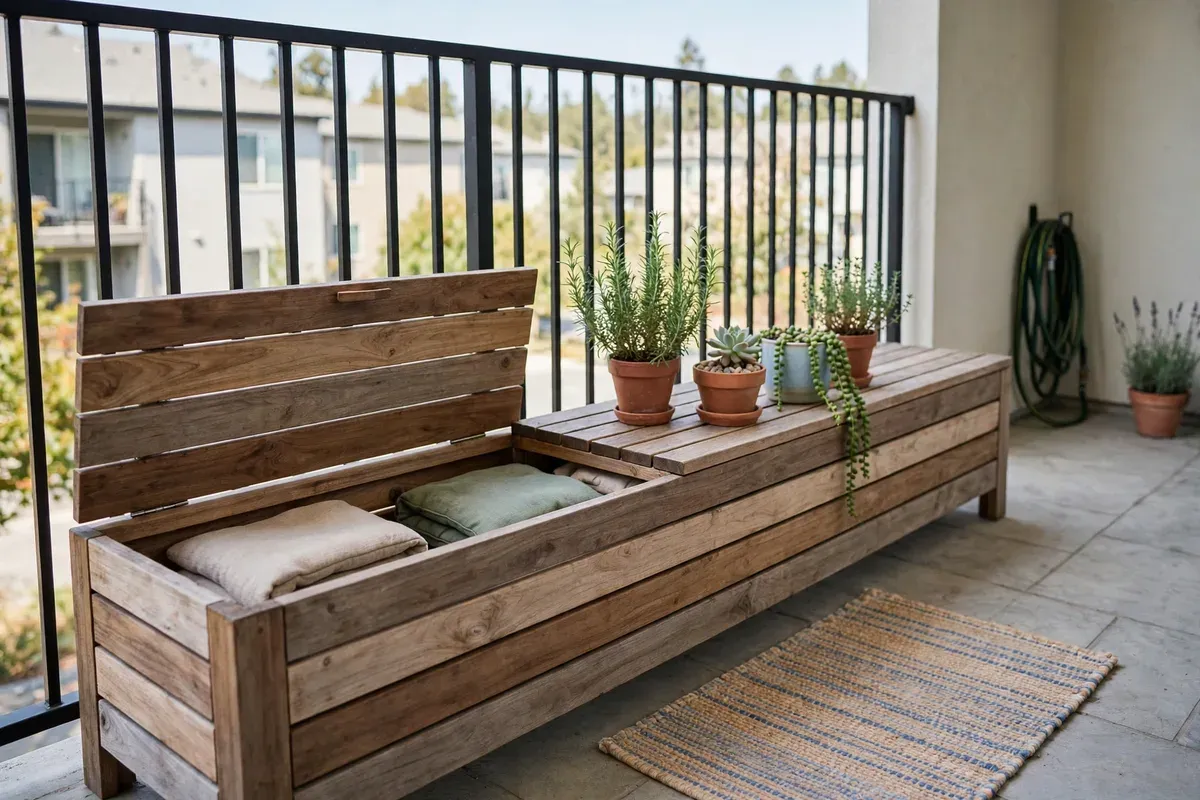
A narrow storage bench does two jobs on a small patio: it seats two people and it hides the clutter. A bench about 36 inches wide and 16 inches deep costs 70 to 130 dollars, holds cushions, throws, and plant tools inside, and doubles as a side table when you put a tray on top. Look for one with a hinged lid that stays open on its own, so you are not holding the lid with one hand while you dig for a cushion with the other.
The tradeoff is that a bench is the bulkiest piece in this list, so measure twice: a 36 inch bench needs a clear wall run of at least 40 inches, and it should sit against the wall, not in the middle of the floor. Choose a weatherproof material like resin wicker or treated wood, since a bench that soaks up rain will warp and smell. On a small patio, every piece of furniture should hide something, and the storage bench is the best example of that rule.
12. Line lanterns along the edge
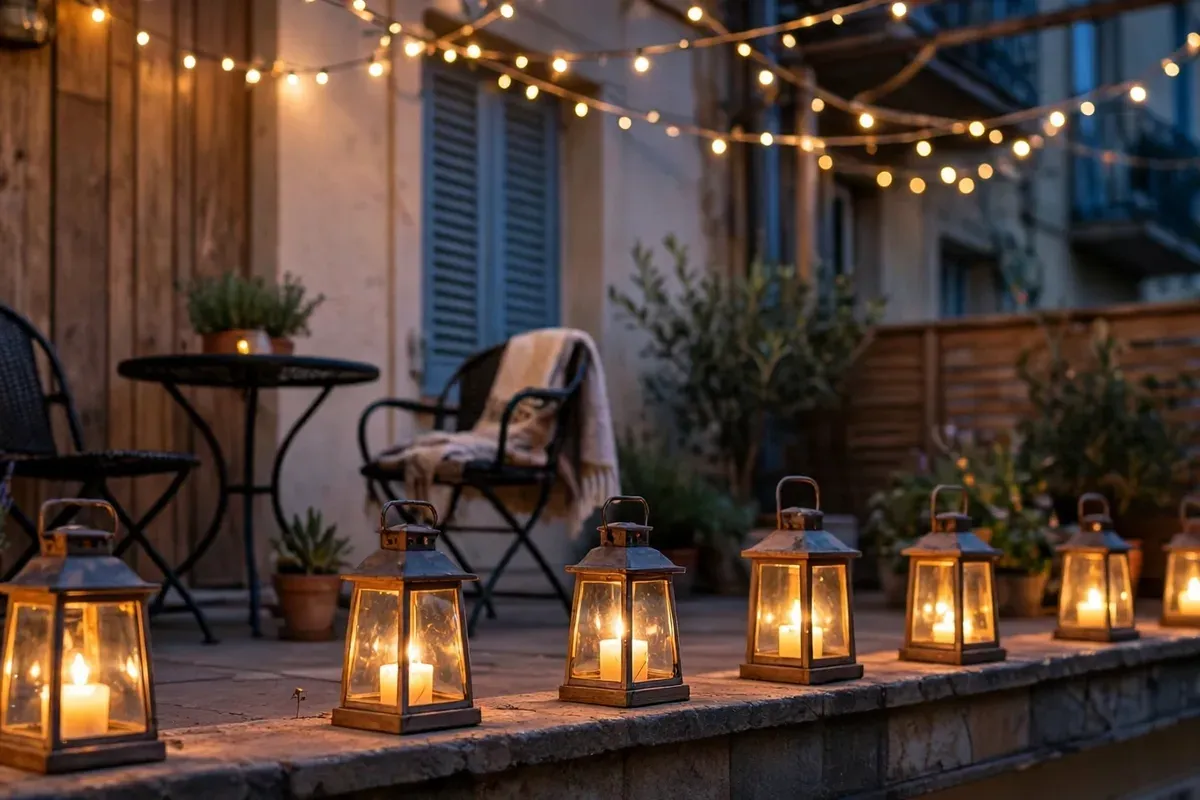
Lanterns along the edge of a patio do two things at once: they light the path so nobody trips, and they mark the boundary of the space, which makes it feel like a room. Three to five outdoor lanterns, 8 to 12 inches tall, cost 25 to 50 dollars for the set, and they look best spaced about 2 feet apart along the railing side of the patio. Battery-operated LED candles inside give a real flicker with no flame and no wax, and they run for weeks on one set of batteries.
The tradeoff is wind: lightweight lanterns blow over, so pick ones with a weighted base or fill the bottom with a few stones, and bring them in during storms. Solar lanterns skip batteries entirely but glow weakly after a cloudy day, so keep one battery set as backup if you entertain at night. Lanterns are a small detail, but on a tiny patio the details are what you notice, since everything is within arm’s reach.
13. Carve out a small grill corner
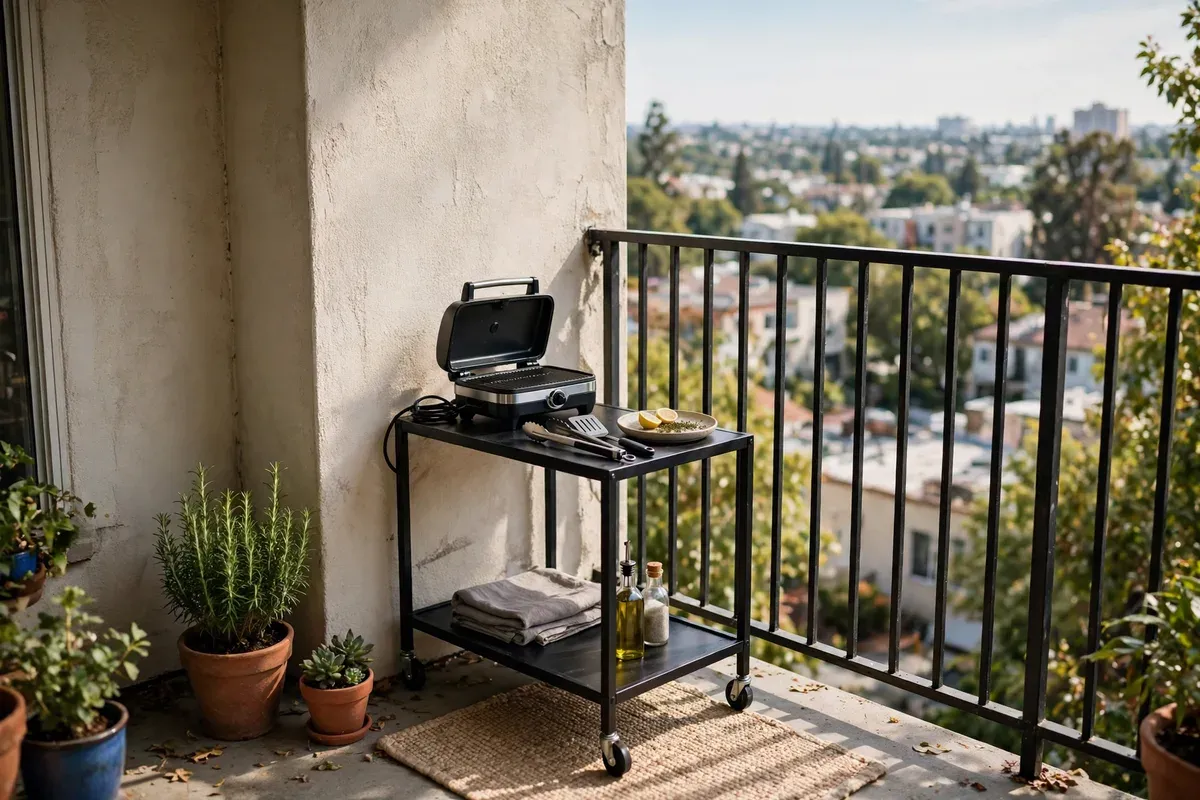
A full barbecue will never fit a small patio, but a tabletop grill on a narrow cart will, and it turns the patio into a cooking space. A compact electric tabletop grill, about 15 by 12 inches, costs 40 to 70 dollars, sits on a rolling cart 18 inches wide, and cooks for two people easily. The cart holds tools and a plate on its lower shelf, and it rolls against the wall when you are done, so the grill corner takes up no more than 2 square feet.
The tradeoff is smoke and rules: charcoal is usually banned on apartment balconies, so electric is the safe pick, and even an electric grill needs an outlet within reach. A grill also adds grease and smell, so wipe the cart down after each use and keep a small cover on the grill. For renters, an electric grill is the only realistic option, but it is a good one, since it cooks burgers and vegetables with no flame, no smoke complaints, and no lease violation.
14. Shade it with an umbrella on a compact base
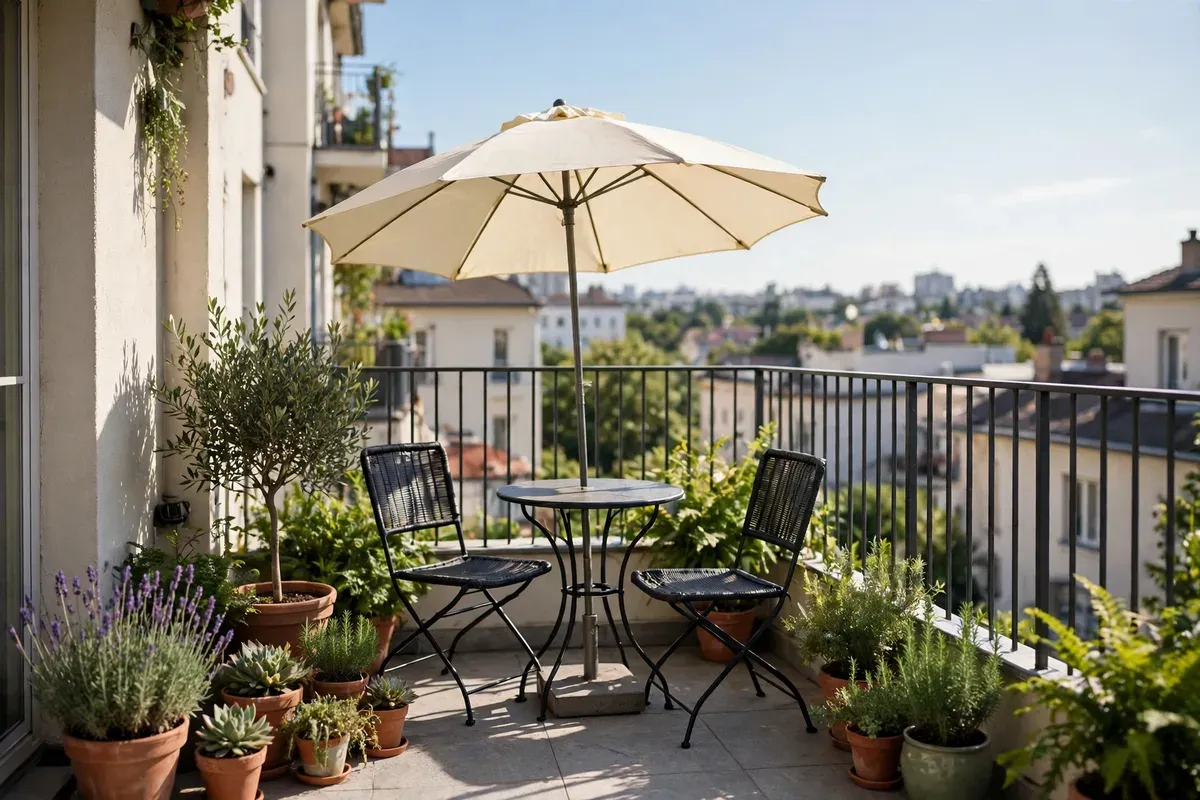
A small patio in full sun is unusable at noon, and a compact umbrella fixes that without eating the floor. A 6 foot market umbrella with a slim weighted base, about 15 inches across, costs 50 to 90 dollars total, and it shades a bistro set completely. Tilt the umbrella as the sun moves, and pick a base that weighs at least 25 pounds, since a light base tips over in a gust and takes the table with it.
The tradeoff is that an umbrella base is dead weight on the floor, so choose the smallest base that still holds the umbrella steady, and fill a hollow base with sand rather than water, since sand does not slosh or leak. A cantilever umbrella shades more but needs a bigger base and more floor, so it is the wrong pick here. On a small patio, a simple center-pole umbrella on a compact base is the best balance of shade and floor space, and it extends the hours you can actually sit outside.
15. Add wind chimes and small decor accents
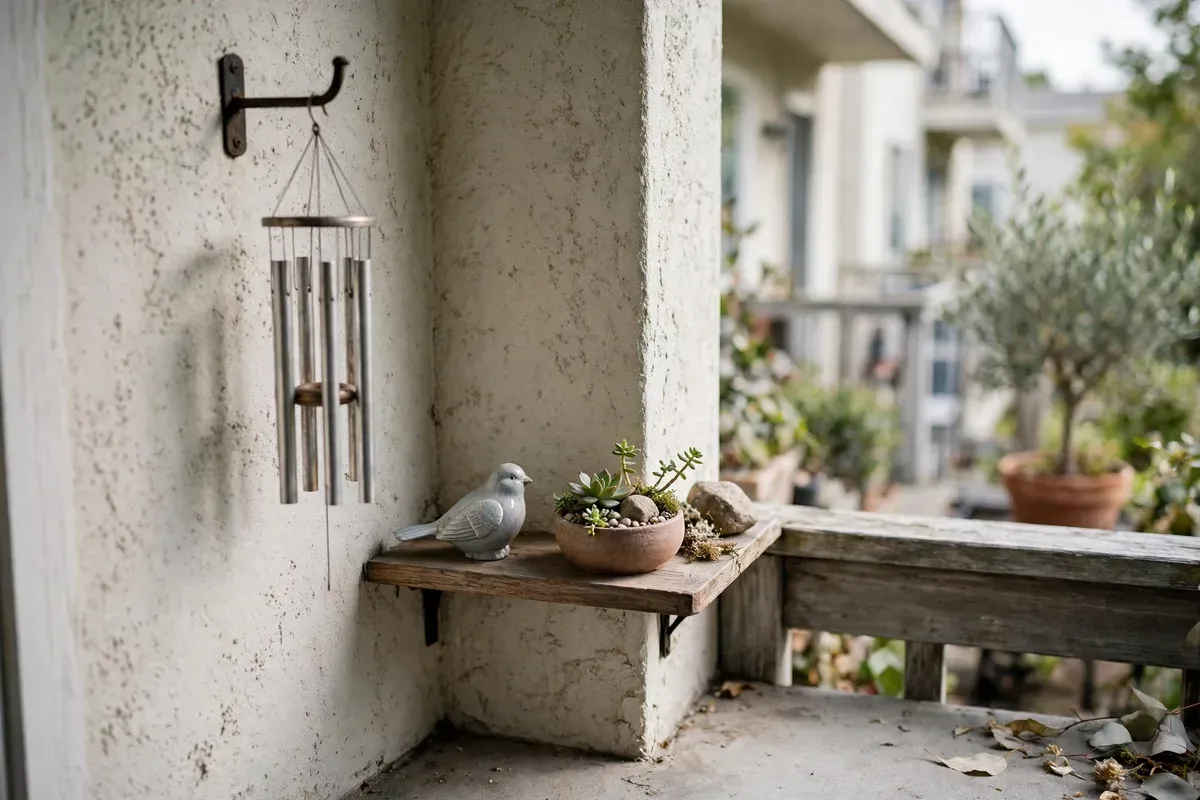
A small patio needs sound and personality, not just furniture, and wind chimes plus a few small accents do that for very little money. A metal wind chime, 12 to 18 inches long, costs 15 to 30 dollars, hangs from a wall hook, and adds a soft sound every time the breeze moves. Pair it with two or three small accents, a ceramic bird, a tiny succulent arrangement, a candle in a jar, and the patio stops looking like a furniture showroom and starts looking like a place someone lives.
The tradeoff is noise and clutter: a loud chime annoys neighbors in a quiet building, so pick a chime with a soft tone and a short drop, and keep the accents to three items on one small shelf, not a dozen scattered objects. Small decor is the easiest part of this list to overdo, since every object is visible from two feet away. One chime, one shelf, three accents, and the patio feels finished without feeling crowded.
16. Add a tiny water feature
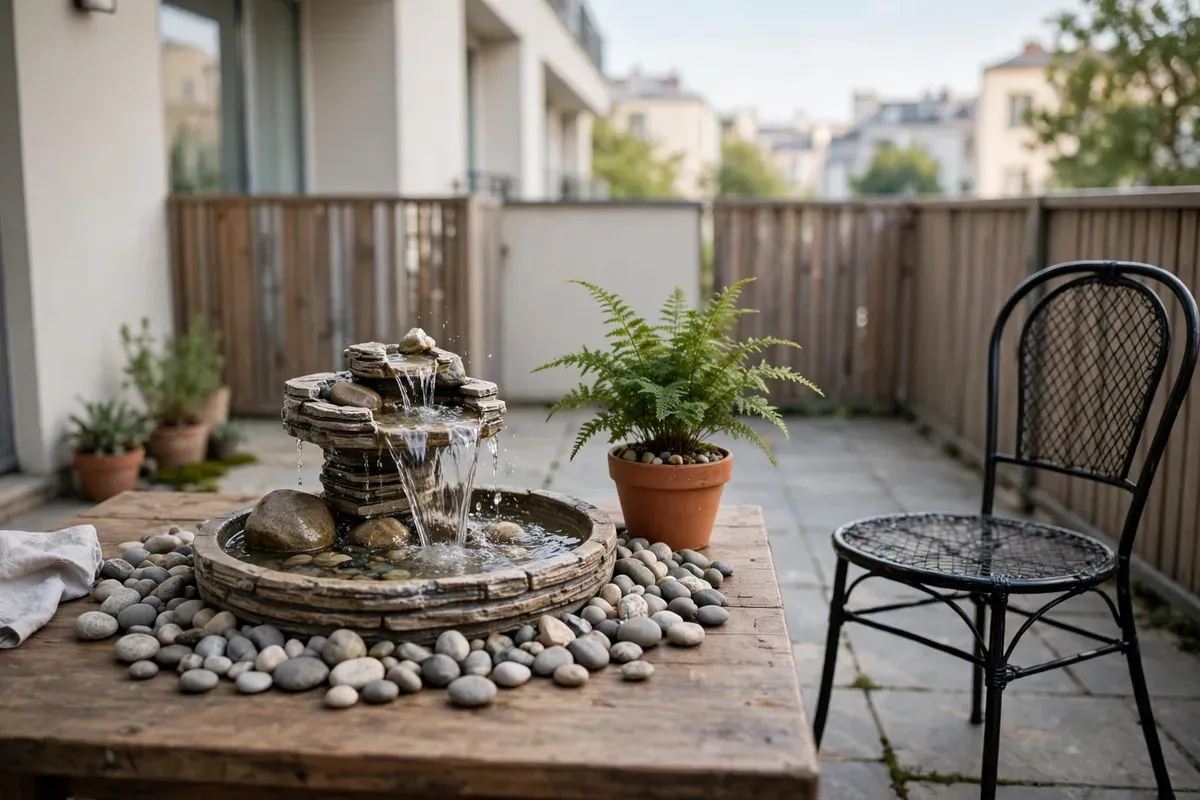
A tiny water feature brings the sound of running water to a patio that has room for nothing bigger than a table. A tabletop fountain, 10 to 14 inches across, costs 30 to 60 dollars, plugs into an outdoor outlet or runs on a small solar panel, and sits on a side table surrounded by pebbles and a fern. The sound masks street noise, which is the real reason to add one, since a small patio in a city is never quiet on its own.
The tradeoff is maintenance: the water needs topping up every few days in summer, the pump needs cleaning once a month, and mosquitoes breed in standing water, so keep the water moving and empty the fountain if you go away for a week. A solar fountain skips the cord but stops on cloudy days, so a plug-in pump is the more reliable pick if you have an outlet nearby. A water feature is the most peaceful of these small patio ideas, and on a tiny patio, peace is the point.
17. Arrange furniture for conversation in a tight footprint
The last step is the arrangement, and on a small patio the arrangement matters more than any single purchase. Angle two small armchairs and a narrow bench toward each other around a round side table about 18 inches across, with the rug underneath tying the group together, and leave a clear path of at least 24 inches from the door to the railing. This layout seats three people in a patch about 5 by 5 feet, and because everyone faces inward, it feels like a conversation nook, not a waiting room.
The tradeoff is that a conversation layout leaves no room for a dining table, so it is the wrong pick if you eat outside every night. But for most small patios, talking, reading, and drinking coffee are what actually happen, and a layout built for that beats a dining set nobody uses. Keep the furniture light enough to move, since you will rearrange it with the seasons, and let the rug define the seating area so the rest of the patio stays open. Good small patio ideas end with a layout that fits the life you actually live outside, not the one you imagine.
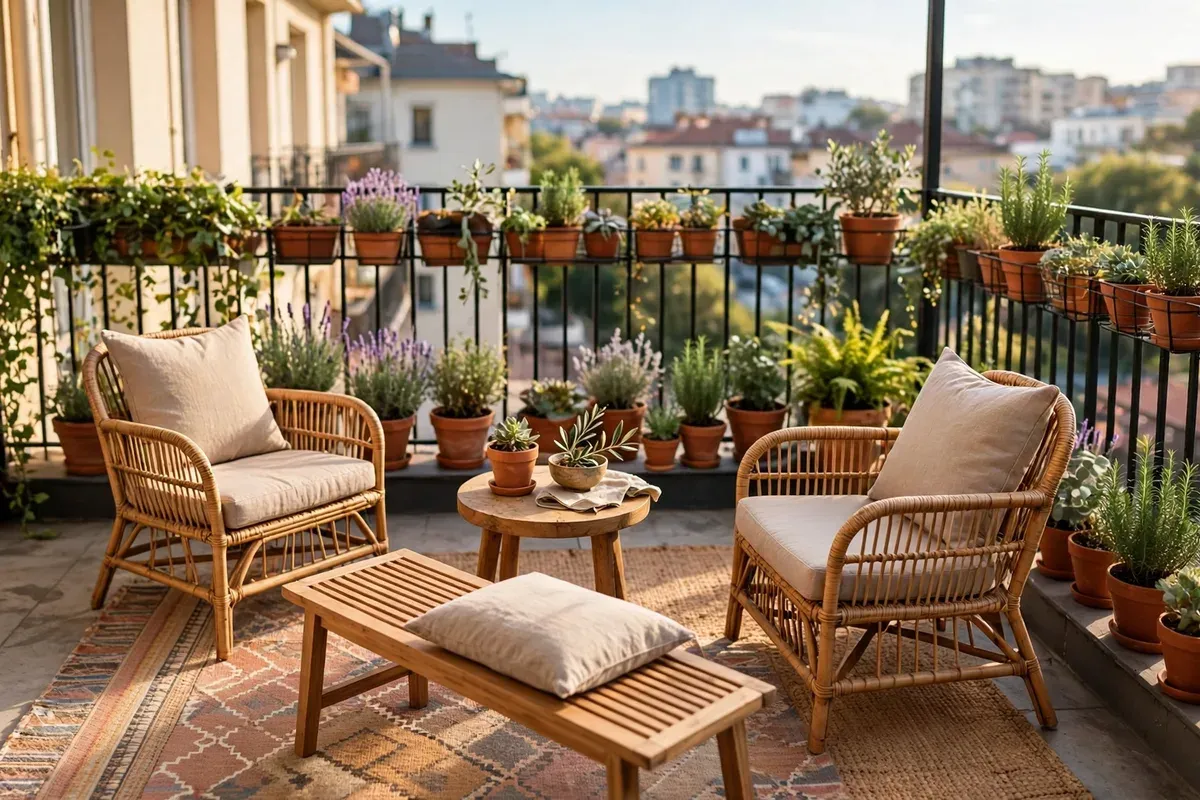
How to plan a small patio that feels bigger
The pattern behind every idea in this list is the same: use the walls and the ceiling, keep the floor clear, and give every piece of furniture a second job. Start with the seat and the surface, add light overhead and green at eye level, then stop before the patio fills up. A small patio feels bigger when you can see the floor, so leave at least a third of it empty, and put the things you use every day within reach of the door. Measure the space first, buy the compact version of everything, and skip anything that only looks good in a photo.
Storage is the part most people forget, and it is what keeps a small patio usable all year. Cushions, throws, and plant tools need a home, and a bench with a lid or a narrow cabinet against the wall is that home. For storage ideas that work inside the apartment too, our best storage ideas for small rooms cover the same hide-it-away thinking, and our renter-friendly apartment wall ideas show how to hang planters, screens, and lights without drilling into a wall you do not own.
What to buy first on a small budget
If you buy only three things, buy the bistro set, the string lights, and the rug, in that order. Together they cost 100 to 200 dollars, they change the patio in one afternoon, and everything else in this list layers on top of them. A bistro set gives you a place to sit, lights give you evenings, and a rug gives you a floor that feels like a room. Add the plants next, then the storage bench, then the extras like the fire bowl or the water feature once you know how you actually use the space.
Furnishing a small outdoor space is the same problem as furnishing a small indoor one, so the thinking carries over. Our small dining room ideas use the same compact-table logic for tight indoor corners, our living room corner ideas show how to turn a dead corner into a seating spot, and our how to furnish a studio apartment covers the whole small-space playbook from the front door to the balcony.
Looking for more ideas? Browse our small space living stories.
Save to Pinterest