In this article
- 1. Install a slatwall or pegboard tool wall
- 2. Add overhead ceiling racks
- 3. Line one wall with tall cabinets
- 4. Hang bikes on the wall
- 5. Create a sports gear zone
- 6. Set up a compact workbench
- 7. Use heavy-duty shelving for labeled bins
- 8. Store lawn equipment vertically
- 9. Build a garden tool station
- 10. Corral recycling and trash smartly
- 11. Create a car-care kit station
- 12. Use magnetic strips for small metal tools
- 13. Hang extension cords and hoses properly
- 14. Zone the garage with floor markings
- 15. Connect the garage to the entry
- How to Maintain Garage Order
- Garage Organization Mistakes to Avoid
- Once the Garage Is Sorted
A small garage has one job that matters more than all the others: fitting the car. Everything else, tools, sports gear, holiday decor, the lawn mower, competes for the leftover inches. These small garage organization ideas work from a simple principle: the floor is for the car and things with wheels, and everything else goes up.
Start by emptying the garage completely, which is miserable for a day and transformative after. Sort everything into keep, relocate, and discard before buying a single hook. Most garages hold 20 percent stuff the owner forgot existed.
1. Install a slatwall or pegboard tool wall
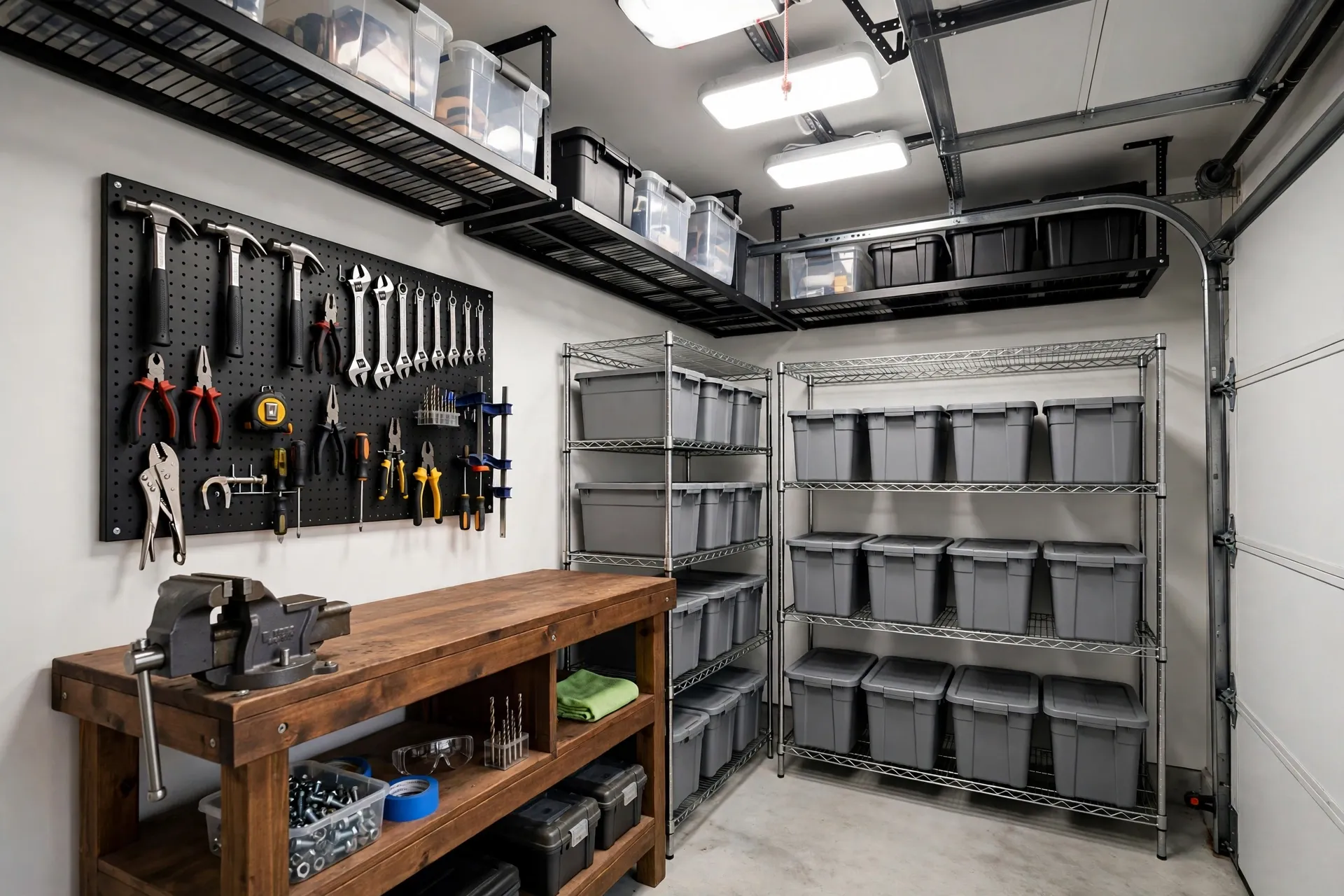
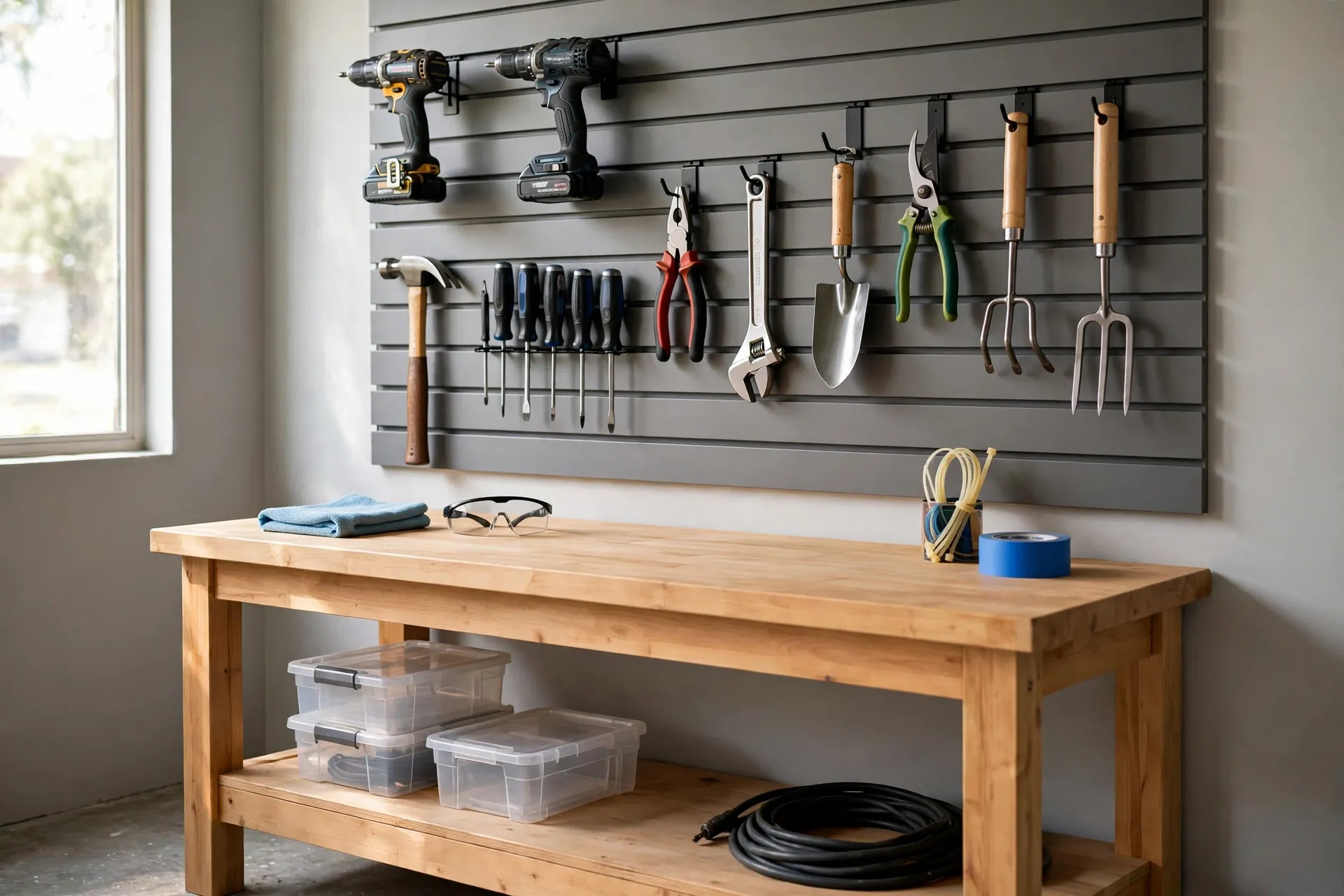
One organized tool wall replaces three junk drawers and a pile in the corner. A 4x8 foot slatwall panel with hooks holds hand tools, drills, garden tools, and extension cords, all visible at a glance. Everything has an outline or a labeled spot, so it goes back where it belongs.
Mount the panel into studs; a loaded tool wall is heavy. Keep daily tools at chest height, heavy items low, and rarely used tools high. A slatwall costs more than pegboard but the hooks lock in and never fall out when you grab a tool.
2. Add overhead ceiling racks
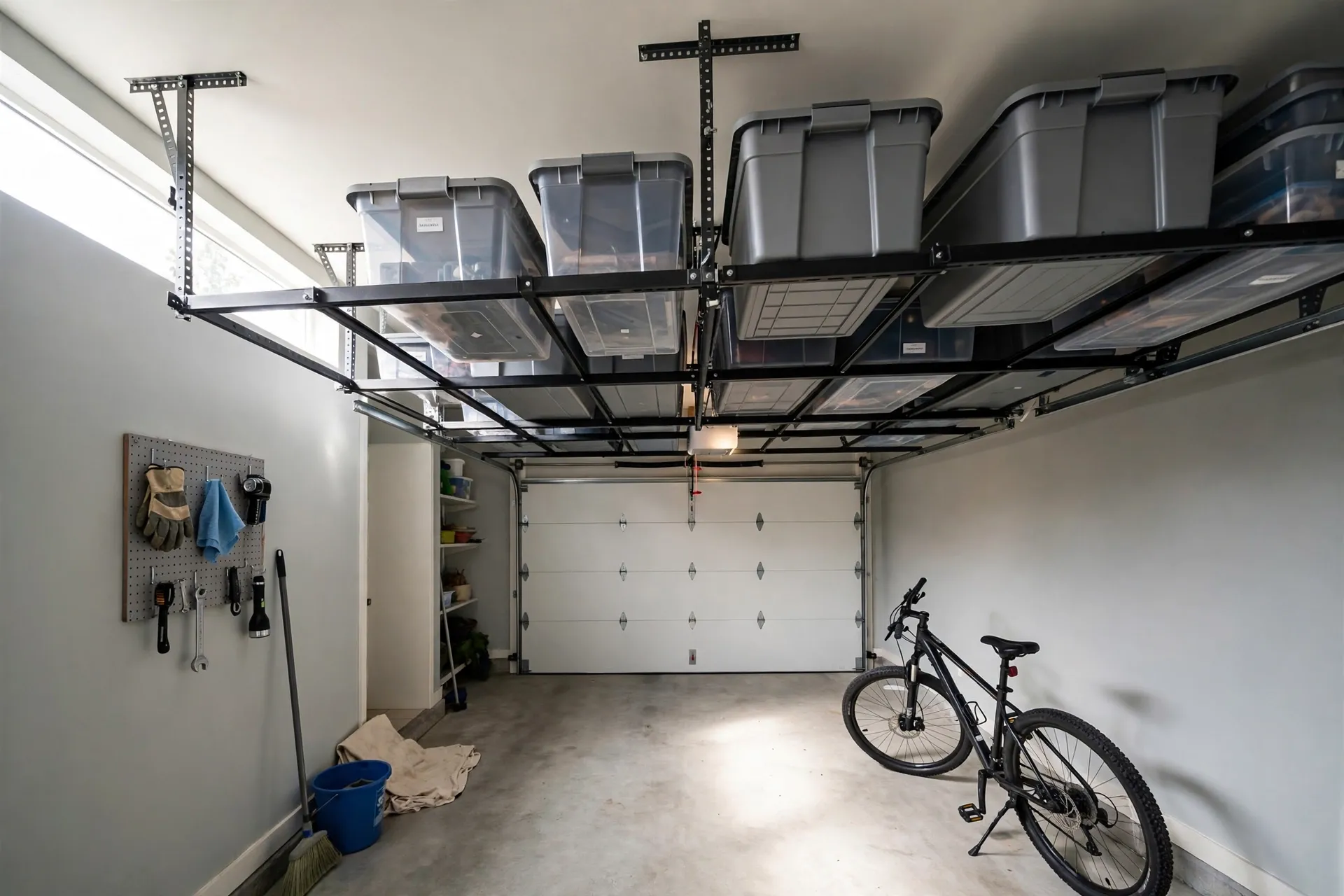
The ceiling is the most underused storage in a small garage. Overhead racks mounted to the ceiling joists hold labeled bins of holiday decor, camping gear, and seasonal items, completely off the floor. A 4x8 foot rack holds roughly a dozen bins.
Check your joist direction and use lag bolts into solid wood, never drywall anchors. Keep the rack’s bottom at least seven feet off the floor so the car and tall people clear it. Load it with light, bulky items; heavy bins overhead are a hazard and a pain to retrieve.
3. Line one wall with tall cabinets
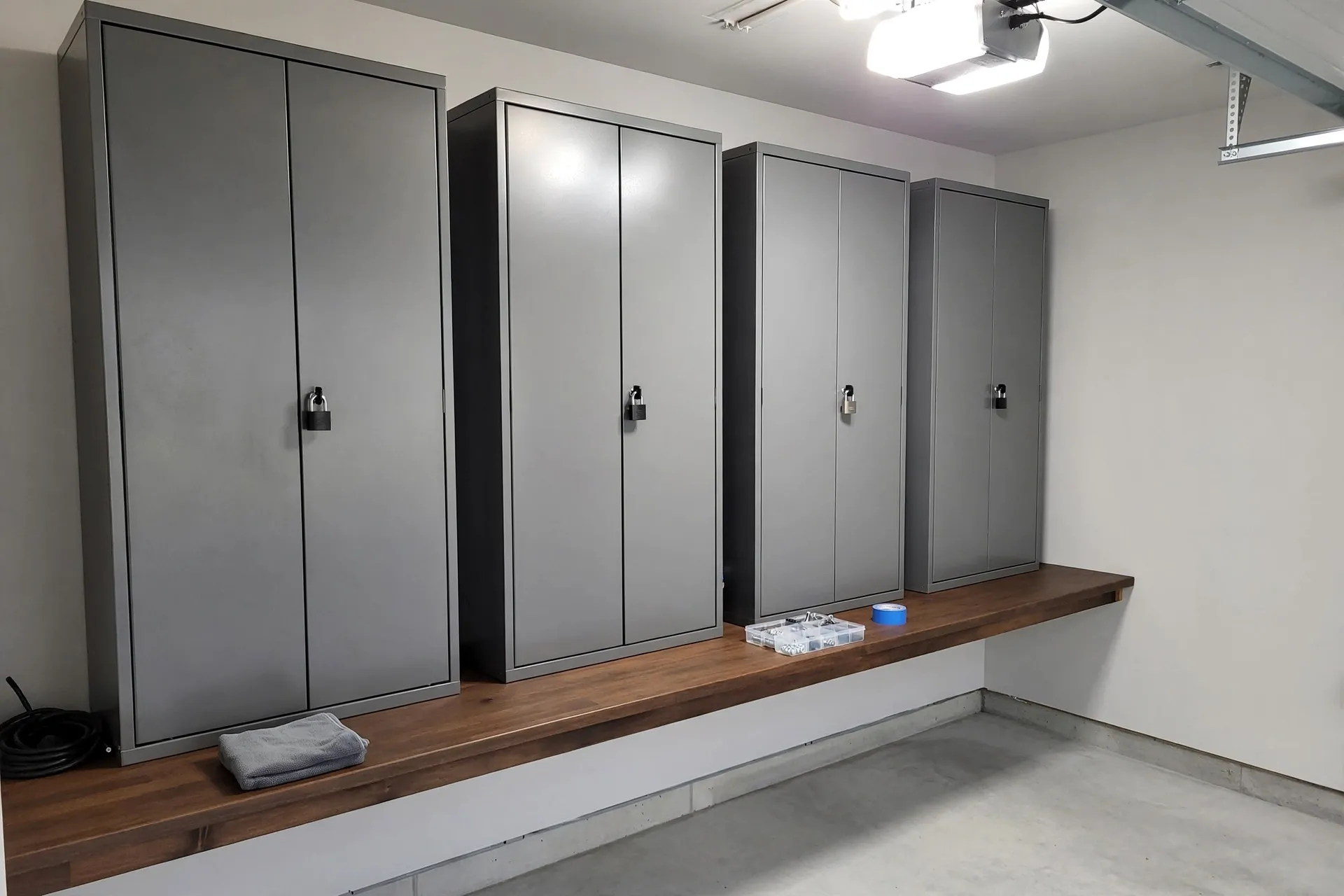
Tall storage cabinets turn a wall of visual chaos into a clean line. Two or three 36-inch wide tall cabinets hold paint, automotive supplies, and tools behind closed doors. Lockable doors matter if kids use the garage; chemicals and sharp tools should not be accessible.
Choose cabinets rated for garage use: metal or heavy-duty resin, not indoor particle board, which swells in humidity. Anchor every cabinet to the wall; a tall loaded cabinet can tip. The countertop above a run of base cabinets doubles as a work surface.
4. Hang bikes on the wall
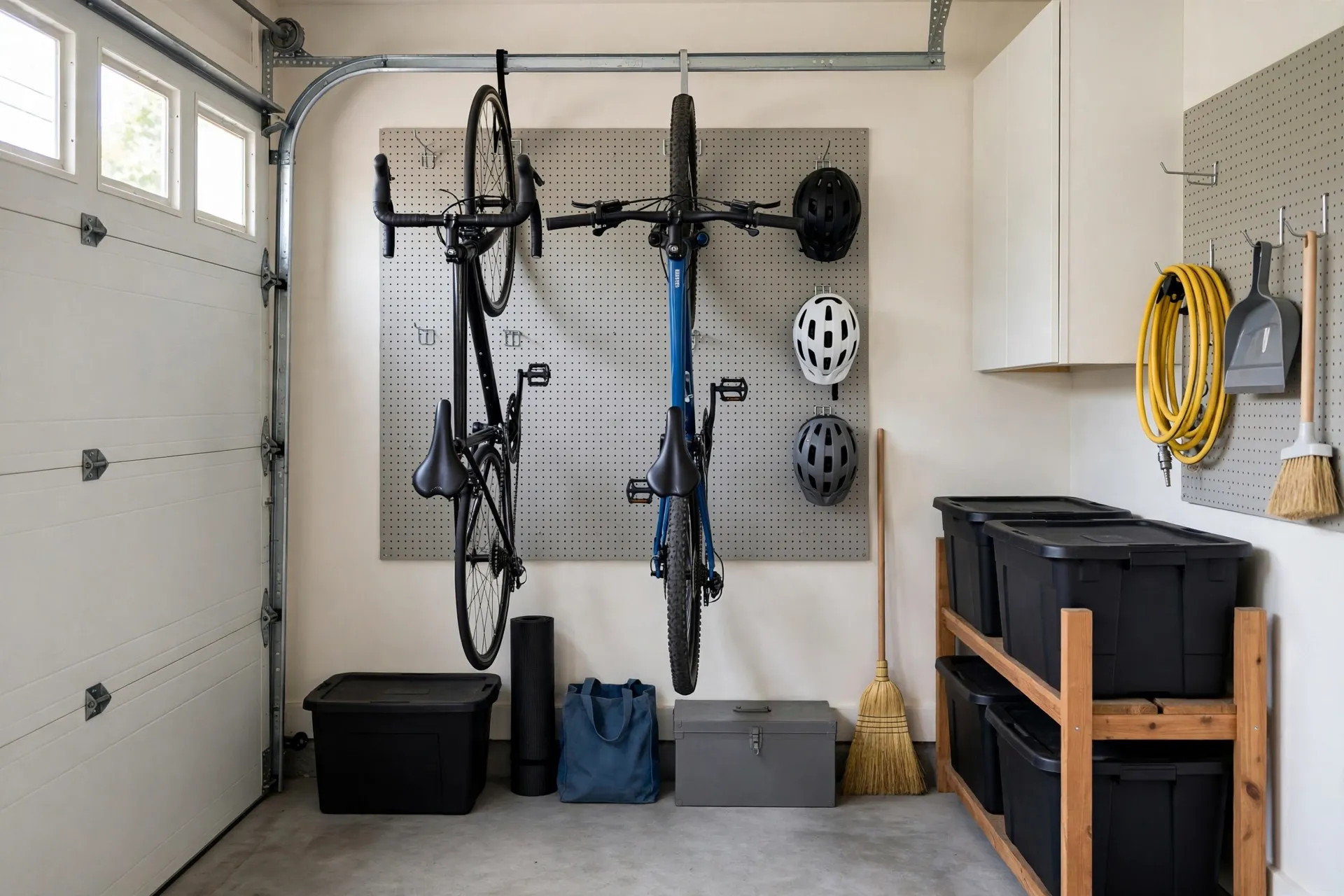
Bikes eat floor space like nothing else. Wall hooks that hold bikes vertically by the front wheel get each bike into about two square feet of wall. For a family of four, that reclaims roughly the footprint of a car door swing.
Mount hooks into studs at about six feet high; you lift the front wheel onto the hook and the bike hangs flat against the wall. Keep helmets and locks on pegs beside each bike so the whole kit lives in one spot.
5. Create a sports gear zone
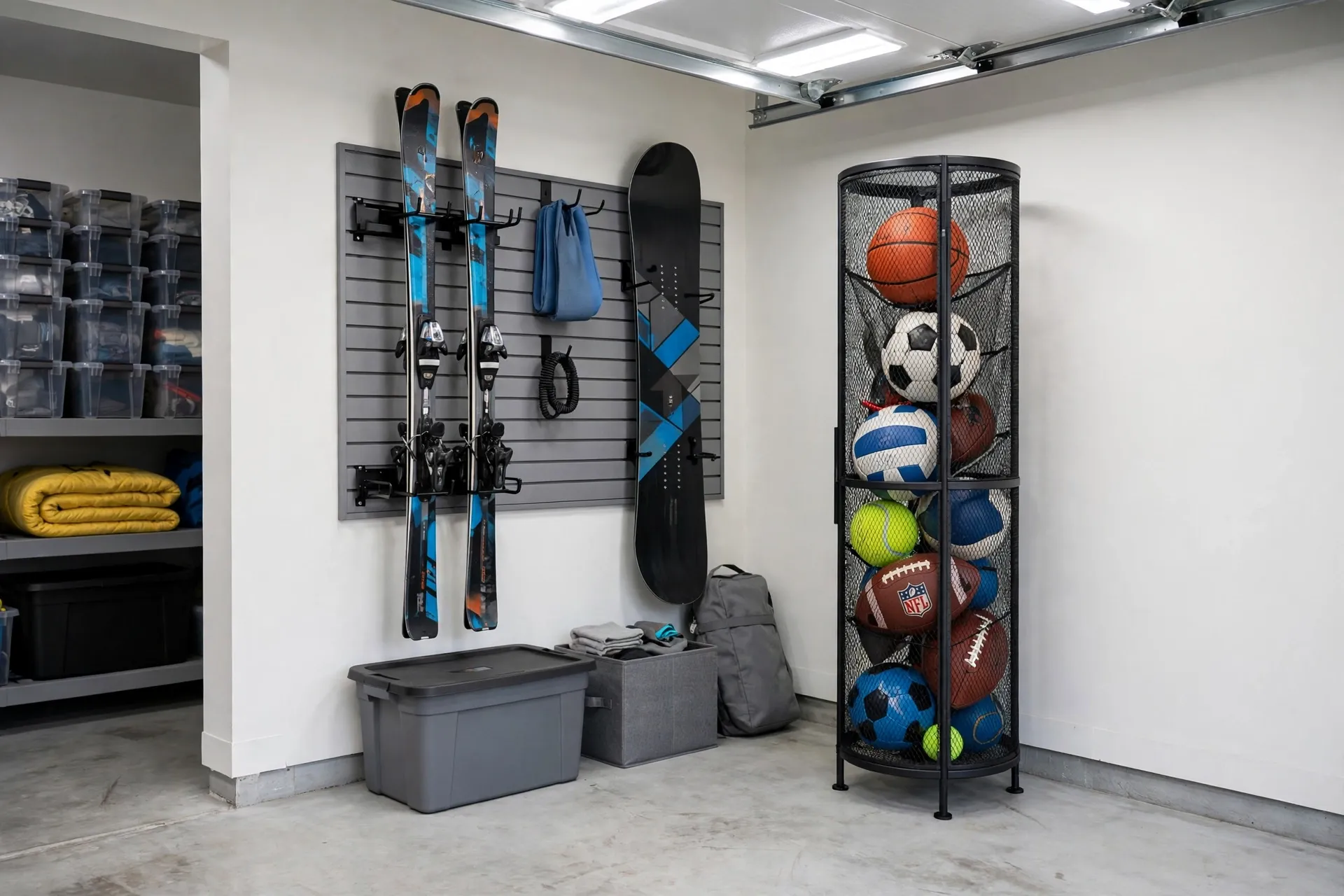
Balls, bats, skis, and boards scatter across a garage unless they have a zone. Dedicate one corner: a tall mesh organizer or bungee-cord ball holder for balls, wall racks for skis and boards, and a low bench for putting on gear. Everything sports lives here and nowhere else.
The zone works because it is a rule, not just furniture. When every ball has a labeled slot, kids actually put them back. Put the zone near the garage door so gear goes straight outside without crossing the car.
6. Set up a compact workbench
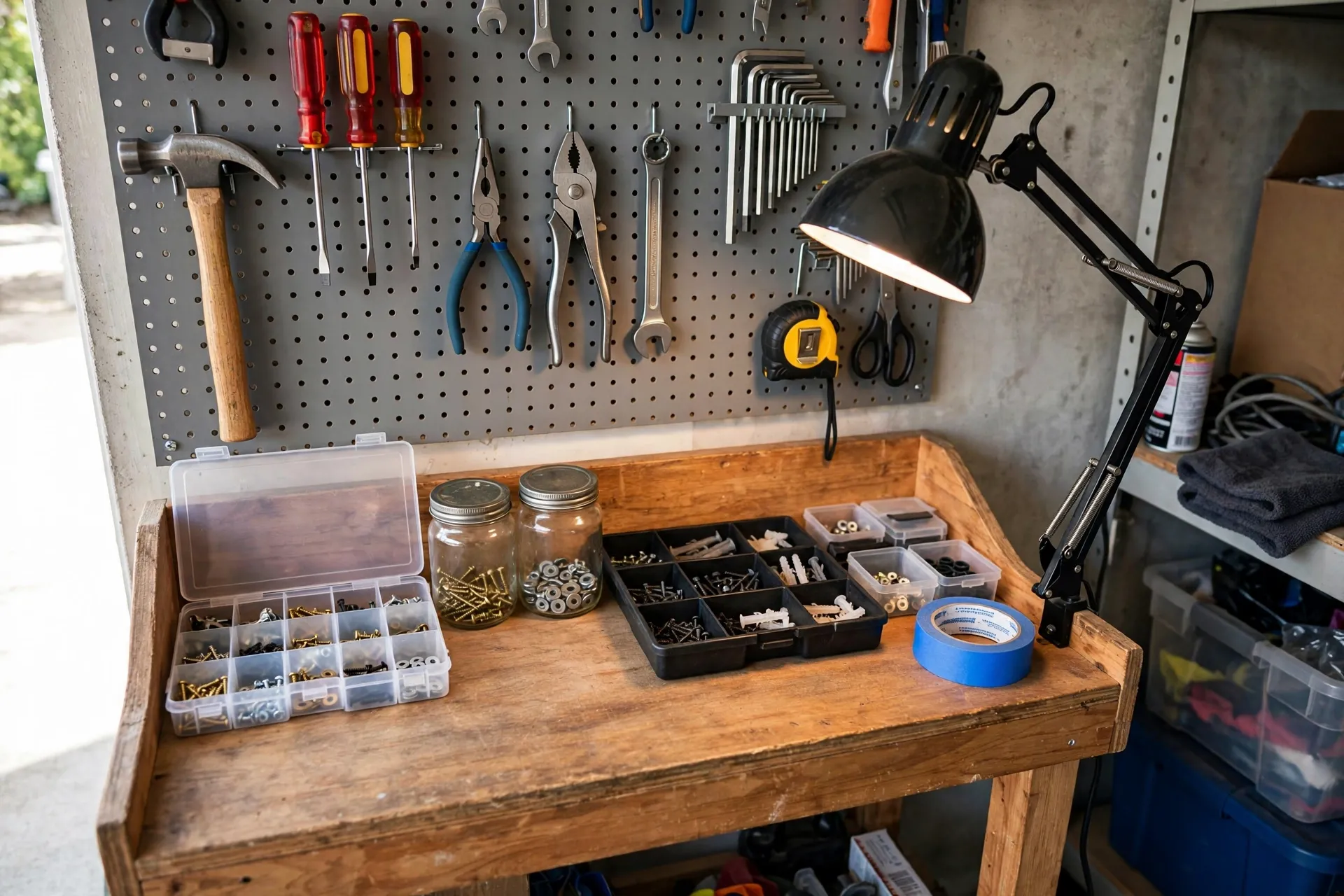
A workbench does not need to be big; a 4-foot bench against the wall handles most home repairs. Mount a pegboard above it for hand tools, add a small parts organizer and a task lamp, and keep the bench top clear as a rule. A cluttered workbench is just a shelf you cannot use.
If floor space is truly zero, a fold-down wall bench gives you a work surface that disappears. It needs solid stud mounting and a sturdy leg or bracket, but it reclaims the floor completely when folded.
7. Use heavy-duty shelving for labeled bins
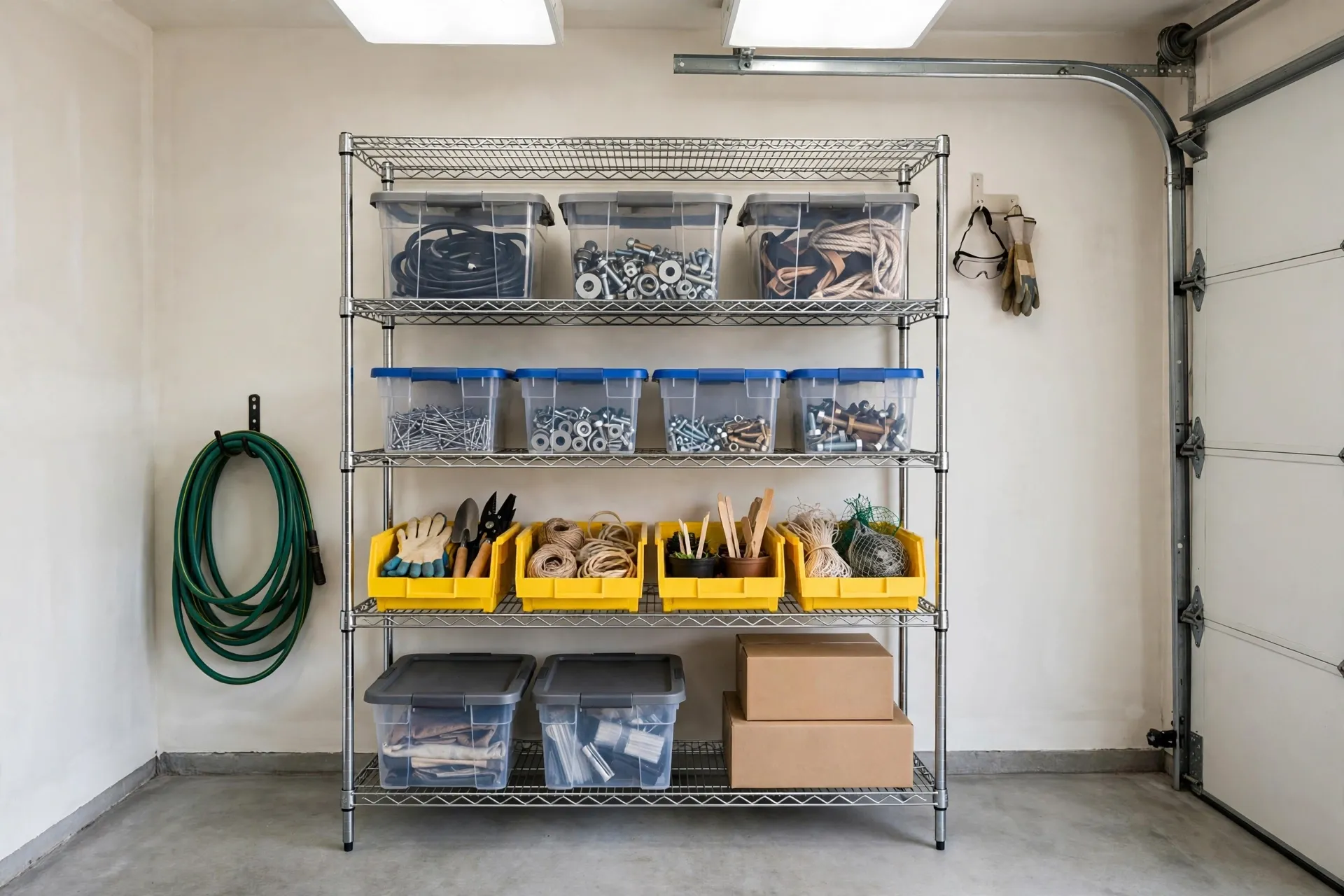
Open metal shelving, the 5-tier kind rated for several hundred pounds per shelf, is the workhorse of garage storage. Fill it with clear labeled bins sorted by category: automotive, gardening, holiday, camping. Clear bins mean you see contents without opening them.
Label every bin on two sides with a label maker or masking tape and marker. Sort by how often you need things: daily items at chest height, seasonal up high, heavy items low. Anchor tall shelving to the wall; loaded shelves are tippy.
8. Store lawn equipment vertically
Mowers, trimmers, and leaf blowers take awkward floor space. Wall brackets hold trimmers and blowers vertically; a mower lift or a simple wall bumper lets the mower tuck tight against the wall. Fold-down-handle mowers halve their footprint.
Drain fuel or add stabilizer before long storage, and keep fuel in an approved can in a ventilated spot away from the water heater. Small engine maintenance once a year prevents the spring ritual of a mower that will not start.
9. Build a garden tool station
Rakes, shovels, and pruners belong together on a wall-mounted tool rack near the garage door you use for yard work. A simple rack with slots holds long-handled tools upright in inches of wall space. Hang a small bucket for hand tools and gloves beside it.
Clean tools before they go back; dried mud in the garage becomes dust in the house. A stiff brush hung on the rack makes the habit easy.
10. Corral recycling and trash smartly
Bins for trash and recycling eat floor space by the garage door, which is exactly where they are needed. Stackable slim bins or a wall-mounted bag holder keep them contained. If your municipality allows it, store bins outside and keep only a small indoor sorting station.
Break down boxes immediately; a flattened box takes a tenth of the space. A box cutter hung by the bins makes it a five-second habit instead of a weekend project.
11. Create a car-care kit station
Keep all car supplies, wash soap, microfiber towels, tire gauge, jumper cables, in one bin or on one shelf near the car. When everything lives together, washing the car or checking tire pressure takes minutes instead of a treasure hunt.
Include an emergency kit: jumper cables or a jump pack, a flashlight, a first-aid kit, and a blanket. Check the jump pack’s charge twice a year; a dead emergency tool is decoration.
12. Use magnetic strips for small metal tools
Magnetic strips on the wall above the workbench hold screwdrivers, wrenches, and drill bits where you can see and grab them. They are cheaper than a tool chest drawer system and keep small tools from vanishing into the bench clutter.
Mount strips at eye level and keep the heaviest tools on hooks instead; magnets have limits. Wipe metal tools lightly with oil before hanging in humid climates to slow rust.
13. Hang extension cords and hoses properly
Cords and hoses tangled on the floor are a tripping hazard and they kink. Wall-mounted cord reels or simple large hooks keep them coiled and off the ground. A reel near the garage door covers both the driveway and the yard.
Coil cords in loose loops, not tight wraps; tight coiling damages the insulation over time. Label cords by length with tape so you grab the right one without uncoiling three.
14. Zone the garage with floor markings
Painter’s tape or floor paint marking zones, car parking spot, walkway, work zone, keeps the organization from drifting. Mark where the car goes first: pull in, mark the tire positions and door swing, and everything else organizes around it.
The walkway from the house door to the car stays clear as a rule. When the walkway fills with stuff, the whole garage has failed, no matter how nice the shelves look.
15. Connect the garage to the entry
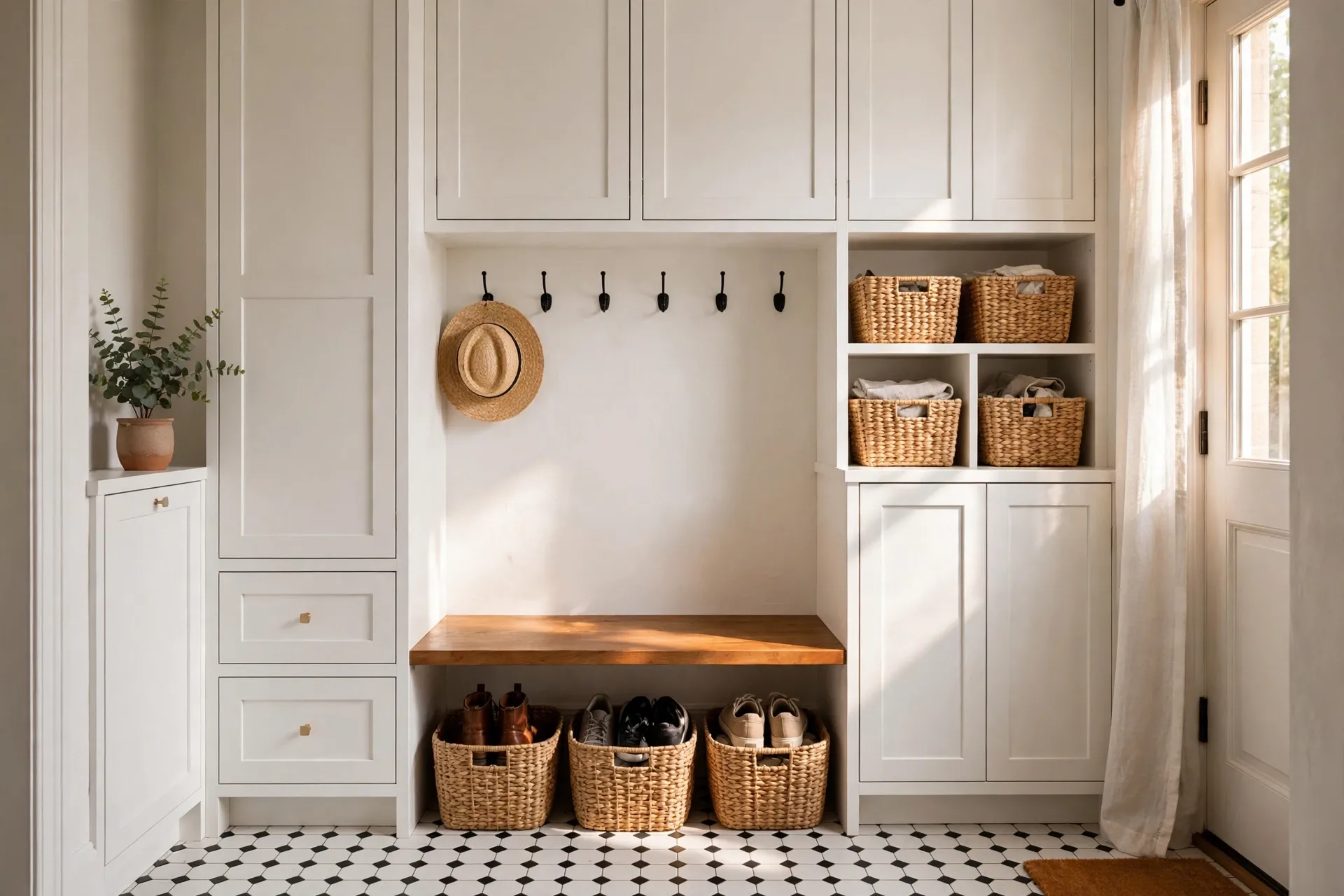
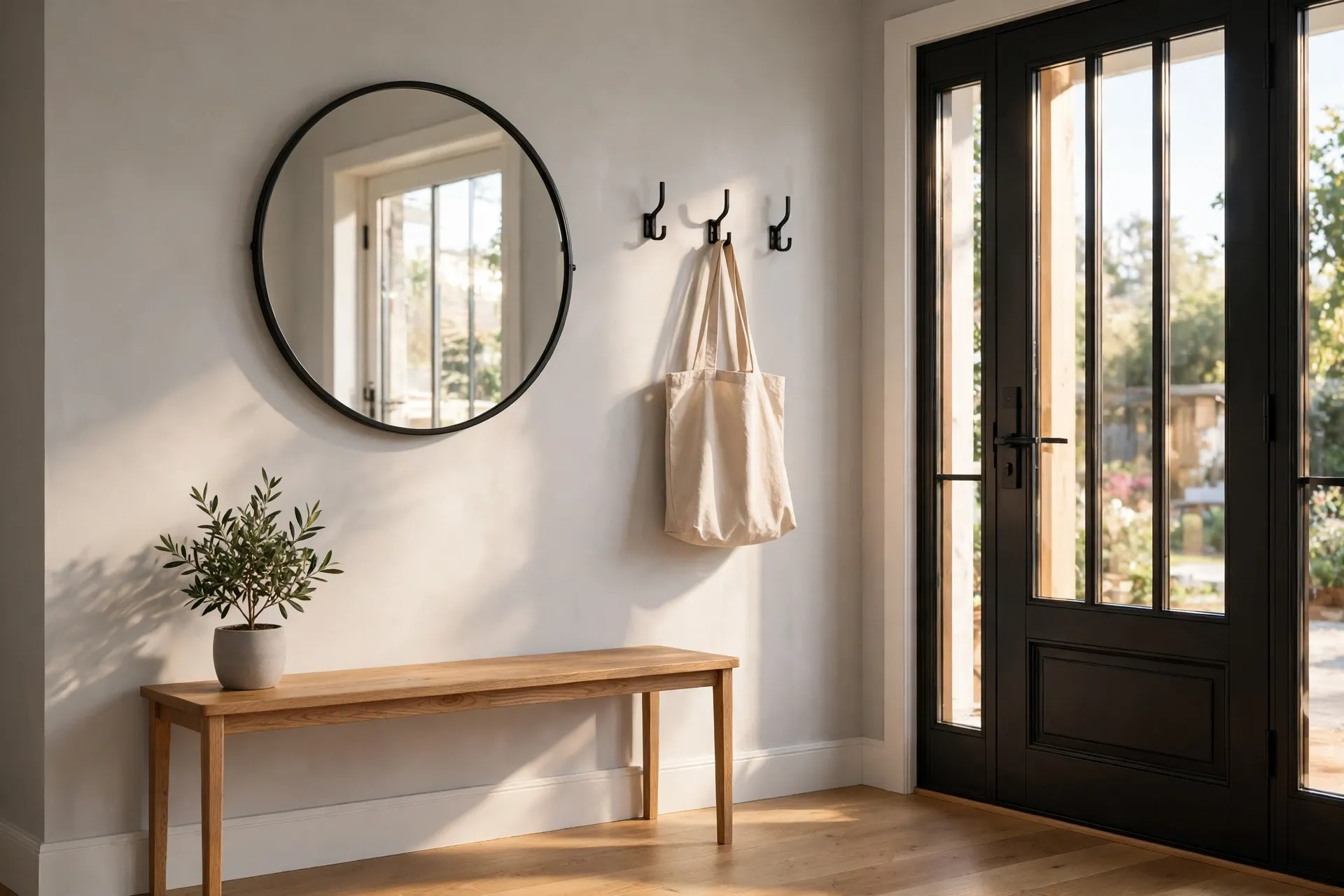
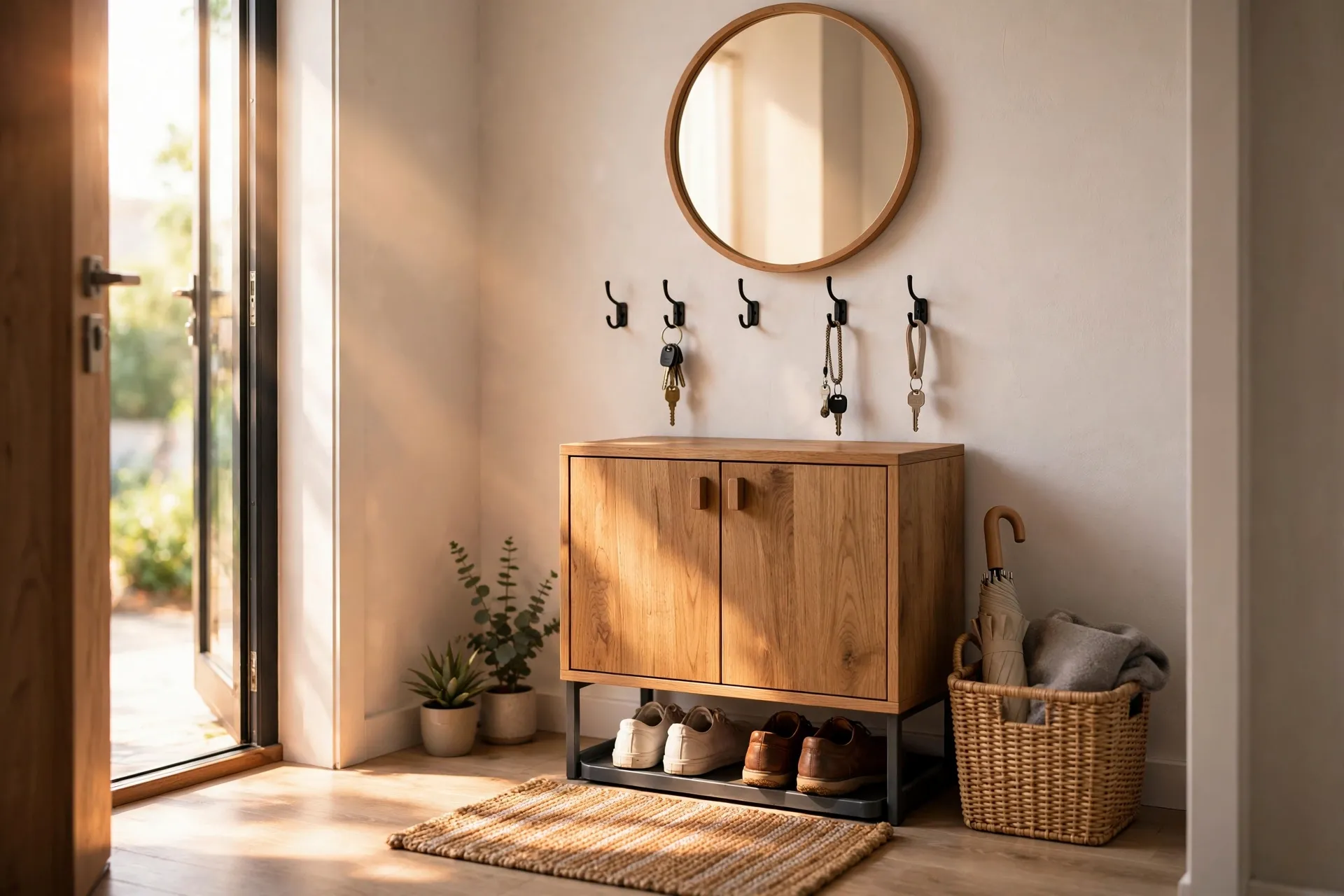
The garage usually feeds straight into the house, which makes the transition zone critical. Mudroom-style storage at the garage entry, hooks for coats, a bench, a shoe tray, stops garage clutter from migrating inside. Our mudroom cabinet ideas cover building that buffer properly.
Even a simple version works: four hooks, a boot tray, and a small bin for each family member’s outdoor gear. For the entry beyond it, modern entryway ideas keep the inside matching the newfound order.
How to Maintain Garage Order
Garages drift back to chaos without a routine. A ten-minute weekly reset, tools back on hooks, bins back on shelves, boxes broken down, prevents the slow slide. A seasonal purge each spring and fall, timed with the gear swap, keeps the keep pile honest.
The one-in-one-out rule helps: a new tool means an old one gets donated or discarded. Garages fill because everything entering stays forever.
Garage Organization Mistakes to Avoid
Do not buy storage before sorting; organizing clutter just makes neat clutter. Do not store paint or chemicals where they freeze or overheat; most have temperature limits on the label. And do not block the electrical panel, the water shutoff, or the water heater with shelving; code requires clear access and service people need it.
The most common mistake is organizing for the stuff instead of the car. Park the car first, mark its space, and let everything else fit around it. A garage that holds the car plus organized gear beats a beautiful storage room you park in the driveway for.
Once the Garage Is Sorted
A sorted garage changes how the whole house feels, because the overflow valve finally works. Turn that momentum inward: the bedroom is the next best target, and boho bedroom decor ideas show how to make it calm without a big budget. One organized space tends to pull the rest along.
Looking for more ideas? Browse our storage & organization stories.
Save to Pinterest