In this article
- Clear Out Everything That Is Not for Guests
- Give Guests Real Closet Space
- Empty Two Drawers
- Set Up a Proper Bedside
- Provide a Luggage Spot
- Stock the Bathroom They Will Use
- Make the Bed Like It Matters
- Add One Comfortable Seat
- Create a Welcome Tray
- Use Under-Bed Storage for the Room’s Own Supplies
- How to Keep It Guest-Ready Between Visits
- Mistakes to Avoid
- Furnishing After Organizing
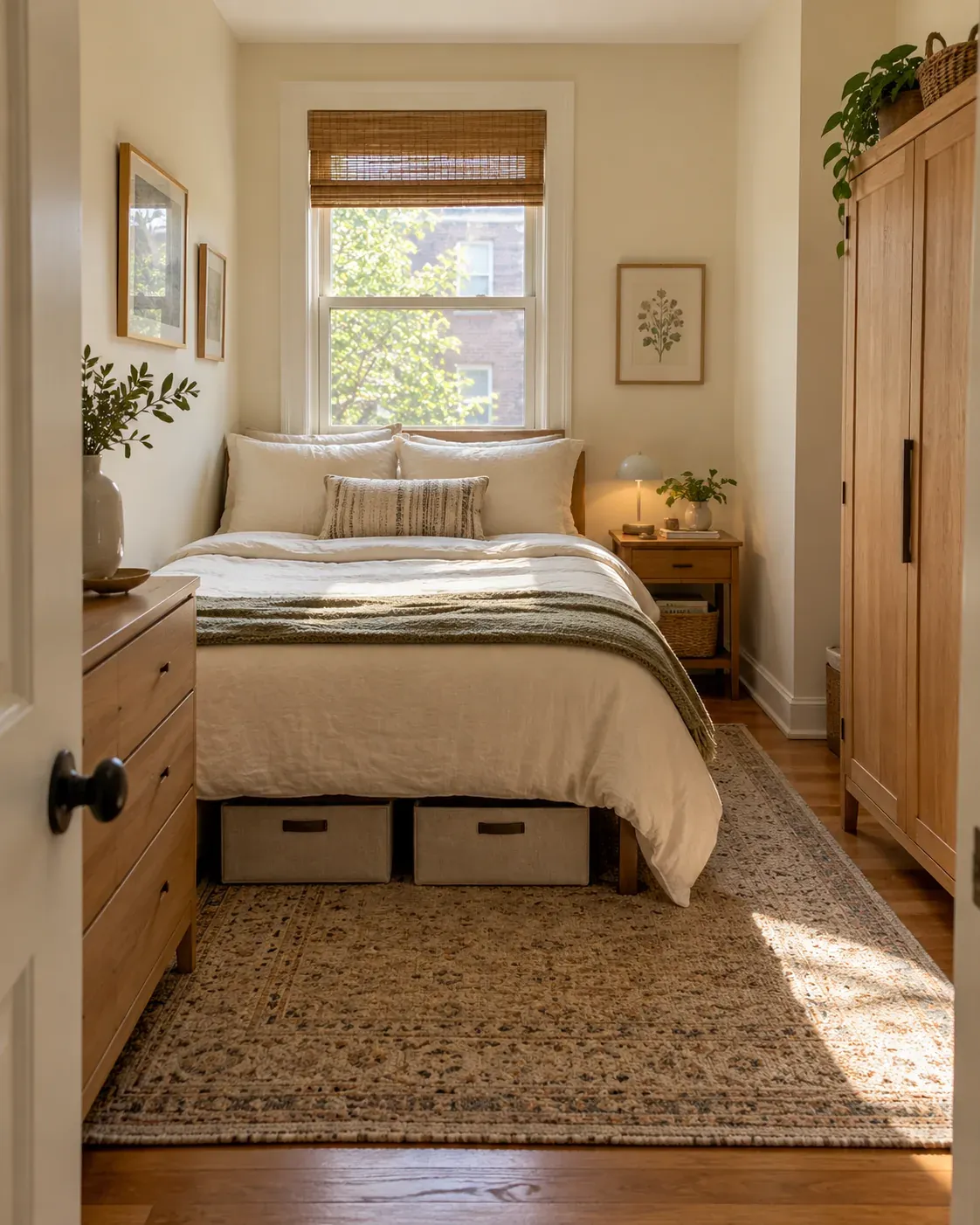
Most guest rooms fail in the same way: they become the place where everything without a home ends up, and then a bed is added. Guests notice. They notice the treadmill in the corner, the closet full of your off-season clothes, and the nightstand buried under chargers and mail. Organizing a guest room means reversing that: the room’s first job is hosting, and storage is the guest, not the host.
The standard is simple. A guest should be able to walk in, put down a suitcase, hang up clothes, charge a phone, and find a towel without asking you a single question. Everything in this guide serves that standard.
Clear Out Everything That Is Not for Guests
Start by removing anything that serves you instead of a visitor: the exercise equipment, the wrapping supplies, the box of cables, the clothes you meant to donate. Be honest about what lives there because it is convenient versus because it belongs. If you have not touched it in six months, it does not live in the guest room anymore.
Find those items real homes or let them go. A guest room that doubles as overflow storage never feels restful, no matter how nice the bedding is. This single step does more for the room than any purchase.
Give Guests Real Closet Space
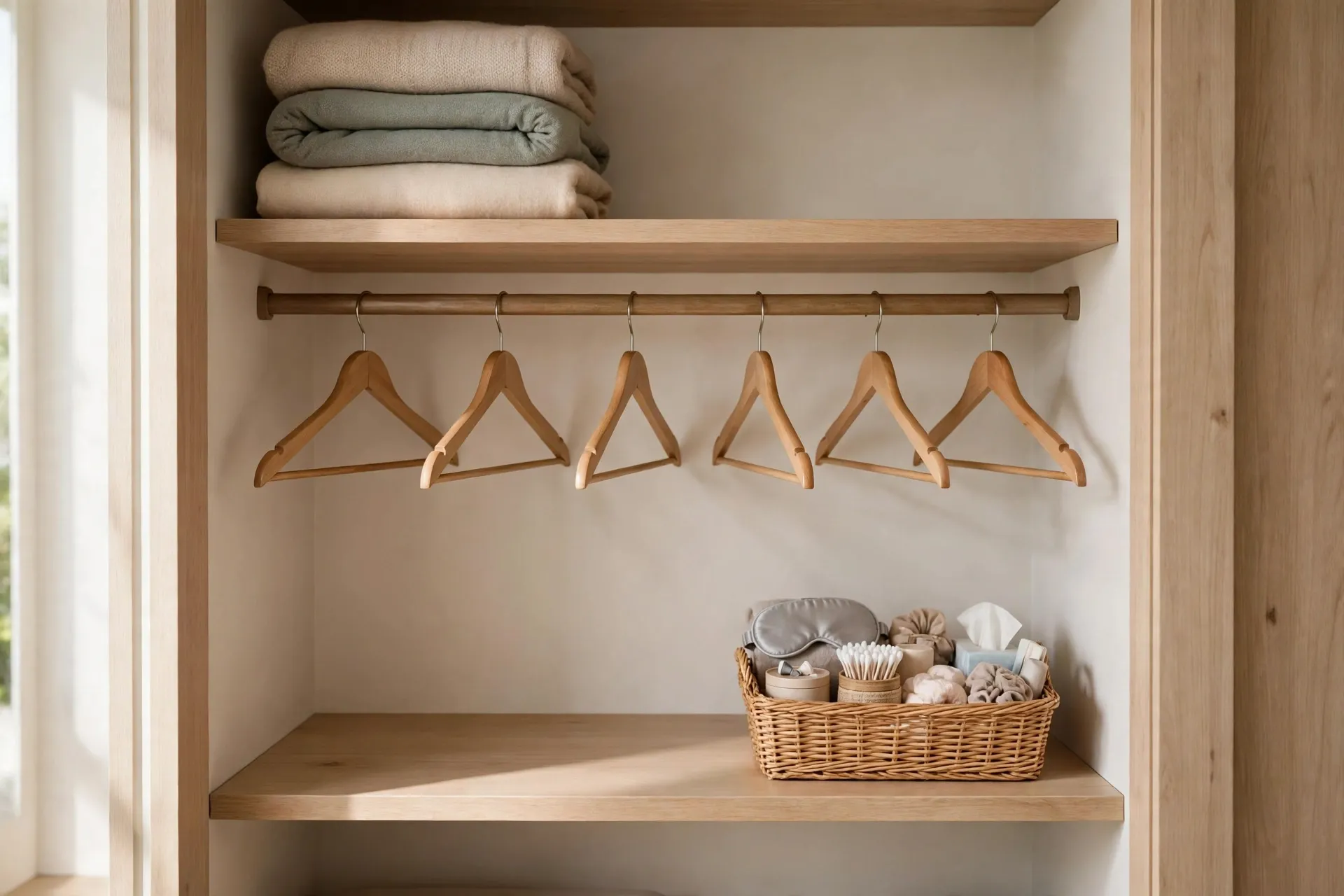
An empty section of closet rod with ten to twelve hangers is the minimum. Guests should not have to drape clothes over a chair or live out of a suitcase for a weekend. Clear one shelf for folded items and leave it visibly empty; a shelf packed with your linens sends the opposite message.
If the closet must share space with your storage, contain yours to one side in closed bins and leave the guest side completely clear. A curtain or even a neat row of bins as a divider keeps the boundary obvious.
Empty Two Drawers
Two empty drawers in the dresser give guests a place for folded clothes and personal items. Empty means empty, not “mostly empty with some of your stuff pushed to the back.” If the dresser is full of your things, move them; the guest room dresser is guest furniture.
Line the drawers with fresh liner if the old one is worn. It is a two-dollar detail that makes the drawers feel intentionally prepared rather than hastily cleared.
Set Up a Proper Bedside
Each side of the bed that a guest might use needs three things: a lamp they can reach without getting up, an outlet or charging cable, and a clear surface for a glass of water, a phone, and a book. Test it yourself: lie in the bed and check that the lamp switch, the outlet, and the surface are all within arm’s reach.
Add a small carafe of water and a glass. It is the detail guests mention most, because it means they do not have to navigate an unfamiliar kitchen at midnight. A simple clock or a card with the Wi-Fi password finishes the setup.

Provide a Luggage Spot
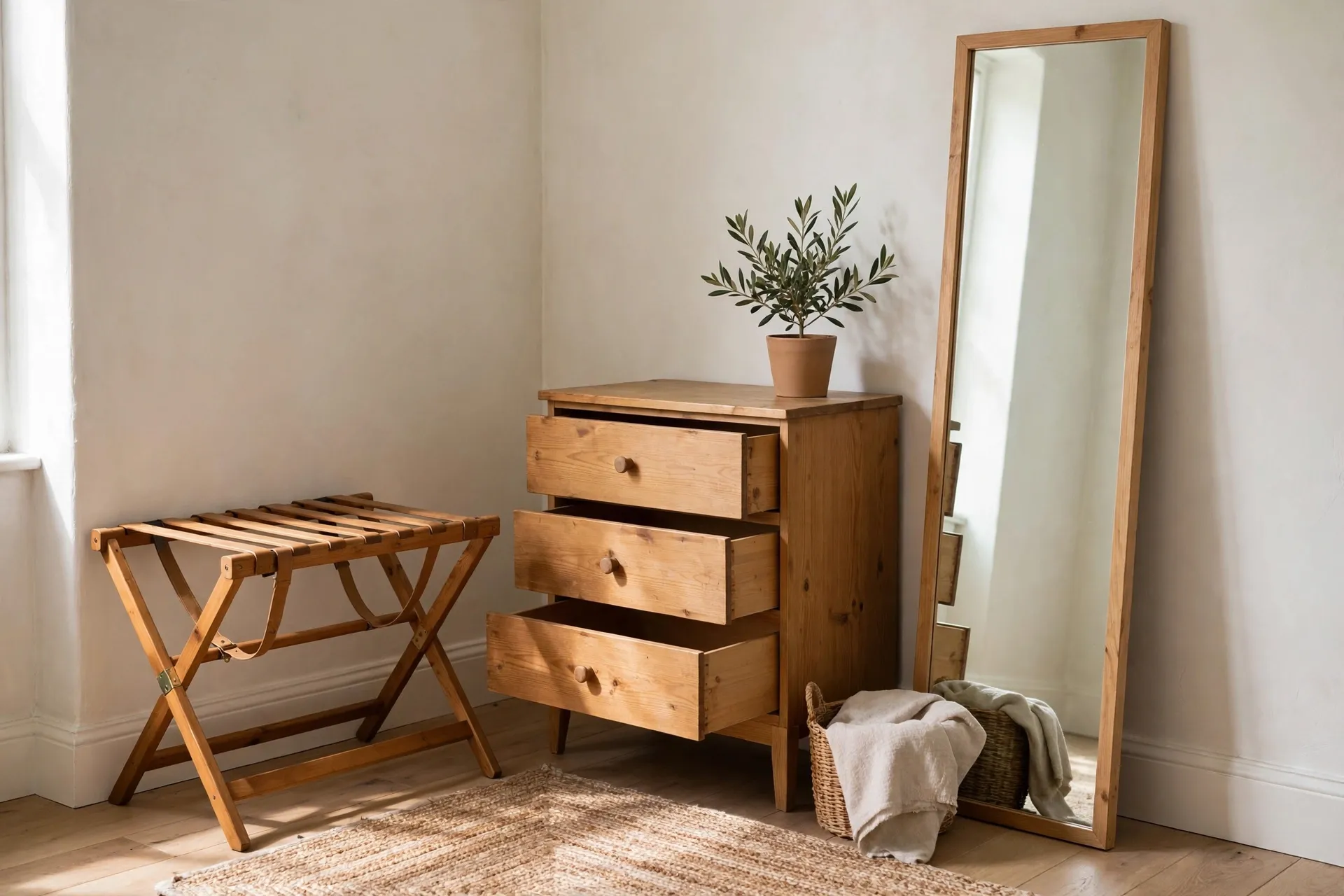
Nobody wants to hoist a suitcase onto a high bed or leave it blocking the doorway. A folding luggage rack in the corner, or a sturdy bench at the foot of the bed, gives the suitcase a home. If space is truly tight, clear a 3x3 foot area of floor and say so; an expected floor spot beats an awkward improvisation.
Keep the rack folded and leaning in the closet when no guests are coming, then set it out before they arrive. It is a five-second setup that signals the room was prepared for them specifically.
Stock the Bathroom They Will Use
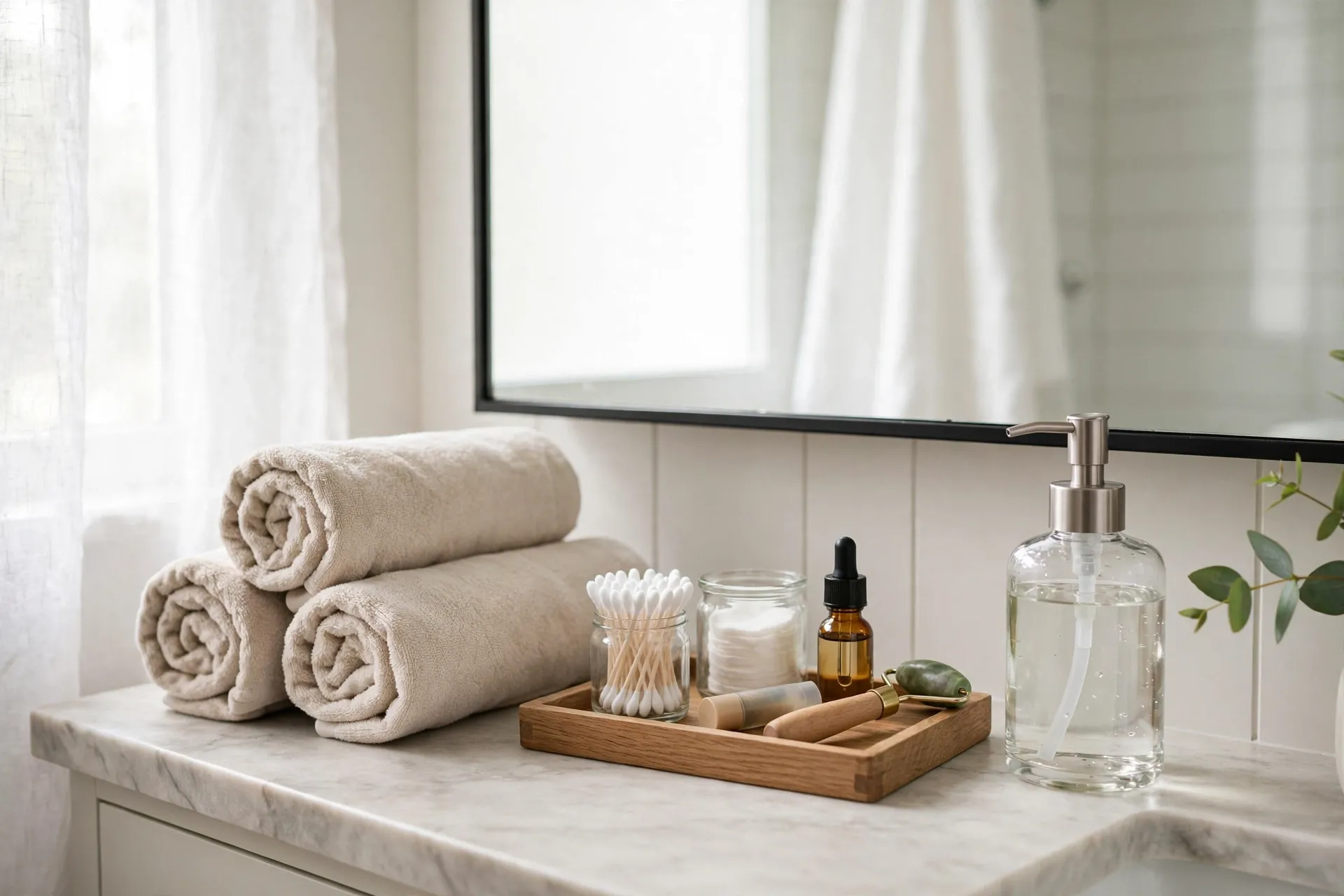
If guests have a dedicated bathroom, clear the counter except for their essentials: hand soap, a spare toothbrush and toothpaste, shampoo and conditioner, and a stack of clean towels. If they share your bathroom, clear one shelf or a caddy for their things and say which towel is theirs.
A small basket of extras, pain reliever, tissues, a phone charger, earns disproportionate gratitude. People forget things; a host who anticipated it feels like a hotel in the best way. Our cabinet door storage ideas show how to add a slim organizer inside the guest bath vanity for these supplies.
Make the Bed Like It Matters
Fresh sheets for every guest, no exceptions, even family who “do not mind.” Make the bed fully: fitted sheet, top sheet or duvet, and pillows with cases, plus one spare blanket folded at the foot. Different guests sleep at different temperatures; the spare blanket covers everyone.
Keep a complete spare bedding set stored in the room, in the closet or under the bed, so turnover between guests takes twenty minutes. If the mattress is older, a two-inch topper transforms it for under a hundred dollars.
Add One Comfortable Seat
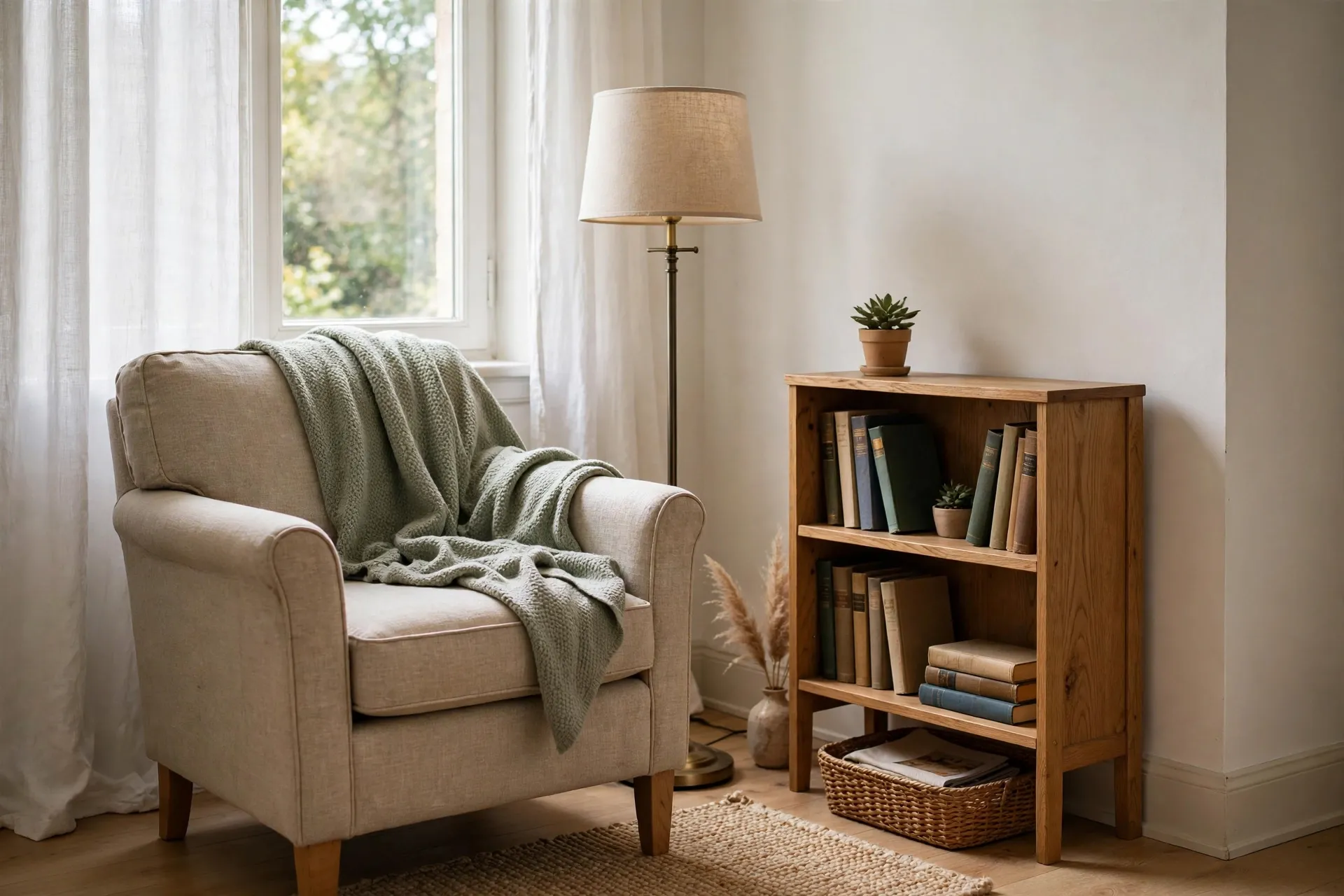
A guest room with only a bed forces visitors to sit on the sleeping surface for everything: reading, working, putting on shoes. One armchair, even a compact one, gives the room a second function. Place it near the best light with a small side table and a lamp.
In very small rooms, a sturdy ottoman or a desk chair that tucks under a small desk does the job. The point is a place to sit that is not the bed.
Create a Welcome Tray
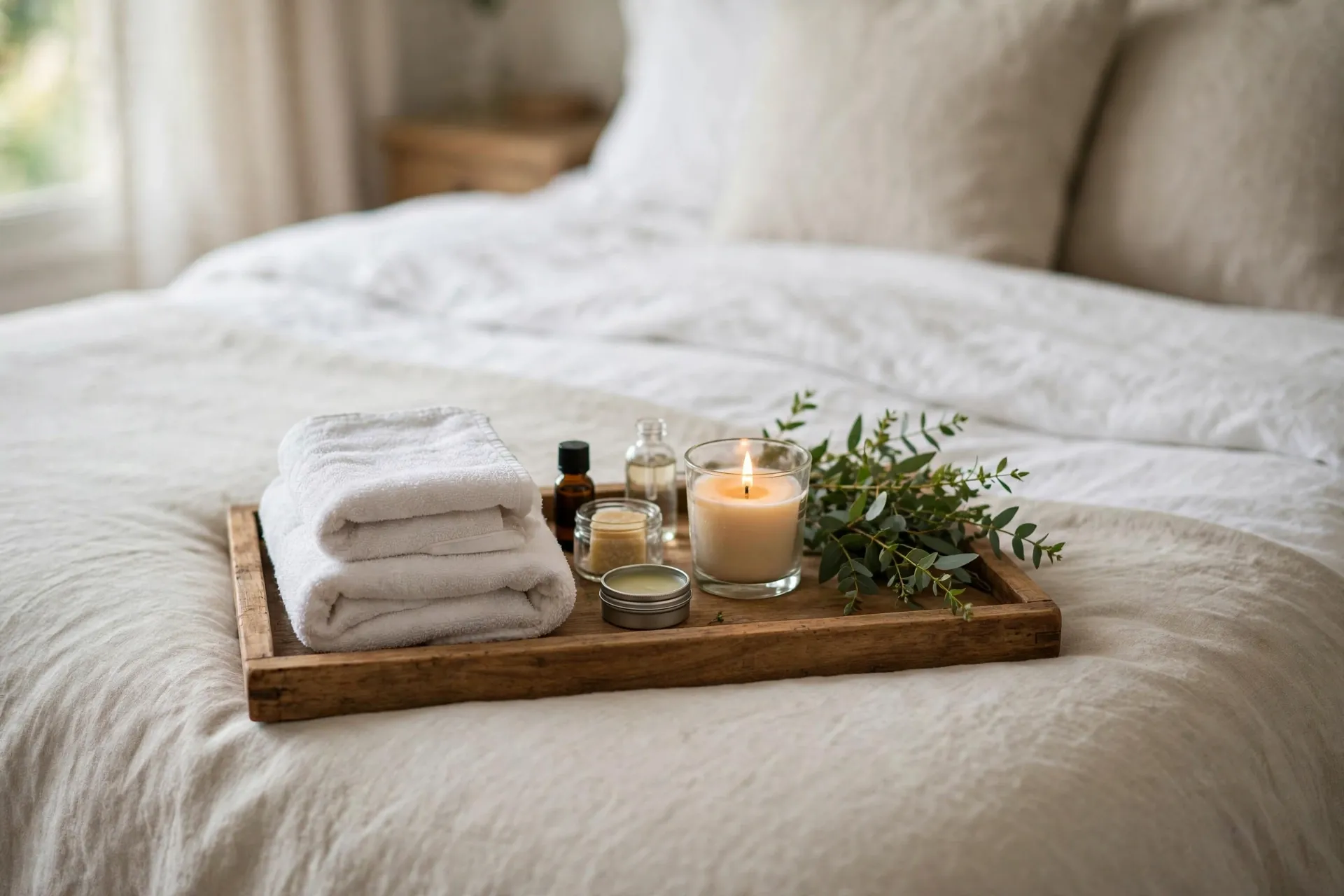
A tray on the bed or dresser with folded towels, a few toiletries, the Wi-Fi password, and a short note turns arrival into an experience. The note can be three lines: welcome, where things are, and your phone number. It answers every question a guest is too polite to ask.
Refresh the tray between guests: new towels, restocked toiletries, and a quick check that the Wi-Fi password has not changed. The whole ritual takes ten minutes and sets the tone for the visit.
Use Under-Bed Storage for the Room’s Own Supplies
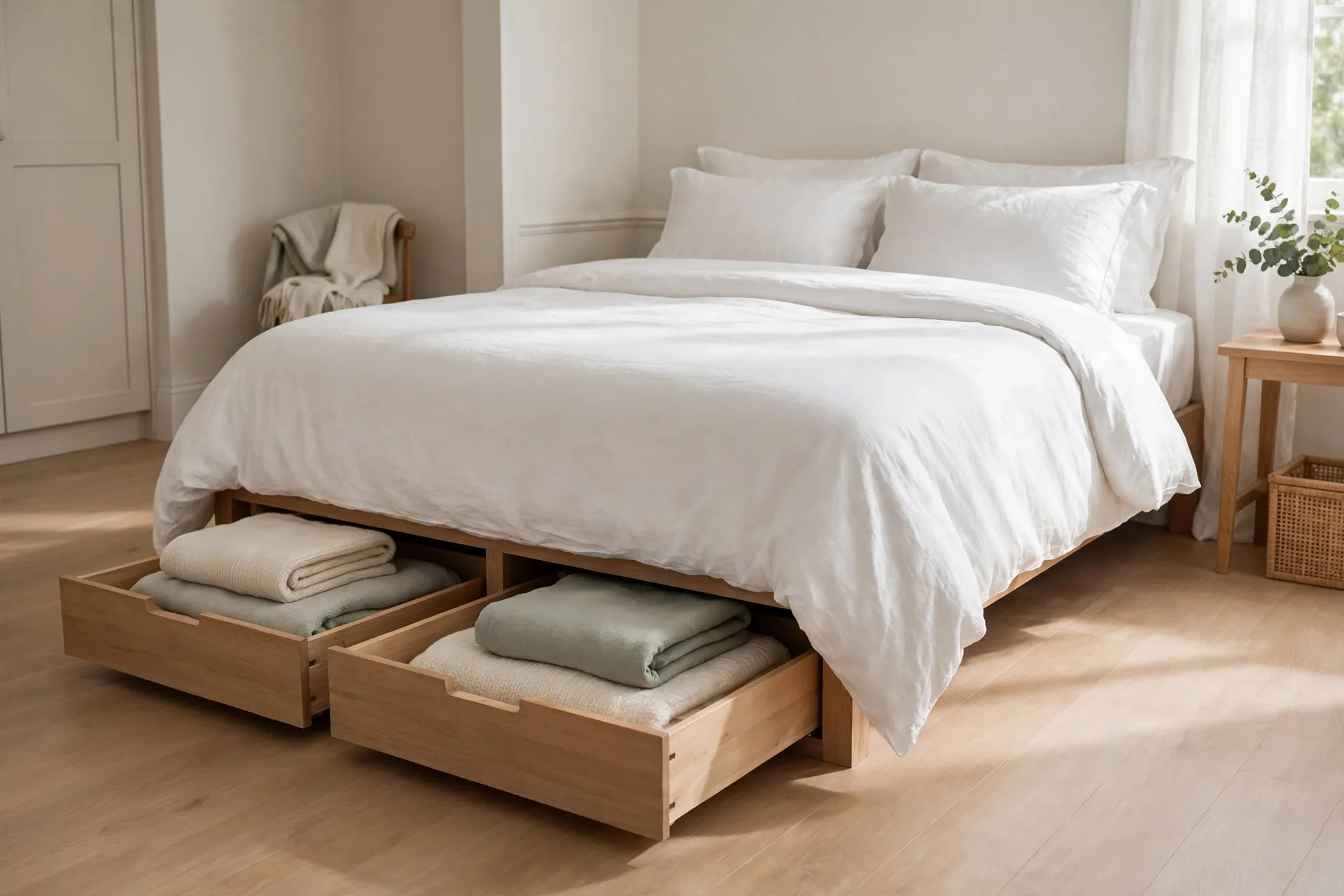
The guest room needs its own supplies: spare sheets, the extra blanket, the welcome tray restocks. Store them under the bed in shallow bins or drawers so they are in the room but invisible. Label the bins so a guest hunting for a blanket can find one without waking you.
Do not use the under-bed space for your overflow. The moment a guest finds your tax files under their bed, the illusion of a dedicated room breaks. If your home is a studio where the guest room is also the living room, read our studio vs 1-bedroom comparison for layout strategies that keep hosting workable.
How to Keep It Guest-Ready Between Visits
The organized guest room decays without a reset routine. After guests leave: strip the bed, wash everything including the mattress protector, wipe the nightstands, restock the tray, and vacuum. Twenty to thirty minutes, done the day they leave, not the day before the next guests arrive.
Between visits, keep the door closed and the room clean. A monthly five-minute check, dust the surfaces, confirm the light bulbs work, glance at the tray supplies, keeps it ready. A guest room that is always ready gets used more, because hosting stops feeling like a project.
Mistakes to Avoid
Do not decorate the guest room with your cast-offs and call it eclectic; mismatched, worn furniture reads as “you get the leftovers.” Do not leave personal items in the bathroom they will use. And do not skip the Wi-Fi password; guests will ask, and the asking is awkward for everyone.
The biggest mistake is treating the guest room as storage with a bed. If the room cannot pass the suitcase test, hang clothes, charge a phone, find a towel without asking, it is not organized yet.
Furnishing After Organizing
Once the room is organized, the furniture itself might need attention: a sagging mattress, a wobbly nightstand, or a dresser with stuck drawers. Our guide on how to choose furniture for a guest room covers what to buy and what to skip when the bones need upgrading.
Looking for more ideas? Browse our living room & bedroom stories.
Save to Pinterest