In this article
- The Short Answer: Three Budget Tiers
- Bedroom: $600 to $2,500
- Living Room: $500 to $3,000
- Kitchen: $300 to $1,200
- Bathroom: $100 to $400
- Dining Corner: $150 to $800
- Thrift vs New: Where Each Wins
- Hidden Costs Everyone Forgets
- Furnishing in Phases Beats All at Once
- How to Set a Furnishing Budget
- Furnishing Mistakes That Waste Money
- Keeping Costs Down Long Term
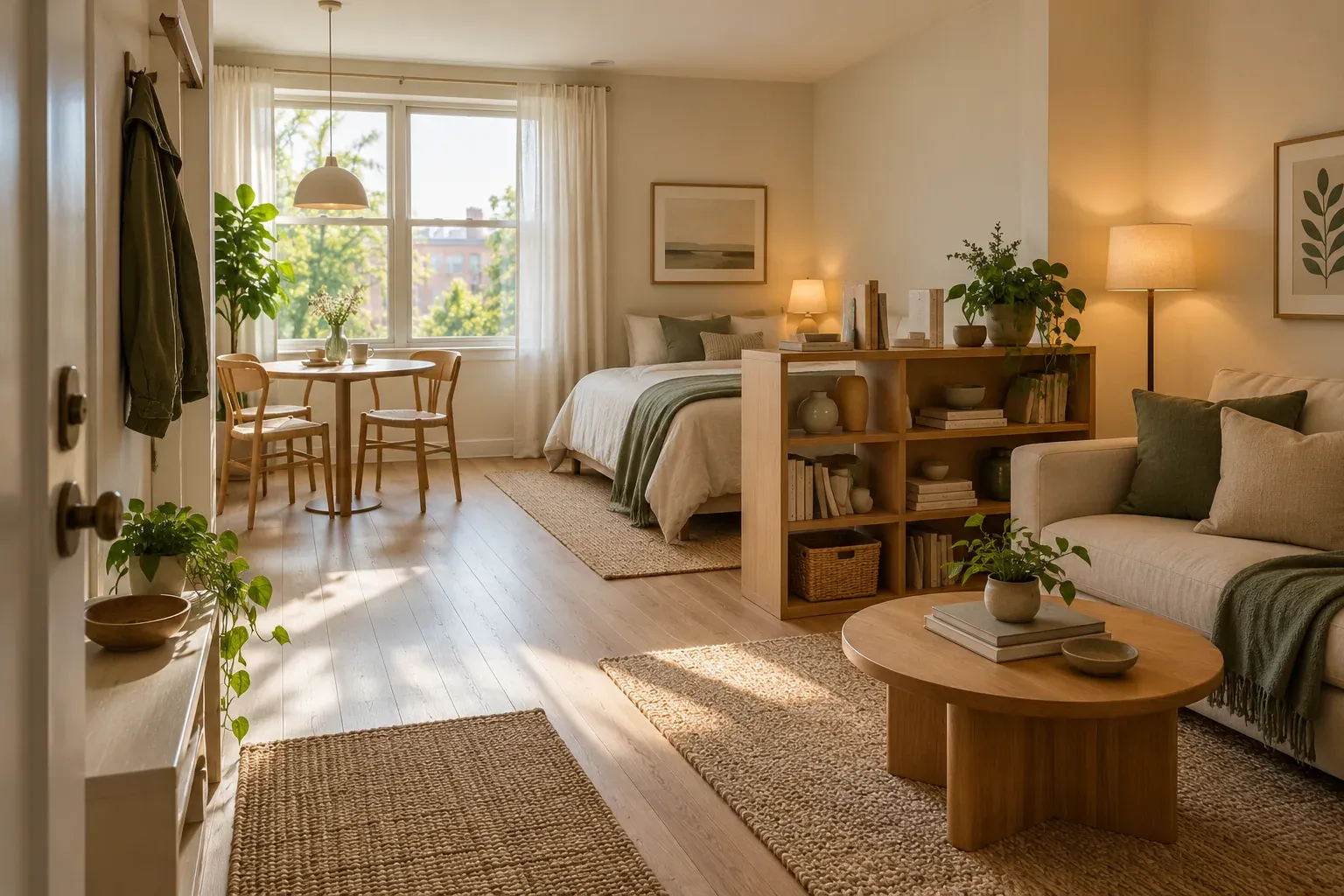
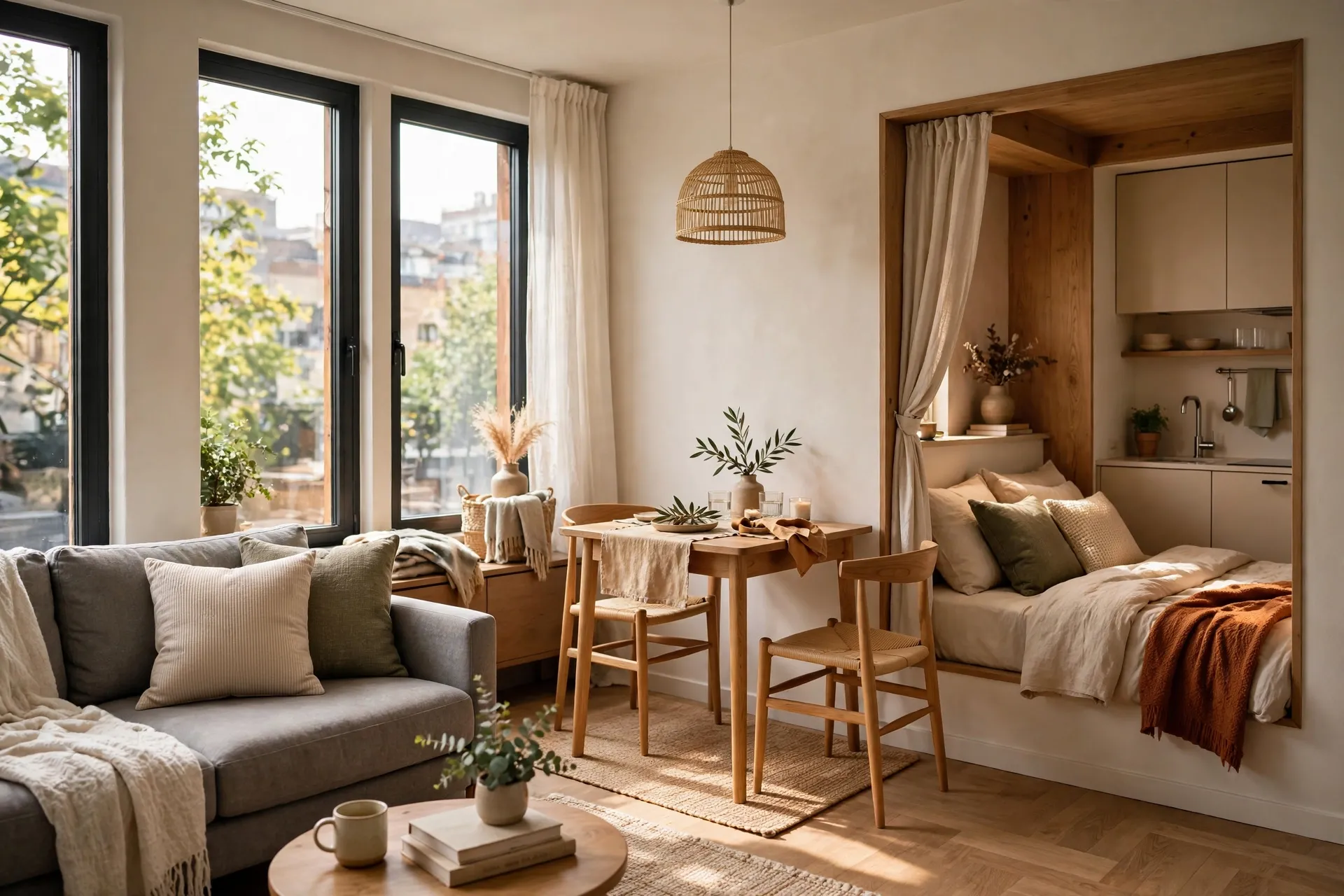
Ask how much it costs to furnish an apartment and you will hear everything from “a few hundred bucks” to “ten grand minimum.” Both can be true. A realistic range for a one-bedroom is $2,000 on a strict thrift-and-hand-me-down budget, $4,000 to $6,000 for a comfortable mix of new and used, and $8,000 to $12,000+ if you buy mostly new mid-range furniture. This guide breaks down the costs room by room, shows where thrift beats new, and flags the hidden expenses that blow up budgets. If you are planning the layout too, our studio apartment layout ideas help you furnish around the floor plan, not against it.
The Short Answer: Three Budget Tiers
The lean tier, $2,000 to $3,000, means a used or budget mattress, thrifted wood furniture, hand-me-down sofa, and dollar-store basics for the kitchen and bath. It is entirely livable; it just takes patience and a car for pickups. The comfortable tier, $4,000 to $6,000, buys a quality mattress new, a decent sofa, and solid basics everywhere with some style.
The full-new tier, $8,000 to $12,000, furnishes a one-bedroom with mid-range retail furniture throughout. Most first-time renters land between the first two tiers. Whatever your tier, spend the most where your body meets the furniture: mattress, sofa, and desk chair, in that order.
Bedroom: $600 to $2,500
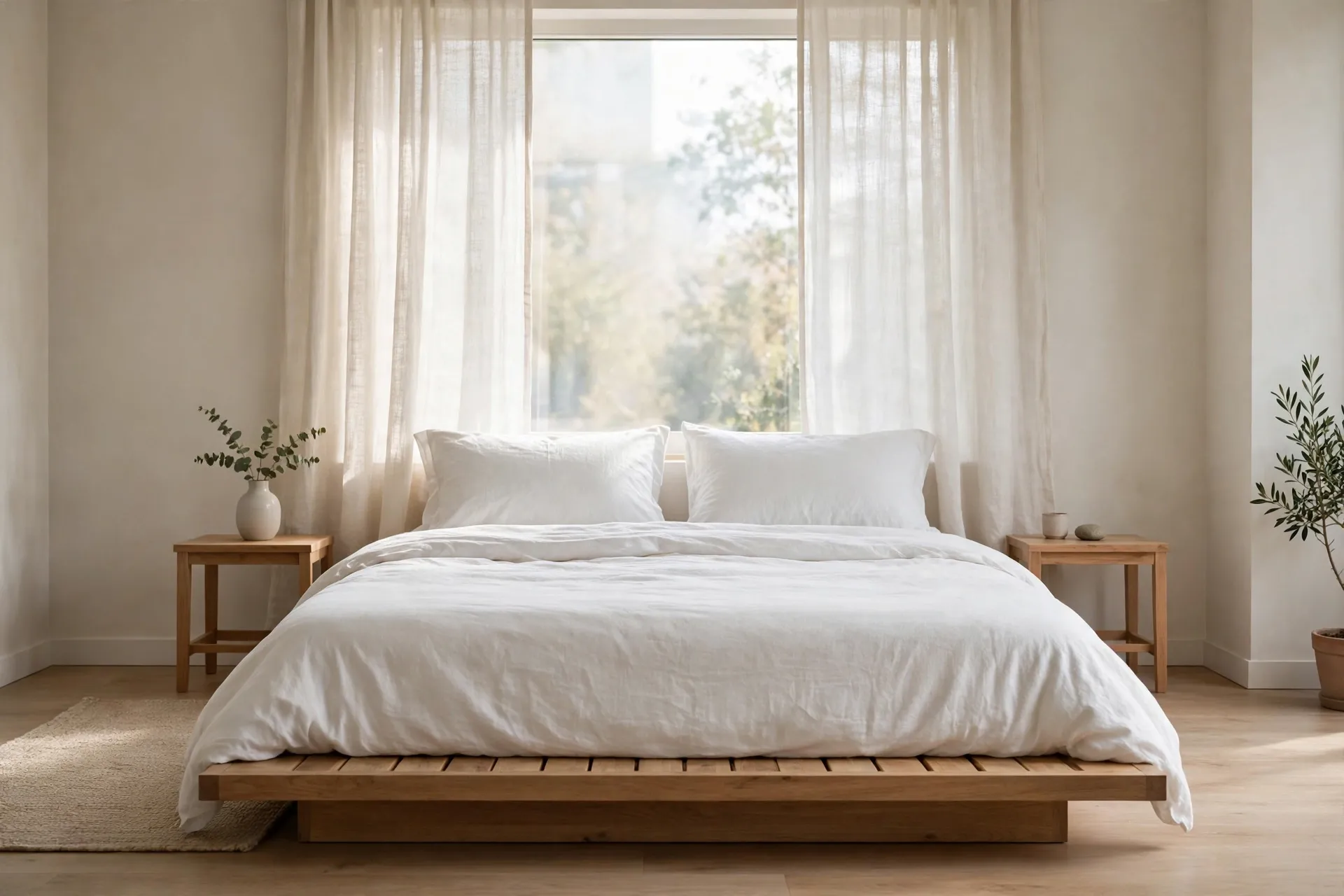
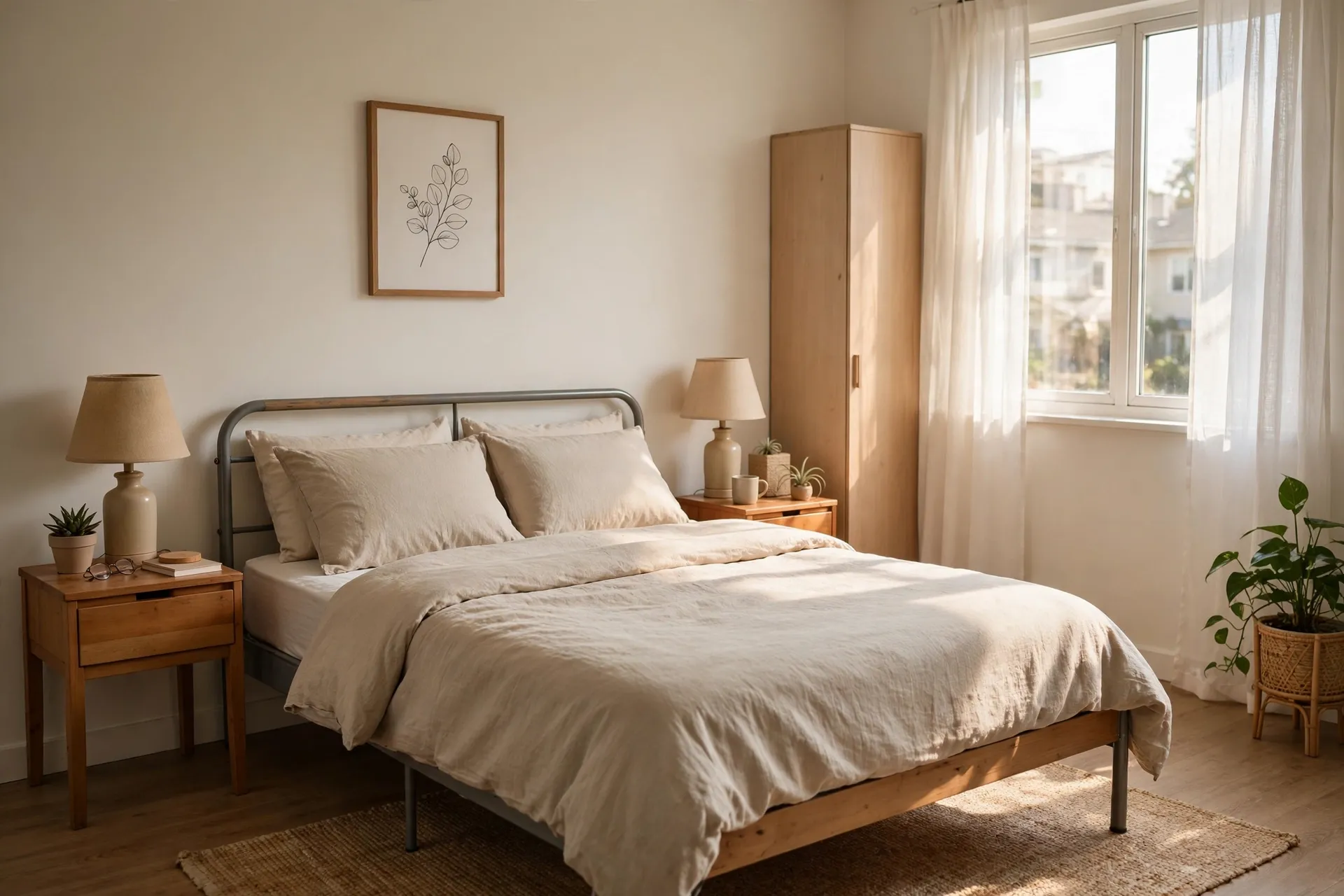
The bedroom is usually the biggest line item because the mattress dominates it. A decent queen mattress in a box runs $400 to $900; a basic metal or wood frame adds $100 to $300. Bedding, pillows, and a mattress protector add another $150 to $300, and people consistently underestimate this.
A dresser or chest runs $80 thrifted to $400 new, and nightstands $30 to $150 each. Curtains and a rug add $100 to $250. A calm, pared-back look also costs less to achieve; our minimalist bedroom furniture picks show how few pieces a bedroom really needs, which is good news for the budget.
Living Room: $500 to $3,000
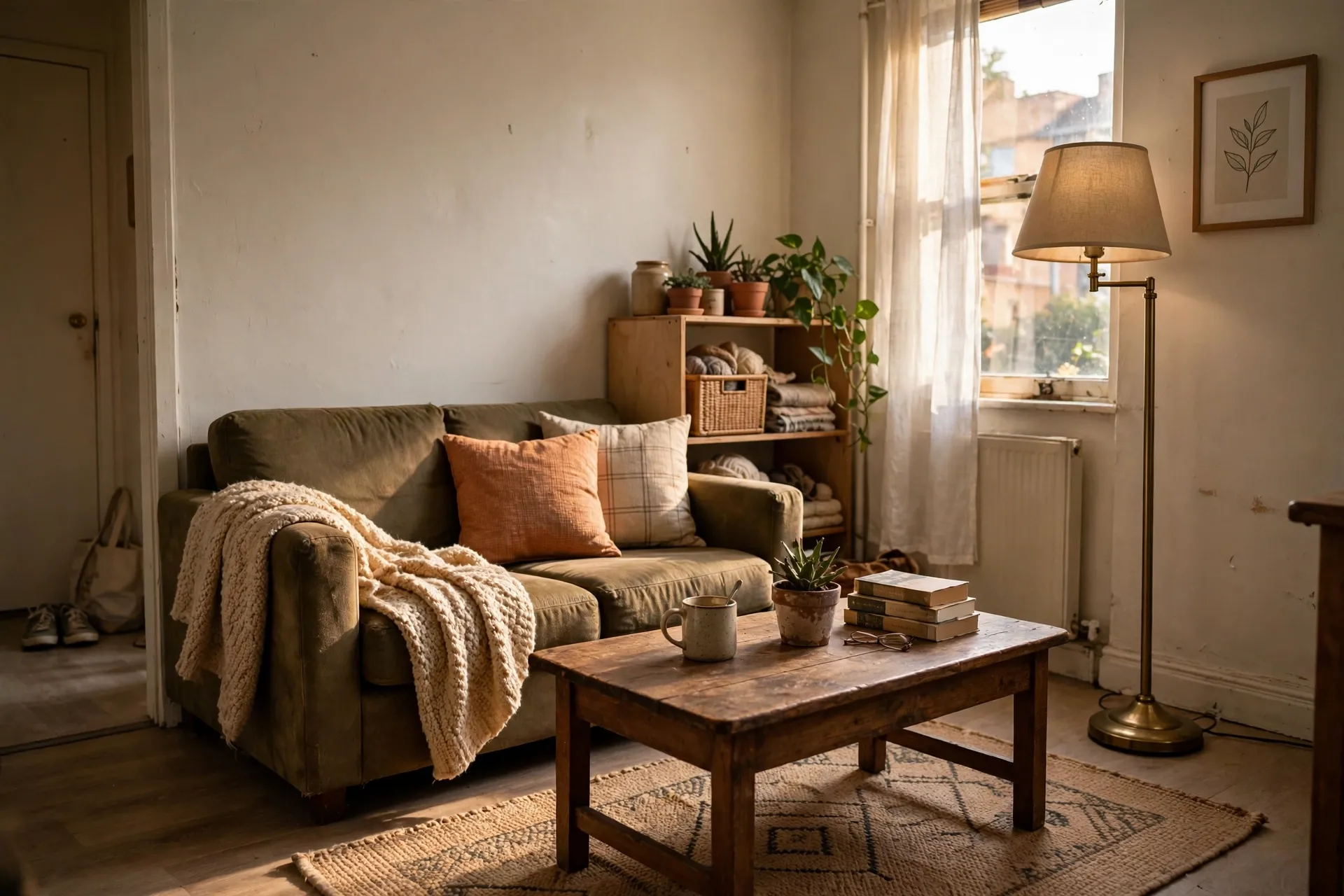
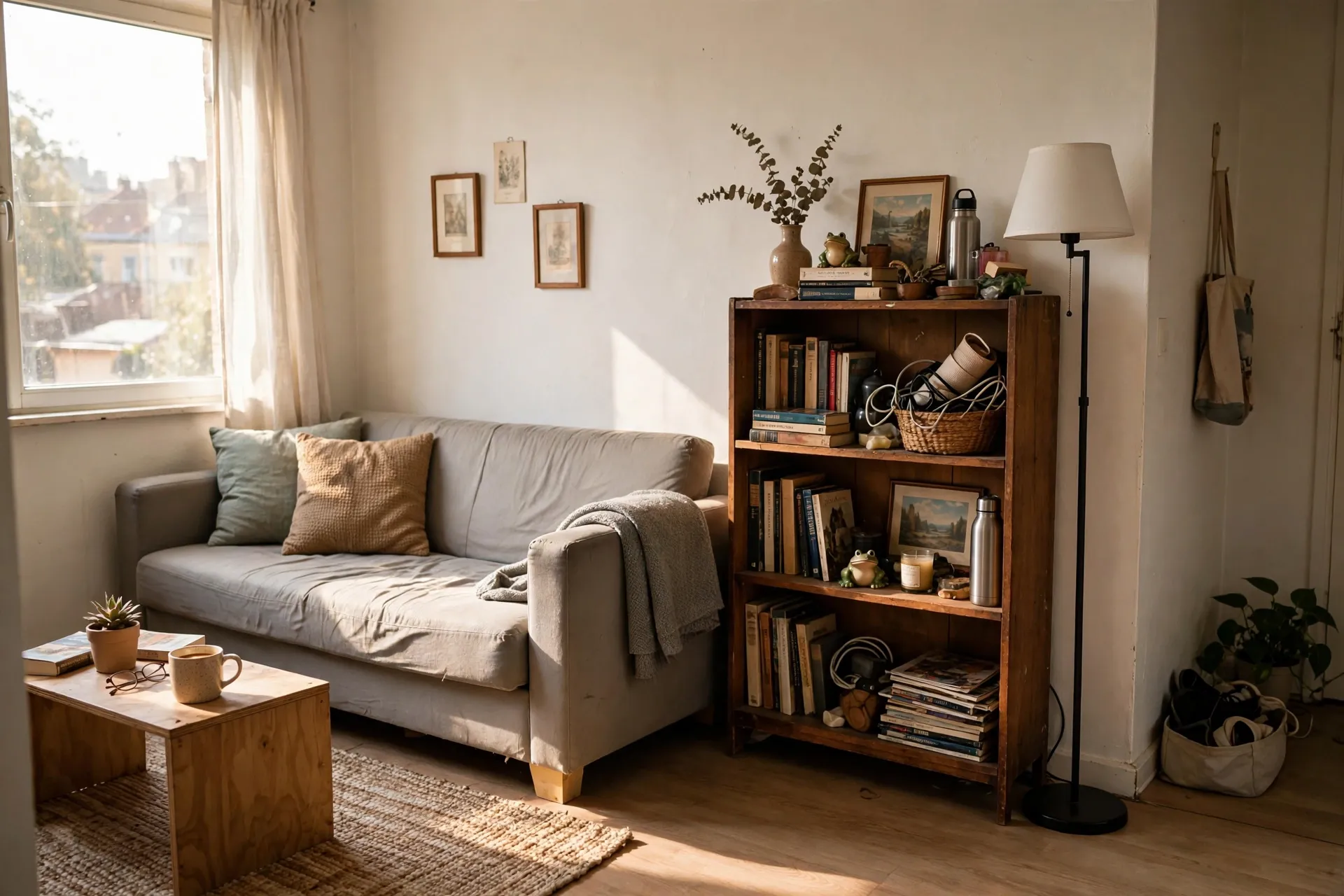
The sofa is the budget killer here: $200 for a decent used one, $800 to $2,000 new for something that lasts. Everything else is modest: a coffee table $40 to $200, a rug $80 to $300 for an 8-by-10, a floor lamp $40 to $120, and a bookshelf or media stand $50 to $200.
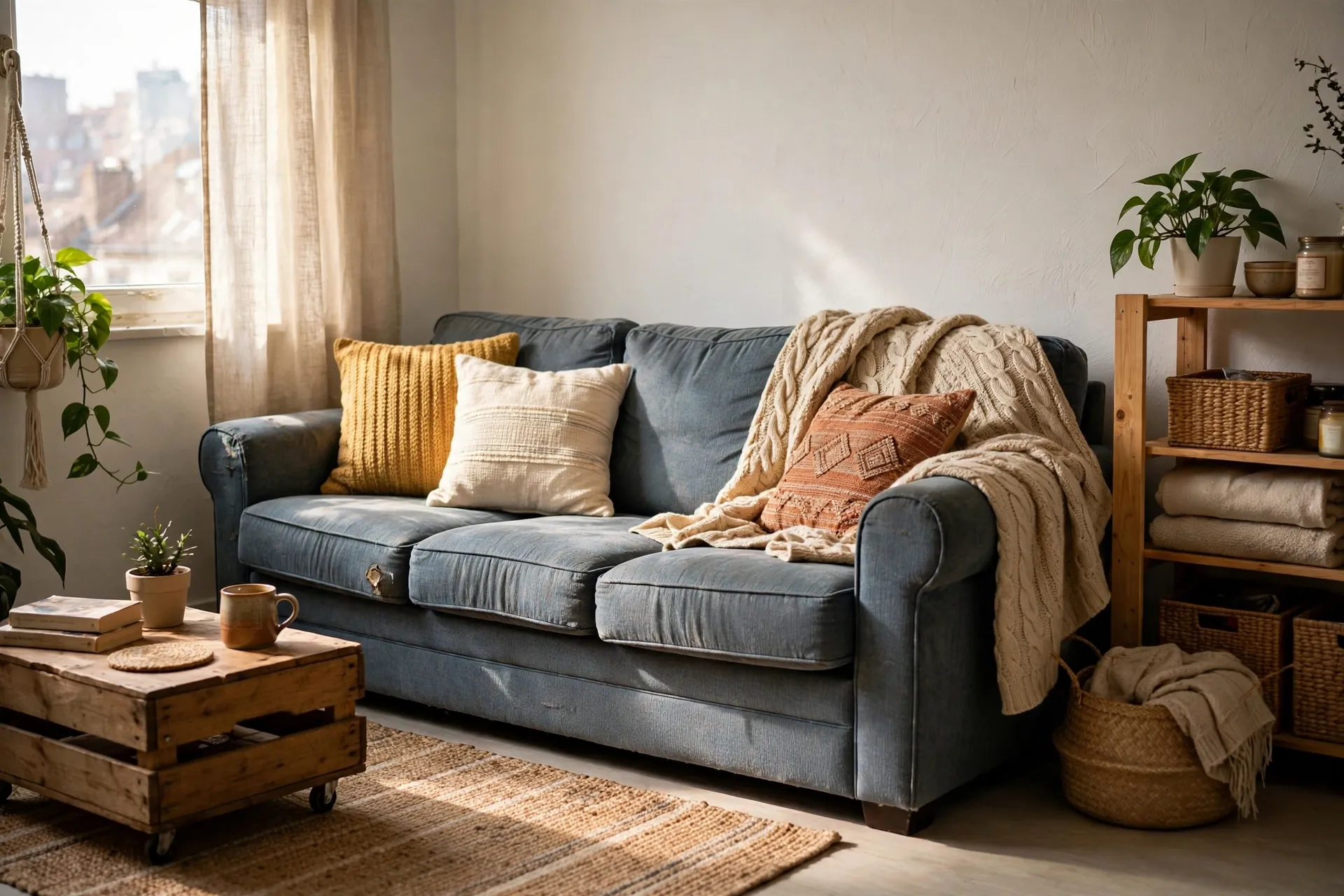
Style a used sofa with new throw pillows and a washable slipcover; a $150 slipcover makes a $200 sofa look like an $800 one. Buy the rug after the sofa, not before, so the sizes and colors actually relate. A rug that is too small, the most common mistake, makes the whole room look cheap regardless of what you spent.
Kitchen: $300 to $1,200
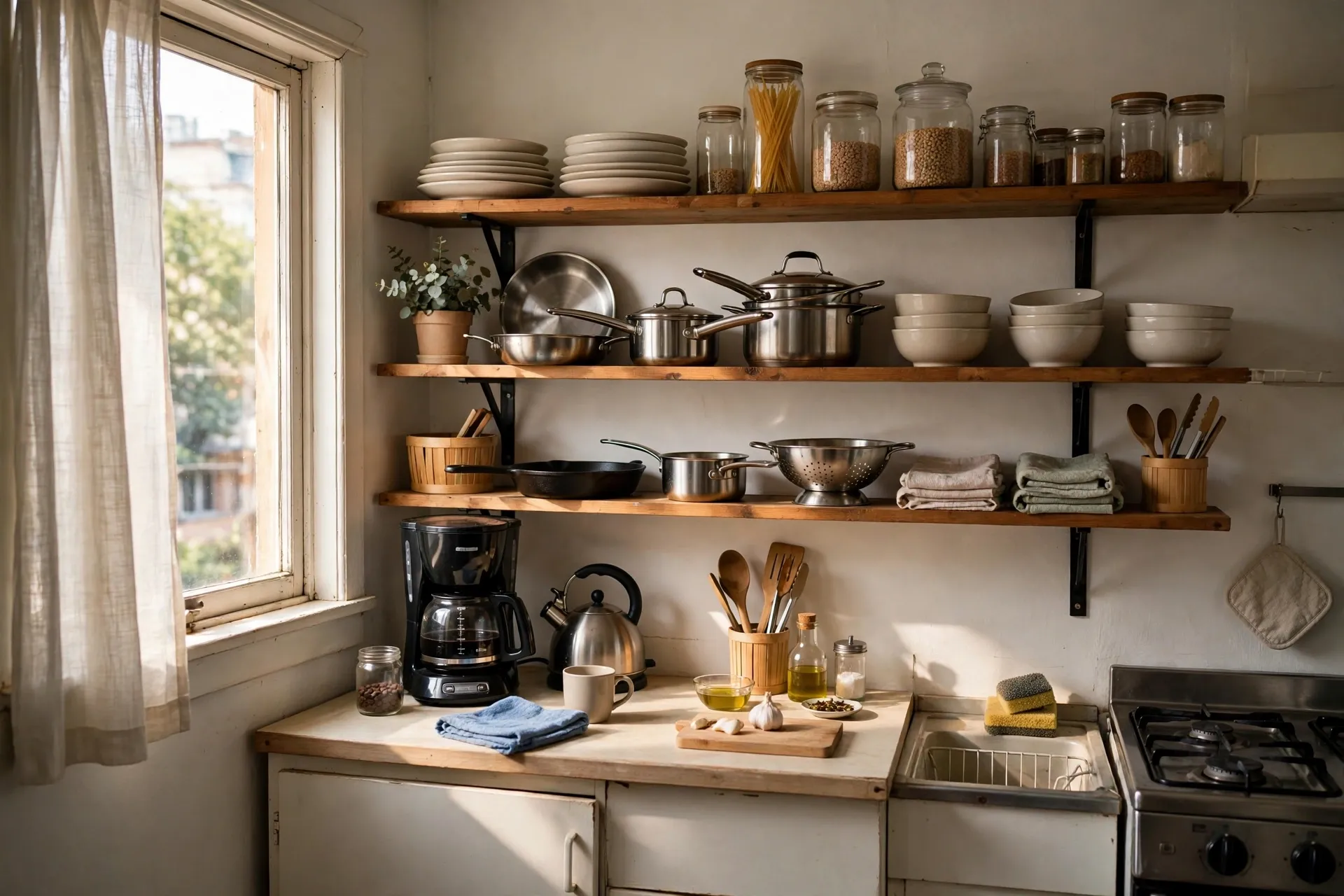
Apartments usually include major appliances, so kitchen furnishing means cookware, dishes, small appliances, and storage. A starter set of pots, pans, knives, and utensils runs $150 to $400; dishes and glassware another $60 to $150. A coffee maker, toaster, and other small appliances add $100 to $300.
Do not buy a 20-piece cookware set; buy a 10-inch skillet, a saucepan, a sheet pan, and a Dutch oven, and add pieces as you cook. A rolling cart or small island for extra counter space runs $80 to $250 and matters more in a tiny kitchen than a gadget. Open shelving, $30 to $80, fixes the cabinet shortage most rentals have.
Bathroom: $100 to $400
The bathroom is the cheapest room to furnish: shower curtain and rings $20 to $40, bath mats $20 to $40, towels $40 to $100 for a decent set, and a toilet brush, plunger, and trash can for $30. Storage, over-toilet shelves or a small cabinet, runs $30 to $100.
Buy towels in white; they bleach clean and always match. A $15 squeegee extends the life of a glass shower door more than any cleaner. Skip the matching accessory sets; a soap dispenser and toothbrush holder from different lines look fine and cost half as much.
Dining Corner: $150 to $800
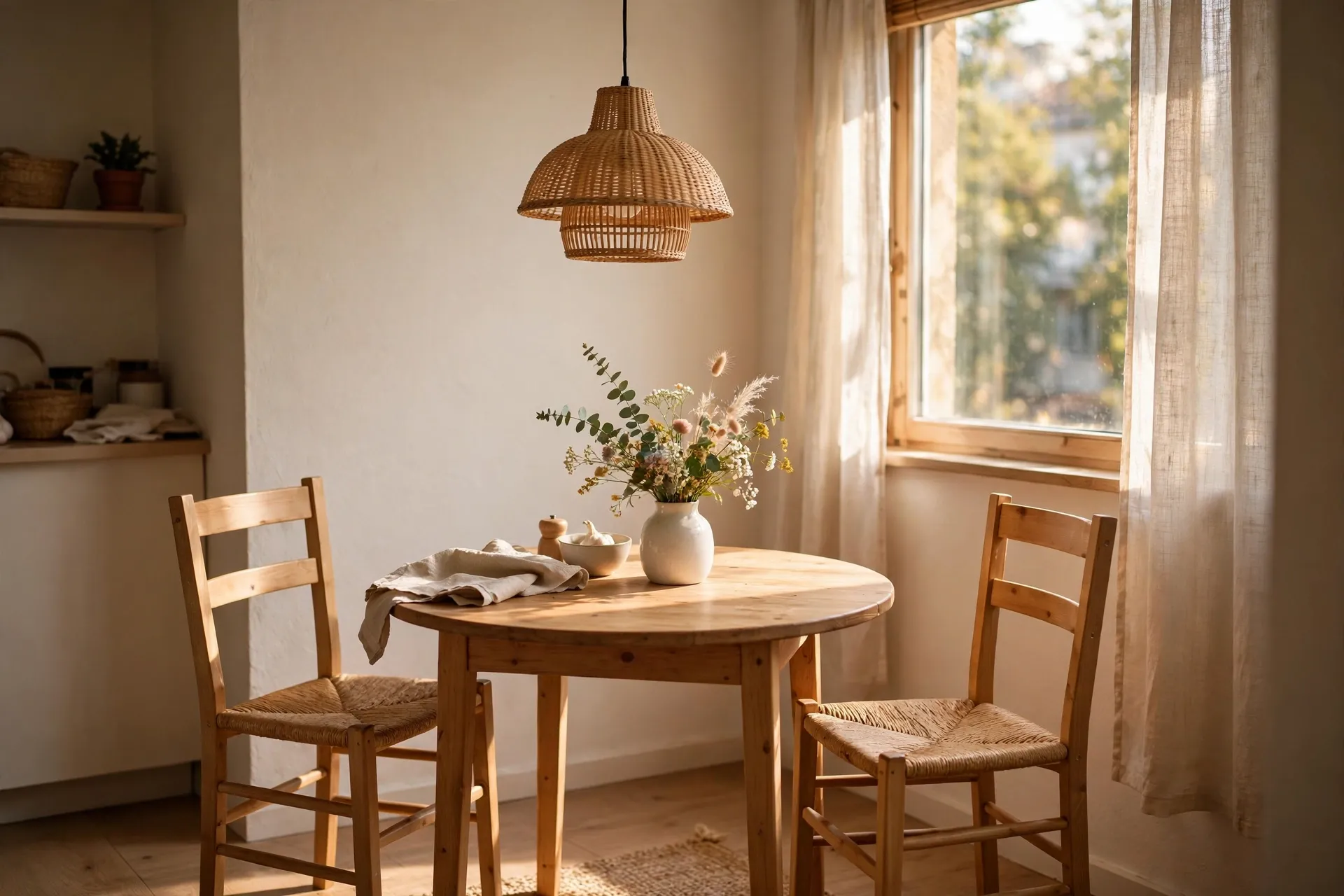
A small round table with two to four chairs runs $150 thrifted to $600 new. Drop-leaf tables cost more but earn it in small apartments by folding away. Two decent dining chairs bought new, $80 to $150 each, outlast a cheap four-chair set.
If space is truly tight, a 36-inch round table seats four in a pinch and two comfortably. Bar stools at a kitchen counter can replace a dining set entirely in a studio. Buy chairs you can sit in for an hour; dining chairs are where cheap furniture announces itself first.
Thrift vs New: Where Each Wins
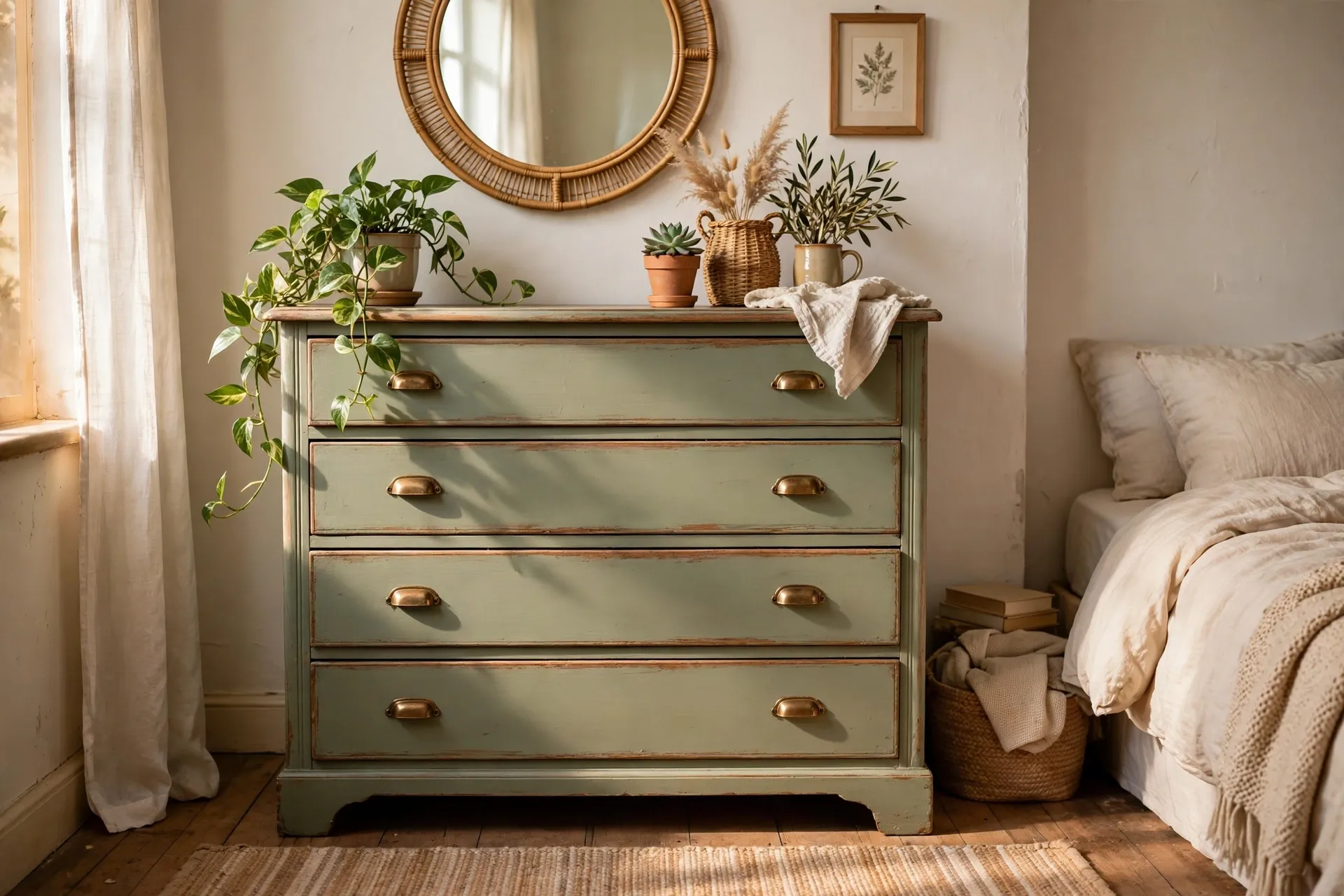
Thrift wins for solid wood furniture: dressers, bookshelves, side tables, and dining tables. Wood is wood, and a $60 dresser with new hardware beats a $250 particle-board one that wobbles in a year. Buy new for mattresses, pillows, and anything upholstered, for hygiene and bedbug reasons.
Lighting is a thrift gray area; vintage lamps are charming but need rewiring checks. Small appliances are better new with warranties; a used toaster is not worth the fire risk. Refurbished pieces from estate sales split the difference: quality furniture at thrift prices, often already cleaned.
Hidden Costs Everyone Forgets
Delivery and assembly add up fast: $100 to $300 for a few furniture deliveries, or a truck rental at $20 to $50 plus pizza for friends. Curtain rods, hardware, light bulbs, batteries, and cleaning supplies run $150 to $250 before you have hung a single picture.
Do not forget the entry: a slim small entryway cabinet keeps shoes and keys contained for under a hundred dollars, and a doormat, umbrella stand, and key hooks add another $50. Renter’s insurance, often required by the lease, runs $15 to $30 a month. Budget 10 percent over your furniture total for these extras and you will not be surprised.
Furnishing in Phases Beats All at Once
You do not need a finished apartment on day one. Phase one, move-in week: mattress, bedding, basic kitchen gear, bathroom essentials, curtains, and cleaning supplies. Phase two, first month: sofa, dining spot, lighting, and rugs. Phase three, months two and three: decor, art, and upgrades.
Phasing spreads the cost and, more importantly, stops you from buying for a layout you have not lived in yet. The chair that looked perfect online may block the only good reading light. Live in the space for two weeks before buying anything decorative; your actual habits will edit the shopping list.
How to Set a Furnishing Budget
Work backward from your savings, not forward from a wishlist. Decide the total, subtract the 10 percent hidden-cost buffer, then allocate: 35 percent bedroom, 30 percent living room, 15 percent kitchen, 10 percent dining, 10 percent everything else. Adjust for your life; a remote worker shifts money to the desk setup.
Track spending in a simple spreadsheet as you buy. The psychological effect is real: writing down each purchase curbs the “just one more thing” drift that sinks budgets. Set a rule that decor waits until every functional need is met; a beautiful apartment you cannot cook in is a failed project.
Furnishing Mistakes That Waste Money
Buying everything from one store in one weekend is the fastest way to overspend and end up with a showroom instead of a home. The second is buying for the fantasy life: the six-person dining set when you eat at the counter, the guest room setup with no guests.
Do not finance furniture at 25 percent interest; a thrifted stopgap for six months beats debt for a sofa. And measure twice for every large piece. Returns on furniture are expensive or impossible, and a sofa that does not fit through the door is a very expensive lesson.
Keeping Costs Down Long Term
Buy furniture you can move with; solid, standard-size pieces survive three apartments, while custom-fit pieces die at the first move. Choose neutral big pieces and express taste in cheap, swappable textiles. A $40 throw changes a room; a $400 chair in last year’s color does not.
Maintain what you own: tighten screws yearly, oil wood, wash slipcovers before stains set. Well-kept budget furniture looks better at year five than neglected expensive furniture. The cheapest furniture is the furniture you never have to replace.
Looking for more ideas? Browse our small space living stories.
Save to Pinterest