In this article
- What Minimalist Means in a Bedroom
- The Platform Bed: Your Anchor Piece
- Nightstands: One Surface, One Drawer
- The Low Dresser
- A Slim Wardrobe (If the Closet Falls Short)
- Seating: One Chair, Maybe
- Lighting: Fewer, Better Fixtures
- Textiles That Do the Decorating
- What to Skip Entirely
- How to Choose Minimalist Bedroom Furniture
- Minimalist Mistakes to Avoid
- Keeping It Minimal Long Term
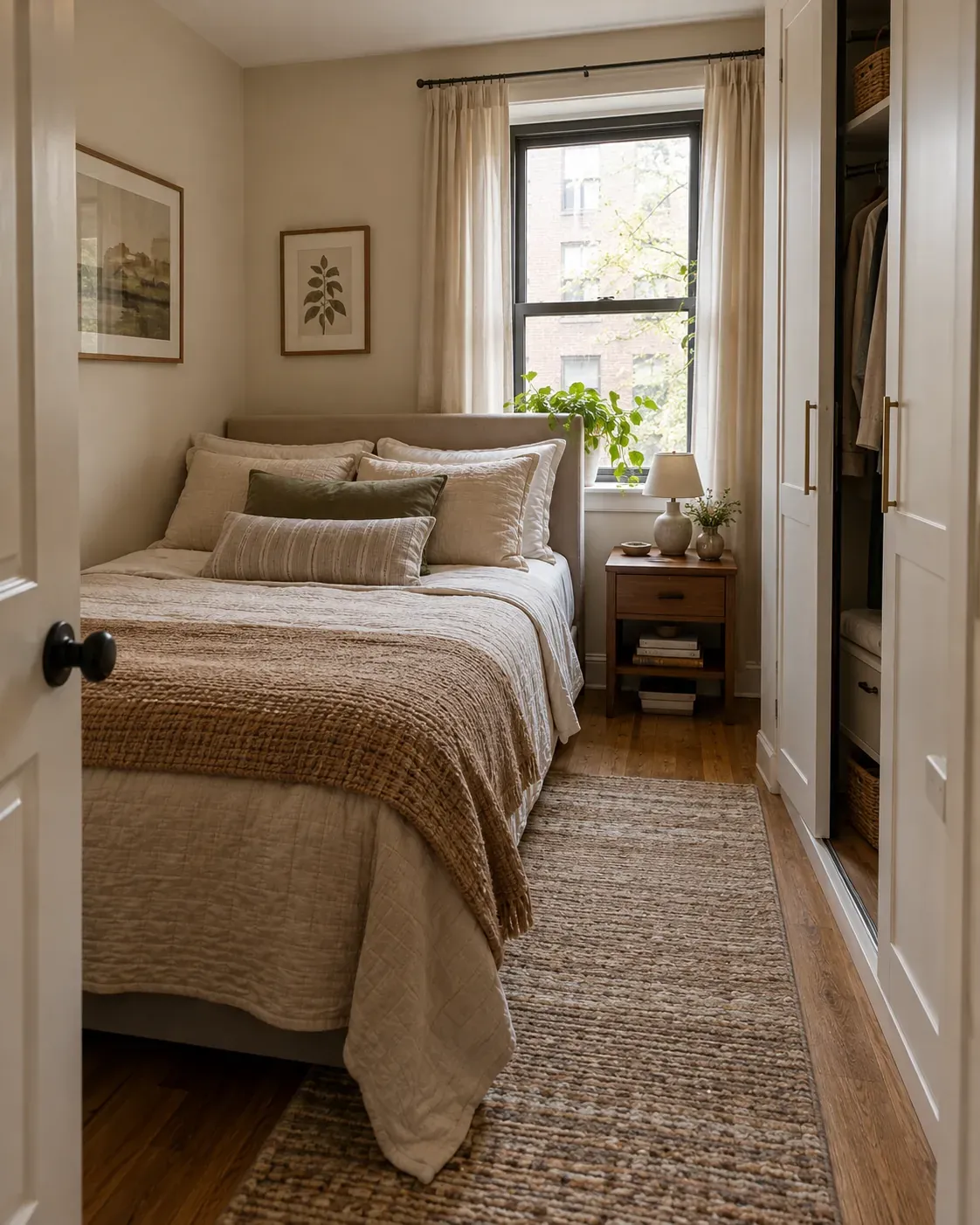
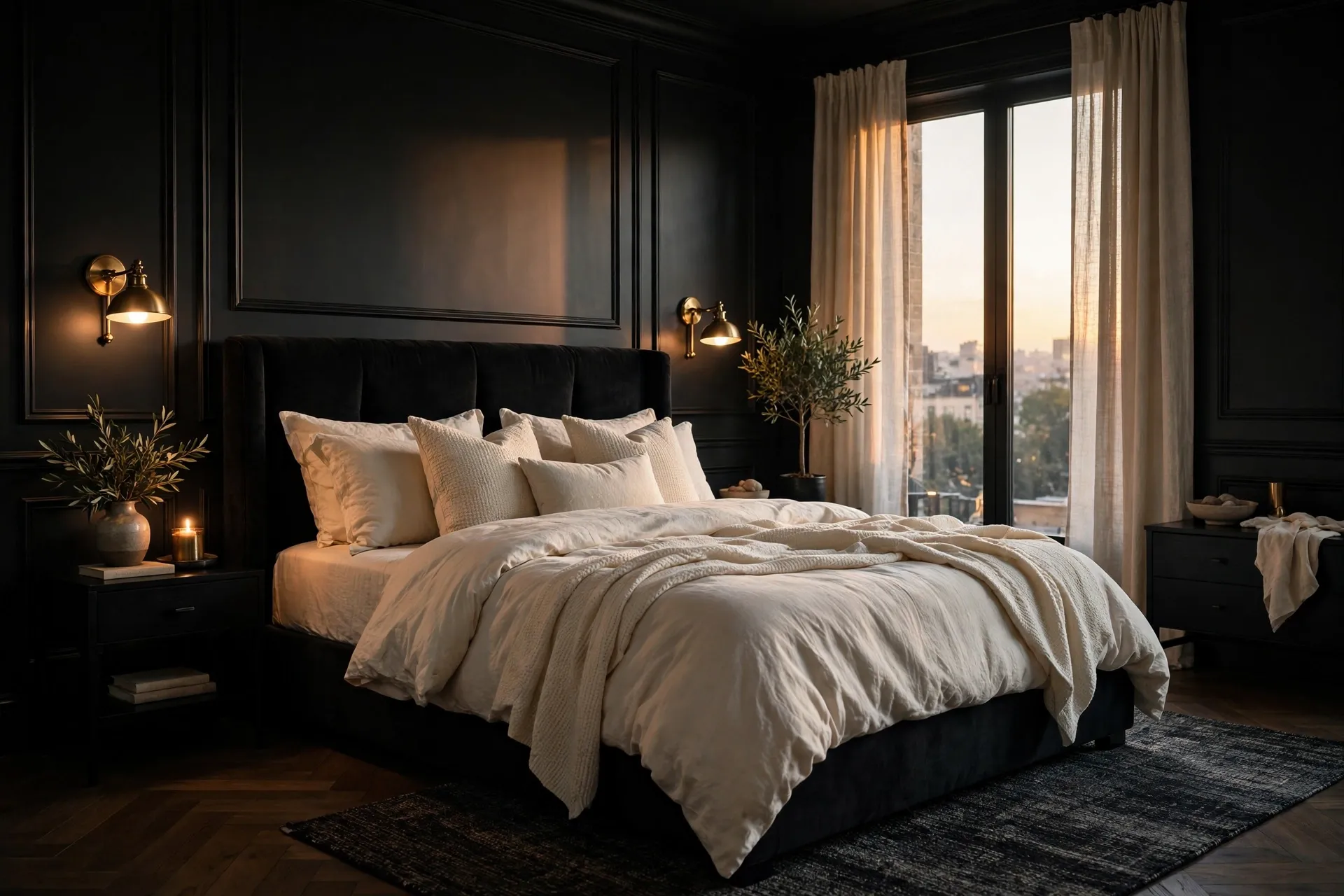
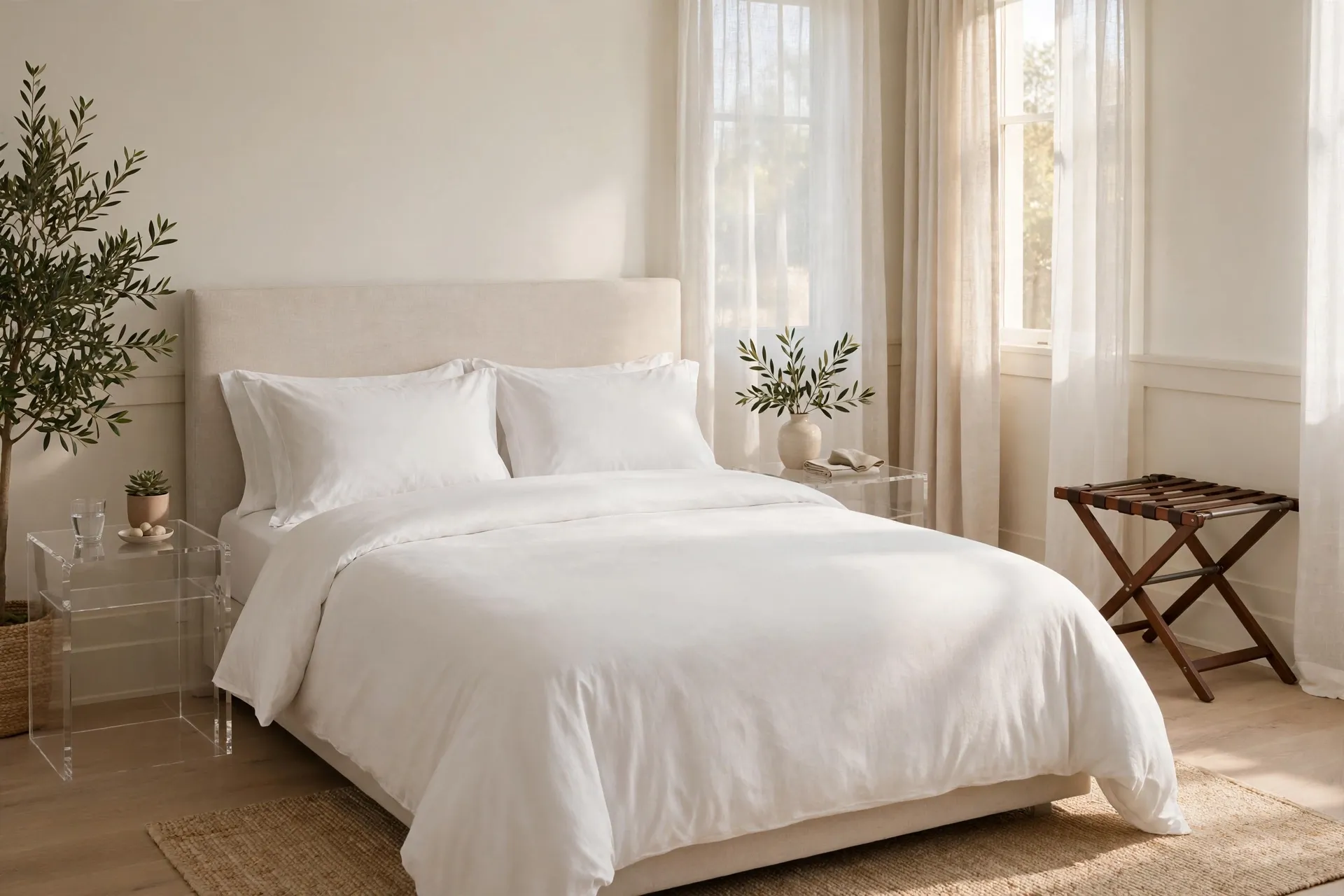
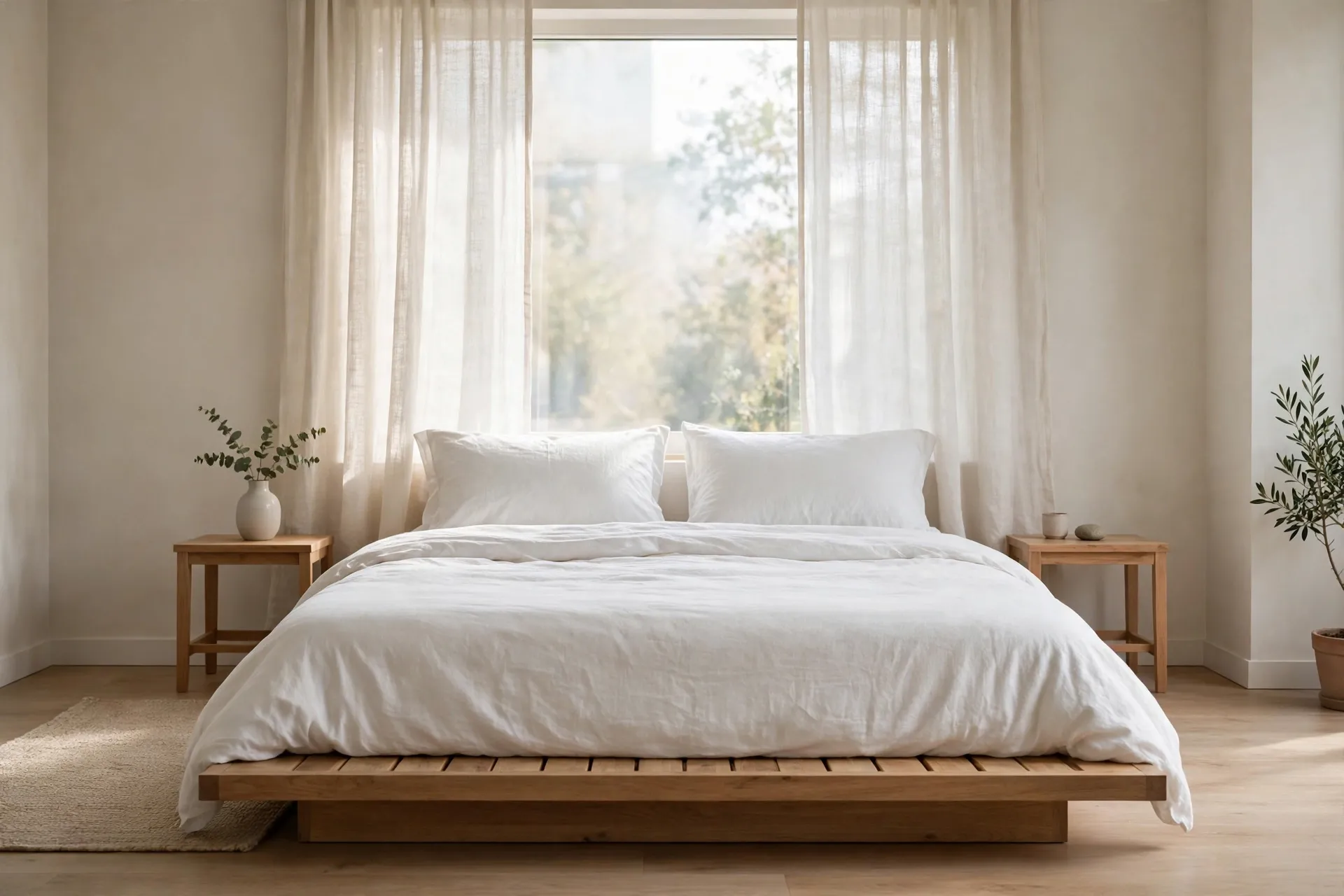
A minimalist bedroom is not an empty bedroom; it is a bedroom where every piece earns its footprint. The style suits small rooms especially well, because fewer pieces mean more visible floor and calmer sightlines. These minimalist bedroom furniture picks focus on the essentials: the bed, one or two nightstands, a dresser or wardrobe, and not much else. Each pick favors clean lines, honest materials, and nothing you have to dust around. For fitting these pieces into a tight floor plan, see our small bedroom layout ideas.
What Minimalist Means in a Bedroom
Minimalist bedroom furniture shares three traits: simple silhouettes with no ornament, a restrained palette of wood, white, black, or grey, and proportions that leave breathing room. A minimalist room typically holds five to seven pieces of furniture total, including the bed. If you are counting past ten, something can go.
This is a practical style, not just an aesthetic one. Fewer pieces mean less dusting, faster cleaning, and fewer decisions. It also costs less: a complete minimalist bedroom often runs $800 to $2,000 furnished, since you are simply buying less furniture.
The Platform Bed: Your Anchor Piece
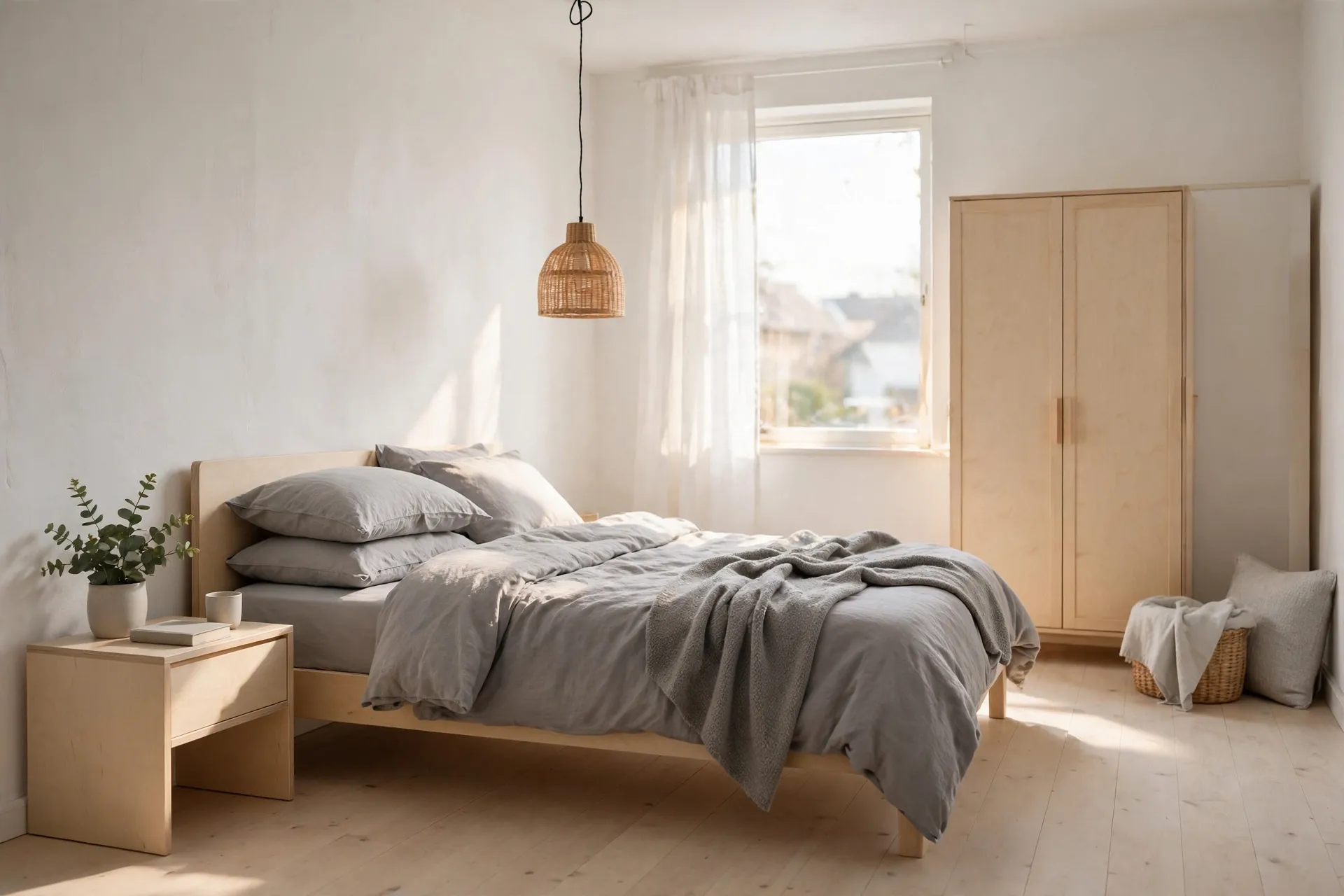
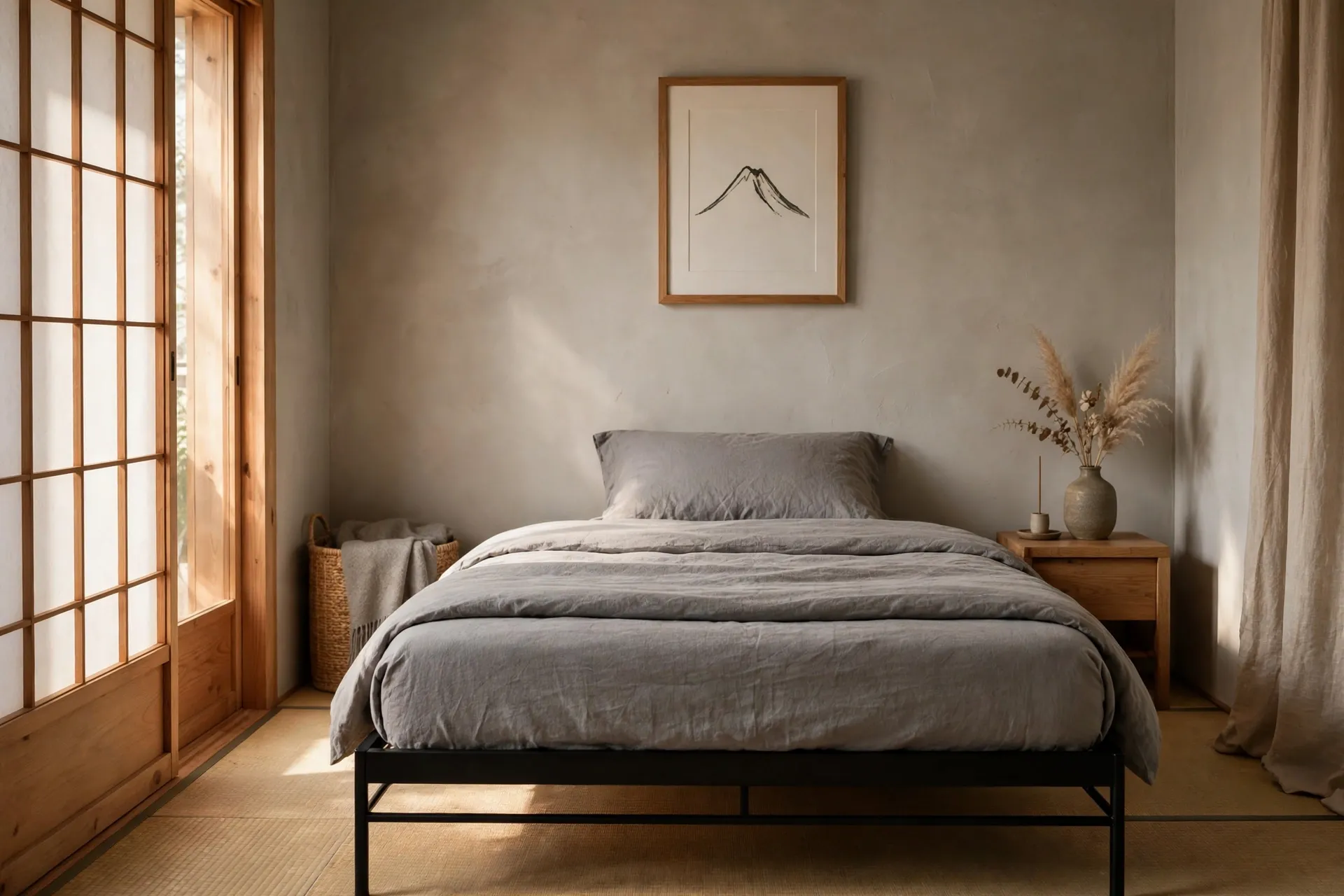
A low platform bed is the minimalist default: no box spring, no tall headboard, just a clean frame 10 to 14 inches off the floor. Solid wood frames in oak or ash run $300 to $800 for a queen; simple metal frames cost half that. The low profile makes ceilings feel higher, which small rooms need.
Skip the headboard or choose an integrated low one; tall upholstered headboards fight the minimalist look and collect dust. Check slat spacing before buying; slats more than 3 inches apart let mattresses sag. A platform bed with built-in drawers adds storage without adding furniture, the minimalist ideal.
Nightstands: One Surface, One Drawer
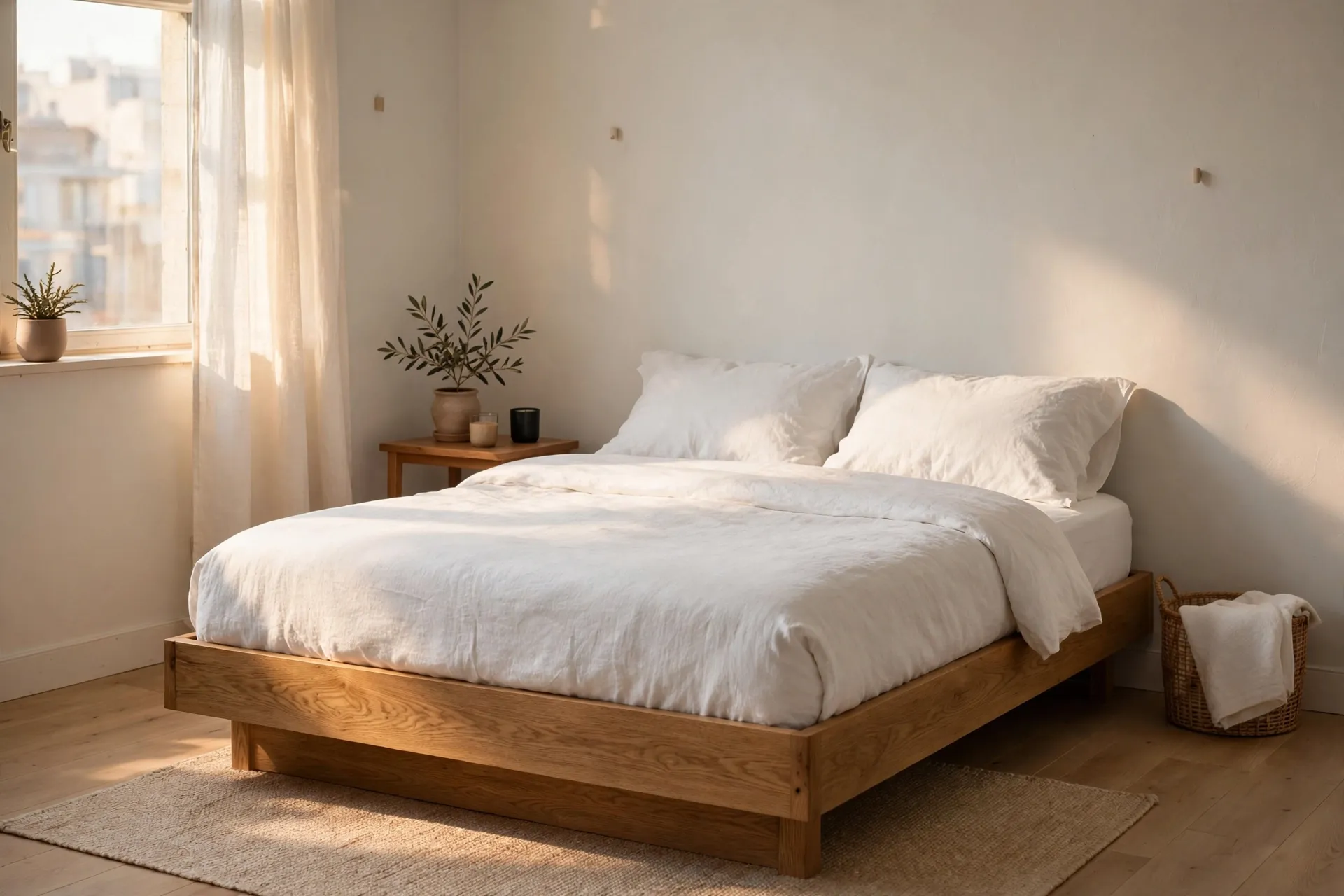
The minimalist nightstand holds a lamp, a book, and a glass of water; everything else lives in its single drawer. Floating nightstands, mounted to the wall, free the floor and make cleaning effortless. A pair of simple cube nightstands runs $60 to $200.
Match the nightstand height to your mattress top within 2 inches; reaching up or down for the lamp gets annoying fast. Corral the small things that migrate to the nightstand in the first place: a slim small entryway cabinet by the front door keeps keys, mail, and sunglasses from ever reaching the bedroom. One drawer each is plenty; two nightstands with drawers hold more than most people need bedside.
The Low Dresser
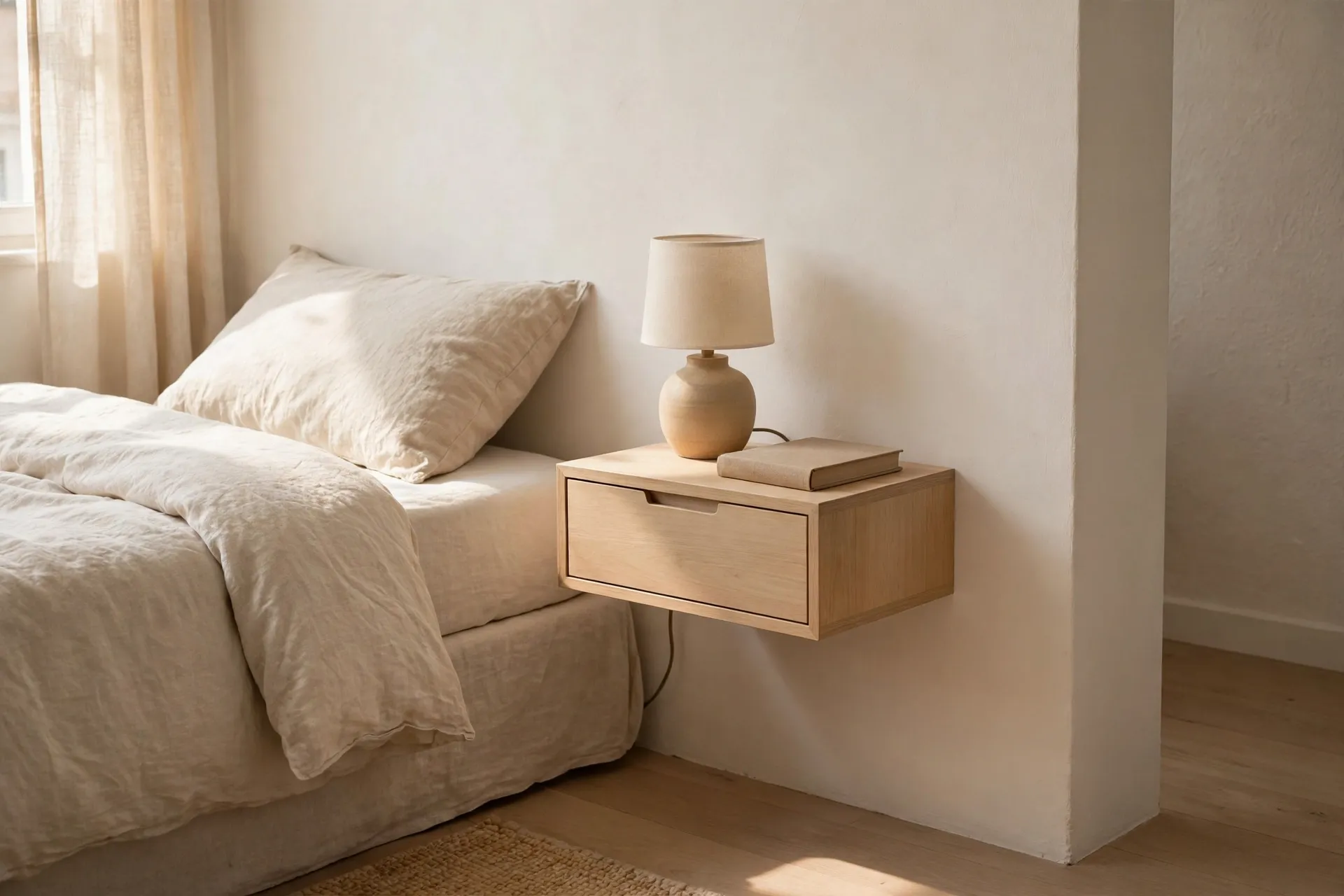
A low, wide dresser doubles as a display surface without the visual weight of a tall chest. Six shallow drawers beat three deep ones; shallow drawers keep clothes visible instead of buried. Expect $250 to $600 for a solid wood six-drawer dresser.
Place it under a window if the layout allows; low dressers fit beneath sills where tall chests cannot. Keep the top to three objects maximum: a lamp or vase, one framed print, one small tray. The dresser top is where minimalism most often fails, so defend it.
A Slim Wardrobe (If the Closet Falls Short)
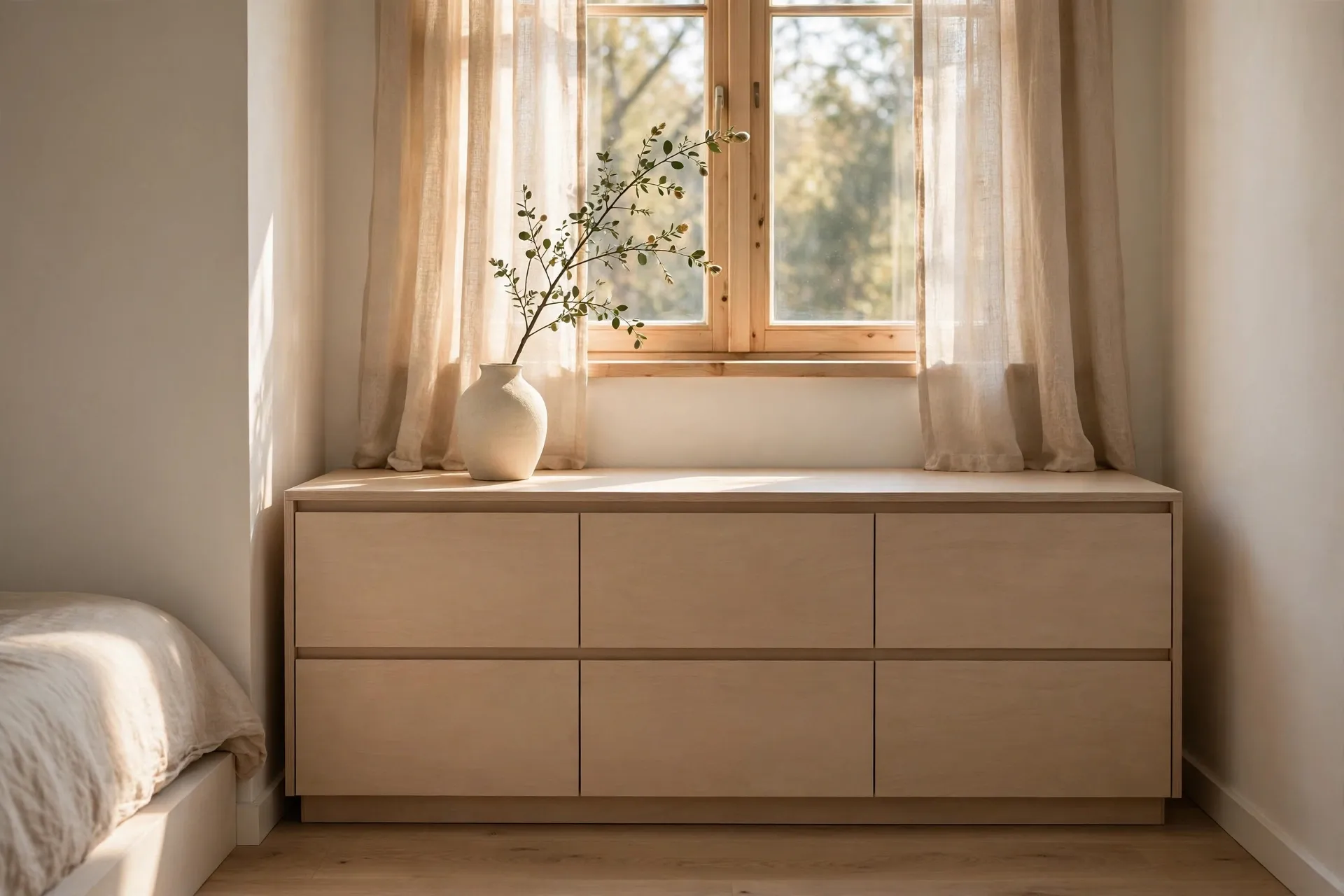
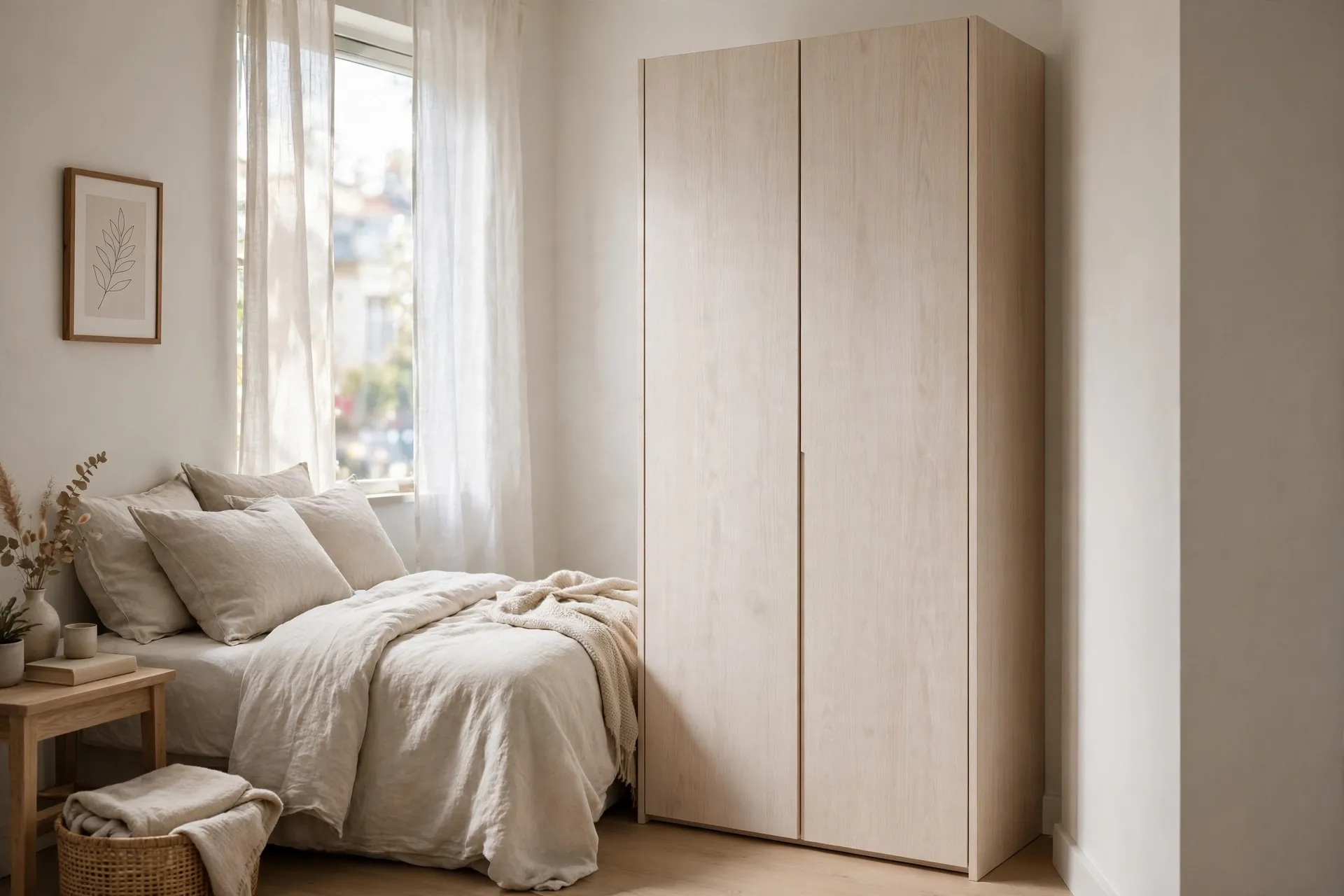
Many apartments have closets too small for real life. A slim wardrobe, 20 to 24 inches deep with clean handleless doors, adds hanging space without the bulk of an armoire. White or light oak finishes recede visually; dark wardrobes dominate small rooms.
Inside, add a double-hang rod to double capacity and a top shelf for out-of-season storage. A wardrobe with a full-length mirror on one door replaces a separate mirror, saving both money and floor space. Anchor it to the wall; tall narrow wardrobes tip when loaded and a child climbs.
Seating: One Chair, Maybe
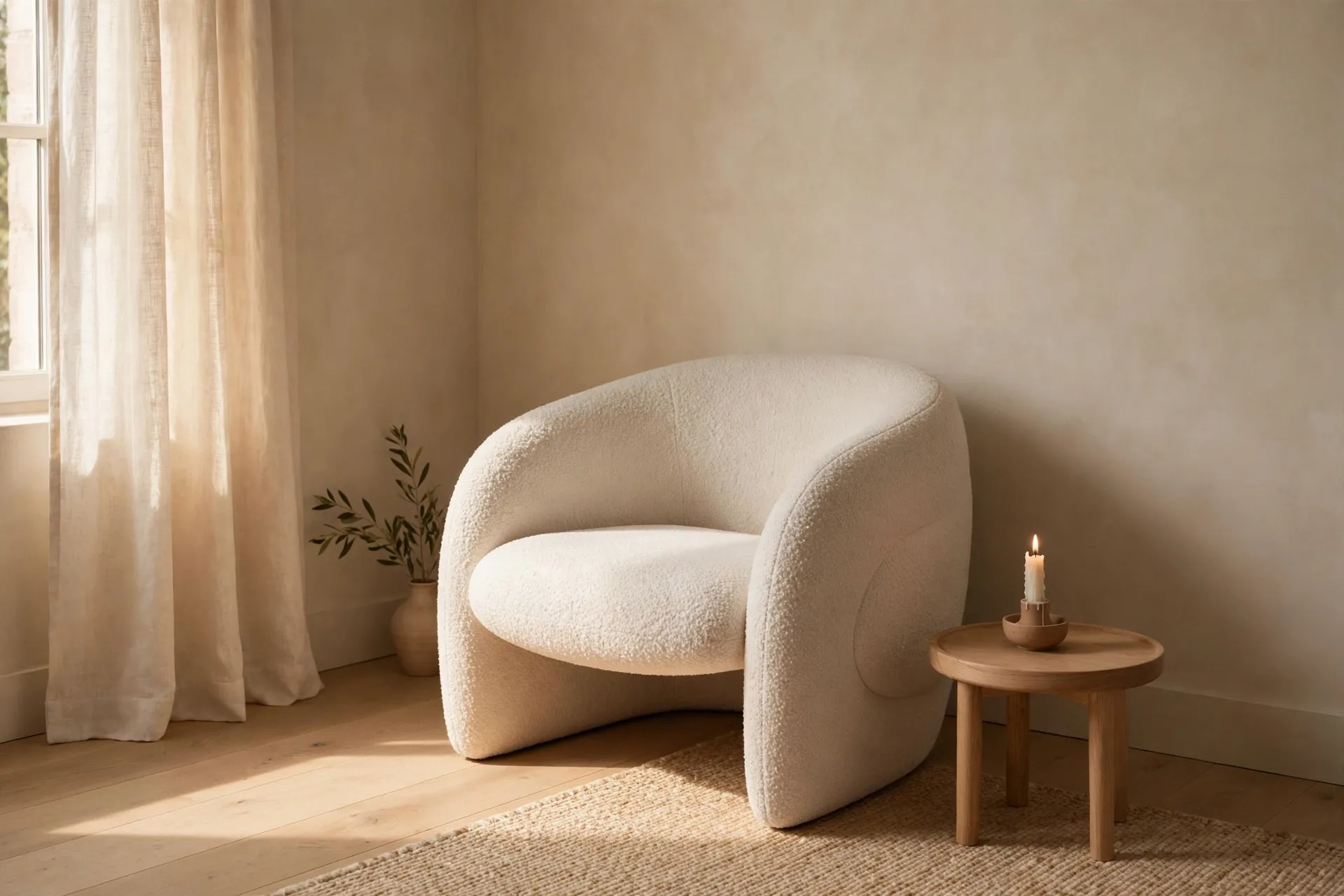
A single sculptural chair in the corner gives the bedroom a place to sit that is not the bed. Choose one with a small footprint, an accent chair or a compact lounge chair, not a full armchair. Boucle, leather, or bent plywood all suit the minimalist palette.
If the room is under 120 square feet, skip the chair; a floor cushion stored in the closet serves the same purpose. The chair earns its place only if you actually sit in it. A chair that becomes a clothes rack has failed and should leave.
Lighting: Fewer, Better Fixtures
Minimalist bedrooms need three light sources: overhead, bedside, and one accent. A simple flush-mount or single pendant handles the overhead; matching bedside lamps or wall sconces cover reading; a small floor lamp or candle-style light warms the corner. That is the whole plan.
Wall-mounted sconces free both nightstands entirely, the cleanest look here. Use 2700K bulbs throughout; mixed color temperatures shatter the calm. Put the overhead on a dimmer, 15 dollars and ten minutes, since bright overhead light is the enemy of a restful bedroom.
Textiles That Do the Decorating
With minimal furniture, textiles carry the style: one quality duvet cover, two sleeping pillows plus two shams, and a single throw. Linen and washed cotton suit the aesthetic and soften with age. Stick to one color family; white, oatmeal, and soft grey are the classics.
A single low-pile rug beside the bed warms the floor without adding pattern noise. Curtains in a natural fabric, hung high and wide, finish the room. These soft pieces are also the easiest to change when tastes shift, which keeps the room feeling current without new furniture.
What to Skip Entirely
Skip the foot-of-bed bench unless you use it daily; it is a dust collector in most rooms. Skip the vanity unless you genuinely do makeup seated; a mirror on the dresser works. Skip the bookshelf in the bedroom; books migrate to the living room and the shelf becomes clutter storage.
Skip matching bedroom sets. They look institutional and cost more than curated pieces. And skip anything that needs styling to look good; minimalist furniture should look right empty, because half the time it will be.
How to Choose Minimalist Bedroom Furniture
Buy the bed first and let it set the material palette: if the bed is oak, the nightstands and dresser follow in oak or white. Mixing more than two finishes breaks the calm. Measure door swings and drawer clearance before ordering; minimalist rooms have no spare inches to absorb mistakes.
Starting from an empty apartment? Our first apartment checklist covers what to buy first, so the bedroom gets furnished before the decor. Prioritize the mattress and bed frame over everything; the room works with just those two while you save for the rest.
Minimalist Mistakes to Avoid
The biggest mistake is confusing minimal with empty: a room with no nightstand and clothes on the floor is not minimalist, it is unfinished. Every daily need still needs a home; minimalism just gives it fewer, better homes.
The second mistake is all-white everything, which shows every speck and feels clinical. Warm wood, one textile color, and good light keep minimalism livable. And do not hide clutter in the closet and call it minimal; the system has to work with the doors open.
Keeping It Minimal Long Term
Adopt one-in-one-out for bedroom objects; a new book means an old one leaves. Do a ten-minute reset nightly: surfaces clear, clothes put away, bed made. Minimalist rooms show disorder instantly, which is actually the feature: the room tells you when it needs attention.
Reassess yearly. Tastes change, and a chair you loved at 25 may not suit at 30. Sell or donate what no longer earns its footprint. A minimalist bedroom is a maintained state, not a purchase; the furniture just makes maintenance easy.
Looking for more ideas? Browse our living room & bedroom stories.
Save to Pinterest