In this article
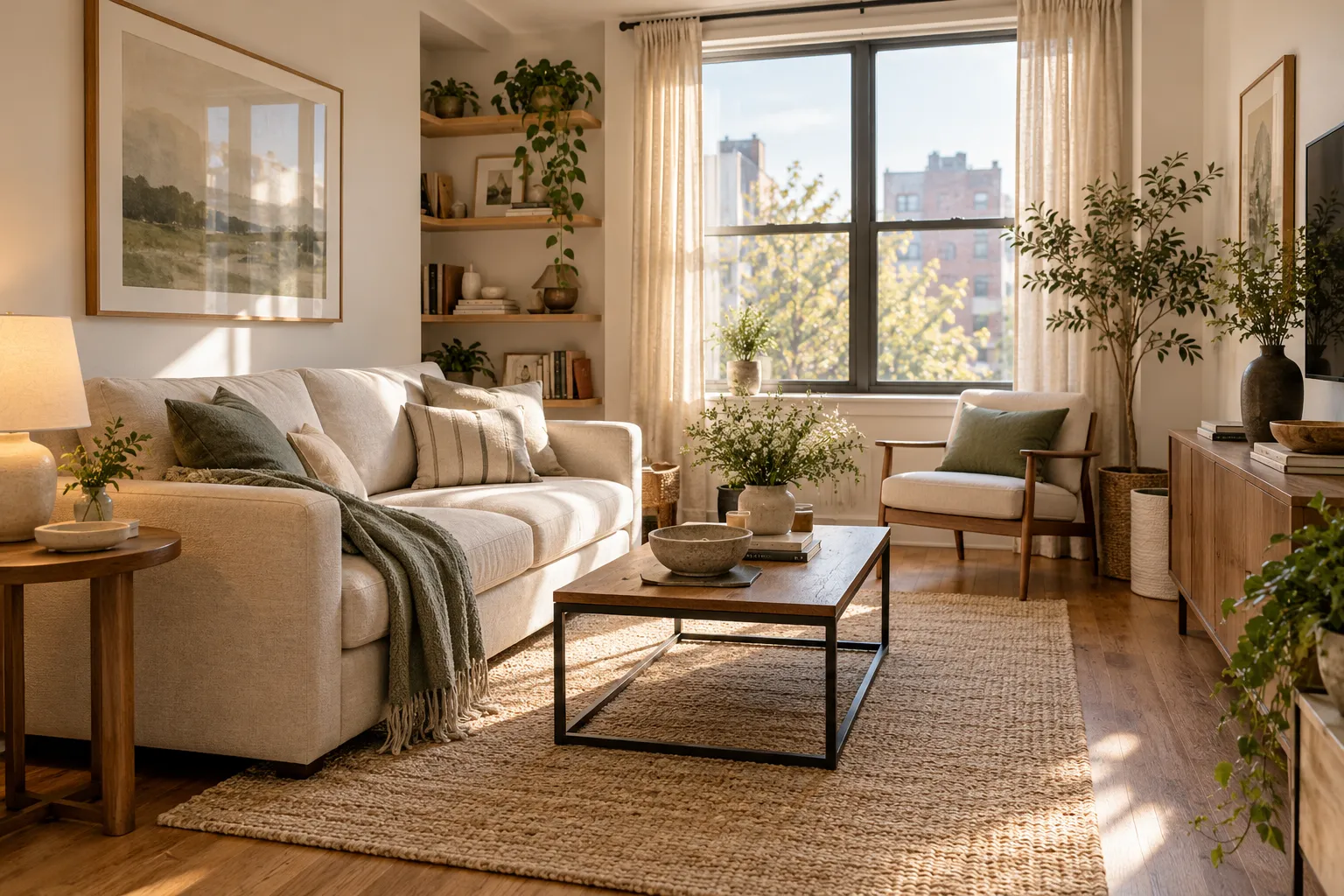
A compact living room does not need to be stripped back to feel spacious. The biggest difference often comes from how the room is arranged: where your eye can travel, whether the furniture leaves a comfortable route through the space, and how everyday items are stored. These ideas focus on those useful changes first, then add the softer details that make a room feel like home.
Start with the path through the room
Before moving furniture, notice how you enter the room and where you naturally walk. A sofa or coffee table that interrupts that route can make even a tidy space feel cramped. Aim for a clear path between the door, seating and any window or adjoining room. You do not need a large empty perimeter; you need a route that feels easy to use.
Try sketching the room from above, including door swings and radiators. It is often easier to spot a better arrangement on paper than while pushing a sofa around. If the room has more than one use, such as relaxing and working, place the main seating first and fit the secondary function around it.
Let the sofa anchor the layout
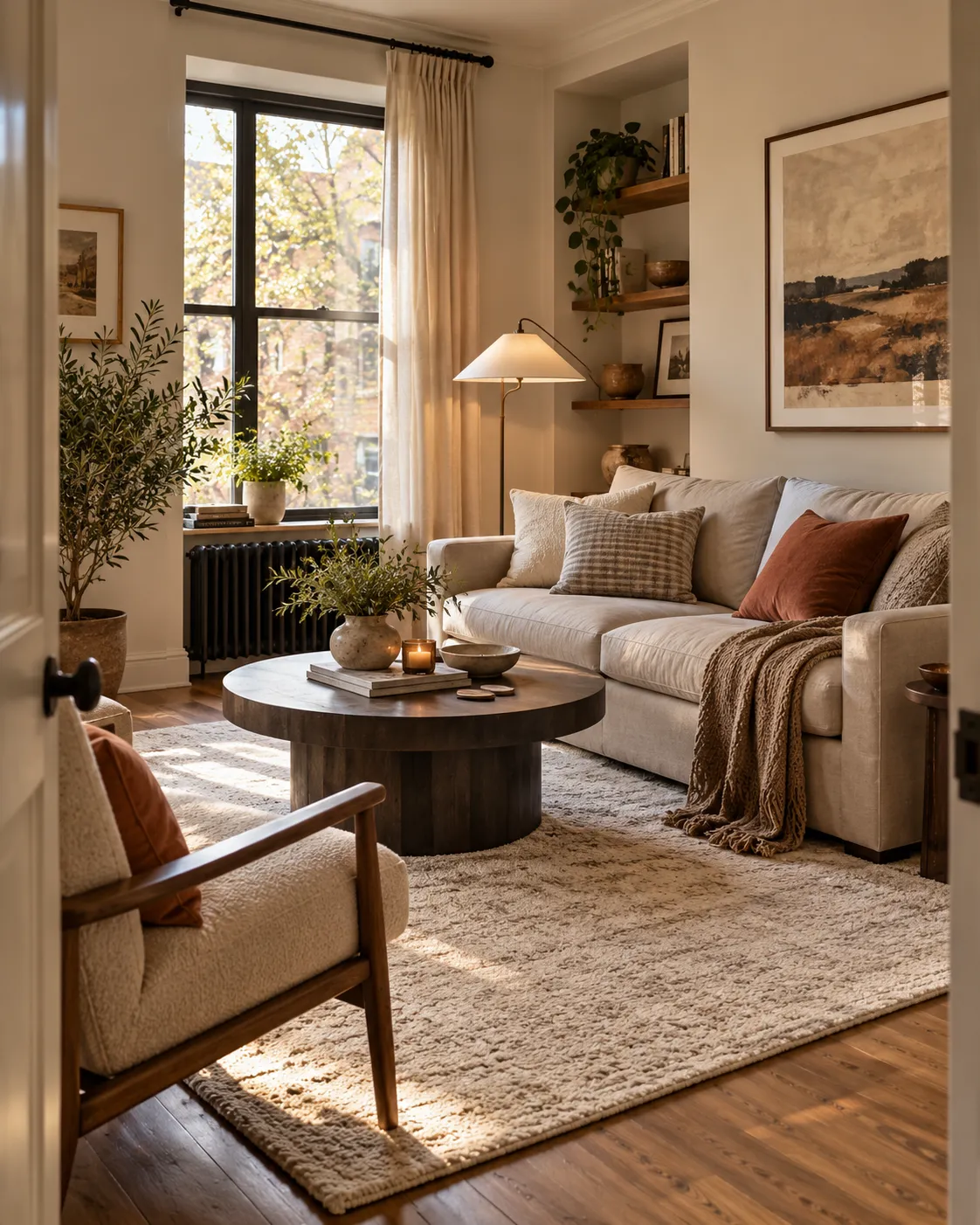
In many compact living rooms, a well-scaled sofa is more useful than several small chairs. It gives the room a clear center and reduces the number of furniture legs and gaps your eye has to process. Measure the wall and the route around the sofa before choosing its size. A slender arm or raised base can make a sofa look lighter, but comfort still matters more than a narrow silhouette.
Choose fewer pieces with a clear purpose
Too many little tables, stools and baskets can make a room feel busy, even if each item is attractive. Decide what needs to happen in the space: a place to set down a drink, light for reading, seating for guests, and somewhere for items you use every day. Then choose pieces that serve those jobs.
A single coffee table may be enough. In a very narrow room, two nesting tables or a slim side table can offer a surface without blocking the route. A storage ottoman can do double duty, but only if it fits the proportions of the room and can open conveniently.
Before buying a piece, mark its footprint on the floor with painter’s tape. Walk around it for a day. This is a simple way to test whether the room still feels comfortable.
Use vertical space without filling every wall
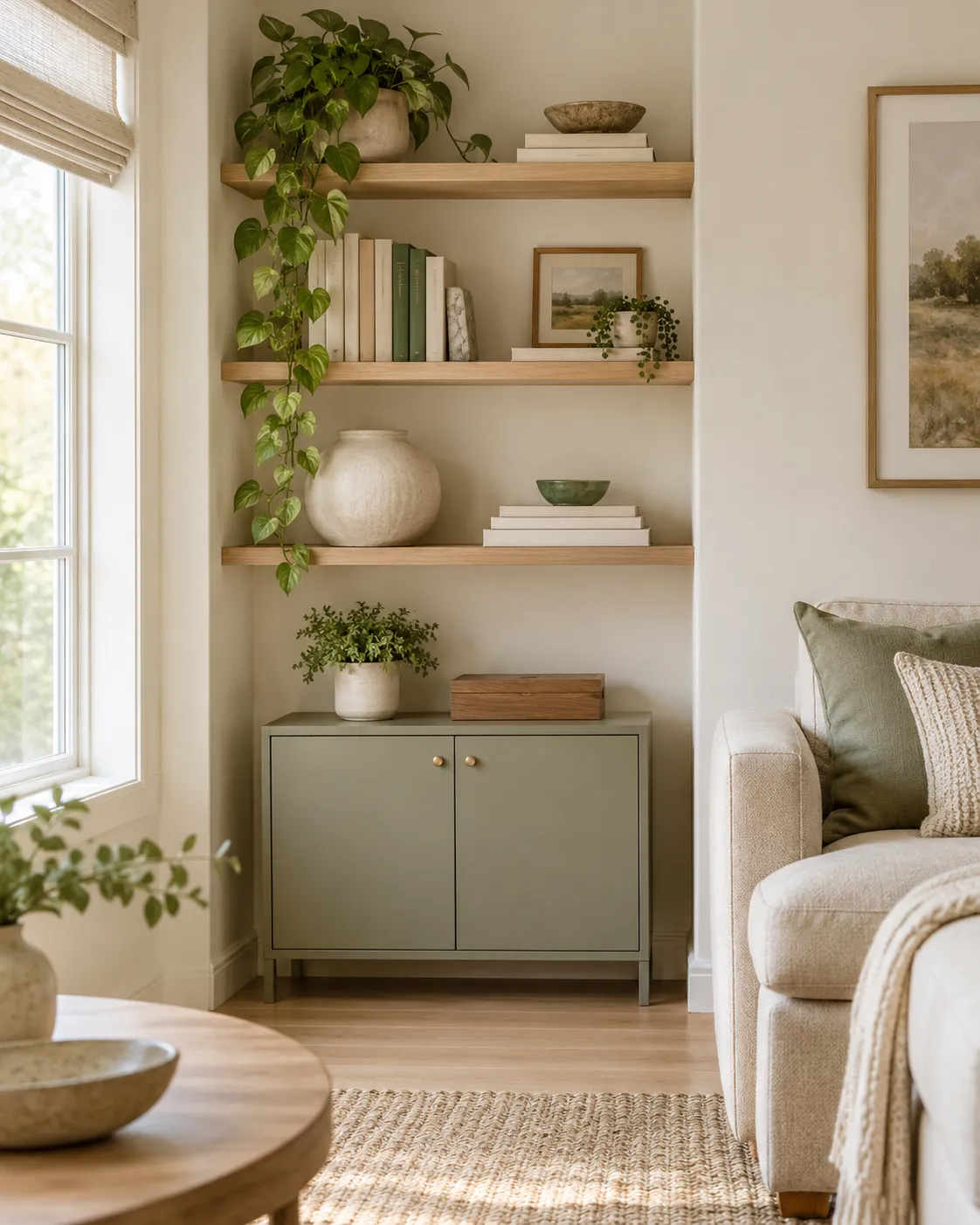
Wall shelves and tall cabinets can free up floor space, but a wall packed with objects may feel visually heavy. Combine open and closed storage. Keep the things you enjoy seeing on a few shelves, and give remotes, paperwork and other small items a closed home.
Look for a storage piece that is shallow enough for the room. A slim cabinet can be more helpful than a deep bookcase if it preserves the walkway. Where possible, align the top edges of shelves and frames so the wall reads as one calm composition.
Make light work harder
Natural light helps a room feel open, so avoid blocking a window with tall furniture when the layout allows. Hang curtains high and wide enough that the fabric can sit mostly outside the glass when open. Sheer or light-filtering fabric can soften a room while preserving daylight.
At night, use more than one source of light. A floor lamp by the sofa and a small table lamp can create a warmer, more flexible room than relying on a single overhead fixture. If floor space is tight, consider a wall-mounted reading light or a plug-in sconce.
Keep contrast intentional
Light walls are a reliable starting point, but a room does not need to be all white. Repeating a small set of colors across textiles and furniture helps it feel connected. Warm ivory and taupe can be the base, with sage or terracotta in a pillow, artwork or vessel. Dark accents can add definition; use them in a few places rather than scattering them everywhere.
Give the eye a place to rest
A rug can help seating feel like one zone. Choose a size that connects the main pieces rather than leaving a tiny rug floating in the center. Large-scale artwork can work in a small room too: one meaningful piece often feels calmer than many unrelated small frames.
Leave some breathing room on shelves and side tables. This does not mean hiding every object. It means choosing which pieces deserve attention, then letting the surrounding space show them off.
A simple order of operations
If the room feels crowded, work through these changes before shopping for new decor:
- Clear the main walking path and remove pieces that interrupt it.
- Measure the largest furniture and check its scale against the room.
- Decide what truly needs open display and what can live in closed storage.
- Improve lighting at the window, sofa and any reading or work spot.
- Add texture and color in a small, repeated palette.
The goal is not to make a small living room look empty. It is to make it feel easy to move through, easy to use and pleasant to spend time in. Explore more room-by-room inspiration in Living Room & Bedroom, or browse Small Space Living for ideas that apply across compact homes.
Looking for more ideas? Browse our living room & bedroom stories.
Save to Pinterest