In this article
- 1. Let floor-length curtains puddle slightly
- 2. Mount the rod on the ceiling
- 3. Layer sheer and blackout curtains together
- 4. Hang curtains wide of the window frame
- 5. Choose lightweight linen curtains
- 6. Place the rod above the frame for height
- 7. Dress a narrow window with full-width panels
- 8. Use simple tiebacks to open up the wall
- 9. Pick a color that blends with the wall
- 10. Keep patterns small so they do not crowd the room
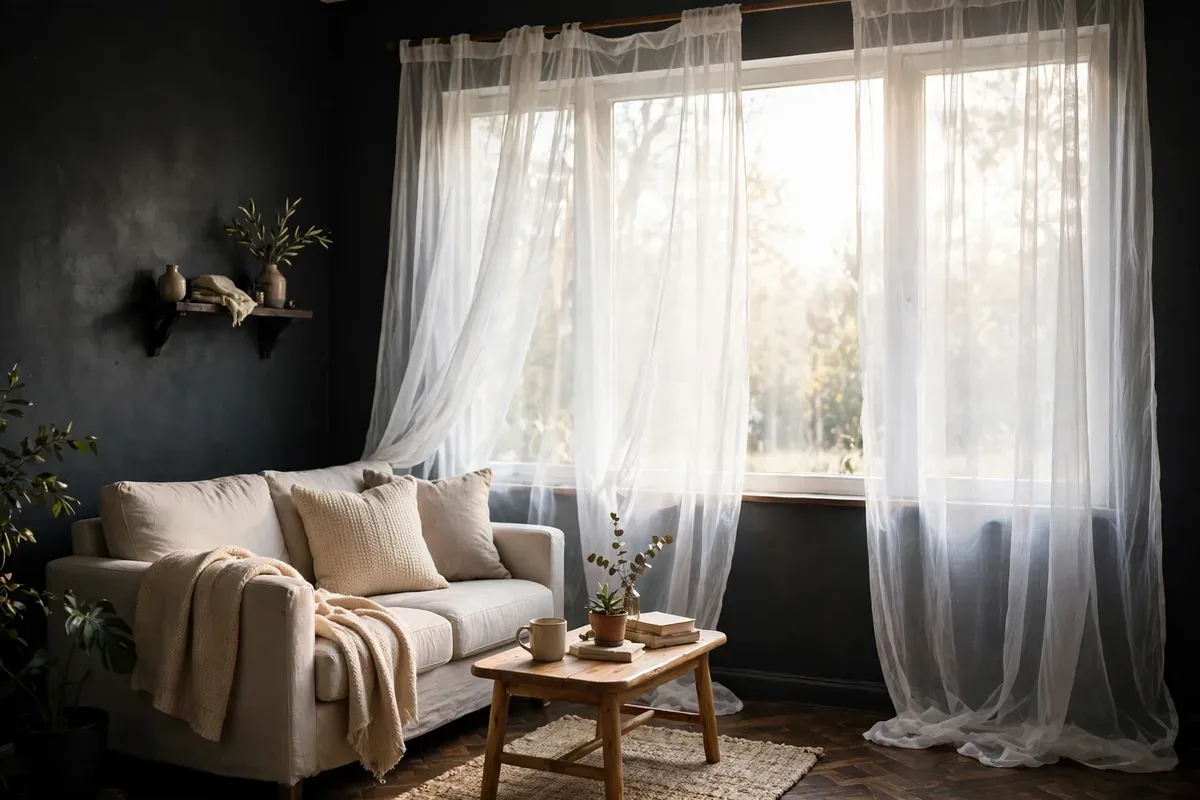
- 11. Use sheer curtains for light in a dark room
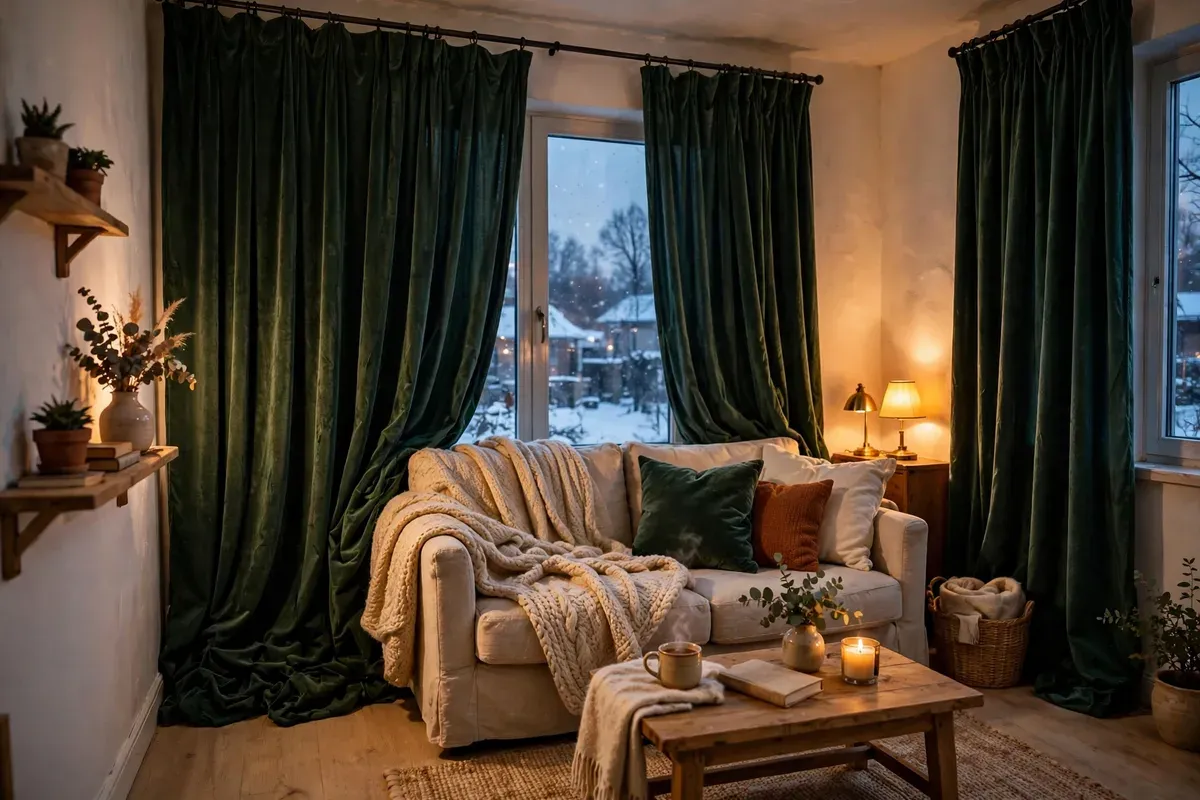
- 12. Add velvet curtains for winter warmth
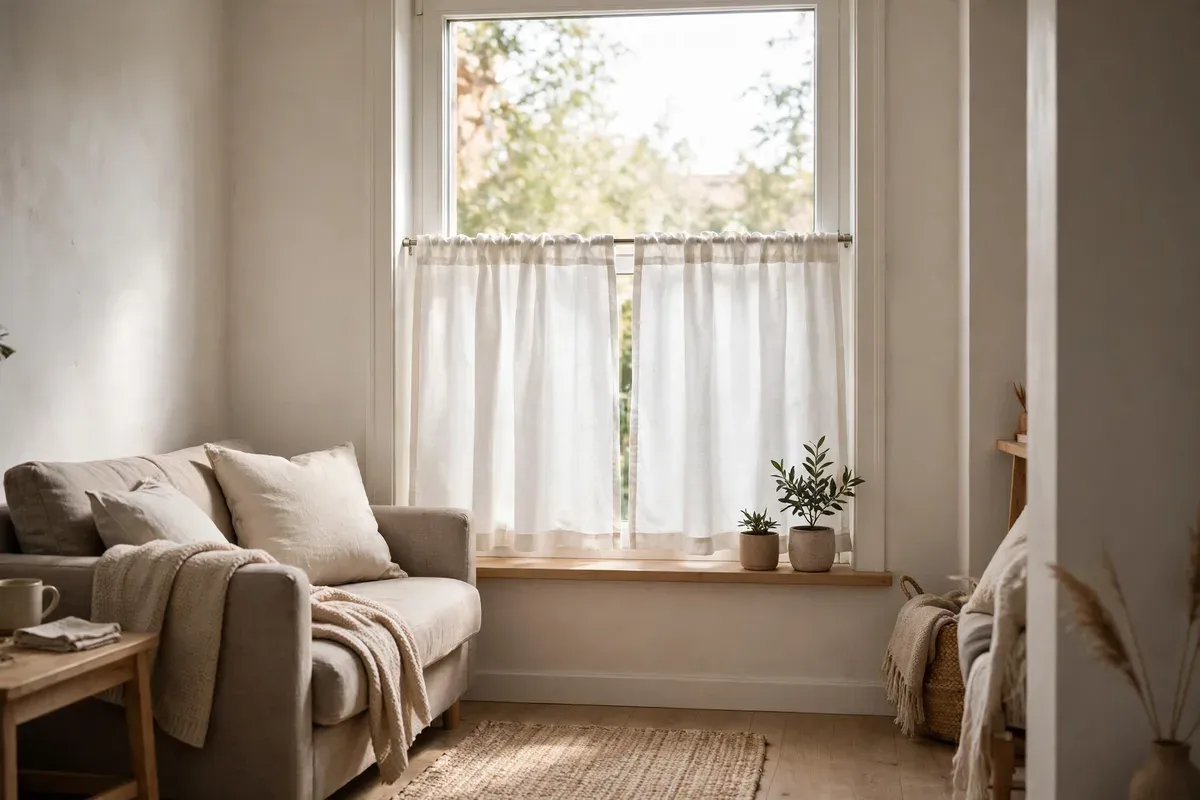
- 13. Try cafe curtains for privacy without blocking light
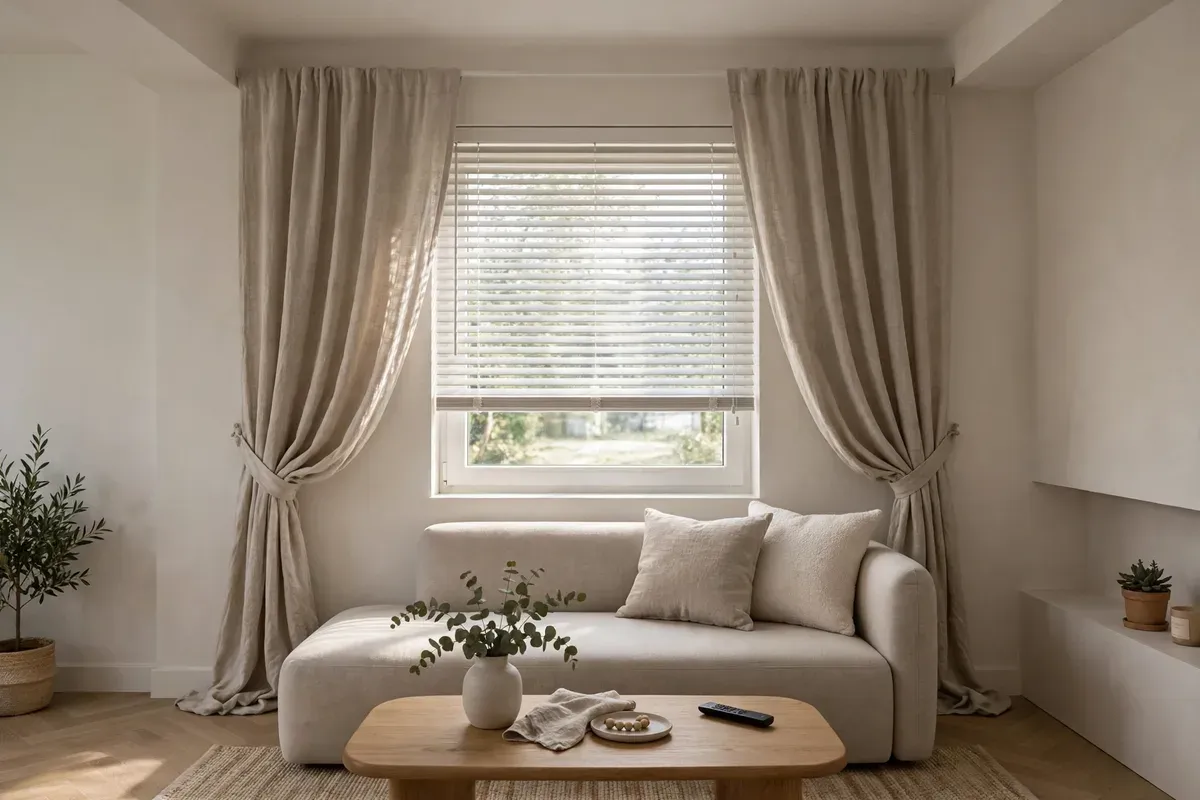
- 14. Layer curtains over blinds
- 15. Use a no-drill tension rod if you rent
- How to measure curtains for a small living room
- What to buy first if you only change one thing
Curtains do more work in a small living room than almost any other decoration. A sofa takes floor space, a rug takes floor space, but curtains take wall space you were not using anyway, and they change how tall the room feels the moment they go up. The trick is length and placement, not price. A 25 dollar pair hung from the right height can make an 8 foot ceiling read like 9 feet, while a 200 dollar pair hung at the window frame just frames the window. These living room curtains ideas are built for small rooms where every inch counts, and each one uses the window to stretch the space instead of shrinking it.
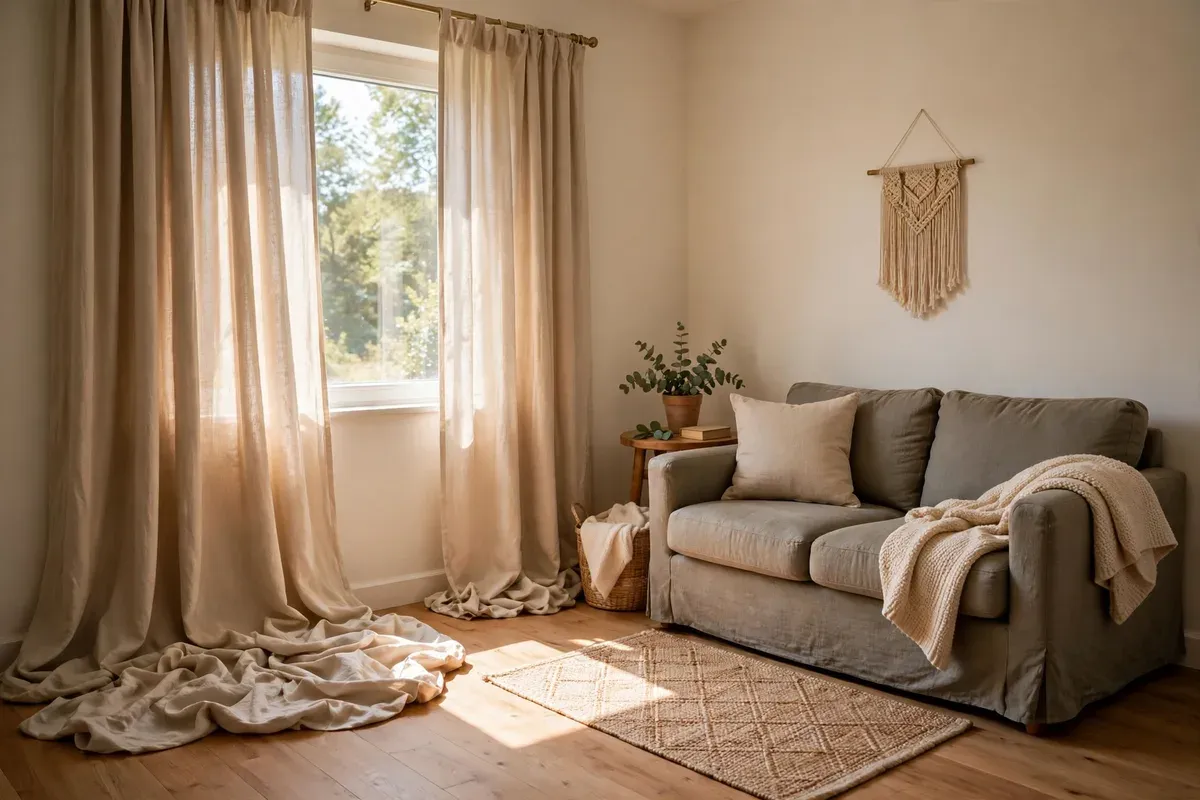
1. Let floor-length curtains puddle slightly
Floor-length curtains that pool 2 to 3 inches on the floor make a small room feel taller because the eye follows one long line from the rod to the ground with nothing breaking it. Buy panels 96 inches long for a standard 8 foot ceiling, and let the extra fabric rest on the floor instead of hemming it short. The puddle reads as soft and relaxed, and it hides the join between the wall and the floor, which is the line that tells your brain where the room ends.
Ready-made 96 inch panels cost 25 to 60 dollars a pair, and linen-look polyester is the safest pick since real linen wrinkles and costs twice as much. Keep the puddle small, 2 to 3 inches, since a 6 inch puddle collects dust and trips the vacuum. If pets or small children live in the room, choose a 1 inch break instead, where the fabric just kisses the floor, since a full puddle will be stepped on daily.
2. Mount the rod on the ceiling
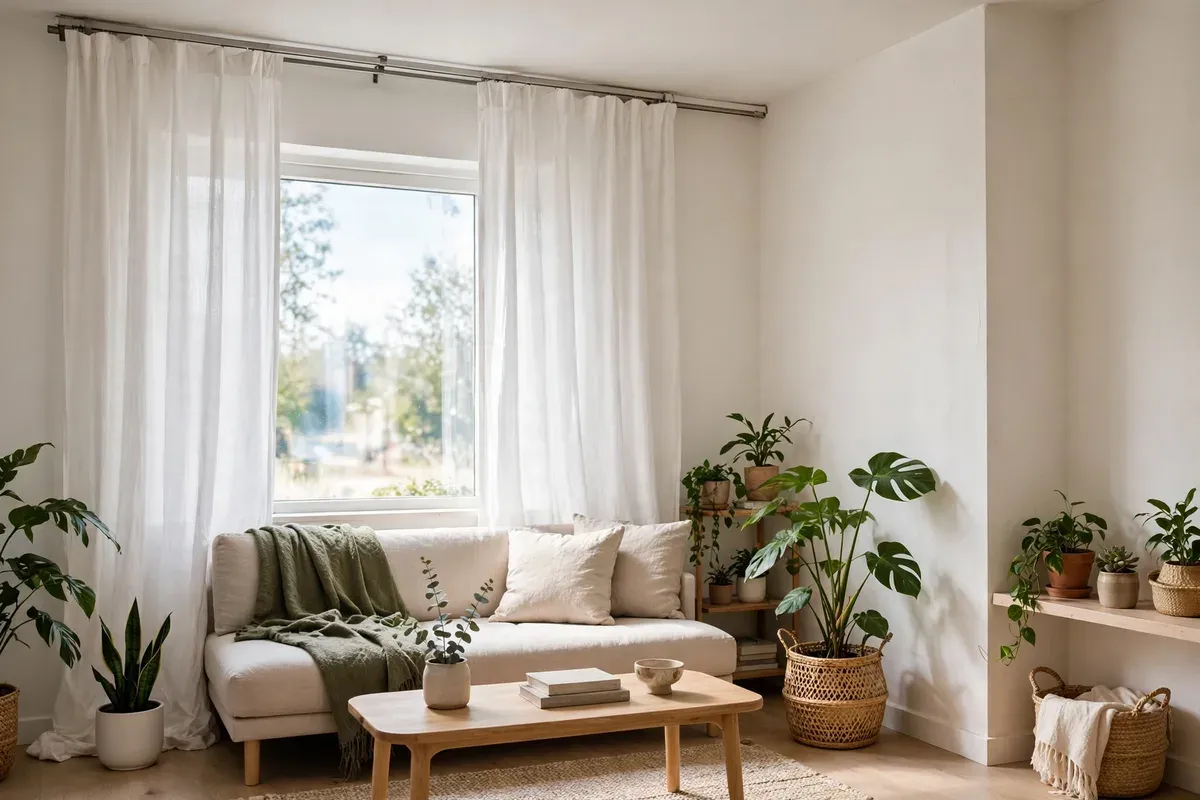
A ceiling-mounted curtain rod adds a full foot of visual height because the curtain starts where the ceiling starts, not where the window starts. Use a ceiling track or a rod mounted on brackets screwed into the ceiling joists, about 2 inches out from the wall, and hang panels that run the full height of the wall. The curtain becomes a fabric wall, and the room feels like it was built taller than it was.
A ceiling track costs 15 to 30 dollars for a 6 foot length, plus 10 to 15 dollars for the gliders and hooks. Find a joist with a stud finder before you drill, since drywall anchors alone will sag under the weight of full-length panels. The tradeoff is the install: it takes an hour and a drill, and you cannot move the rod later without patching holes, so measure twice and hang once.
3. Layer sheer and blackout curtains together
Sheer and blackout layers on one window give a small room two moods for the price of one rod setup. Hang the sheer on a back rod or the inner channel of a double rod, and the blackout on the front, so daytime light filters through the sheer while the blackout waits at the sides. In the evening you pull the blackout closed for privacy and sleep, and the room never needs a second window treatment.
A double rod costs 20 to 40 dollars, and a pair of sheer panels costs 15 to 30 dollars on top of whatever blackout panels you already own. Buy the sheer in white or warm white, not a color, since a colored sheer tints the whole room when the sun hits it. The tradeoff is bulk: two layers take up 4 to 5 inches of depth at the sides when open, so this works best on windows with at least 6 inches of clear wall on each side.
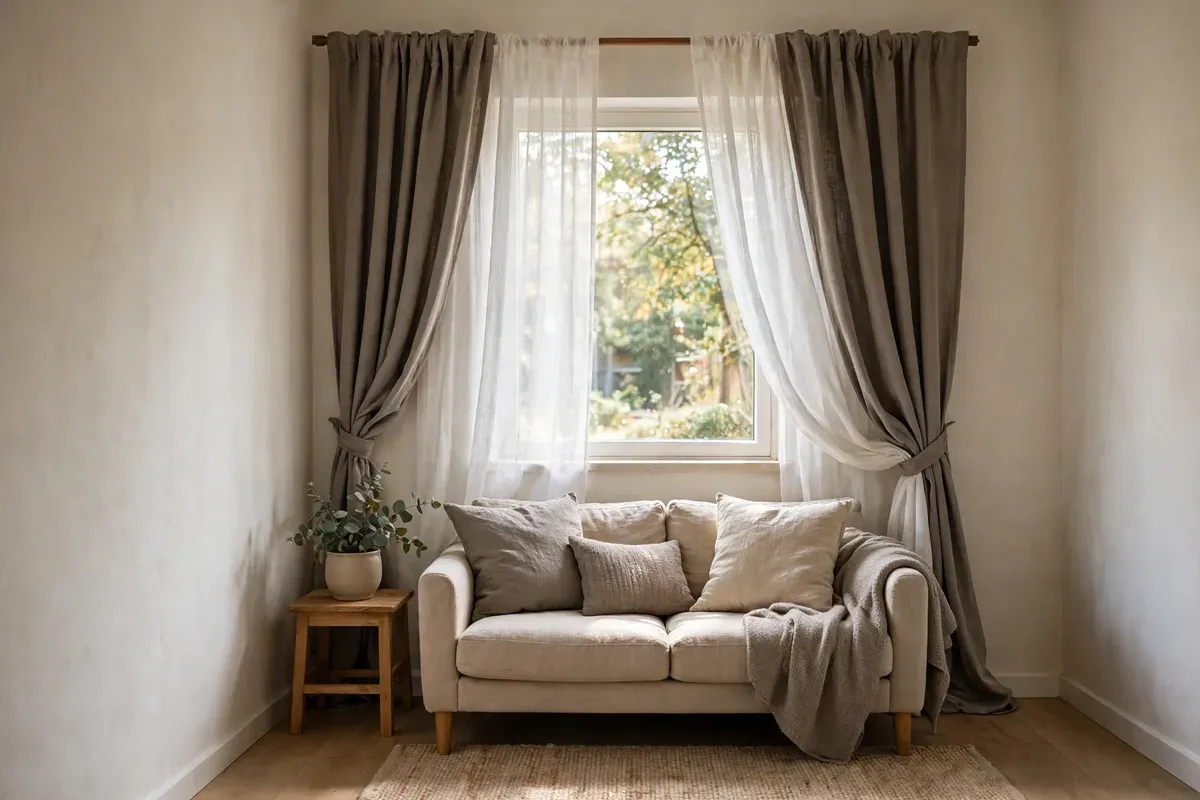
4. Hang curtains wide of the window frame
Hanging the rod 8 to 12 inches wider than the window on each side makes the window look bigger and the wall look wider, which is the fastest way to make a small room feel less cramped. When the curtains are open, the panels stack on the wall, not over the glass, so the full window shows and the light comes in. A 36 inch window with panels hung wide reads like a 60 inch window.
A rod that spans 12 to 16 inches past the frame on each side costs 20 to 35 dollars for a 48 to 72 inch adjustable rod. Buy panels 1.5 to 2 times the width of the rod so they still look full when they stack at the sides. The tradeoff is wall space: if the window sits close to a corner or a bookshelf, there may be nowhere for the panels to stack, so check the clearance before you buy the longer rod.
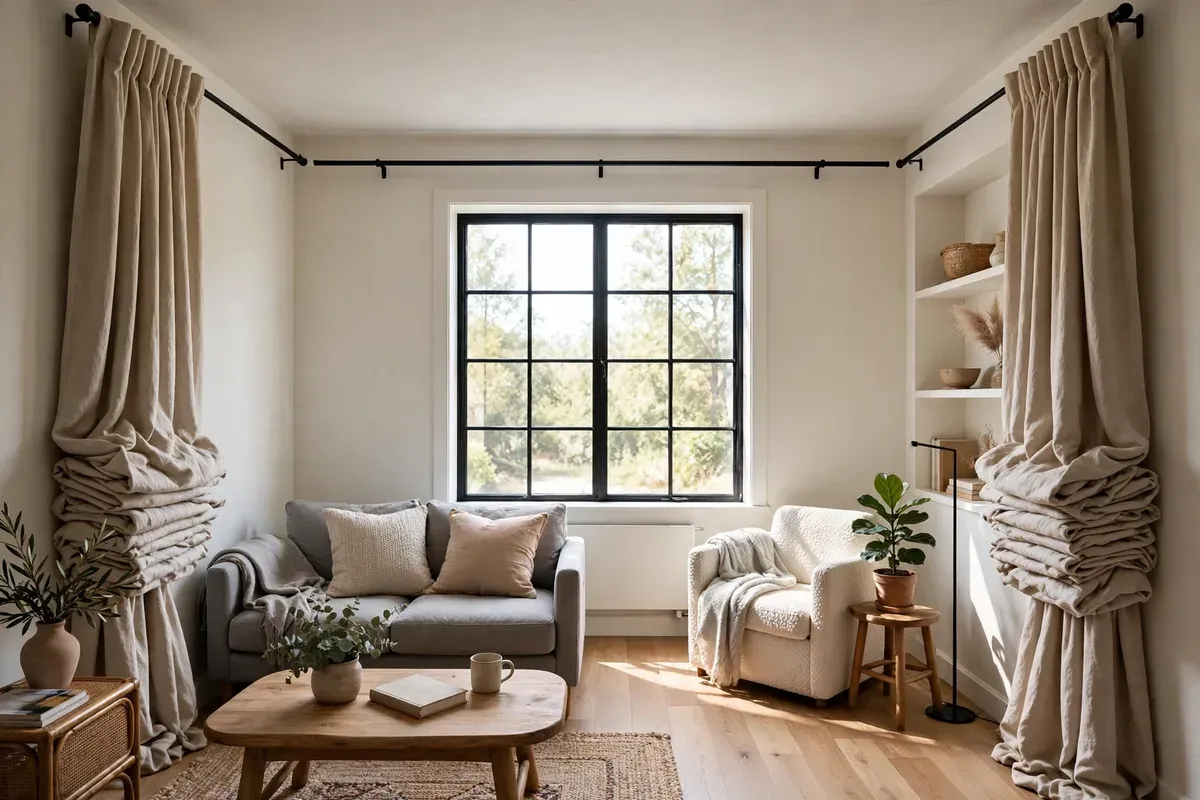
5. Choose lightweight linen curtains
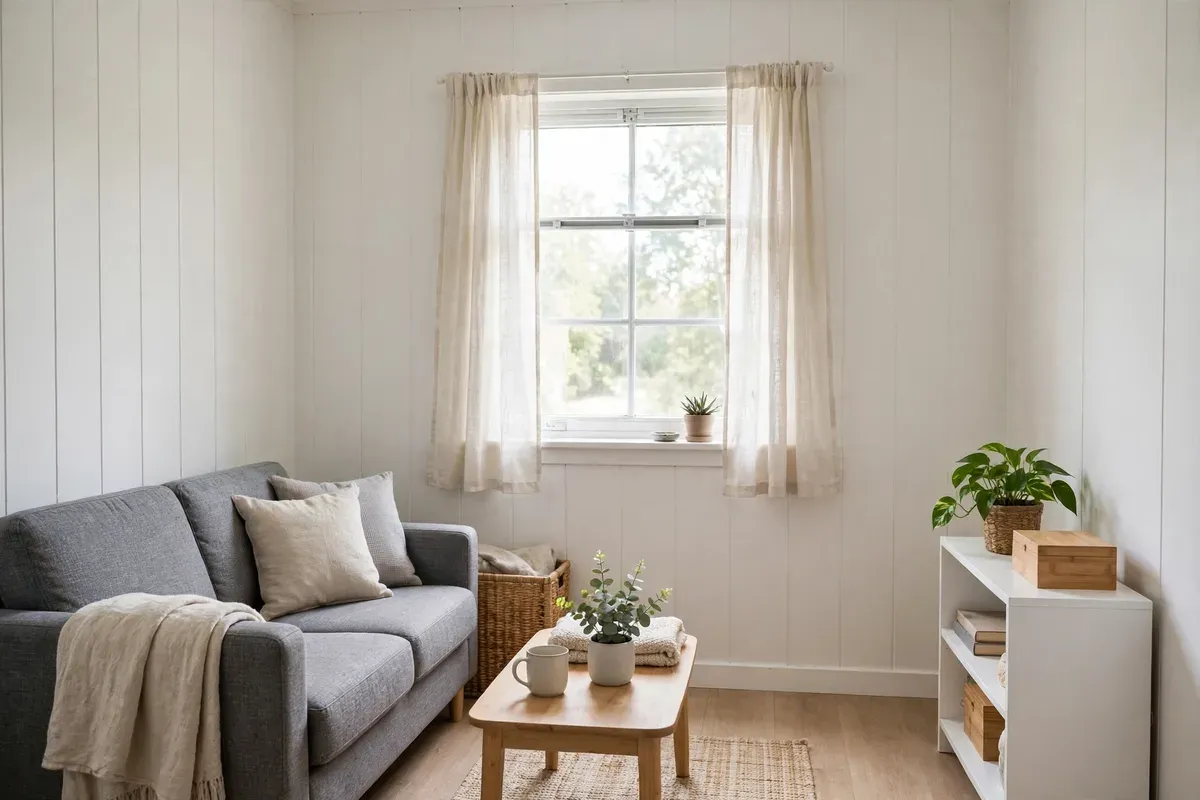
Lightweight linen curtains suit a small living room because they move with the air and let light through instead of sitting like a heavy wall of fabric. A linen or linen-look panel in pale oatmeal weighs half what a cotton canvas panel weighs, so it hangs in soft folds and never looks stiff. The texture reads expensive even at a low price, and the slight wrinkle is part of the look, not a flaw to iron out.
Linen-look panels cost 30 to 70 dollars a pair, while real linen runs 80 to 150 dollars a pair and needs gentle washing. Linen shrinks about 3 to 5 percent in the wash, so buy panels 2 inches longer than you need if you plan to wash them. The tradeoff is privacy: light linen shows silhouettes at night when the room is lit, so pair it with a sheer or a blind if the window faces a street.
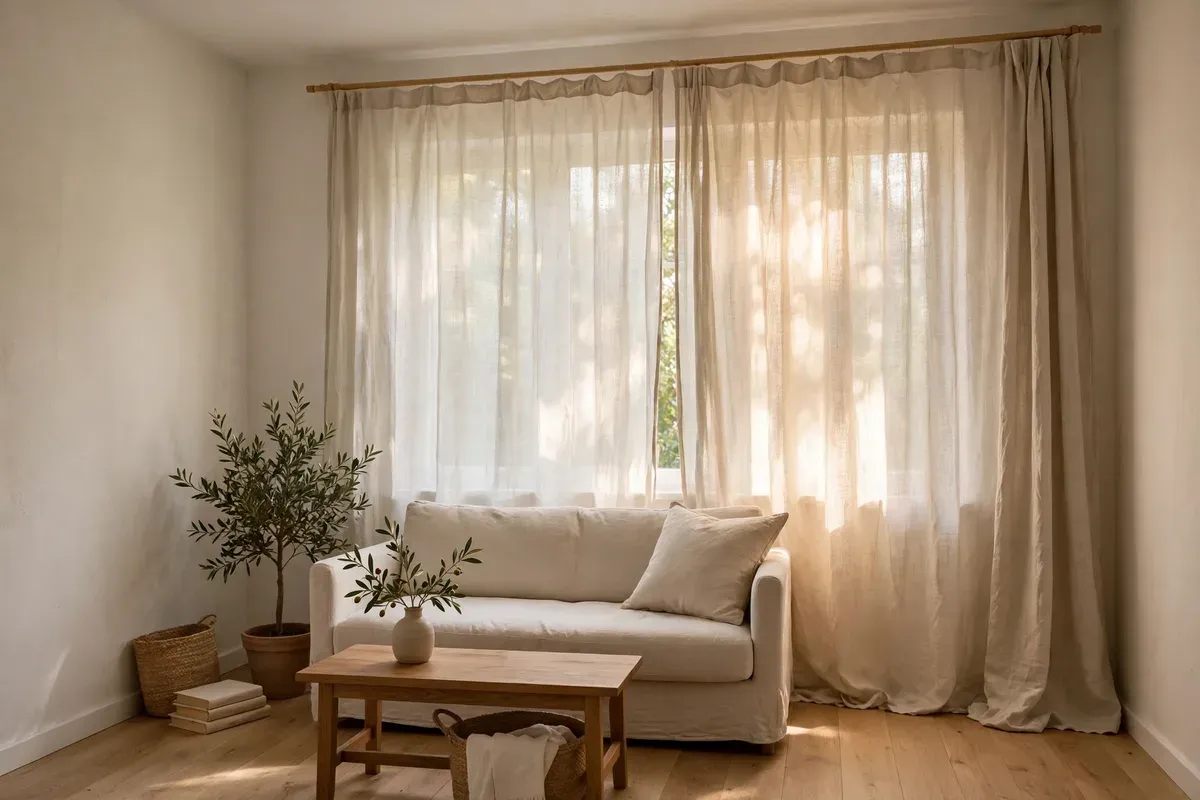
6. Place the rod above the frame for height
Mounting the rod 4 to 6 inches above the window frame is the simplest of all the living room curtains ideas, and it costs nothing beyond the rod you already own. The extra strip of wall between the frame and the rod disappears behind the curtain, so the window looks taller and the ceiling looks higher. It works on every window shape, and it takes ten minutes with a drill and a level.
Mark the rod height with a pencil and check it with a level before you drill, since a rod that slopes even half an inch shows at once on a long wall. Use brackets rated for at least 10 pounds if the panels are lined or heavy. The tradeoff is a small one: the top of the window frame shows a gap of bare wall when the curtains are open, so keep the rod within 6 inches of the frame unless the ceiling is high enough to go further.
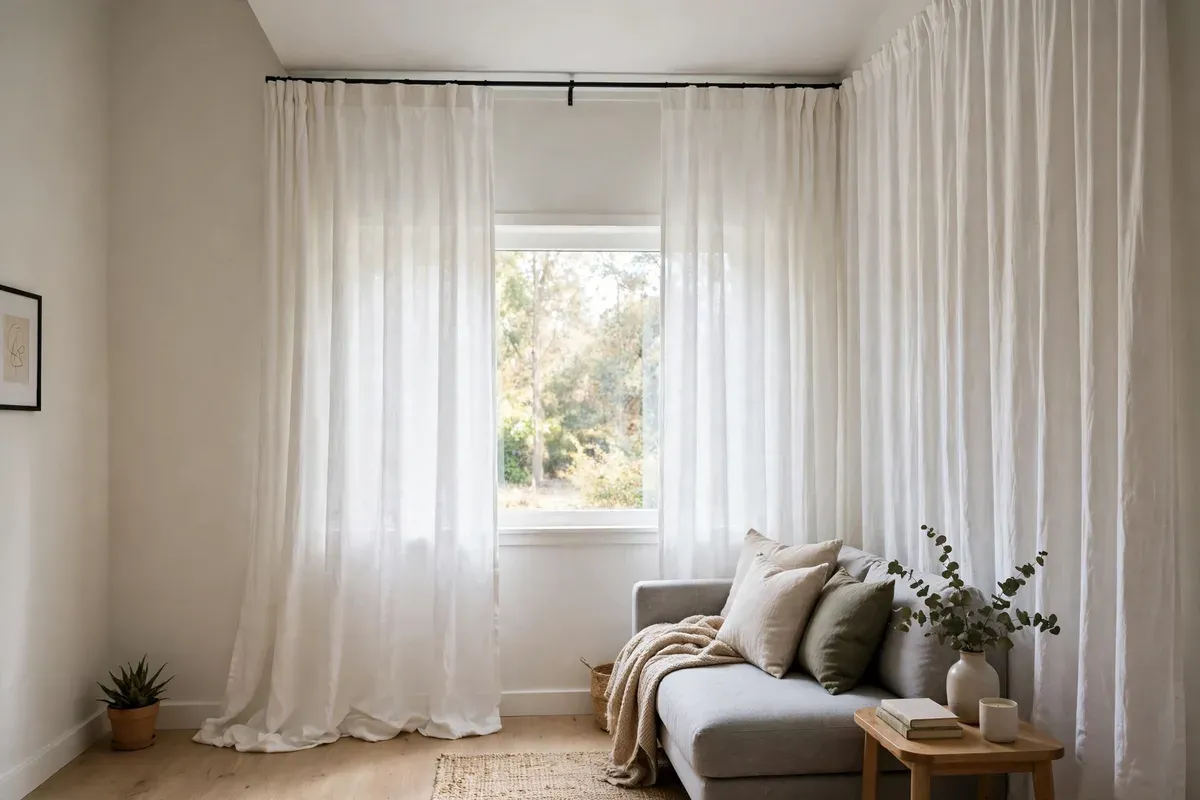
7. Dress a narrow window with full-width panels
A narrow window in a small room can look like a slit, but full-width curtain panels that span the whole wall turn it into a feature. Hang a rod the full width of the wall, 6 to 8 feet, and use panels that cover the wall from end to end, so the window becomes a small bright gap in a wide fabric wall. The room reads wider at once, and the narrow window stops being the thing you notice first.
A wall-width rod costs 25 to 45 dollars, and you will need 4 to 6 panels, 60 to 120 dollars total, to cover the span without gaps. Choose a light fabric so the wall of curtains does not darken the room. The tradeoff is cost and light: more panels cost more, and the fabric covers wall that could hold a shelf or art, so this works best on the one wall that has nothing else on it.
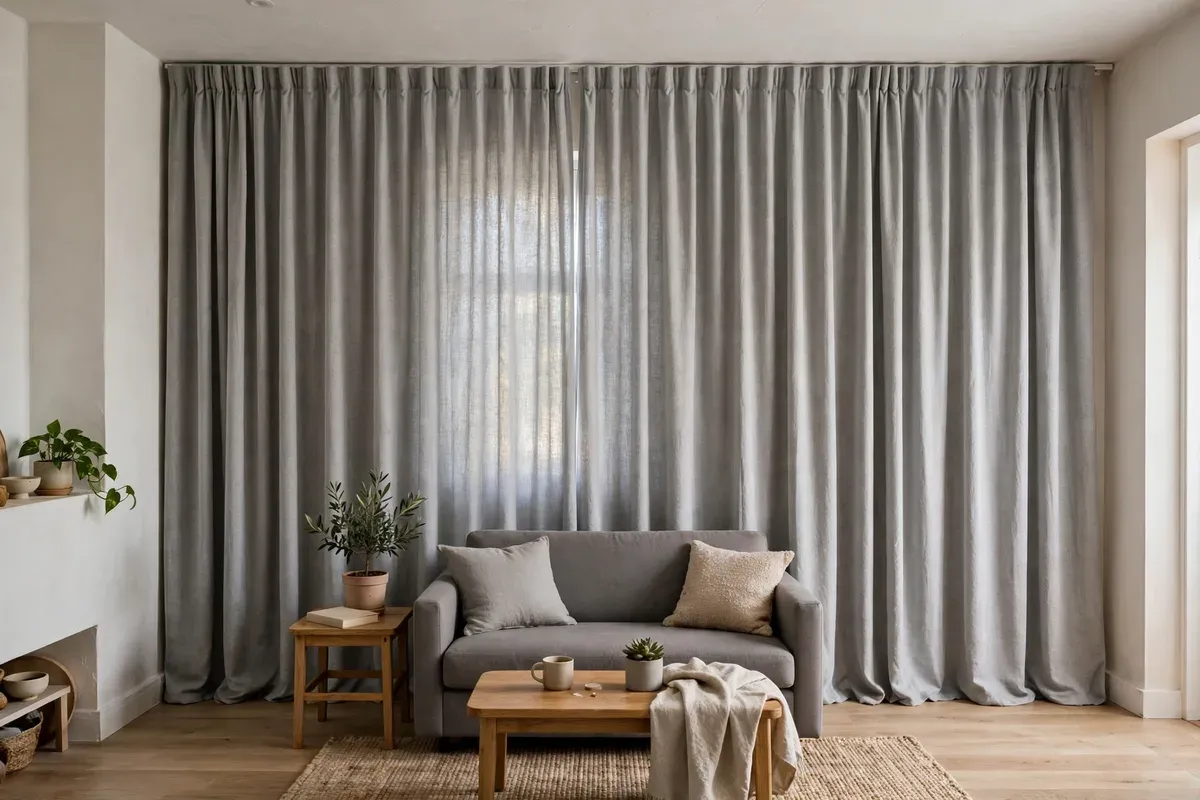
8. Use simple tiebacks to open up the wall
Simple fabric tiebacks pull the curtains to the sides and open up the wall, which matters in a small room where every inch of window is also an inch of light. A tieback costs almost nothing, a length of the same fabric or a plain cotton cord, and it holds the panel in a soft curve instead of a flat stack. The window stays fully open during the day, and the tieback itself becomes a small detail that makes the curtains look finished.
Tiebacks cost 5 to 15 dollars a pair, or make them from a 12 inch strip of matching fabric. Place them about two-thirds of the way down the panel, around 36 to 40 inches from the floor on a standard panel, so the curve looks natural. The tradeoff is dust: tiebacks hold the fabric in folds that collect dust faster than a straight hang, so shake them out once a month when you vacuum.
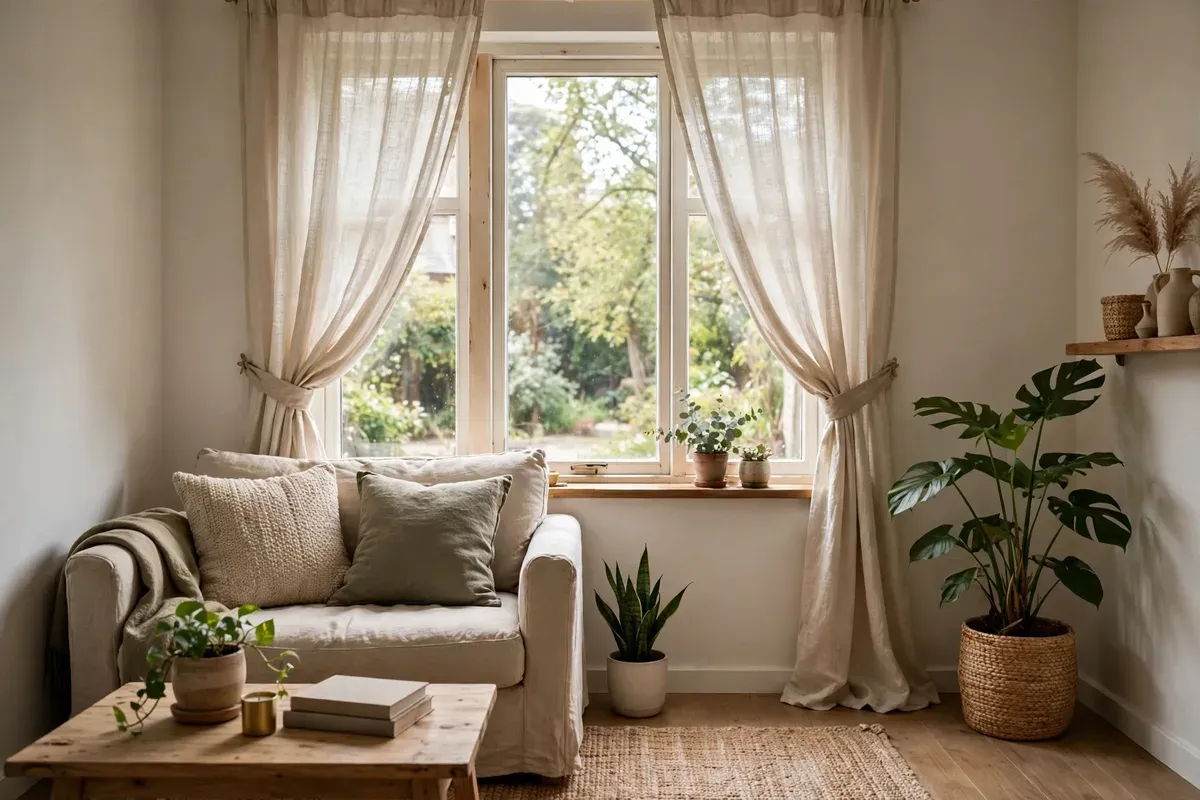
9. Pick a color that blends with the wall
Curtains in the same color as the wall, or one shade lighter, make a small room feel bigger because the wall and the fabric read as one surface with no hard edge. A warm white curtain on a warm white wall, or a pale grey curtain on a pale grey wall, lets the eye travel past the window instead of stopping at it. The room gains a calm, unbroken backdrop, and the furniture in front of it stands out more.
Take a paint chip to the store and match it in daylight, since a curtain that looks white under shop lights can read yellow at home. Solid colors work best here, and a subtle texture like linen weave keeps the fabric from looking flat. The tradeoff is that the curtains will not be the star of the room, so if you want a bold moment, put the color in the cushions or the rug instead and let the curtains stay quiet.
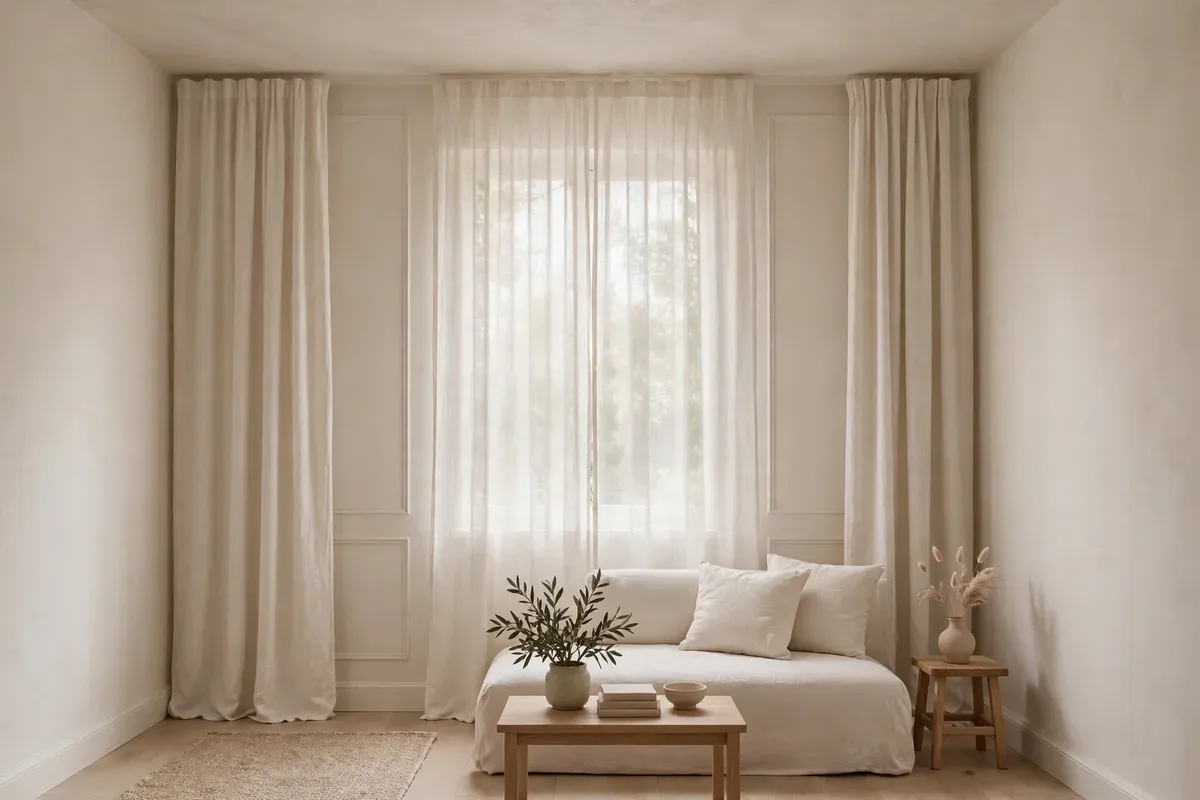
10. Keep patterns small so they do not crowd the room
Small-scale patterns, a fine stripe, a tiny dot, a small geometric repeat under 2 inches, add interest without crowding a small living room. A large floral or a bold block print breaks the wall into pieces and makes the room feel busy, while a small pattern reads as texture from across the room and only shows its detail up close. It is the same reason small rooms take small rugs: the scale of the pattern should match the scale of the space.
Look for a repeat of 1 to 2 inches and keep the contrast low, two tones close together rather than black on white. Small-pattern panels cost the same as plain ones, 25 to 60 dollars a pair. The tradeoff is that small patterns show creases and fading more than plain fabric, so steam them once a season and keep them out of direct afternoon sun if the window faces west.
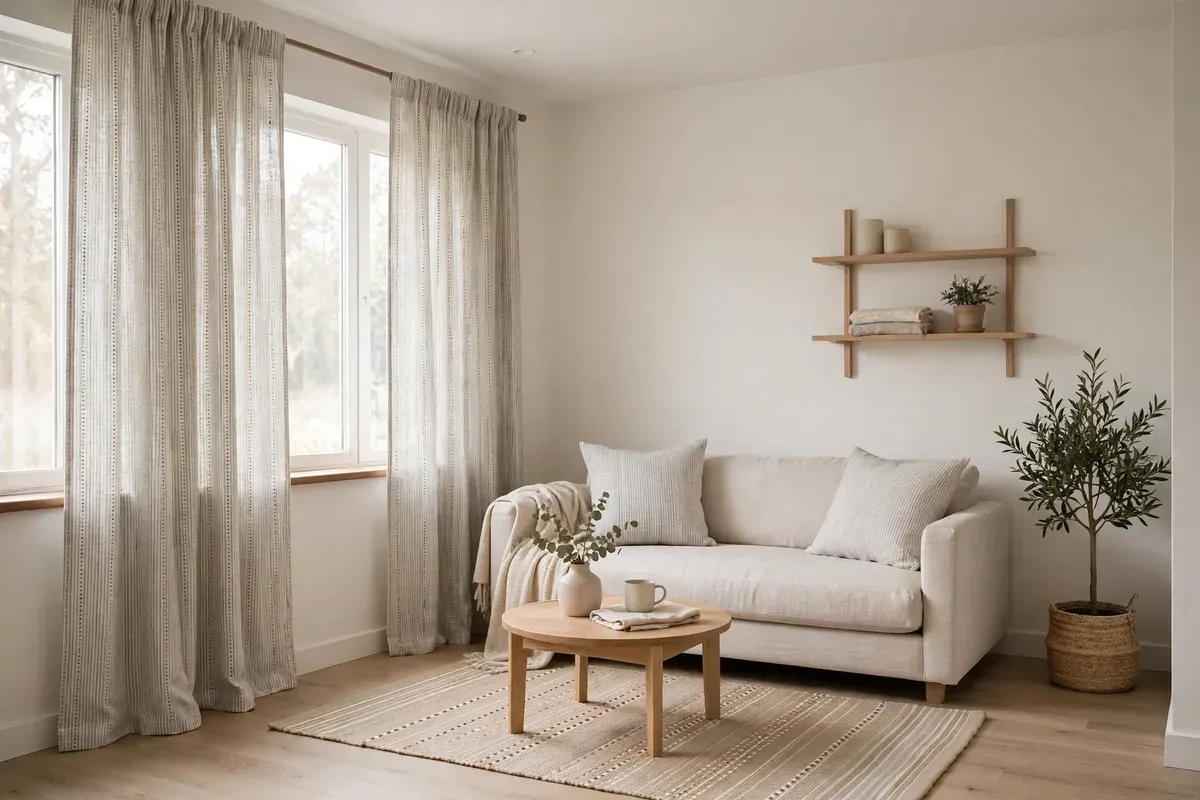
11. Use sheer curtains for light in a dark room
Sheer curtains are the fix for a small living room that never gets enough light. A white voile panel lets in about 70 to 80 percent of the daylight while softening the view from outside, so a north-facing room stops feeling like a cave. The sheer glows when the sun hits it, which adds a light source to the room that no lamp can copy, and it costs less than any other window treatment.
Voile panels cost 12 to 25 dollars a pair, and a slim rod to hang them costs 10 to 15 dollars. Hang the sheer on its own rod close to the glass so it sits flat and does not billow into the room. The tradeoff is privacy at night: a sheer shows everything once the lights are on, so add a blind or a blackout panel for the evening if the window faces a neighbor.
12. Add velvet curtains for winter warmth
Velvet curtains make a small living room feel warmer in winter, and they do real work beyond the look. A lined velvet panel blocks drafts from an old window frame and cuts the chill that sits by the glass on cold nights. The heavy fabric also deadens echo in a small room with hard floors, so the space sounds softer as well as looking richer.
Velvet panels cost 50 to 120 dollars a pair, and lined ones sit at the top of that range. Choose a deep tone like forest green or rust, since pale velvet shows marks and crushed velvet shows every touch. The tradeoff is weight: a pair of lined velvet panels can weigh 6 to 8 pounds, so the rod and brackets must be rated for at least 15 pounds, and the panels need a full 4 to 6 inches of wall on each side to stack when open.
13. Try cafe curtains for privacy without blocking light
Cafe curtains cover only the lower half of the window, which is exactly the half neighbors see through. Hang a slim rod at the midpoint of the window, about 36 to 42 inches from the sill on a standard window, and the top half stays open to the sky while the bottom half gives you privacy. A small living room keeps its daylight and its view, and the curtain costs half as much fabric as a full panel.
A cafe curtain and rod cost 15 to 30 dollars total, and a white cotton panel is the classic pick because it washes easily. Measure the rod height so the curtain covers the sightline from the street, which is usually the bottom 18 to 24 inches of the glass. The tradeoff is that the top half of the window is bare, so this works best on ground-floor windows and less well on a bedroom-facing window where full coverage matters.
14. Layer curtains over blinds
Curtains over blinds give a small living room the best of both: the blind controls the light hour by hour, and the curtain softens the hard lines of the blind. Hang the curtain rod 2 to 3 inches in front of the blind, on brackets that clear the blind housing, and let the panels frame the window while the blind does the work. The window looks finished even when the blind is down, which is the part most rooms get wrong.
A basic venetian blind costs 20 to 40 dollars, and the curtain panels on top run 25 to 60 dollars a pair. Use a blind in white or warm white so it disappears behind the curtain when open. The tradeoff is cleaning: blinds collect dust and need a wipe every two weeks, and the curtain behind them makes the blind harder to reach, so pick a blind with a simple tilt wand rather than cords.
15. Use a no-drill tension rod if you rent
A no-drill tension rod is the renter-friendly answer to living room curtains ideas that need no holes in the wall. The rod wedges between the sides of the window frame with spring pressure, so it holds a light curtain and comes down in seconds when you move out. It costs less than a takeaway dinner and it leaves no trace, which is the whole point in a rental where the deposit depends on the walls.
A tension rod costs 8 to 15 dollars, and a pair of light cotton or sheer panels costs 15 to 30 dollars. Measure the inside width of the frame and buy a rod that covers that range with the spring half-compressed, since a rod stretched to its limit slips. The tradeoff is weight: a tension rod holds 5 to 7 pounds at most, so it takes sheers and light cotton, not lined velvet, and it works only inside a frame, not across an open wall.
How to measure curtains for a small living room
Measure the window before you buy anything, since a panel that is 6 inches too short is the most common curtain mistake in a small room. Measure the width of the window frame, add 16 to 24 inches for the wide hang, then multiply by 1.5 for the fullness of the panels. For length, measure from the rod position to the floor, add 2 to 3 inches for a puddle, and write both numbers down before you shop, since guessing in the store is how the wrong length ends up on the wall.
Check the rod position with the curtains closed and open, since a panel that looks right closed can stack too wide open and cover a bookshelf or a light switch. A tape measure, a pencil and ten minutes save a return trip. For the rest of the room, our how to make a small living room feel bigger covers the furniture side of the same problem, and our small living room layout ideas show where the sofa should sit once the curtains are up.
What to buy first if you only change one thing
If you change one thing, change the rod height. A rod mounted 4 to 6 inches above the frame and 8 to 12 inches wider than the window costs 20 to 35 dollars and makes the biggest difference of any single move in this list. Buy the rod first, hang it, and live with the old curtains on it for a week before you buy new panels, since the new height alone may be enough.
Then pick the panels to match the light the room gets: sheer or linen for a dark room, blackout layers for a street-facing window, velvet for a cold one. For the bigger picture, our living room design ideas for small apartments cover the whole room, our living room wall art ideas show what to hang on the wall the curtains leave free, our living room corner ideas fill the empty corner beside the window, and our moody paint colors for small rooms help if the wall color itself needs to change.
Looking for more ideas? Browse our living room & bedroom stories.
Save to Pinterest