In this article
- 1. Layer three light sources at different heights
- 2. Drape a chunky knit throw over the sofa arm
- 3. Size the rug to the seating, not the room
- 4. Warm up one wall with color
- 5. Mix cushion textures, not just colors
- 6. Add a floor pouf for flexible seating
- 7. Build a tray vignette on the coffee table
- 8. Soften one chair with sheepskin
- 9. Bring in warm wood tones
- 10. Hang linen curtains high and wide
- 11. Carve out a reading nook in one corner
- 12. Keep a blanket basket by the sofa
- 13. Cluster candles for evening glow
- 14. Layer textiles instead of adding furniture
- 15. Style one shelf with warm ceramics and books
- How to keep a small living room cozy without clutter
- A cozy living room on a small budget
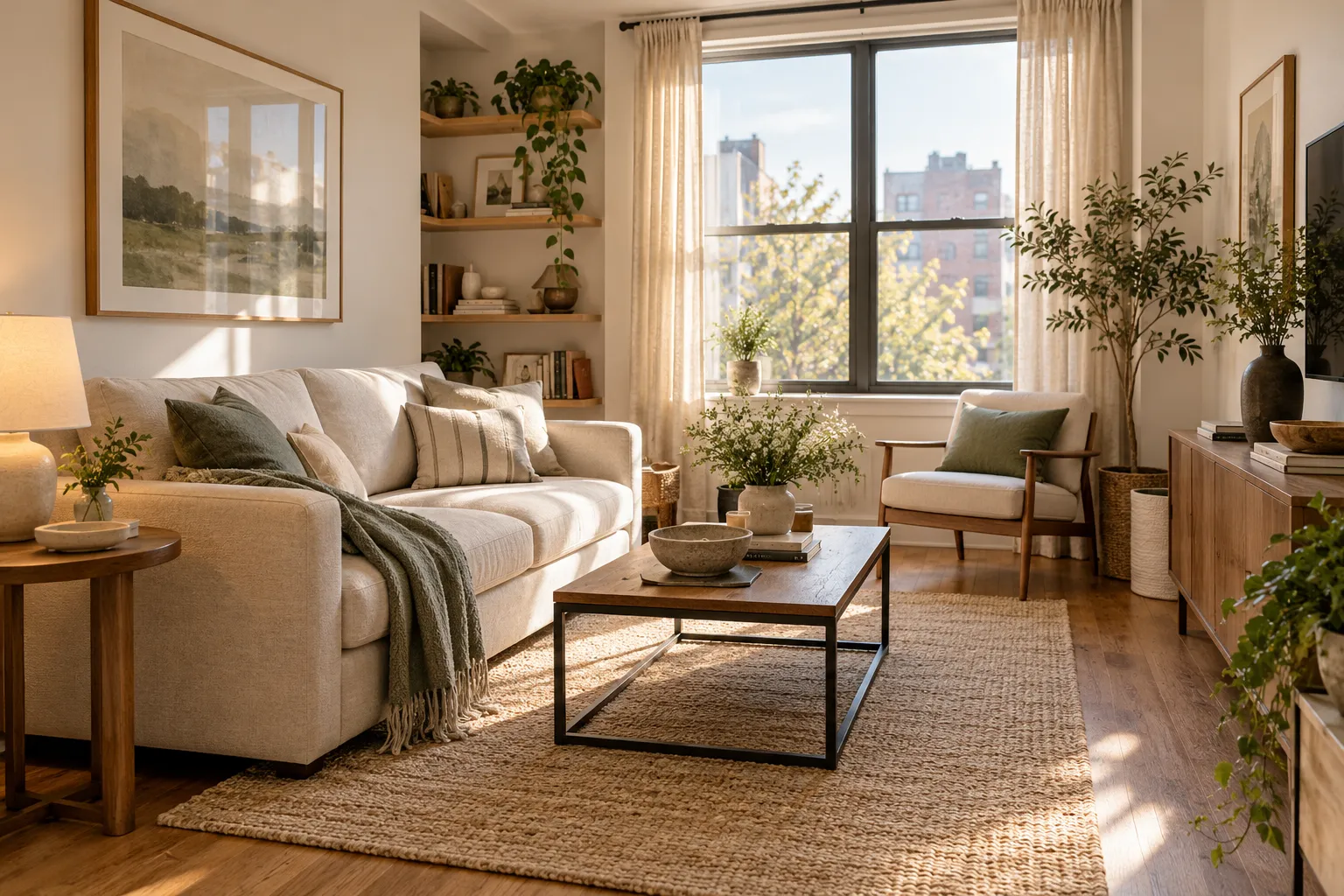
A small living room does not need more furniture to feel cozy. It needs warmth in the right places: light at eye level instead of only overhead, soft textures you actually touch, and warm color that makes the walls feel closer instead of farther away. Most small apartments already have the bones for this. A compact sofa, one rug and a window are enough to start, and every idea below works with that setup.
The difference between cozy and crowded comes down to size and restraint. A rug that is too small makes the room feel scattered, a throw folded wrong looks like laundry, and three lamps in a 120 square foot room is one too many. These 15 cozy living room decor ideas keep each choice small, specific and easy to undo, so you can test what works in your room before you spend much. If you are also rethinking the room itself, our guide on how to make a small living room feel bigger covers the space side of the same problem.
1. Layer three light sources at different heights
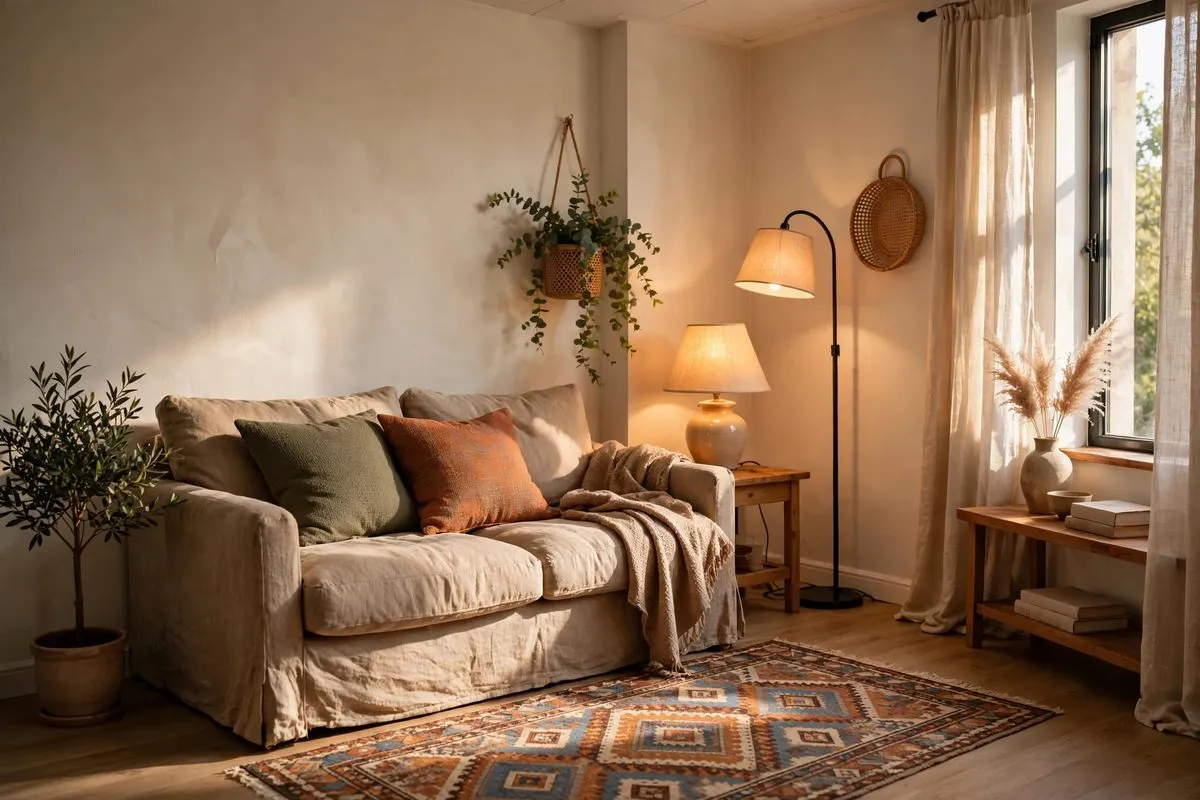
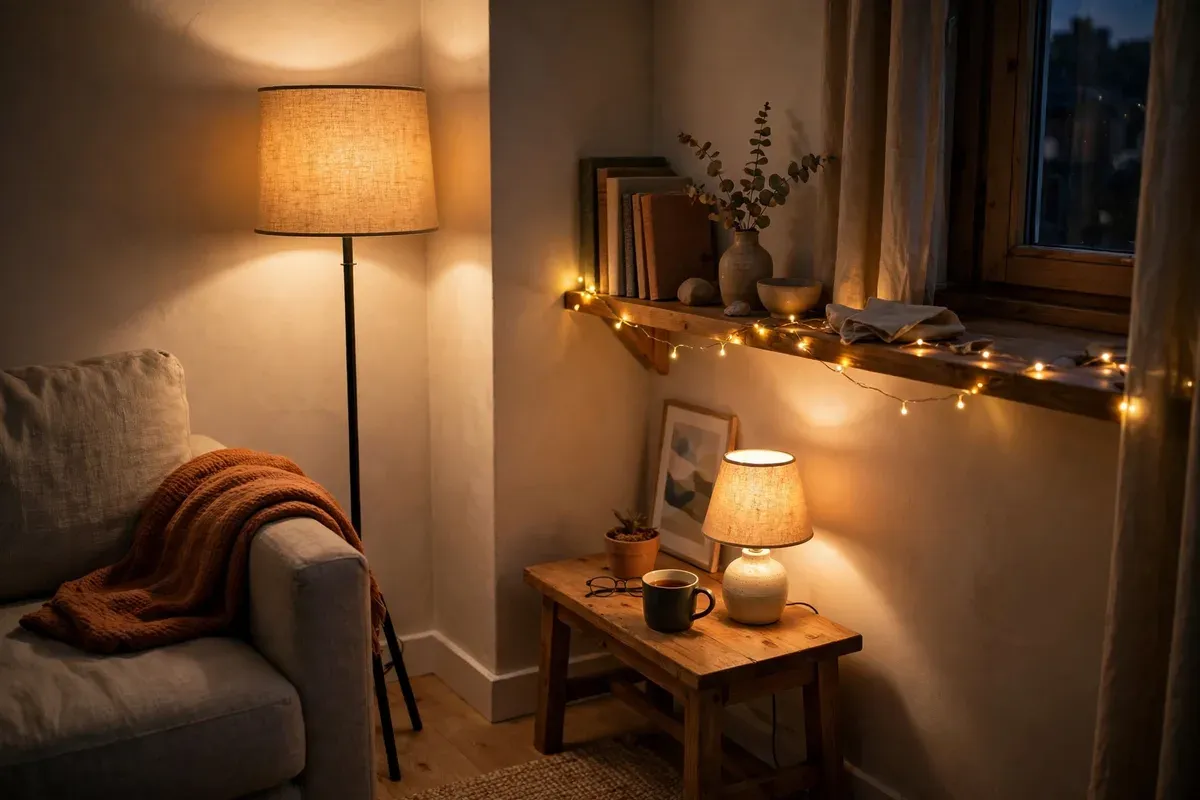
One ceiling light makes a small living room feel flat and a little harsh, because all the light comes from above and every shadow falls the same way. Three smaller sources at different heights fix that. A floor lamp beside the sofa, a table lamp on a side table and a short string of warm fairy lights on a shelf give the room depth, and each one can switch on alone in the evening. Aim for warm bulbs around 2700K, which read as amber rather than white.
Budget about 25 to 40 dollars for a basic floor lamp and 15 to 25 for a small table lamp, and keep the shades in linen or cotton so the light spreads softly. Put the floor lamp behind the sofa arm, not in the walkway, and keep fairy lights on a battery pack so no cord crosses the floor. The tradeoff is one extra plug used, so a small power strip tucked behind the side table keeps the cords out of sight.
2. Drape a chunky knit throw over the sofa arm
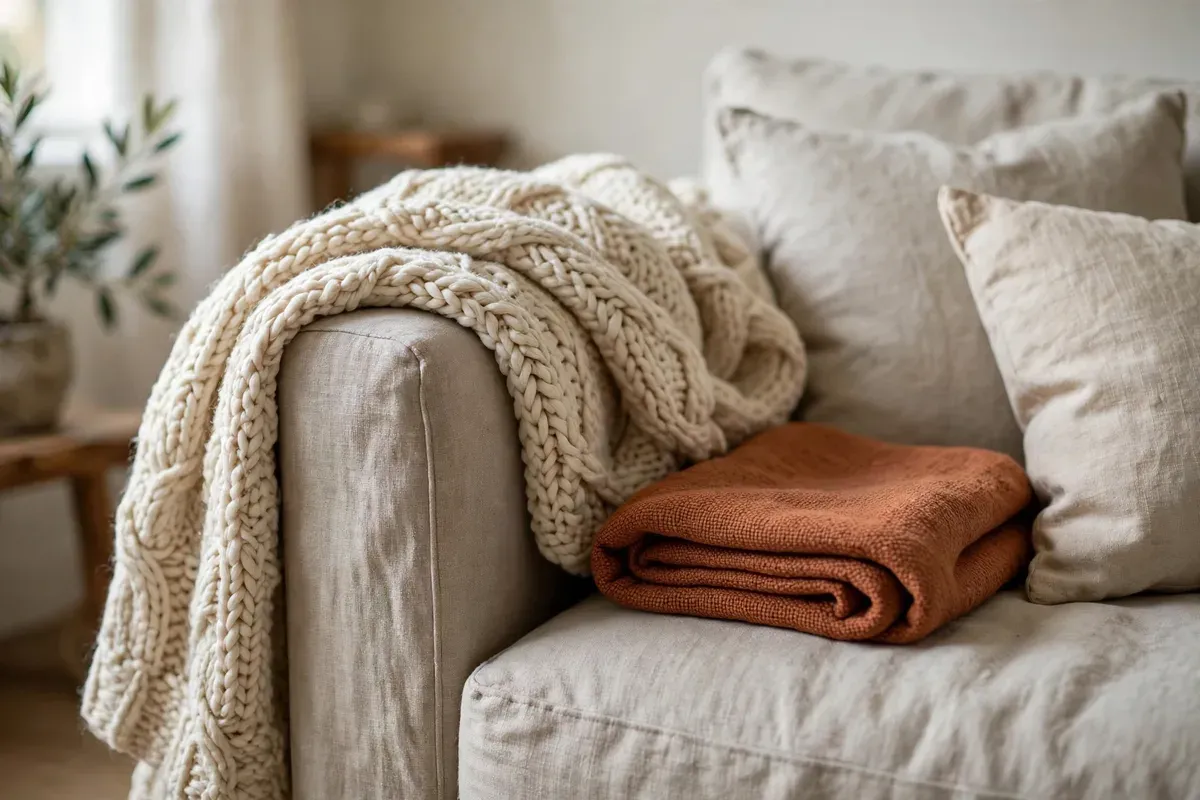
A chunky knit throw is the fastest way to make a sofa look inviting, because the texture does the work that a new sofa would. Fold it in thirds lengthwise, drape it over one arm, and let about 12 inches hang down the outside. That one fold looks deliberate. A throw tossed in a pile reads as mess, while a throw folded flat looks like a shop display.
Choose cotton or a cotton blend if the room runs warm, since acrylic knits trap heat and pill after a few washes. A decent knit throw costs 25 to 45 dollars, and one is enough for a two-seat sofa. Keep the color in the same family as the cushions, cream with rust or mustard with oatmeal, so the throw ties the sofa together instead of fighting it.
3. Size the rug to the seating, not the room
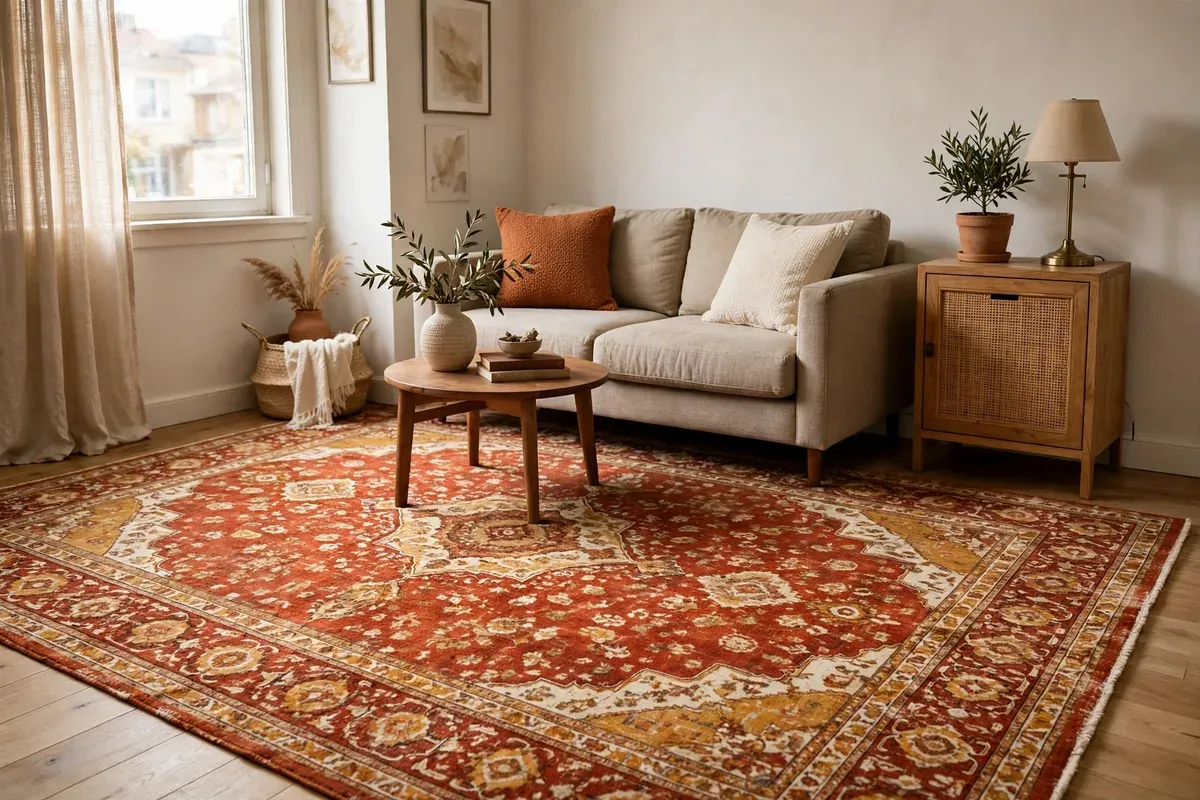
A rug that is too small is the most common mistake in a small living room. It floats in the middle of the floor, the sofa sits off it, and the whole arrangement feels unfinished. The fix costs nothing extra if you buy the right size first. For a two-seat sofa, a 5 by 7 foot rug works, and a 6 by 9 foot rug works if the seating area stretches past 8 feet. The front legs of the sofa and chairs should sit on the rug, with at least 6 inches of rug in front of them.
Warm colors matter as much as size. A rug in rust, ochre or a faded Persian pattern in warm tones pulls the seating together and warms the floor underfoot, while a pale rug in the same size can still look cold. A wool blend rug in 5 by 7 feet runs about 80 to 150 dollars, and a cotton flatweave runs 40 to 80. Leave 12 to 18 inches of bare floor between the rug edge and the wall so the room still breathes.
4. Warm up one wall with color
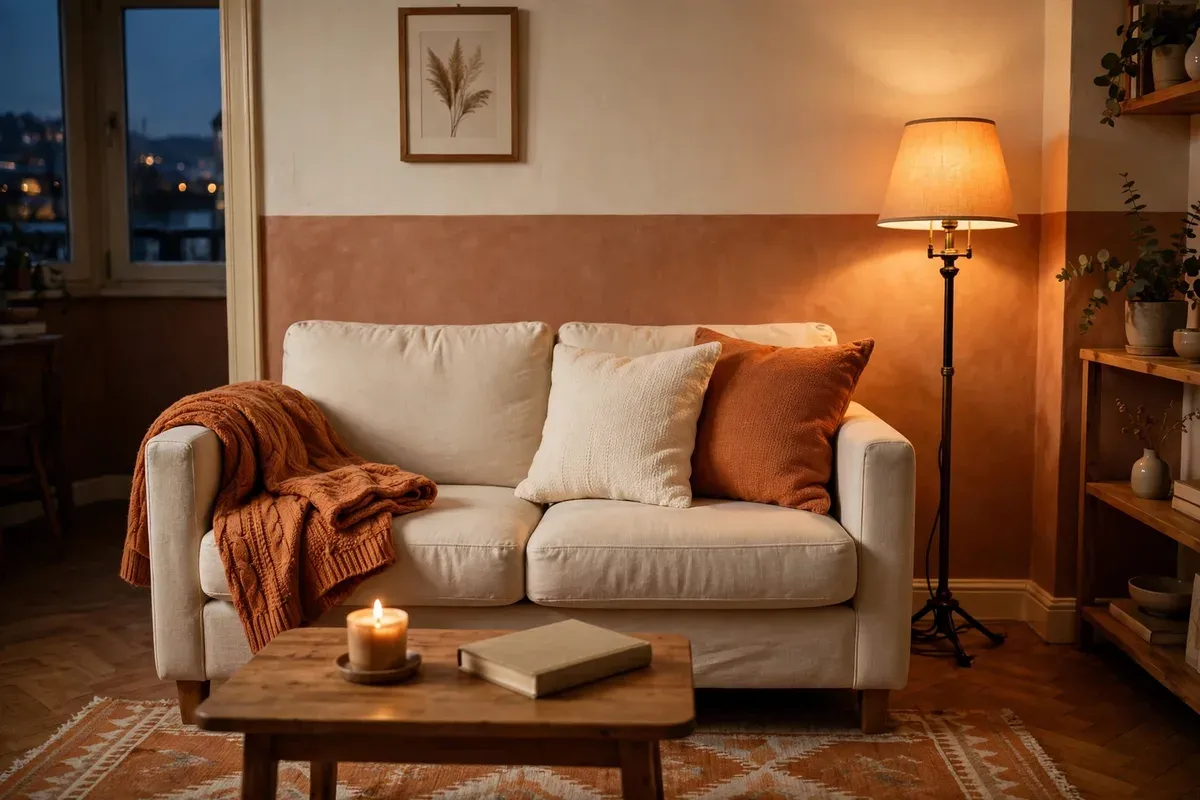
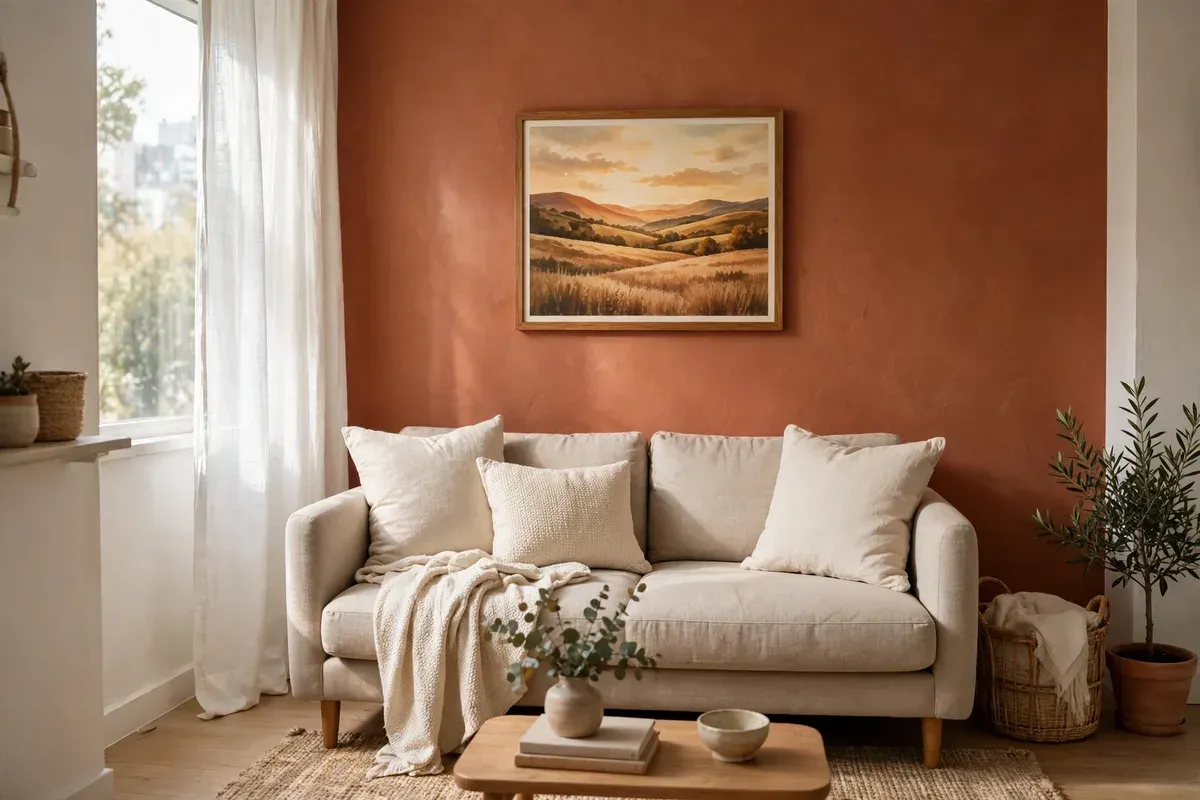
Painting one wall a warm color changes the whole room for the price of a single can of paint. Terracotta, warm clay or a muted mustard on the wall behind the sofa makes that wall feel closer, which is exactly what cozy means in a small room. A full room in a dark warm color can feel small, but one wall reads as a backdrop, not a box.
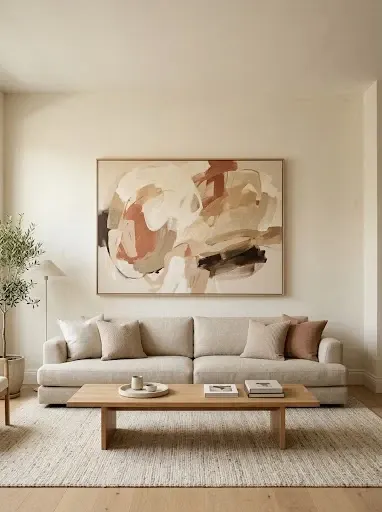
A quart of paint covers about 100 square feet, which is enough for most apartment accent walls, and costs 15 to 25 dollars. If you rent and cannot paint, a large piece of warm-toned art does the same job: one framed landscape print about 24 by 36 inches, hung so its center sits 57 inches off the floor. Our living room wall art ideas show how to size art so it anchors the sofa instead of floating above it.
5. Mix cushion textures, not just colors
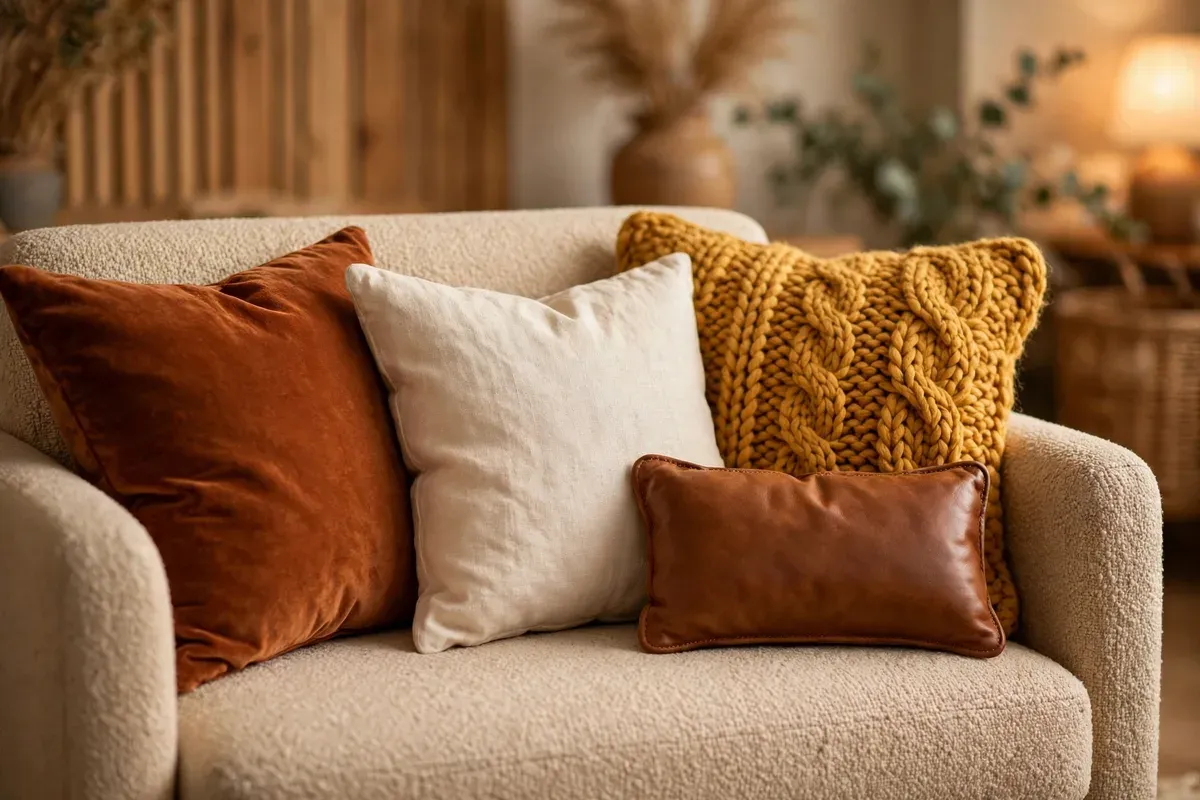
Three cushions in the same fabric look flat even when the colors are right. Mix the textures and the sofa comes alive: one velvet, one linen and one knit, in two or three warm colors. The rule that keeps it from looking random is simple. Keep all three in the same color family, rust, cream and mustard for example, and let the fabrics do the contrasting.
Two 18 inch cushions and one 12 by 20 inch lumbar cushion fit a two-seat sofa without crowding the seat. Budget 15 to 30 dollars per cushion cover if you buy covers and reuse inserts you already own, which also makes seasonal swaps cheap. Avoid sequins and shiny satin in a small room. They catch the light and draw the eye to one spot, while matte textures spread the warmth evenly.
6. Add a floor pouf for flexible seating
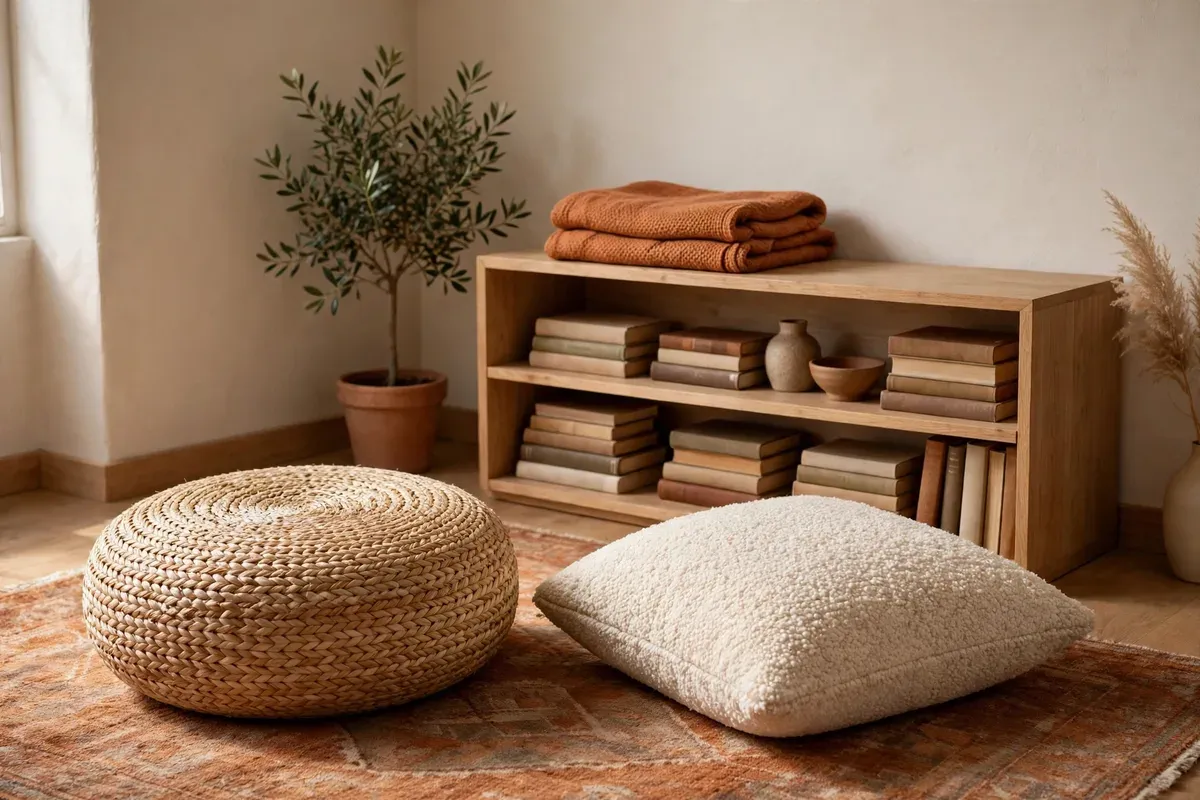
A small apartment rarely has room for a second armchair, but it almost always has room for a pouf. A round woven pouf about 18 inches across tucks beside the sofa, works as a footrest during a film and becomes a seat when a friend visits. When nobody needs it, it reads as a soft sculpture on the rug rather than spare furniture.
Woven jute or cotton poufs cost 30 to 60 dollars, and a bouclé floor cushion runs 20 to 40. Pick a pouf that is no taller than the sofa seat, about 15 to 17 inches, so it does not block the view across the room. The tradeoff is storage: a pouf holds nothing inside, so if you need hidden storage, a small storage ottoman in the same size does the same job and hides blankets.
7. Build a tray vignette on the coffee table
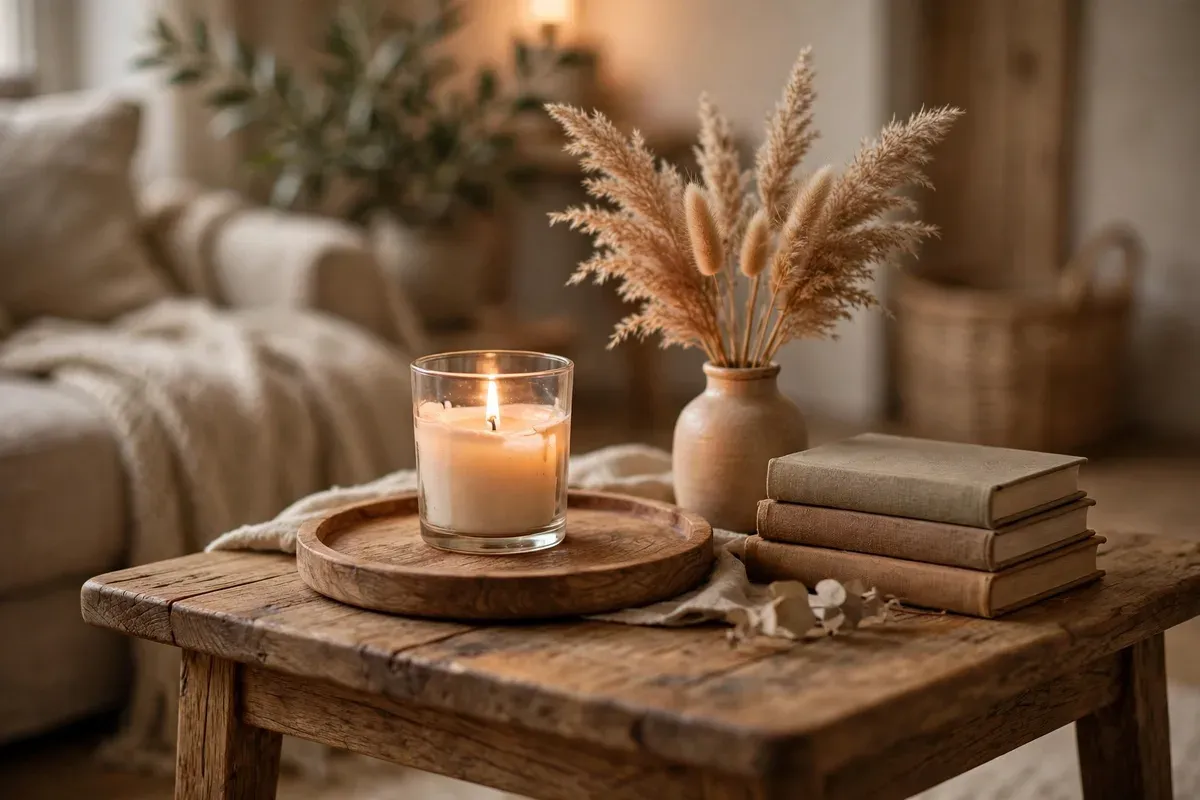
A bare coffee table looks unfinished, and a cluttered one looks like a dumping ground. A tray fixes both. A round wooden tray about 14 to 16 inches across holds a candle, a small vase and a book, and it gives the table a defined zone. When you need the table, you lift the whole tray off in one move.
Keep the vignette to three objects at different heights: something tall like a vase with dried stems, something mid height like a candle in a glass holder, and something flat like a stacked book. A wooden or rattan tray costs 15 to 30 dollars. Skip fresh flowers here if the table gets daily use. Dried pampas or eucalyptus lasts months, costs under 10 dollars a bunch, and never needs water near the books.
8. Soften one chair with sheepskin
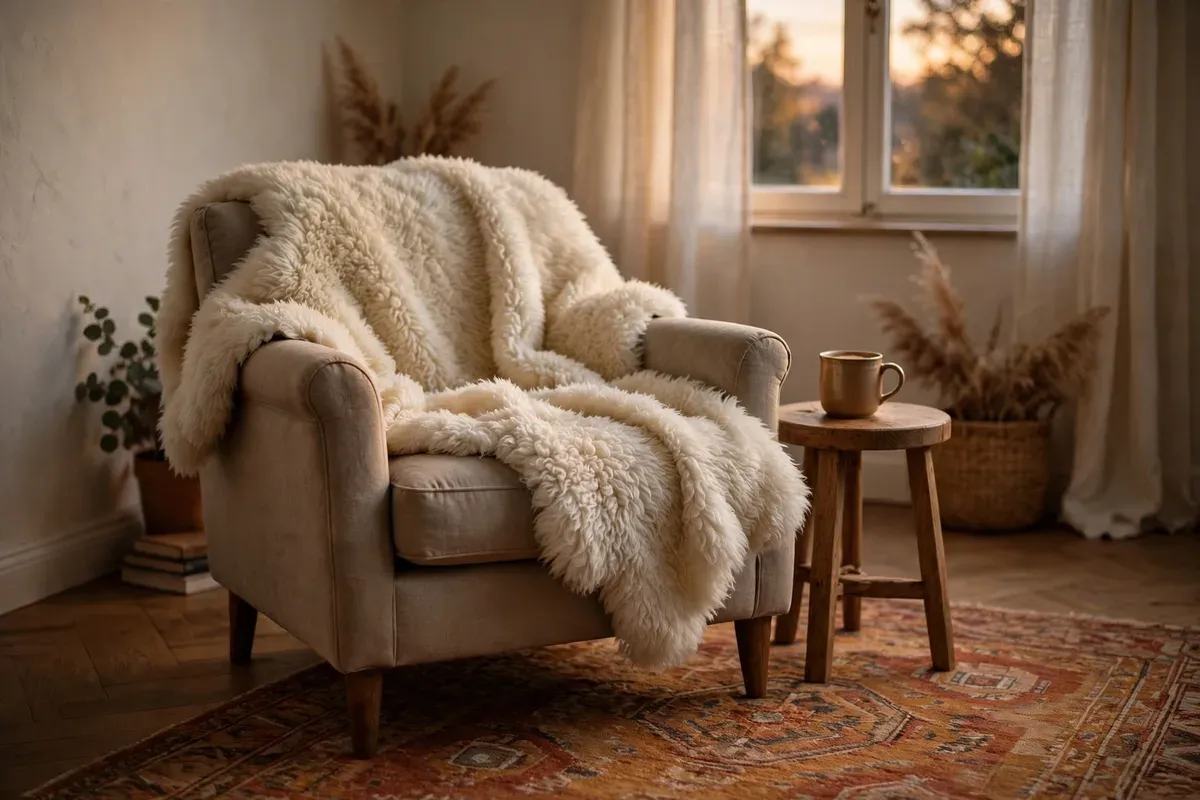
One sheepskin throw changes how a chair feels to sit in, which is the point of cozy that a picture cannot show. Drape a faux sheepskin about 24 by 36 inches over the back and seat of a single armchair, not over the whole sofa. On one chair it looks like an invitation. Spread across a sofa it slides around and looks untidy within a week.
Faux sheepskin costs 20 to 35 dollars, while real sheepskin runs 60 to 120 and needs more care. Choose cream or natural undyed tones, since bright white shows every mark in a room that gets daily use. Shake it outside once a month and spot clean with cold water, and it will hold its loft for a couple of years.
9. Bring in warm wood tones
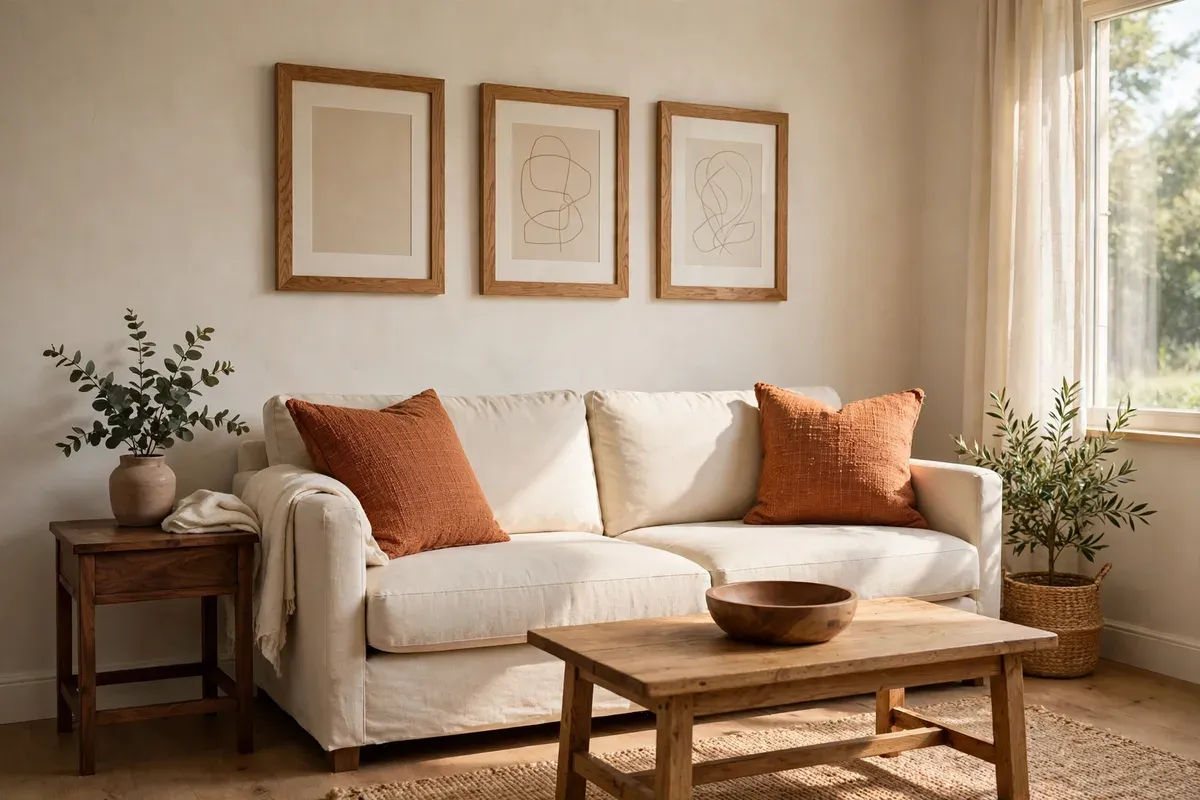
Cool grey and black metal can make a small living room feel like an office, even when the sofa is soft. Warm wood pulls it back. A walnut side table, oak picture frames or a wooden bowl on the coffee table adds amber tones that no fabric can. You do not need matching wood. Two or three warm wood pieces in different finishes look collected, while a full matching set looks like a showroom.
Start with the piece closest to where you sit: a side table about 18 inches across and 22 inches high, which costs 40 to 80 dollars in solid wood or 25 to 40 in veneer. Add oak frames around 8 by 10 inches for the art you already own. The risk is going too dark. In a room under 150 square feet, medium walnut and light oak warm the room, while near-black wood can make the corners feel heavy.
10. Hang linen curtains high and wide
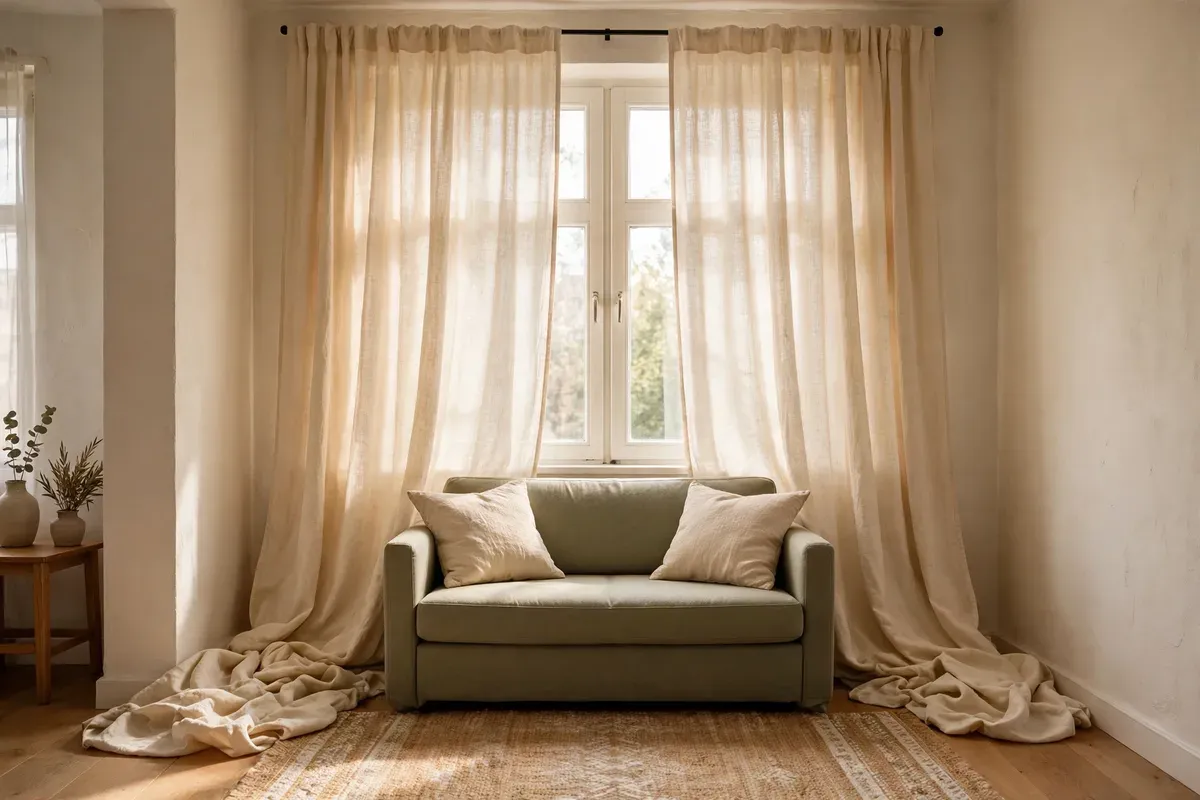
Short curtains that stop at the window frame make a window look smaller and a room feel boxed in. Hang a linen curtain rod 4 to 6 inches above the frame and 6 to 8 inches wider than the frame on each side, and let the curtains fall to the floor. The window looks taller, the wall looks wider, and the linen softens the daylight so the room glows instead of glaring.
Cream or warm oatmeal linen works in almost every small living room, and a pair of ready-made linen-look panels costs 30 to 60 dollars. Wash them once before hanging so they drop properly, and iron the top fold so they hang straight. The tradeoff is light: linen filters daylight but does not block it, so add a simple roller blind behind the curtains if the room faces a street and you need privacy at night.
11. Carve out a reading nook in one corner
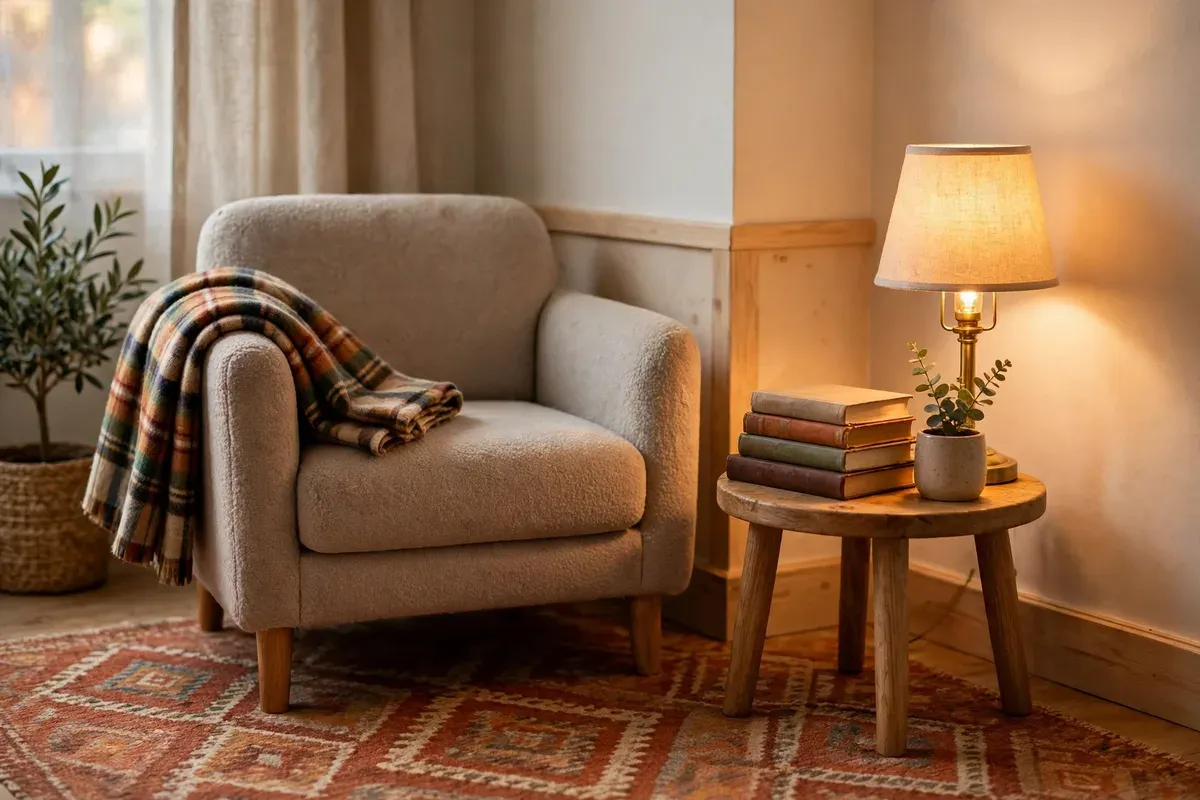
A reading nook sounds like a luxury, but in a small apartment it is just a corner used properly. One compact armchair, a small side table and a floor lamp in a corner you already ignore is enough. The chair should face into the room, not into the wall, so the nook feels like part of the living room instead of a timeout corner.
A brass or black floor lamp with a warm bulb costs 25 to 50 dollars, and a side table just big enough for a book and a mug runs 20 to 40. Keep the chair under 30 inches wide so the nook fits a corner without pushing the sofa. Add a folded plaid blanket over the chair arm and the corner reads as cozy on its own, even before anyone sits in it. For more corner ideas, our living room corner ideas cover the awkward spots a sofa cannot fill.
12. Keep a blanket basket by the sofa
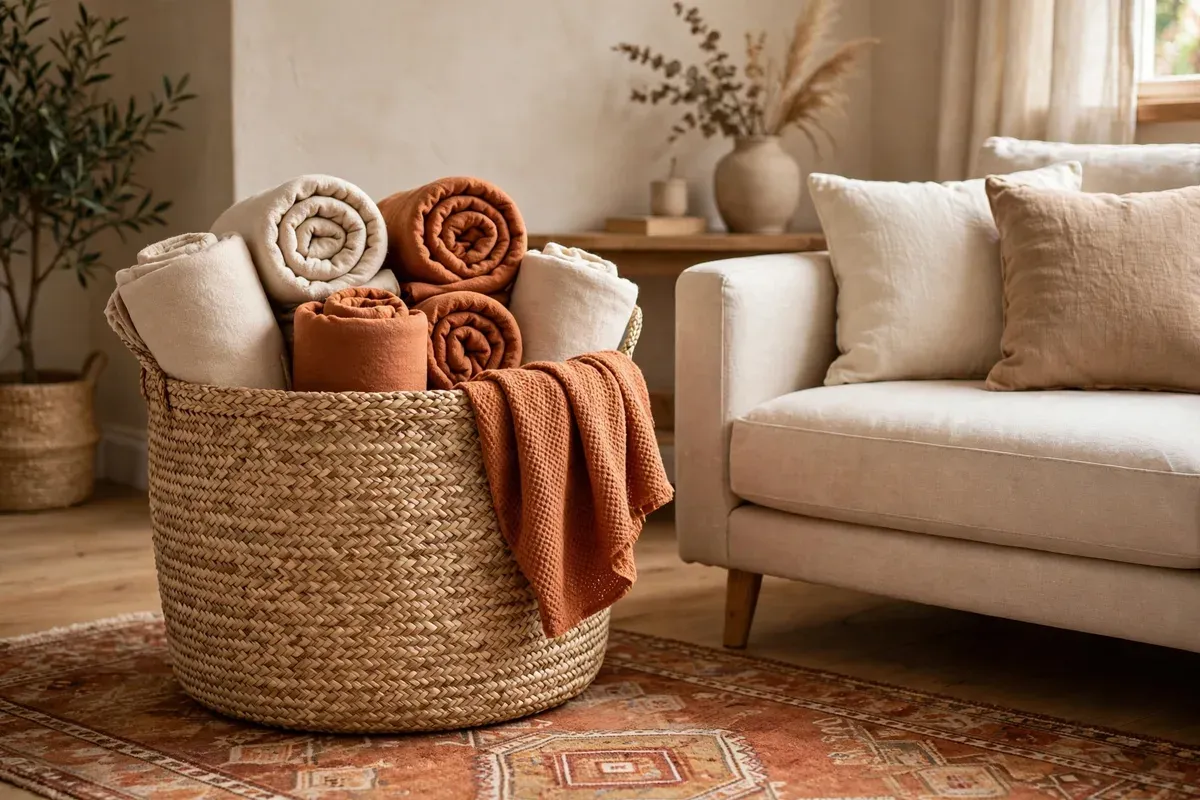
Throws only make a room cozy if they are within reach when the evening turns cold. A large woven basket beside the sofa holds two or three rolled blankets and keeps them off the sofa back, where they slide and wrinkle. Rolled blankets look tidy and take up less space than folded ones, and a basket about 18 inches across and 16 inches high fits the gap between most sofas and the wall.
Seagrass or cotton rope baskets cost 20 to 40 dollars. Roll each blanket instead of folding it, stand the rolls upright, and put the one you grab most on top. The basket also solves the end-of-evening problem: blankets go back in the basket in thirty seconds, so the room resets itself instead of looking lived in by morning.
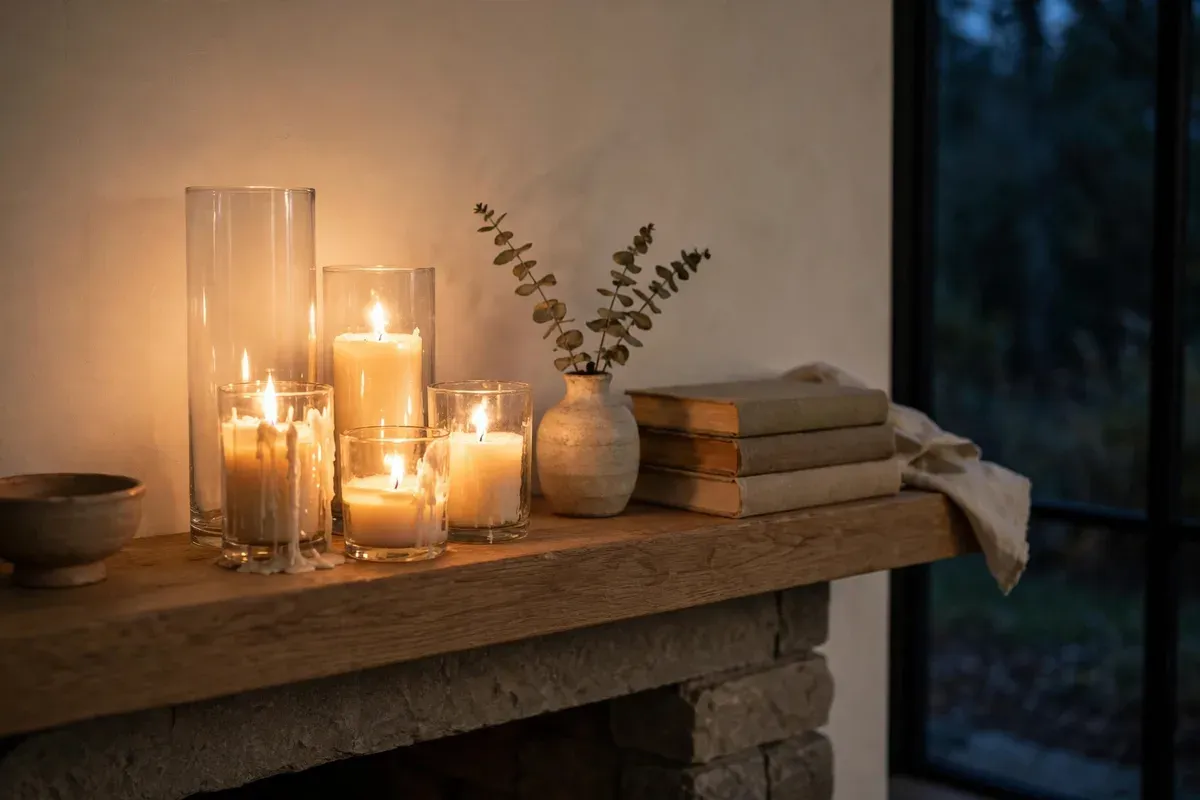
13. Cluster candles for evening glow
Nothing makes a small room feel warm faster than candlelight, because it is light at the lowest level and it flickers. A cluster works better than one candle alone. Three candles in glass holders at different heights, 4, 6 and 8 inches, on a shelf or mantel give a steady glow without looking like a shrine. Keep them together in one spot so the glow has a center, instead of scattering single candles around the room.
Battery candles are the safer choice in a small apartment, and good ones with a flicker effect cost 10 to 20 dollars for a set of three. Real candles in glass holders are fine too, but never leave them burning in a room you leave, and keep them at least 12 inches from curtains and throws. The same low, grouped approach works for the holidays: our Christmas living room decor ideas use candle clusters on the mantel without crowding it.
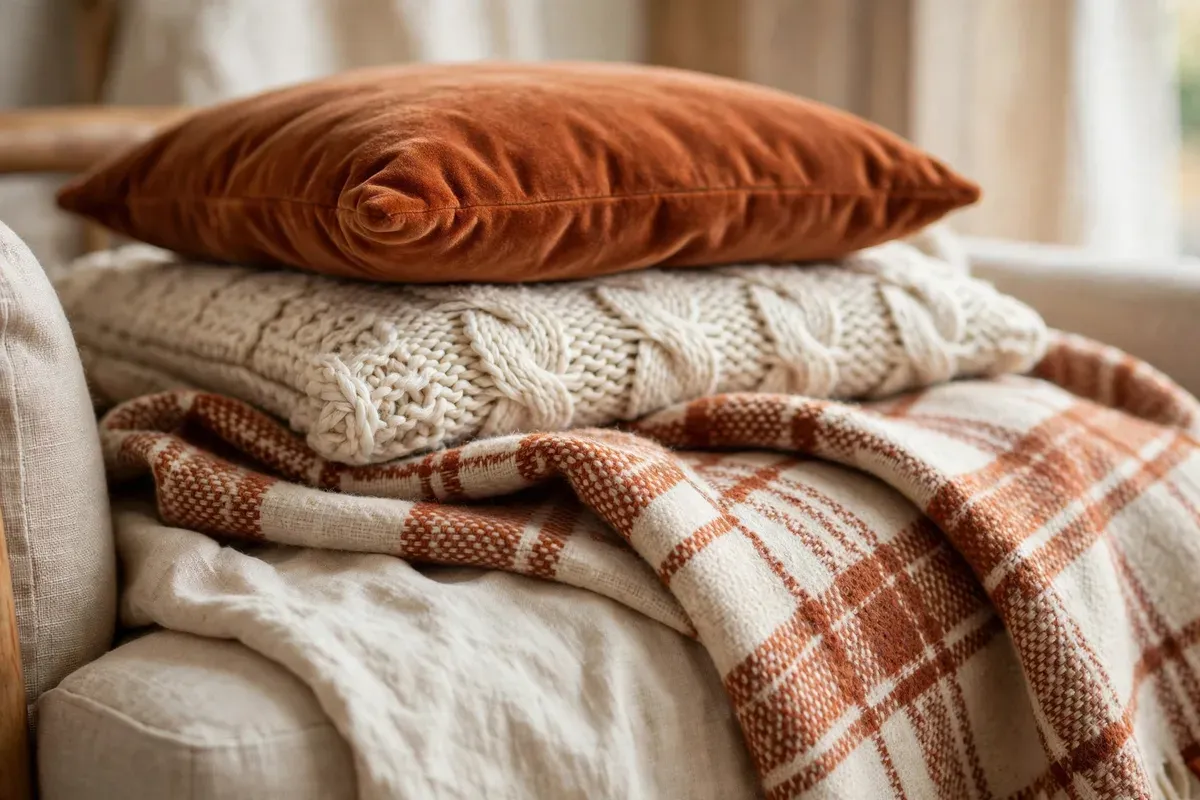
14. Layer textiles instead of adding furniture
When a small room feels bare, the instinct is to buy another piece of furniture. Layering textiles does the same job for less money and no floor space. A plaid wool throw over a linen throw, a knit cushion in front of a velvet one, and a rug with a smaller flatweave layered on top at an angle all add depth without adding a single leg to the room.
The trick is to vary the weight. Pair a heavy wool throw with a light linen one, not two heavy ones, or the sofa looks buried. A second small rug, about 3 by 5 feet, layered over the main rug at a slight angle costs 25 to 50 dollars and defines a spot for the coffee table. Step back after each layer. If you cannot see the sofa fabric anymore, you have added one layer too many.
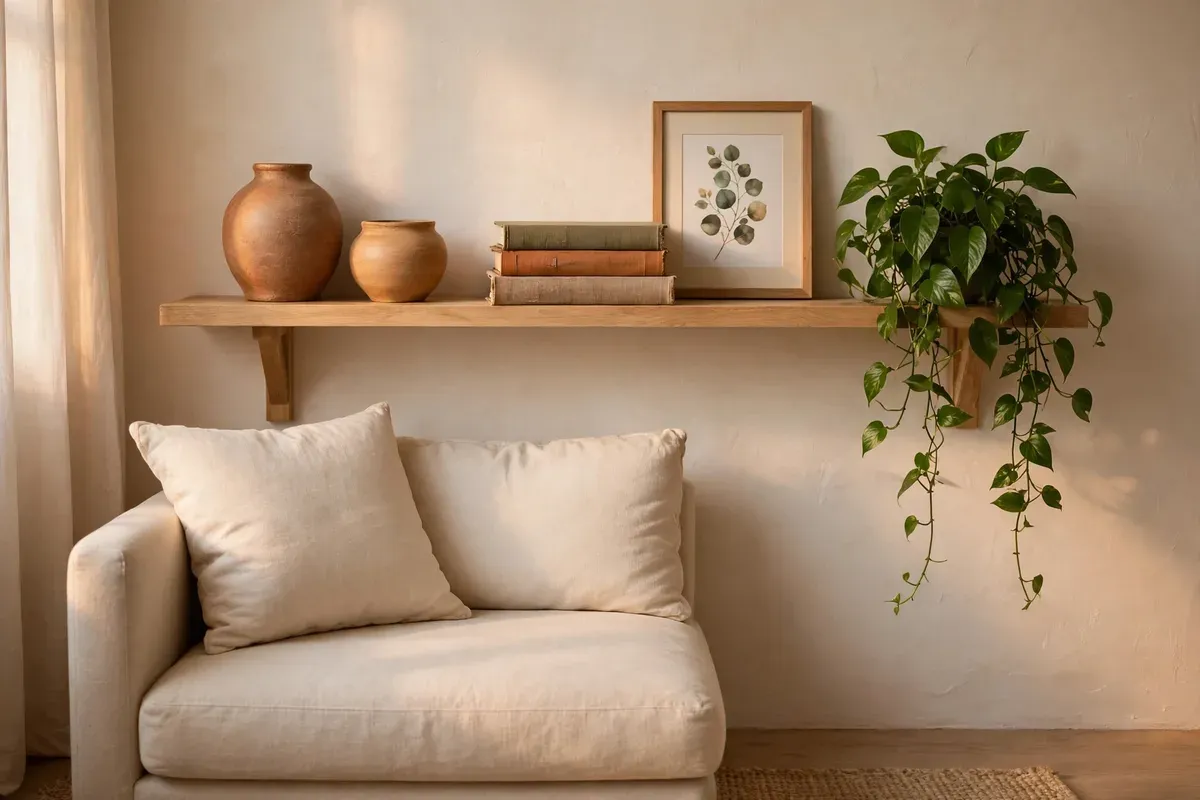
15. Style one shelf with warm ceramics and books
One styled shelf does more for a small living room than a wall full of shelves. Pick the shelf at eye level, clear it completely, and rebuild it with five or six objects: two or three warm ceramic vases or bowls, a stack of two books laid flat, and one small framed print or trailing plant. Leave a third of the shelf empty. The empty space is what makes the objects look chosen instead of stored.
Terracotta and stoneware ceramics cost 8 to 20 dollars each at home stores, and a trailing pothos in a small pot runs about 10 dollars. Group the ceramics together on one side and the books on the other, so the shelf has two clusters with a gap between them. Dust it once a week. A styled shelf in a small room is close enough to see, and dust shows at that distance.
How to keep a small living room cozy without clutter
Cozy tips over into cluttered when every surface holds something. The guardrail is simple: every horizontal surface gets one job. The coffee table holds the tray, the side table holds the lamp, and the shelf holds the ceramics. When a new object arrives, an old one leaves the surface and goes into the basket, a drawer or another room. Our living room design ideas for small apartments use the same one-job rule for the room as a whole, so the styling here and the layout there do not fight each other.
Give the room a weekly five minute reset. Fold the throws, roll the blankets back into the basket, straighten the cushions and clear the tray. A small room shows disorder fast, and it also fixes fast, because there is so little of it. That reset is what keeps the 15 ideas above feeling warm month after month instead of tipping into mess by the second week.
A cozy living room on a small budget
You do not need all 15 ideas to change the room. Start with the three that cost the least and show the most: a knit throw for 25 to 45 dollars, warm bulbs in the lamps you already own for under 10 dollars, and a tray vignette built from a candle and a book you already have. Together they cost under 60 dollars and the room feels different the same evening.
Add one idea a week after that, in this order: the rug, the cushions, then the curtains. Those three are the bigger purchases, 40 to 150 dollars each, and spacing them out lets you check each one against the room before you buy the next. A cozy small living room is built in layers, not in one shopping trip, and the room will tell you which layer it still needs.
Looking for more ideas? Browse our living room & bedroom stories.
Save to Pinterest