In this article
- Start with the Bed: Size and Frame
- Do Not Skimp on the Mattress
- Choose Nightstands with Drawers
- Pick a Dresser Guests Can Actually Use
- Add One Comfortable Chair
- Include a Luggage Rack or Bench
- Consider a Daybed for Dual-Purpose Rooms
- Light Every Zone
- Add a Small Desk or Vanity If Space Allows
- What to Skip
- How Much to Spend
- Storing Off-Season Guest Bedding
- The Final Test
Furnishing a guest room is a strange shopping trip: you are buying for someone else’s comfort, in a room used a few weeks a year, and every dollar competes with furniture you use daily. The temptation is to fill it with cast-offs. Resist it. Guests can tell when they got the leftovers, and a room that feels like an afterthought makes visitors feel like one.
The good news is that a guest room needs less than you think: a genuinely comfortable bed, two usable nightstands, some drawer space, one chair, and good lighting. Buy those well and skip the rest.
Start with the Bed: Size and Frame
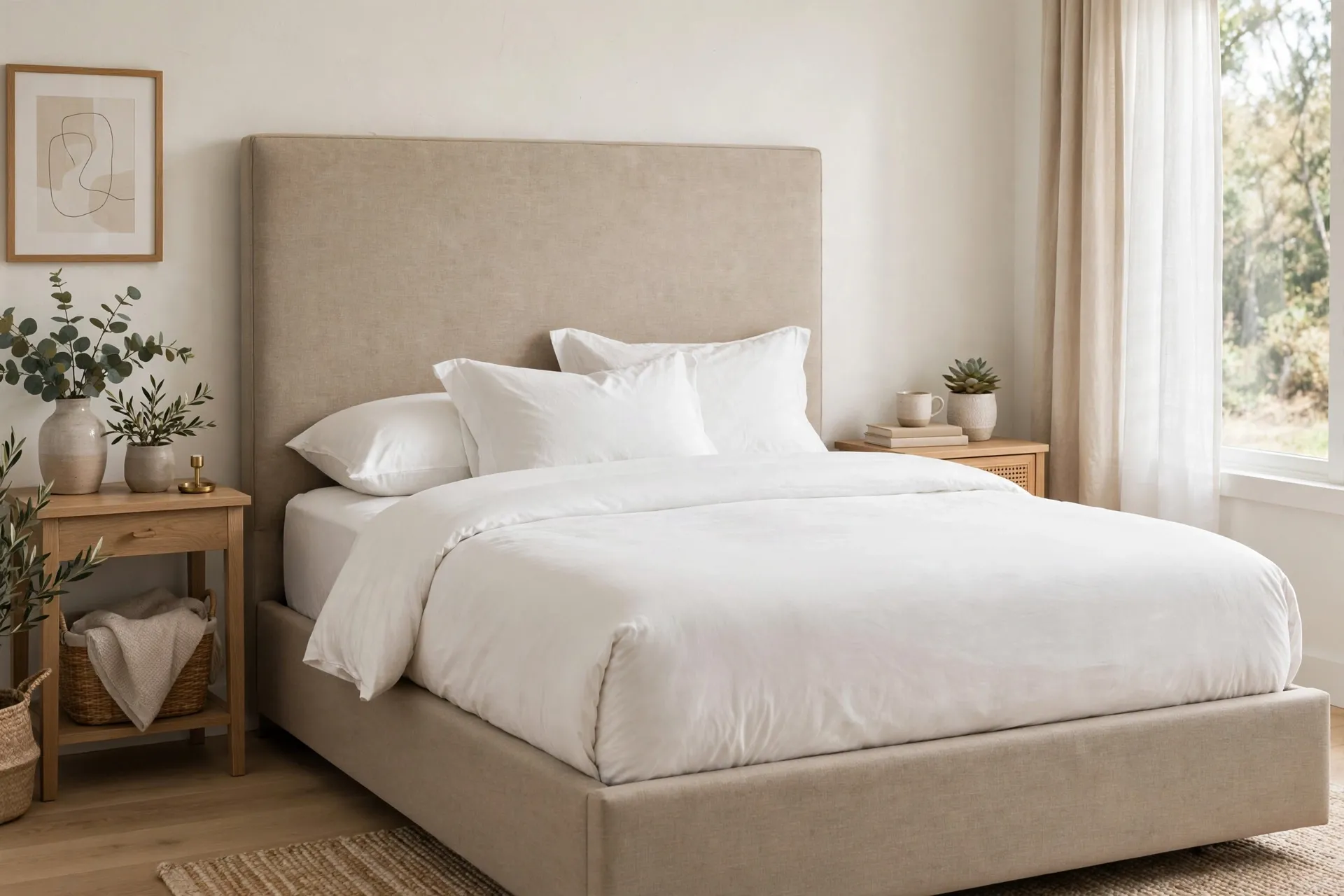
A queen bed fits most guest rooms and sleeps couples comfortably; a full works in rooms under 120 square feet. Skip the twin unless the room is truly tiny or always hosts one person. Measure the room first and leave at least 24 inches of walking space on each accessible side of the bed.
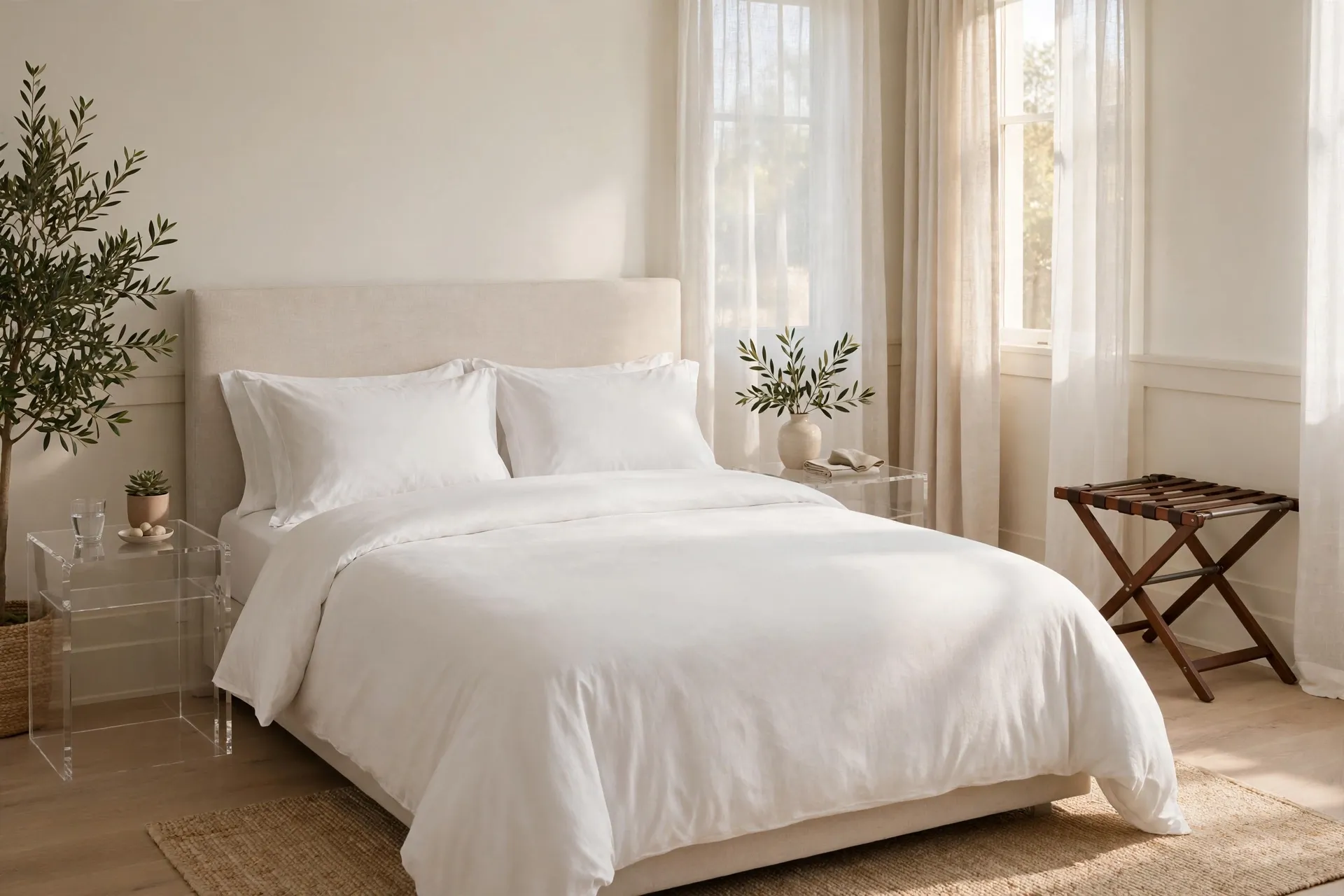
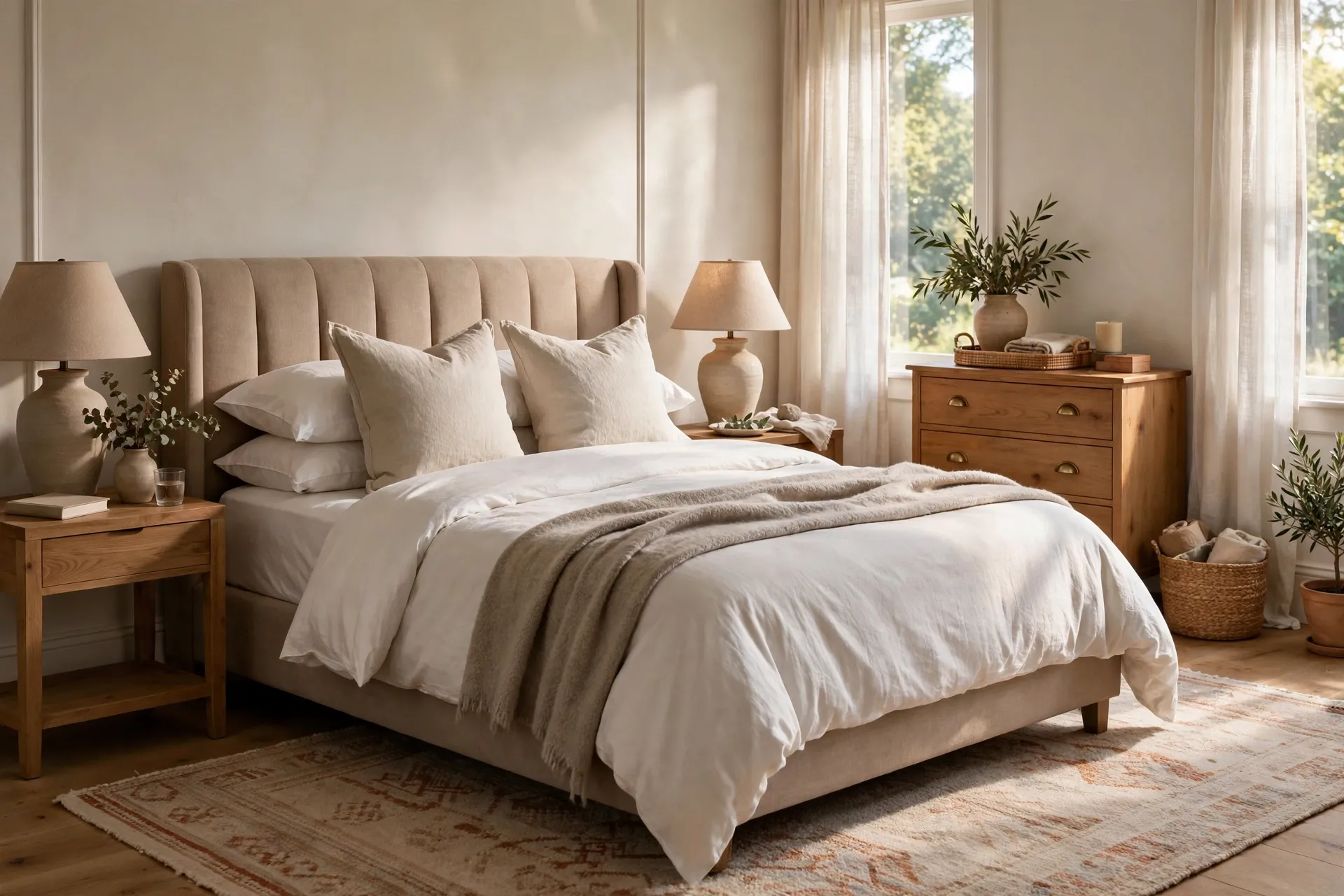
For the frame, choose sturdy and simple: a platform bed with a solid headboard, upholstered or wood. Avoid ornate frames with lots of crevices; they collect dust in a room that sits empty for weeks. A headboard matters more than you think: guests sit up in bed to read, and a bare wall is uncomfortable.
Do Not Skimp on the Mattress
The mattress is the one place to spend. Guests remember a bad guest bed for years, and they tell other people. A medium-firm mattress suits the widest range of sleepers; very soft or very firm mattresses please some guests and punish others.
You do not need a luxury mattress. A well-reviewed bed-in-a-box in medium-firm, or a two-inch topper over a decent basic mattress, hits the comfort target for a few hundred dollars. Replace guest mattresses every eight to ten years, same as your own; a sagging guest bed undoes all your other work.
Choose Nightstands with Drawers
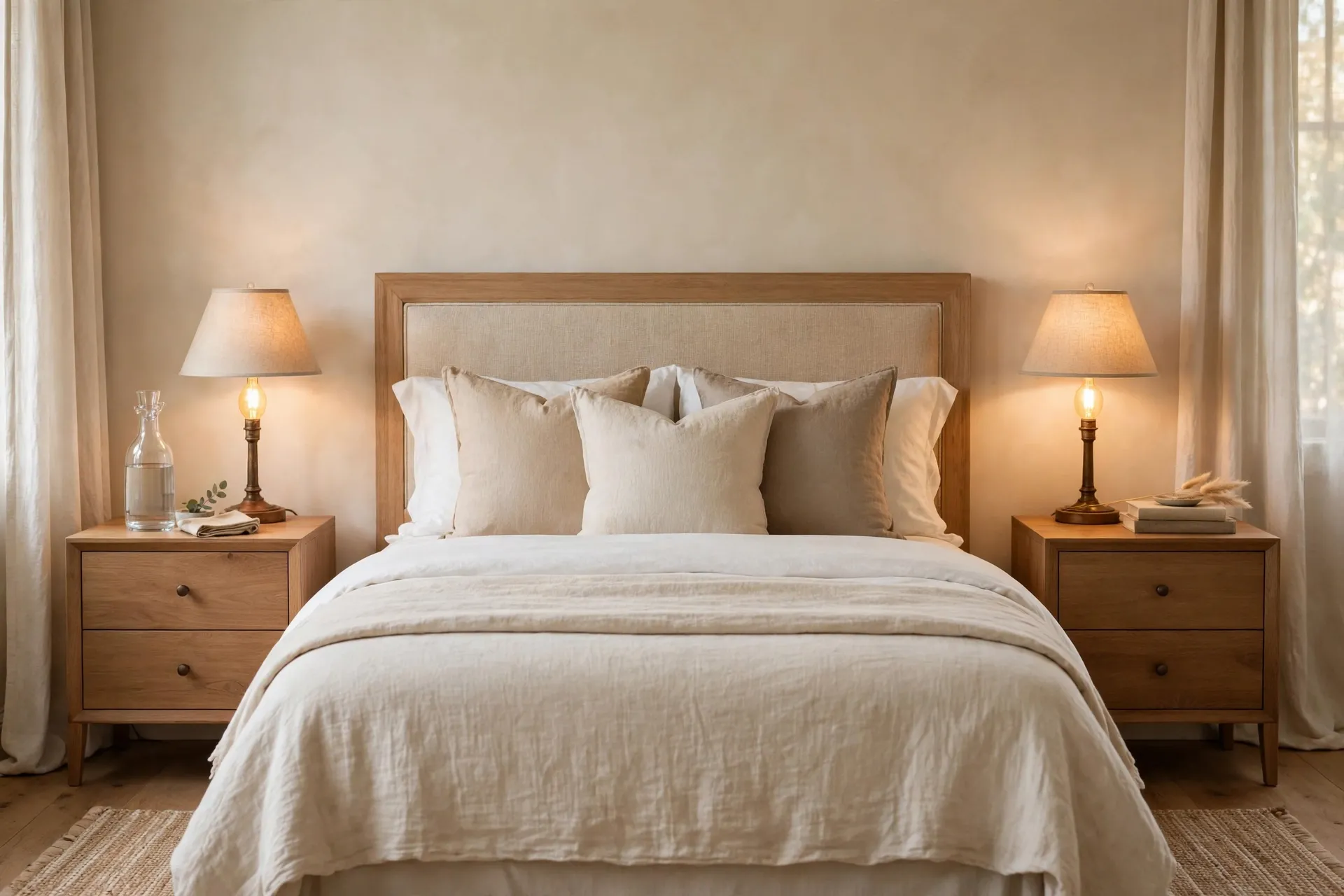
Each side of the bed gets a nightstand, and drawers beat open shelves. Guests stash chargers, medications, and books in drawers; open shelves display clutter. A single drawer plus an open cubby below is the ideal layout: private storage up top, easy access below.
Size them to the bed: nightstand tops should sit within two inches of the mattress top so guests can reach a lamp and water without sitting up. Too tall or too short, and the whole setup feels wrong in a way guests cannot name.
Pick a Dresser Guests Can Actually Use
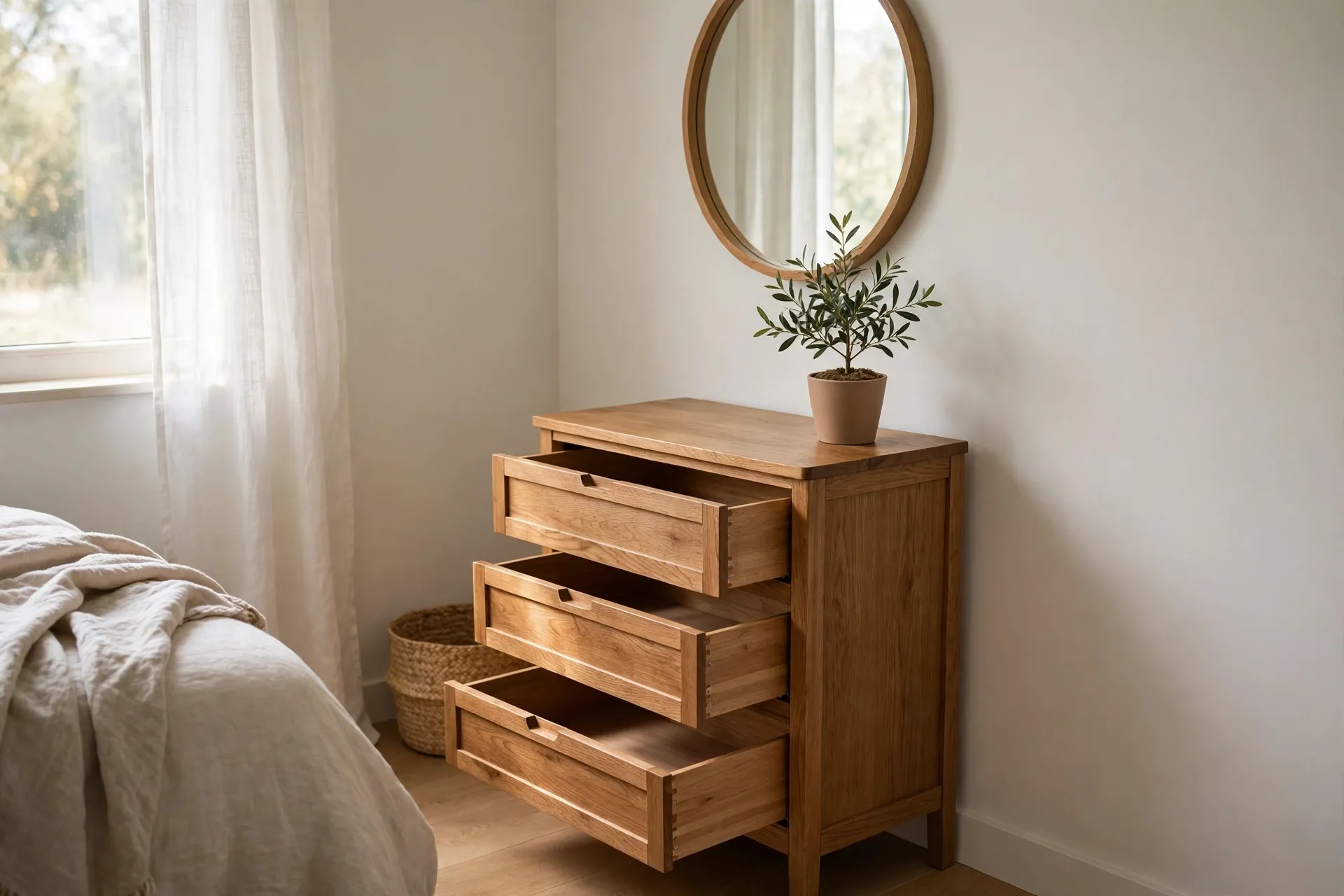
A three or four drawer dresser with empty drawers is the goal; our guide to organizing a guest room covers the empty-drawer standard. When choosing the piece, test the drawers in the store: they should glide without sticking, because guests will not force a stuck drawer twice.
Keep the dresser compact. A 48-inch wide dresser holds a week’s clothes for two people and fits most rooms. Top it with a mirror or a small tray for keys and watches; the surface becomes the room’s landing zone.
Add One Comfortable Chair
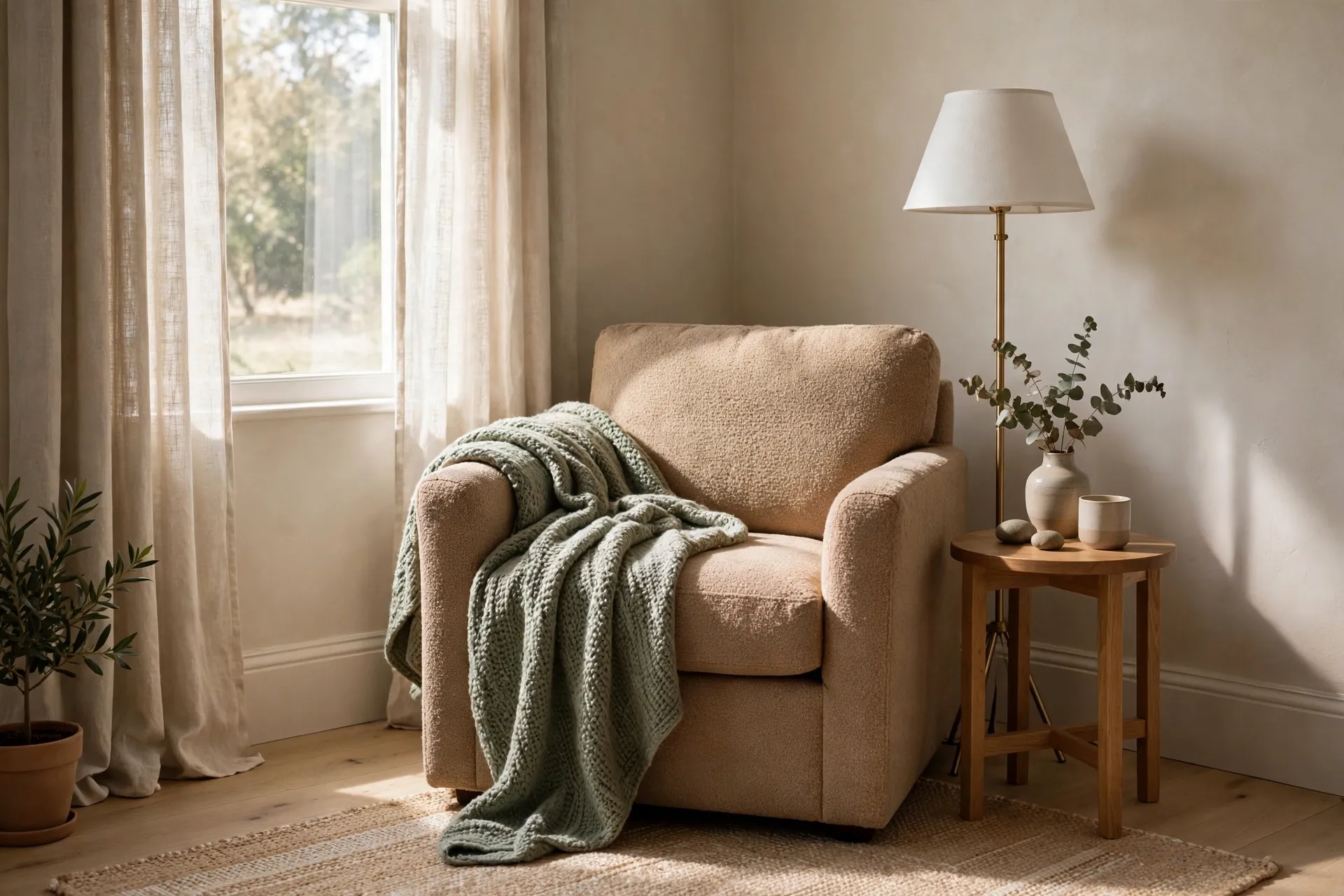
A guest room without a chair is a room where visitors sit on the bed for everything. A compact armchair with a small side table and a reading lamp gives guests a place to read, work, or put on shoes. It does not need to be large; a 28-inch wide chair fits a corner.
Choose a chair that is easy to get out of. Deep, low lounge chairs look inviting and trap older guests. A seat height around 17 to 18 inches with firm arms works for everyone from teenagers to grandparents.
Include a Luggage Rack or Bench
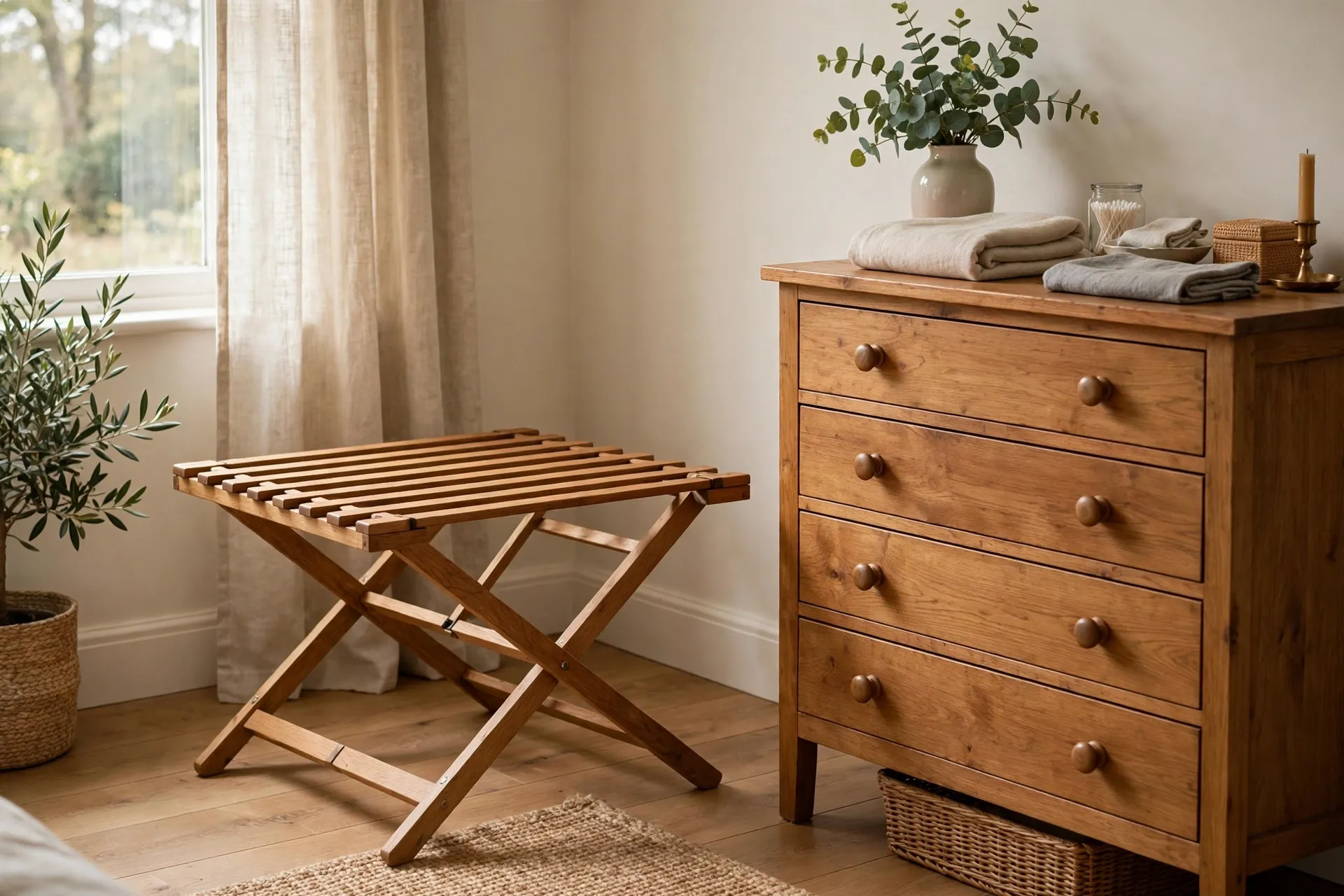
A folding luggage rack costs twenty to forty dollars and solves the suitcase problem completely. Keep it folded in the closet and set it out before guests arrive. If you prefer furniture, a storage bench at the foot of the bed does double duty: luggage platform plus extra blanket storage inside.
Skip the rack only if the room has a genuinely clear floor area you are willing to dedicate. “They can just use the floor” works if you say so upfront and the floor is actually clear, not if the suitcase ends up blocking the door.
Consider a Daybed for Dual-Purpose Rooms
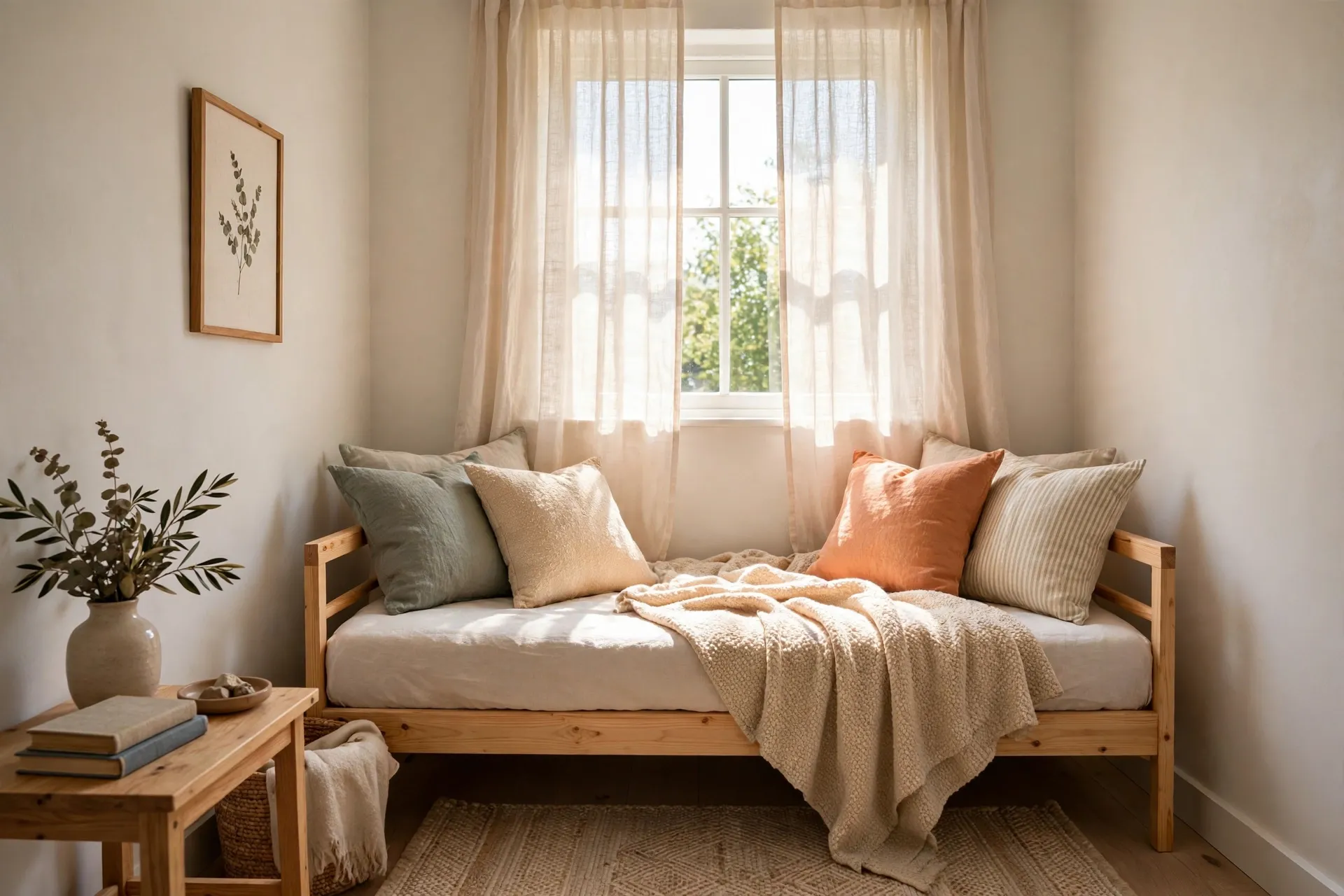
If the guest room doubles as an office, craft room, or reading room, a daybed is the smartest choice. Dressed with cushions it reads as a sofa by day and sleeps one comfortably by night. A twin daybed with a trundle sleeps two when needed.
Buy a real daybed mattress, not a futon pad; the sleep quality difference is enormous. And get the trundle even if you think you will not need it. The one time two guests arrive, you will be glad.
Light Every Zone
Guest rooms need more lighting than you think because guests do not know the room. Overhead light for arrival, bedside lamps for reading, and one light near the closet or dresser so they can see their clothes. Three sources minimum, each on an obvious switch or with a reachable lamp switch.
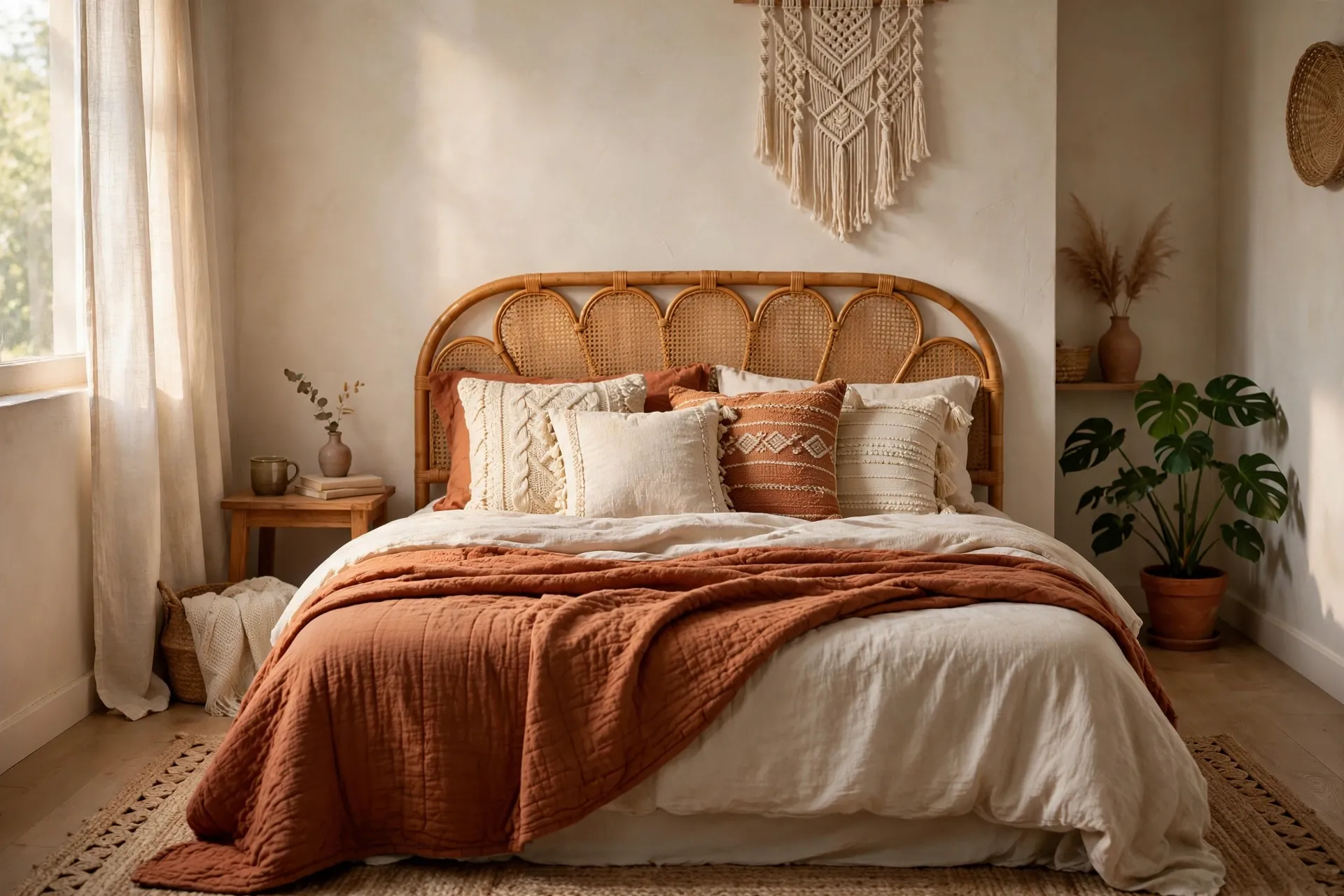
Put the brightest light on the room’s main switch and keep bedside lamps warm and dimmable if possible. A guest fumbling for a pull chain in the dark is a small failure of hospitality. For style direction once the pieces are chosen, boho bedroom decor ideas show how to warm up a simple furniture set.
Add a Small Desk or Vanity If Space Allows
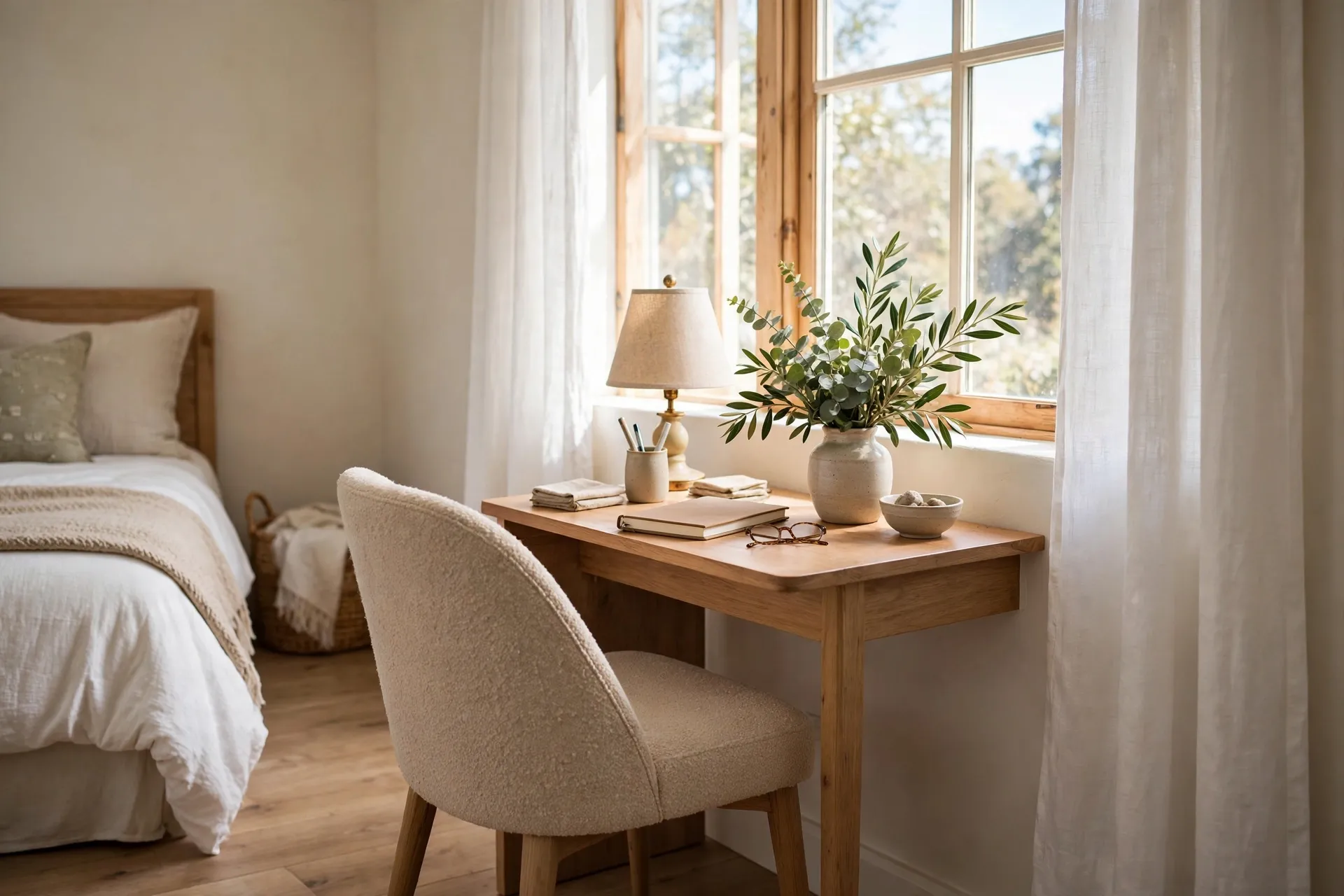
Guests increasingly work from wherever they are. A compact 36-inch desk with a comfortable chair lets a guest take a morning call without colonizing the kitchen table. It does not need to be a full office; a simple writing desk with a lamp does it.
If no desk fits, at least provide a clear surface at desk height somewhere, the dresser top cleared, with a nearby outlet. Name it in your welcome note so guests know it is theirs to use.
What to Skip
Skip the TV unless guests ask; most people bring their own screens and a TV dominates a small room. Skip the elaborate bedding sets with seventeen pillows; guests need two sleeping pillows each and one spare, not a styling project to dismantle. Skip scented everything; one unscented room beats a perfumed one for sensitive guests.
Skip anything fragile or precious. Guest rooms take more wear than you expect from people unfamiliar with the furniture. Sturdy and simple outlasts delicate and beautiful here.
How Much to Spend
A reasonable guest room furnishing budget: $300 to $600 for the mattress or topper, $150 to $300 for the frame, $100 to $200 for two nightstands, $150 to $300 for a dresser, $100 to $250 for a chair. Total: roughly $800 to $1,650 for a complete room that will last a decade.
Buy the bed and mattress new. Everything else can be secondhand if it is sturdy and clean; a solid wood dresser from a thrift store outlasts a new particle-board one. Spend the savings on good sheets, which guests touch more than any furniture.
Storing Off-Season Guest Bedding
Guest bedding for the season you are not in, heavy quilts in summer, light coverlets in winter, needs a home between visits. An under-bed bin in the guest room works, but if space is tight, the garage is the overflow valve. Our small garage organization ideas show how to store textiles where they stay clean and reachable.
The Final Test
Before declaring the room done, spend a night in it yourself. Sleep in the bed, use the bathroom routine, charge your phone, read in the chair. You will find the wobbly nightstand, the missing outlet, and the hallway light that shines under the door. Fix what you find.
A guest room furnished with care says something about the host. It says you thought about someone else’s comfort in advance, which is the whole point of having people stay.
Looking for more ideas? Browse our living room & bedroom stories.
Save to Pinterest