In this article
- 1. Use a compact freestanding wardrobe
- 2. Choose a bed with built-in storage drawers
- 3. Store seasonal items under the bed
- 4. Add a narrow dresser
- 5. Use a small clothing rack
- 6. Install wall hooks where appropriate
- 7. Add floating shelves for lightweight storage
- 8. Consider a storage bench at the foot of the bed
- 9. Conceal a clothing zone with a curtain
- 10. Choose a tall, narrow storage cabinet
- 11. Choose nightstands with drawers
- 12. Store shoes in a slim vertical organizer
- 13. Use decorative baskets for small belongings
- 14. Create a compact wardrobe wall
- 15. Build a simple daily storage system
- How to organize a bedroom without a closet
- Best furniture for small bedrooms with no built-in storage
- Where to store clothes when you have no closet
- How to make open bedroom storage look less cluttered
- Small bedroom storage mistakes
When a bedroom has no built-in closet, clothing tends to migrate to the chair, the end of the bed, and every spare corner. The solution is not necessarily a huge wardrobe. It is a combination of places for hanging, folding, shoes, and the things you use less often, sized to the room’s actual floor plan.
These small bedroom storage ideas create those places while protecting access to the bed, doors, and windows. Measure with drawers and doors open, not only with furniture pushed against the wall. If the bed position is still flexible, our small bedroom layout ideas can help you choose a workable route before buying storage. If you do have a built-in closet, the small closet organization guide addresses that different problem.
1. Use a compact freestanding wardrobe
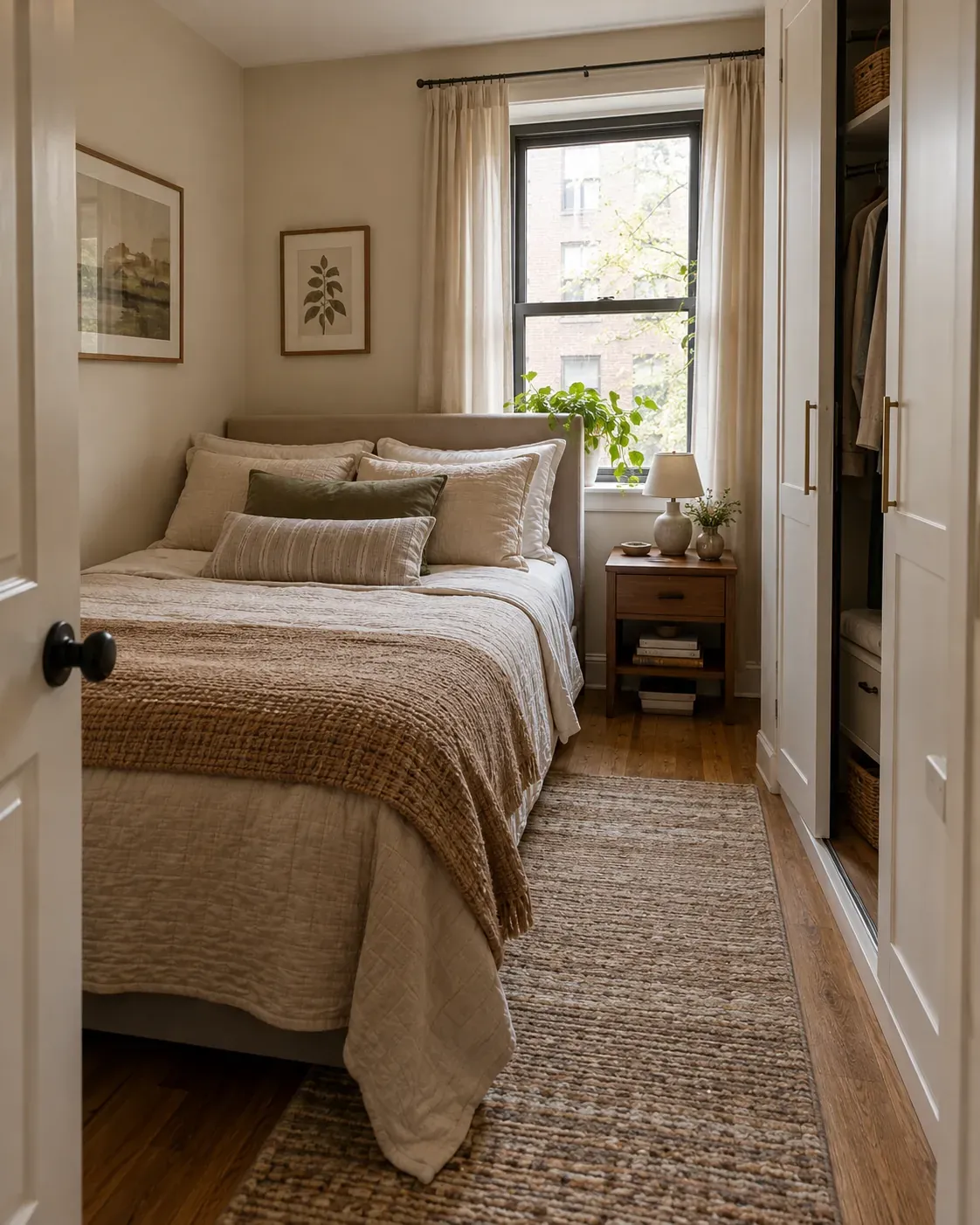
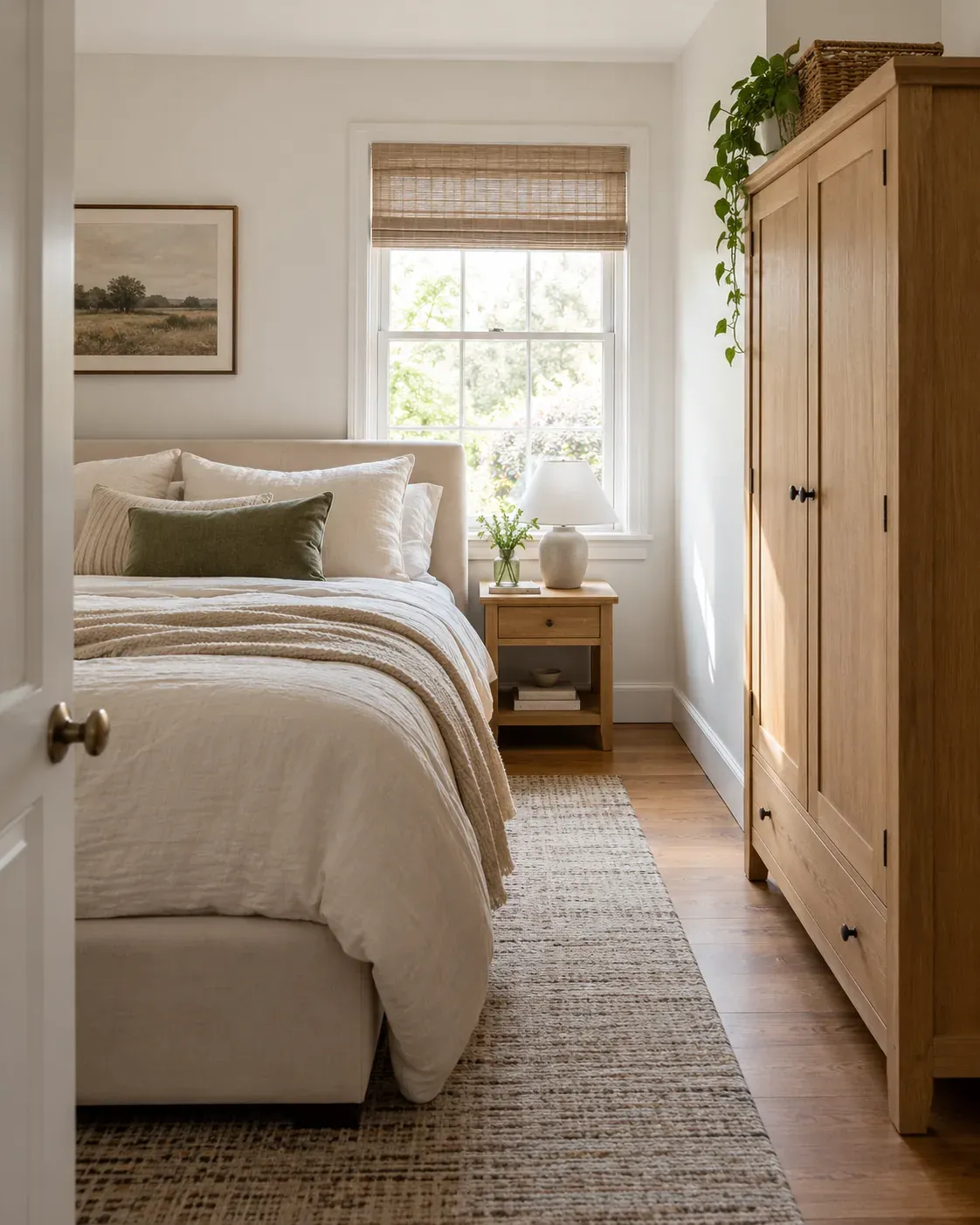
A wardrobe gives hanging clothes a proper home when the room has no closet at all. Choose one based on the clothes you hang most often: short shirts need a different interior from long dresses or coats. Measure width, depth, height, and the full swing of the doors. Sliding doors save door-swing space, but you may see only half the interior at once.
Place it where it will not narrow the path to the bed or hide a window. A shallow model may be enough for a small daily wardrobe, while a deeper one can overwhelm a tight room. Tall storage furniture presents tip-over risks; follow its anchoring instructions and use wall fasteners suitable for the wall. The US Consumer Product Safety Commission recommends securing top-heavy furniture, including clothing storage units. If a rental forbids needed anchoring, discuss an approved solution before buying the piece.
2. Choose a bed with built-in storage drawers
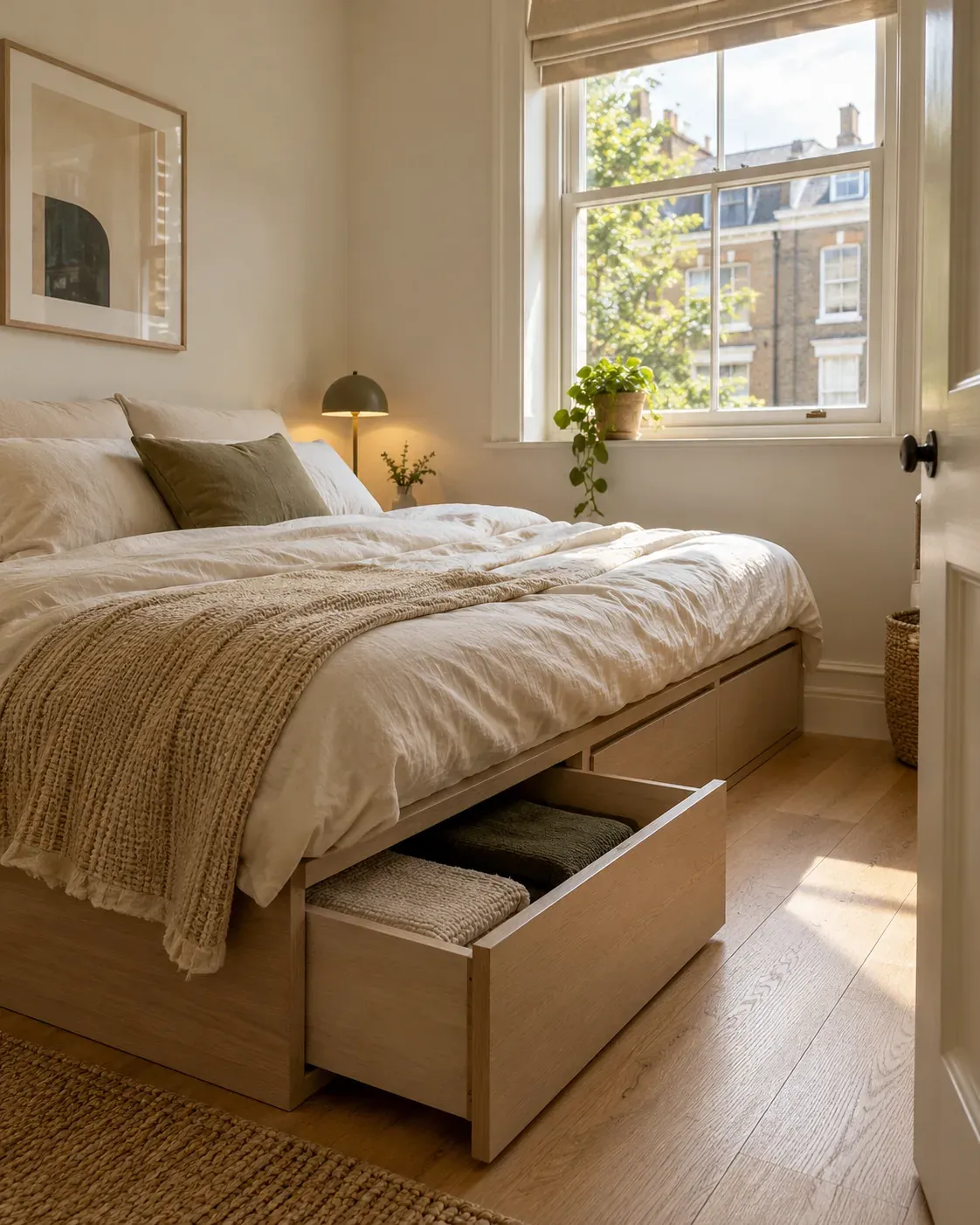
A storage bed can hold folded clothes or spare bedding without adding another cabinet. It works well if one or both long sides of the bed have enough open floor for the drawers to extend fully. Measure the drawer opening while imagining the rug, nightstand, and door in their normal positions.
Drawers make daily items easier to reach than loose boxes under the bed, but the bed can cost more and is harder to move. If it must sit against a wall, drawers on that side may be useless. Lift-up storage beds need their own overhead clearance and maker’s operating instructions. Choose the mechanism that fits your room, not the one that looks clever in a catalog.
3. Store seasonal items under the bed
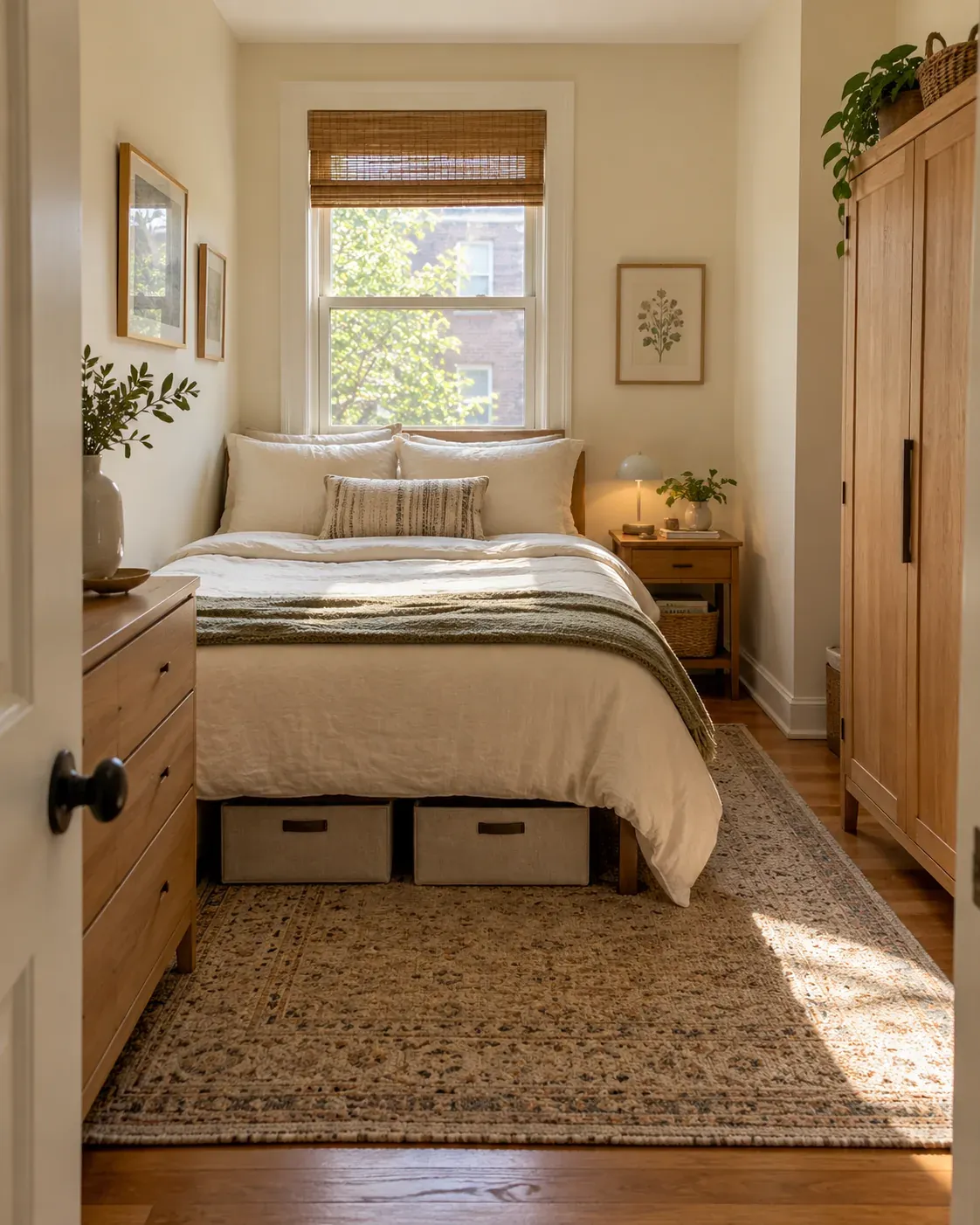
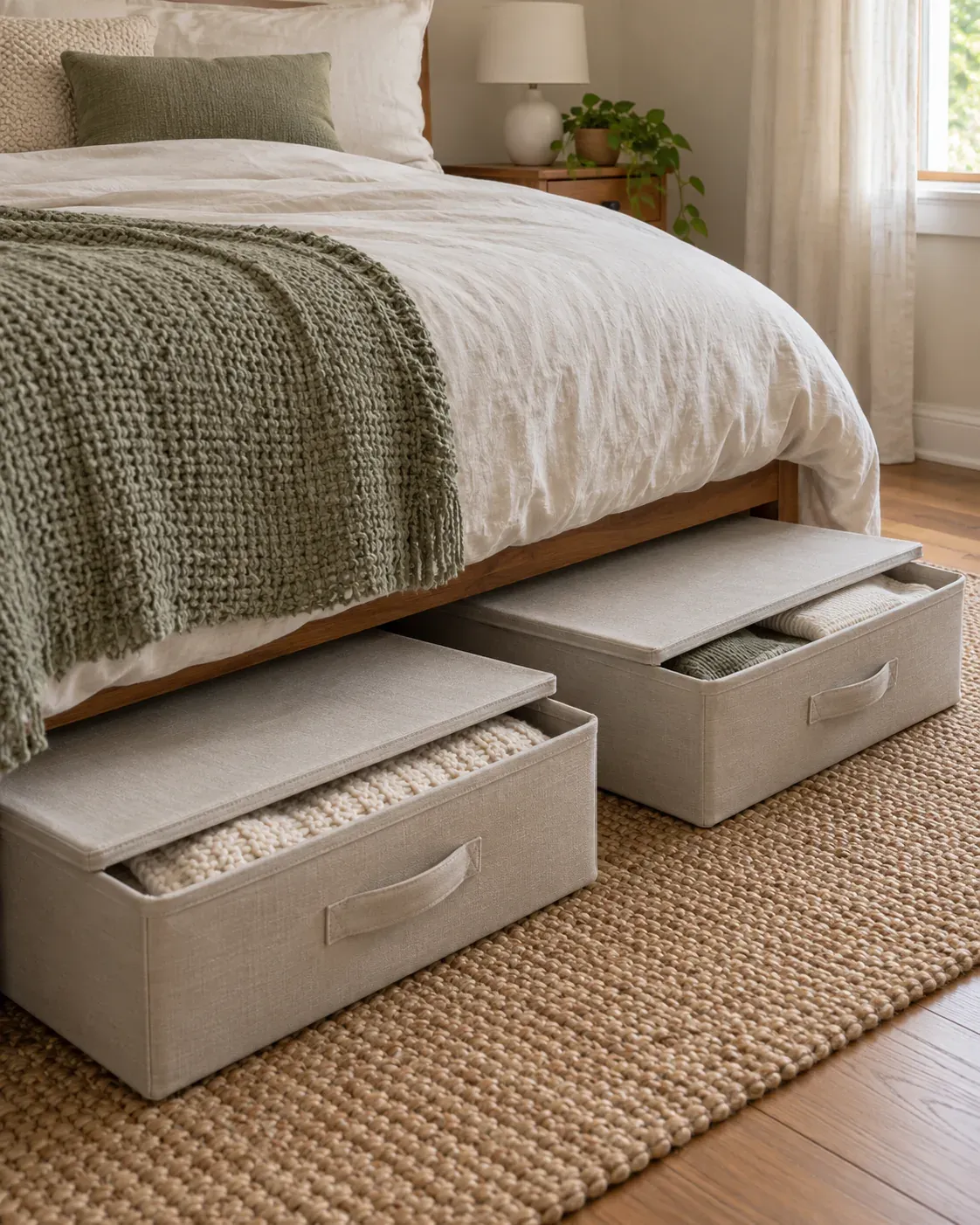
Low lidded bins can hold off-season sweaters, extra sheets, or seldom-used shoes. Measure from the floor to the lowest bed rail and allow room to pull the container out without scraping. Choose containers you can actually lift when full, and label the short end so you know what is inside without opening every bin.
Keep fabrics clean and dry before packing them, and follow the garment’s storage needs. Do not wedge containers against vents or block access to electrical outlets. Under-bed storage is best for things you retrieve occasionally; daily clothing belongs somewhere easier to reach. If your bed has almost no clearance, raising it solely for more bins may make it awkward to get in and out.
4. Add a narrow dresser
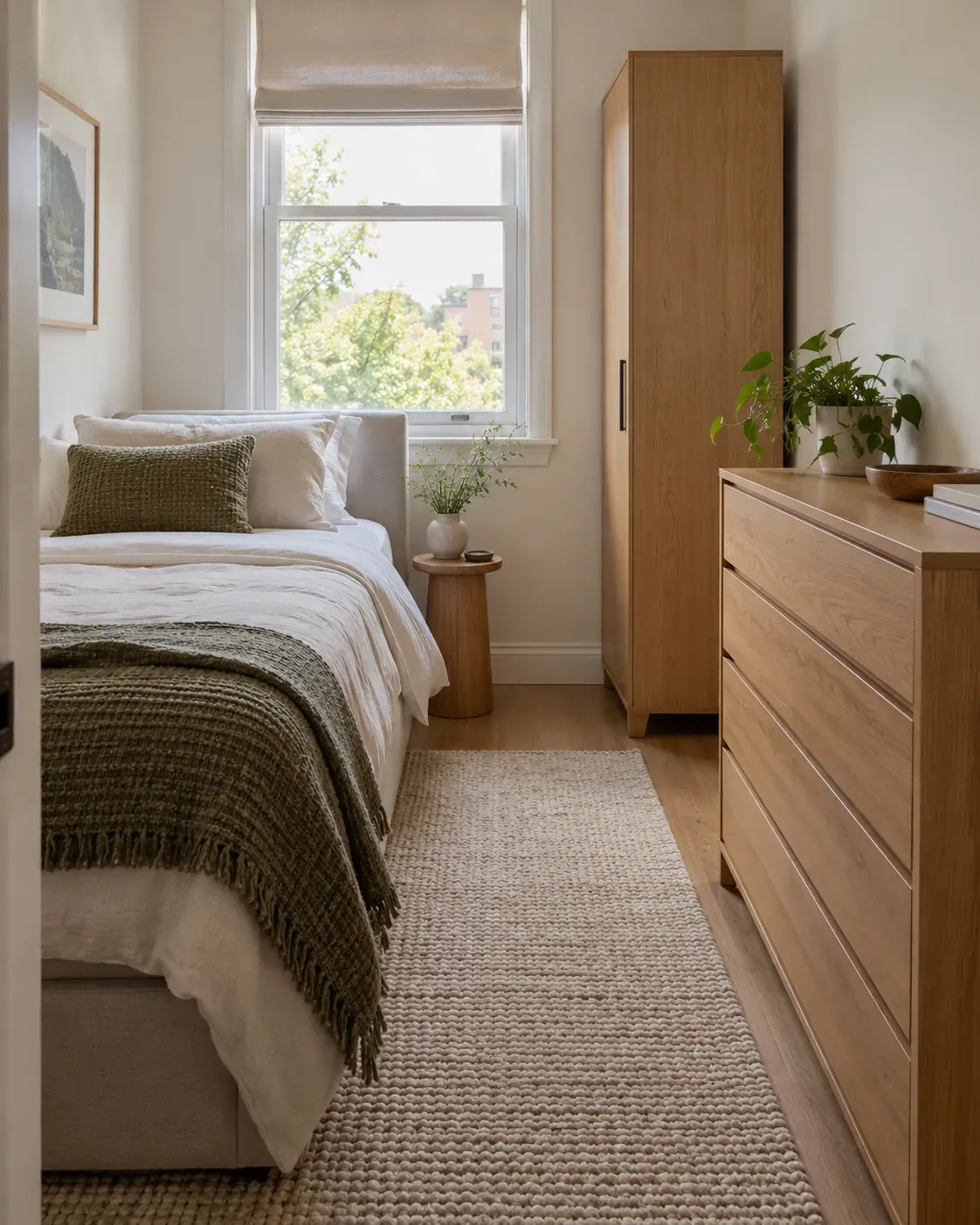
A slim dresser is a practical home for folded shirts, underwear, and accessories. In a small room, depth matters as much as width. Draw a tape outline on the floor, then open the bed-side route and the bedroom door to see what remains. Check the drawers’ full extension, not just the cabinet footprint.
Choose enough drawers for the categories you own rather than buying the tallest unit that will fit. Place heavier items in lower drawers and follow the furniture maker’s anchoring instructions. A narrow dresser can provide more usable folded storage than several baskets scattered around the room, but it should not make the bed difficult to reach.
5. Use a small clothing rack
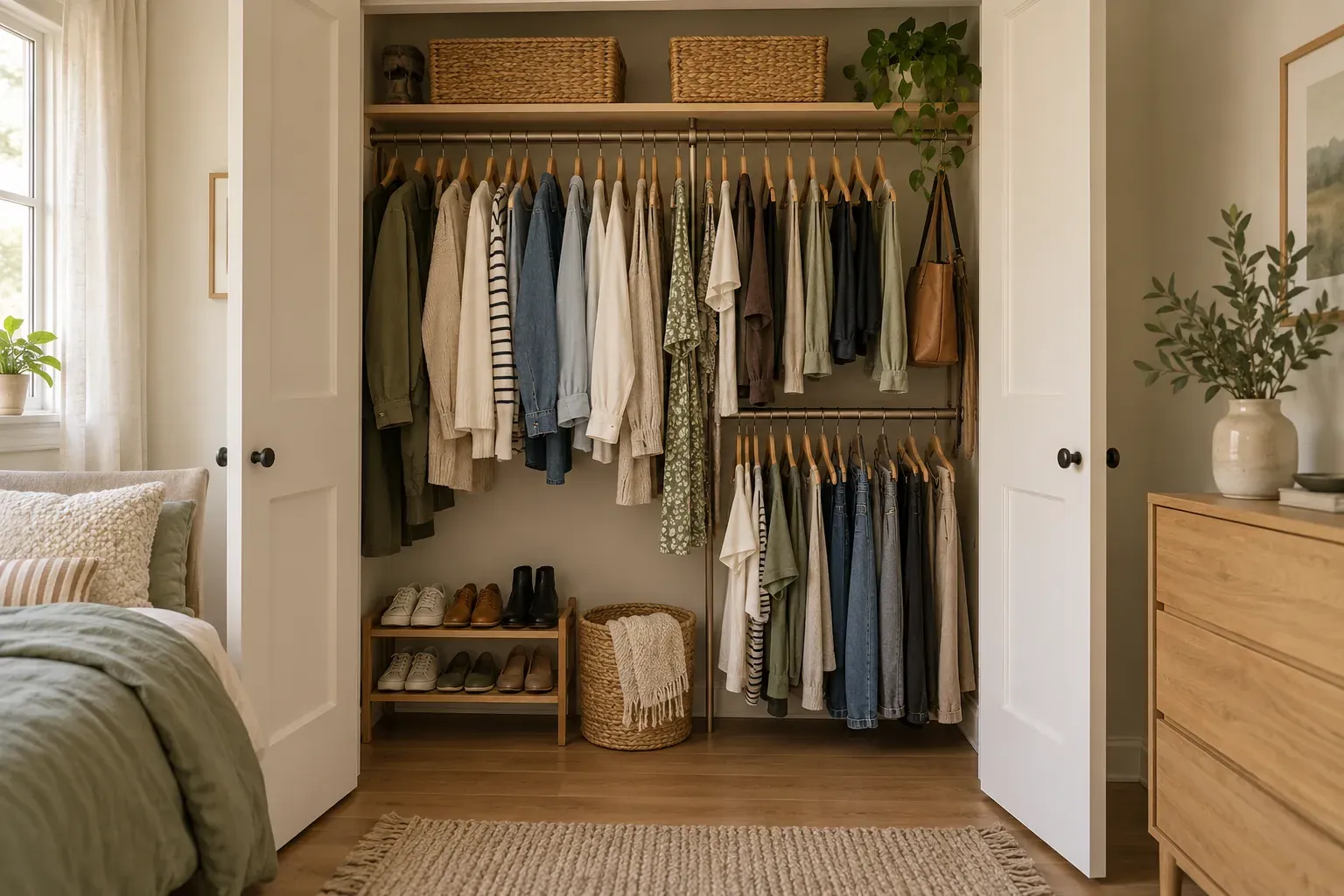
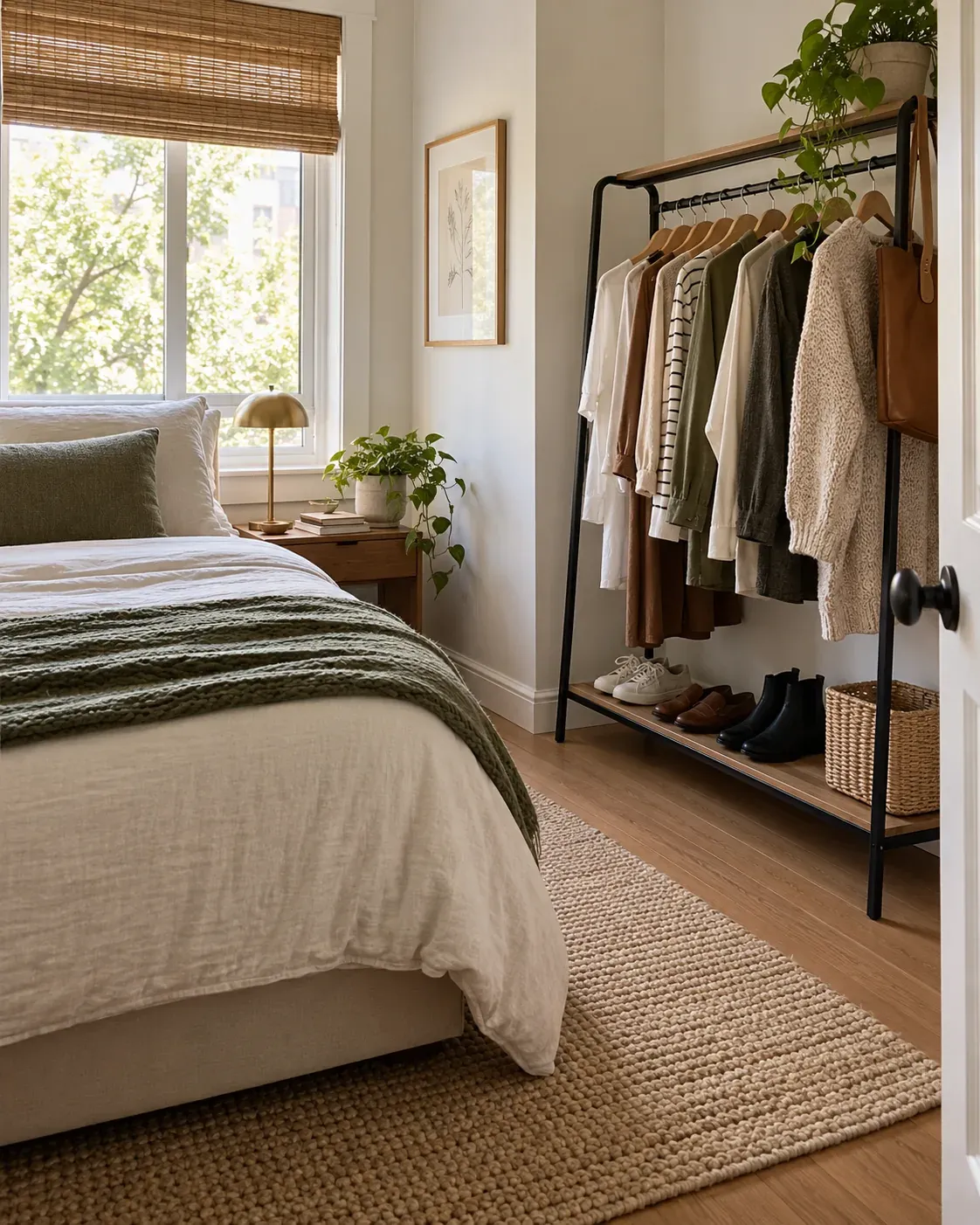
A compact rack can hold the everyday clothes that truly need hanging. Put it along a wall with enough depth for hangers and enough room to take a shirt off without brushing the bed. A lower shelf may hold a few shoes or baskets if the rack is designed for that load.
Open storage looks best when it is edited. Keep roughly one season of frequently worn clothing on the rail and move the rest to a dresser, bins, or another suitable space. Overloading a light rack can make it unstable, and a broad garment rack may project almost as far into the room as a wardrobe. Check the maker’s load limit and assemble it completely.
6. Install wall hooks where appropriate
Hooks can hold a robe, everyday bag, or tomorrow’s outfit without taking floor space. Put them where hanging items will not hit a door, hide a light switch, or crowd the bed. A short row near the wardrobe can create a useful dressing zone.
Match hardware, anchors, and load limits to the wall and the item. Adhesive hooks have specific surface, weight, and removal instructions; they are not universal damage-free hardware. For a rental, check what installation is permitted. Avoid hanging heavy bags where someone might pull them down over the bed or where a hook could catch clothing in a narrow passage.
7. Add floating shelves for lightweight storage
A small shelf can hold a jewelry box, folded lightweight items, or a few accessories. It works above a dresser or another low piece if there is no conflict with doors, windows, or daily movement. Select a shelf with enough depth for the actual object but not so deep that it projects into the path.
Installation matters more than styling. Use fixings appropriate to the wall construction and the shelf maker’s load guidance. Do not put heavy books, breakable objects, or loose stacks over a pillow. In a rental, obtain permission when required. Shelves add display capacity; they rarely replace a wardrobe for clothing volume.
8. Consider a storage bench at the foot of the bed
A storage bench can hold spare throws or bedding and give you a place to sit while dressing. It suits a room with a genuinely open zone at the foot of the bed, not a room where the bench would force you sideways through the only route. Tape out its footprint and test the door with the bed made.
Choose a stable bench designed for sitting if you plan to use it that way, and follow its capacity and lid instructions. A soft ottoman may hold less than it appears. If the room is narrow, put bedding under the bed or in a wardrobe instead; preserving circulation has more value than adding one more container.
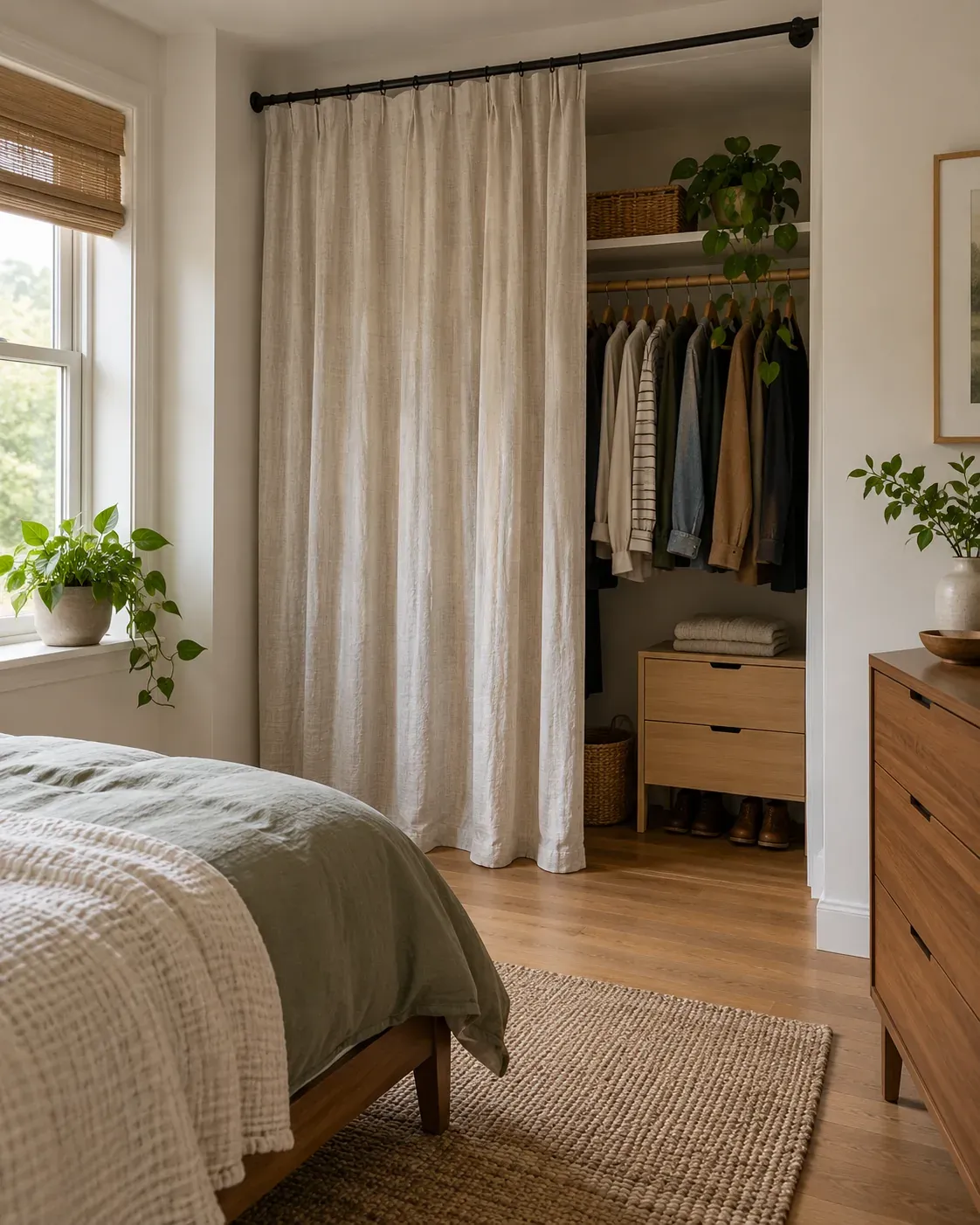
9. Conceal a clothing zone with a curtain
If the room has a shallow recess or one uninterrupted wall, a properly supported rail and curtain can hide hanging clothes without a bulky cabinet front. Measure the depth needed for hangers, the curtain’s sweep, and a route to open it fully. A lightweight curtain keeps the setup softer than a solid wardrobe.
This is not an instant closet. The rail and curtain support must be rated for their loads and mounted to suitable structure; a tension rod is not a substitute for a heavy clothing rail. Keep fabric clear of heaters and vents, allow reasonable airflow around stored clothes, and clean the zone periodically. Rental rules may limit mounting. A curtain can hide visual clutter, but it cannot fix an overloaded rail.
10. Choose a tall, narrow storage cabinet
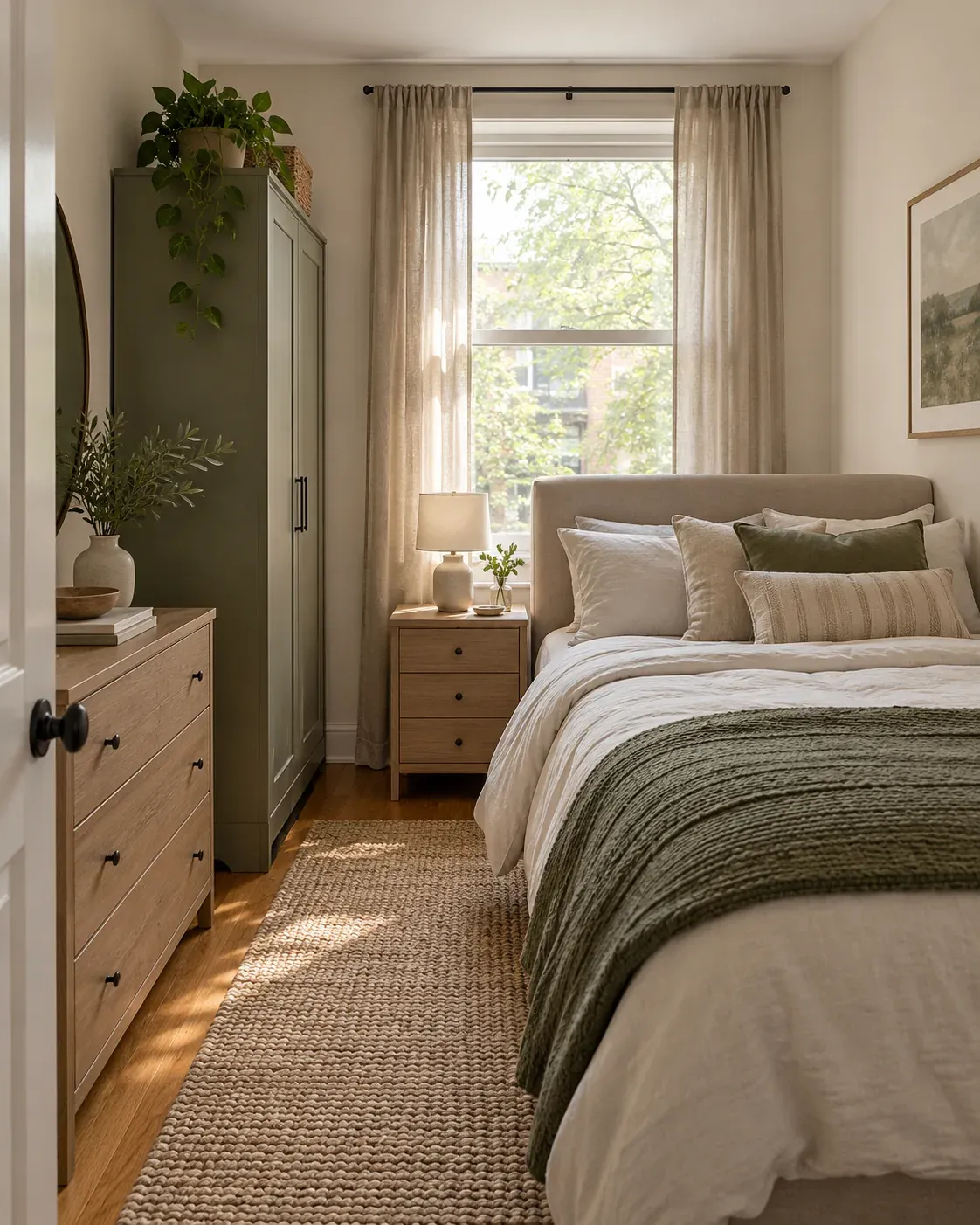
A vertical cabinet may hold folded clothes, bags, and small boxes on the same patch of floor a short chest would use. It is most useful in a room with enough wall height and a spot where the cabinet door can open without hitting the bed. Check the interior shelf sizes before deciding it will hold your actual belongings.
Tall furniture needs particular attention to stability. Follow the manufacturer’s anchoring directions and use suitable wall hardware; do not assume its weight alone makes it secure. Keep heavy items low and avoid storing things you need daily on a high shelf. If the upper space requires standing on the bed to reach it, choose a lower piece instead.
11. Choose nightstands with drawers
If a bedside table already occupies floor space, let it contain something. One or two drawers can hold chargers, glasses, books, or small accessories that would otherwise spread across the top. Match its height to the bed so you can use it comfortably while seated.
This is a good choice for the smallest rooms because it replaces rather than adds furniture. Check that the drawer can open with the bedroom door or wardrobe door in use. A narrow nightstand with full-height drawers is often more useful than an open shelf that displays every cable.
12. Store shoes in a slim vertical organizer
A shallow shoe cabinet or a modest rack can keep pairs off the floor. Put it near the bedroom entrance or wardrobe, wherever shoes are actually removed. Measure depth with the unit open; some tilt-out cabinets need more reach than their closed footprint suggests.
Use the organizer for the shoes that fit comfortably, not every pair you own. Clean and dry footwear before enclosing it, and leave ventilation as the product allows. Tall narrow cabinets should follow anchoring instructions. Do not place a rack where it blocks a door, baseboard heater, or the only route out of the room.
13. Use decorative baskets for small belongings
Baskets can hold scarves, belts, or a folded throw on a shelf or beneath a nightstand. Choose one size that fits a real category and one location where it can be lifted out easily. A breathable material may be helpful for dry textiles; a lined basket prevents rough edges from snagging delicate pieces.
Avoid using baskets to postpone decisions. If each one contains a mixture of papers, clothes, and chargers, the room will feel tidy only until you need something. Label hidden baskets and avoid stacking heavy ones above shoulder height. In a damp room, do not pack fabrics tightly and ignore airflow.
14. Create a compact wardrobe wall
For a room with one available wall, align a shallow wardrobe and narrow dresser, with a short hook rail or mirror between them if space permits. Grouping storage makes the remaining walls calmer and keeps dressing tasks in one place. This is often better than placing one piece at each corner of the room.
Measure every door and drawer in the open position, including the bedroom door. Leave access to outlets and windows, and follow the anchoring requirements for each tall or drawer unit. This arrangement works when the wall has enough length; in a truly tiny room, a single wardrobe with better internal fittings may be the better use of money and floor area.
15. Build a simple daily storage system
Even good furniture fails if the chair remains the easiest place to drop a shirt. Give daily categories a clear home: hanging clothes on the rail, folded clothes in a dresser, accessories in one drawer, and laundry in a hamper that fits the room. Put frequently used items where you can reach them without moving another object.
Make a small end-of-day reset part of the arrangement. Return clean clothes, put worn clothes in the hamper, and clear the bedside surface. Review the system after a week; if the same item stays out, its assigned place may be too far away or too full. This costs little and prevents storage furniture from becoming another layer of clutter.
How to organize a bedroom without a closet
First, group what must live in the bedroom: hanging clothes, folded clothes, shoes, bedding, and small personal items. Separate daily, seasonal, and occasional belongings. Measure the room, including open-door and open-drawer clearances, and map the path to the bed, window, and exit. Choose the largest essential storage piece first, usually a wardrobe or dresser, then add smaller solutions only for categories it cannot hold.
Keep daily clothing at comfortable reach and seasonal items lower or farther away. Do not store heavy things overhead. After loading the furniture, see whether you can still dress, change sheets, and clean the floor without shifting storage. If not, reduce the furniture footprint or edit what is kept in the room.
Best furniture for small bedrooms with no built-in storage
A freestanding wardrobe suits clothing that must hang and gives the most closet-like result, but needs depth and door clearance. A dresser is often better for folded clothing and may fit under a window if its height allows. A storage bed uses space already occupied by the bed, provided drawers can open. A clothing rack is lighter and sometimes less expensive, but exposes everything and has limited capacity.
Choose by your belongings and the room’s usable wall lengths. Combining a compact wardrobe with a narrow dresser can work; combining every option usually does not. For tall or drawer furniture, follow product anchoring instructions and choose safe placement before styling the top.
Where to store clothes when you have no closet
Hang wrinkle-prone and frequently worn garments in a compact wardrobe or a modest rack. Fold knits, underwear, and casual clothes in a dresser or suitable bed drawer. Use low under-bed bins for off-season items, not the shirt you need every morning. Shoes can live in a shallow rack or cabinet near the dressing zone.
If you share the room, allocate a clear zone to each person rather than mixing both wardrobes across baskets and rails. Leave a little capacity for laundry coming back into the room. When storage is packed tightly from day one, the chair tends to become the overflow closet.
How to make open bedroom storage look less cluttered
Use consistent hangers so garments sit at roughly the same height. Group clothing by type or a broad color range, and leave a little space on the rail so pieces can slide. Keep only the current rotation visible; off-season clothes can move to labeled bins if the fabric’s storage needs allow it.
A curtain can soften an open zone where mounting is appropriate, but a tidy rail is still necessary behind it. Repeat a restrained finish across the rack, dresser, and baskets without buying a full matching furniture set. The goal is to see a usable collection, not a display that takes an hour to maintain.
Small bedroom storage mistakes
An oversized wardrobe can consume the walkway and still fail if its doors cannot open. An unanchored tall dresser or cabinet can tip, especially if multiple drawers are opened or a child climbs it. Deep boxes under the bed become inaccessible when they cannot slide out. Too much open storage puts every item on display and makes the room feel busy.
Do not block a door, exit route, window access, or necessary airflow for the sake of another cabinet. Measure furniture in use, follow mounting and load instructions, and buy for the clothes you actually keep. A slightly smaller storage plan that works every day is better than one that fills every available inch.
Looking for more ideas? Browse our living room & bedroom stories.
Save to Pinterest