
In this article
- 1. Make the bed the main festive element
- 2. Add one or two festive pillows
- 3. Use decorative lights with a safety plan
- 4. Bring in a small greenery accent
- 5. Choose a miniature tree only if it fits
- 6. Decorate the window lightly
- 7. Hang a simple holiday wreath
- 8. Style the bedside table around its real job
- 9. Use ribbon as a low-cost accent
- 10. Layer cozy winter textiles
- 11. Edit the dresser before decorating it
- 12. Choose a restrained Christmas color palette
- 13. Create one clear focal point
- How to decorate a small bedroom for Christmas on a budget
- Cozy Christmas color combinations
- How to avoid overcrowding a small bedroom
A small bedroom does not need a forest of decorations to feel like Christmas. A softer layer on the bed, one touch of greenery and a warm glow can change the mood while leaving drawers, doors and walking space free. The most useful holiday details are the ones you can live with for several weeks without moving them every morning. These Christmas bedroom decor ideas favor ordinary apartments and simple additions over elaborate displays. Choose two or three that suit your room, repeat a restrained color palette, and leave room for the things the bedroom must still do every day.
1. Make the bed the main festive element
The bed takes up much of the visual space in a small bedroom, so a change of bedding can do more than several separate ornaments. Try a warm ivory duvet with a plaid throw, a subtle red stripe or evergreen-colored pillowcases. You can keep existing sheets and add only a removable layer rather than buying a complete seasonal set.
Choose washable fabrics that feel comfortable for your climate. A thick throw looks cozy but may be unnecessary in a warm room; a lighter cotton layer can still carry the color. Fold the accent neatly at the foot so it does not interfere with sleeping or collect on the floor.
2. Add one or two festive pillows
A pair of pillow covers can introduce a holiday pattern without requiring more furniture or storage space. Choose colors that already appear in the room, then add a small seasonal motif or texture. Swapping covers on existing inserts is easier to store than a pile of whole new cushions.
Keep the pillow count realistic. If decorative pillows end up on the floor each night, there are too many for the room. A single lumbar cushion against everyday bedding may provide enough contrast, especially when the bed is close to a wall or other furniture.
3. Use decorative lights with a safety plan
A short strand of suitable low-heat decorative lights can add a gentle evening glow to a shelf or window. Choose lighting intended for indoor use, inspect cords and follow the maker’s installation instructions. Keep lights away from bedding, curtains and other combustibles; do not trap cords under rugs or pinch them behind furniture. Turn decorative lights off before sleeping or leaving the room, as CPSC holiday decorating guidance advises.
Battery-powered lights can avoid an awkward cord, but their batteries still need appropriate care. Never overload an outlet or use damaged wiring. If safe placement is difficult, a warm bedside lamp can provide the same cozy atmosphere without a decorative strand.

4. Bring in a small greenery accent
A single sprig of evergreen in a stable vase, a short garland on a dresser or a modest faux branch can add seasonal texture. Keep greenery away from heat sources, lights and outlets, and check whether a natural cutting needs water or sheds needles. In a very small room, one contained arrangement feels fresher than greenery draped across every surface.
Look at where you already have a safe, uncluttered spot. A branch on a shelf may be easier to live with than a garland above the bed. If pets or children share the room, consider plant safety and whether the arrangement can be reached or knocked over.
5. Choose a miniature tree only if it fits
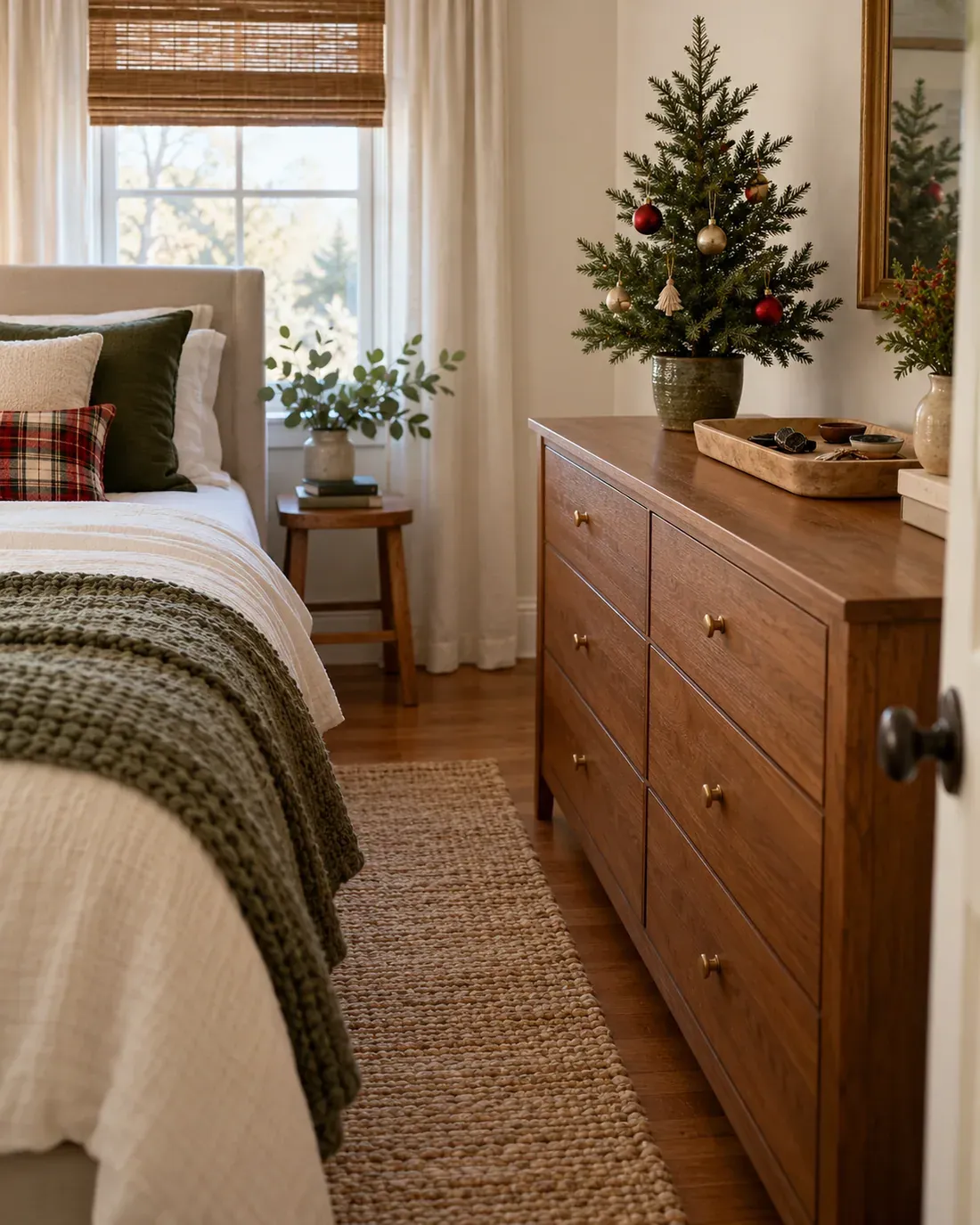
A tabletop tree can make a bedroom feel festive without taking a floor corner. Put it on a sturdy dresser or shelf that still has space for the things you use every day. A small undecorated tree or one with a few lightweight ornaments can be more restful than a dense display. Check that the base is stable and that drawers can still open.
If a tree would crowd the only usable surface, skip it. A framed print, small wreath or branch in a vase may provide the same seasonal cue. Do not place a live tree near a heat source; maintain it according to its care needs.
6. Decorate the window lightly
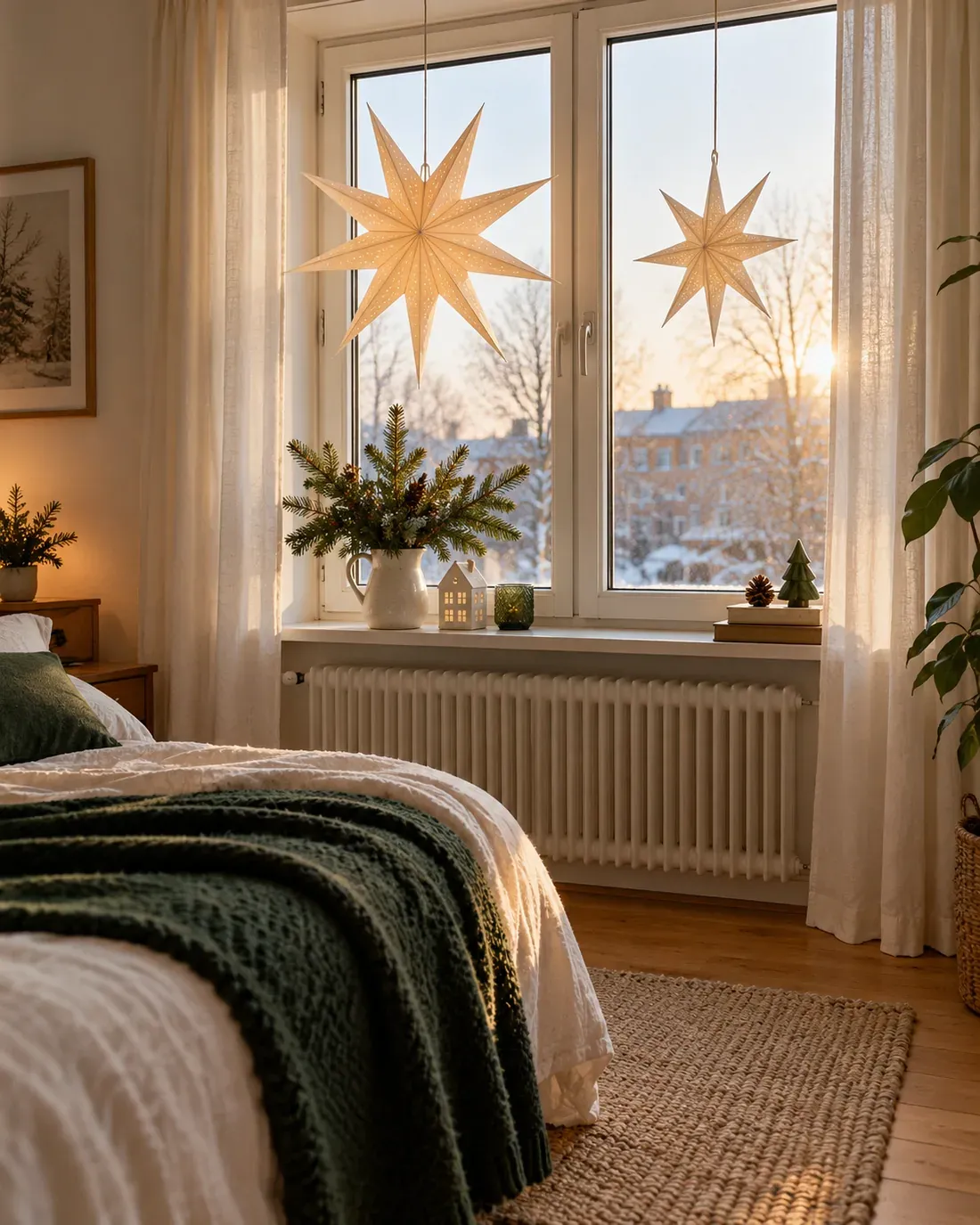
A paper star, small hanging ornament or narrow garland can use the window as a focal point without taking floor space. Position it so curtains and blinds still work and the window can open as needed. Removable hangers must suit the surface and the weight of the decoration. Avoid a cluster that blocks daylight, especially in a bedroom with only one window.
At night, a paper decoration can look lovely with ordinary room lighting behind it. If you use lights nearby, keep cords clear of fabric and follow their safety instructions. The window should remain practical first and decorative second.
7. Hang a simple holiday wreath
A small wreath on a wall or closet door can offer a clear seasonal focal point. Choose one light enough for the mounting method, and check that the door closes freely and the wreath does not brush a bed or narrow route. A plain evergreen or ribbon wreath often suits a bedroom better than a heavily decorated one.
In a rental, an over-door hanger may work if the door has clearance; removable hooks need the correct surface and load rating. Avoid hanging a wreath where it blocks an exit, switch or ventilation. A small wall arrangement can substitute if door placement is awkward.
8. Style the bedside table around its real job
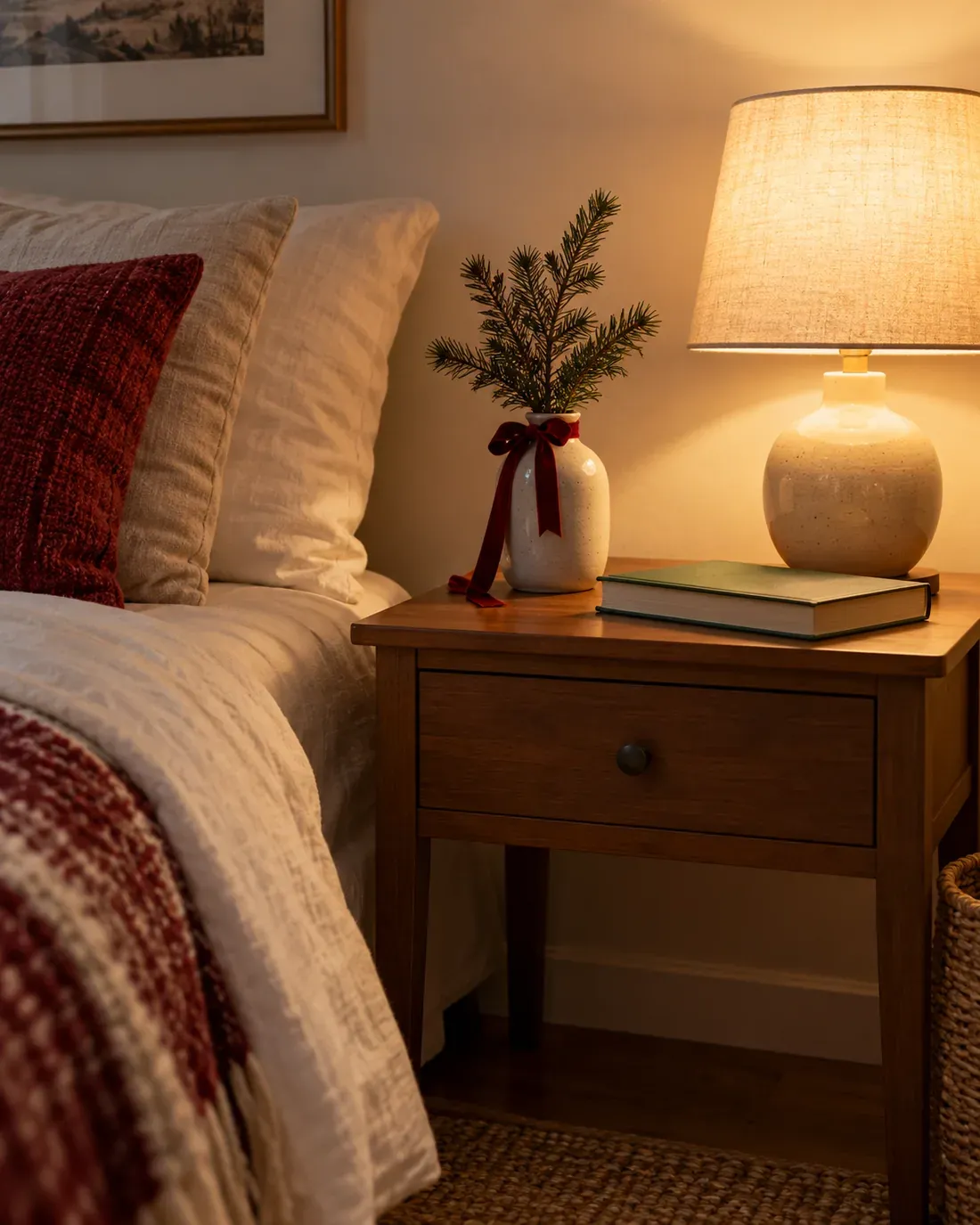
The bedside surface still needs room for a lamp, water, glasses or a book. Add one small holiday detail, such as a tiny ceramic tree or a sprig in a stable vessel, and keep the rest usable. A decorative tray can corral everyday items so the seasonal piece does not create a crowded tabletop.
Skip lit candles in the bedroom. The U.S. Fire Administration recommends against using lit candles in bedrooms; a lamp or suitable battery light can create a warm effect without an open flame. Make sure the decoration cannot be knocked over when reaching for essentials at night.
9. Use ribbon as a low-cost accent
A length of ribbon can tie a small bow around a vase, a wreath or a gift-like stack of books. Repeating the same ribbon in two places makes the room feel considered without adding many new objects. Choose a material and color that relates to the bedding or existing decor, such as muted red, forest green or natural linen.
Keep ribbons away from lights and heat, and do not drape them where they can trail onto the floor or catch in drawers. The benefit is flexibility: at the end of the season, a few lengths pack into a small envelope rather than a large storage box.
10. Layer cozy winter textiles
Texture can make a bedroom feel warmer even with very little color. Try a knitted throw, brushed cotton pillow cover or soft rug beside the bed. Keep the number of layers sensible so they can be folded away easily at night. A washable textile is often a better purchase than a decoration that only looks good on display.
Choose materials for the room’s temperature and care routine. A plush throw may feel lovely in a cool climate but oppressive in a heated apartment. Keep floor textiles flat and out of the route between the bed and door, particularly when you may get up in the dark.
11. Edit the dresser before decorating it
A dresser often becomes a landing place for laundry, cosmetics and mail. Clear and regroup those everyday objects before adding holiday decor. Then choose one compact arrangement, such as a miniature tree beside a framed photo, leaving the rest of the top easy to use. A stable tray can contain small objects and make dusting simpler.
Do not block drawers with a hanging garland or place heavy decor near the edge. If the dresser is already full of necessities, decorate the wall above it instead. A restrained display is easier to maintain throughout the season than several separate clusters.
12. Choose a restrained Christmas color palette
Pick two main colors already suited to the room and one accent. Ivory and evergreen feel calm; warm white and muted red read more traditional; soft brown and brass can make a neutral bedroom festive without bright color. Repeat the combination in bedding, ribbon and one small ornament rather than introducing a different palette at every surface.
A palette is a guide, not a shopping list. Look through what you own first. A red book cover or green vase may already support the holiday look. In a small room, repetition helps several modest details feel like one coherent idea.
13. Create one clear focal point
Choose the bed, window or dresser as the main seasonal moment. Give it the strongest detail, then let everything else be quieter. If the bed has patterned festive bedding, a plain wreath and warm lamp may be enough. If the bedding stays neutral, a small tree on the dresser can take the lead.
Stand in the doorway and notice what your eye meets first. Editing from that viewpoint prevents every corner from competing for attention. Leave doorways, floor routes and access to storage clear. A bedroom should still feel restful when the decorations are in place.
How to decorate a small bedroom for Christmas on a budget
Start with what you can move from elsewhere in the home: a warm throw, a vase, ribbon or a small lamp. Changing one pillow cover and adding a paper window star may be enough. Natural greenery can be inexpensive, but use it only where it can be cared for and placed safely. Borrow the color of existing bedding so new purchases can be few and reusable.
If you buy anything, prioritize a piece you can store easily and use again. Flat paper ornaments, ribbon and pillow covers need much less storage than bulky figurines. A tiny budget goes further when it supports one focal point instead of many disconnected decorations.
Cozy Christmas color combinations
For a light bedroom, ivory, evergreen and natural wood add warmth without dimming the room. Muted red, cream and dark brown create a familiar holiday feel without a bright red takeover. If your room already has blue or blush, pair those colors with warm white and a little greenery rather than replacing everything. Keep the strongest color on a removable textile or small accessory so the room can return to its usual look easily.
How to avoid overcrowding a small bedroom
Decorate the surfaces you already have rather than adding a new table or floor-standing display. Keep a clear route to the door and leave drawers, windows and outlets accessible. Avoid overloaded plugs, damaged lights and decorations close to heaters or bedding. The U.S. Fire Administration’s winter holiday guidance recommends inspecting holiday lights and discarding strings with worn or broken cords.
Put away one decoration if you need to move it every time you make the bed. That simple test keeps the room comfortable through the whole season. For other compact-home arrangements that preserve daily function, explore our studio apartment layout ideas. A festive bedroom can feel cozy with a few well-chosen details and plenty of space to rest.
Looking for more ideas? Browse our seasonal decor stories.
Save to Pinterest