In this article
- 1. Tiny dots on warm white in the living room
- 2. Oversized navy dots behind the bed
- 3. Muted dusty pink in a reading nook
- 4. A bathroom accent wall behind the vanity
- 5. Charcoal dots as a headboard wall
- 6. Peel-and-stick dots for renters
- 7. A terracotta dot strip in the hallway
- 8. A grey dot focus wall in the home office
- 9. Pastel dots on one nursery wall
- 10. Warm beige dots in a dining nook
- 11. Bold black and white in the powder room
- 12. Olive dots across the living room wall
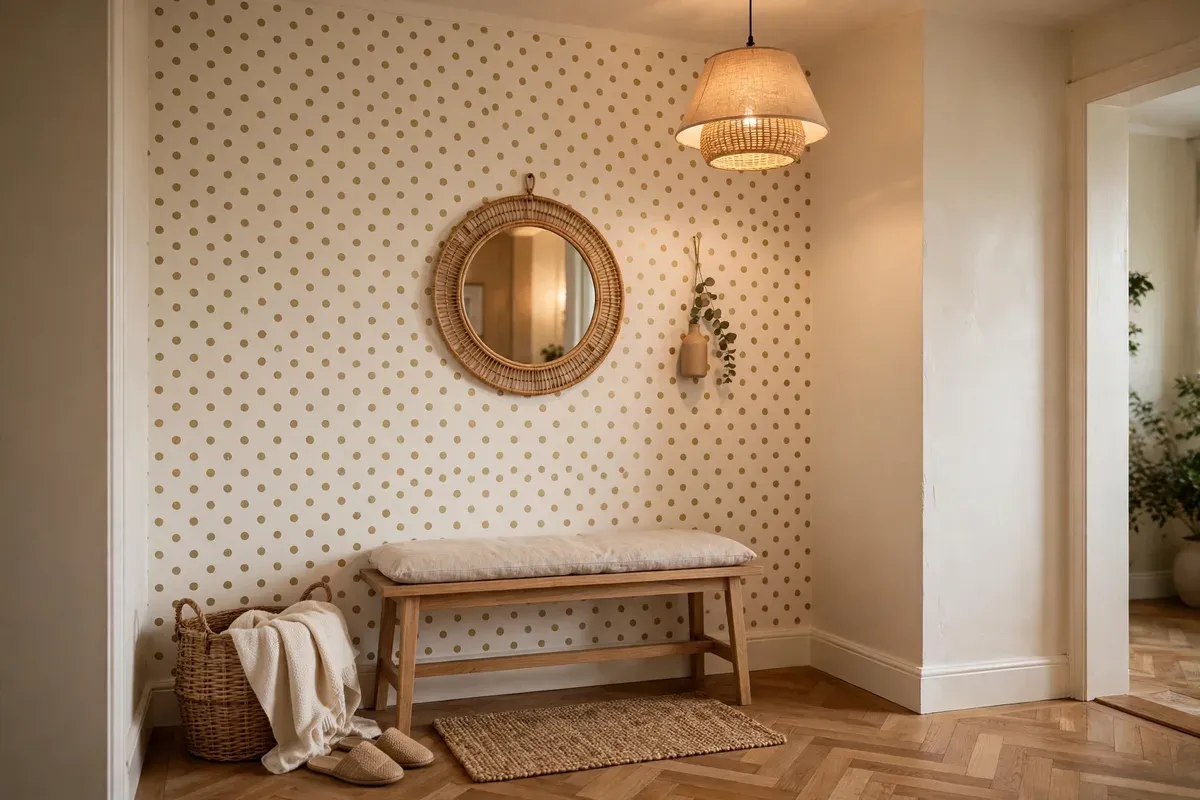
- 13. Soft gold dots in the entryway
- How to pick the right dot size for your room
- What to know before you buy polka dot wallpaper
Polka dots have a reputation problem. Most people picture a bright red nursery or a 1950s diner, so the pattern rarely gets a chance in a grown up room. The pattern itself is not the problem. A dot that is too big, too bright or repeated on all four walls is what makes a room feel like a costume. Change the scale, soften the color and keep the pattern to one wall, and the same dots read as calm, graphic and intentional.
These polka dot wallpaper ideas follow three rules. First, the dots stay small or the color stays muted, never both loud at once. Second, the wallpaper covers one wall or one strip, not the whole room. Third, the rest of the room stays plain, so the dots are the one pattern in the space. A roll of peel-and-stick wallpaper costs 30 to 60 dollars and covers about 28 square feet, which is enough for most accent walls in a small apartment. A paste-the-wall roll costs 40 to 90 dollars for the same coverage. Measure the wall first, then buy, since one short roll is the most common mistake.
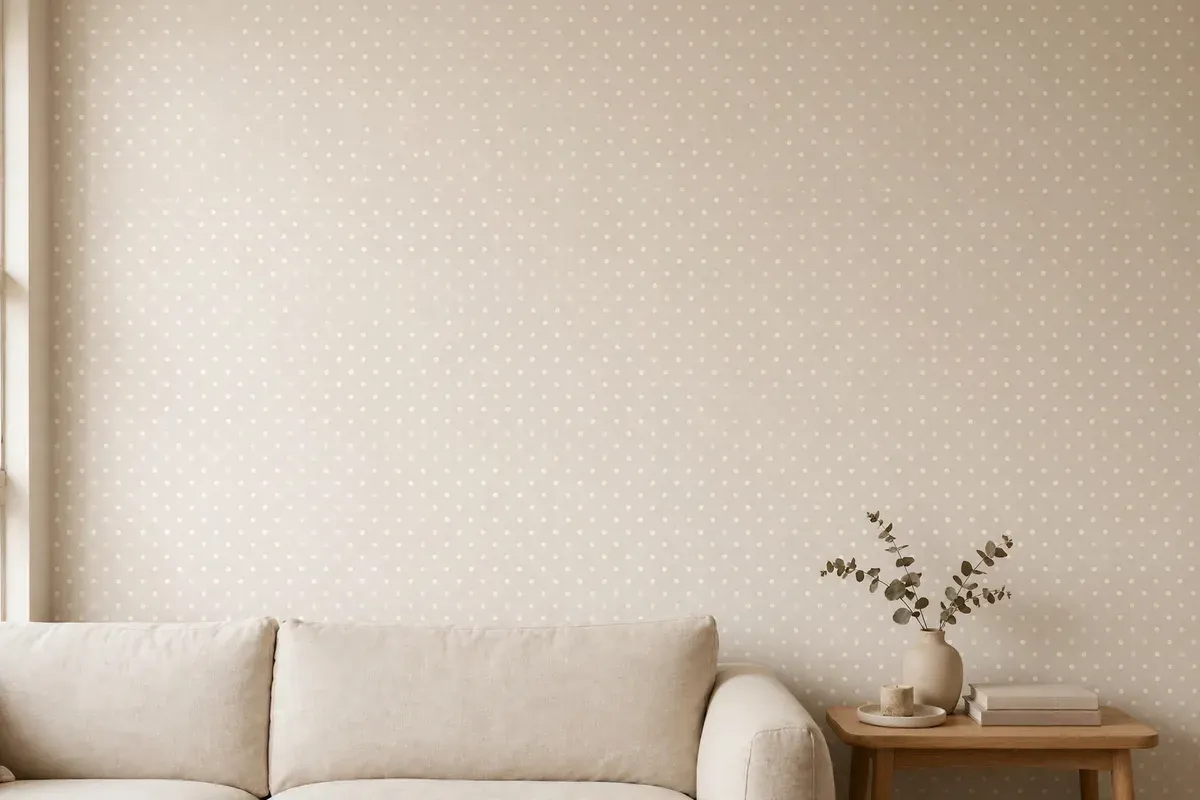
1. Tiny dots on warm white in the living room
Tiny dots are the safest way into this pattern. Dots under half an inch read as texture from across the room, not as a print, and they do not compete with the sofa or the art. A warm white base with cream or pale grey dots works in a living room because it adds interest without changing the color of the room. The wall still reads as light, and the room still feels bigger than it is.
Order a sample first and tape it to the wall for two days. Dots that look subtle in a photo can look busy under bright daylight, and a sample costs 5 to 10 dollars against a 50 dollar roll. Keep the other walls plain white or pale grey, and skip patterned cushions on the sofa. One pattern in the room is the rule that keeps tiny dots from turning into visual noise.
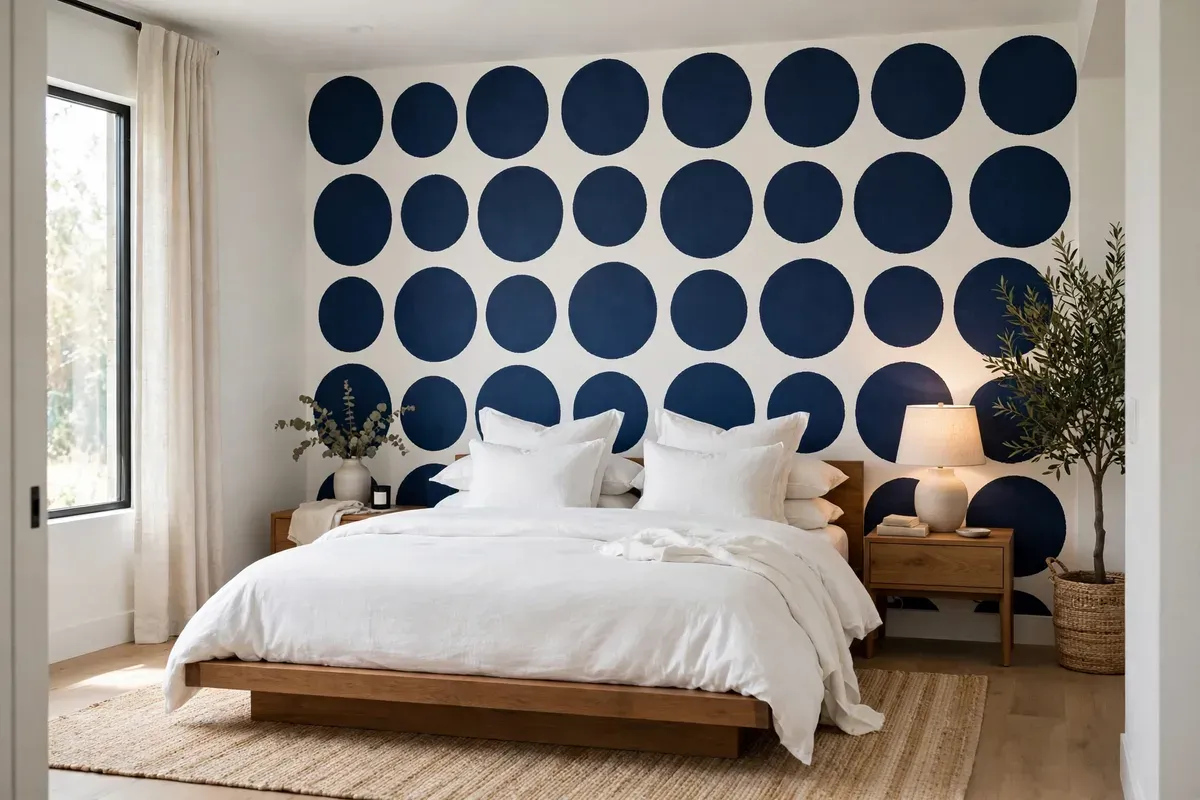
2. Oversized navy dots behind the bed
Oversized dots work when the color does the calming and the size does the drama. Navy dots 6 to 8 inches across on a white ground make a strong headboard wall, and the contrast is sharp enough that the room needs nothing else on that wall. The bed, the bedding and the nightstands stay plain, which lets the dots carry the whole wall. This is the boldest idea in the list, and it works because it is confined to one wall.
A standard bedroom accent wall is about 10 feet wide and 8 feet tall, which takes two rolls of most peel-and-stick papers. Hang the first strip centered behind the bed so the pattern is symmetrical from the doorway. Dark navy can make a small bedroom feel smaller if the other three walls are also dark, so keep them white or pale grey. If the room gets little daylight, pick a navy with a warm undertone rather than a cold one, since cold navy turns grey in dim light.
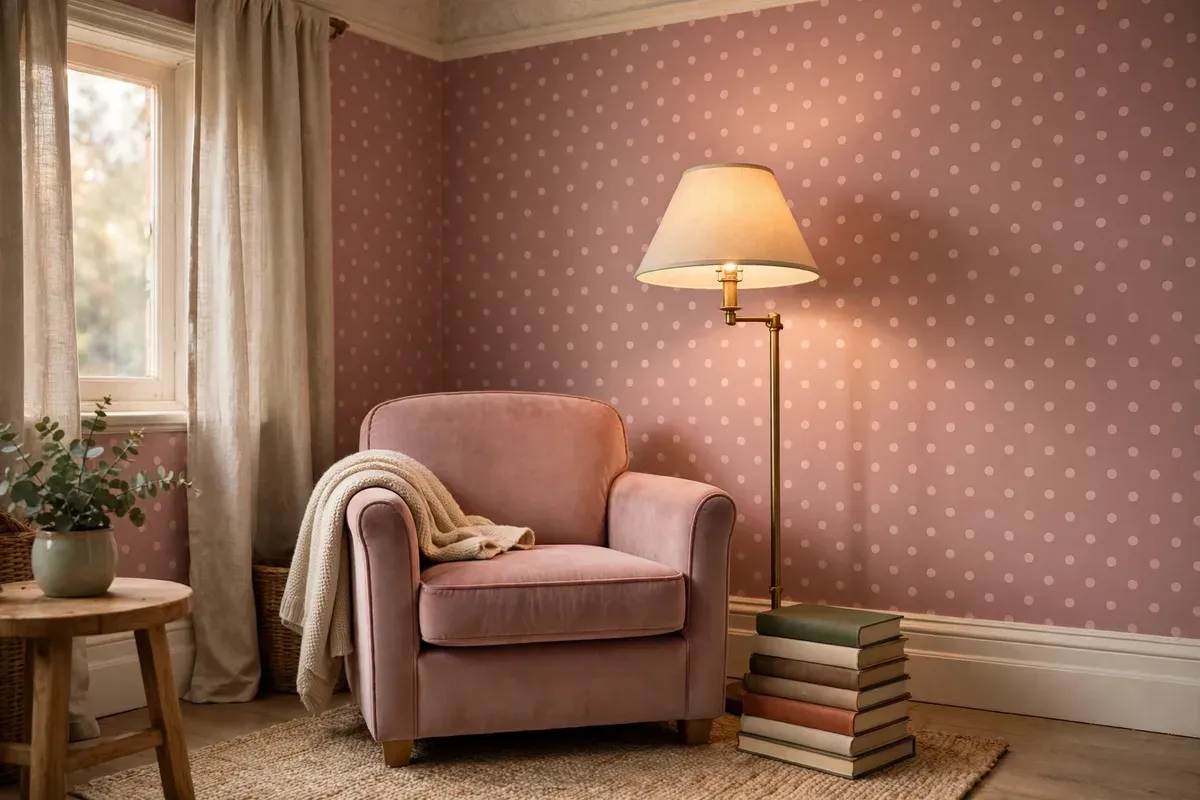
3. Muted dusty pink in a reading nook
A reading nook is the right size for a color you would not trust on a whole room. Dusty pink dots on a slightly deeper pink ground feel warm and quiet, and the nook becomes a destination instead of a leftover corner. A small armchair, a floor lamp and a stack of books are all the furniture the space needs, and the wallpaper does the decorating.
Paint the ceiling and the trim white so the pink stays contained. A nook wall is usually 5 to 6 feet wide, so one roll is enough, and the leftover paper can cover the inside of a bookshelf back for a matching detail. If pink feels too sweet, look for a dusty rose with a grey undertone, which reads as a neutral in evening light. Our long wall decorating ideas use the same trick of letting one short wall carry the color.
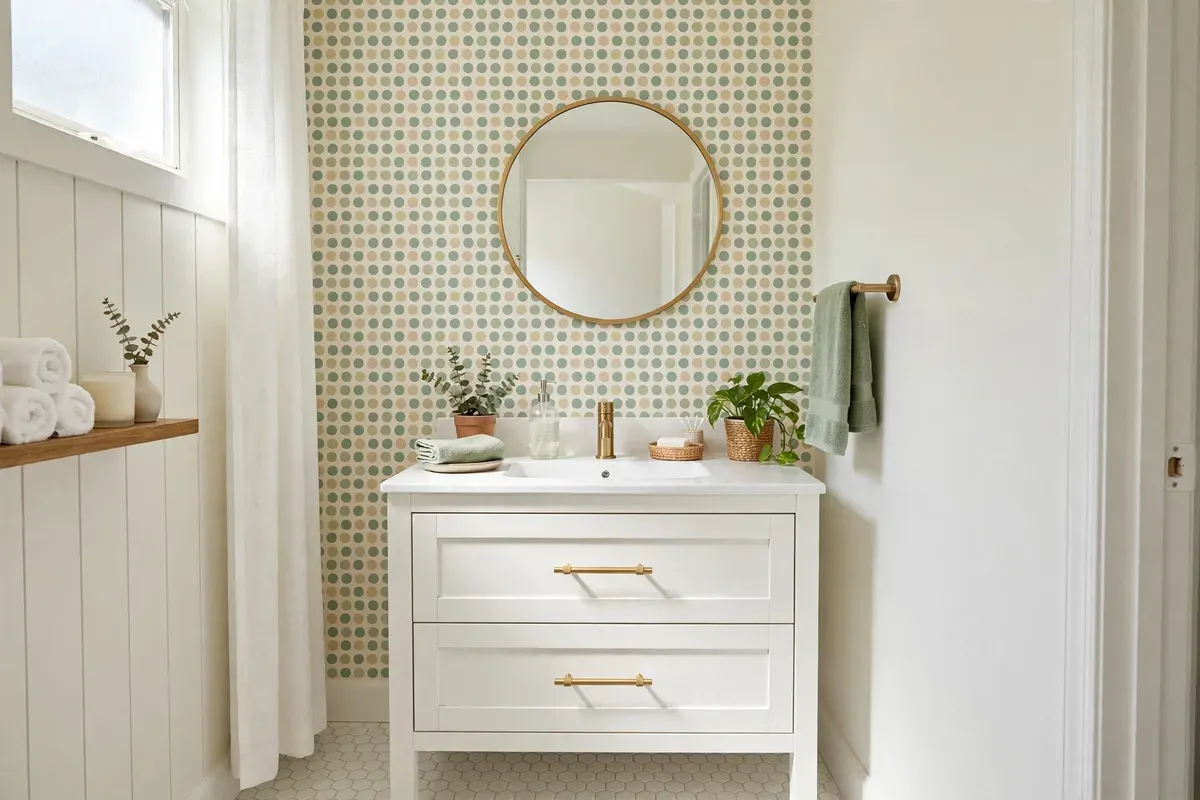
4. A bathroom accent wall behind the vanity
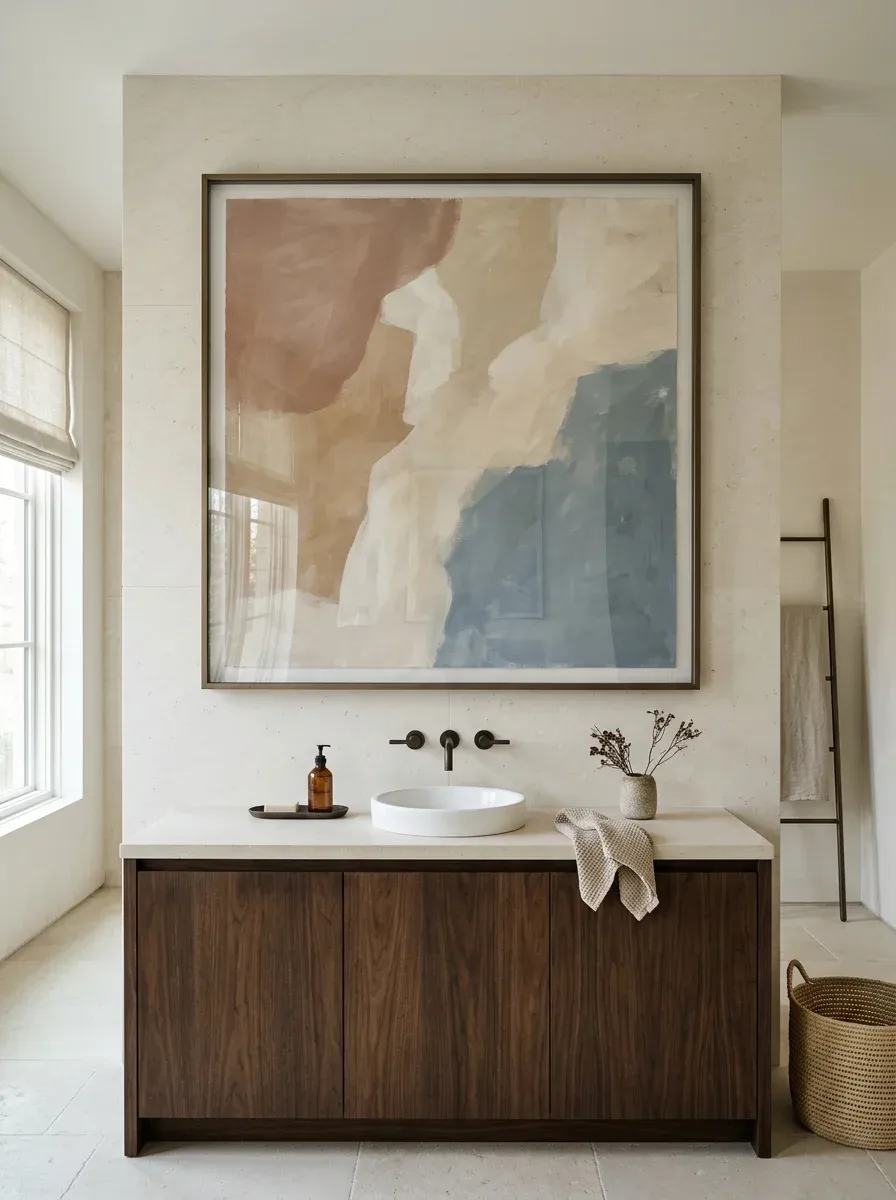
Bathrooms are the easiest room for polka dots, because the wall area is small and the fixtures are white. A dotted accent wall behind the vanity and mirror gives a plain bathroom a finished look for the price of one roll, and the mirror breaks up the pattern so it never feels overwhelming. Sage and cream dots keep the room calm, and they work with brass or matte black fittings.
Use vinyl or vinyl-coated wallpaper in a bathroom, not standard paper, since steam will lift ordinary paste and peel-and-stick edges. Keep the paper off the wall inside the shower and at least 12 inches from the tub edge. A vanity wall in a small bathroom is usually 5 to 7 feet wide, so one roll covers it with paper to spare. Seal the bottom edge with a thin bead of clear silicone where the paper meets the backsplash, which stops moisture creeping under the edge. For more ideas on finishing the rest of the room, our bathroom wall decor ideas pair well with a single patterned wall.
5. Charcoal dots as a headboard wall
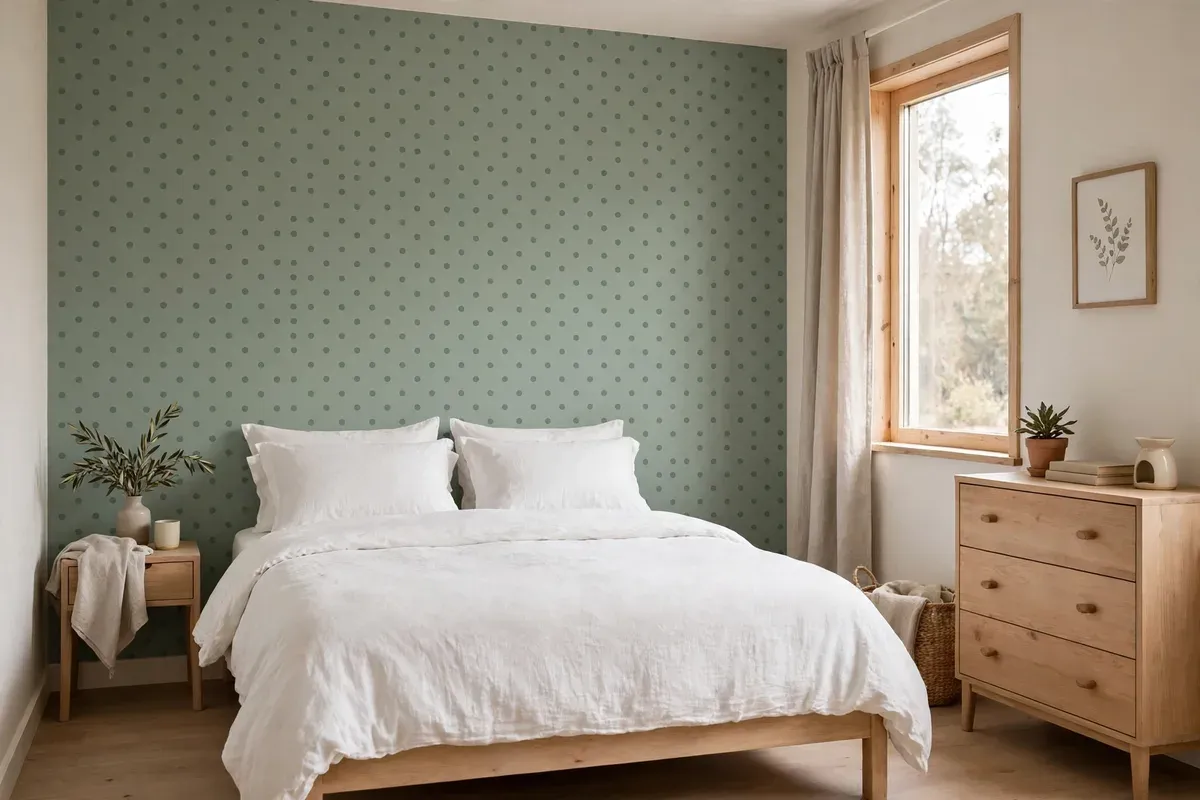
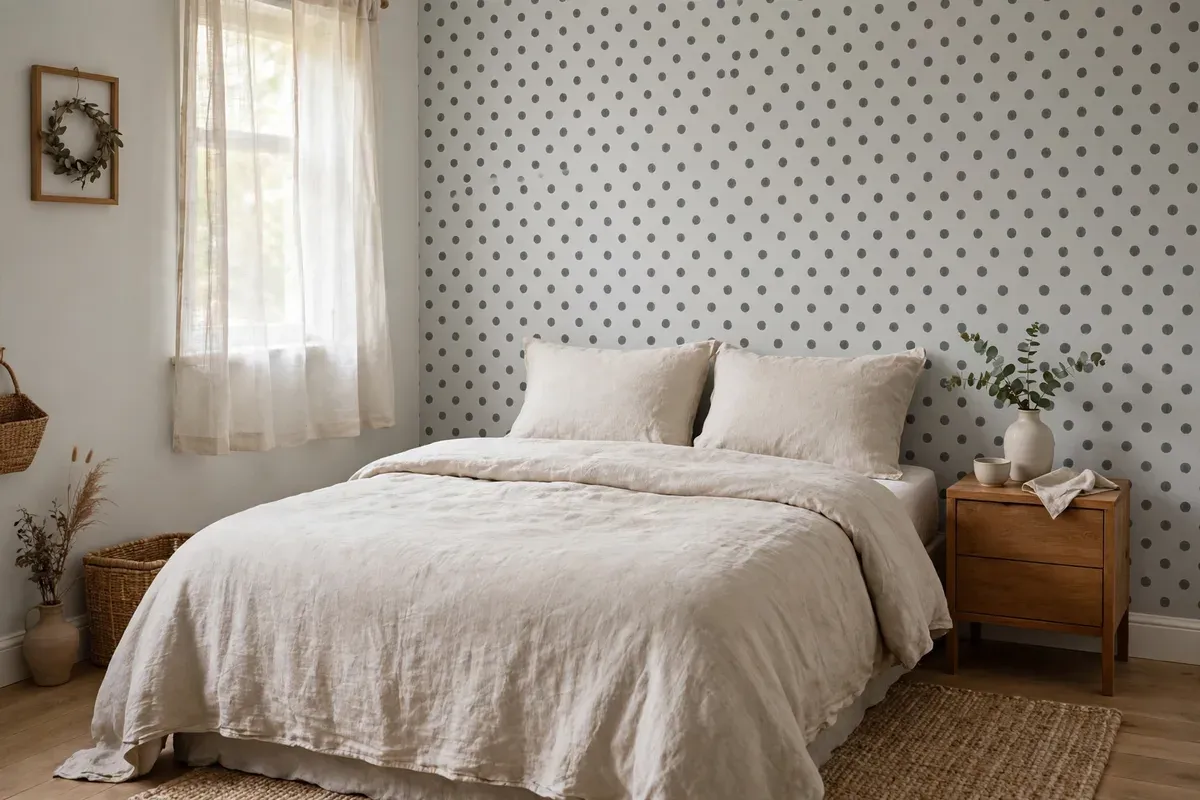
Charcoal dots on a pale grey ground give a bedroom the structure of a headboard without buying one. The dots are small, about 1 inch across, and evenly spaced, so the wall reads as a quiet pattern rather than a print. Linen bedding in natural tones and a wooden nightstand keep the room soft, and the dark dots stop the pale palette from looking washed out.
This works best on the wall the bed already faces, which is usually the longest wall in the room. Skip a physical headboard, or use a low one under 30 inches tall, so the wallpaper stays visible above it. A tall headboard would hide the best part of the pattern. Budget about 60 to 120 dollars for two rolls, and check the batch numbers match when you buy, since two rolls from different batches can differ slightly in shade.
6. Peel-and-stick dots for renters
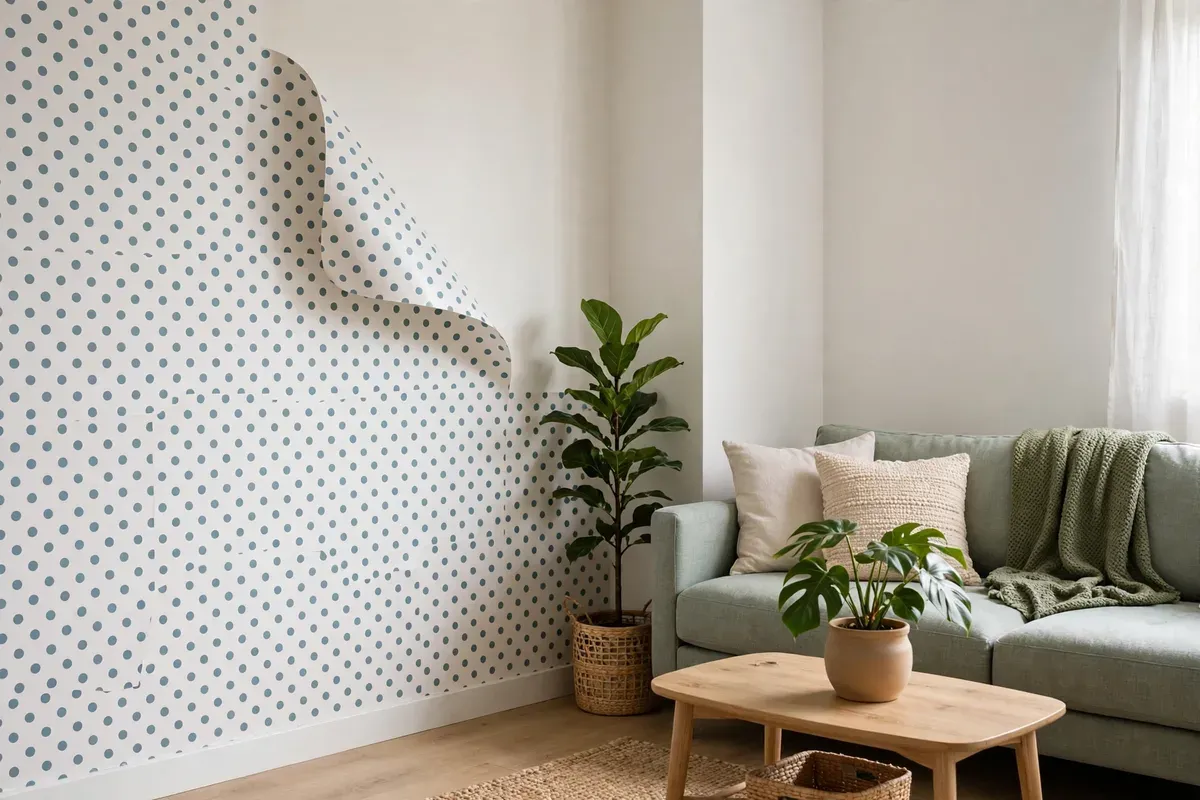
Peel-and-stick is the renter-friendly way to try polka dots, and it is also the easiest to remove. The paper comes off cleanly from painted drywall if the paint has cured for at least 30 days, and it leaves no paste behind. A single accent wall takes one to two rolls, and the whole job fits in an afternoon with a utility knife, a smoothing tool and a level.
Test a corner first. Press a 6 inch piece onto the wall, leave it for a week, then peel it off and check for paint lift. Fresh paint, textured walls and matte finishes are the three surfaces that cause trouble, and a test piece costs nothing. When you remove the paper at move-out, warm it with a hair dryer on low and pull slowly at a 45 degree angle. If your lease bans wallpaper outright, the same look works as removable dot decals, which cost 15 to 25 dollars a pack and cover about 20 square feet. Our shelf wallpaper ideas use peel-and-stick the same way, on shelves instead of walls.
7. A terracotta dot strip in the hallway
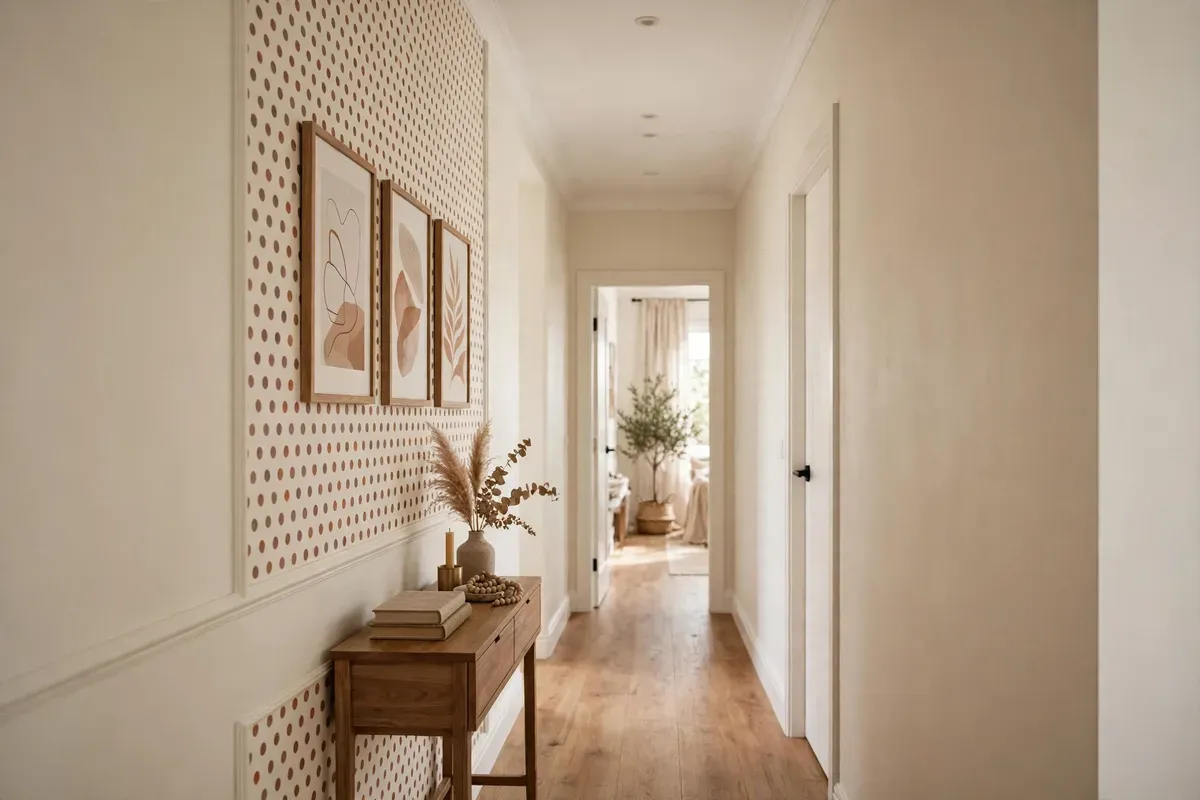
A hallway does not need a full wall of pattern. One strip of polka dot wallpaper, about 24 to 36 inches wide, framed by plain walls and picture rail, gives a narrow hallway a focal point without closing it in. Terracotta dots on cream warm up a space that usually gets no daylight, and three framed prints hung on the strip turn it into a gallery wall.
Measure the strip so the dots are centered, not cut in half at the edges. A 24 inch strip takes less than half a roll, which makes this the cheapest idea in the list at under 30 dollars of paper. Hang the frames so their centers sit at 57 inches from the floor, the standard gallery height, and keep the console table narrow, under 12 inches deep, so the hallway stays passable. If the hallway is under 36 inches wide, skip the console table and let the strip and frames do the work alone.
8. A grey dot focus wall in the home office
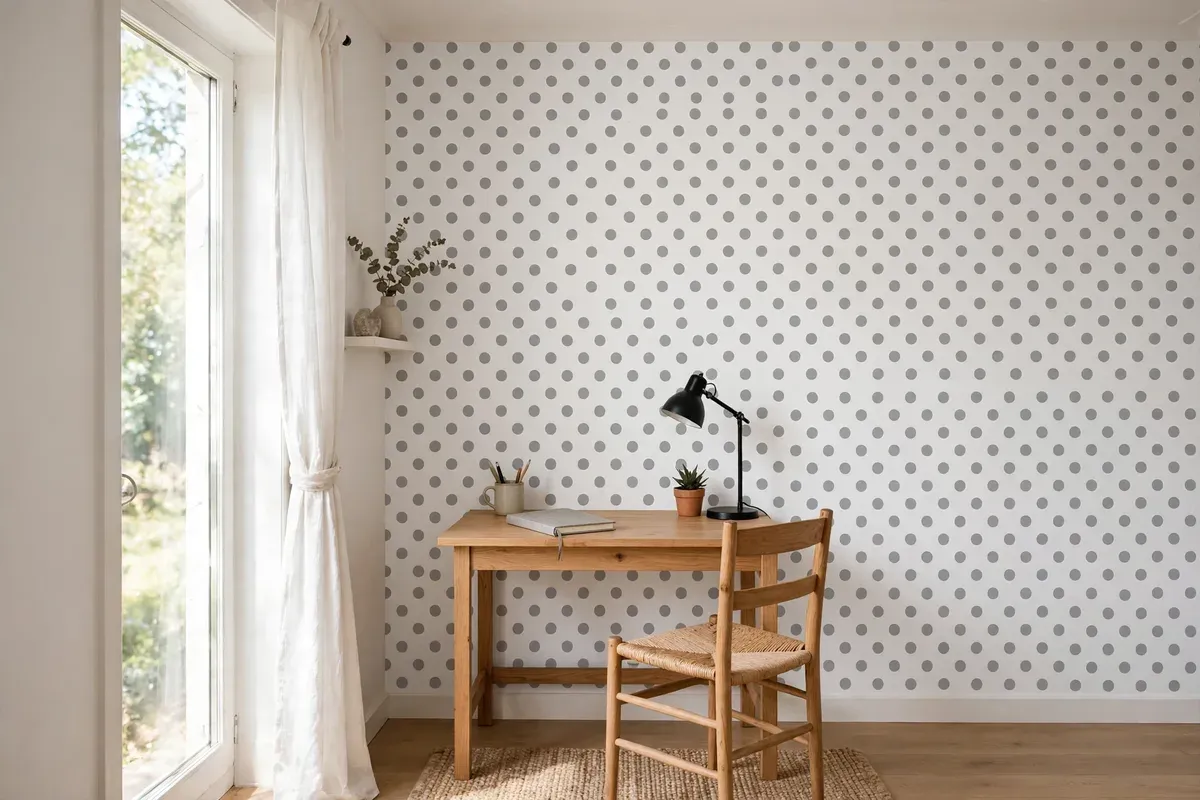
A home office needs a wall that looks good on video calls and does not distract during work. Grey dots on white do both. The pattern is visible enough to look intentional on camera, but it is regular and quiet enough to ignore while you work. A compact desk, a simple chair and one desk lamp are all the room needs, and the wall behind the desk becomes the backdrop.
Place the desk against the dotted wall so the pattern frames you on calls, not the plain wall behind you. Keep the dots medium sized, about 1 to 2 inches, since tiny dots can shimmer on camera and large dots can look like a backdrop. A desk wall in a spare bedroom is usually 8 to 10 feet wide, so budget two rolls. If the room doubles as a guest room, pick a paper with a matte finish, since gloss reflects the desk lamp and shows on camera.
9. Pastel dots on one nursery wall
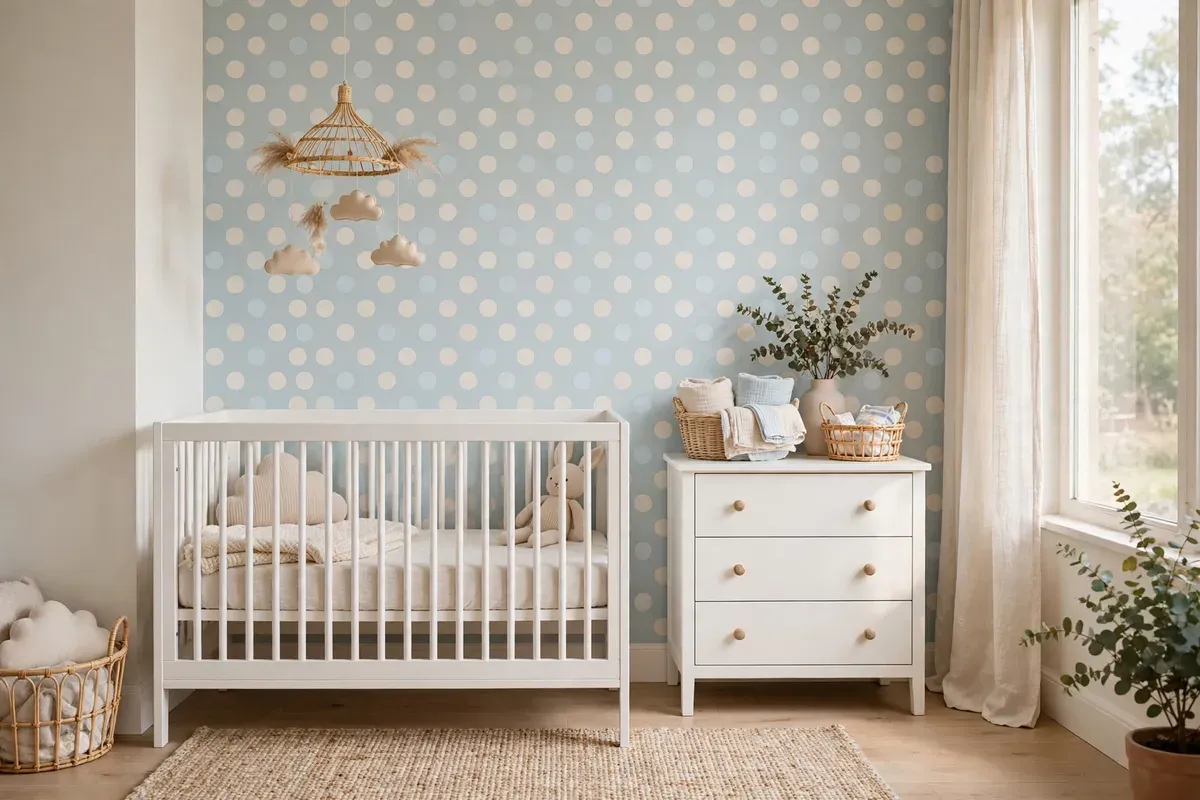
A nursery is the one room where polka dots are expected, and the trick is to keep them soft enough that the room still feels restful. Pale blue and cream dots on a light ground work because the contrast is low, and the pattern fades into the background once the crib, dresser and curtains are in place. One wall is enough. The other three stay plain so the room does not feel busy at 3 a.m.
Choose a paper with a low VOC rating and a wipeable surface, since nursery walls get touched and cleaned often. Hang the paper on the wall the crib faces, not the wall behind it, so the pattern is in view when you sit in the chair and not right against the baby’s head. A crib wall is about 8 feet wide, so one to two rolls cover it. If you plan to repaint in a few years, peel-and-stick is the better buy, since it comes off without steaming or scraping.
10. Warm beige dots in a dining nook
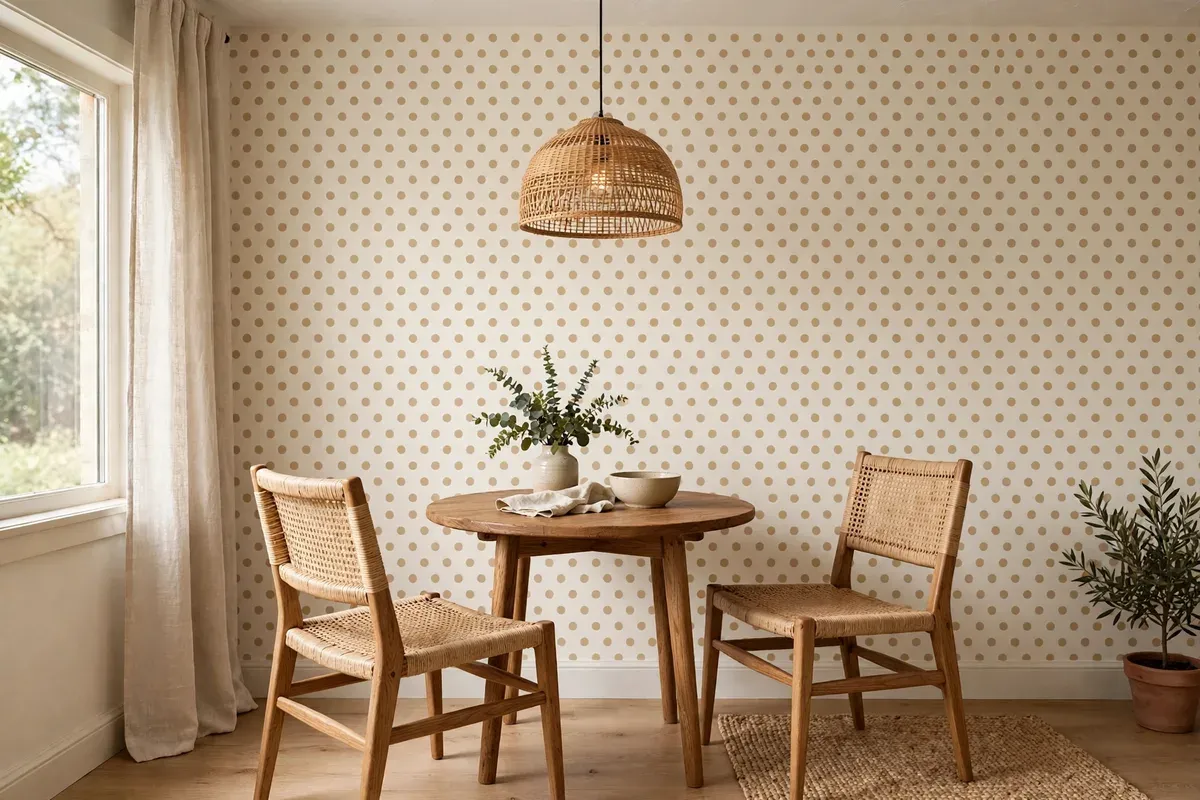
A dining nook gets used for 30 minutes a day and ignored the rest, so it is a good place for a pattern that would feel like too much in the living room. Warm beige dots on ivory add color without adding a color, and they work with wood, rattan and linen, the materials a small dining set is usually made from. A round table, two chairs and a pendant light finish the space.
Hang the pendant so its bottom sits 30 to 34 inches above the table, which keeps it out of sightlines across a small table. Keep the chairs simple, since a patterned wall plus patterned chairs is too much in 40 square feet. One roll usually covers a nook wall, and the job takes under two hours including trimming around the window. If the nook shares a wall with the kitchen, carry the same paper 12 inches around the corner so the edge does not look accidental.
11. Bold black and white in the powder room
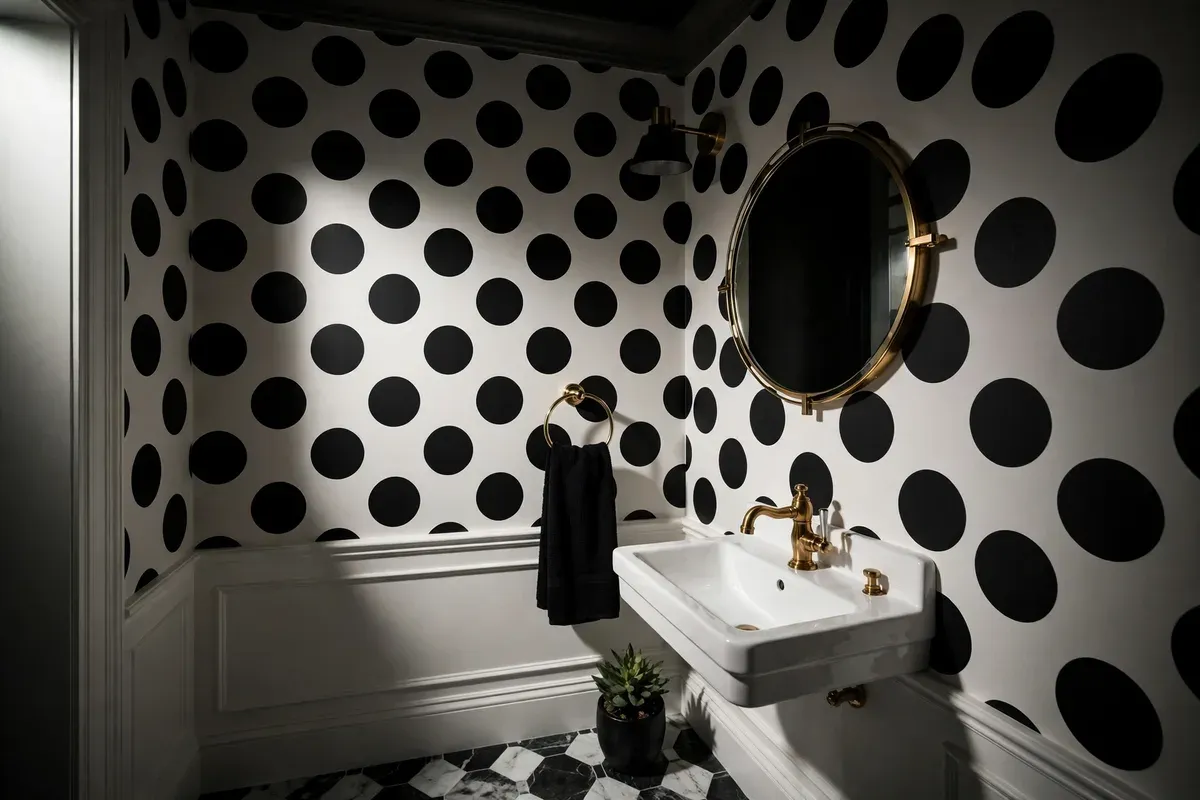
A powder room is the smallest room in the house, and that is exactly why it can take the boldest dots. Large black dots on white, 4 to 6 inches across, turn a room you spend two minutes in into the most memorable room in the house. The contrast is dramatic, but the room is so small that the pattern never gets tiring. Brass fittings and a white sink keep it from feeling stark.
Paper all four walls in a powder room, since the room is usually under 25 square feet and one roll covers most of it. Use vinyl paper, seal the edges, and keep the paper above the wainscot line if the room has one, so splashes hit paint or tile instead of paper. A black ceiling makes the room feel like a box, so keep the ceiling white. This is the one idea where going bold on every wall works, because the room is too small for the pattern to overwhelm anyone.
12. Olive dots across the living room wall
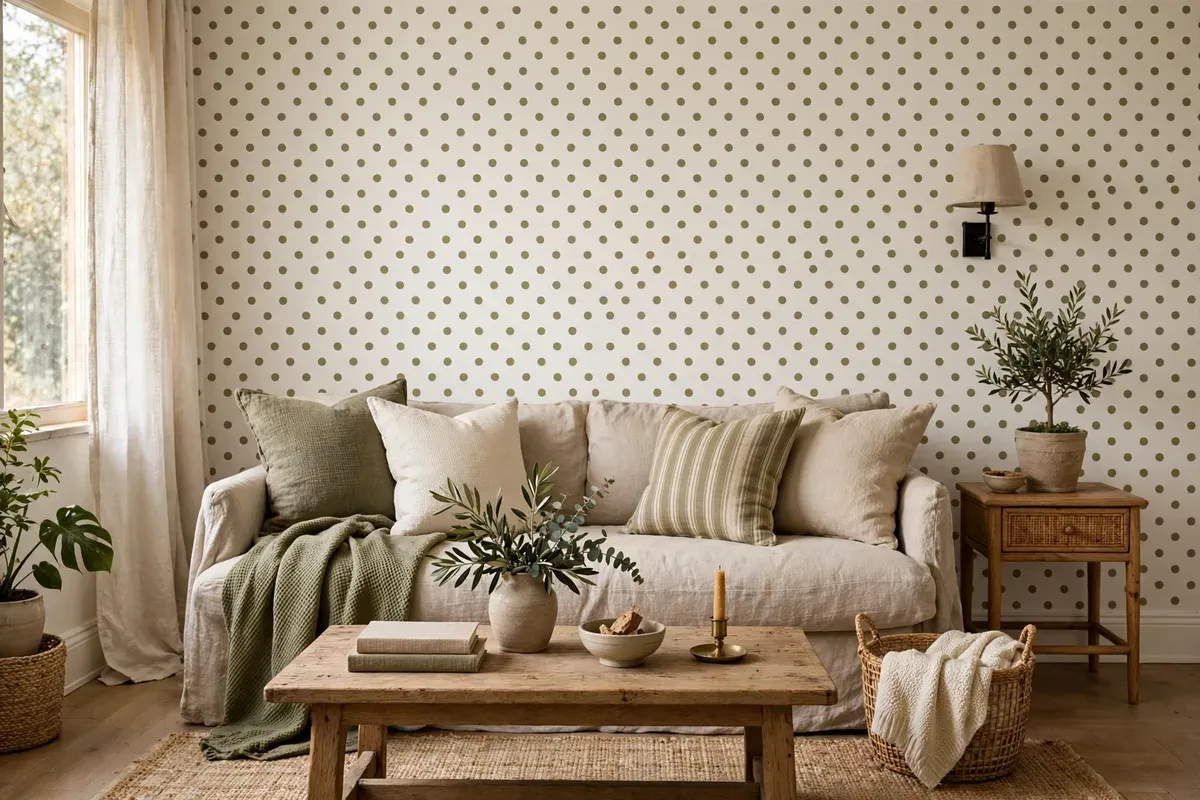
Olive dots on warm white are the most neutral option in this list, and they work in a living room that already has green in the cushions, throws or plants. The dots are small, about half an inch, and the spacing is wide, so the wall reads as a soft green wash from a distance. A linen sofa, a wooden coffee table and a woven basket keep the room relaxed, and the wallpaper ties the green accents together.
This is the idea to pick if you want pattern without committing to a color statement. Olive sits between green and brown, so it works with warm wood, black metal and brass. A full living room wall is 12 to 14 feet wide, so budget three rolls and buy them all at once to keep the batch numbers the same. Hang the strips from the center outward so the pattern is symmetrical around the sofa, which is where the eye lands first.
13. Soft gold dots in the entryway
An entryway is the first wall a guest sees, and soft gold dots on cream make it feel warm without trying hard. The dots are small and the gold is muted, closer to brass than to glitter, so the wall reads as elegant in daylight and glowing under the entry light. A wooden bench, a round mirror and a woven basket are all the furniture the space needs, and the wallpaper does the welcoming.
Entryways take scuffs from shoes, bags and keys, so pick a scrubbable vinyl paper and keep a spare strip for patches. A bench wall is usually 6 to 8 feet wide, so one to two rolls cover it. Hang the mirror at eye level, about 60 inches to its center, and keep the bench cushion in a plain linen so the dots stay the only pattern. If the entry opens straight into the living room, stop the paper at the doorway trim, which gives the pattern a clean edge.
How to pick the right dot size for your room
Dot size is the decision that matters most, and it follows a simple rule. Small rooms take small dots, and large walls take large dots. Dots under half an inch suit bathrooms, hallways and nooks. Dots of 1 to 2 inches suit bedrooms and offices. Dots over 4 inches need a wall at least 10 feet wide, or the pattern repeats too few times and looks like random circles instead of a pattern. Count the repeats before you buy: a wall should show at least 6 dots across, or the scale looks wrong.
Color follows the same logic. A muted dot color, sage, olive, dusty pink, charcoal, navy, lets the pattern sit quietly in the room. A bright dot color, red, royal blue, hot pink, needs a small wall and plain furniture around it. If you are unsure, order two samples in different sizes and tape both to the wall. The right one will look obvious after a day of living with it, and the wrong one will start to annoy you by the second evening.
What to know before you buy polka dot wallpaper
Start with the wall measurement, not the roll. Measure the width and height in feet, multiply them for square footage, and add 10 percent for trimming and pattern matching. Most peel-and-stick rolls cover 28 square feet and cost 30 to 60 dollars. Most paste-the-wall rolls cover 56 square feet and cost 40 to 90 dollars. Buy all the rolls at once and check the batch numbers match, since a shade difference between batches shows up clearly on a dotted pattern.
Check the wall before you order. Wallpaper sticks best to smooth, primed drywall. Textured walls, fresh paint under 30 days old and glossy finishes all cause adhesion problems, and a test piece will tell you in a week. In bathrooms, use vinyl only. In rentals, use peel-and-stick and test a corner first. If the pattern still feels risky, try it on one wall in the smallest room first. A powder room or a hallway strip costs one roll and an afternoon, and it tells you whether you want dots in a bigger room. For a seasonal take on the same idea, our Christmas wallpaper ideas for small apartments use pattern on one wall the same way.
Looking for more ideas? Browse our small space living stories.
Save to Pinterest