In this article
- 1. Peel-and-stick accent wall behind the tree
- 2. Make a plaid wallpaper nook
- 3. Use wrapping paper as a wall panel
- 4. Go deep green in the entryway
- 5. Try a snowflake pattern on one wall
- 6. Wallpaper the back of a bookcase
- 7. Frame a wallpaper panel like art
- 8. Use red and cream in the dining corner
- 9. Paper a narrow hallway wall
- 10. Put pattern behind open shelves
- 11. Add a temporary paper border at chair rail height
- 12. Mix one pattern with plain walls
- Renter-Friendly Removal Tips
- A Christmas Wallpaper Budget
Wallpaper is the fastest way to make Christmas feel like a real event in a small apartment. One patterned wall does the work of a dozen ornaments, and it costs less than a box of decorations. The trick is to use it as a statement, not a takeover: one wall, one nook or one panel, in a pattern that suits the room. Every idea here is renter friendly, since peel-and-stick paper and wrapping paper panels come down cleanly in January.
1. Peel-and-stick accent wall behind the tree
The wall behind the Christmas tree is the most watched wall in the home for a month, so give it a pattern. A peel-and-stick paper in deep green with a subtle snowflake or star pattern turns a plain corner into a scene, and the tree looks fuller against a dark background. One roll, about $25 to $40, covers a wall up to 8 feet wide if you buy the 20 inch wide rolls.
Measure the wall first and buy one extra roll, since pattern matching wastes about 10 percent. Smooth the paper from the center outward with a plastic smoother, and work in daylight so bubbles show. The tradeoff is patience: a first timer needs about two hours for one wall, but the result lasts the whole season and peels off in January without damage.
2. Make a plaid wallpaper nook
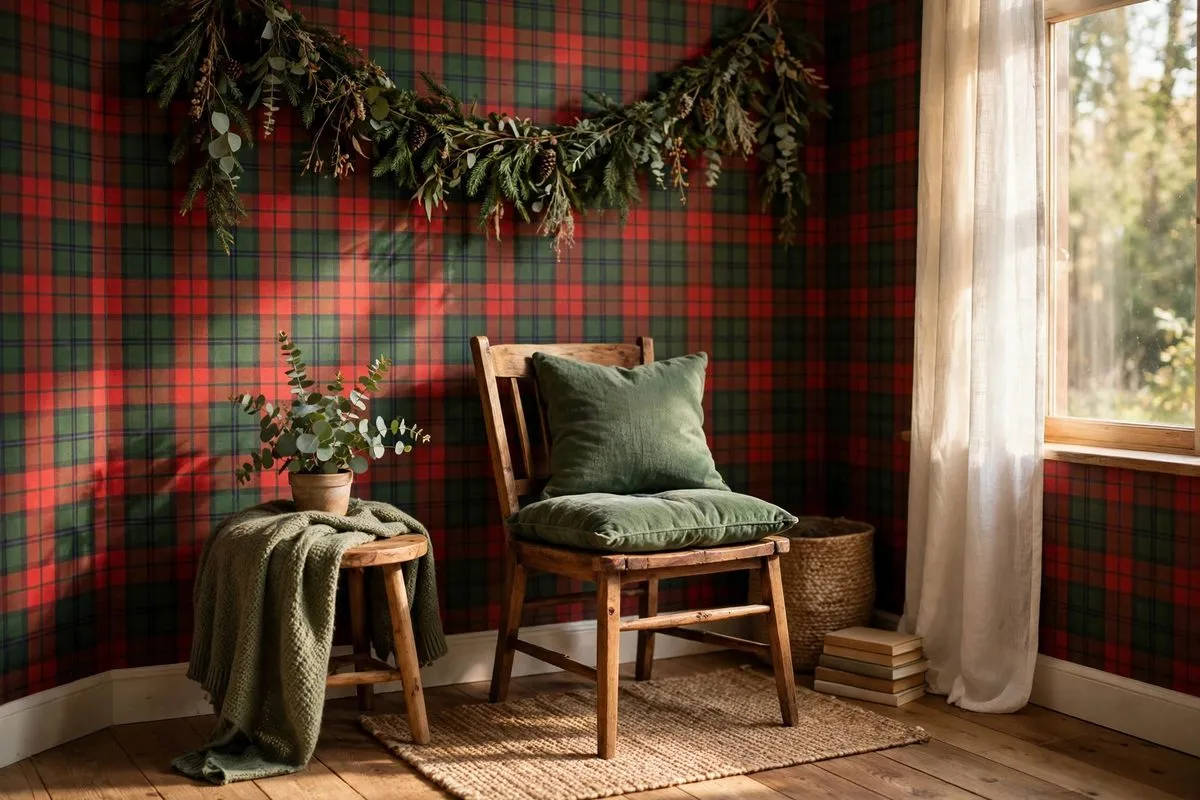
A small nook, a reading corner or the wall behind a chair, becomes a Christmas moment with plaid paper. Red and green plaid reads instantly as holiday, and a nook needs only one or two rolls, about $25 to $50 total. Add a wooden chair, a green cushion and a garland above, and the corner looks like a cabin.
Plaid is a strong pattern, so keep the rest of the nook plain: one cushion, one throw, no competing prints. The risk is a nook that feels like a gift box, so choose a plaid with a muted background rather than a bright one. If you rent, test a small piece behind furniture first, and leave it for a week to check it peels cleanly.
3. Use wrapping paper as a wall panel
Wrapping paper is the cheapest wallpaper there is, and a panel of it behind a sideboard makes a festive backdrop for ornaments. Cut a sheet 3 feet wide and 4 feet tall, tape it to a foam board, about $5, and lean the board against the wall. The panel costs under $15 total and takes ten minutes to make.
Choose a heavyweight wrapping paper, since thin paper tears when you smooth it. Red and cream patterns work best, and a paper with a small repeat looks more like real wallpaper than a large print. The panel leans, so it never touches the wall, which makes it the safest option for strict rental agreements.
4. Go deep green in the entryway
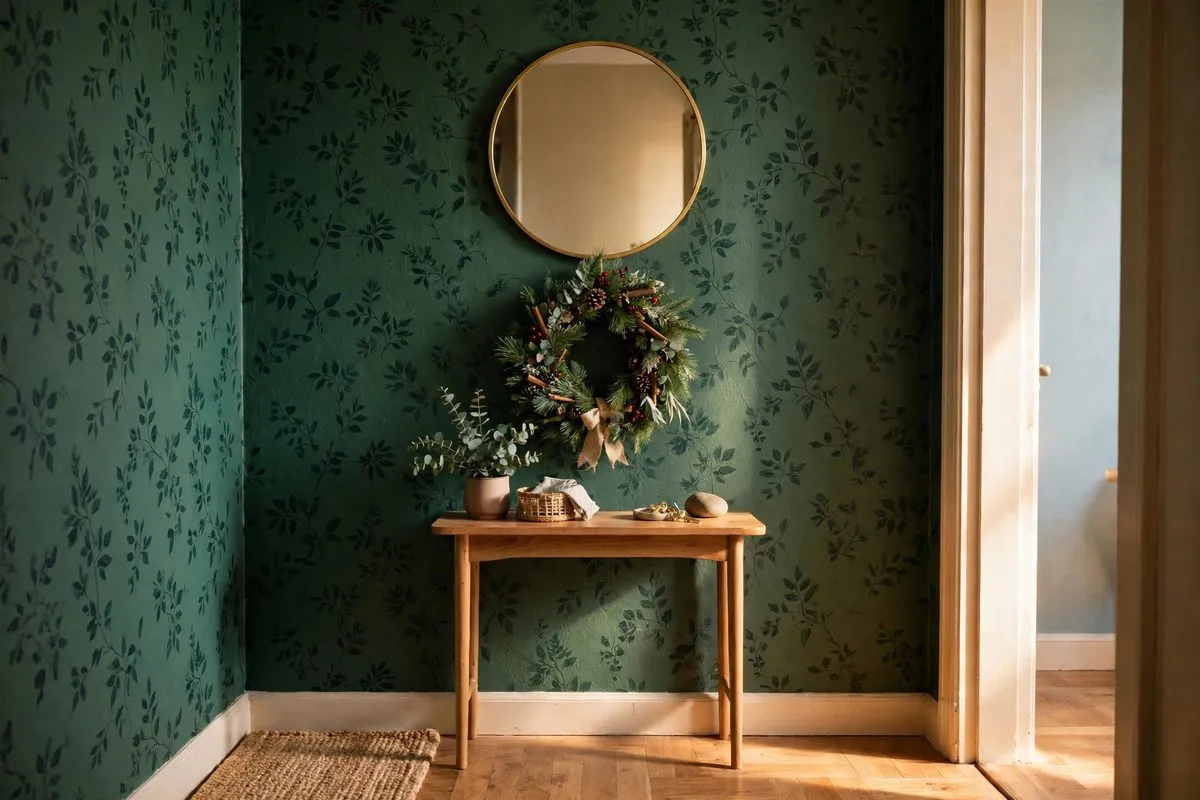
The entryway is small, so a bold pattern there feels rich rather than overwhelming. A deep green wallpaper with a leaf or fern pattern, plus a wreath and a round mirror, makes the first thing you see feel like a boutique hotel. One roll covers most entryways, since the wall is usually under 6 feet wide.
Dark paper in a small space needs light, so keep the mirror large and the console table light wood. The tradeoff is that dark paper shows dust and scuffs more than light paper, so wipe it with a dry cloth weekly. If the entryway has no window, add a small lamp on the console, since a dark wall in a dark corner can feel like a cave.
5. Try a snowflake pattern on one wall
A snowflake pattern is the most Christmas-specific wallpaper there is, and it works best on the wall the tree stands against. A white or silver snowflake print on a deep green or navy background reads as winter without being childish. The pattern scale matters: a small repeat, about 2 inches, looks calm from across the room, while a large repeat dominates a small wall.
Buy paper with a matte finish, since gloss reflects the tree lights and creates glare. One wall, about 8 feet by 8 feet, needs two rolls of standard 20 inch paper. If the budget is tight, paper only the 4 foot wide strip directly behind the tree, and paint the rest of the wall a matching solid color.
6. Wallpaper the back of a bookcase
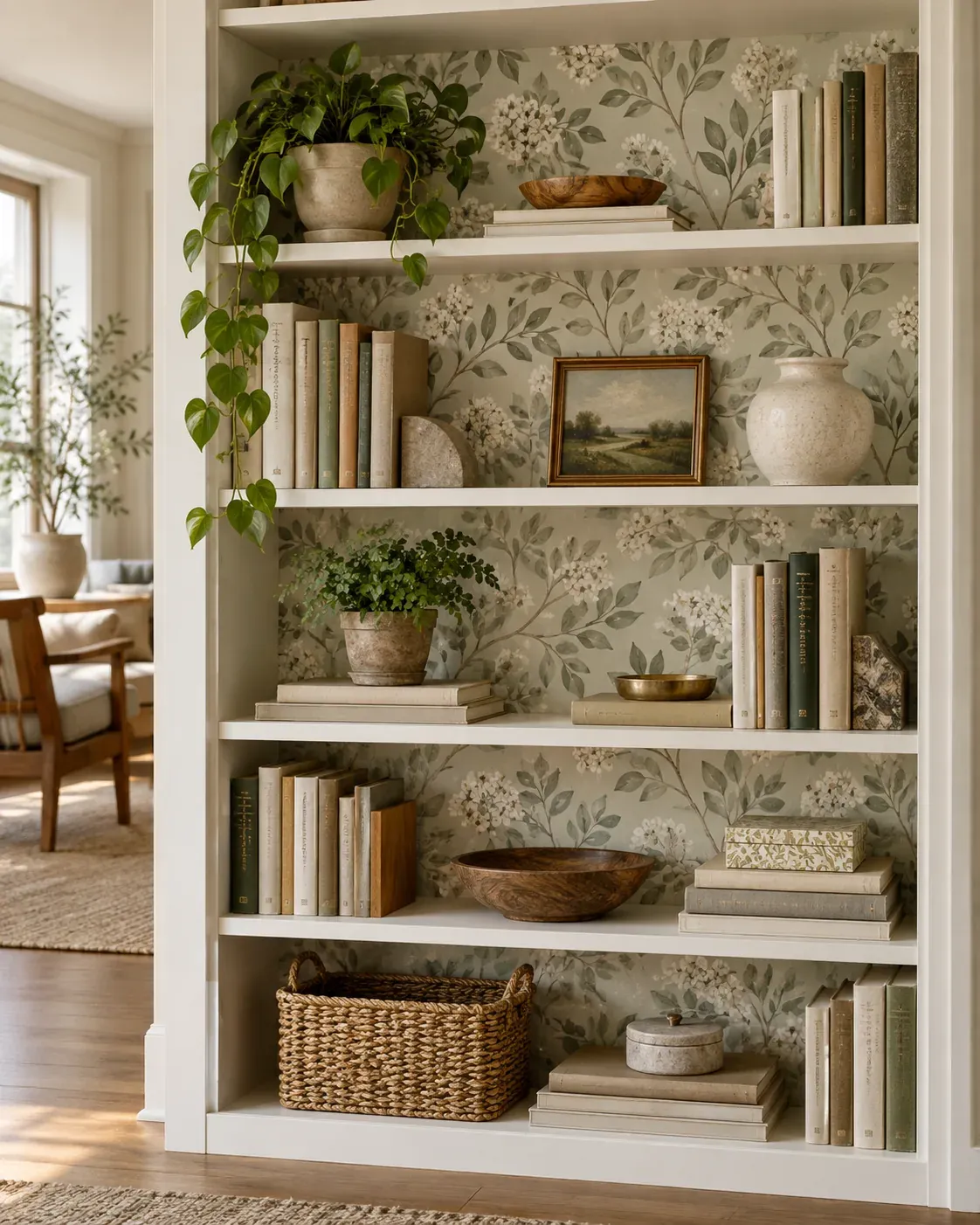
The back panel of a bookcase is a tiny canvas, and a Christmas paper there turns ordinary shelves into a display. Cut the paper to fit each shelf back, about 12 inches wide and 10 inches tall per shelf, and fix it with removable tape. A single roll covers a whole bookcase with paper to spare.
This is the best idea for renters who cannot touch a wall at all. The paper is hidden behind books most of the year, so you can leave it up or swap it seasonally. Choose a pattern that suits the objects on the shelves: a deep red paper behind white ceramics, or a green paper behind brass ornaments.
7. Frame a wallpaper panel like art
A framed panel of Christmas wallpaper works like a large piece of art, and it needs no wall fixing at all. Cut a 24 by 36 inch piece, mount it on foam board and lean it on a sideboard or hang it with a single picture hook. The frame, about $20, makes a $5 piece of paper look finished.
This suits rooms where the walls are already busy or the lease forbids paper. One framed panel per room is enough; two starts to look like a wallpaper shop. The panel stores flat under the bed in January, so it is also the easiest idea here to reuse next year.
8. Use red and cream in the dining corner
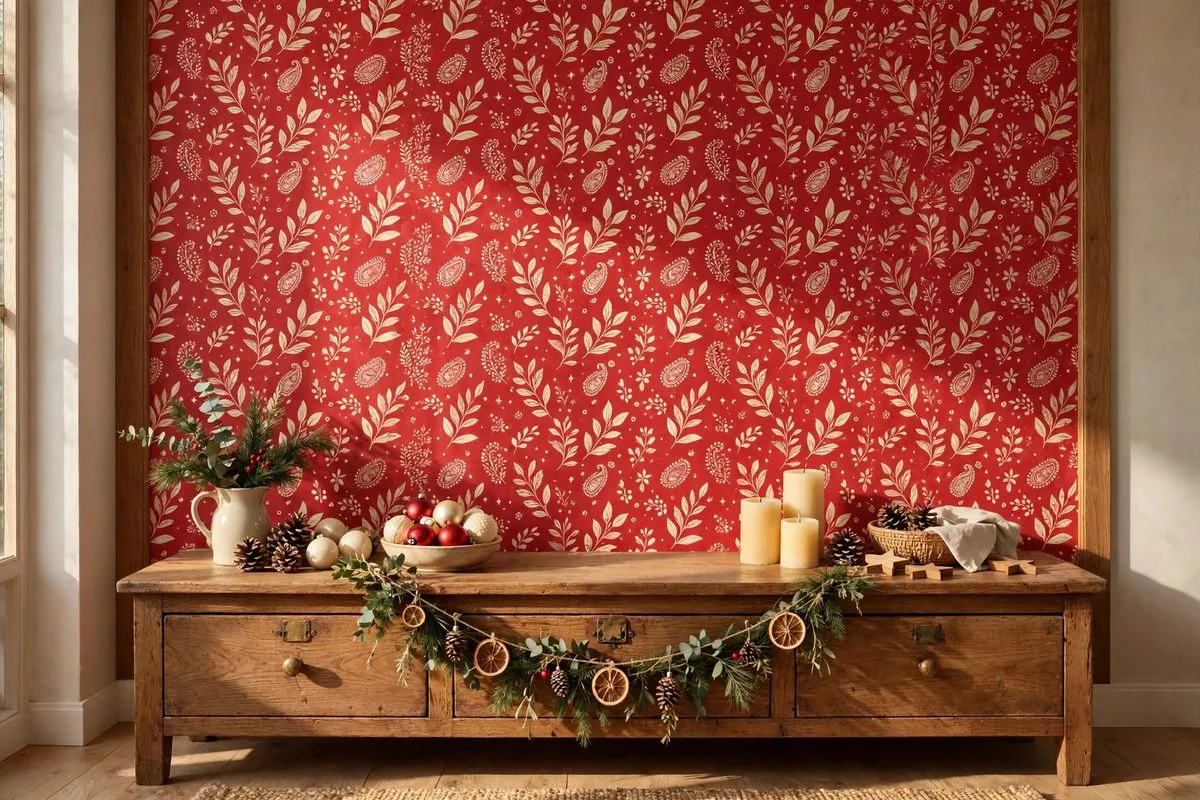
The dining corner is where people sit and look at the wall, so it earns a warm pattern. A red and cream paper, in a small floral or leaf print, makes a plain dining table feel like a holiday table even before you set it. Paper the wall the table faces, usually about 6 feet wide, and keep the table setting simple so the wall does the talking.
The tradeoff is appetite for pattern at mealtimes: a busy print can feel loud when you sit close to it. Choose a small repeat and a muted red rather than a bright one. If the dining corner shares a wall with the kitchen, stop the paper at the corner so the kitchen stays plain and easy to clean.
9. Paper a narrow hallway wall
A narrow hallway is the perfect place for a bold Christmas paper, because you never sit and stare at it. A deep green or plaid paper on one hallway wall, about 10 feet long, needs two to three rolls and turns a plain corridor into a festive passage. Add a slim garland along the top and the hallway feels dressed.
Hallways get scuffed by bags and coats, so choose a scrubbable peel-and-stick paper and keep the pattern dark enough to hide marks. Leave the opposite wall plain white so the corridor still feels wide. If the hallway is under 36 inches wide, paper only the wall without the doors, since cutting around door frames wastes paper and patience.
10. Put pattern behind open shelves
Open kitchen or living room shelves look flat against a white wall. A strip of Christmas paper behind them, cut to the shelf width and fixed with removable tape, gives the dishes and objects a backdrop. A 2 foot wide strip per shelf is enough, and one roll covers a whole shelving unit.
Choose a pattern that suits what sits on the shelves: a deep green behind white dishes, a red print behind glass jars. The tradeoff is cleaning, since paper behind kitchen shelves catches grease, so use a wipeable vinyl paper in the kitchen and a fabric paper in the living room. Our shelf wallpaper ideas have more year-round versions of this trick.
11. Add a temporary paper border at chair rail height
A border is the lowest commitment wallpaper idea here. A 6 inch wide strip of Christmas paper, run around the room at chair rail height, about 32 inches from the floor, adds a festive line without covering a wall. A single roll makes a 20 foot border, and it peels off in minutes.
Use a bold pattern for the border, since a narrow strip needs a strong print to read. Plaid, snowflake or red stripe all work. The border suits rooms where a full wall would be too much, and it is the easiest idea to remove, which matters if you want the room back to normal on January 2.
12. Mix one pattern with plain walls
The rule that holds all of this together is one pattern per room. A patterned accent wall, a patterned nook or a patterned panel, plus plain walls everywhere else, looks designed. Two patterns in one small room compete, and three look like a shop window. Pick the one spot that matters most, usually the tree wall, and leave the rest alone.
Plain walls are not a failure, they are the frame that lets the pattern shine. If you already have patterned curtains or a patterned rug, skip the wallpaper in that room and use a framed panel instead. The room should feel festive, not crowded, and one pattern is enough to do that.
Renter-Friendly Removal Tips
Peel-and-stick paper comes off cleanly if you remove it the right way. Start at a bottom corner, pull slowly at a low angle, and warm stubborn spots with a hair dryer on low for ten seconds. Never yank, since a fast pull can lift paint. Wipe the wall with a damp cloth after removal to take off any adhesive residue.
Test a small piece behind furniture for a week before you paper a whole wall, and keep the backing paper so you can reuse the rolls next year. If a landlord forbids any adhesive, use the foam board panel or the framed panel instead, since neither touches the wall. For the tree that stands against your new accent wall, our small apartment Christmas tree ideas help you pick the right size, and our Christmas window decor ideas show how to dress the window in the same room.
A Christmas Wallpaper Budget
A one-wall Christmas wallpaper project costs about $40 to $80: two rolls of peel-and-stick paper at $25 to $40 each, plus a plastic smoother for $5. A wrapping paper panel costs under $15, and a framed panel about $25 with the frame. The nook and the bookcase back are the cheapest options, since one roll covers them with paper to spare.
Buy the paper in November, when Christmas patterns are in stock, and keep the leftover rolls for next year. A roll stored flat in a dry cupboard lasts for years, so the first year is the expensive one and every year after is nearly free.
Looking for more ideas? Browse our seasonal decor stories.
Save to Pinterest