In this article
- 1. Make a low pumpkin and greenery centerpiece
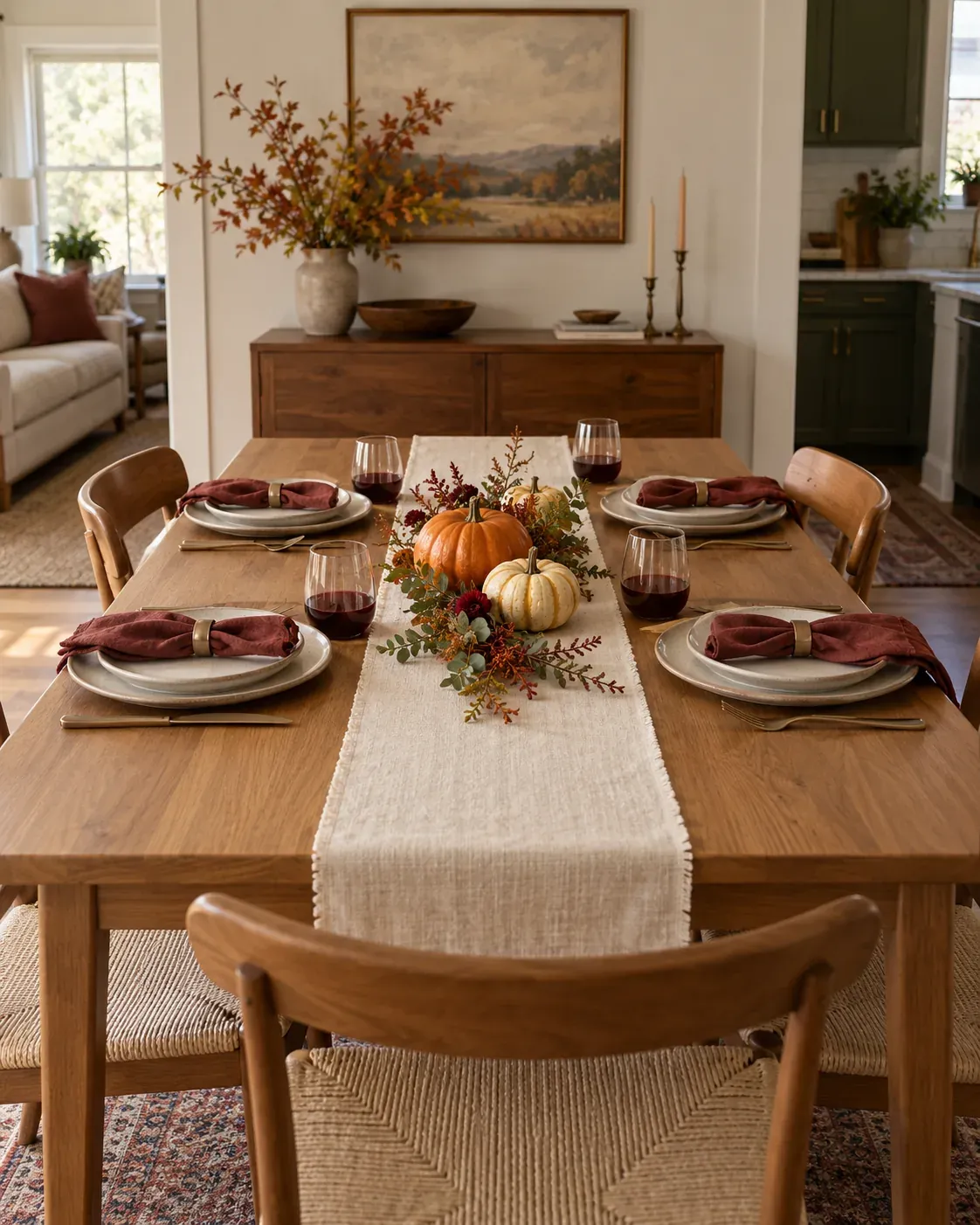
- 2. Let a narrow linen runner set the color
- 3. Put mini pumpkins at individual places
- 4. Keep candle and eucalyptus arrangements simple
- 5. Build a warm neutral Thanksgiving table
- 6. Add burgundy and rust in small doses
- 7. Style a small round Thanksgiving table
- 8. Combine rustic wood and linen
- 9. Assemble a grocery-store centerpiece
- 10. Keep the tablescape minimal
- 11. Coordinate napkins and place cards
- 12. Use one vase of autumn branches, then move it
- 13. Reserve a lane for serving dishes
- 14. Set a cozy Thanksgiving table for two
- 15. Move the meal to a separate food station
- How to decorate a small Thanksgiving table without crowding it
- What colors work best for a Thanksgiving tablescape?
- What should go in the center of a small Thanksgiving table?
- Budget-friendly Thanksgiving table decorating tips
- Thanksgiving tablescape mistakes to avoid
On a small table, Thanksgiving decorations compete with the things guests actually need: plates, glasses, elbows, and somewhere to pass the potatoes. A centerpiece that looks lovely before dinner can become a problem the moment the serving dishes arrive.
The most useful Thanksgiving tablescapes start with a serving plan. Set the table with real dinnerware first, then decorate the space that remains. If your small dining area barely fits its everyday table, you can still make the meal feel special through color, texture, and a few details that move easily when needed.
1. Make a low pumpkin and greenery centerpiece
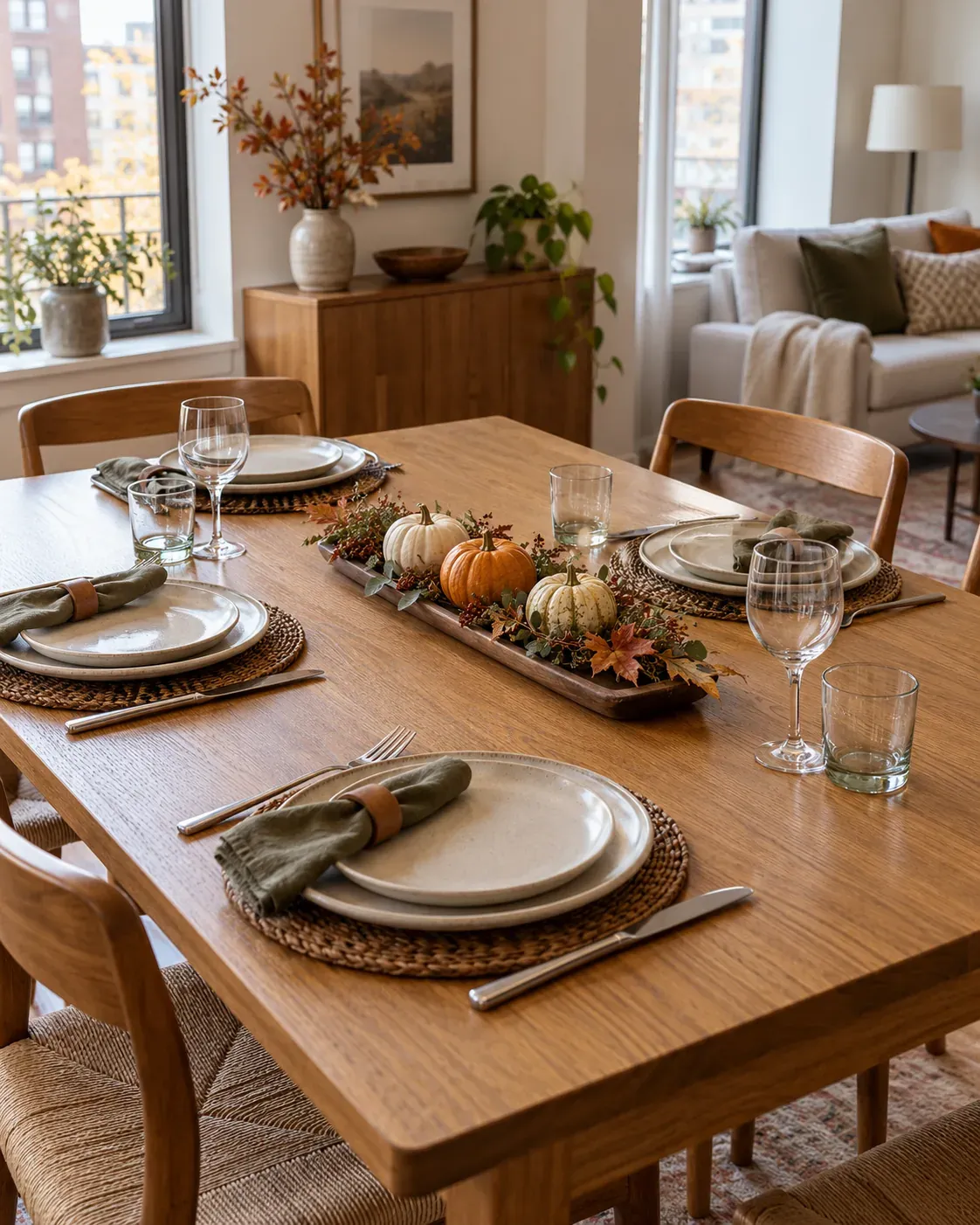
Place two or three miniature pumpkins and a few short sprigs of greenery on a shallow tray. Keep the arrangement below the sightline between seated guests. A narrow tray gives the display a clear boundary and lets you lift everything away when a serving dish needs the middle.
This works best on a rectangular table for four with a little space between place settings. Try the arrangement after setting out full-size plates and water glasses; a decorative pumpkin should never force a glass to the edge. Use clean decorative materials and keep leaves, soil, and non-food-safe finishes away from food. A grocery-store bundle can be enough; buying a large floral centerpiece defeats the point.
2. Let a narrow linen runner set the color
A slim runner adds a soft cream, rust, or olive stripe without hiding the table surface. On a short table, choose one that stays clear of diners’ laps and does not bunch under a plate. Set a bowl or tray on it only if there is still room to put down the food you plan to serve at the table.
Linen looks relaxed even with simple dishes, and a cotton blend can be easier to wash after spills. If the table is so narrow that a runner pushes glasses inward, skip it and use matching napkins instead. The aim is one coherent color cue, not another layer to maneuver around.
3. Put mini pumpkins at individual places
One tiny pumpkin beside each napkin can replace a central arrangement altogether. This suits four to six place settings when the center must stay open for serving bowls. Repeat the same size or color so the table feels intentional without requiring more objects.
Place each pumpkin above the plate or on a napkin only before food is served; move it to the windowsill or sideboard when guests sit down. Avoid placing decorative, painted, or glittered produce directly against food. A small name card tied to a napkin can do the same visual work if even mini pumpkins take too much space.
4. Keep candle and eucalyptus arrangements simple
Use a short vase with a restrained eucalyptus stem and a pair of battery-operated candles on a stable tray. This gives the table a gentle glow without open flames near cloth napkins, loose foliage, sleeves, or reaching hands. Check the battery candle’s instructions and keep its compartment away from spills.
If you choose real candles, place them in appropriate stable holders with substantial clearance from greenery and anything combustible, and never leave them unattended. The National Fire Protection Association’s holiday guidance specifically advises keeping lit candles away from decorations. On a crowded dinner table, flameless lights are usually the more practical choice.
5. Build a warm neutral Thanksgiving table
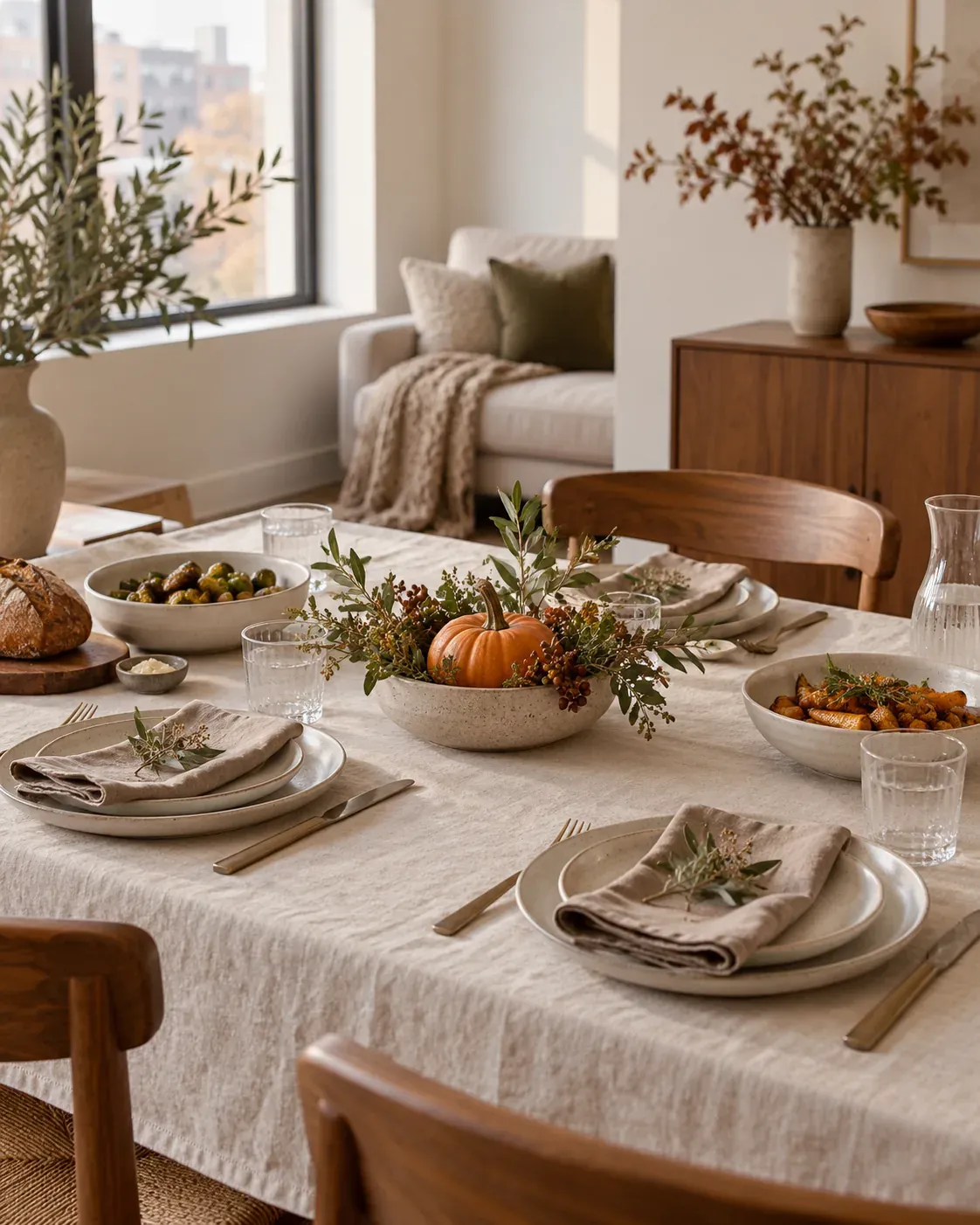
Ivory plates, taupe napkins, a beige runner, and the natural color of wood can make a small table feel calm without an elaborate centerpiece. Add one brown ceramic bowl or a few pale pumpkins for a seasonal note. This is especially useful if your everyday dinnerware is already neutral: most of the look comes from textiles you can reuse.
Vary the textures rather than adding objects. Soft linen beside smooth stoneware creates enough contrast. Leave the central lane open for a roast platter or a casserole. Avoid pale fabric that is precious to clean if the meal will be served family style.
6. Add burgundy and rust in small doses
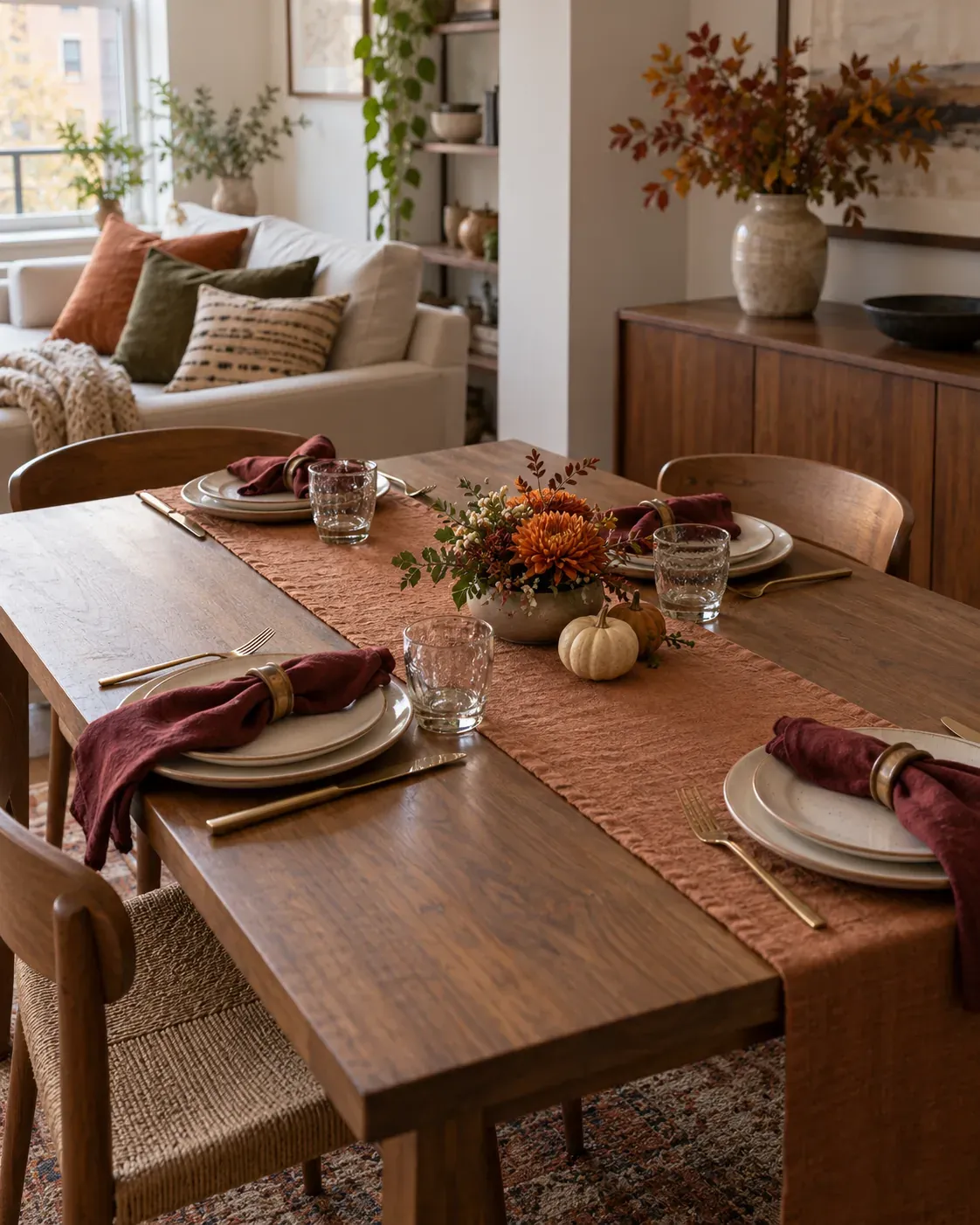
Burgundy napkins and a rust-colored runner bring autumn depth to a compact table without requiring more decorations. Choose one dominant accent and repeat it two or three times. For example, burgundy napkins, a small rust-toned bowl, and a few seasonal leaves can be enough against cream plates.
This approach suits a table where four place settings already fill most of the surface. Keep the deeper color in washable textiles rather than tall branches or a large arrangement. Test the colors under your actual dining light; very dark place settings can disappear in a dim nook unless the plates or tablecloth provide contrast.
7. Style a small round Thanksgiving table
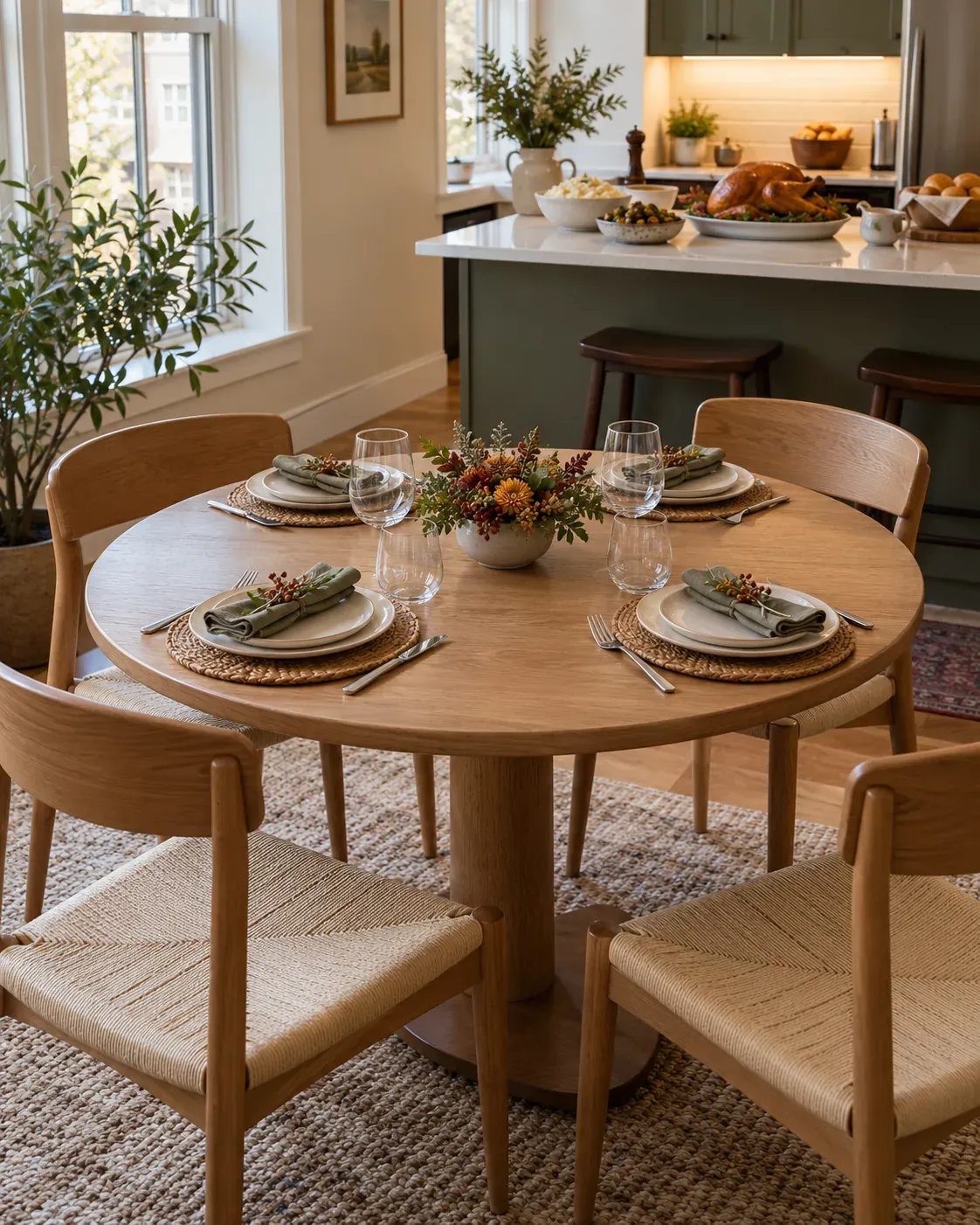
On a round table, everyone reaches toward the same center. Set four real plates first, then check where glasses and cutlery fit. A small, low bowl of foliage may be the only centerpiece you need. Round placemats can eat up surprising amounts of surface; if they overlap, use bare wood or a small tablecloth instead.
Plan to serve most dishes from a nearby counter or sideboard. A single bowl might fit in the middle, but several will crowd the guests. Keep the edge clear enough for forearms and move the centerpiece before hot platters arrive. This is one place where a smaller display looks more generous.
8. Combine rustic wood and linen
If you have a wood table, let it show. Pair simple dinner plates with washed linen napkins and perhaps one woven or ceramic serving piece. The visible grain supplies much of the warmth associated with fall table decor, so you do not need a stack of artificial leaves and signs.
This works well in an informal apartment dining nook. Avoid rough wood pieces that snag linens or take up the space a guest needs to pass food. Put any decorative cutting board on a sideboard if it is only there for display; keep the tabletop for serving items that will actually be used.
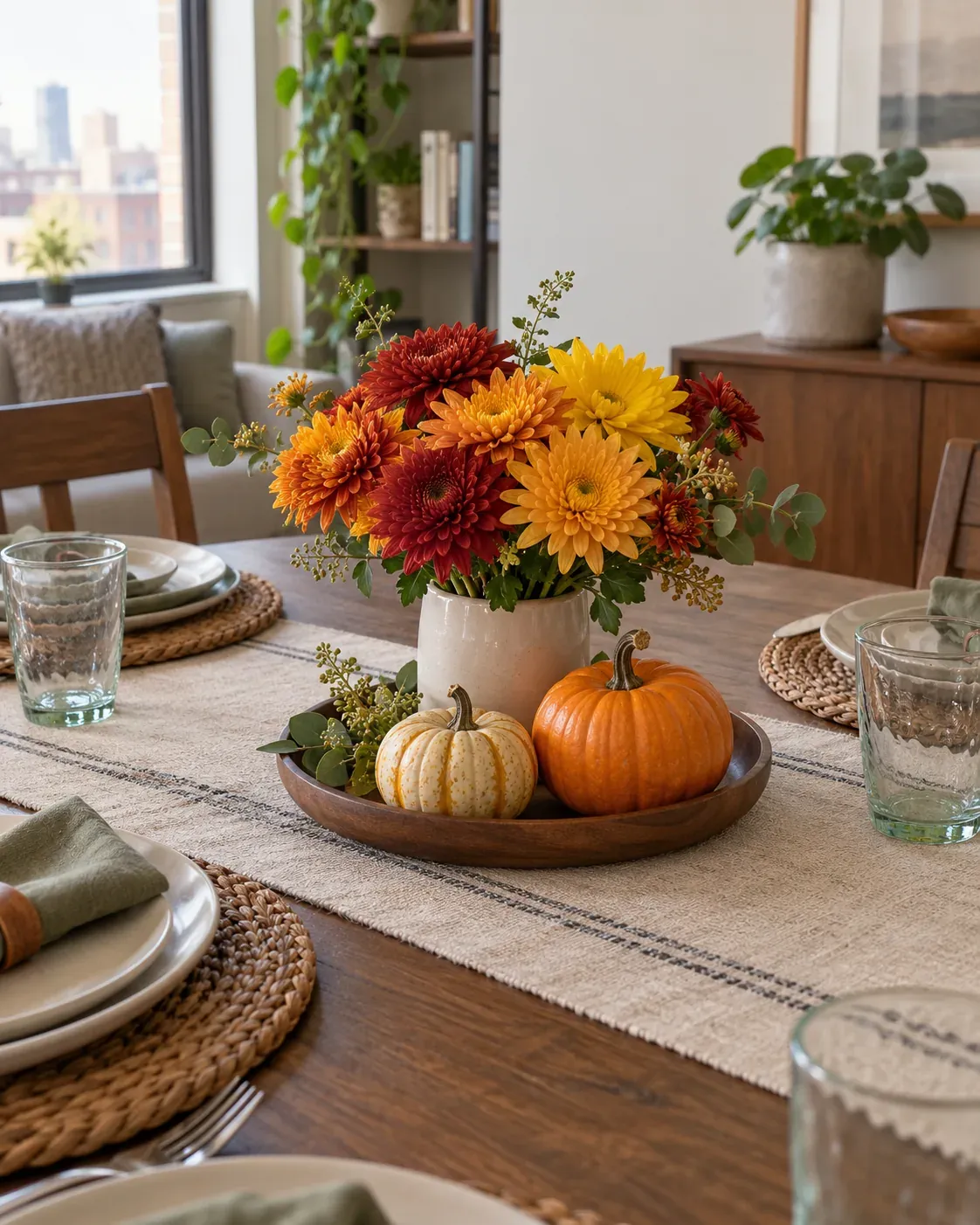
9. Assemble a grocery-store centerpiece
Buy a modest bunch of seasonal flowers or greenery and trim it into a short, sturdy vase. Set it with one or two small pumpkins on a saucer or tray. This costs less than outfitting an entire table with themed objects and can be assembled the day before dinner.
Choose flowers that will not shed petals into nearby dishes, keep vase water off the table, and place the arrangement away from food preparation. Produce used as decor should stay separate from ready-to-eat food unless it is handled and washed appropriately. Before guests sit, check whether the vase blocks a face; if it does, move it to the counter.
10. Keep the tablescape minimal
Start with your best everyday plates, cloth napkins, clean glasses, and one small central object. A tiny vase or bowl can be enough. The benefit is practical: there is no last-minute scramble to remove a display when the turkey arrives.
Minimal does not have to mean bare. Neatly folded napkins and a consistent place-setting rhythm look considered. It is a useful choice on a narrow table for four or a table that doubles as the meal’s only serving surface. If you want more visual detail, add it on the wall or sideboard rather than between dinner plates.
11. Coordinate napkins and place cards
A folded napkin, a simple paper name card, and a thin piece of twine can make each seat feel prepared. Use the same card stock and fold across the table. These details take almost no central space and are easy to clear when dinner begins.
Place cards are especially helpful when six guests are fitting around a modest table and you need to decide who sits near a wall or serving route. Avoid elaborate favors that crowd the plate or end up in the food. A handwritten card is enough; there is no need for a purchased set.
12. Use one vase of autumn branches, then move it
A single branch arrangement can bring height to the table before the meal. Choose a heavy, stable vase and a few branches rather than a wide bouquet. It can make a good welcome image while the table is empty, but tall branches may interrupt conversation or catch a sleeve.
Treat this as temporary decor. Before serving, transfer the vase to a stable sideboard out of traffic and away from food. Do not place a heavy, top-heavy vessel on an unstable folding table or at the edge. A shorter branch display is better if there is nowhere suitable to move it.
13. Reserve a lane for serving dishes
For a rectangular table, map the center lane before decorating it. Set down the actual casserole dish, bread basket, and any condiments you expect to use. If they fit only when the centerpiece is gone, plan to remove the centerpiece. A shallow tray makes that a one-step move.
This matters most for family-style service. Hot dishes need stable surfaces and room for guests to reach them without touching glassware or decor. Use trivets suitable for the table finish and the dish, and keep handles within the table’s edge. A pretty arrangement is unsuccessful if guests cannot pass the food comfortably.
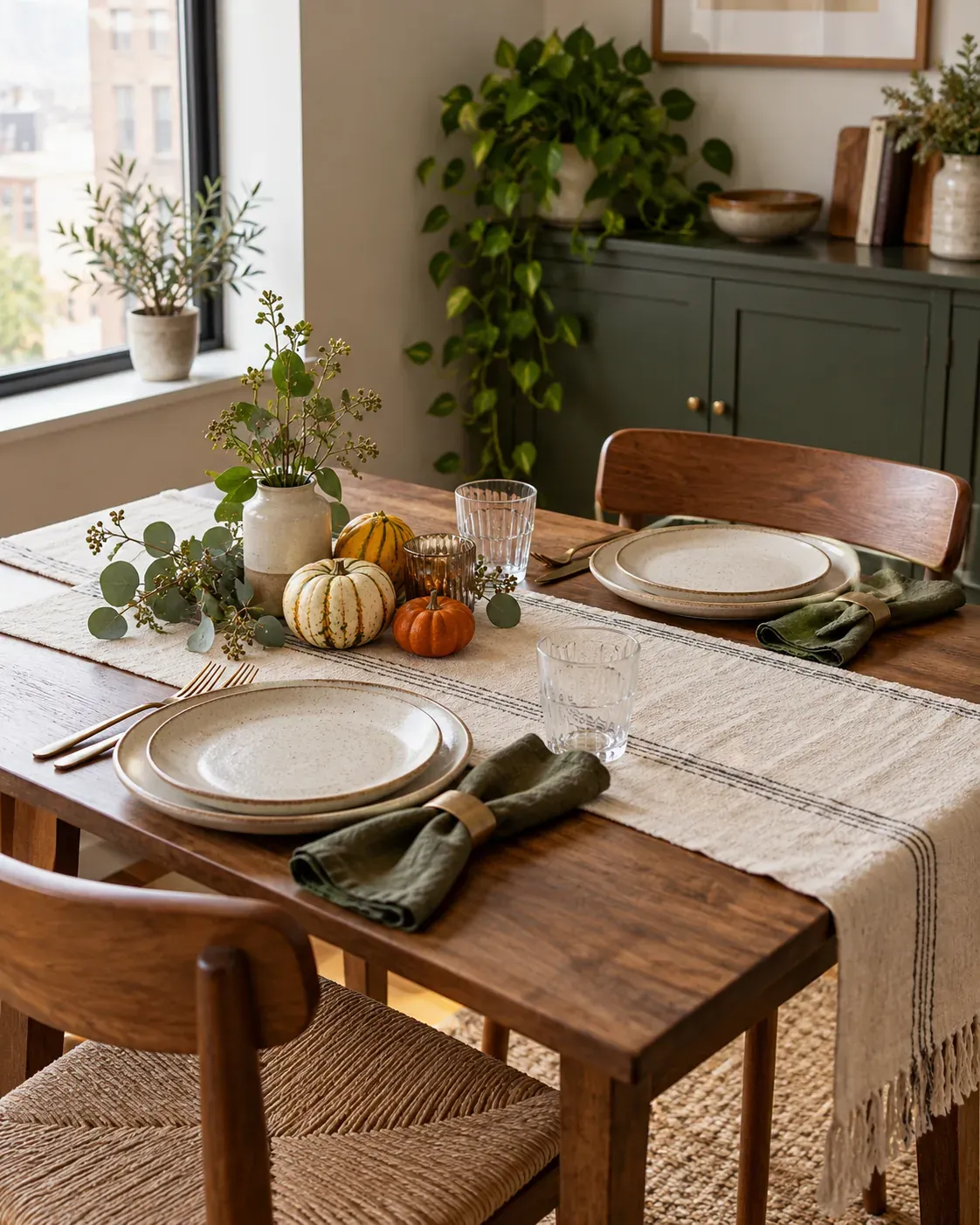
14. Set a cozy Thanksgiving table for two
A smaller meal gives you more freedom, but a two-person table still needs room for plates and the food you will share. Put two place settings opposite or adjacent to one another, then add a narrow runner and one tiny arrangement. Use your regular dishes and make the occasion feel different with a pair of warm-colored napkins.
If a casserole or serving board will occupy the middle, keep the centerpiece movable. A small side table can hold a beverage pitcher only if it is sturdy and does not block the route to the kitchen. A restrained setup feels thoughtful without buying decor that will be stored for the rest of the year.
15. Move the meal to a separate food station
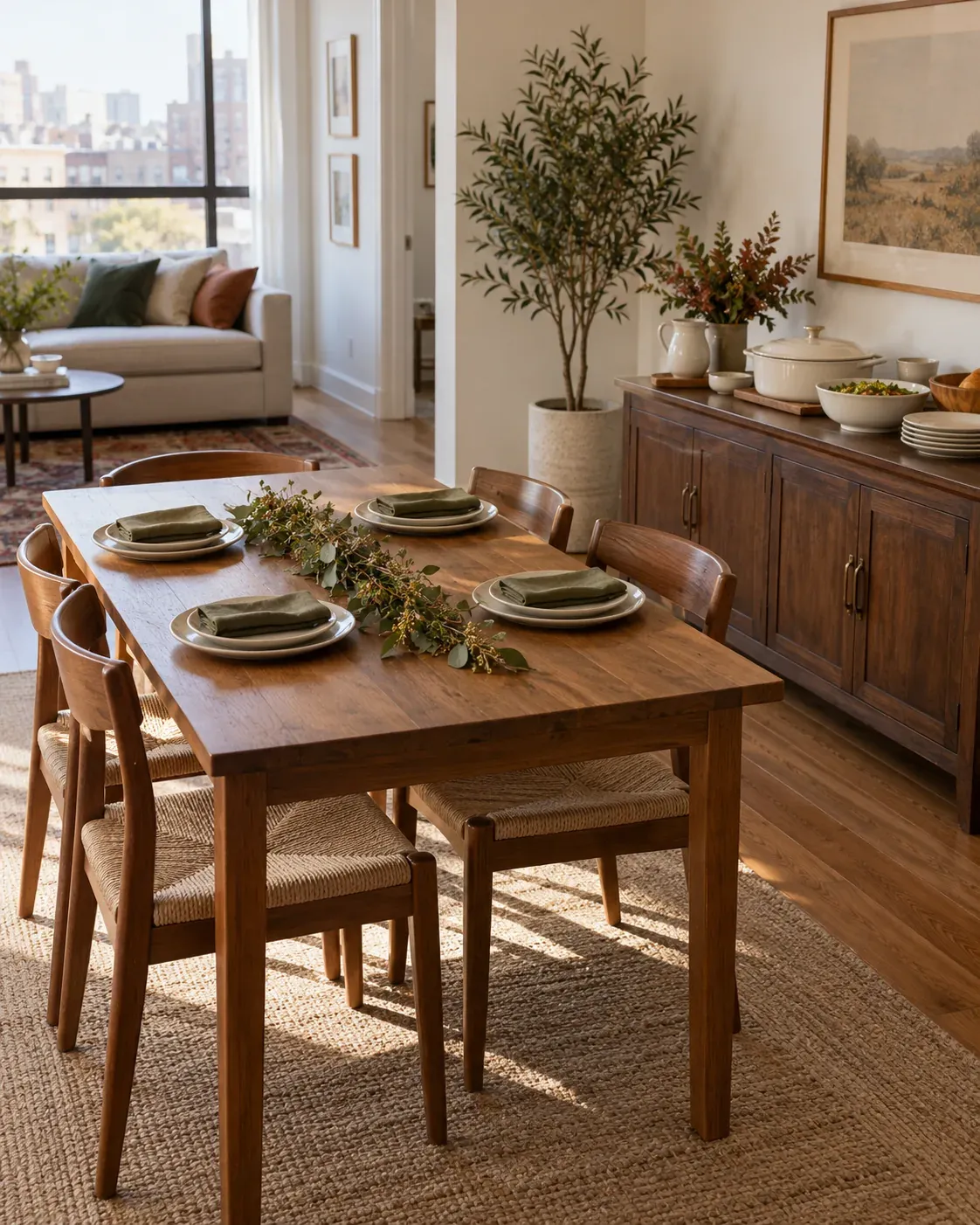
When four to six people fill the table, a nearby kitchen counter or sturdy sideboard can be the best serving space. Keep the dining table to place settings, water, and one low decoration. Guests can serve themselves before sitting, leaving everyone enough elbow room to eat. If the serving area is also compact, the same clear-counter principle helps with small kitchen decor.
Check the walking route so people carrying plates do not squeeze behind chairs. Put hot dishes on appropriate heat-resistant supports and keep heavy platters on surfaces intended to hold them. A station should be close enough to use, but not on a narrow, unstable console. This arrangement makes a small table feel more generous because the food has a real place of its own.
How to decorate a small Thanksgiving table without crowding it
Measure the usable tabletop, then lay out every plate, glass, and piece of cutlery as it will appear at dinner. Pull out the chairs and sit down; the reach and elbow space can look very different from a standing view. Next, decide whether food will be plated in the kitchen, passed family style, or served from a separate station. Place serving dishes or cardboard templates on the table to test the plan.
Only then add decorations. Choose one visual anchor, such as a narrow runner, low tray, or repeated napkin color. Keep anything in the center easy to lift. If the arrangement requires a guest to move a glass to get a serving spoon in, reduce it.
What colors work best for a Thanksgiving tablescape?
Warm neutrals such as cream, taupe, muted brown, and natural wood are flexible because they suit everyday dishes. Terracotta and rust add warmth; olive and soft green balance orange accents; burgundy offers a deeper contrast. Pick a main neutral and one or two accents rather than trying to use every autumn color at once.
Color is most economical in napkins or a runner, where a small amount goes a long way. A white plate against a dark wood table already provides contrast, while a pale table may benefit from a darker napkin. Use the light in your actual dining area to decide whether the palette feels welcoming.
What should go in the center of a small Thanksgiving table?
The most practical center is a low tray, bowl, or short vase that leaves conversation unobstructed and can be moved in one motion. Its size should follow the remaining space after the table is set, not a centerpiece displayed alone in a store. On a round table, keep the center especially compact because all diners need to reach around it.
If several serving dishes will live on the table, the best centerpiece may be none. Let attractive food, napkins, and dishes supply the visual interest. If you do use a vase, check its stability and where it will go when the meal starts.
Budget-friendly Thanksgiving table decorating tips
Use everyday plates and glasses, then buy or borrow only what creates a visible change. Cloth napkins in one autumn shade can be reused all season. A grocery-store bunch cut short often fills a small vase more appropriately than a large arrangement. Mini pumpkins can sit on a windowsill afterward, and a plain runner works beyond Thanksgiving.
Shop your home for a shallow tray, wooden bowl, or simple pitcher before buying a themed centerpiece. If you host only once a year, storage space matters too. Choose pieces you will use again or that can be composted or recycled appropriately after the holiday.
Thanksgiving tablescape mistakes to avoid
The most common problem is styling an empty table and forgetting the meal. Oversized flowers block faces, scattered objects interfere with passing dishes, and too many candles add obstacles and fire risk. A runner that bunches under plates can be awkward. Heavy branches on a light table and decorations that shed near food are poor tradeoffs for a photograph.
Do one final rehearsal with the serving dishes and chairs in place. Remove anything that blocks sightlines, food access, or a comfortable seat. The table should look inviting after dinner lands on it, not only before.
Looking for more ideas? Browse our seasonal decor stories.
Save to Pinterest