In this article
- 1. Let the bedding do the decorating
- 2. Use removable wall decals and a small photo grid
- 3. Style the desk like a second home base
- 4. Raise the bed and use the space under it
- 5. Agree on a shared color scheme with your roommate
- 6. Layer the lighting instead of living under the ceiling light
- 7. Put a rug down to claim your side
- 8. Hang everything on removable hooks
- 9. Add a bedside caddy instead of a nightstand
- 10. Split the room into zones with your roommate
- 11. Take storage up the wall above the desk
- 12. Two pillows and a throw change the whole bed
- 13. Turn the mini fridge top into a snack station
- 14. Hide the mess with a bed skirt
- 15. Build a 10-minute weekly reset into the routine
- How to decorate a dorm room on a student budget
- What to check before you hang anything
A dorm room is about 12 by 12 feet, shared with a stranger, and it has to work as a bedroom, a study and a living room at the same time. Most of the furniture is already there, the walls are painted an institutional off-white, and the housing rules ban nails, screws and paint. That sounds like a lot of limits, but it is also a clear brief: everything you add has to be removable, cheap and useful, and it has to earn its floor space.
These dorm room decor ideas are built around that brief. Bedding does most of the decorating because the bed takes up a third of the room. Removable wall decor adds personality without risking your deposit. Under-bed storage hides the clutter that makes a small room feel chaotic. And a few ideas are about living with a roommate, because the best-decorated dorm still fails if the two people in it are working against each other. Start with the bed, then the walls, then the desk, and stop when the room feels finished rather than full.
1. Let the bedding do the decorating
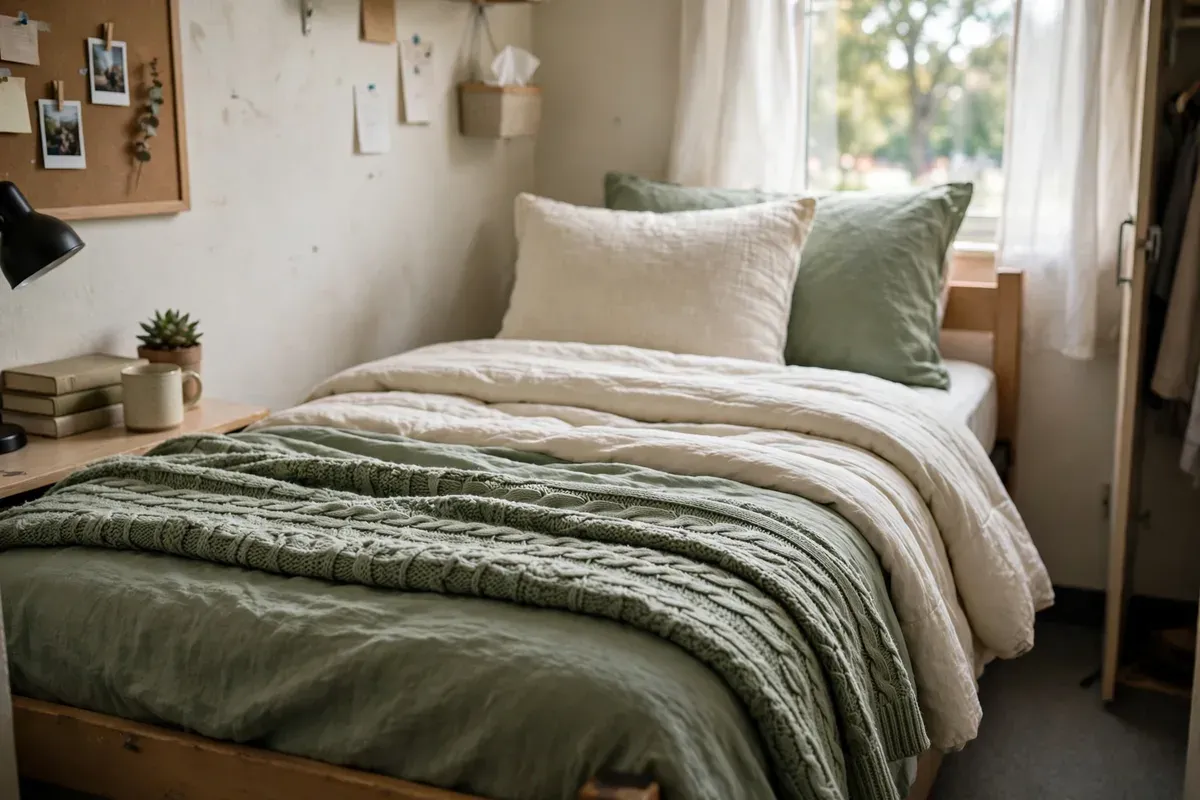
The bed is the biggest surface in a dorm room, so the bedding is the room’s color scheme whether you plan it or not. A twin XL duvet set in one calm color, plus a folded throw at the foot, changes the whole room for about 40 to 60 dollars. Pick a color you actually like looking at every morning, not the trendiest one, because you will see it from every corner of the room.
Layering matters more than the price tag. A flat sheet, a light duvet and a knit throw give the bed a finished look that a single thin comforter never does. Cotton or cotton-blend sheets breathe better than cheap polyester, which matters in a room where the heating is out of your control. If the mattress is thin and hard, a 2-inch foam topper under the sheets costs about 25 dollars and does more for your sleep than any decoration.
2. Use removable wall decals and a small photo grid
Blank walls make a dorm feel like a hospital room, but nails and screws will cost you part of your deposit. Peel-and-stick wall decals solve that problem: a set of leaf or shape decals costs 8 to 15 dollars, goes up in ten minutes, and peels off cleanly in May. Arrange them above the bed in a loose cluster rather than a strict grid, since a strict grid looks like wallpaper and a loose cluster looks intentional.
A photo grid adds the personal part. Print six to nine photos at 4 by 6 inches, hang them with removable poster strips in two rows of three, and leave a gap of about 2 inches between frames so the wall can breathe. Keep the prints inside one color family, warm or cool, so the grid reads as one display instead of nine random pictures. If your housing office bans anything adhesive, use washi tape frames instead, which lift off painted drywall without a mark.

3. Style the desk like a second home base
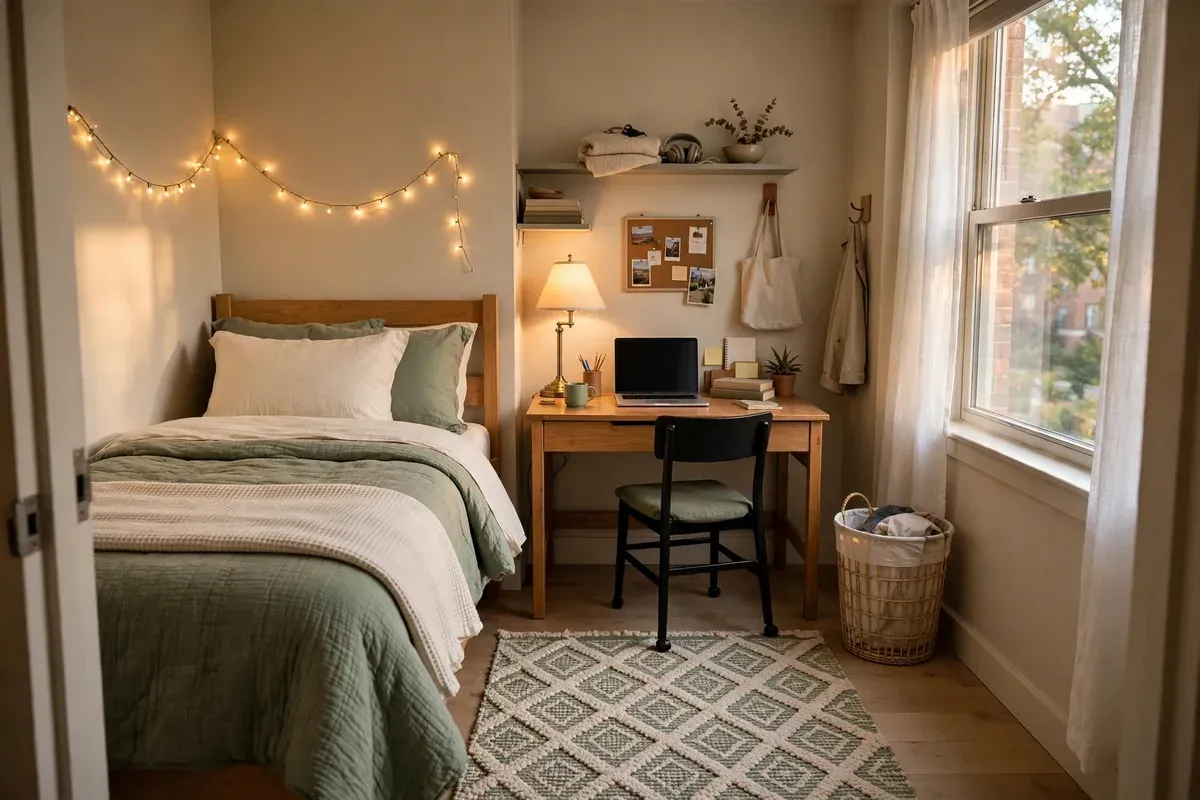
You will spend more waking hours at the desk than anywhere else in the room, so it deserves the same attention as the bed. Clear everything off it, then put back only what you use daily: laptop, lamp, pen cup and one small plant. A desk lamp with a warm bulb, about 2700K, makes late-night studying feel less harsh than the ceiling fluorescent, and a small succulent costs 5 dollars and survives a week of forgotten watering.
A pinboard above the desk keeps the surface clear. A cork board about 18 by 24 inches holds the class schedule, a few notes and one or two photos, and it stops papers from spreading across the desk. Keep a small tray or basket on one corner for chargers and cables, since loose cables are what make a tidy desk look messy within a day. Our guide to furnishing a studio apartment uses the same rule: one clear work surface, everything else stored vertically.

4. Raise the bed and use the space under it
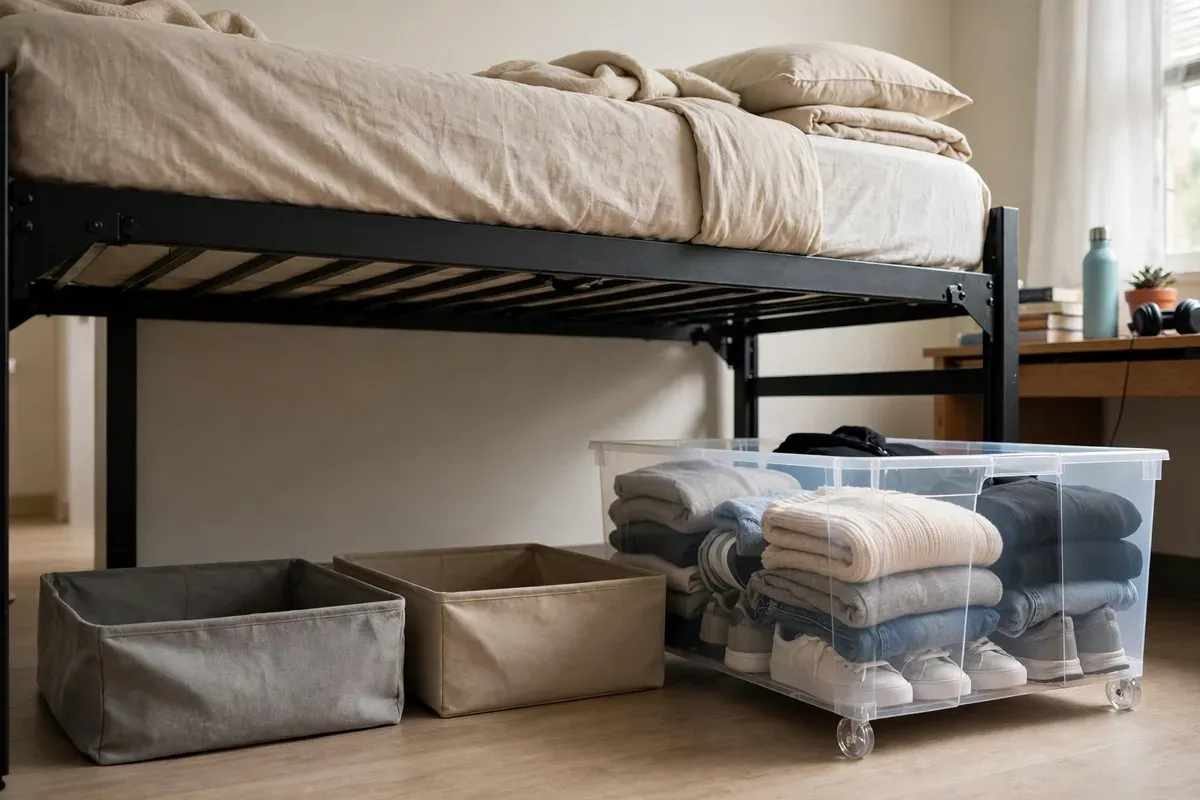
Most dorm beds sit on adjustable frames, and raising the bed from the lowest setting to the middle one buys about 12 inches of storage height underneath. That space holds two flat fabric bins and a rolling clear bin, which together swallow off-season clothes, extra shoes and spare bedding. Bed risers cost 15 to 20 dollars a set and add another 5 to 6 inches if the frame does not adjust high enough.
Measure first, then buy the bins. The space under a raised twin XL is roughly 75 by 38 inches, and bins taller than 10 inches will not slide out easily. Clear rolling bins work best for shoes and clothes you grab often, since you can see what is inside, while fabric bins suit the things you touch once a season. Label the front of each bin with masking tape so you are not dragging out three bins to find one sweater.
5. Agree on a shared color scheme with your roommate
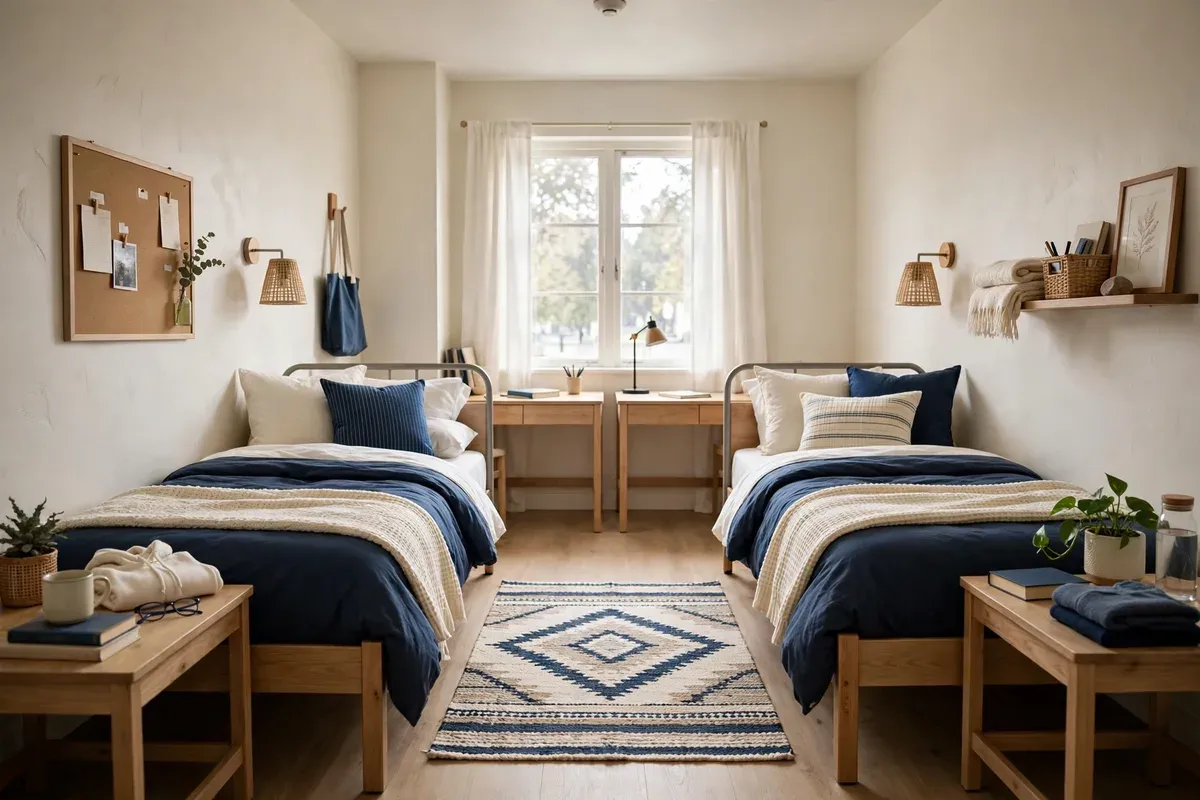
A shared dorm looks twice as big when both sides of the room speak the same color language. You do not need matching bedding, just one shared accent color and one shared neutral. If your side is sage green and cream, and your roommate’s side is navy and cream, the room reads as two separate bedrooms crammed together. If you both use cream as the base and pick one accent each from the same family, the room reads as one room.
Have this conversation in the first week, before either of you buys anything big. Agree on the neutral first, since that is the part you both have to live with, then each pick an accent that sits well next to it. Warm neutrals like cream and oatmeal pair with sage, terracotta and mustard. Cool neutrals like white and light grey pair with navy, dusty blue and forest green. Write it down in a shared note so neither of you forgets it at the store.
6. Layer the lighting instead of living under the ceiling light
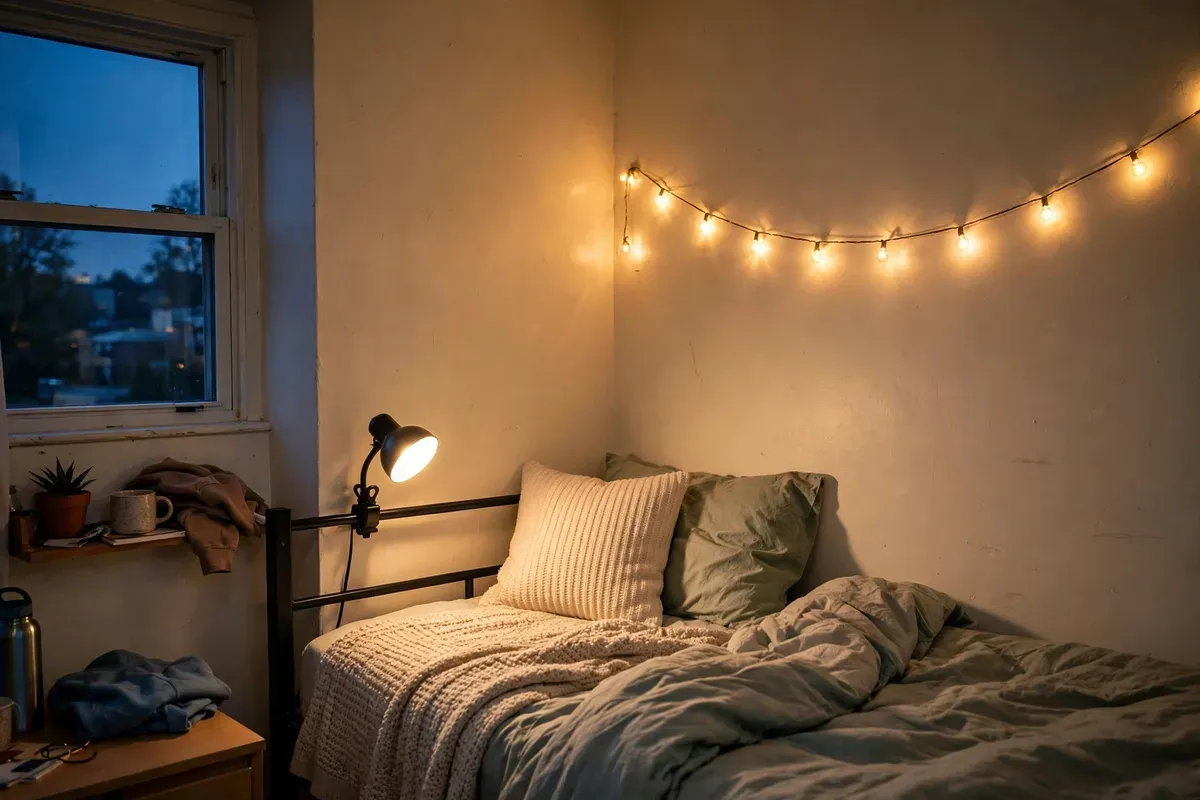
The ceiling fluorescent is the single biggest reason a dorm room feels cold. Turn it off and use three smaller light sources instead: a desk lamp for studying, a clip-on lamp on the bed frame for reading, and a string of warm fairy lights along one wall for evenings. Battery-powered fairy lights cost 6 to 10 dollars for a 10-foot strand and need no outlet, which matters when the room has only two.
Warm light changes the room more than any poster. A bulb around 2700K makes white walls look cream instead of grey, and it makes the bedding colors look richer. Keep the fairy lights on a removable hook, never taped to the wall, since tape leaves residue that shows up at move-out inspection. If your roommate sleeps earlier than you, the clip-on bed lamp lets you read without lighting their whole side of the room.
7. Put a rug down to claim your side
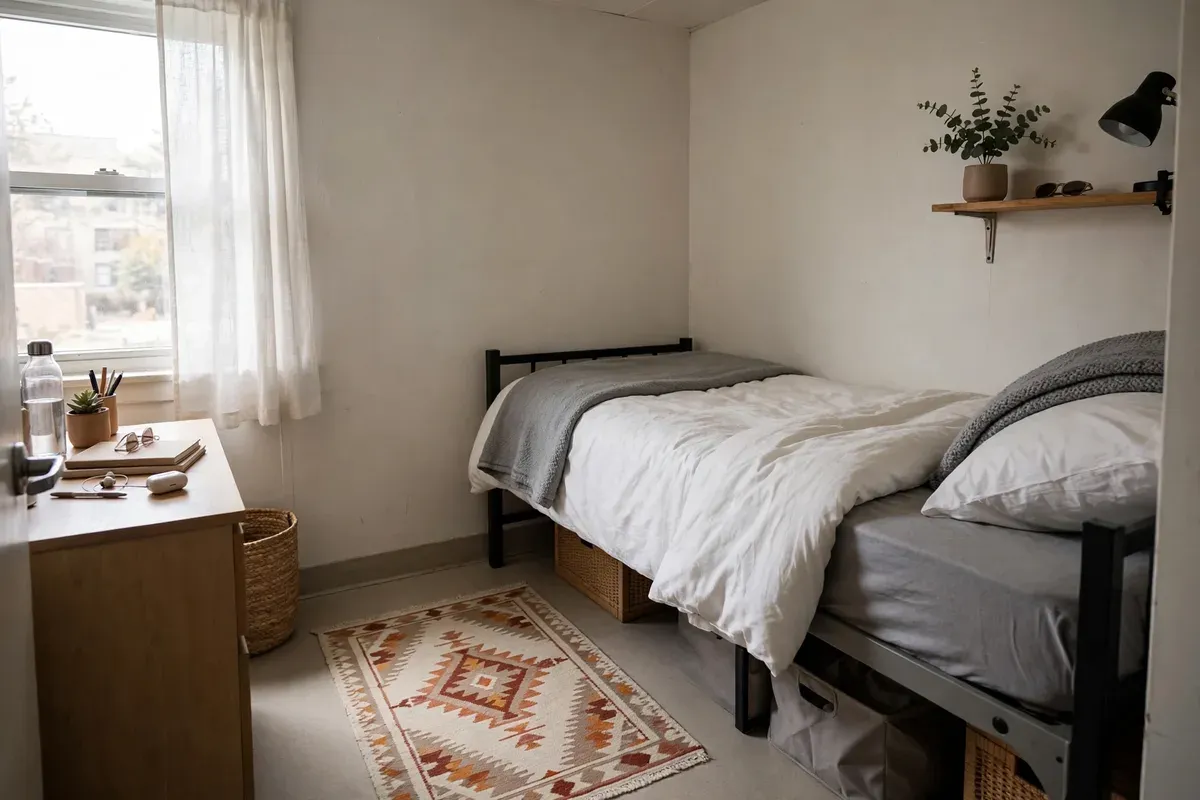
A dorm floor is usually bare tile or thin carpet, and a rug is the fastest way to make your side of the room feel like yours. A 3 by 5 foot rug beside the bed costs 20 to 35 dollars, warms up cold tile in the morning, and visually marks where your space ends. Pick a low-pile rug, since high-pile rugs trap dust and are hard to vacuum in a room with no storage for a vacuum.
Size it to the bed, not the room. A rug that runs the length of the bed and sticks out about 18 inches on the side you get out of is enough, and it leaves the walkway clear. If you and your roommate both want rugs, pick two in the same color family so the floor reads as one room instead of two territories. A rug pad underneath stops it sliding on tile, and it costs about 8 dollars.
8. Hang everything on removable hooks
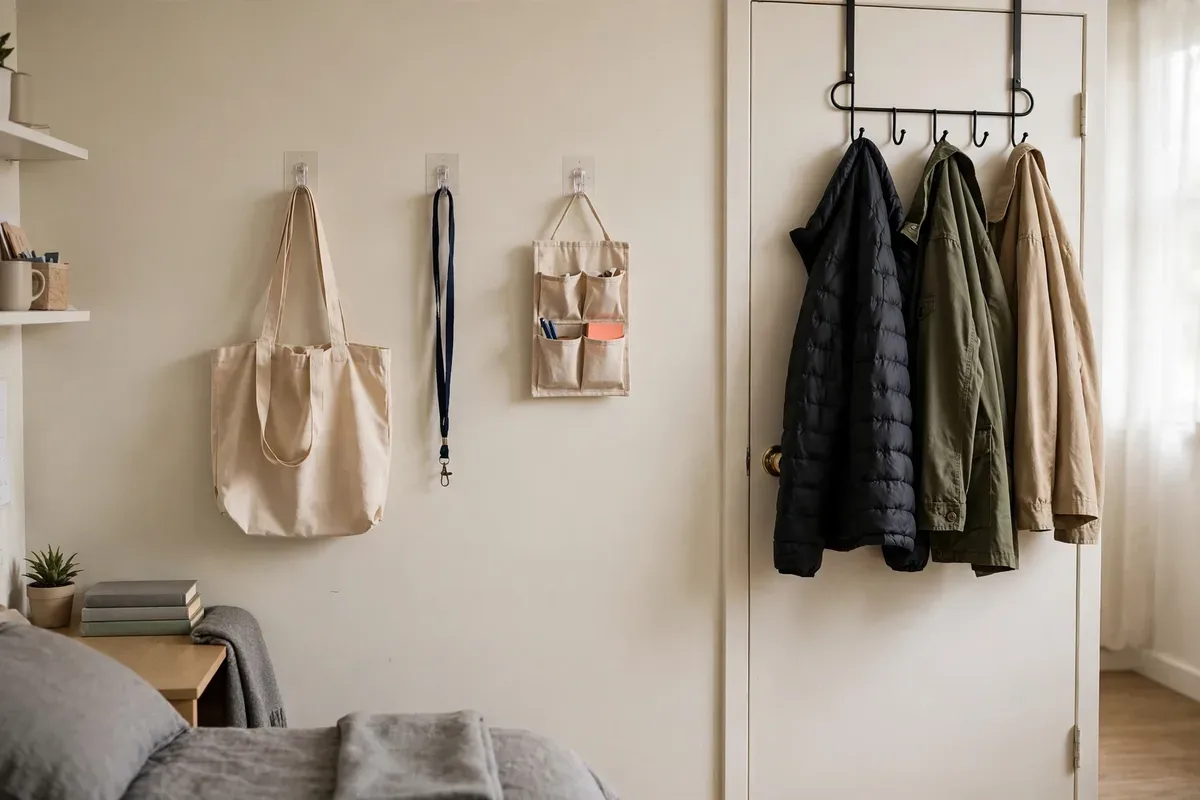
In a room with no closet space to spare, the walls and the door are your storage. A set of removable adhesive hooks costs about 8 dollars and holds tote bags, lanyards, a hanging organizer and tomorrow’s outfit. An over-the-door hook rack adds five more hooks for jackets without touching a single wall, and it moves with you at the end of the year.
Respect the weight limits printed on the package. A small hook rated for 1 pound will hold a lanyard and a tote bag, but it will drop a wet winter coat on the floor at 2 a.m. Use the large hooks rated for 3 to 5 pounds for coats and backpacks, and put them on smooth painted drywall, not textured walls, since adhesive strips grip poorly on texture. When you remove them, pull the strip straight down slowly, exactly as the instructions say, and the wall stays clean.
9. Add a bedside caddy instead of a nightstand
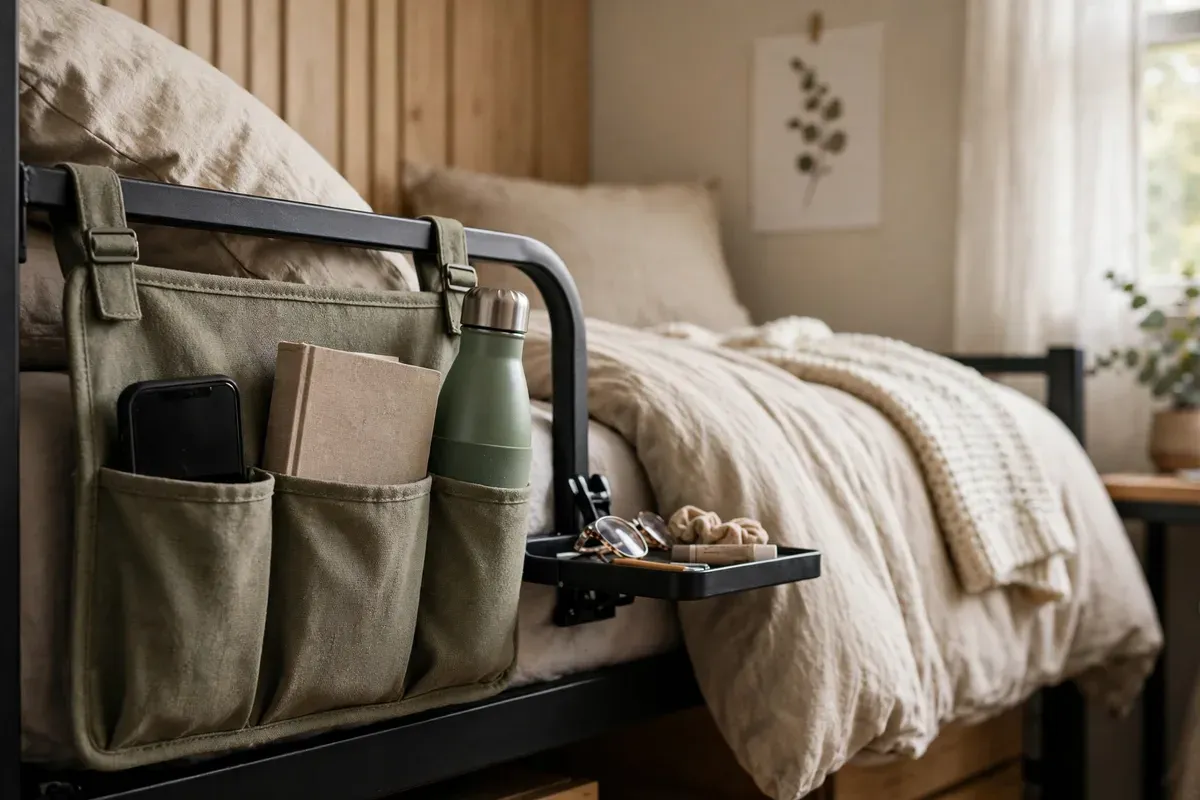
There is rarely floor space for a nightstand in a dorm, and a bedside caddy solves the same problem for about 12 dollars. It hangs over the side of the bed frame with pockets for a phone, a book, a water bottle and glasses, so everything you reach for at night is within arm’s length. A small clip-on shelf on the frame does the same job for a phone and a mug if you prefer a flat surface.
Pick a caddy with a stiff back panel, since soft ones sag and dump your phone on the floor. Canvas caddies hold their shape better than thin polyester ones, and a dark color hides the scuffs from daily use. Keep the water bottle in the outside pocket, not against the mattress, so a leak stays outside the bedding. If your bed is lofted, a caddy is even more useful, since the floor is too far away to reach in the dark.
10. Split the room into zones with your roommate
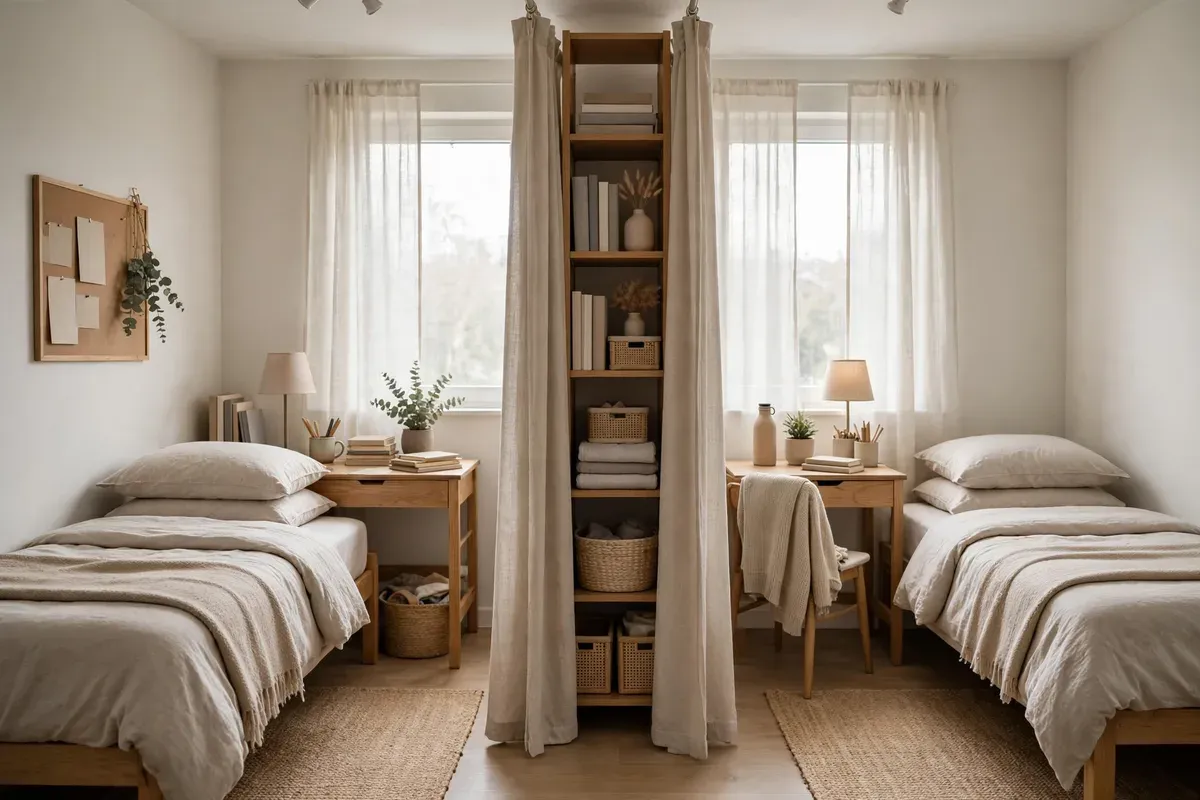
A shared dorm works better when each person has a defined zone, and a narrow bookshelf or a curtain makes that division visible without building a wall. A bookshelf about 12 inches deep placed perpendicular to the wall creates a soft divider that also stores books and boxes, and it costs nothing if you already own one. A tension rod with a curtain does the same job for about 20 dollars and takes up no floor space at all.
Agree on the split before you arrange anything. Each zone gets one bed, one desk and one stretch of wall, and the shared space in the middle holds the rug and the mini fridge. Keep the divider low enough that light still reaches both sides, since a floor-to-ceiling curtain makes one side dark and resentful. If you want more ideas for dividing a small shared space, our best storage ideas for small rooms cover the vertical storage that makes zones work.
11. Take storage up the wall above the desk
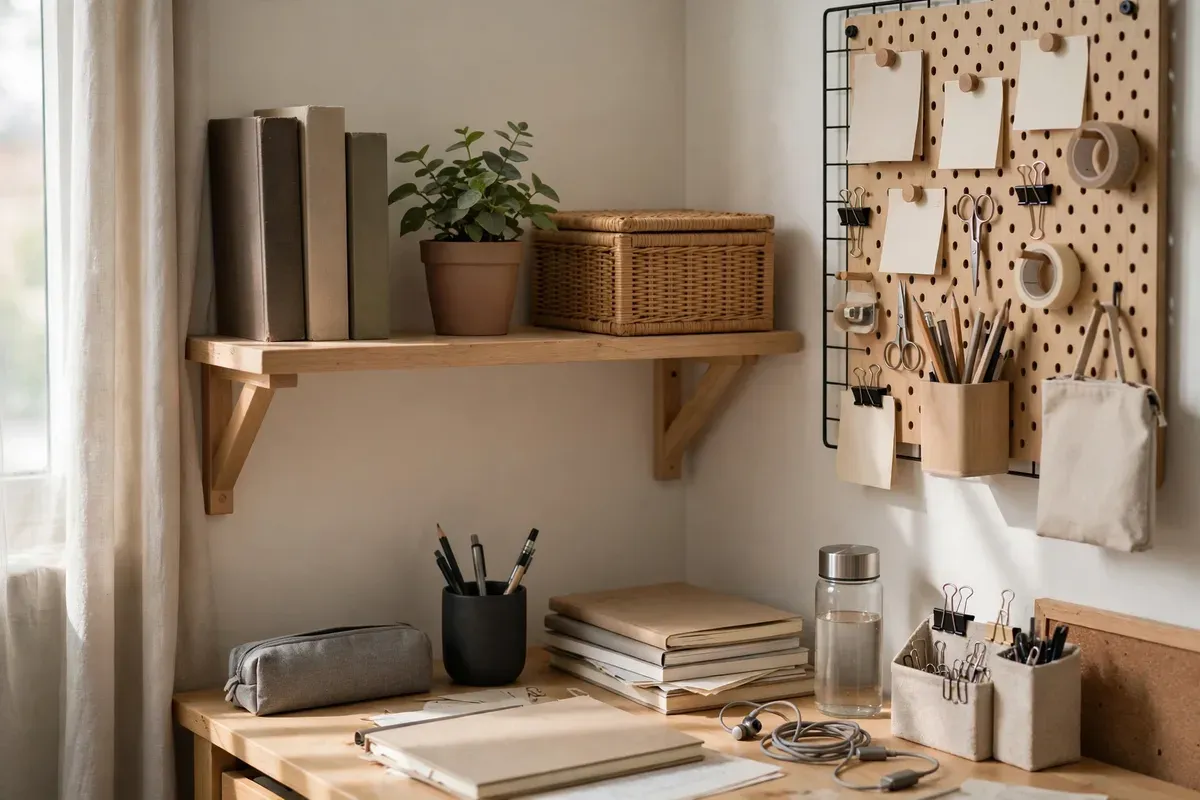
Dorm desks are small, usually about 40 inches wide, and the wall above them is empty. A floating shelf 24 inches long holds textbooks, a plant and a storage box, and it frees the desk surface for actual work. Use a shelf that mounts with removable adhesive strips rated for the weight, or a small bracket shelf if your housing rules allow screws in the desk area, and check the rules first, since they vary by school.
A pegboard beside the shelf holds the small things that clutter a desk: scissors, tape, pens and notes. A pegboard about 16 by 24 inches costs 15 to 25 dollars with hooks, and it hangs on two adhesive strips. Keep the heaviest items on the shelf and the lightest on the pegboard, since adhesive strips hold a shelf load better than a pegboard loaded with jars. Leave the bottom 12 inches of wall above the desk empty, so you are not ducking under a shelf every time you sit down.
12. Two pillows and a throw change the whole bed
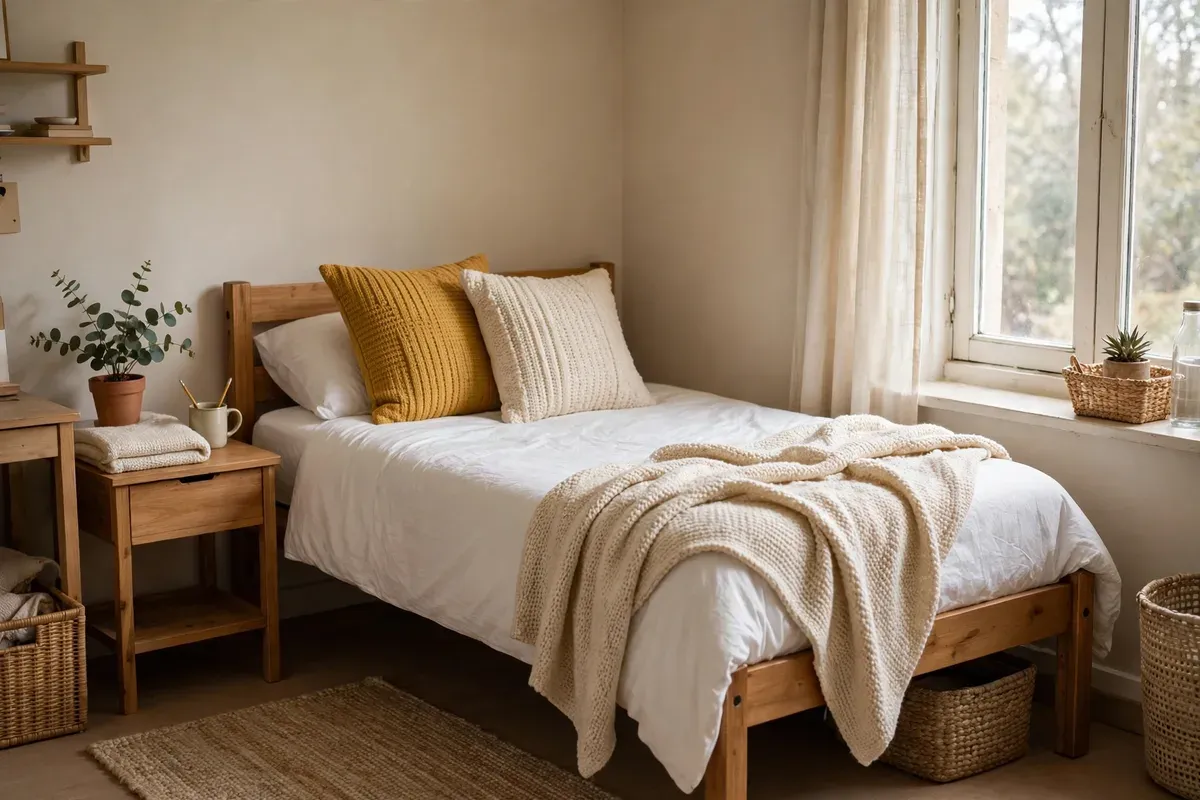
If a full bedding set is out of budget, two throw pillows and one throw blanket do most of the same work for about 25 dollars. Pick pillows in two different textures, one knit and one smooth cotton, in colors pulled from the same family as the bedding, so the bed looks layered instead of random. A throw draped across the foot of the bed adds the third texture and hides a wrinkled duvet on lazy mornings.
Scale matters on a twin bed. Pillows larger than 18 inches overwhelm a twin XL and leave no room to sleep, so stick to 16 or 18 inch squares and keep the sleeping pillows behind them. Store the throw pillows on the desk chair during the day if they crowd the bed at night, and skip the third pillow, since two is the number that looks intentional and three looks like a furniture store. This is the cheapest idea on the list, and it is also the one guests notice first.
13. Turn the mini fridge top into a snack station
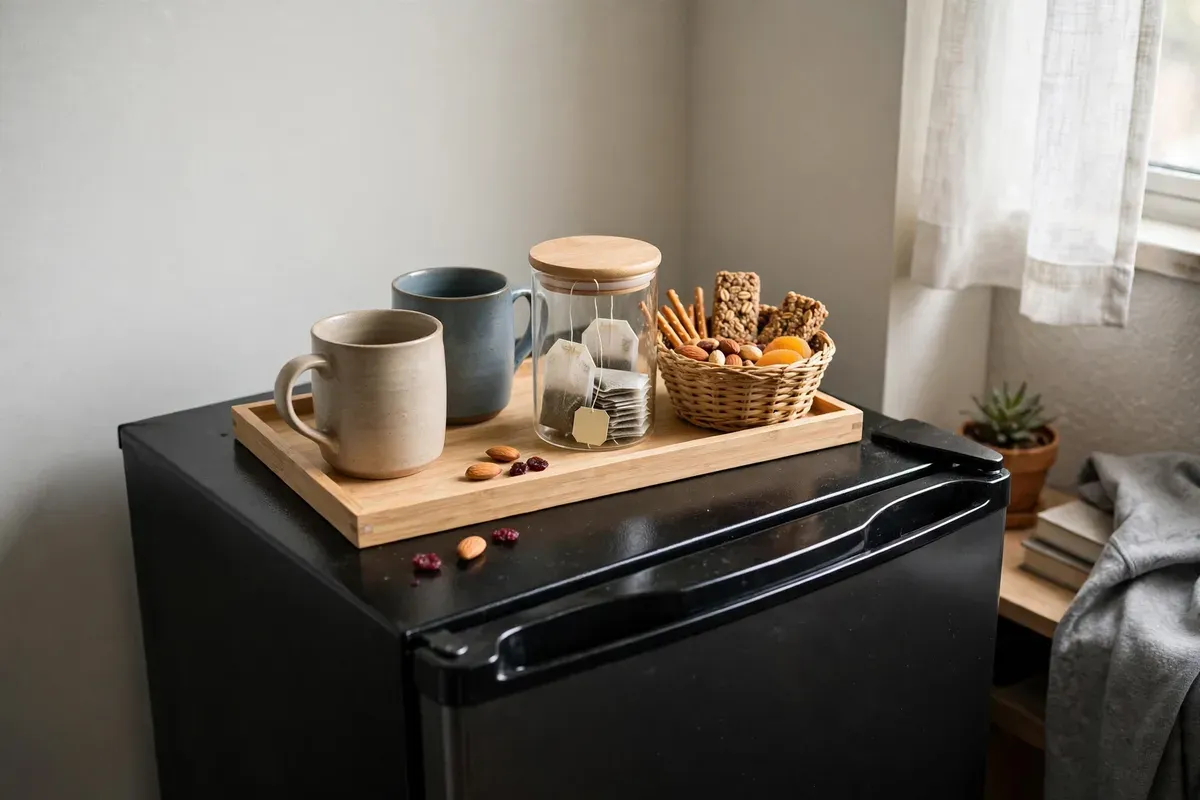
The mini fridge is a flat surface going to waste. A wooden tray about 12 by 18 inches on top holds two mugs, a jar of tea bags and a small basket of snacks, and it turns an appliance into a little kitchen corner. The tray keeps crumbs and drips off the fridge, and it lifts off in one move when you need to clean.
Keep it to four things, since a crowded fridge top looks like clutter, not a station. Two mugs, one jar and one basket is the right count, and everything should be something you actually use every day. Skip the electric kettle on top of the fridge, since most dorms ban them and the steam damages the wall behind it. If you share the fridge, agree on whose snacks go in the basket, since a shared basket empties twice as fast as a personal one.
14. Hide the mess with a bed skirt
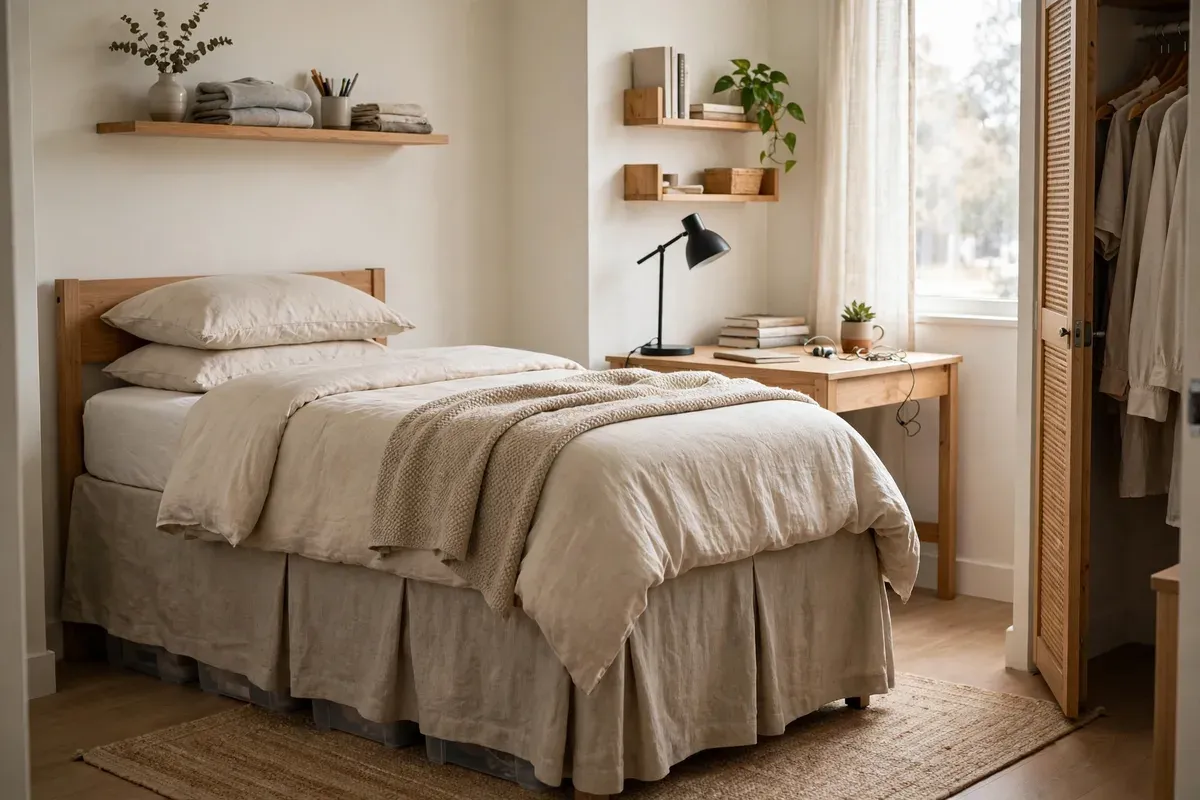
Under-bed storage is useful, but it looks messy from the doorway. A bed skirt in a neutral linen or cotton hides the bins completely, and it makes the bed look like a finished piece of furniture instead of a frame on legs. A twin XL bed skirt costs 15 to 25 dollars, and it attaches with a fitted sheet style panel that slips under the mattress, so it stays put when you pull a bin out.
Measure the drop before you buy. The distance from the top of the box spring to the floor is usually 14 to 18 inches in a dorm, and a skirt that is too short looks like a mistake. Pick a color close to the bedding, not a contrast color, since the skirt should disappear, not draw the eye. If the skirt keeps riding up, a few strips of double-sided fabric tape along the frame hold it in place without damaging anything.
15. Build a 10-minute weekly reset into the routine
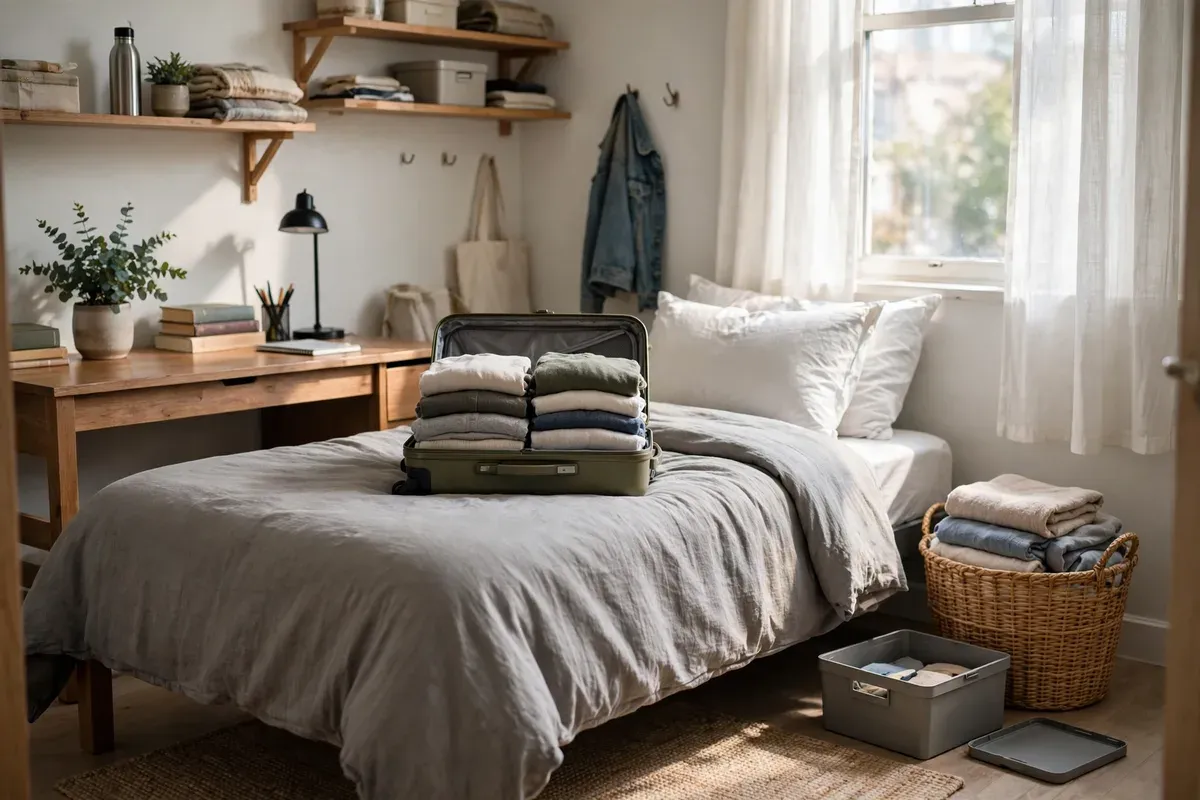
A dorm room does not stay decorated on its own. Laundry piles up, the desk collects papers, and the floor disappears under bags within a week. Pick one evening, Sunday works for most students, and spend ten minutes putting everything back where it belongs: laundry in the basket, dishes to the hall kitchen, papers into the desk tray, and the bed made properly. Ten minutes a week keeps the room at the level these ideas created, and it stops the Saturday deep clean that takes an hour.
Keep a small laundry basket and one storage box within reach so the reset has somewhere to send things. If the reset keeps failing, the problem is usually storage, not discipline: add one more bin under the bed before you blame yourself. When the semester ends, the same routine becomes your move-out plan, since everything already has a home and the adhesive hooks peel off in one pass. For the move to your own place, our first apartment checklist covers what to buy first and what can wait.
How to decorate a dorm room on a student budget
Start with the bed, since it is the biggest change for the least money. A duvet set, two pillows and a throw cost about 60 dollars total and transform the room in one afternoon. Add the rug and the lighting next, about 30 dollars combined, and you have covered the three things that make a room feel finished. Everything after that is storage and small touches, and it can wait until you have lived in the room for two weeks and know what you actually need.
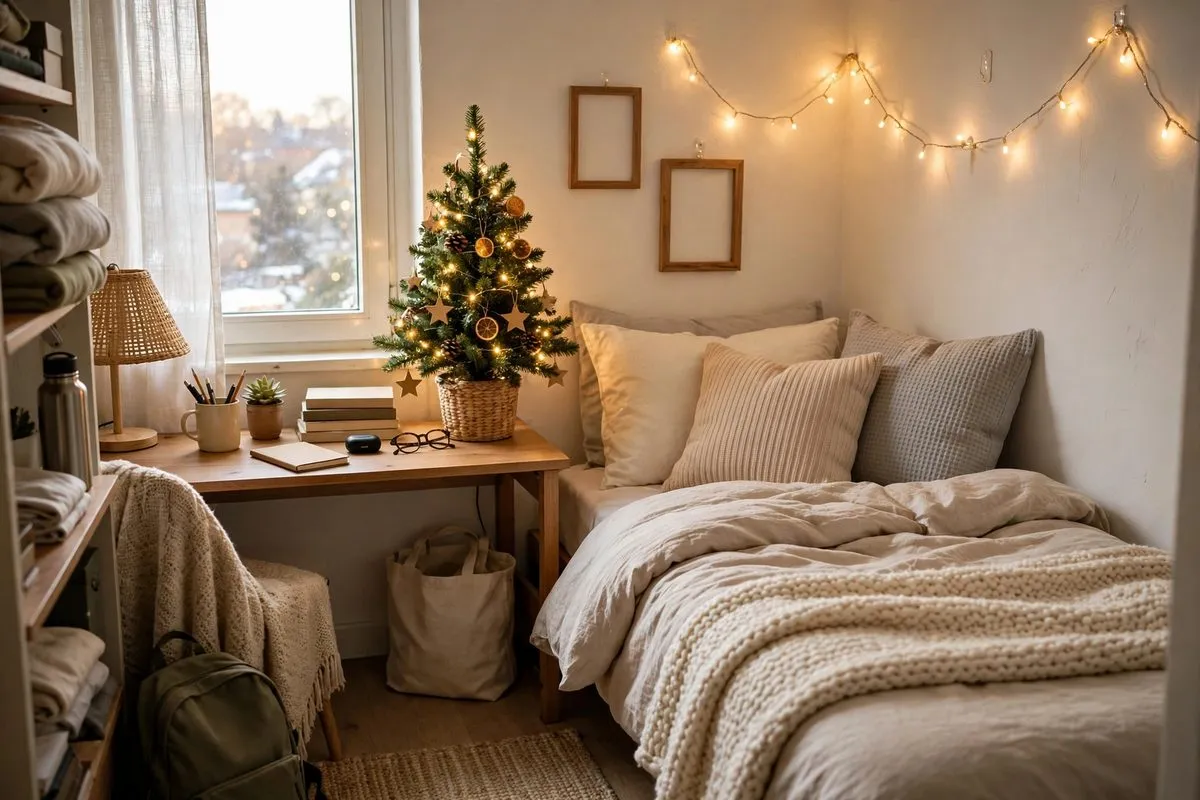
Buy in this order, and skip the rest until the basics are done: bedding, rug, lighting, hooks, then bins. Thrift stores near campus are the best source for throws, baskets and lamps, and they cost a third of new. For more budget-first ideas, our apartment decorating ideas on a budget apply the same buy-in-order rule to a first apartment. If you want to decorate for the holidays, our dorm Christmas decor ideas keep the same removable, roommate-friendly approach for December.
What to check before you hang anything
Read your housing handbook before you buy adhesive strips or hooks, since the rules change by school and some dorms ban all adhesives. Test one strip on a hidden patch of wall, behind the door, and leave it for a day before you commit to a whole wall of decals. Check the fire rules too: most dorms ban candles outright and limit string lights to LED only, since LED strands stay cool and draw very little power.
Keep the original boxes for anything you might return, and photograph the room on move-in day so you have proof of the wall condition. That photo is worth more than any decoration if a deposit dispute comes up in May. A dorm room is temporary by design, and the best decor respects that: everything removable, nothing drilled, and a room that looks like home for nine months and takes an afternoon to pack up.
Looking for more ideas? Browse our small space living stories.
Save to Pinterest