In this article
- 1. Buy thrifted furniture with good bones
- 2. Hang secondhand art in mismatched frames
- 3. Change the room with inexpensive textiles
- 4. Use renter-friendly wall decor without holes
- 5. Warm the room with budget lighting
- 6. Put peel-and-stick wallpaper on one wall
- 7. Fill thrifted vases with fresh greenery
- 8. Make DIY art from canvas and paint
- 9. Rescue a tired sofa with a slipcover
- 10. Ground the room with a secondhand rug
- 11. Rearrange before you buy anything
- 12. Spend in a room-by-room order so money goes furthest
- 13. Decorate free with branches, pinecones and stones
- 14. Spot the good finds on the marketplace
- 15. Paint one wall instead of the whole room
- 16. Swap the bedding and the bedroom feels new
- 17. Make thrifted lamps look intentional
- Start with the room you see first
- Where to spend first and what to skip
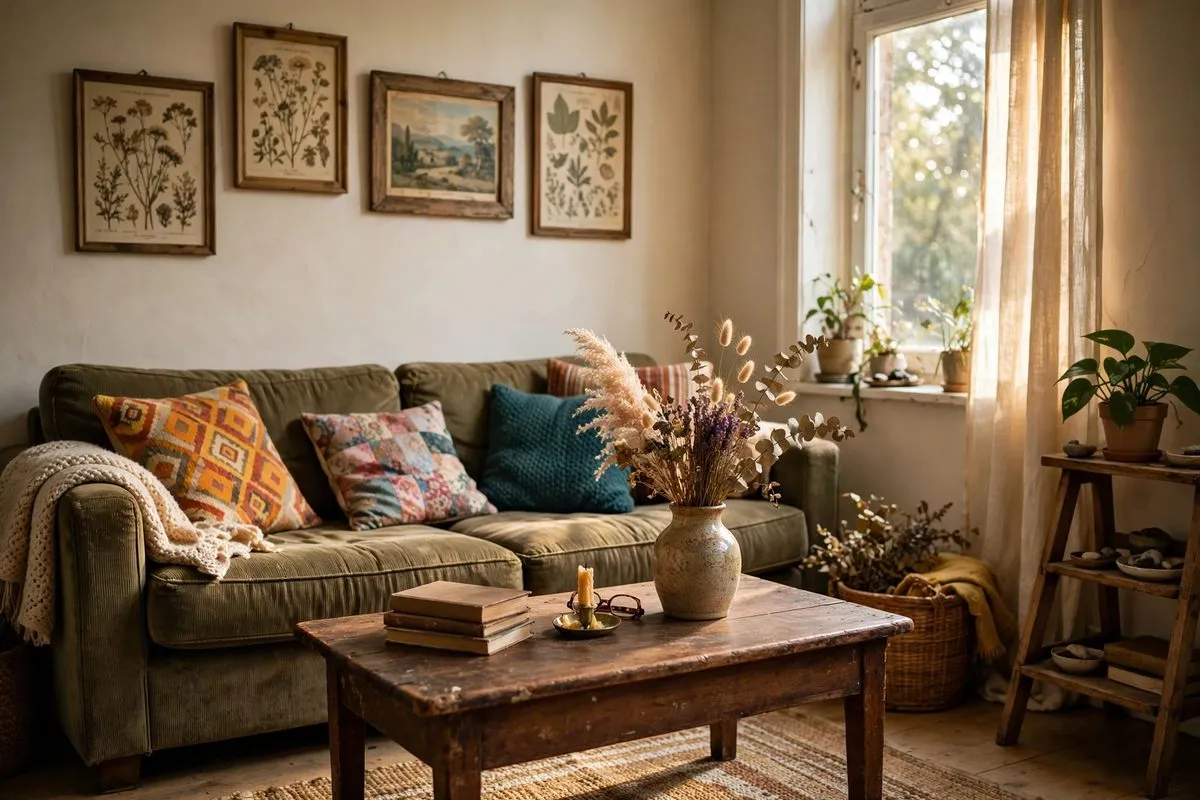
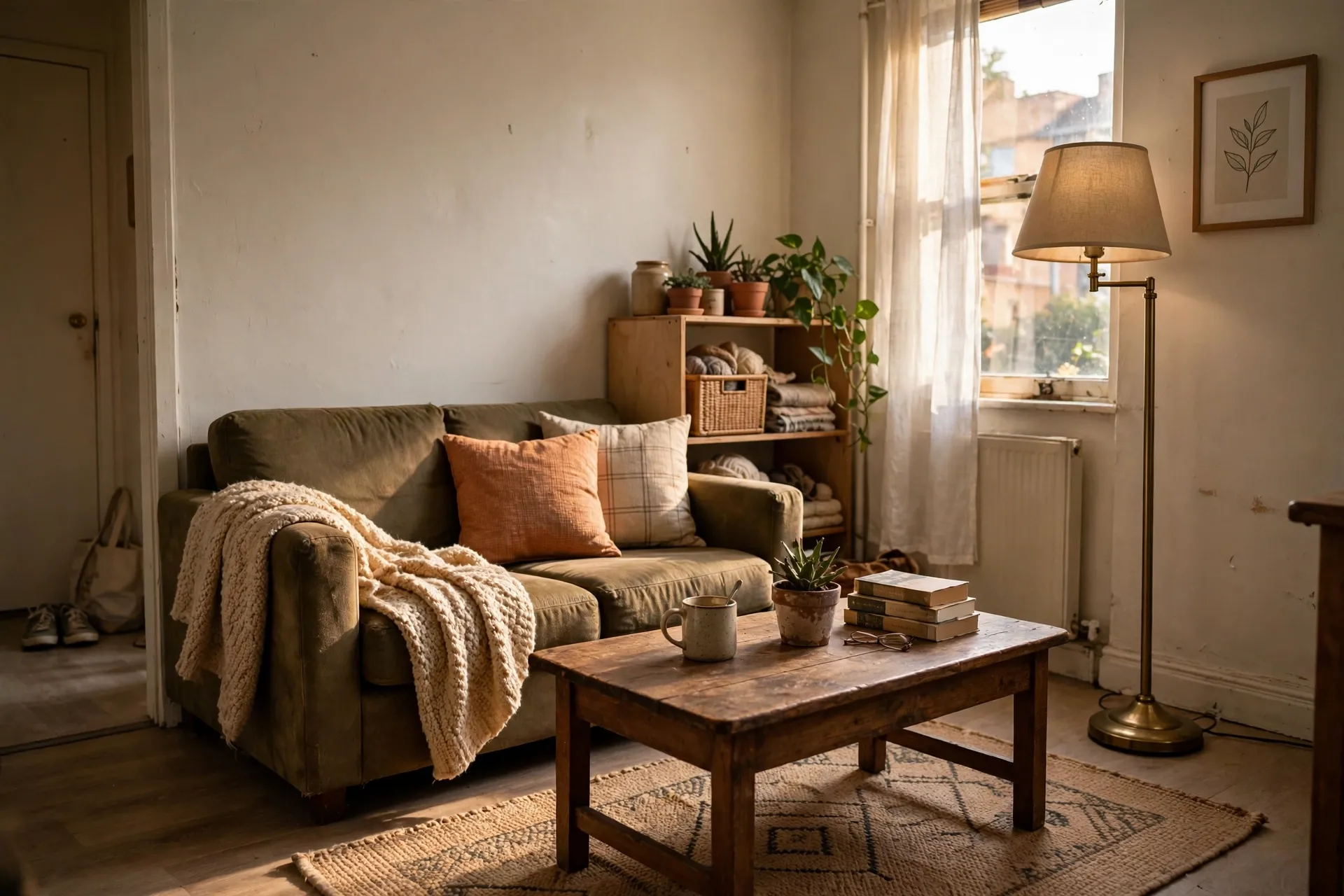
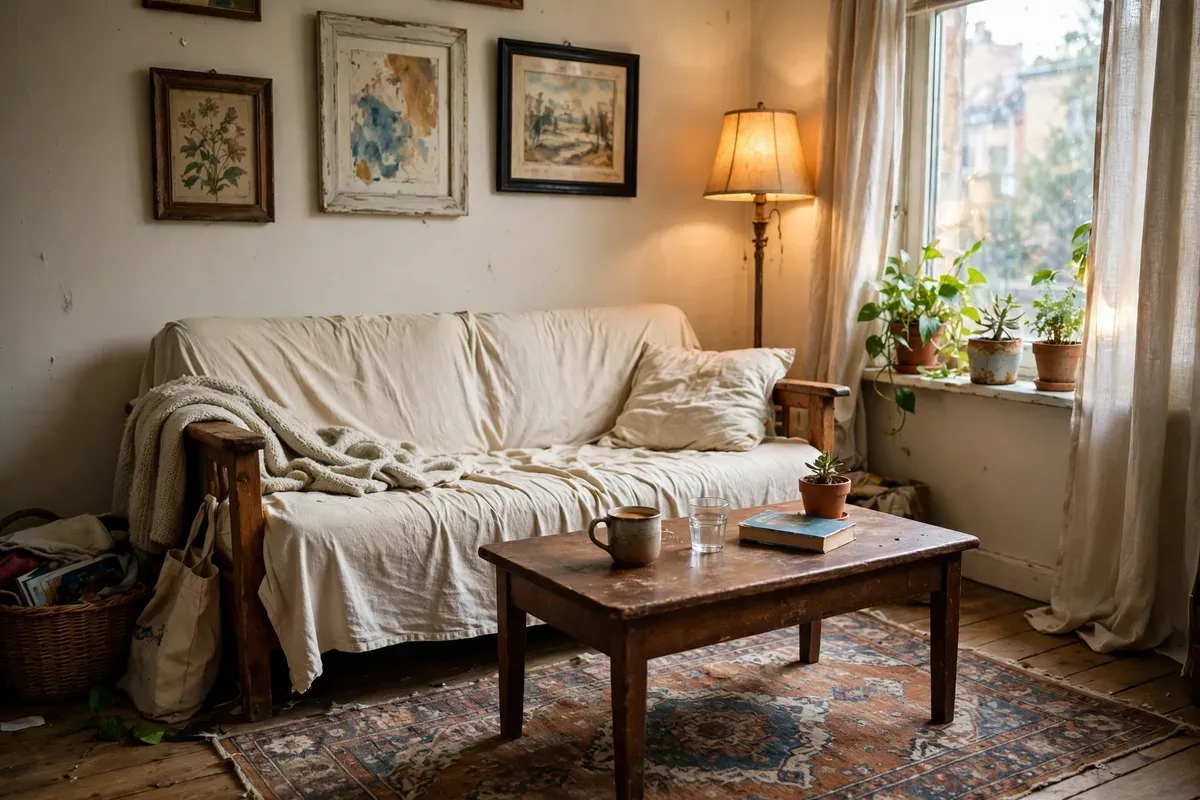
Apartment decorating on a budget starts with one honest fact: a room looks cheap when everything in it is new and flimsy, not when some of it is secondhand. The apartments that look expensive on a small budget mix old solid pieces with a few new soft things, and they spend money where the eye lands first. A thrifted oak chair, a real rug, and a lamp that throws warm light will carry a room further than a cart full of matching decor from a discount store.
These 17 ideas work in that order. Most of them cost under 50 dollars, several cost nothing, and none of them needs a drill, a landlord’s permission, or a full weekend. Pick the three that fit your worst room first, because one finished corner changes how the whole apartment feels.
1. Buy thrifted furniture with good bones
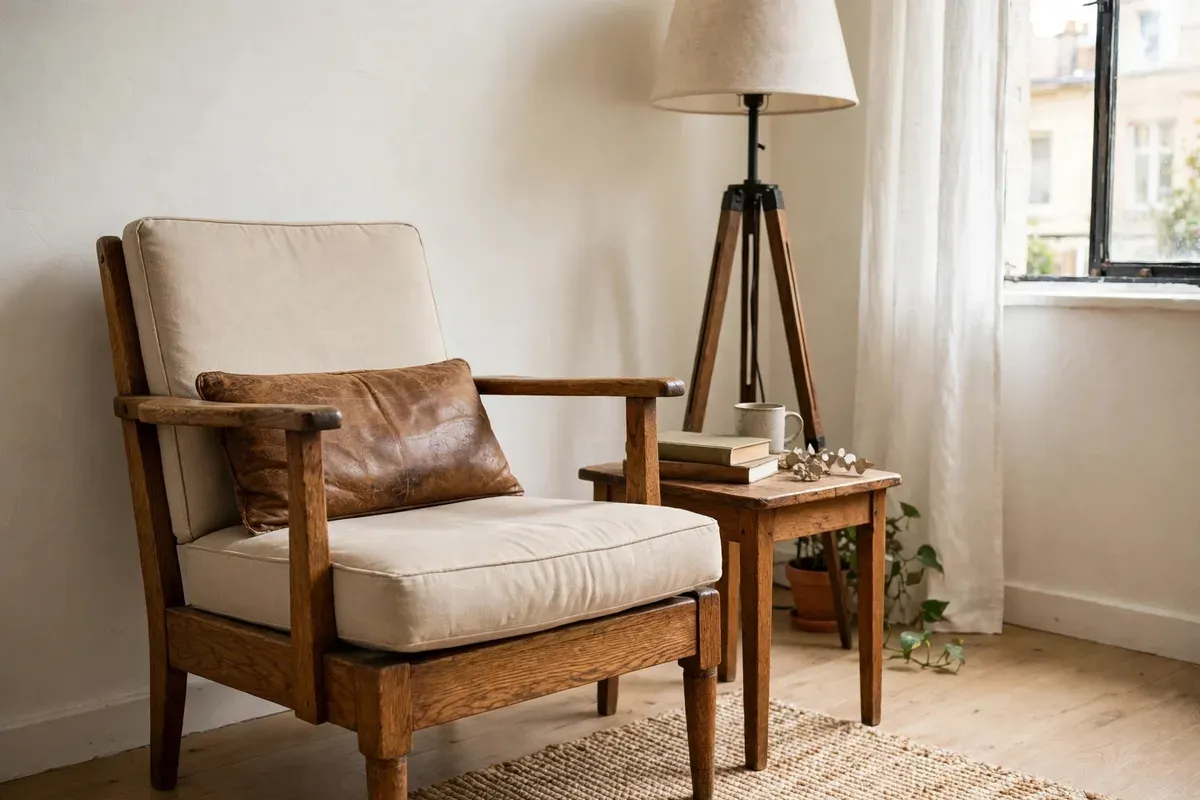
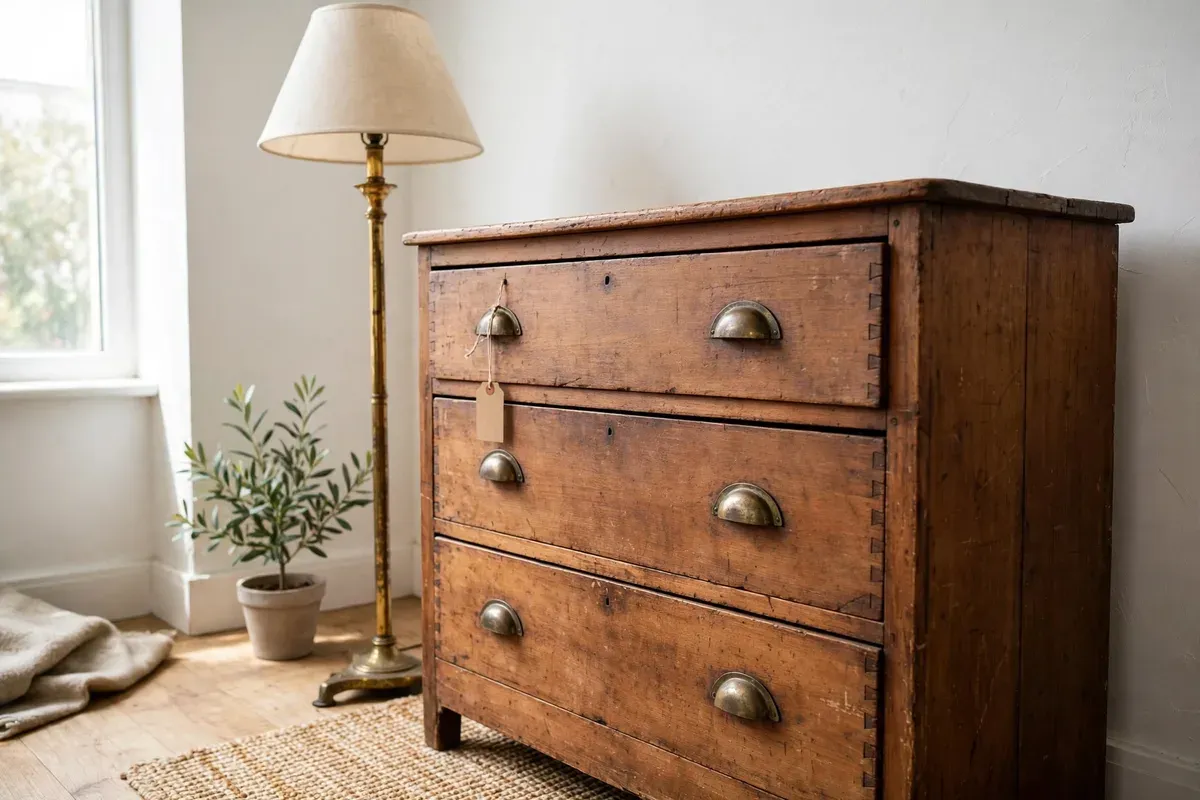
A solid wood chair with a wobbly cushion is a better buy than a new chair made of particle board, because the frame is what lasts. Look for hardwood frames, dovetail joints in drawers, and pieces that feel heavy when you lift one end. A 25 to 60 dollar armchair from a thrift store or estate sale often has a frame that would cost 400 dollars new, and the only thing it needs is a cushion cover or a good clean.
Check the piece the way a buyer would: sit in it, rock it gently to test for loose joints, and open every drawer. Skip anything with a musty smell that survives a wipe-down, since that smell lives in the padding and rarely leaves. A frame that is solid but ugly is the ideal find, because a 15 dollar can of spray paint or a 20 dollar slipcover turns it into the best-looking piece in the room.
2. Hang secondhand art in mismatched frames
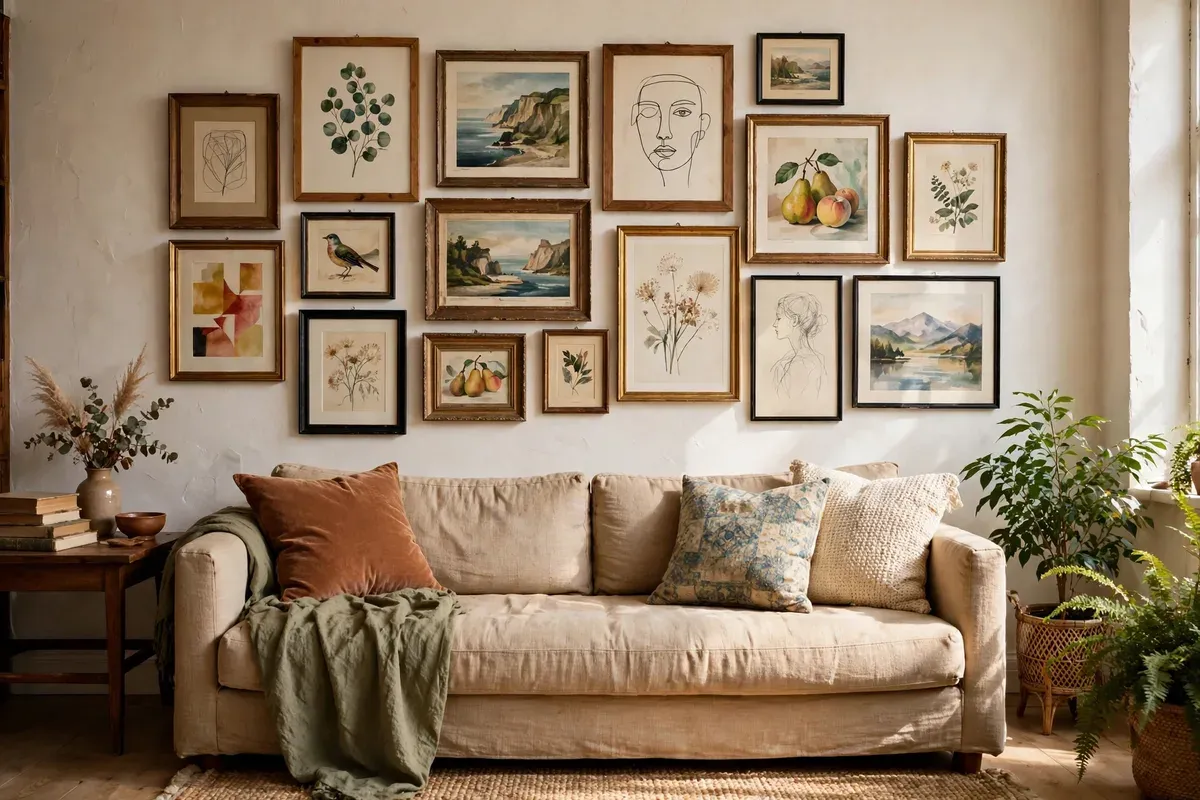
A gallery wall looks collected instead of cheap when the frames do not match. Thrift stores sell framed prints for 3 to 10 dollars each, and the frame is usually worth more than the print inside it. Buy frames in wood, black metal, and one gold tone, then swap in your own prints, photos, or pages torn from old calendars, so the wall looks gathered over years rather than bought in one afternoon.
Hang the largest frame at eye level, about 57 inches to its center, and build outward with 2 to 3 inches between frames. Keep the total arrangement under 4 feet wide in a small living room, since a wall that is too crowded reads as clutter. If the frames are different depths, hang the deepest ones at the edges, which keeps the center flat and the whole wall looking calm instead of lopsided.
3. Change the room with inexpensive textiles
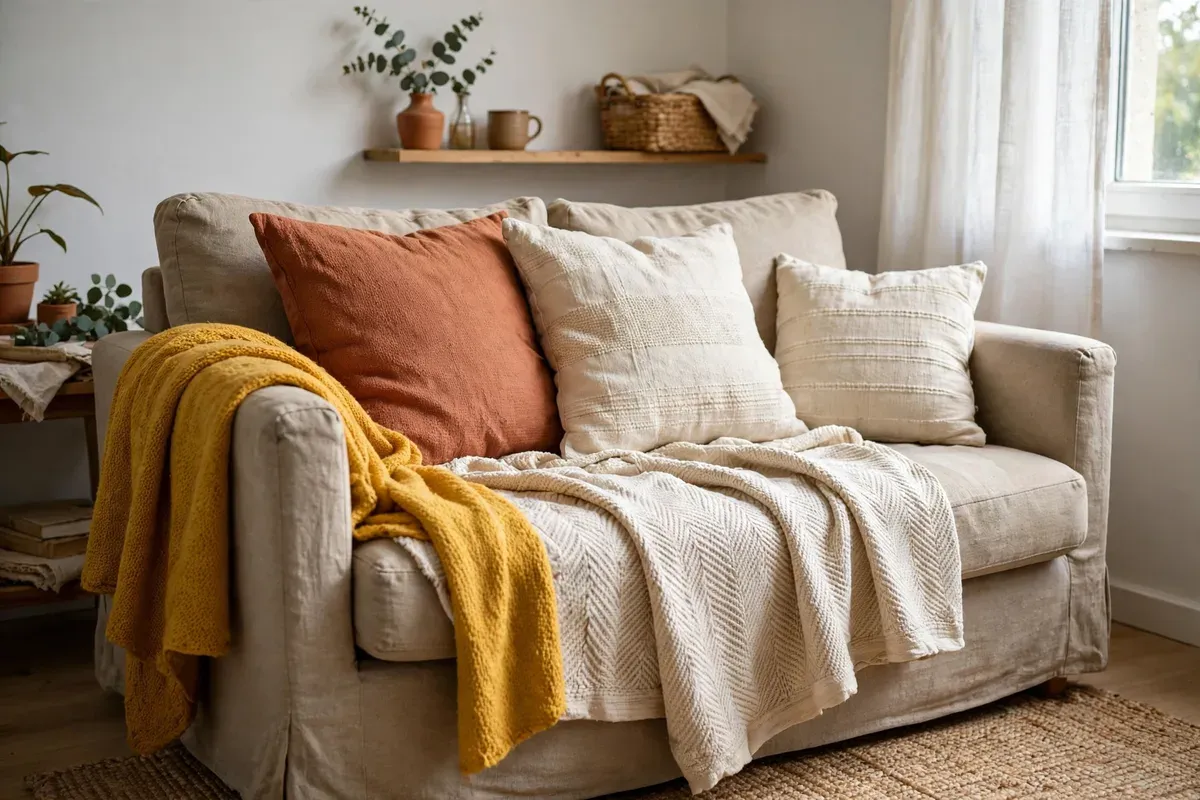
Textiles are the fastest budget change in apartment decorating on a budget, because they cover the largest surfaces for the least money. A 12 dollar throw blanket, two 8 dollar cushion covers, and a 15 dollar cotton curtain panel can change the color of a whole living room in one afternoon. The sofa, the bed, and the windows are the biggest blocks of color in any apartment, so dressing them well matters more than any small decor object.
Buy textiles in solid colors with a visible weave, like linen, cotton canvas, or a chunky knit, since flat shiny fabric is what reads as cheap. Keep to two main colors plus one warm accent, and repeat that accent in at least two places, a cushion and a throw, so the room feels planned. Wash new cushion covers once before use, since a fresh wash softens the fabric and removes the stiff factory finish that gives budget textiles away.
4. Use renter-friendly wall decor without holes
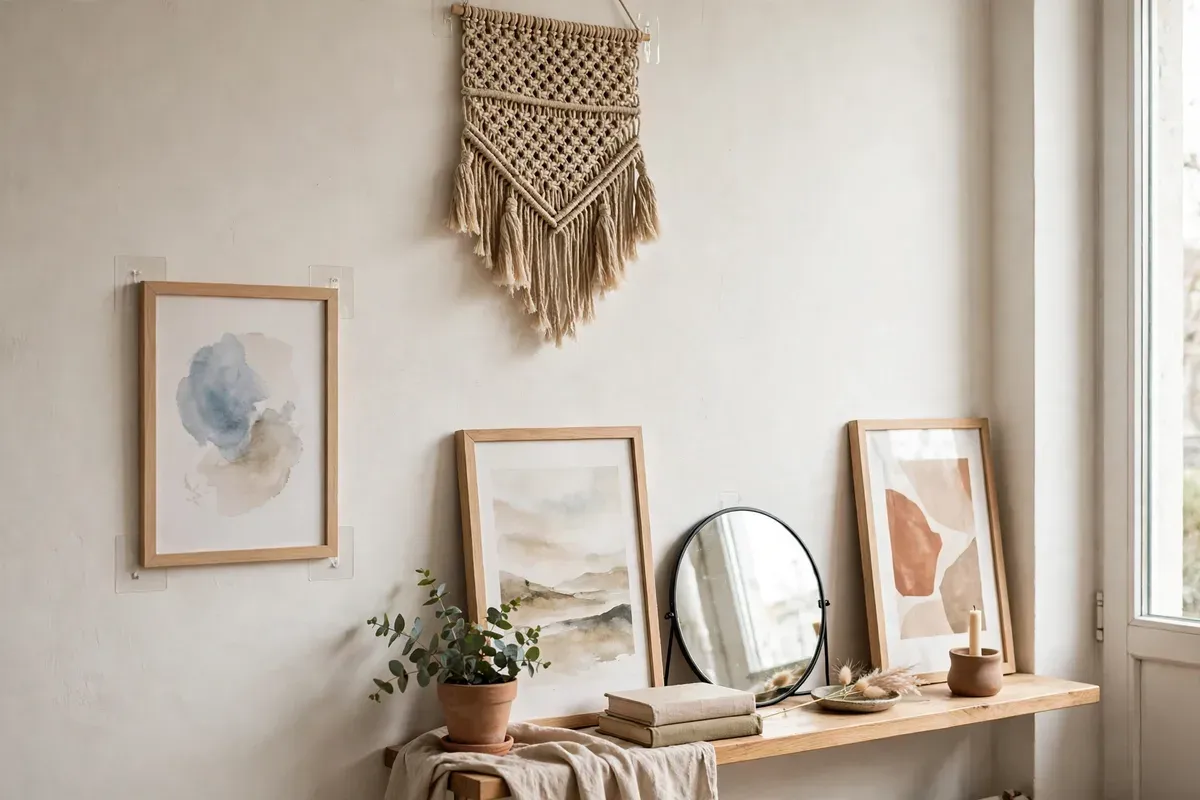
Apartment decorating on a budget has to respect the deposit, and that means no holes in the walls. Adhesive picture strips rated for 3 to 5 pounds hold most framed prints, and a leaning mirror or a large frame propped on a shelf fills a blank wall without a single nail. A woven wall hanging on one hook, or a macrame piece hung from a removable hook, adds texture that a flat poster never will.
Test the strips on a hidden spot first, since they grip painted drywall well but fail on textured or chalky paint. Hang frames in pairs or trios at eye level, and lean one large piece on a console or dresser for height, which costs nothing and fills the wall above the furniture. When you move out, pull the strips straight down along the wall, not toward you, so the paint stays intact and the deposit stays safe.
5. Warm the room with budget lighting
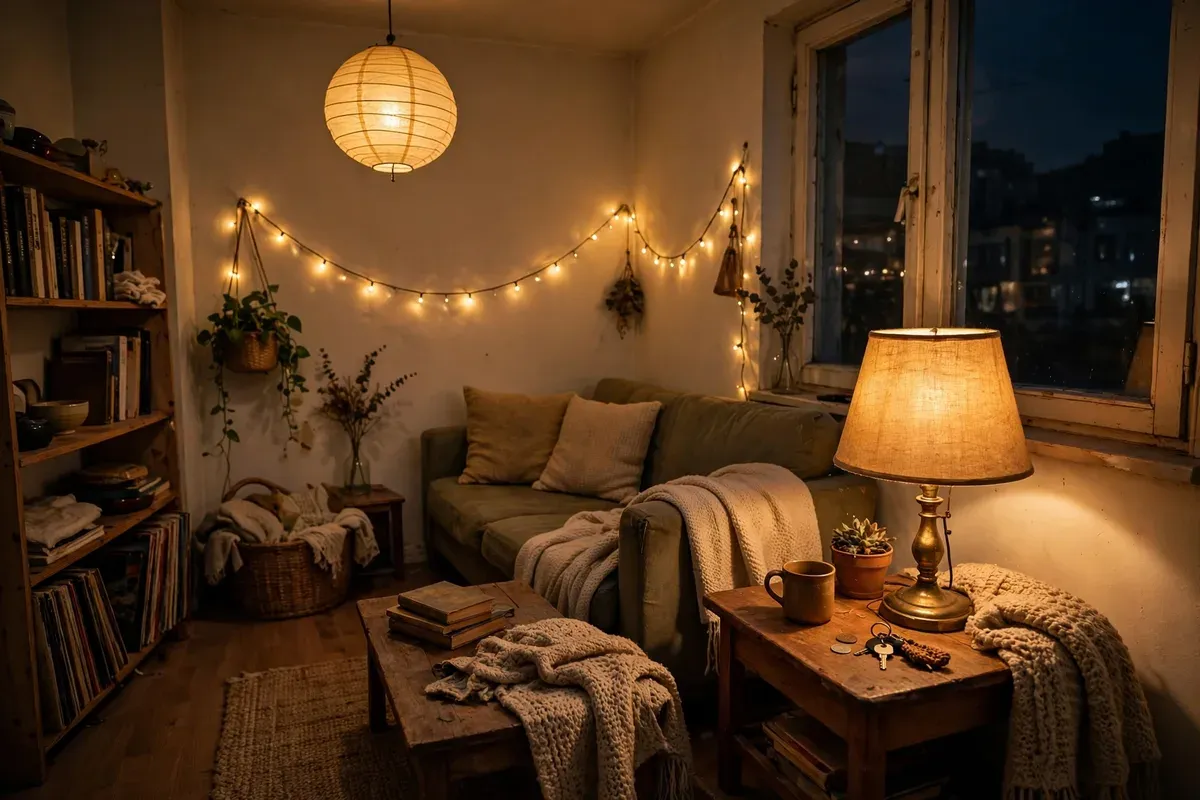
One warm lamp changes a room more than any decor purchase, because light is what the eye notices first in the evening. Swap cool white bulbs for warm white ones at 2700K, which cost about 2 dollars each, and add a paper lantern pendant for 10 to 15 dollars plus a thrifted table lamp with a linen shade. Three small warm light sources at different heights beat one bright ceiling light, and they make even plain furniture look softer.
Keep the lampshades in cream or natural linen, since colored or plastic shades tint the light and look dated. A string of warm fairy lights along a shelf or window frame costs 5 to 8 dollars and adds the same glow for almost nothing, but use it in one place only, since fairy lights in every corner turn a room into a dorm. Put the brightest lamp near the reading chair and the softest one near the bed, so each part of the apartment has its own light.
6. Put peel-and-stick wallpaper on one wall
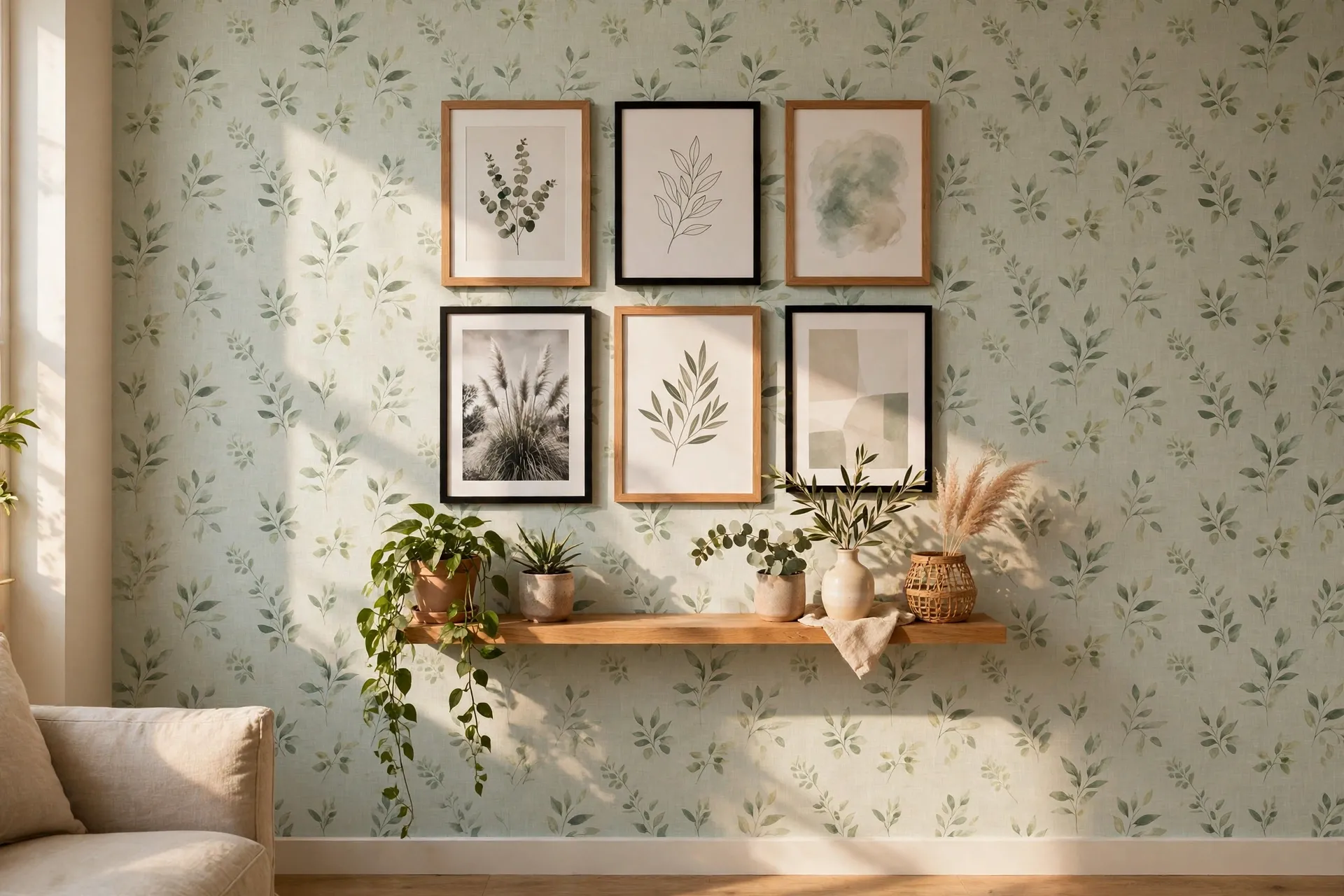
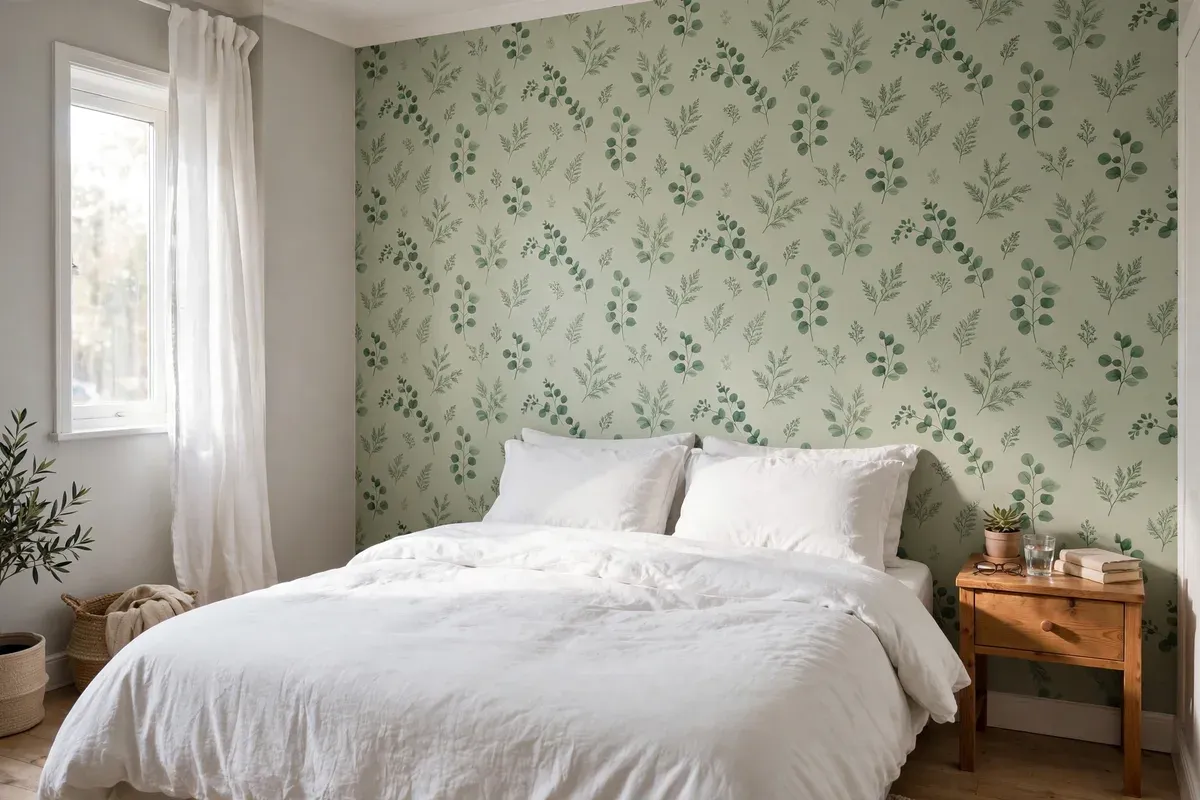
Peel-and-stick wallpaper is the budget way to get a feature wall without paint or a landlord argument, and one wall is all it takes. A single roll covers about 28 square feet and costs 25 to 40 dollars, which is enough for the wall behind a bed or a sofa in most apartments. Choose a small-scale pattern, like a subtle botanical or a soft stripe, since large bold prints shrink a small room and show every crooked seam.
Measure the wall first and buy one extra roll, because matching the pattern across panels eats more paper than the square footage suggests. Start at the top corner, peel 12 inches at a time, and smooth with a plastic card as you go, which stops air bubbles before they form. The paper peels off cleanly when you move, but warm it with a hair dryer for 30 seconds if a corner resists, since heat softens the adhesive without tearing the paint underneath.
7. Fill thrifted vases with fresh greenery
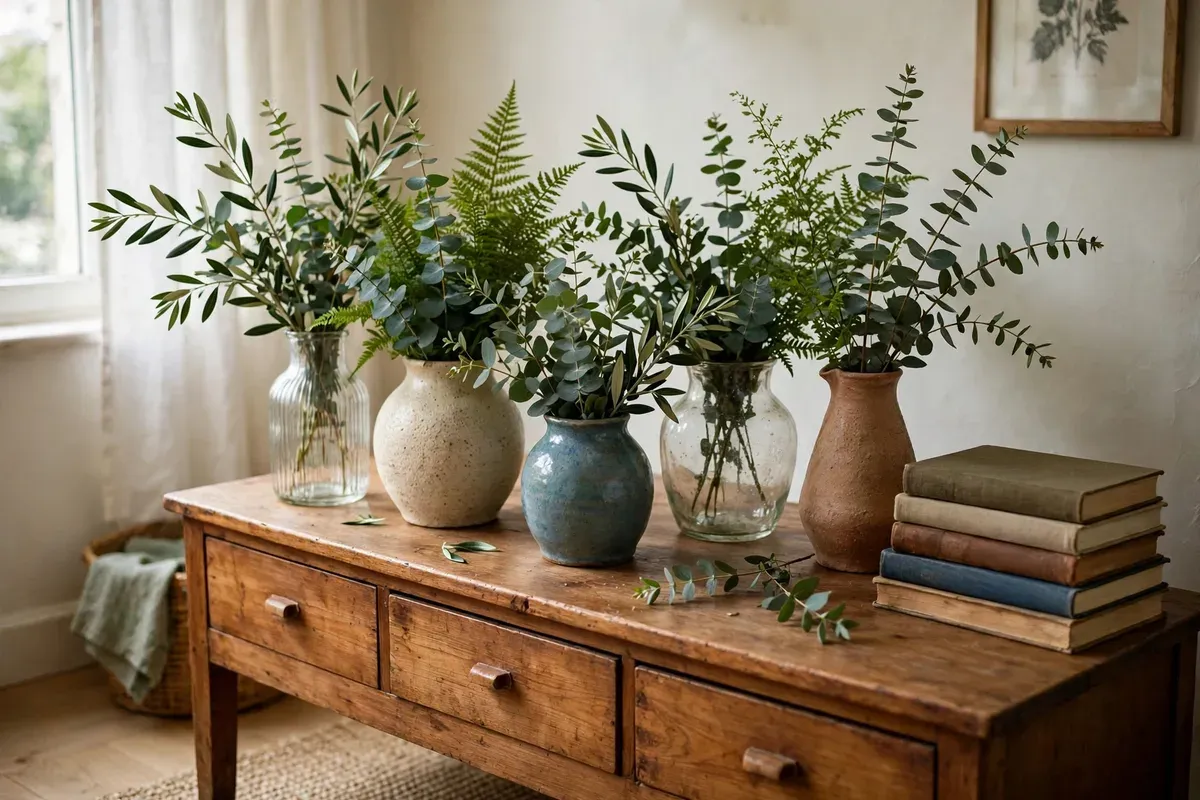
A 2 dollar vase from a thrift store looks like a 30 dollar vase once it holds fresh greenery, because the plant does the work. Buy vases in glass, ceramic, and one matte stoneware piece, in heights from 6 to 12 inches, and group three of them on a sideboard or windowsill. Eucalyptus stems cost about 5 dollars a bunch and last two weeks, while a grocery store herb plant costs 3 dollars and keeps growing on the sill.
Vary the heights by at least 2 inches between vases so the group reads as a cluster instead of a row, and keep the stems loose, not packed tight, since a full vase looks stuffed and a loose one looks styled. Change the water every three days and trim the stems by half an inch each time, which keeps eucalyptus fresh for a full two weeks. When the stems dry out, keep them anyway, since dried eucalyptus in a tall vase looks intentional for months.
8. Make DIY art from canvas and paint
A blank canvas and three tubes of acrylic paint cost less than one framed print, and the result looks better than a poster because it has real texture. Buy a 16 by 20 inch canvas for about 8 dollars, pick two colors that match your room plus white, and paint large color blocks or simple arches with a 2 inch brush. The trick is to stop early, since most DIY art fails from too many details, not too few.
Tape off straight edges with painter’s tape for clean lines, and let each color dry for 30 minutes before painting next to it, so the edges stay sharp. Hang the finished canvas at eye level, about 57 inches to its center, and give it a simple wood frame if the edges look rough, which costs 10 dollars and makes the whole piece look bought. Two matching canvases hung side by side fill a wide wall for under 25 dollars total.

9. Rescue a tired sofa with a slipcover
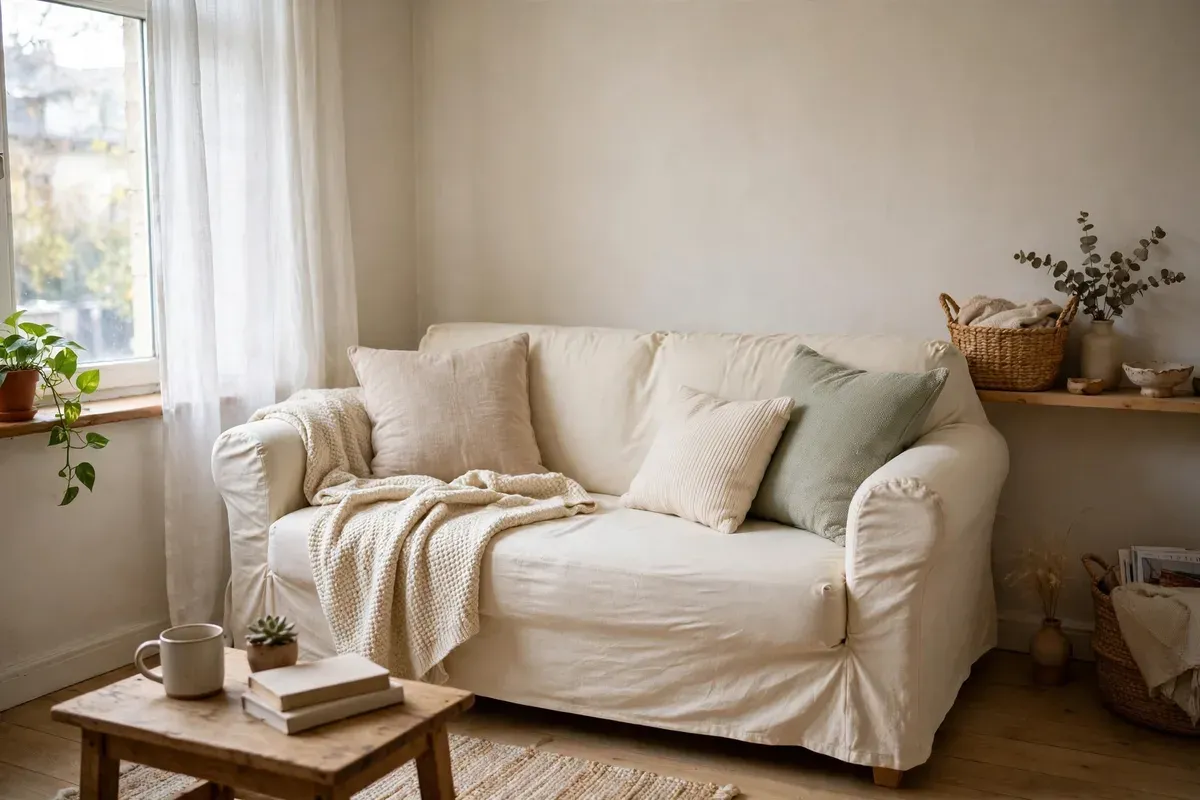
A slipcover is the cheapest way to save a sofa that is structurally fine but looks ten years old. A fitted cotton slipcover costs 40 to 80 dollars depending on the sofa size, which is a fraction of the 600 dollars a replacement would cost, and it covers stains, faded arms, and fabric that has gone shiny with wear. Choose a washable cotton or linen blend in a light neutral, since dark slipcovers show dust and pet hair more than light ones do.
Measure the sofa before ordering, including the arm height and the seat depth, since a slipcover that is one size too big sags and looks worse than the old fabric. Tuck the extra fabric into the seat creases with a wooden spoon handle, and pin the back in two places so it does not slide when someone sits down. Wash the cover every month or two, which keeps it looking fresh, and keep the old fabric underneath, since the slipcover is protection as well as decoration.
10. Ground the room with a secondhand rug
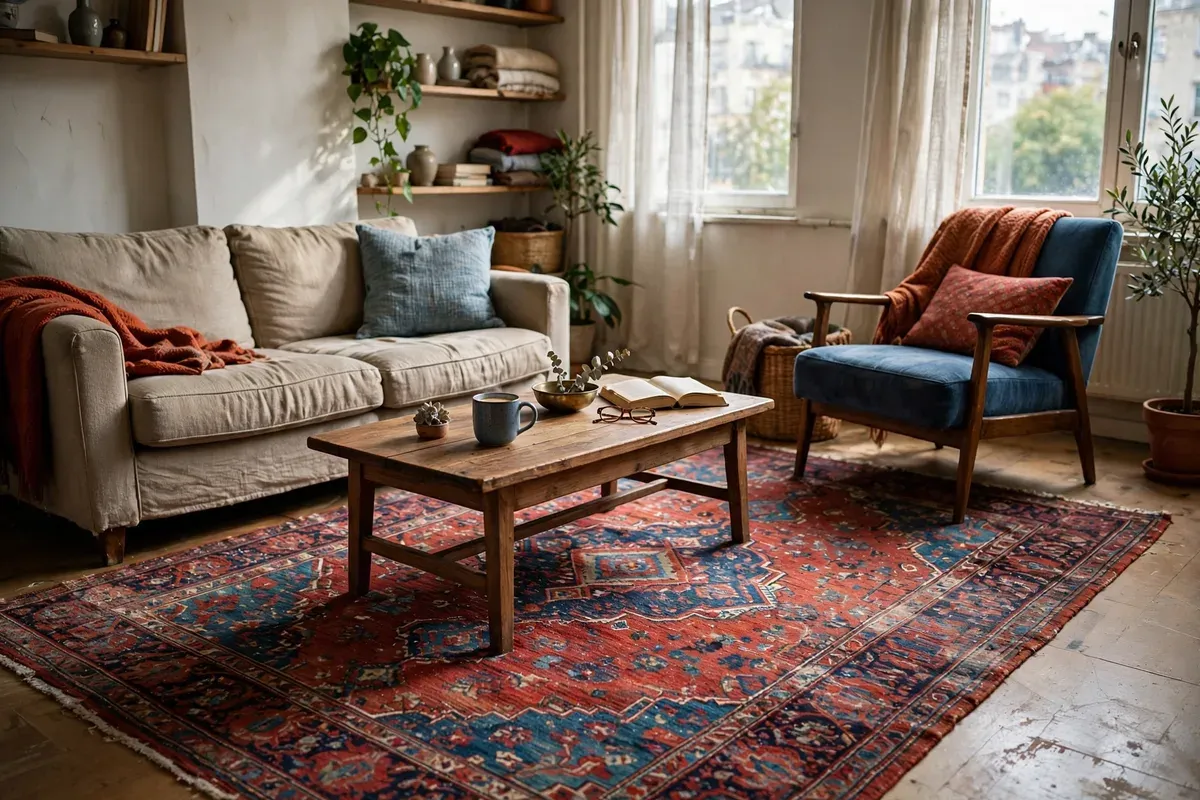
A rug is what makes a group of furniture look like a room instead of pieces pushed against walls, and secondhand rugs are one of the best thrift buys there is. A 5 by 7 foot vintage-style rug costs 40 to 80 dollars used, against 150 to 300 dollars new, and wool rugs especially survive decades of use. Look for a rug with a tight weave and a pattern that hides wear, like a Persian-style design in warm reds or blues.
Size it so the front legs of the sofa and chairs sit on the rug, which usually means a 5 by 7 foot rug for a small living room or an 8 by 10 foot rug for a larger one. A rug that is too small is the most common mistake, since it makes the furniture float and the room look unfinished. Vacuum both sides when you bring it home, and lay a 10 dollar rug pad underneath, which stops slipping and adds the softness that makes a thin old rug feel new.
11. Rearrange before you buy anything
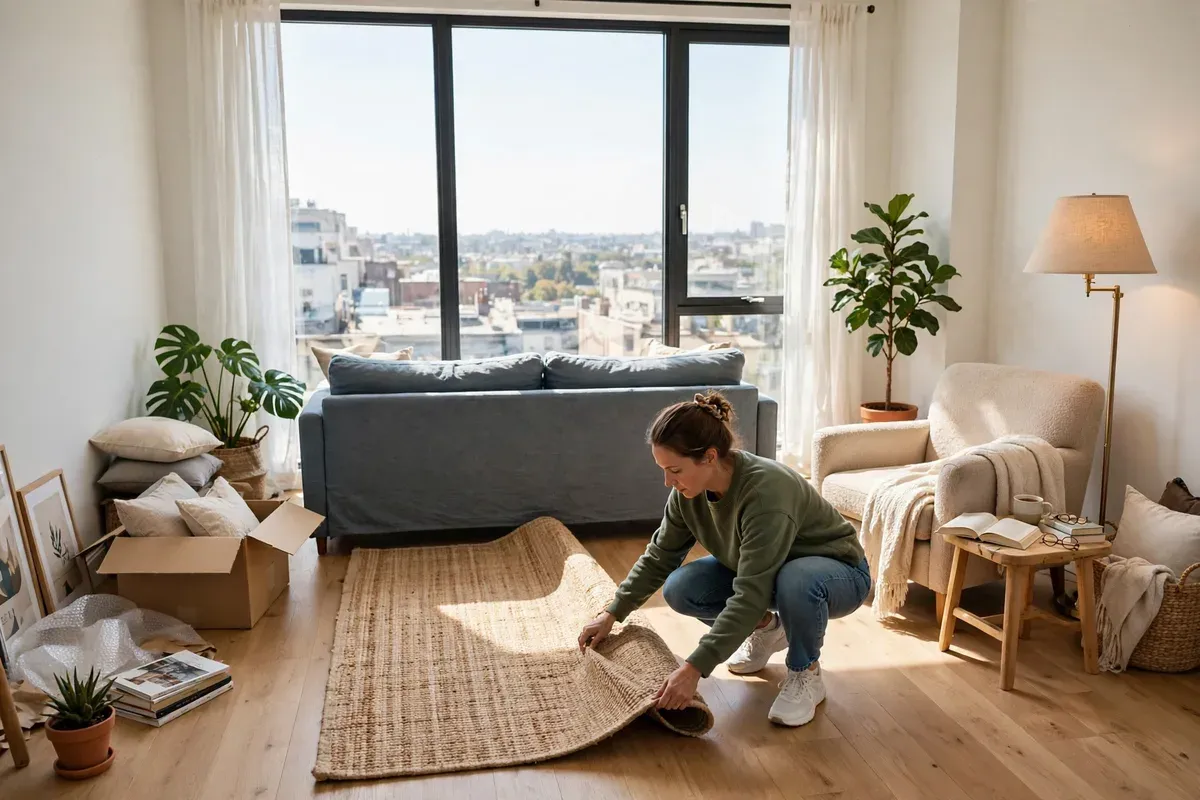
The cheapest idea in this list costs nothing at all: move the furniture before you spend a dollar. Most apartments are arranged the way the last tenant left them, and a sofa pushed against the longest wall is rarely the best layout. Try the sofa facing the window instead, pull the armchair into a reading corner with the lamp, and leave 30 inches of walking space between pieces so the room breathes.
Live with each layout for two full days before judging it, since a new arrangement feels wrong on the first evening and right by the third. Take a photo from the doorway after each move, because a photo shows the balance of the room more honestly than standing in it. Only after the layout works should you buy anything, since half of what people buy is really a fix for bad placement, and good placement makes the furniture you already own look better.
12. Spend in a room-by-room order so money goes furthest
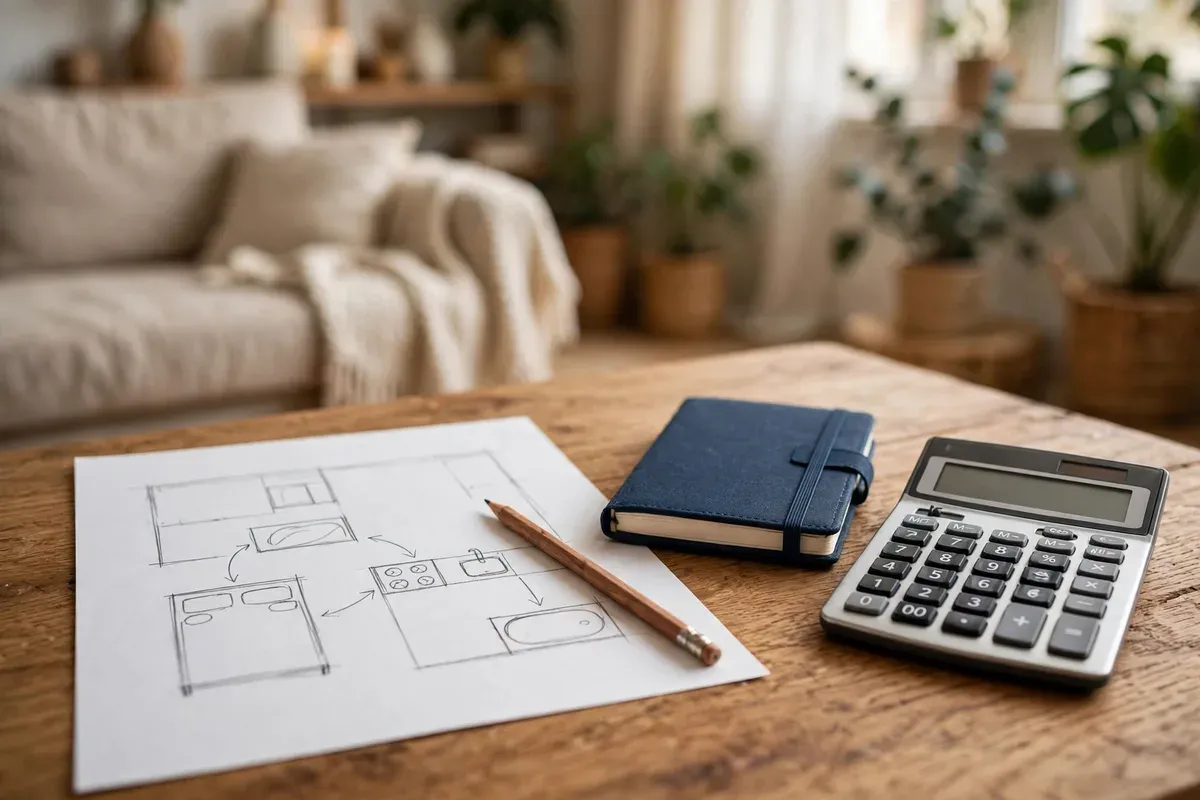
Apartment decorating on a budget fails when the money goes to the wrong room first. Start with the living room, since it is the room you and your guests see most, then the bedroom, then the entryway, and leave the bathroom and kitchen last, because those rooms are already full of fixtures and need the least decoration. Give the living room half the total budget, the bedroom a third, and split the rest between the entryway and the small rooms.
Set the total budget before you start, even if it is only 150 dollars, and write it down room by room on paper, since a written plan stops the 20 dollar impulse buys that eat a budget without changing a room. Buy the biggest item in each room first, the rug or the lamp, then fill in with the small pieces, because a room with one right big piece and nothing else looks better than a room full of small things and no anchor. Our cost to furnish an apartment breaks down realistic room-by-room numbers if you want a full budget to plan against.
13. Decorate free with branches, pinecones and stones
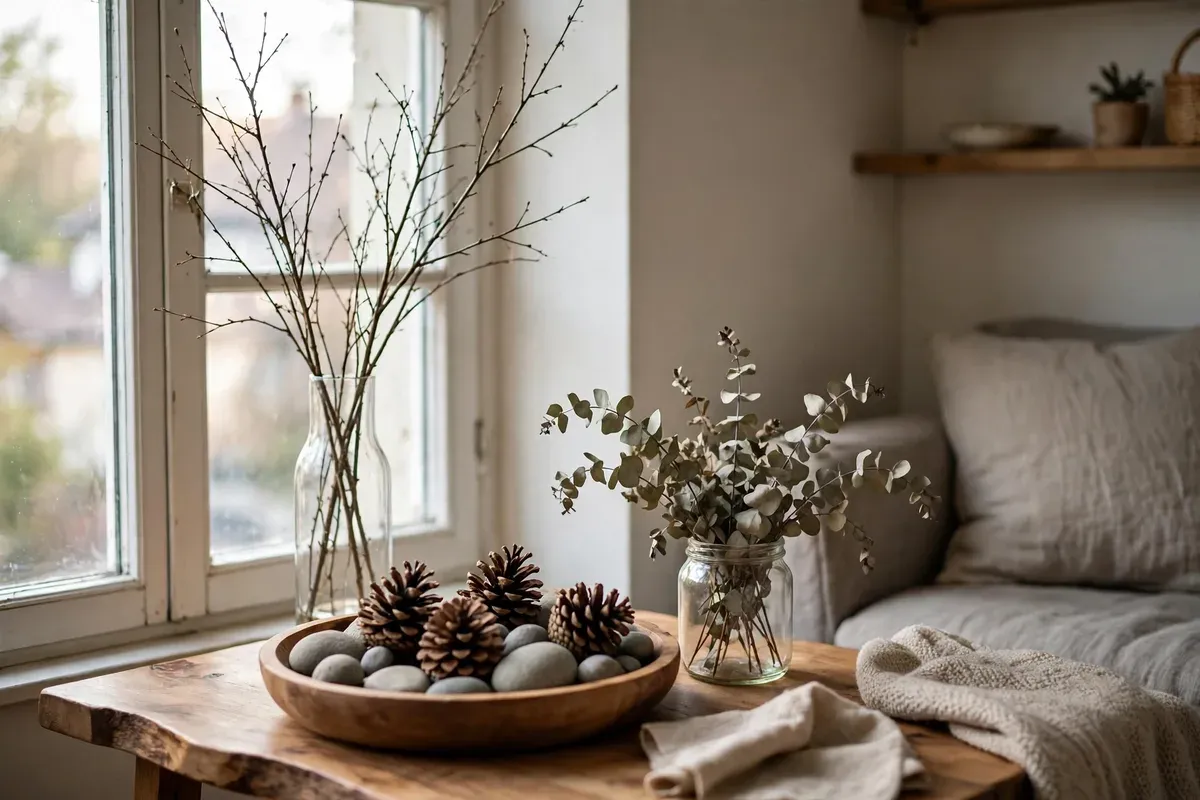
The best free decor grows outside, and a walk with a tote bag can fill a sideboard for nothing. Tall bare branches in a glass vase give a room height that a 30 dollar decor object would, pinecones in a wooden bowl add texture to a coffee table, and smooth stones in a shallow dish work on a bathroom shelf. Cut branches to about 24 inches so they clear the shelf above, and keep the arrangement to one vase per room so it reads as a choice, not a pile of yard waste.
Clean everything before it comes inside: rinse branches and stones, bake pinecones at 200 degrees for 30 minutes to kill insects, and let them dry fully before arranging. Spray branches with a clear matte sealant if you want them to last a season without shedding, which costs about 6 dollars a can and covers a dozen stems. Swap the pieces with the seasons, green branches in spring, pinecones in winter, which keeps the apartment feeling fresh for the price of a walk.
14. Spot the good finds on the marketplace
Online marketplaces are where the best budget furniture lives, but only if you can tell a good find from a bad one in a photo. Search for solid wood, real leather, and brand names you know, and skip anything listed as flat-pack, particle board, or assembled, since those pieces rarely survive a move. A solid wood dresser listed for 40 dollars is a better buy than a new one at 150 dollars, because the wood alone is worth more than the price.
Ask the seller three things before you drive over: the exact measurements, whether the piece comes from a smoke-free home, and why they are selling it. Measure your doorway and the elevator first, since a 36 inch wide dresser does not fit through a 30 inch door, and bring a friend and a blanket for the car. Check the piece in person before paying, open the drawers, sit on the chair, and walk away if anything wobbles or smells, because another good find will be listed tomorrow. Our where to find cheap home decor lists the best sources for secondhand pieces if you want more places to search.
15. Paint one wall instead of the whole room
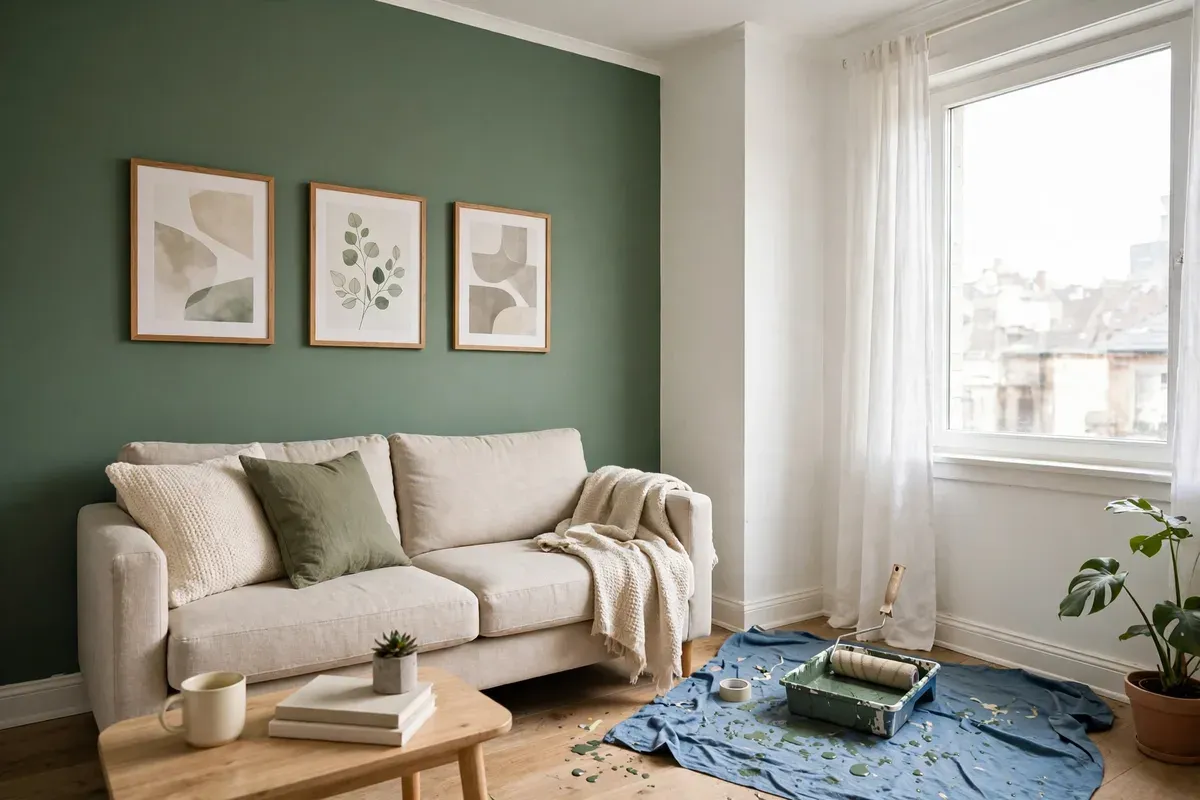
One painted accent wall gives a room a color story for the price of a single quart, about 15 to 25 dollars, while painting the whole room costs four times as much and takes a full weekend. Pick the wall behind the sofa or the bed, since that is the wall the eye lands on, and choose a deep muted tone like sage green, dusty blue, or warm terracotta, which looks expensive in small doses and flat when it covers every wall.
Prep the wall properly even though it is only one wall: wash it with a damp cloth, tape the edges with painter’s tape, and lay a drop cloth, since paint on the floor costs more time than the painting itself. Two thin coats beat one thick coat, and a 2 inch angled brush for the edges plus a small roller for the middle gives the cleanest finish. If you rent, check the lease first, and keep the leftover paint in a labeled jar, since the landlord will want the exact color for touch-ups.
16. Swap the bedding and the bedroom feels new
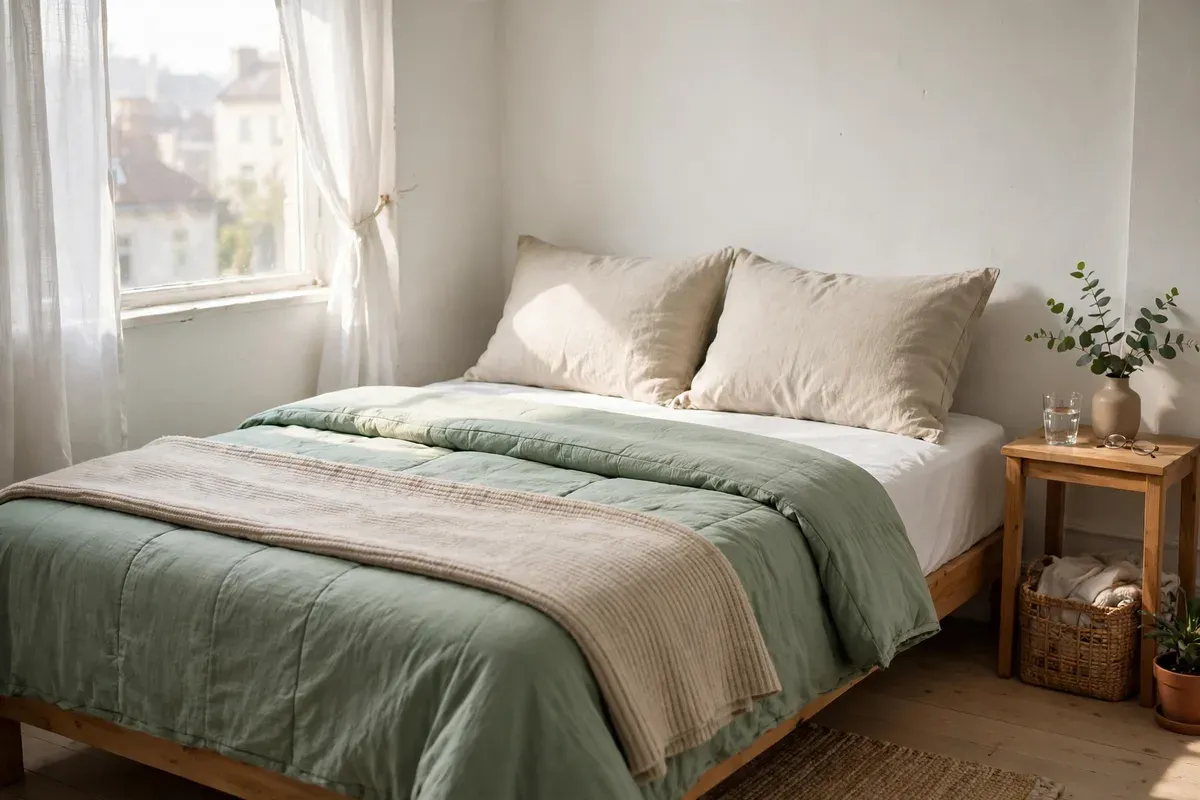
The bedroom is the easiest room to transform on a budget, because the bed is the whole room. A new bedding set in crisp white cotton, a duvet in a soft sage or dusty blue, and two linen pillowcases cost 50 to 70 dollars total, and the change is bigger than any wall art, since the bed takes up half the floor. White sheets with a colored duvet look more expensive than a patterned set, because the contrast reads as intentional rather than busy.
Iron or steam the pillowcases once, since crisp pillowcases are the detail that separates a hotel bed from a slept-in one. Fold a throw across the foot of the bed, about 18 inches from the edge, and add one cushion in a texture that matches the room, like a knit or a linen, not a shiny satin. Keep the bedside table clear except for a lamp and a book, since a made bed with a clear table looks finished, while a made bed with a crowded table looks like a storage shelf. Our first apartment checklist covers the bedroom basics to buy first if you are starting from an empty apartment.
17. Make thrifted lamps look intentional
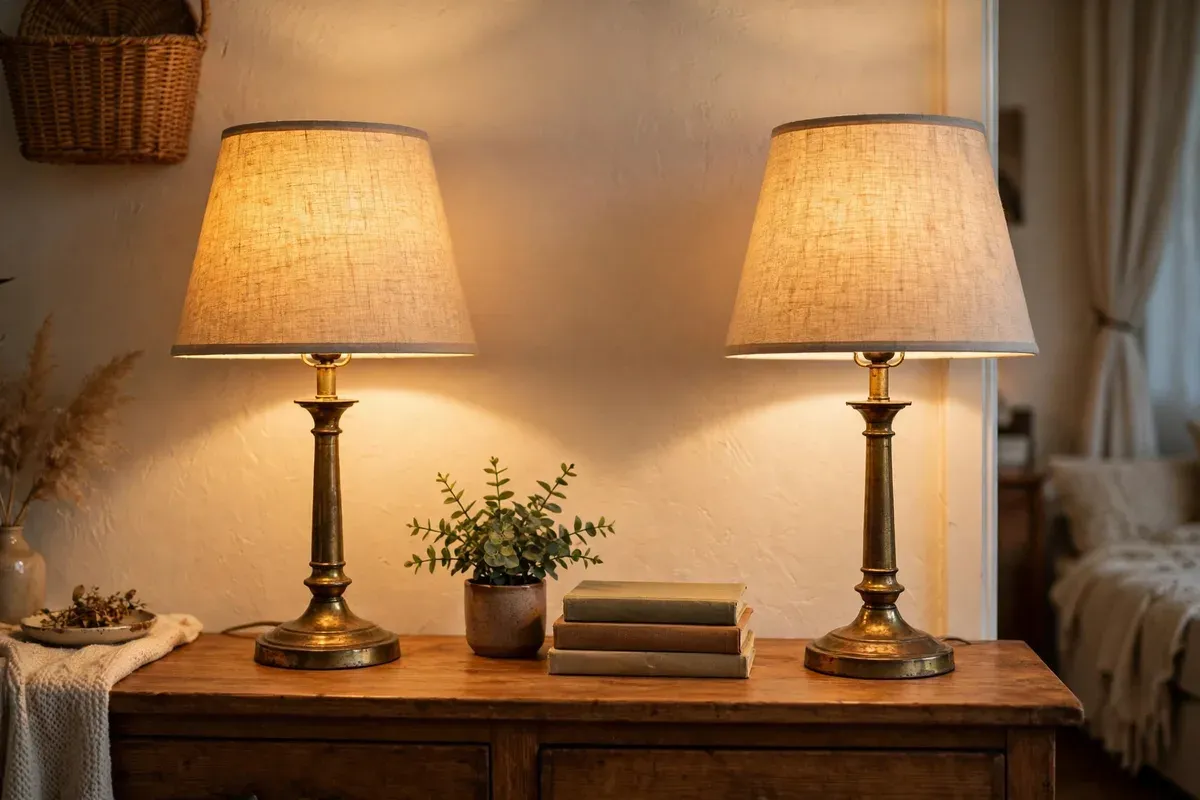
Thrifted lamps fail when they look like random leftovers, and they succeed when they look like a pair. Buy two lamps with the same shade shape, even if the bases are different, and put matching linen shades on both, which costs about 12 dollars per shade and ties them together instantly. Matching shades are the trick, because the eye reads the shades first and the bases second.
Set the lamps at the same height on either side of a sofa or on matching nightstands, and use warm white bulbs at 2700K in both, since mismatched color temperatures are what make a room feel off. Clean brass bases with a vinegar and salt paste, and spray-paint a chipped ceramic base in matte black or cream, which costs 6 dollars a can and makes a 5 dollar lamp look like a 40 dollar one. If the cord is frayed or the plug is cracked, replace the whole lamp, since no bargain is worth a fire risk. Our renter-friendly apartment wall ideas pair well with this, since good lamps and good walls are what make a rental feel finished.
Start with the room you see first
The fastest way to use this list is to pick the room you walk into every day and fix one thing in it this week. A rug in the living room, a slipcover on the sofa, or a single painted wall changes how the whole apartment feels, and the rest of the rooms can wait. Spend where the eye lands, buy solid pieces secondhand, and let the small things, the textiles, the greenery, the warm light, do the rest.
Apartment decorating on a budget is a slow build, not a shopping trip. One good thrifted piece a month, one room finished at a time, and by the end of the season the apartment looks collected instead of furnished, which is exactly the look that costs the most to buy new.
Where to spend first and what to skip
Spend first on the things you touch and sit on: the rug under your feet, the sofa you sit on every evening, and the lamp that lights the room. Those three pieces decide whether an apartment feels comfortable, and they are also the pieces where secondhand quality beats new budget quality by the widest margin. Our how to furnish a studio apartment shows the same order for the smallest spaces, and our small living room ideas cover layouts that make a tight living room feel bigger.
Skip the small decor objects until the big pieces are right. A 10 dollar vase on a bare shelf does nothing, while the same vase on a dressed sideboard finishes the room. Skip matching furniture sets, since a set bought in one afternoon is the fastest way to make a room look like a showroom, and skip anything that needs a drill or a landlord’s signature until the free and renter-friendly ideas are done. For more on finding the pieces themselves, our where to find cheap home decor lists the sources worth checking first.
Looking for more ideas? Browse our small space living stories.
Save to Pinterest