In this article
- 1. Rearrange Your Furniture for a Fresh Bedroom Layout
- 2. Paint One Wall to Create a New Focal Point
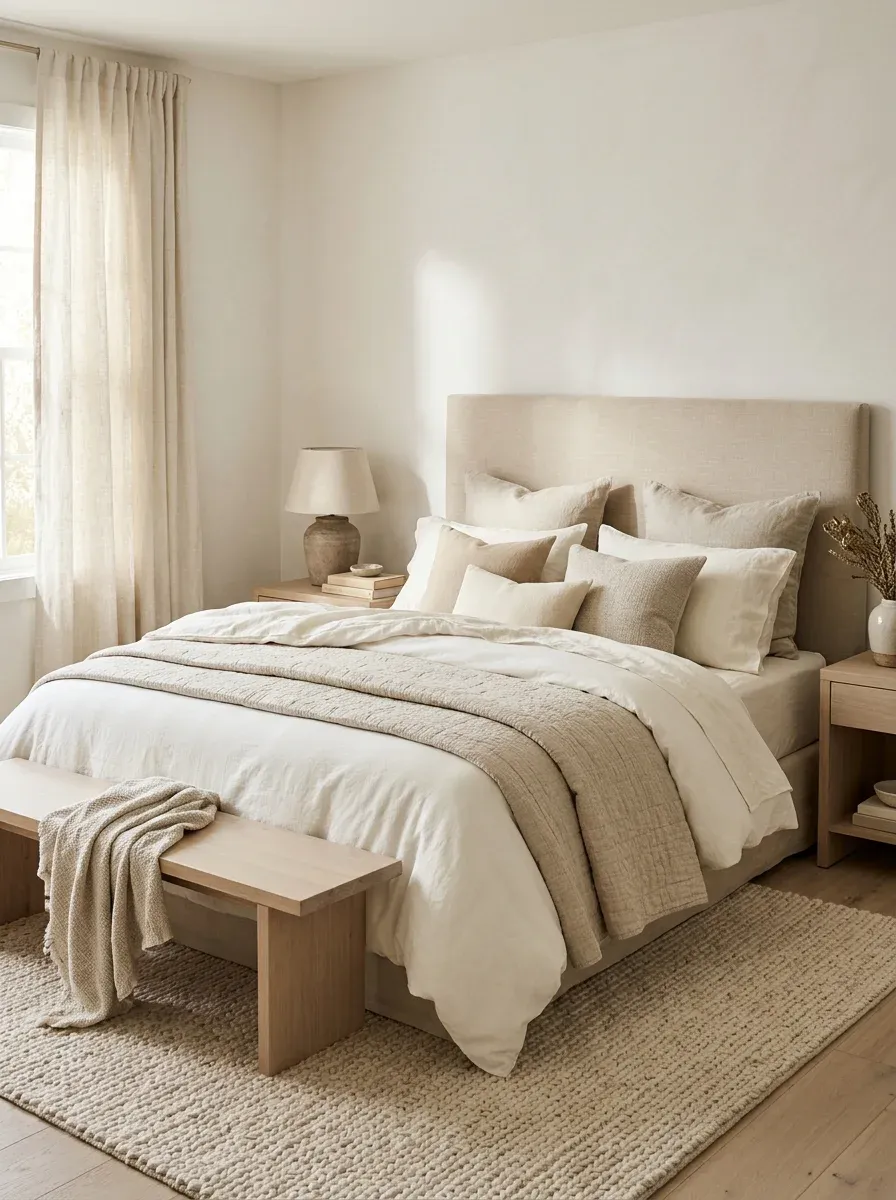
- 3. Refresh the Bed with New Bedding and Textures
- 4. Create a Simple DIY Upholstered Headboard
- 5. Give an Old Dresser or Bedside Furniture a Second Life
- 6. Improve the Atmosphere with Warm, Layered Lighting
- 7. Make the Walls Feel Finished with Affordable Artwork
- 8. Finish the Room with Curtains and a Well-Placed Rug
- How to Plan a Bedroom Makeover on a Budget
- Common Budget Bedroom Makeover Mistakes to Avoid
- Frequently Asked Questions
- How can I makeover my bedroom on a small budget?
- What is the cheapest way to make a bedroom look better?
- How can I make an old bedroom look modern without buying new furniture?
- What should I update first in a bedroom makeover?
- Can I makeover a bedroom without painting?
- Conclusion
A bedroom makeover does not have to mean buying a new bed, replacing every piece of furniture, or spending a large amount on a complete renovation. Sometimes, the biggest difference comes from changing the layout, refreshing a few tired surfaces, improving the lighting, and making better use of the things you already own.
The best budget bedroom makeover ideas focus on changes that are visible without being expensive. A freshly painted wall can give the room a new focal point, updated bedding can make an older bed feel more inviting, and a secondhand dresser can become a beautiful feature with a little attention. For more small-space styling, check our guides on small bedroom layout ideas and small bedroom storage ideas.
Whether your bedroom feels outdated, unfinished, or simply ready for a fresh look, these eight ideas can help you create a more comfortable and thoughtfully decorated space without starting from scratch.
1. Rearrange Your Furniture for a Fresh Bedroom Layout
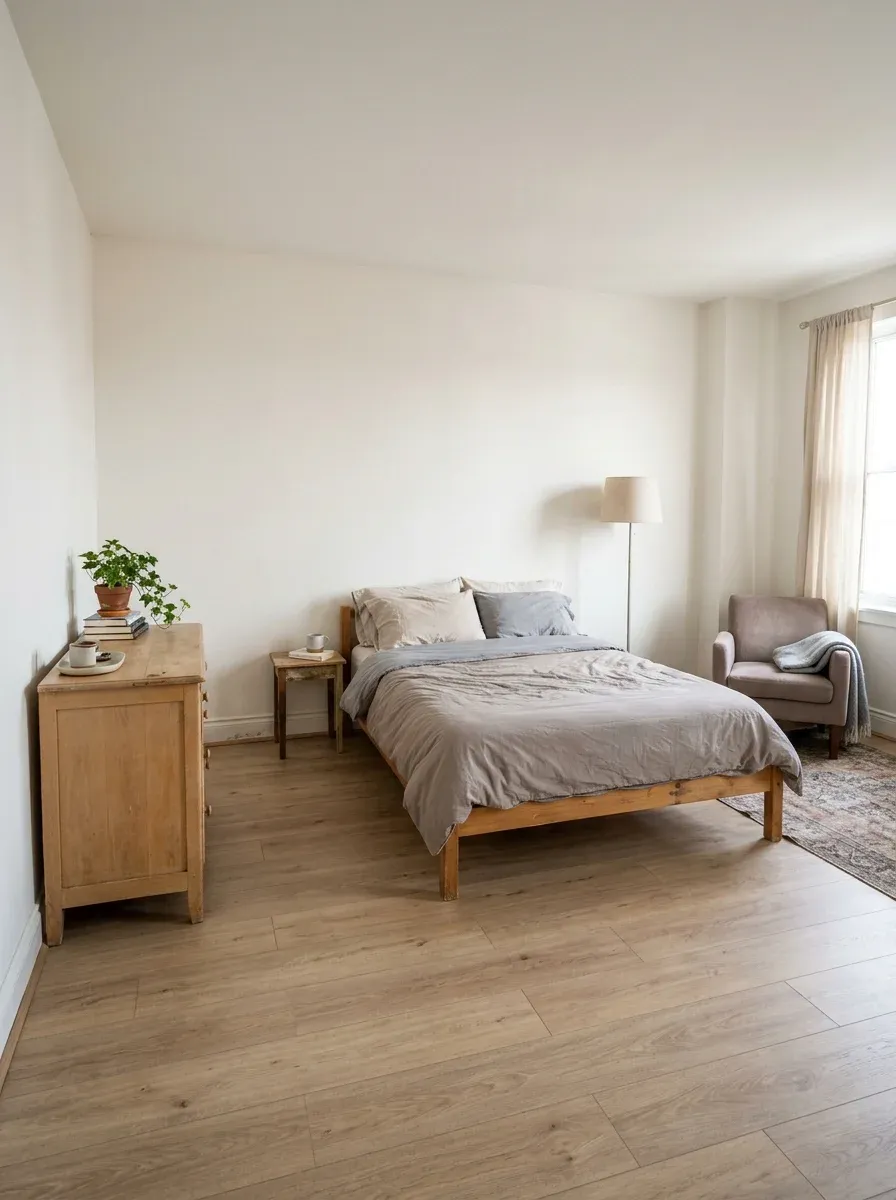
Before buying anything, look at the way your bedroom is arranged. A bed pushed against the wrong wall, furniture blocking natural light, or too many pieces competing for attention can make even a nicely decorated room feel uncomfortable.
Rearranging your existing furniture is one of the easiest budget bedroom makeover ideas because it costs nothing. It can also make the room feel more spacious and balanced.
Start by choosing the bed as the main focal point. In many bedrooms, placing it against the most suitable uninterrupted wall creates a natural center for the rest of the layout. Keep enough room to move comfortably around it, and avoid blocking doors, wardrobes, or windows.
Look at the other furniture with a critical eye. A chair that is rarely used, an extra table, or a decorative piece that makes the room feel crowded may be better placed in another room.
How to make this change work:
- Try a different bed position before moving smaller furniture.
- Keep the main walking paths clear.
- Move furniture away from windows when it blocks natural light.
- Remove pieces that do not serve a useful or decorative purpose.
- Take a photograph of the room before and after rearranging it to compare the difference.
Budget tip: Test more than one arrangement before purchasing storage or furniture. You may discover that the room already has enough space and only needs a more practical layout.
2. Paint One Wall to Create a New Focal Point
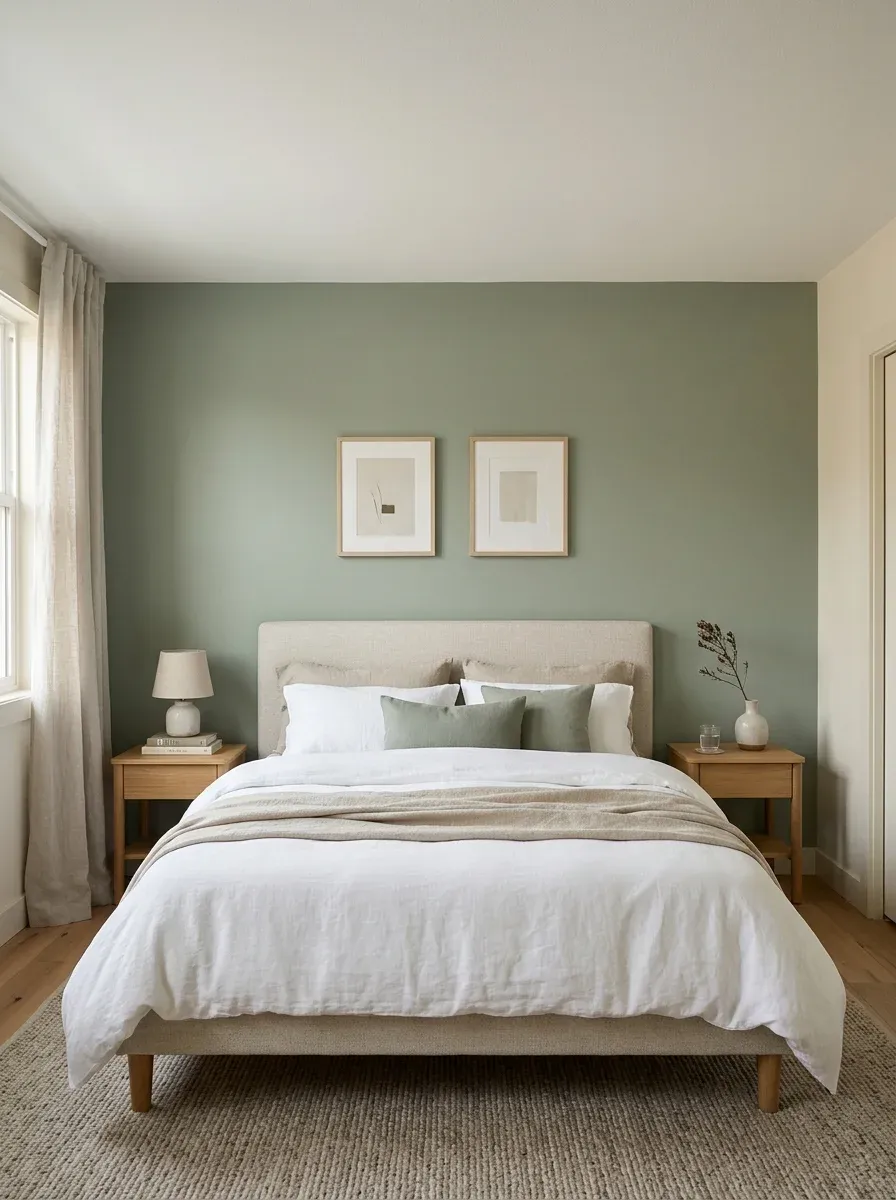
A fresh coat of paint can change the atmosphere of a bedroom without requiring a complete room renovation. Instead of painting every wall, focus on the wall behind the bed or another area that naturally attracts attention.
A carefully chosen accent wall gives the room more depth and makes the furniture feel more connected to the overall design.
For a calm bedroom, consider muted sage, warm beige, soft greige, dusty blue, or a gentle clay shade. Deeper colors such as olive green, charcoal, or muted burgundy can create a more dramatic look when balanced with lighter bedding and simple furniture.
Before choosing a color, consider the existing floor, furniture, curtains, and natural light. The paint should work with these elements rather than make the room feel disconnected.
How to create a polished accent wall:
- Choose the wall that deserves the most attention, usually the wall behind the bed.
- Test a few paint samples in different lighting conditions.
- Prepare the surface by cleaning it and filling small holes.
- Protect the floor, furniture, and nearby trim.
- Apply the paint evenly and allow it to dry according to the manufacturer’s instructions.
If painting is not suitable for your home, removable wallpaper can offer another way to introduce a pattern or subtle texture. Check the manufacturer’s instructions and test a small area before applying it to a larger surface.
Budget tip: Painting one wall instead of the entire room helps limit the amount of paint and preparation required while still making a noticeable visual change.
3. Refresh the Bed with New Bedding and Textures
The bed usually occupies the largest visual area in a bedroom, so refreshing it can make the entire room feel different. You do not need an expensive bedroom furniture set or a completely new mattress to create a more inviting look.
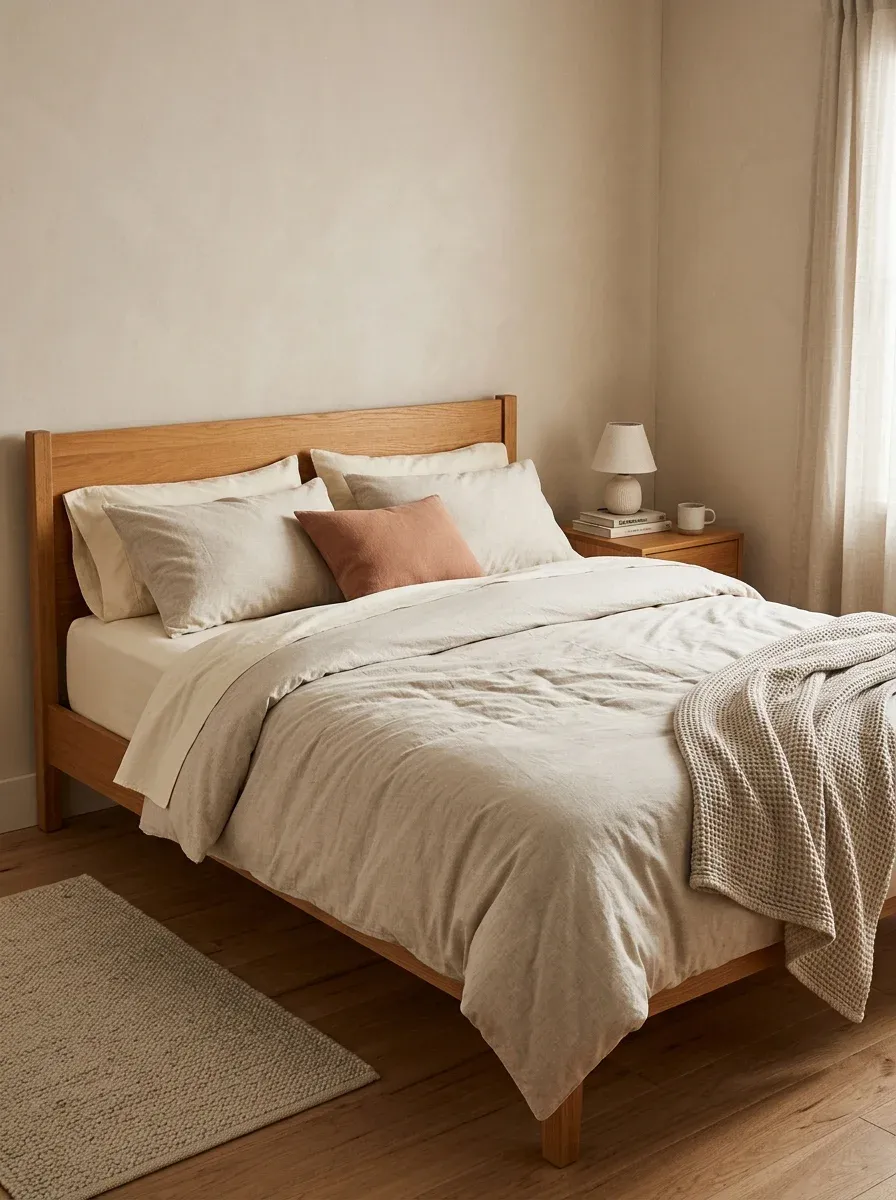
Start with the main bedding. A simple duvet cover in a fresh color can make an older bed feel updated. Add a textured throw or a small selection of coordinating cushions for a more finished appearance. Explore our curated bedding combinations for timeless color pairings.
For a relaxed, timeless bedroom, try a combination of warm white, oatmeal, and soft taupe. If you prefer more color, consider muted blue, olive, dusty rose, or terracotta.
The key is to keep the color palette controlled. Too many competing patterns can make the bed look busy, while a few carefully selected textures add depth.
How to refresh your bed affordably:
- Wash and neatly arrange the bedding you already own.
- Replace only the most visibly worn item first.
- Choose a duvet cover that works with your existing furniture and wall color.
- Add one textured throw at the foot of the bed.
- Use a limited number of cushions instead of filling the bed with decorative pillows.
Budget tip: Shop for a duvet cover or throw that updates your existing bedding rather than replacing every textile at once. A single well-chosen change can have more impact than several unrelated purchases.
4. Create a Simple DIY Upholstered Headboard
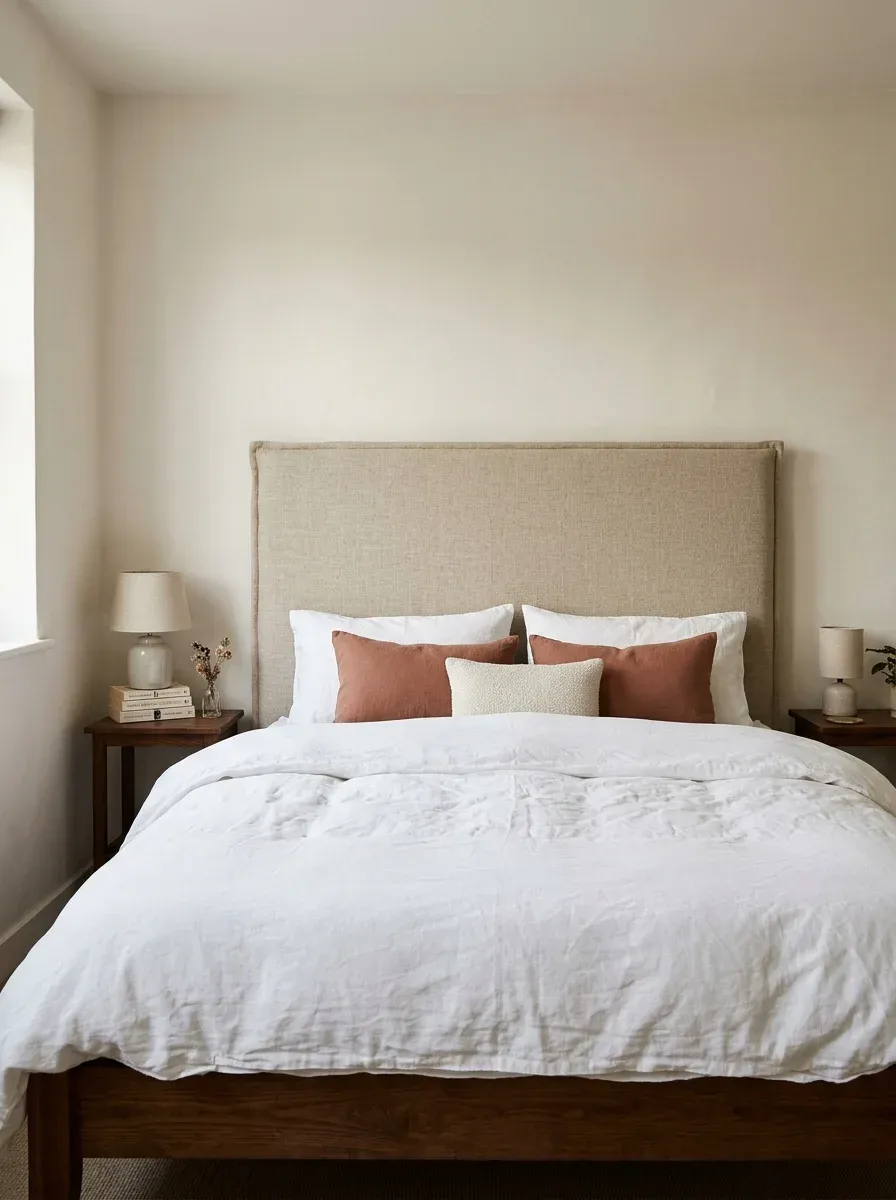
A headboard can make a bedroom feel more complete, but an expensive upholstered bed is not necessary to achieve that look. A simple DIY headboard can give the bed a finished appearance while allowing you to choose the size, fabric, and color.
For a soft upholstered effect, use a suitable backing board, padding, and upholstery fabric. Choose a neutral fabric such as linen-look cotton, textured cream, taupe, or muted olive. These shades are easy to coordinate with different bedding styles.
You can also create a more minimal look with a painted wooden panel or a pair of fabric-covered panels mounted behind the bed.
A basic DIY approach:
- Measure the width of the bed and decide how high you want the headboard to appear.
- Select a suitable backing material and have it cut to the required size.
- Add even padding if you want a soft upholstered finish.
- Stretch the fabric smoothly over the front and secure it neatly at the back.
- Mount or position the finished headboard using a method appropriate for its weight and your wall type.
For a secure installation, use suitable wall fixings and follow the manufacturer’s guidance. If you are renting, check your agreement before drilling into walls.
Budget tip: A simple fabric panel can provide the look of a custom headboard without requiring a completely new bed frame.
5. Give an Old Dresser or Bedside Furniture a Second Life
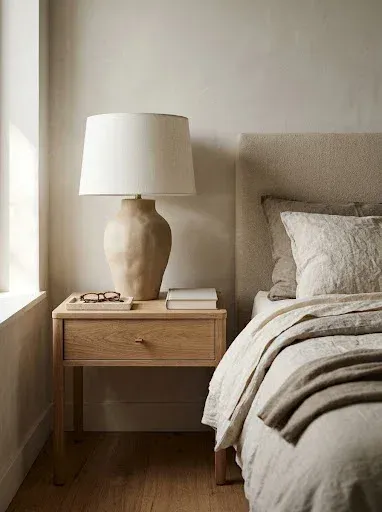
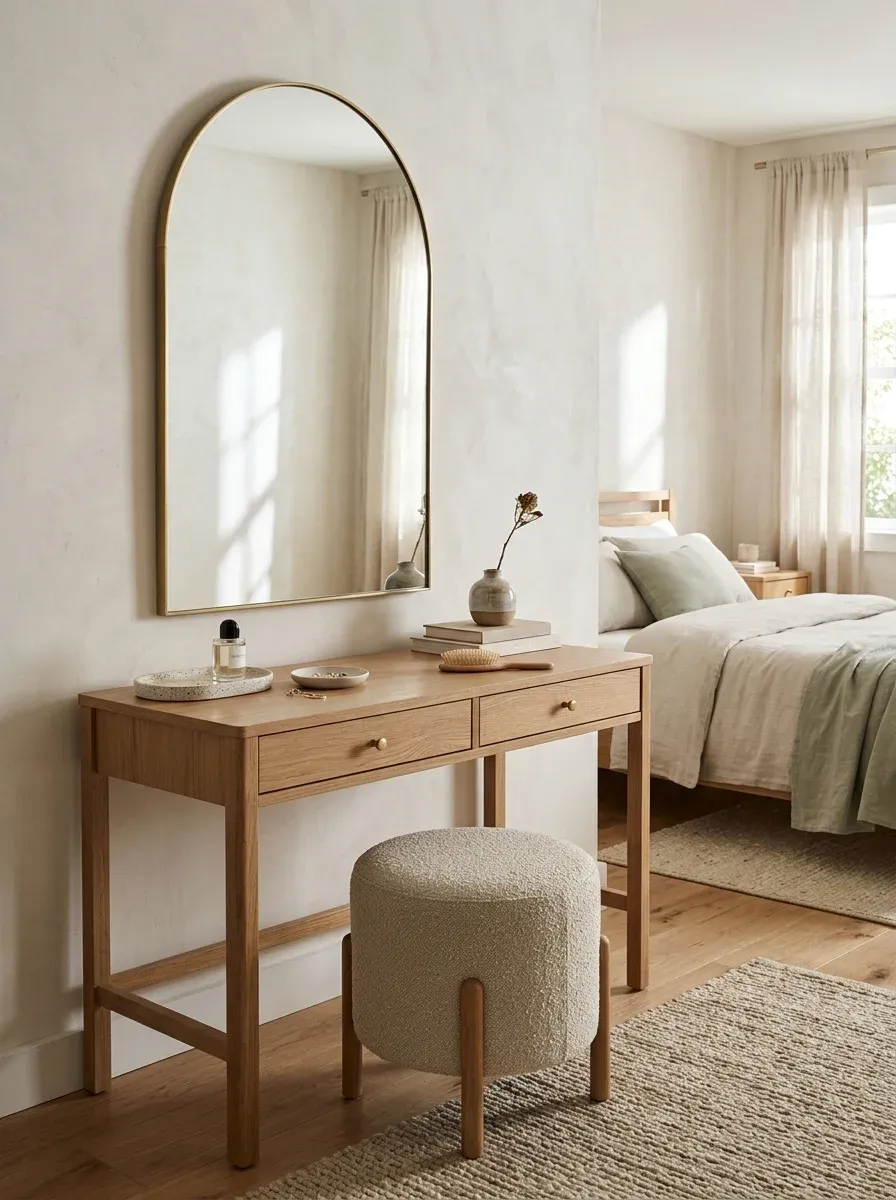
Replacing bedroom furniture can quickly increase the cost of a makeover. Before shopping for new pieces, consider whether your existing dresser, bedside cabinet, or small chest of drawers could be improved. You can also integrate ideas from our guide on bedside table decor ideas or styling a compact bedroom vanity.
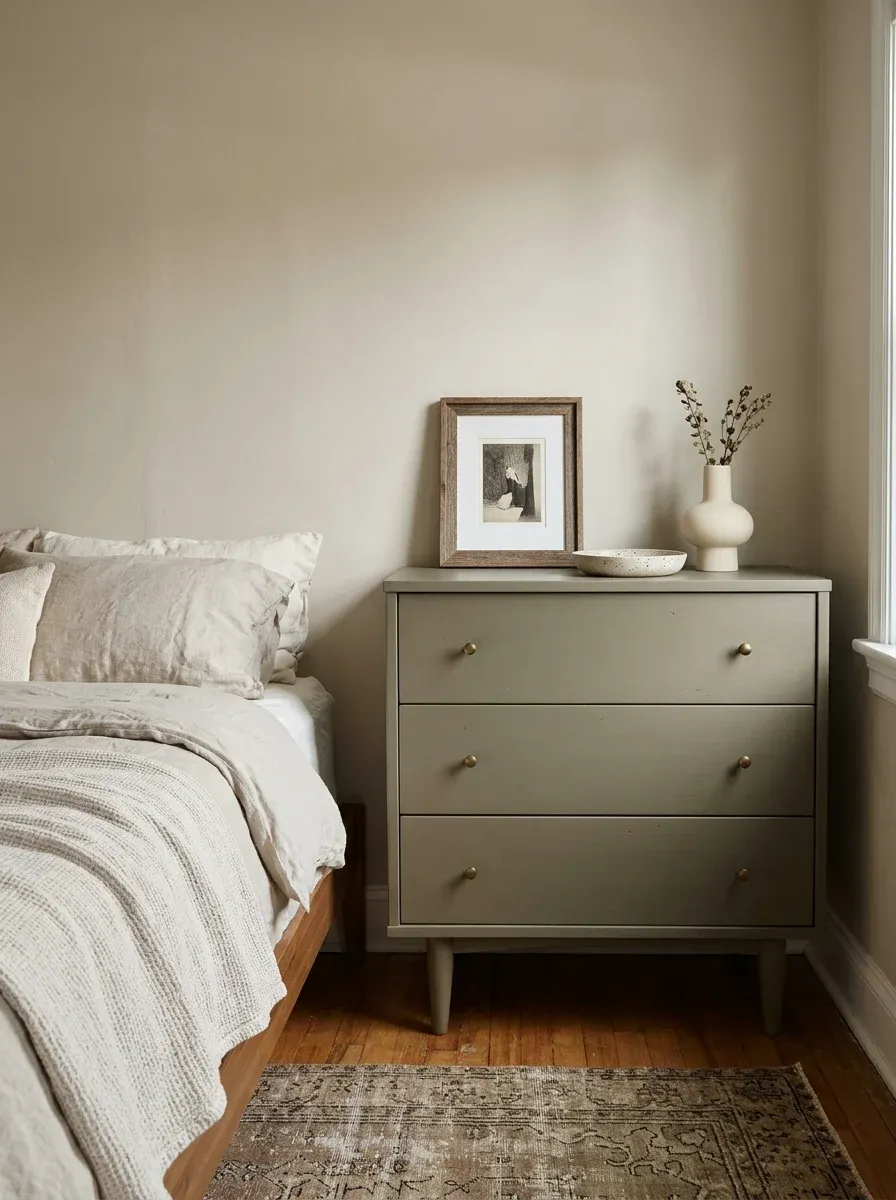
Furniture that looks dated may only need cleaning, a fresh finish, or a small hardware update. Changing old handles can make a traditional dresser feel more modern, while sanding and repainting a suitable piece can give it a completely different appearance.
For a calm, contemporary bedroom, consider warm white, soft greige, muted green, or a natural wood finish. If you prefer a more characterful space, leave the wood visible and update only the hardware.
Ways to refresh existing furniture:
- Clean the piece thoroughly before deciding what needs to change.
- Replace worn handles with a style that suits the room.
- Use furniture paint that is suitable for the existing surface.
- Sand and refinish damaged wood where appropriate.
- Check secondhand furniture for strong construction before bringing it home.
Always follow the product instructions for sanding, priming, painting, ventilation, and drying time. Some finishes need more preparation than others.
Budget tip: Try updating one furniture piece first. A refreshed dresser can become a feature in the room without the cost of replacing an entire furniture set.
6. Improve the Atmosphere with Warm, Layered Lighting
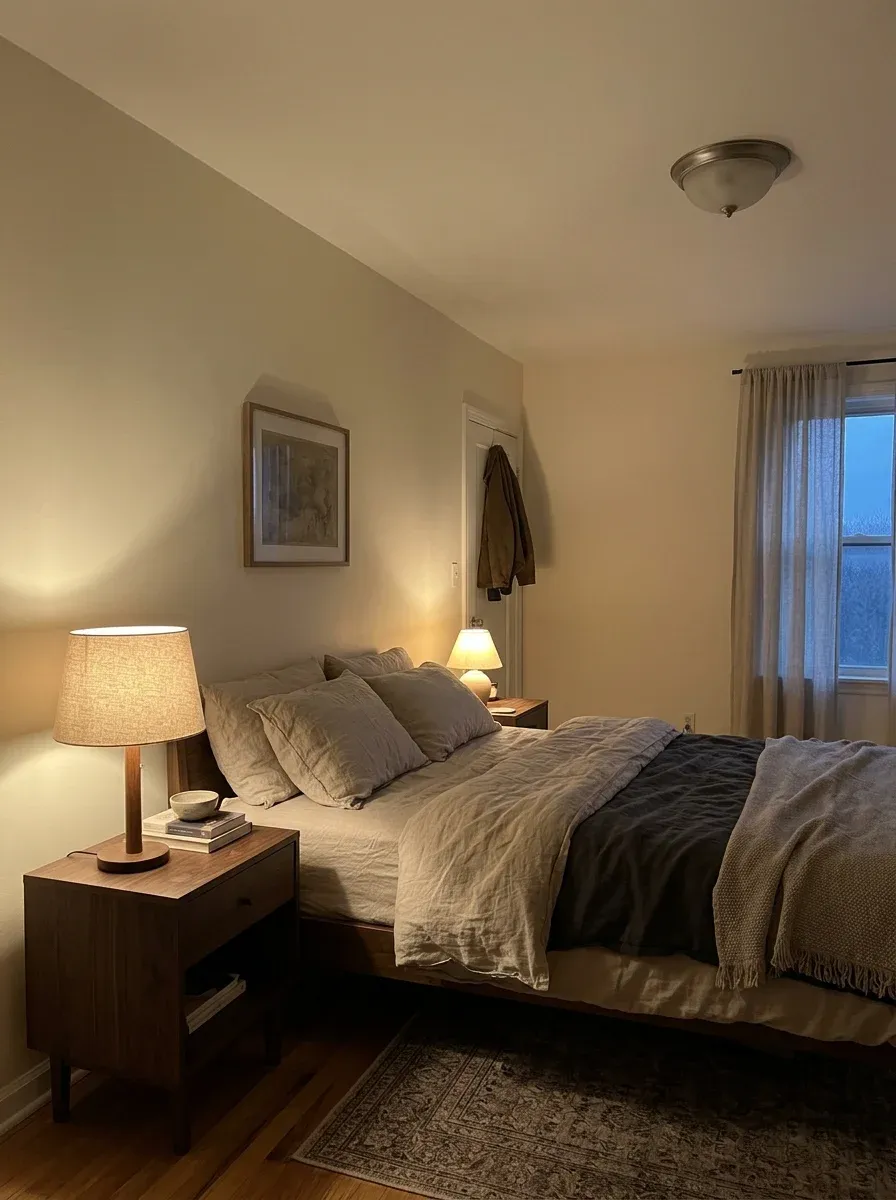
Lighting has a strong effect on how a bedroom feels. A single bright ceiling light can make the room feel flat, especially in the evening. Adding a few smaller light sources creates a softer and more comfortable atmosphere.
You do not necessarily need new electrical fixtures. A table lamp, floor lamp, or suitable plug-in wall light can add warmth and make different areas of the bedroom more useful.
Choose bulbs with a warm color temperature for a relaxed evening feel. Look for lampshades that soften the light rather than allowing a harsh bulb to shine directly into the room.
How to improve bedroom lighting on a budget:
- Use an existing table lamp in a more visible position.
- Replace a harsh bulb with a suitable warm-toned bulb.
- Choose a lampshade that complements the room’s color palette.
- Add a floor lamp in a darker corner if there is enough space.
- Use bedside lighting for reading instead of relying only on overhead lighting.
Keep the lighting balanced. One very bright lamp next to several dim areas can feel uneven, so think about how the room looks from the bed and from the doorway.
Budget tip: Start by changing the bulbs and lampshades you already have. These small adjustments can make the bedroom feel noticeably more welcoming.
7. Make the Walls Feel Finished with Affordable Artwork
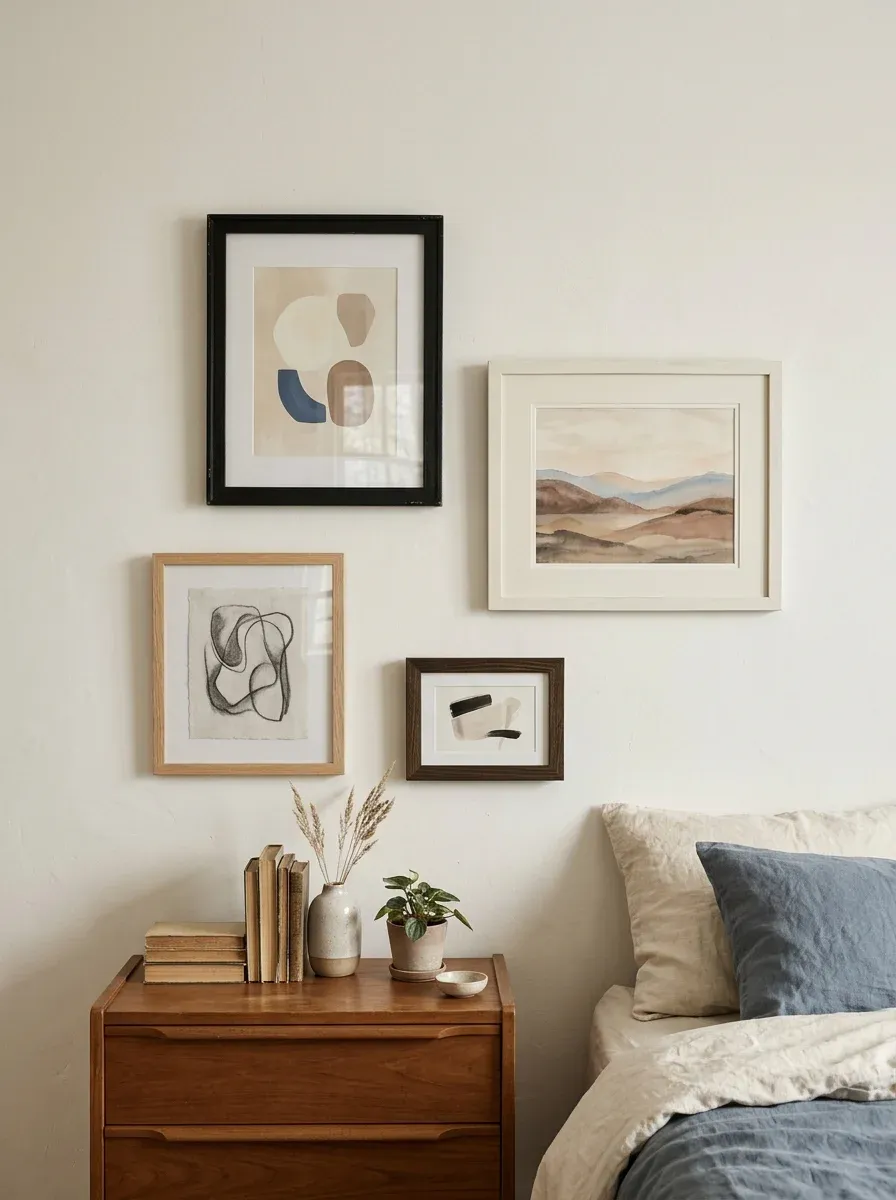
Bare bedroom walls can make a room feel unfinished, but decorating them does not require expensive original artwork. A few well-chosen prints, photographs, or secondhand frames can create a personal and polished display.
Choose artwork that connects with the colors already in the room. Soft landscapes, abstract shapes, botanical illustrations, and simple monochrome prints can all work well, depending on the style you prefer.
Rather than filling every empty wall, choose one area and make it feel intentional. A pair of matching frames above a dresser or a balanced arrangement behind a reading chair can be enough.
Affordable ways to decorate bedroom walls:
- Print artwork you are legally allowed to use.
- Reuse frames from another room.
- Paint an inexpensive frame to match the bedroom.
- Create a simple two- or three-frame arrangement.
- Use one larger piece instead of several tiny decorations.
Before hanging anything, place the frames on the floor and experiment with the spacing. This helps you find an arrangement that looks balanced before making holes in the wall.
Budget tip: Reusing frames and changing only the prints is an inexpensive way to give familiar decor a new appearance.
8. Finish the Room with Curtains and a Well-Placed Rug
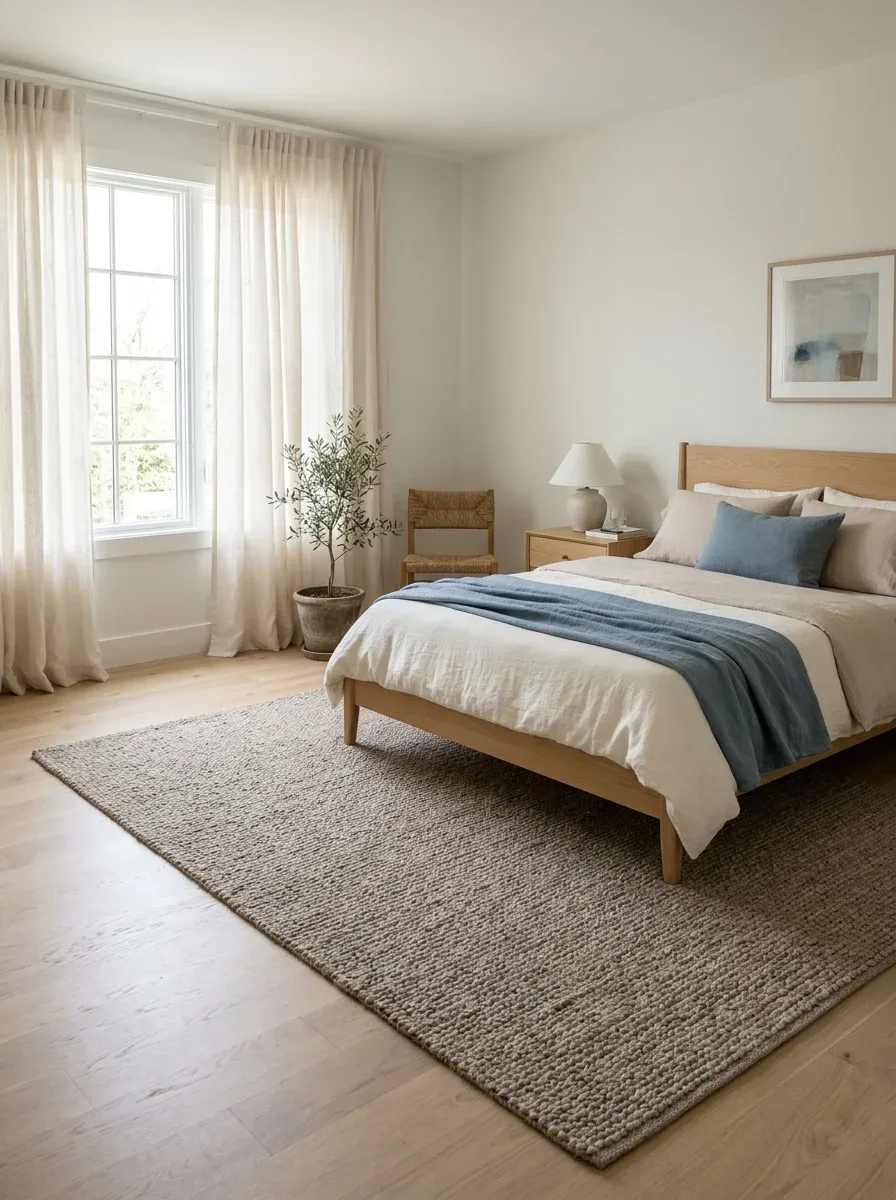
Curtains and rugs may seem like small finishing details, but they can make a bedroom feel more complete. They soften hard surfaces, add texture, and help connect the bed, furniture, and wall colors.
Curtains that hang too short or rugs that are too small can make a room feel visually unbalanced. When possible, choose curtains that fall close to the floor and a rug large enough to relate properly to the bed.
For a soft, neutral bedroom, consider cream or warm beige curtains with a subtly textured rug. A patterned rug can add character to a simpler room, while plain curtains help keep the overall look calm.
How to choose these finishing pieces:
- Measure the window before purchasing curtains.
- Choose a curtain length that suits the window and ceiling height.
- Select a rug that extends far enough around the bed to feel intentional.
- Use color and texture to connect the rug with the bedding or accent wall.
- Avoid adding too many strong patterns in the same space.
If you already own a rug or curtains in good condition, try moving them from another room before buying replacements.
Budget tip: Prioritize the item that looks most out of place. Replacing just the curtains or adding a suitable rug may be enough to make the bedroom feel finished.
How to Plan a Bedroom Makeover on a Budget
A bedroom makeover is easier to manage when you decide what needs attention before buying anything. Without a plan, it is easy to spend money on decorative items while overlooking the changes that would make the biggest difference.
Use this simple process to organize your makeover:
- Decide what is not working: Look at the bedroom as it is today. Does it feel too crowded, too dark, unfinished, or outdated? Identify the main issue instead of trying to change everything at once.
- Set a spending limit: Decide how much you can comfortably spend. Keep a small portion available for practical items you may discover you need during the process, such as paint supplies or suitable hardware.
- Separate free changes from purchases: Start with rearranging furniture, editing unnecessary items, cleaning surfaces, and restyling what you already own. These steps can reveal what the room actually needs.
- Choose one main visual change: This might be a painted wall, refreshed bedding, a DIY headboard, or updated furniture. Make this the main focus of your budget rather than buying several unrelated accessories.
- Add finishing details slowly: Once the larger changes are complete, look at lighting, artwork, curtains, and rugs. Add only what improves the room instead of filling every empty surface.
Common Budget Bedroom Makeover Mistakes to Avoid
- Buying decor before deciding on a color palette: A collection of attractive items can still look disconnected when the colors do not work together. Choose a small group of colors first, then use them to guide your bedding, artwork, and accessories.
- Replacing furniture that could be updated: A scratched dresser or dated bedside cabinet may still be perfectly useful. Consider cleaning, repainting, or changing the hardware before replacing it.
- Choosing a rug that is too small: A tiny rug can look lost beside a large bed. Measure the available floor area and consider how the rug will sit in relation to the bed and nearby furniture.
- Using only overhead lighting: A single ceiling light often creates a flat appearance. Add softer light sources where they are useful, particularly near the bed or in a reading corner.
- Spending the whole budget on decorative accessories: Small decorations can be enjoyable to buy, but they do not always solve the main problem. Prioritize the layout, wall finish, bedding, lighting, and furniture condition first.
- Trying to change everything at once: A bedroom makeover does not have to happen in one weekend. Complete one change, see how it affects the room, and decide what is still missing.
Frequently Asked Questions
How can I makeover my bedroom on a small budget?
Start with free changes such as rearranging furniture, removing unnecessary items, and restyling what you already own. Then choose one affordable improvement, such as painting a focal wall, refreshing the bedding, or updating a dresser.
What is the cheapest way to make a bedroom look better?
Rearranging furniture, decluttering, washing and restyling bedding, and improving the lighting you already have are practical starting points. These changes cost little or nothing and can make the room feel more intentional.
How can I make an old bedroom look modern without buying new furniture?
Use a consistent color palette, update tired furniture finishes, improve the lighting, and simplify the decor. A fresh wall color and better styling can help older furniture feel more coordinated.
What should I update first in a bedroom makeover?
Start with the feature that has the greatest effect on the room. For many bedrooms, this is the furniture arrangement, the wall behind the bed, or the bedding. Choose based on what currently makes the space feel least comfortable or attractive.
Can I makeover a bedroom without painting?
Yes. You can refresh the room with new bedding, improved lighting, artwork, updated furniture hardware, curtains, and a rug. Removable wallpaper may also be an option where it is suitable for the wall surface.
Conclusion
A beautiful bedroom makeover does not need a large budget or a completely new set of furniture. Often, the most effective changes are the ones that make the room feel more balanced, comfortable, and personal.
Start by rearranging what you already own, then focus on one visible improvement such as a painted accent wall, refreshed bedding, or a DIY headboard. Once those changes are complete, use lighting, artwork, curtains, and a rug to bring the room together.
The best budget bedroom makeover is not about buying the most things. It is about making thoughtful choices that help your bedroom feel like a space you enjoy coming back to.
Looking for more ideas? Browse our living room & bedroom stories.
Save to Pinterest