In this article
- 1. Add a warm, washable kitchen runner
- 2. Style one small countertop corner
- 3. Use wood accents to warm plain cabinets
- 4. Hang one small piece of kitchen wall art
- 5. Introduce sage green or olive accents
- 6. Choose attractive everyday kitchen textiles
- 7. Try a removable backsplash accent where suitable
- 8. Improve lighting without rewiring
- 9. Bring in one small herb plant or greenery
- 10. Coordinate countertop accessories
- 11. Refresh cabinet hardware when permitted
- 12. Decorate above cabinets selectively
- 13. Style a small open shelf
- 14. Make the sink area look intentional
- 15. Repeat one or two accent finishes
- 16. Make a cozy breakfast or coffee corner
- 17. Choose a simple palette for the whole kitchen
- How to decorate a small kitchen on a budget
- How to make a small rental kitchen feel more personal
- What colors make a small kitchen feel more inviting?
- How to decorate kitchen countertops without creating clutter
- Small kitchen decorating mistakes
A small kitchen can look tired even when its cabinets and appliances work perfectly well. A plain wall, mismatched towels, or a harsh evening light can change the whole impression of the room. You do not need to replace the cabinets to address any of those details.
These small kitchen decor ideas focus on what you see and touch every day: textiles, color, lighting, useful accessories, and a few carefully placed objects. Start with the areas visible from the doorway, then keep enough counter clear to cook. If the real problem is access inside cabinets, our small kitchen organization guide tackles that separately.
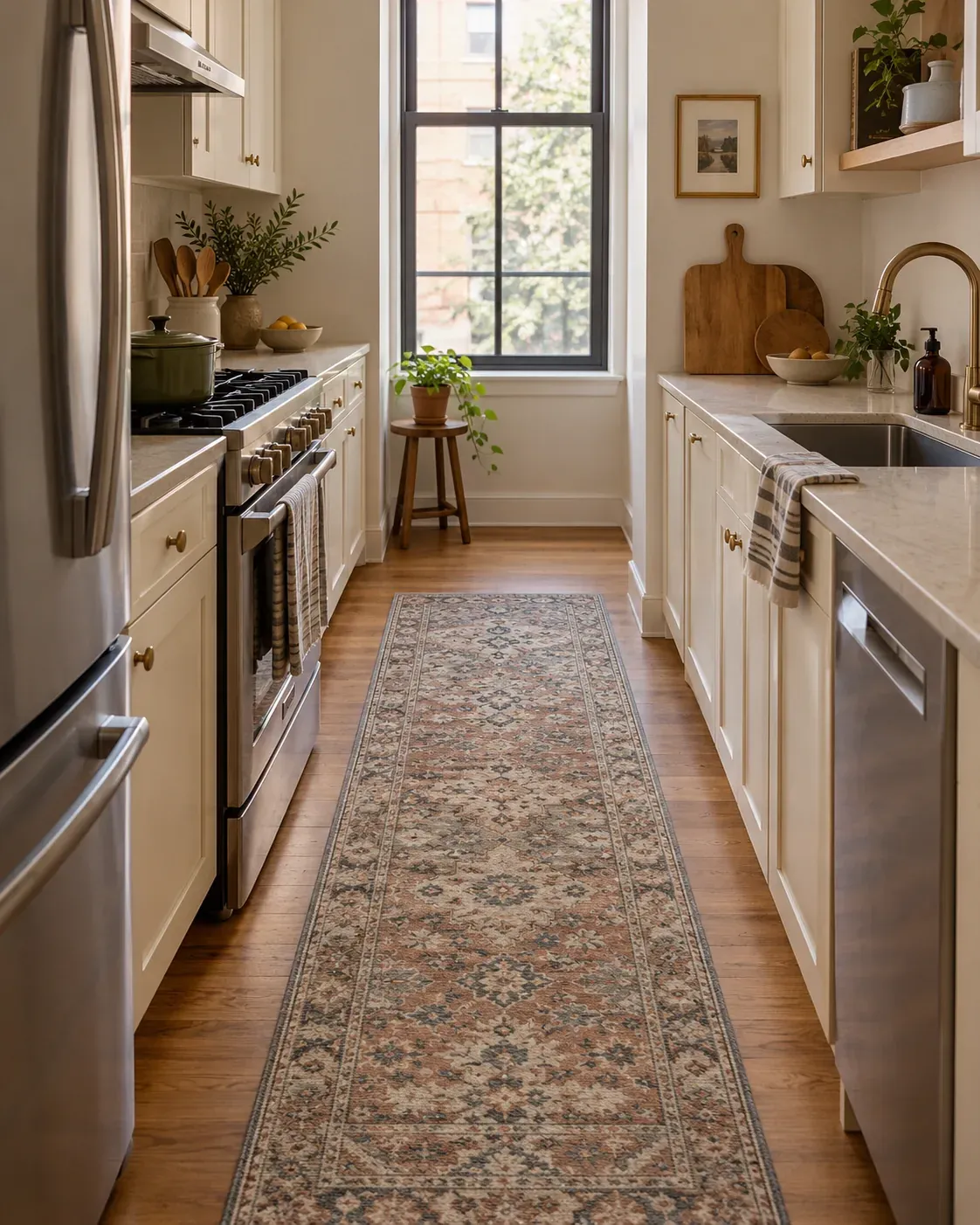
1. Add a warm, washable kitchen runner
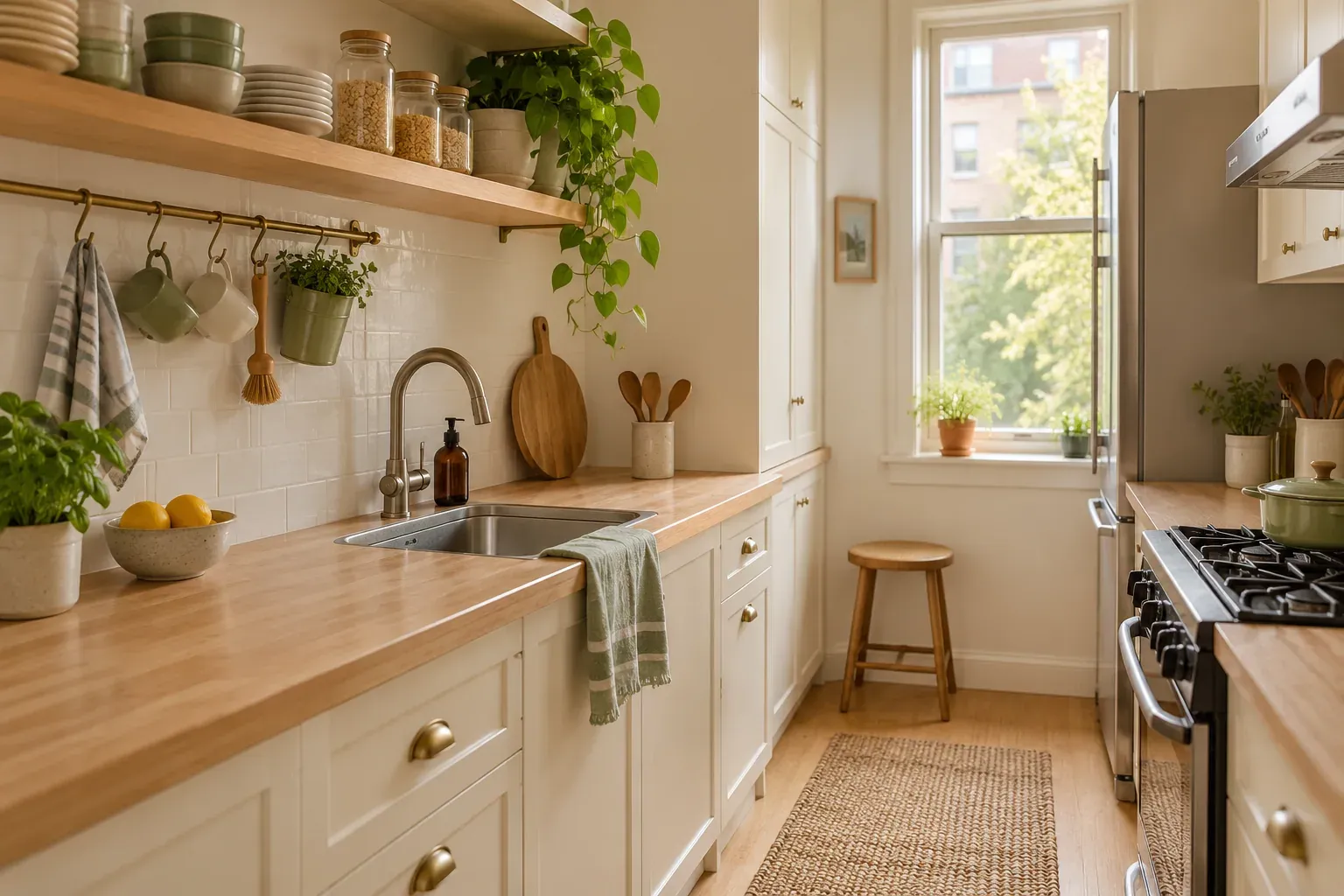
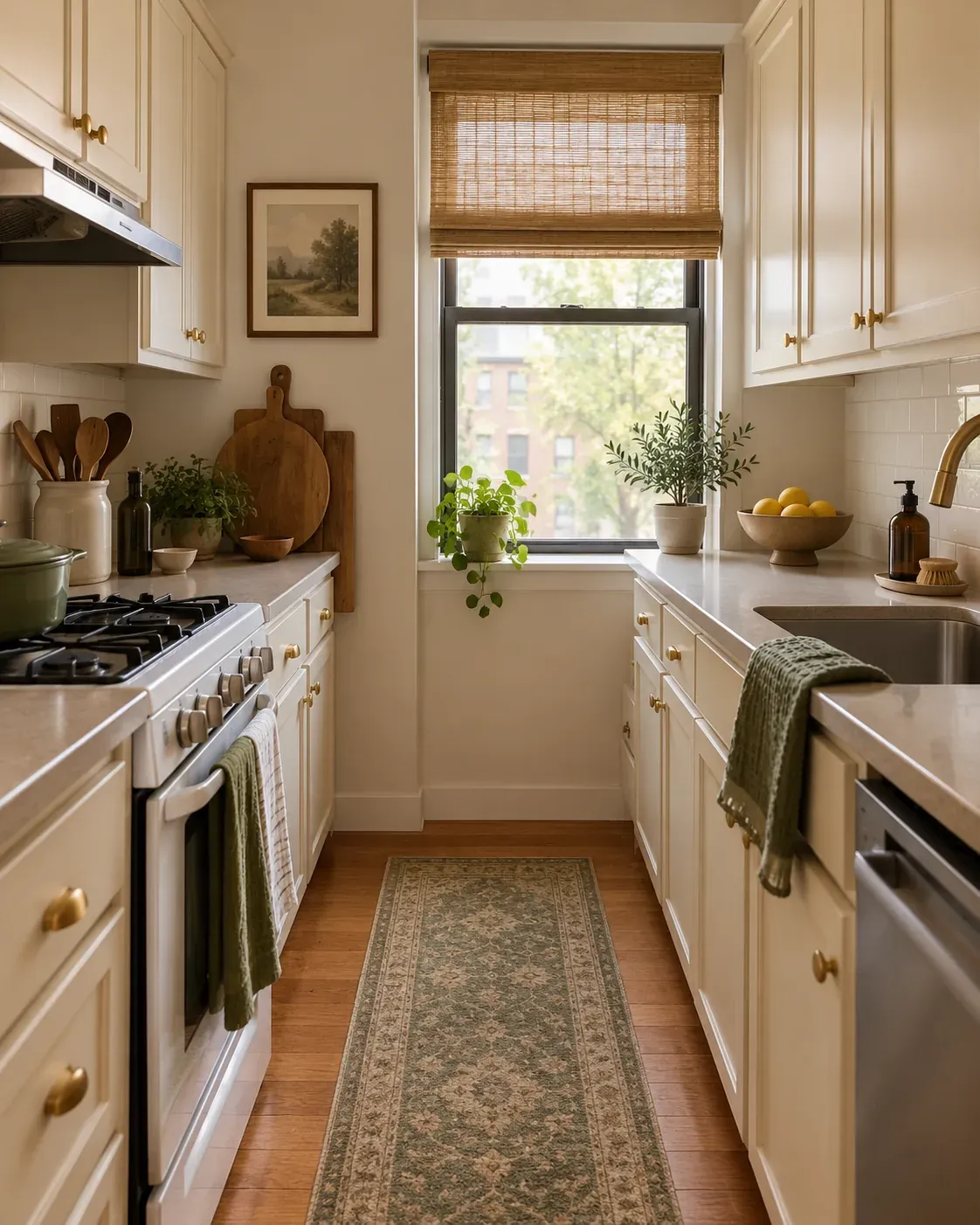
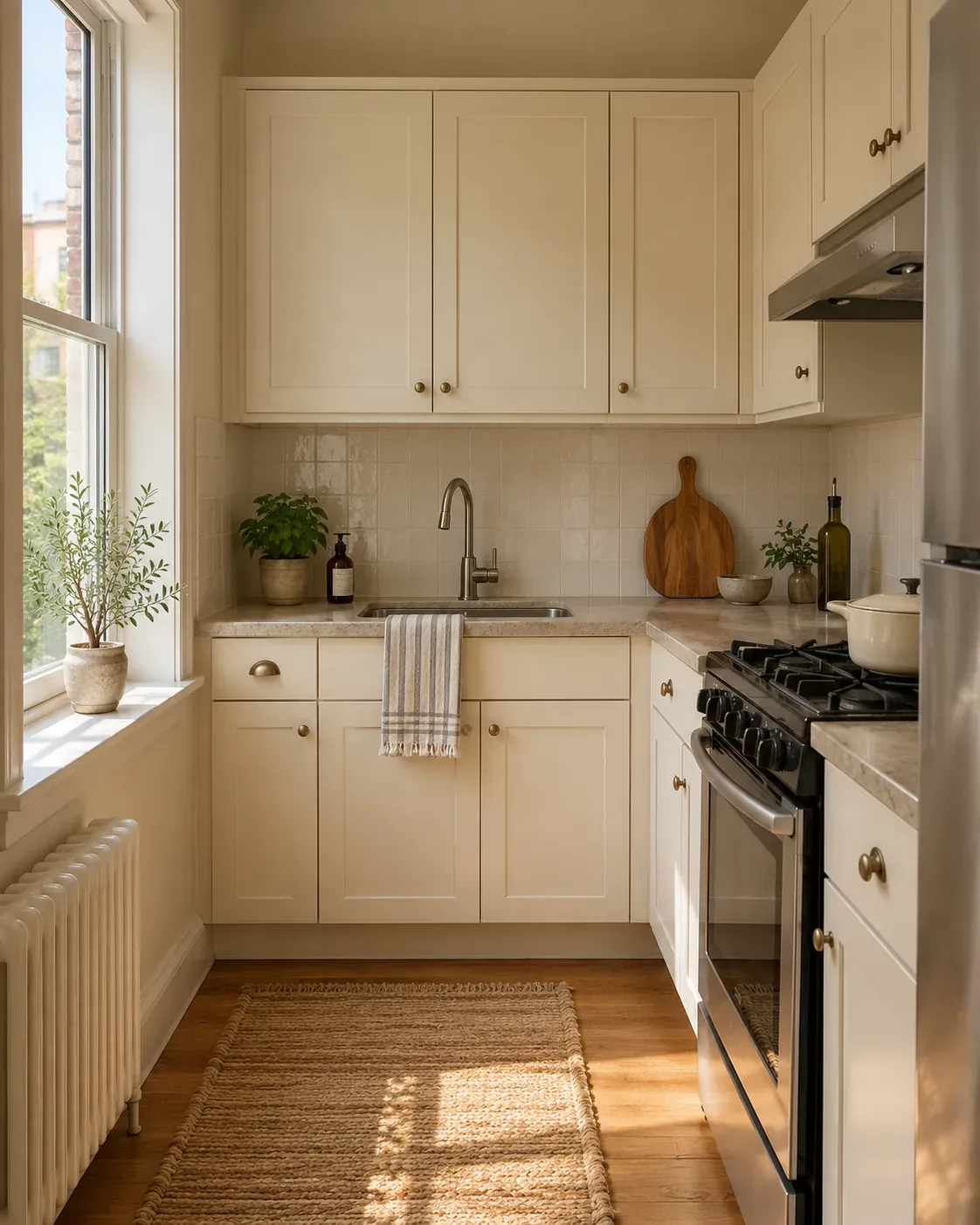
A narrow runner can give a galley kitchen color and texture without changing a single fixture. Choose a width that leaves some visible floor at both sides and a length that does not curl around cabinet corners or door swings. A low pile or flatweave is easier to clean than a thick rug when crumbs and spills are inevitable.
The runner must lie flat and resist sliding; use the rug and pad combination recommended for your floor. Check whether it catches a rolling cart or appliance door. A muted pattern can disguise ordinary wear, while a very busy one may make a tiny kitchen feel restless. If the floor stays wet around the sink, prioritize a washable material and dry it promptly.
2. Style one small countertop corner
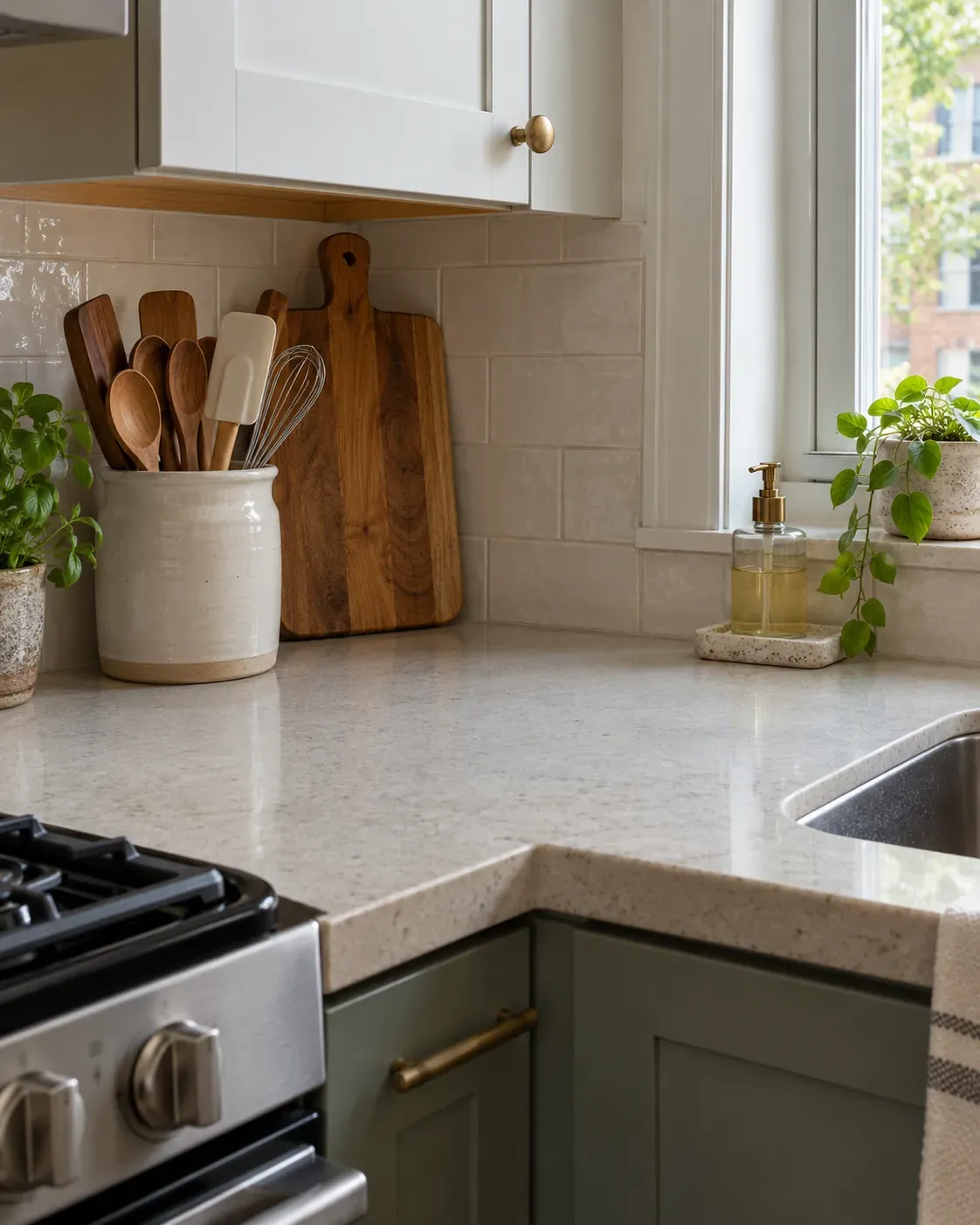
Group two or three useful things in a corner: perhaps a utensil crock, a wooden board, and a small plant if the light suits it. A shallow tray can define the grouping, but it should not become one more object you have to lift to wipe the counter. Place the display away from the stove’s heat and your main chopping area.
This is most effective in a kitchen with a short stretch of counter that is not the primary prep zone. Try preparing a normal meal before deciding the corner is free. If you repeatedly move the arrangement to set down groceries, keep only the utensil crock. The space you save is part of the decor’s success.
3. Use wood accents to warm plain cabinets
Lean one or two cutting boards against a dry backsplash or choose a wooden utensil holder. Warm wood softens white or gray cabinets and connects naturally with a table in an adjacent dining space. Mixing every wood tone in a small room can look accidental, so repeat one general tone where possible.
Use boards that you can actually reach and wash. Do not stack them against a hot burner, block an outlet, or treat decorative boards as a substitute for food-safe cutting surfaces. If your counter is very short, move a larger board to the wall art zone and let a wooden spoon or stool provide the warm accent instead.
4. Hang one small piece of kitchen wall art
A modest framed print can make a blank wall feel finished. Look for a dry wall away from cooking grease, steam, and open flame, perhaps near the breakfast end of the room or across from the sink. Its proportions matter more than its price; one print scaled to the wall is clearer than several tiny frames.
Use hanging hardware suitable for the wall and frame, and check rental rules before making holes. Do not hang a glass frame where it can be knocked while carrying hot food. A washable or protected print makes more sense in a kitchen than delicate paper exposed to frequent steam.
5. Introduce sage green or olive accents
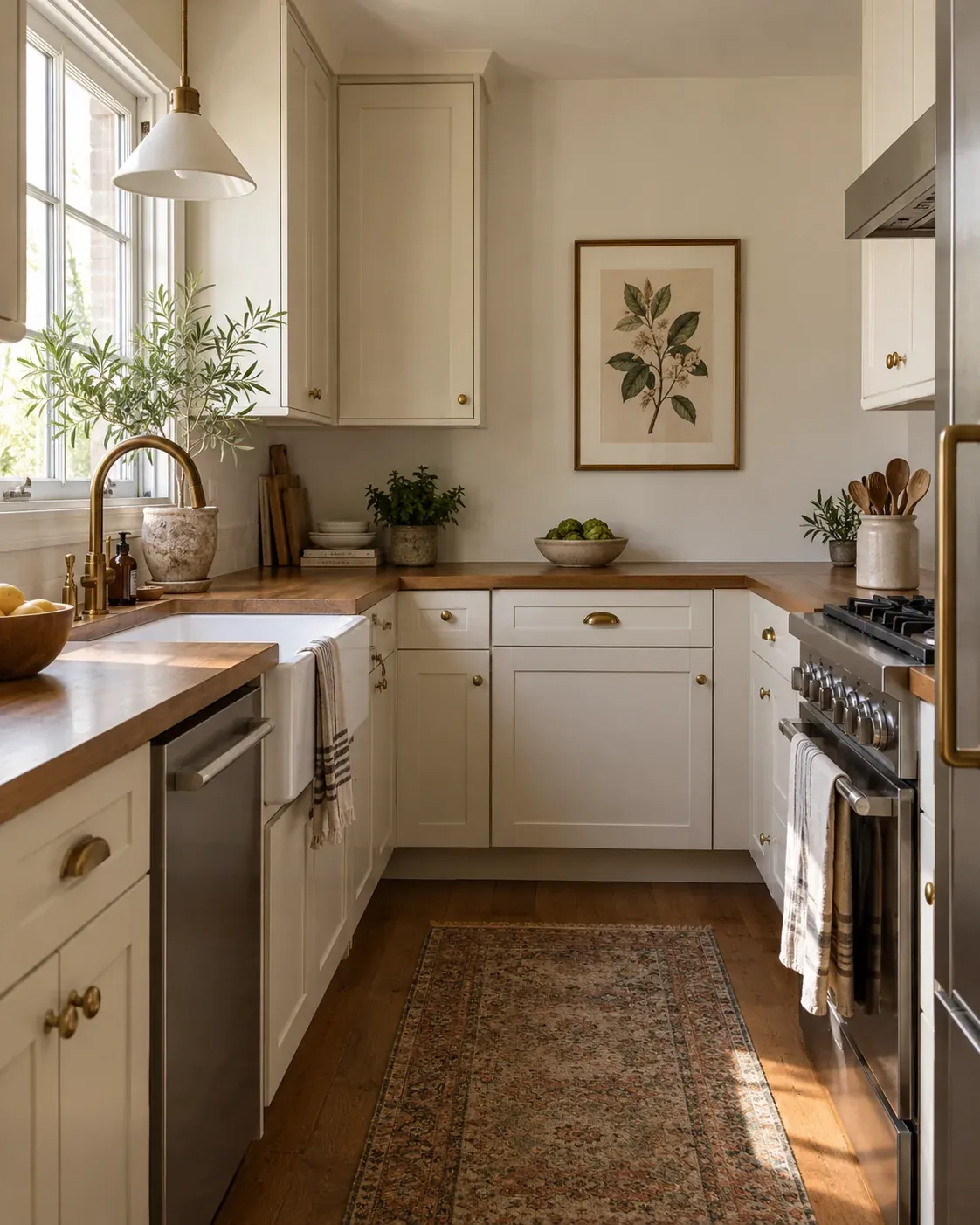
Try sage in a tea towel, a small planter, or one ceramic canister rather than covering every surface. These muted greens sit comfortably beside cream cabinets and natural wood. Olive creates a slightly deeper look in a kitchen with good daylight.
This approach is useful when you cannot paint or replace a backsplash. Repeat the color twice so it reads as a choice, then let the rest of the room stay neutral. A plant counts as a green accent only if it can thrive in the available light and does not occupy the sole prep surface.
6. Choose attractive everyday kitchen textiles
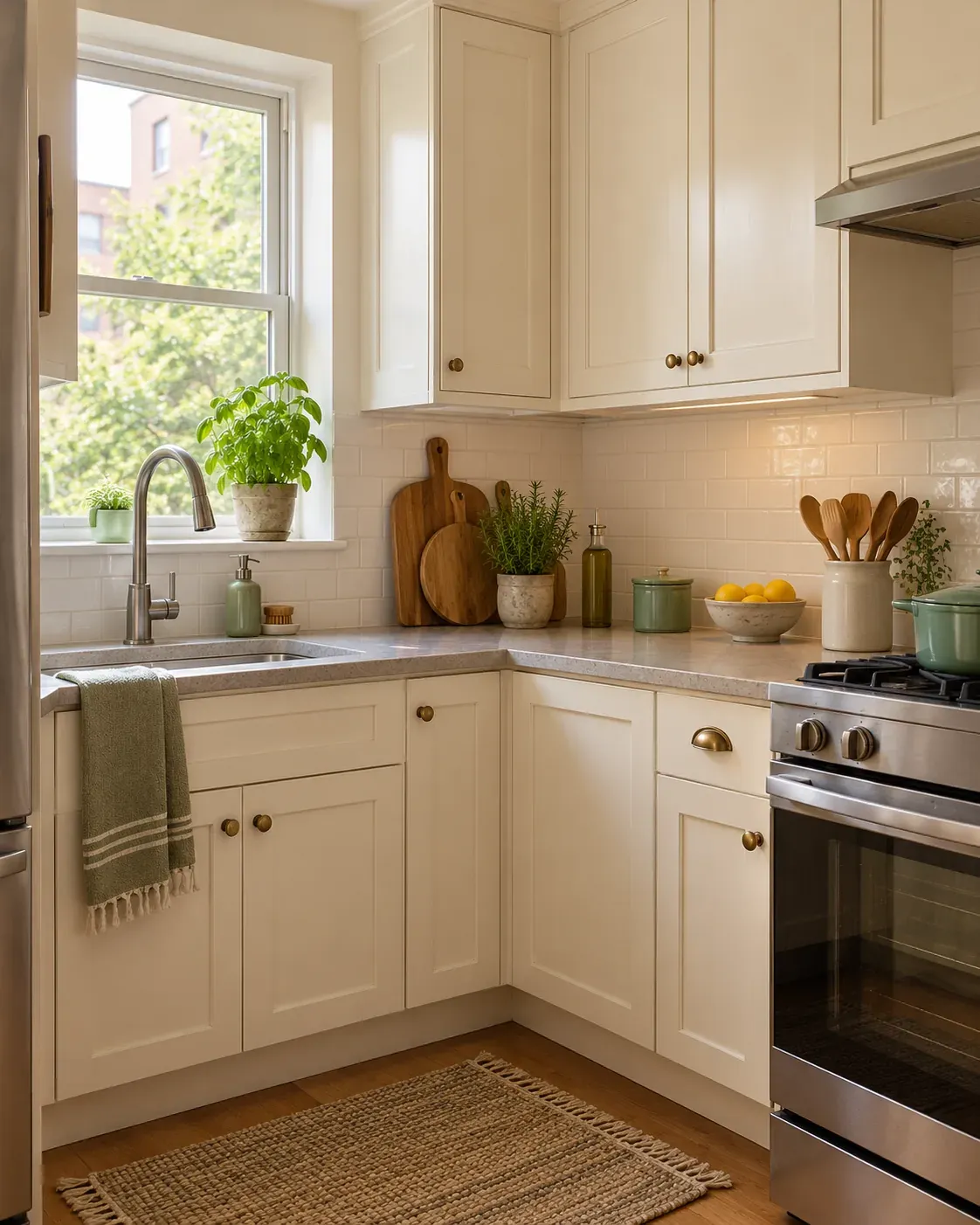
Tea towels, a sink cloth, and oven mitts are in view often, so a coordinated set can do more than a decorative sign. Pick fabric that suits the actual task: absorbent towels for drying, a heat-protective mitt used according to its instructions, and washable materials near the sink.
Hang only what you use and keep fabric away from burners and other heat sources. A single striped towel against a plain cabinet can add pattern without overwhelming the room. Replace worn textiles first; buying extra purely for display may create clutter and laundry.
7. Try a removable backsplash accent where suitable
A peel-and-stick accent can add pattern to a small dry section of backsplash, but the product has to match the surface and location. Some require smooth, clean, fully cured walls; others have specific clearances from cooktops and countertop appliances. The Smart Tiles guidance, for example, gives product-specific heat and appliance restrictions. Follow the instructions for the exact tile you choose, not a generic claim that all adhesive backsplashes are stove-safe.
Check the lease and get permission when required. Test a small inconspicuous area and consider the finish beneath it: removal can affect paint or delicate surfaces. Do not install over loose paint, damaged tile, or a surface the manufacturer excludes. If the location is unsuitable, a textile and art accent achieves a similar visual change without adhesive.
8. Improve lighting without rewiring
If the kitchen feels flat at night, first check the existing bulbs and fixture allowances. A bulb with a suitable base, wattage, and color temperature can make the same cabinets feel warmer. Under-cabinet lighting can help a work surface when a product is rated for that location and installed as its maker directs.
Avoid loose cords near the sink, burners, or a cutting area. Battery-powered options can simplify placement, but they still need accessible battery compartments and appropriate moisture ratings. Do not improvise wiring or cover vents on an existing fixture. The point is a more usable and inviting kitchen, not a new electrical project.
9. Bring in one small herb plant or greenery
A pot of herbs can add life beside a window. Choose a plant that matches the light and temperature the spot actually receives; many herbs struggle in a dark kitchen. Use a saucer to protect the surface, keep soil away from food preparation, and leave room to open the window and clean behind the pot.
If sunlight is limited, a low-maintenance houseplant in a suitable spot or a small vase of cut greenery may be more realistic. Do not crowd a narrow sill with pots that can fall when the window opens. One healthy plant looks better than a collection that blocks the light.
10. Coordinate countertop accessories
Everyday items such as a soap dispenser, utensil holder, and a small container for scrubbers can share a finish or color. This gives a visually busy sink or counter a calmer rhythm. Choose containers sized to the actual contents, rather than buying a large matching set that consumes prep space.
Put the soap near the sink and the utensil holder near, but not on, a hot burner. Materials should be easy to wipe clean. The goal is to reduce visual noise around necessary tools; it is not a reason to decant every product or add jars that hide labels you need.
11. Refresh cabinet hardware when permitted
Replacing knobs with a compatible style can change the look of existing cabinets. Match the original screw spacing and check door thickness before buying. Keep every original pull, screw, and washer labeled in a bag so the kitchen can be restored if needed.
Ask a landlord or property manager when the lease requires it. Avoid drilling new holes for a decorative whim, especially in thin or damaged cabinet fronts. Hardware is a small improvement only when it fits cleanly and does not interfere with adjacent doors or drawers.
12. Decorate above cabinets selectively
The space above cabinets can hold one light, easy-to-clean basket or a restrained group of pottery if there is adequate clearance. It suits kitchens with a genuine open gap and no vents, sprinklers, or access points that would be obstructed. Leave room to clean dust and grease; the display should not be a hidden collection of rarely used objects.
In many small kitchens, an empty top edge looks better. Avoid heavy items high up, especially over a working area, and do not place anything near a ventilation opening. If the gap is narrow, skip the decor rather than forcing it.
13. Style a small open shelf
One shelf can display a few frequently used cups, a small bowl, and perhaps a plant. Repeat a simple color palette and leave space between items. The arrangement can look welcoming because it reflects how the kitchen is used, not because it contains many decorations.
Check the shelf’s mounting, wall type, and load rating before placing dishes on it. In a rental, ask before adding a shelf. Keep heavy stacks low and avoid placement above a stove or where steam will soil everything quickly. If the shelf exists but is crowded, editing its display may be enough.
14. Make the sink area look intentional
The sink is often the first cluttered point in a small kitchen. Choose a soap dispenser that is easy to refill, a compact dish brush holder that drains, and a cloth you can launder. Keep the group on a small wipeable surface if that helps contain drips.
Do not choose a decorative tray so large that it blocks the faucet or crowds the drying area. Clean and dry the sink zone regularly; attractive accessories cannot compensate for pooled water. If the counter is tiny, a single good dispenser may be the entire update.
15. Repeat one or two accent finishes
Warm brass, matte black, or natural wood can tie together a kitchen that has mixed existing materials. You might repeat black in a frame and a utensil holder, or wood in a board and stool. The repetition makes ordinary pieces feel related without replacing permanent fixtures.
Work with the metal finishes you cannot change. You do not need to match every hinge or faucet exactly, but introducing three more metals can make a small room look unsettled. Buy useful objects in the chosen finish as they need replacing, rather than discarding working pieces at once.
16. Make a cozy breakfast or coffee corner
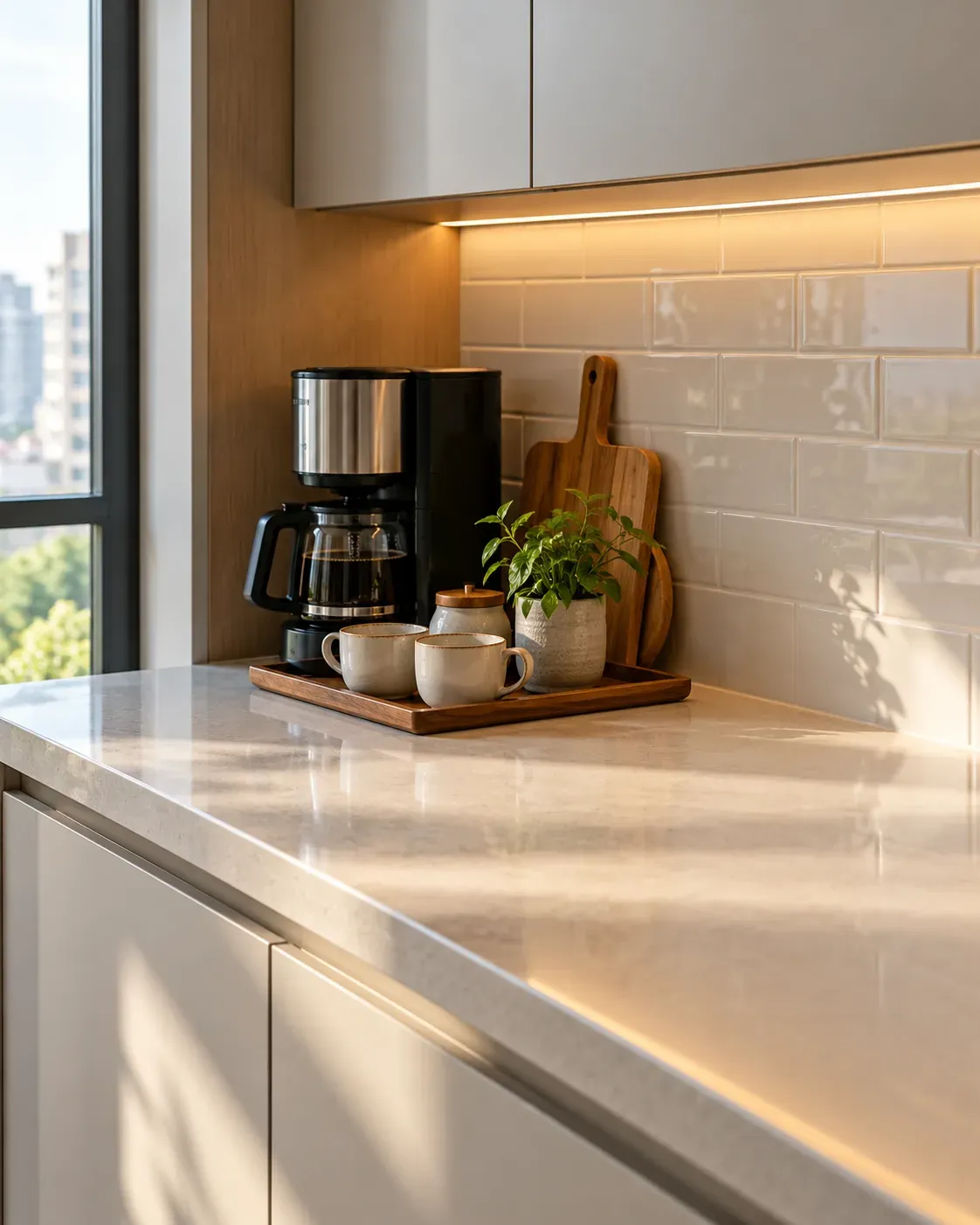
Use an existing end of the counter, small table, or shelf that already has the right support for the items. A coffee maker, two cups, and a shallow tray can establish the zone. Leave the adjacent counter open so you can still pour, prepare breakfast, and set down groceries.
Check appliance clearances, ventilation, outlet access, and cord routing in the manual. Keep electrical equipment away from the sink and damp plant watering. Avoid buying a cart if it would narrow the walking route. A clear, compact corner is more inviting than a crowded display of mugs and canisters.
17. Choose a simple palette for the whole kitchen
Stand in the doorway and identify the colors already fixed in place: cabinets, counters, floor, and appliances. Add one warm neutral, one natural material such as wood, and perhaps one muted accent like sage. Repeat them through a runner, towel, and a few useful pieces.
This is a decorating plan rather than a shopping list. A small kitchen can tolerate contrast, but several unrelated prints and accent colors often compete for attention. If the floor is patterned, keep the runner quiet. If the cabinets are plain, a patterned runner can carry more interest. Let the existing room guide the additions.
How to decorate a small kitchen on a budget
Start by cleaning and clearing the surfaces you already have, then identify the view that feels most unfinished. Replace a worn towel or add a runner before buying decorative objects. Next, choose one recurring material or accent color and use it in items you need anyway. Shop your home for a frame, board, or small plant pot that can move into the kitchen.
Spend on function first: a runner that stays put, a washable textile, or lighting that helps you see the work surface. Wait before buying a full set of matching accessories. If the room still needs something after a week of cooking, you will know which small change is worth the money.
How to make a small rental kitchen feel more personal
Use pieces that come with you: textiles, art hung with approved methods, plants, and countertop accessories. Keep the existing cabinets and backsplash in good condition. Review the rental agreement before changing hardware, installing shelves, or applying adhesive material; get written permission when the agreement calls for it.
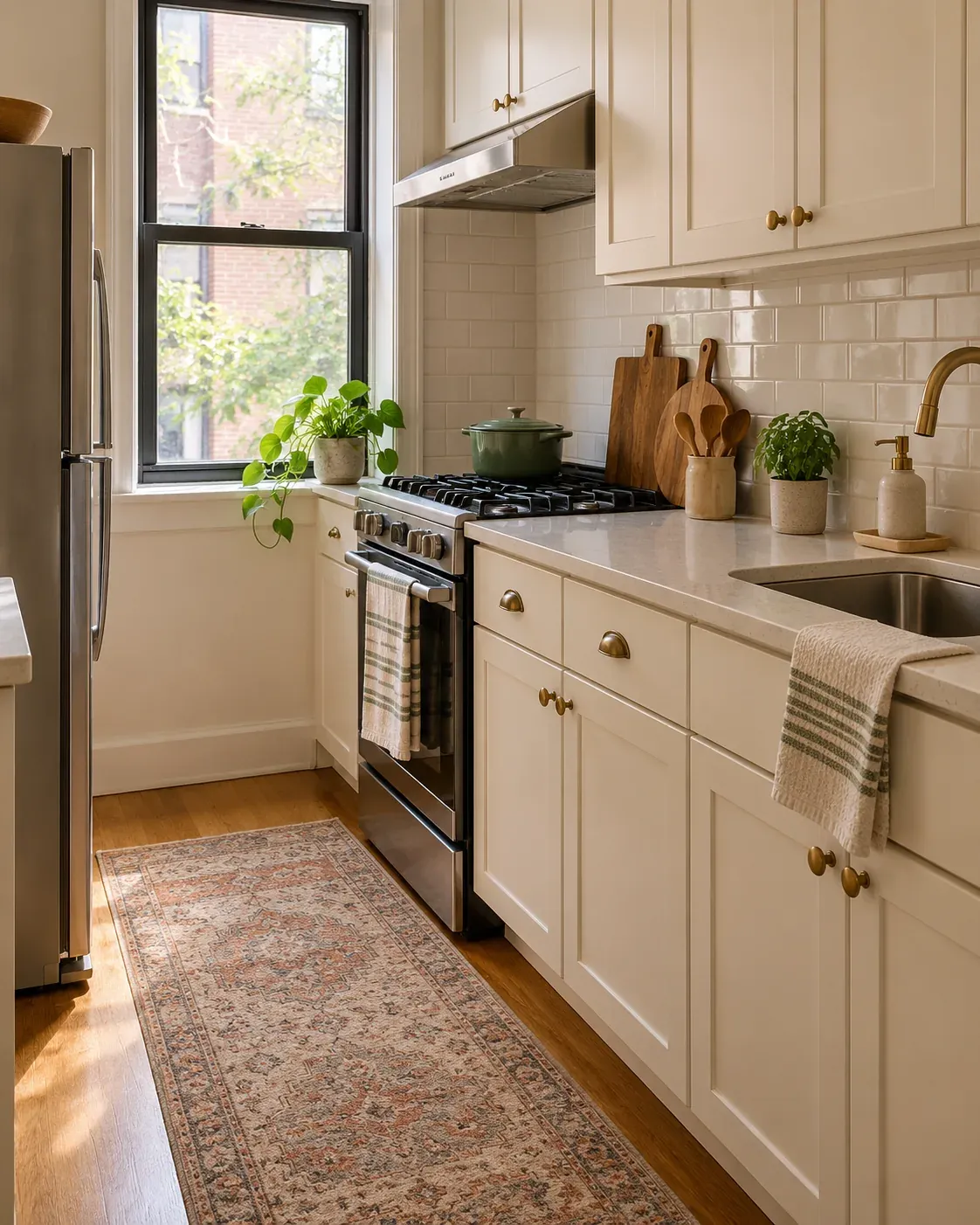
Removable does not mean risk-free. Adhesive performance and removal depend on the exact product, surface, paint condition, moisture, and heat. Test and follow manufacturer instructions. The photograph below illustrates accessories rather than a promise about a particular wall treatment.
What colors make a small kitchen feel more inviting?
Cream, warm white, and soft beige can provide a calm background; natural wood makes those light colors less stark. Sage and olive work well as restrained accents, while a muted rust towel or patterned runner can add warmth. A black frame or small brass detail can supply definition.
No single color makes every kitchen look larger. Daylight, bulb color, cabinet finish, and the floor all change how a palette reads. Test a towel or paper color sample in the kitchen at morning and evening before committing to several matching items.
How to decorate kitchen countertops without creating clutter
Mark the place where you chop, mix, and set down hot or heavy items. Protect that working area before styling anything. Group necessary tools close to their task: soap at the sink, utensils within convenient but safe reach of the range, and coffee supplies in one corner. Keep decorative items away from appliance ventilation and water splashes.
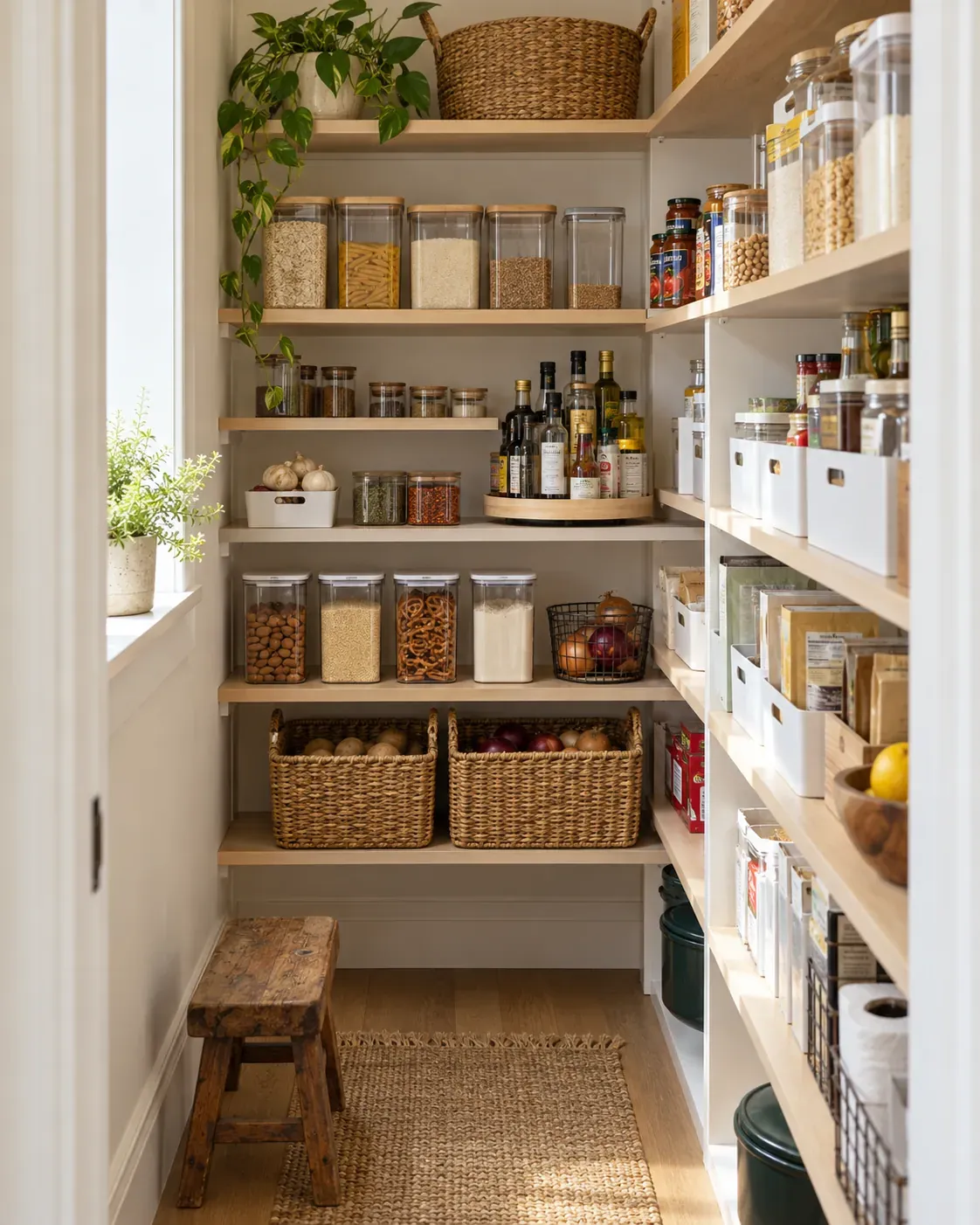
If an object repeatedly moves during dinner prep, it belongs somewhere else. A small pantry system may help relocate food packages, but the counter itself needs breathing room. One plant or bowl can be a finishing touch; five tiny objects become cleaning obstacles.
Small kitchen decorating mistakes
An unsuitable rug can slide, curl, or stay damp. Too many accessories reduce the only prep surface. Busy patterns on the runner, towels, and wall art can compete in a compact view. Weak lighting makes even a good palette feel dull, while decorative lights with poorly placed cords add a practical problem.
Avoid display pieces that collect grease, block vents, or require difficult cleaning. Be skeptical of claims that every peel-and-stick product will remove cleanly from every finish. The strongest kitchen refresh is one you can keep tidy while cooking a normal meal.
Looking for more ideas? Browse our kitchen & bathroom stories.
Save to Pinterest