In this article
- 1. Start with the ribbon
- 2. Mix red and white baubles in three sizes
- 3. Tie a bow on every third branch
- 4. Add candy cane stripes
- 5. Finish with a plaid tree skirt
- 6. Try a Scandi red and white tree
- 7. Use white lights only
- 8. Top the tree in red
- 9. Add paper ornaments for a light tree
- 10. Allow one metallic accent
- 11. Try a white tree with red ornaments
- 12. Keep the base simple
- A Red and White Tree Budget
- Storing a Red and White Tree
Red and white is the most forgiving Christmas palette there is. It suits a slim tree in a small apartment, it hides a thin tree better than any other color pair, and almost everything you need is already in the shops. These 12 ideas work on trees from 4 feet to 7 feet, and each one keeps the red and white balance so the tree looks classic rather than loud.
1. Start with the ribbon
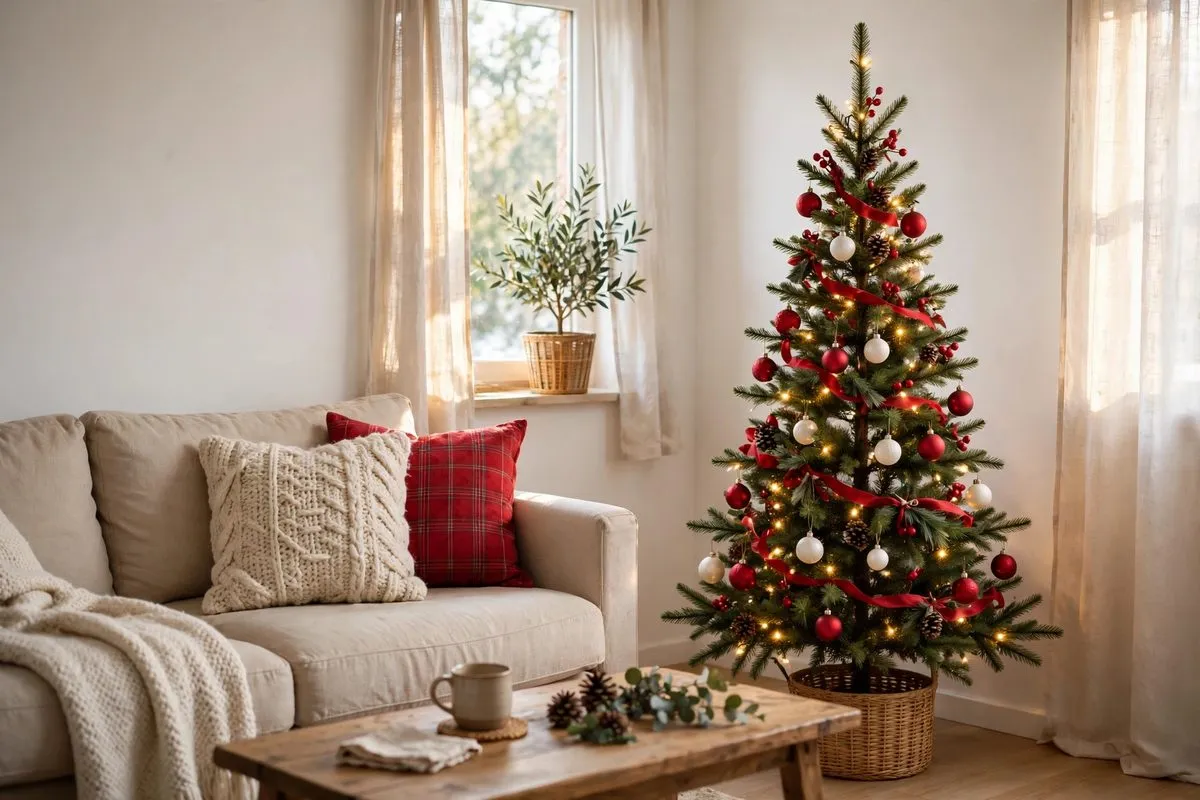
Ribbon is the backbone of a red and white tree, and it should go on before the ornaments. Use a 2.5 inch wide red ribbon, about 10 yards for a 6 foot tree, and weave it in loose loops from the top down, tucking it into the branches every 12 inches. The ribbon gives the tree its structure, and the ornaments hang from it rather than floating on bare branches.
Wired ribbon holds its shape best, and costs about $8 to $12 a roll. The tradeoff is stiffness: wired ribbon looks formal, while soft grosgrain looks relaxed. Pick one and use it everywhere on the tree, since mixing ribbon types makes the tree look unfinished.
2. Mix red and white baubles in three sizes
Baubles look best in three sizes: large ones, about 4 inches, for the inside of the tree, medium ones, about 3 inches, for the middle branches, and small ones, about 2 inches, for the tips. The large baubles fill the gaps near the trunk, which is where a slim tree looks thin, and the small ones catch the light at the edges.
A set of 30 mixed baubles costs $15 to $25. Hang the large ones first, deep inside the branches, then work outward. The tradeoff is weight: glass baubles look better than plastic but break when they fall, so use plastic on the lower branches if children or pets share the room.
3. Tie a bow on every third branch
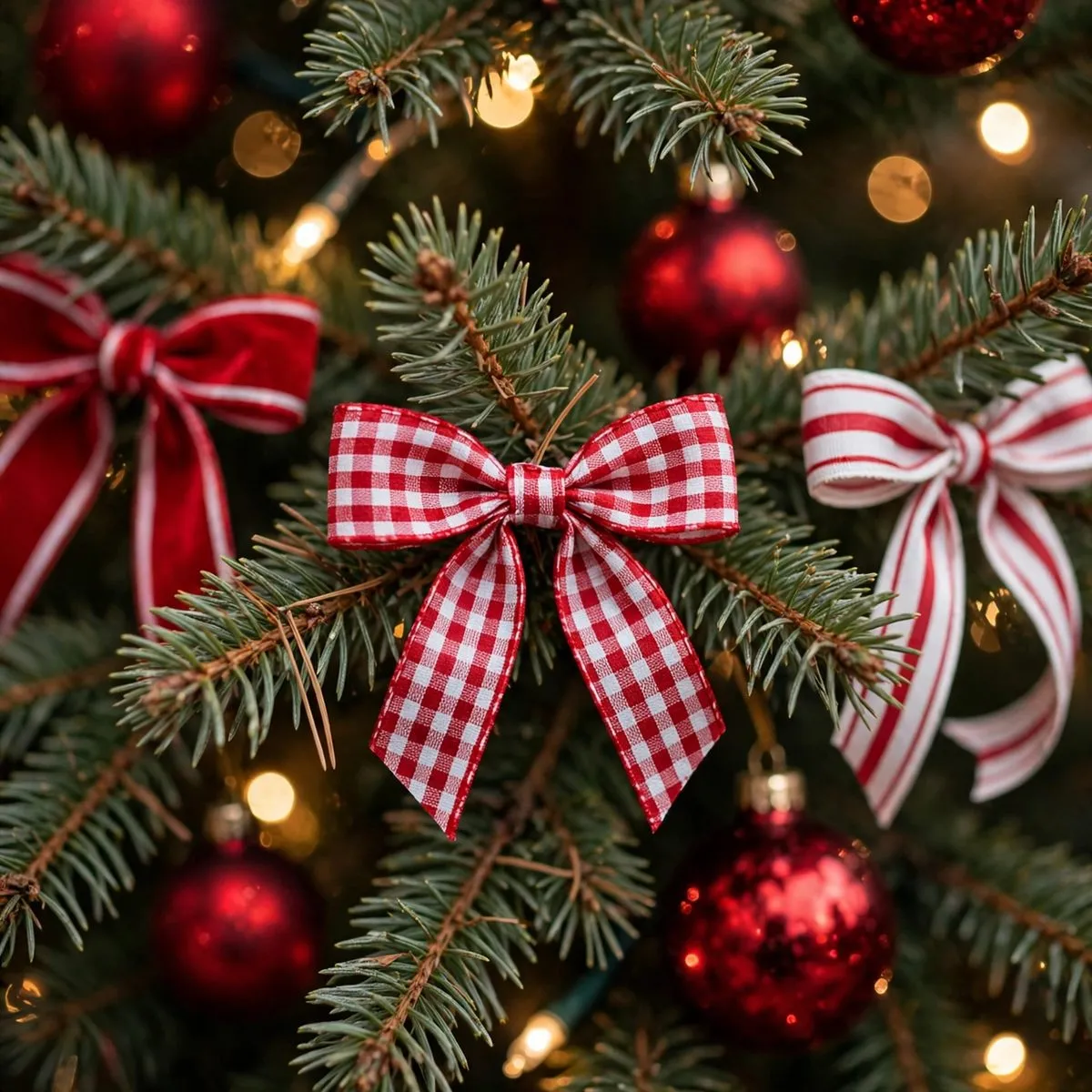
Bows are the cheapest way to add red to a tree. Cut 12 inch lengths of red ribbon, tie simple bows and wire one to every third branch tip. A 6 foot tree needs about 15 bows, which takes one roll of ribbon and half an hour. The bows read as ornaments from across the room and cost almost nothing.
Our Christmas bow decor ideas show bow styles for trees, mantels and wreaths. Tip: make all the bows the same size, about 4 inches across, since mixed sizes look accidental. A bow maker, about $10, helps if your bows always come out lopsided.
4. Add candy cane stripes
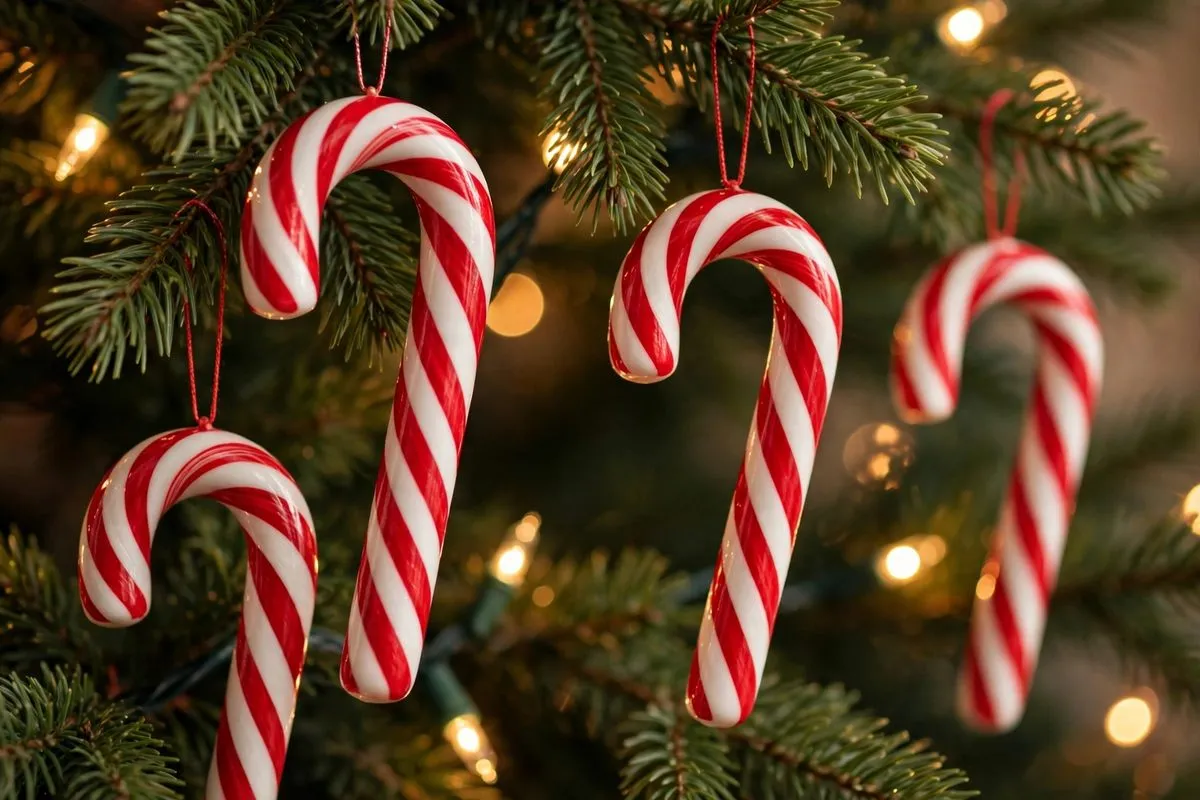
Candy cane ornaments bring the white into a red tree and give it a playful note. Use striped baubles, candy cane hooks and a few striped ribbon lengths, but keep them to about a third of the decorations, so the tree reads as classic with a candy twist rather than a sweet shop. A set of 12 candy cane ornaments costs $8 to $12.
Hang the striped pieces evenly around the tree, one per branch section, so no side is all stripes and the other is all solid. The tradeoff is that candy canes are a strong motif, so pair them with plain white baubles rather than more patterns, or the tree gets busy fast.
5. Finish with a plaid tree skirt
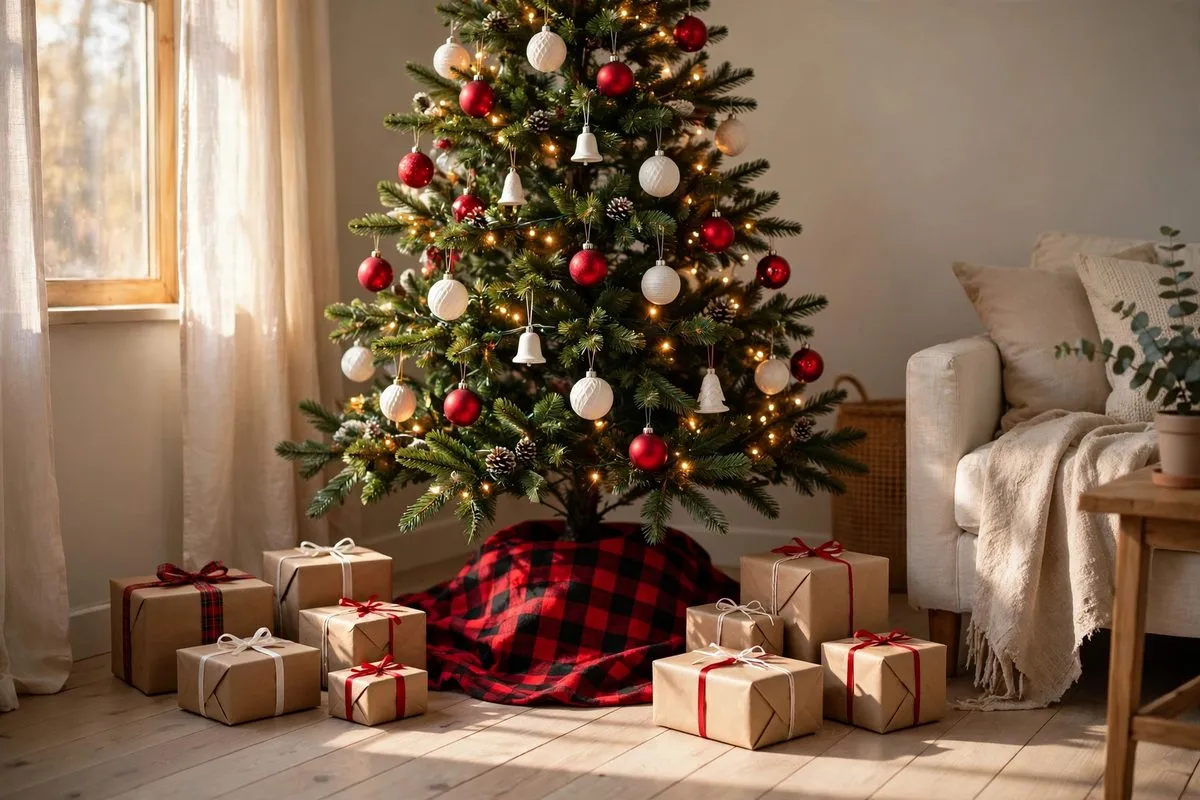
A plaid tree skirt hides the stand, catches fallen needles and finishes the red and white story at the base. A 48 inch skirt fits most slim trees, and costs $20 to $35. Red and black buffalo plaid is the classic choice, while red and white plaid is softer and suits a white tree.
Measure the tree stand before you buy, since a skirt that is too small leaves the stand showing. The tradeoff is floor space: a 48 inch skirt needs a clear circle of about 4 feet, so skip it on a tabletop tree and use a small basket instead. A skirt also protects the floor from water if you have a live tree.
6. Try a Scandi red and white tree
A Scandinavian red and white tree uses fewer decorations and more empty space. Hang 12 to 15 ornaments total on a 6 foot tree: red wooden hearts, white paper stars and a few straw ornaments, spaced widely so the green shows through. The tree looks calm and handmade, and it costs less than a fully dressed tree.
Wooden and paper ornaments cost $2 to $5 each, so the whole tree costs about $40. The tradeoff is that a sparse tree needs a healthy, full tree to work, since gaps show. If your tree is thin, add a red ribbon first to fill the visual gaps, then hang the sparse ornaments on top.
7. Use white lights only
White lights are the right choice for a red and white tree, and warm white beats cool white. A 6 foot tree needs about 200 lights, usually two 100 light strands at $8 to $12 each. Wrap the lights from the inside out, starting at the trunk and working to the branch tips, so the tree glows from within rather than looking lit from the outside.
Colored lights fight the red and white palette and make the red ornaments look orange. If you already own colored lights, use them on the balcony or in the window instead. A timer plug, about $8, turns the tree lights on at dusk, so the tree is lit when you come home.
8. Top the tree in red
The topper should be red on a red and white tree, since a gold or silver topper introduces a third color. A red star, a red bow or a red finial all work, and each costs $8 to $15. A bow topper is the easiest to make: tie a large bow from the same ribbon used on the tree, wire it to the top branch, and let the tails fall 12 inches down the tree.
Keep the topper in scale with the tree. A 10 inch star suits a 6 foot tree, while a 6 inch star suits a 4 foot tree. Leave 6 inches of clearance to the ceiling so the topper never touches it, and check the top branch is strong enough to hold the topper without bending.
9. Add paper ornaments for a light tree
Paper ornaments are light, cheap and perfect for a slim tree with thin branches. White paper stars, red paper baubles and folded paper snowflakes cost $1 to $3 each, or nothing if you make them from craft paper. They hang without pulling branches down, which matters on a small tree where every branch is visible.
A set of 12 paper stars costs about $10. The tradeoff is durability: paper creases if it gets damp, so keep paper ornaments away from the window and the front door. Store them flat between sheets of tissue paper, and they last for years.
10. Allow one metallic accent
One metallic accent, used sparingly, lifts a red and white tree without breaking the palette. Choose gold or silver, not both, and use it in one place: gold ribbon on the top third, or silver baubles mixed into the white ones. About 10 percent of the decorations in metal is enough.
The risk is a tree that drifts into red, white and gold, which is a different palette. If you choose gold, keep the ribbon red and let the gold appear only in a few baubles. If you choose silver, use white ribbon and let the silver appear only in the small ornaments at the branch tips.
11. Try a white tree with red ornaments
A white artificial tree with red ornaments is the boldest version of this palette, and it suits a small apartment because the white tree reflects light and makes the corner feel brighter. A 6 foot white slim tree costs $60 to $100. Hang red baubles, red bows and a red ribbon, and skip the white ornaments entirely, since they vanish against the white branches.
The tradeoff is that a white tree shows dust and yellows in sunlight, so keep it out of direct sun and store it in its box, not in a damp cupboard. A white tree also needs fewer ornaments, about 20 for a 6 foot tree, since the branches themselves are part of the look.
12. Keep the base simple
The base of the tree should be quiet, so the tree gets the attention. A plain basket, a red plaid skirt or a simple white collar are the three options, and one is enough. Skip the fake snow, the miniature village and the train set on a small tree, since the base is only 3 to 4 feet across and every extra object crowds it.
A basket costs $15 to $25 and looks finished with no skirt at all. If you use a skirt, tuck it under the lowest branches so no stand shows. The base is also where the presents go, so leave a clear space of about 12 inches in front of the tree for gifts on Christmas morning.
A Red and White Tree Budget
A full red and white tree costs about $70 to $120 if you buy everything new: ribbon $10, a set of mixed baubles $20, bows from the same ribbon roll, candy cane ornaments $10, a plaid skirt $25 and two light strands $20. The Scandi version costs less, about $40, since it uses fewer ornaments and no skirt.
Buy the ribbon and the lights first, since they do the most work, then add baubles in one color at a time. A tree dressed in stages, with a week between each addition, often looks better than one dressed in an afternoon, because you can see what it still needs. For more tree ideas, our small apartment Christmas tree ideas compare tree sizes for tight corners, and our Christmas tree theme ideas show other palettes if red and white is not your style.
Storing a Red and White Tree
Pack red and white decorations separately by color, in small boxes with tissue paper between layers, so the red dye never rubs onto the white baubles. Ribbon rolls store best on their side, and bows keep their shape if you stuff them loosely with tissue. Label the box by palette, not by room, so next December you can find the whole red and white set in one place.
A slim tree stores in its original box under the bed or on top of a wardrobe. Remove the lights and coil them loosely, since tight coils break the wire over time. The whole kit fits in one under-bed box, about $15, which means next Christmas starts with a plan instead of a hunt.
Looking for more ideas? Browse our seasonal decor stories.
Save to Pinterest