In this article
- Choose Your Representation Before You Choose Your Palette
- Pick a Palette That Lets Skin Tones Stand Out
- Place Focal Figures Where Faces Get Light
- Mix Large Figures with Simple Fillers
- Add Beaded Garlands and Textile Accents
- Light for Depth, Not Just Sparkle
- Make the Topper Count
- Let Kids Place the Ornaments They Can Reach
- Extend the Theme to One Nearby Surface
- Consider Handmade and Small-Maker Pieces
- How to Build This Tree on a Real Budget
- Mistakes to Avoid with Figurative Ornaments
- Storing Figurative Ornaments Safely
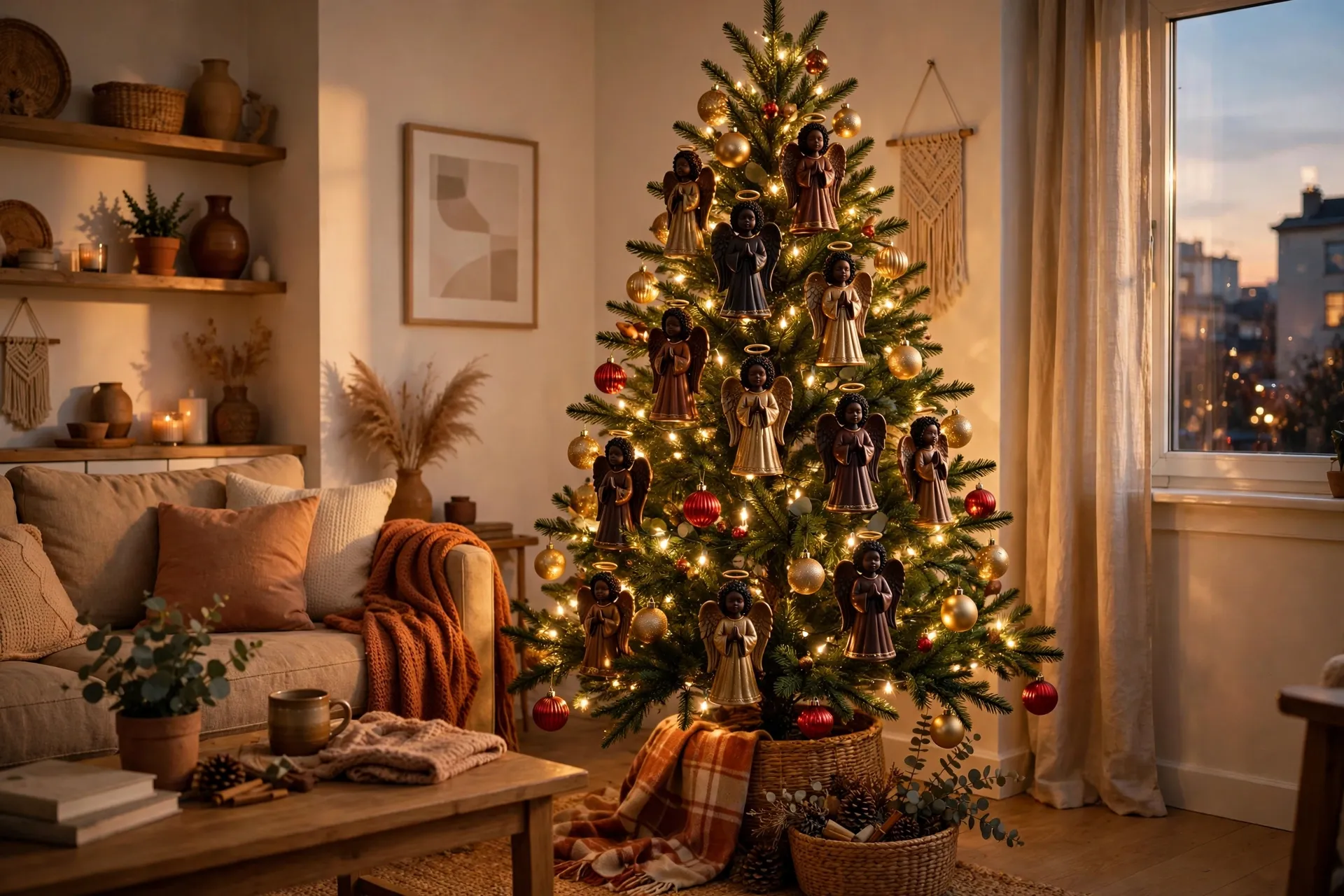
For years, the ornament aisle assumed one kind of family. That is changing, and the shelves are finally catching up: Black angels with full, detailed faces, Santas in a range of skin tones, ornaments with natural hair, kente-inspired patterns, and artisan pieces made by Black makers. Building a tree with African American Christmas tree ornaments is not about a theme. It is about walking past the tree and seeing your own people reflected back.
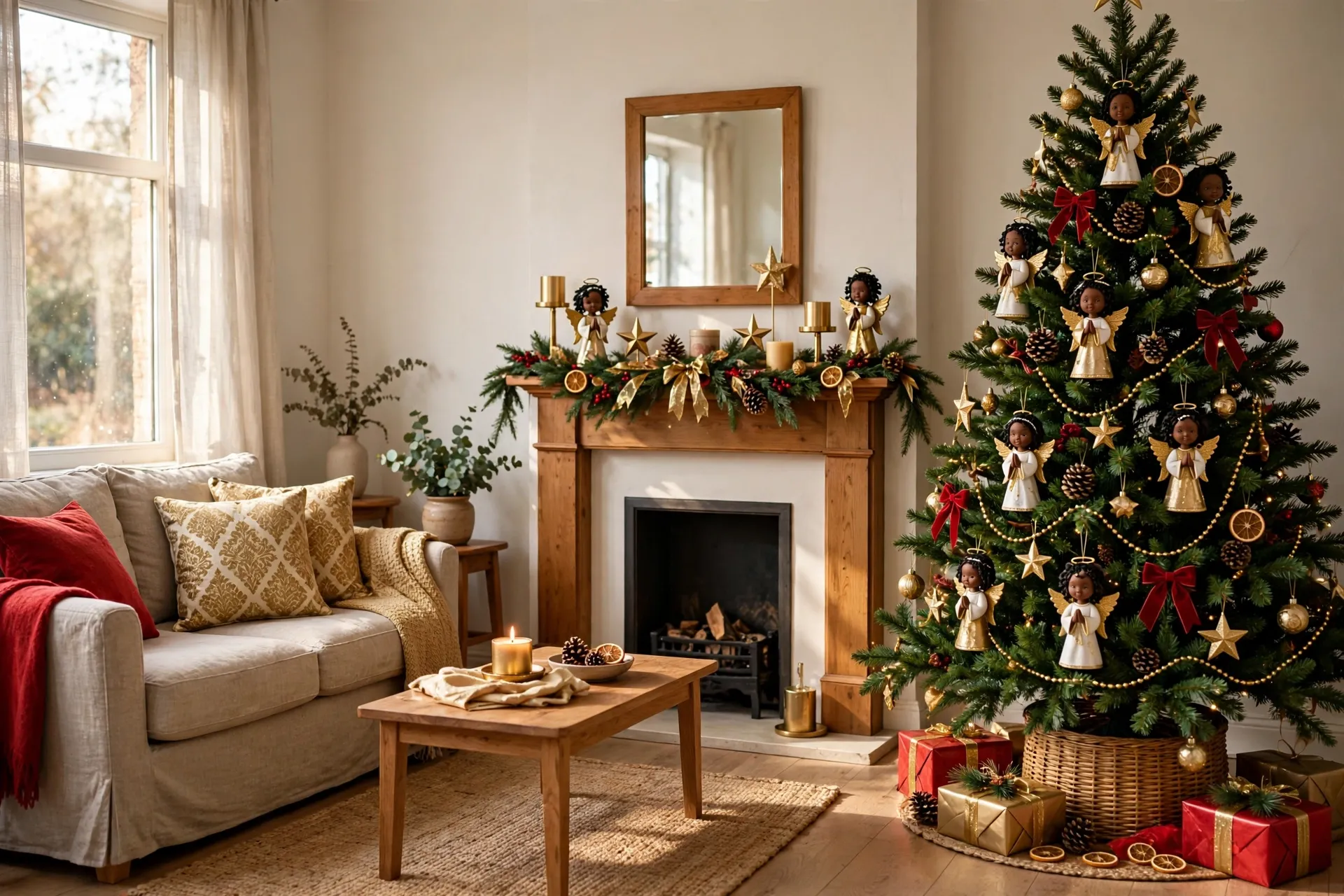
You do not need to replace everything you own. Most inclusive trees are a mix: the ornaments you have loved for years plus a deliberate layer of representation added where it counts, near eye level, where the light hits, and at the top. Start with five to eight meaningful figures and build the rest of the tree around them.
Choose Your Representation Before You Choose Your Palette
Decide what “inclusive” means for your tree before you shop. Some families want Black angels as the focal figures. Others want a Black Santa topper, or ornaments that nod to heritage through fabric patterns and handwork rather than faces. There is no rule that says you need all of them, and trying to include everything is how a tree gets cluttered.
Write a short list: one topper or topper alternative, two to three large focal figures, and three to four smaller accent ornaments. That is the whole representation budget for most trees under seven feet. Everything else on the tree can be plain baubles, garland, and lights that support those pieces.

Pick a Palette That Lets Skin Tones Stand Out
Deep skin tones read best against warm, rich backgrounds. Gold, champagne, crimson, forest green, and warm copper all give dark-toned ornaments a stage. Stark white or icy silver palettes can work, but they tend to make detailed faces harder to see from across the room, so you need stronger lighting if you go that way.
A practical starting palette: warm gold baubles for volume, deep red for warmth, and natural wood or rattan for texture. Keep one metal dominant. Mixed gold and silver on the same tree can look fine on large trees but tends to read busy on a five or six foot apartment tree.
Place Focal Figures Where Faces Get Light
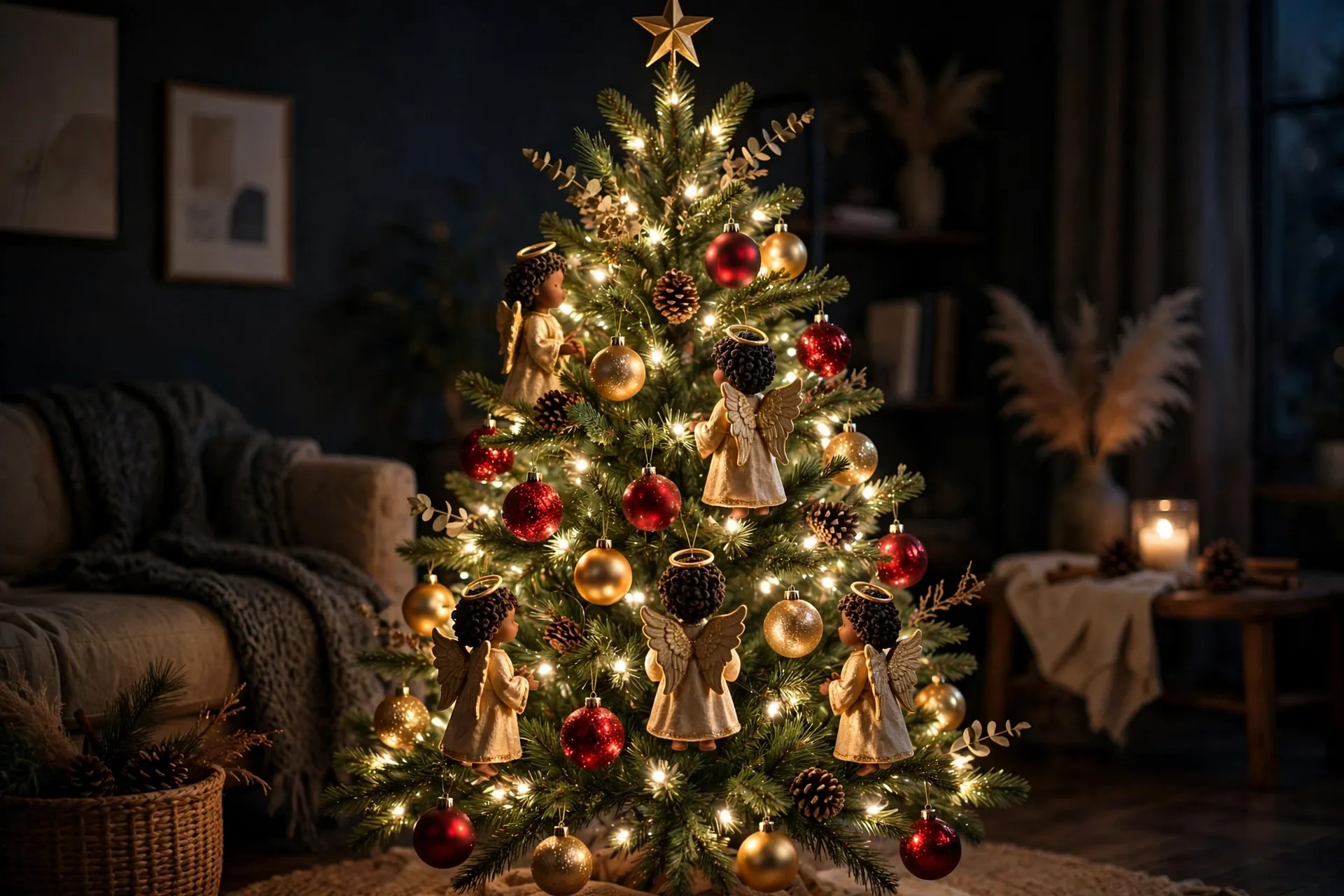
The biggest mistake with figurative ornaments is hanging them deep inside the tree where branches swallow them. Angels and Santas belong on outer branches at or slightly above eye level, turned to face the room. On a six-foot tree, that means the middle band, roughly three to four and a half feet off the floor.
Hang each figure from a sturdy branch with an ornament hook long enough to clear the needles, and tilt it slightly forward. Test from the doorway, not just from two feet away. If you cannot read the face from where you will actually sit, move it outward or up one branch.
Mix Large Figures with Simple Fillers
A tree made entirely of figurines looks like a shelf display, not a Christmas tree. For every statement angel or Santa, plan eight to twelve simple fillers: plain baubles, wooden beads, pinecones, or ribbon loops. The plain pieces give the eye somewhere to rest and make the figures feel special instead of crowded.
This ratio also protects your budget. Handcrafted or artisan ornaments often run twelve to thirty dollars each, while a bag of plain gold baubles costs a fraction of that. Spend on the faces; save on the background.

Add Beaded Garlands and Textile Accents
Wooden bead garlands are one of the cheapest ways to add warmth and a handmade feel. A nine-foot strand costs around eight to fifteen dollars and wraps a six-foot tree with room to spare. Drape it in loose swags rather than tight spirals, and let it sit slightly forward on the branches.
For textile nods, look for ribbon or small fabric ornaments in kente-inspired or mudcloth-style prints. A few tied bows in a patterned fabric connect the tree to the rest of your decor. Our Christmas bow decorating guide covers proportions if you are new to ribbon. If natural textures are your thing beyond the tree, boho Christmas decor for small apartments builds a whole holiday look from rattan, pampas, and warm neutrals.
Light for Depth, Not Just Sparkle
Warm white lights are the safest choice for an inclusive tree. Cool white can wash out warm skin tones and make gold look harsh. Plan roughly one hundred lights per foot of tree height as a baseline, more if your tree is wide.
String lights from the trunk outward, not just around the surface. Interior lights create depth so the tree glows from within instead of looking like a lit shell. Plug them in and check at night before you hang a single ornament; rearranging lights afterward is miserable.
Make the Topper Count
The topper is the most visible ornament on the tree, and it is where representation matters most. A Black angel topper, a handcrafted star, or a simple elegant bow in your palette all work. What does not work is a topper that is too heavy for the leader branch, which bends and leans all season.
Test the topper on the tree before decorating day. If the leader bends, switch to a lighter piece or support it with floral wire wrapped around the trunk below the top. For small apartment trees, see our small apartment Christmas tree ideas for topper options that suit short trees.
Let Kids Place the Ornaments They Can Reach
If children are decorating with you, give them a defined zone: the lower third of the tree, with shatterproof ornaments only. Their placements will not match yours, and that is fine. A tree that shows small hands were part of it feels more like home than a styled one.
Keep glass and heavy pieces above their reach, and put the most meaningful fragile ornaments at adult eye level. After the kids go to bed, you can quietly redistribute a few pieces without undoing their work.
Extend the Theme to One Nearby Surface
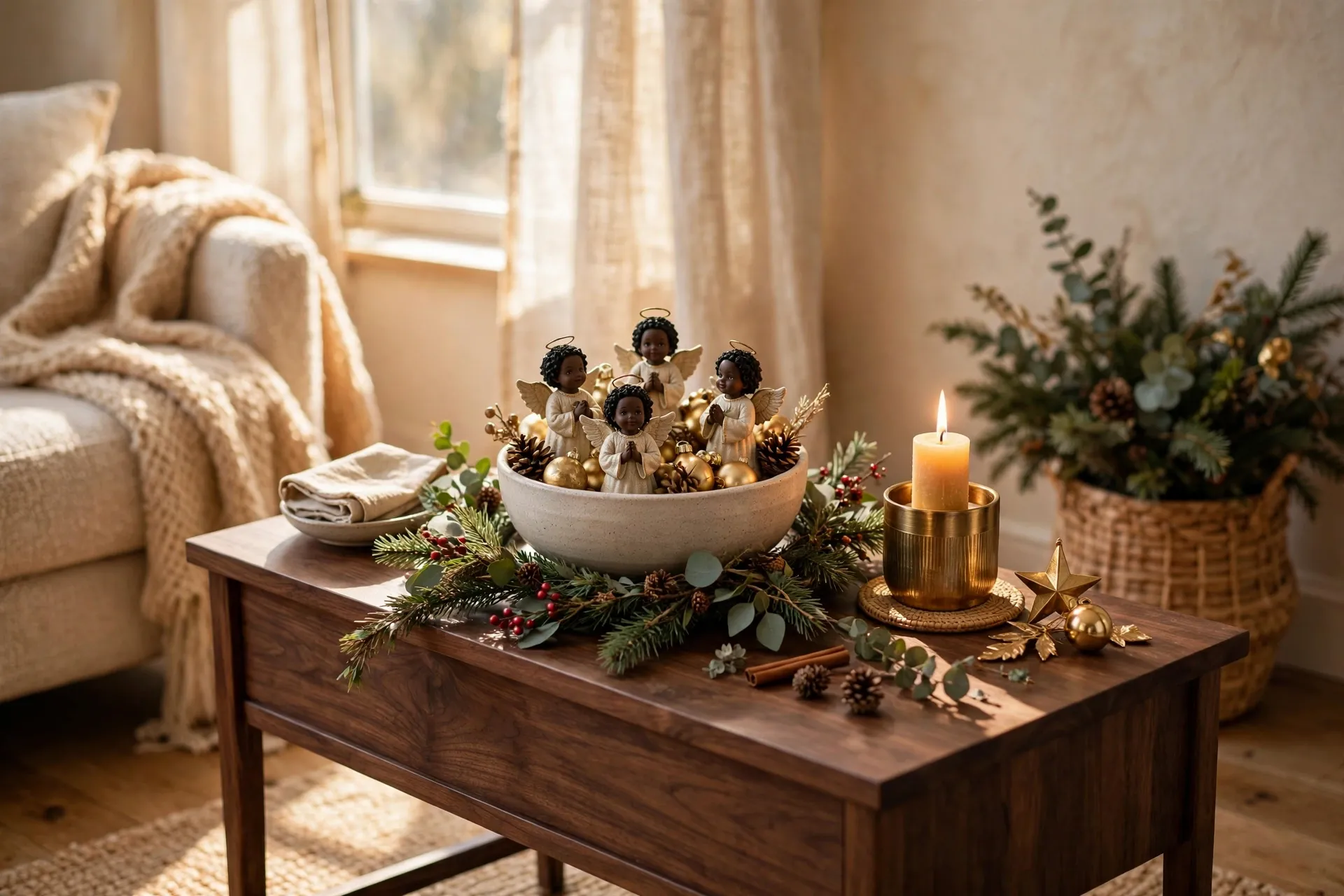
You do not need to redecorate the whole room. One surface, a mantel, a console table, or the top of a bookshelf, carrying two or three coordinating pieces makes the tree feel connected to the room. A small bowl of extra ornaments, a garland swag, or one angel figure on the mantel is enough.
Repeat one element from the tree: the same beaded garland, the same ribbon, or one extra figure. Repetition across two spots reads as intentional. Spreading ornaments across five surfaces reads as scattered.
Consider Handmade and Small-Maker Pieces
Some of the most beautiful inclusive ornaments come from independent makers rather than big-box stores. Clay angels, hand-painted Santas, and fabric ornaments from Black artisans tend to have more character than mass-produced versions, and many are priced comparably once you factor in sales.
Shop these early, ideally October or November. Small makers sell out and rarely restock mid-season. If you find an artist you love, follow them; next year’s additions get easier when you already know where to look.

How to Build This Tree on a Real Budget
Start with what you own and add one meaningful piece per year if money is tight. Five years of one good angel each December builds a collection with a story, and stories are what guests ask about. Nobody audits your tree for completeness.
For immediate impact on a budget, spend first on the topper, then on two to three focal figures, then on warm lights if yours are cool white or half-dead. Plain baubles and bead garlands fill the rest cheaply. Thrift stores and post-season clearance in January are the best times to buy basics at sixty to eighty percent off.
Mistakes to Avoid with Figurative Ornaments
Do not cluster all your figures in one spot unless you are doing it deliberately as a vignette. Spread them around the tree at different heights so the eye travels. Do not hang heavy ceramic pieces on weak outer tips; they slide, and the branch sags.
And do not buy every inclusive ornament you see in one season. A tree built slowly, with pieces chosen because they meant something, always looks better than a tree built in one shopping trip. Leave room for next year.
Storing Figurative Ornaments Safely
Faces chip, paint scratches, and wings snap. Wrap each figurative ornament individually in tissue or a soft cloth, not just in a shared box with baubles. Keep the original boxes for the most fragile pieces; they were shaped for them.
Store boxes upright on a shelf rather than stacked under heavy bins. Label the outside clearly so next December you are not opening four boxes to find the angel. When January comes, our post-holiday decor reset walks through takedown, sorting, and restyling for the new year. A tree that reflects your family deserves ornaments that survive to see many more Decembers.

Looking for more ideas? Browse our seasonal decor stories.
Save to Pinterest