In this article
- Measure Your Table First
- Tablecloths: When They Earn Their Keep
- Runners: The Small-Table Hero
- Placemats: The Practical Choice
- Fabric Guide: Cotton, Linen, Polyester
- Color and Pattern: What Works for Thanksgiving
- Layering Without Clutter
- Washability: The Question Nobody Asks First
- How Many Sets Do You Actually Need?
- Storing Linens in a Small Home
- When to Buy
Walk into a home store in October and the Thanksgiving linen wall suggests you need a tablecloth, a runner, placemats, napkins, and chair covers. You do not. Most small tables look best with one linen layer doing the work, and every layer you add is something to wash, iron, and store. This guide covers what is worth buying, how to size it, and which fabrics forgive a gravy spill.
Measure Your Table First
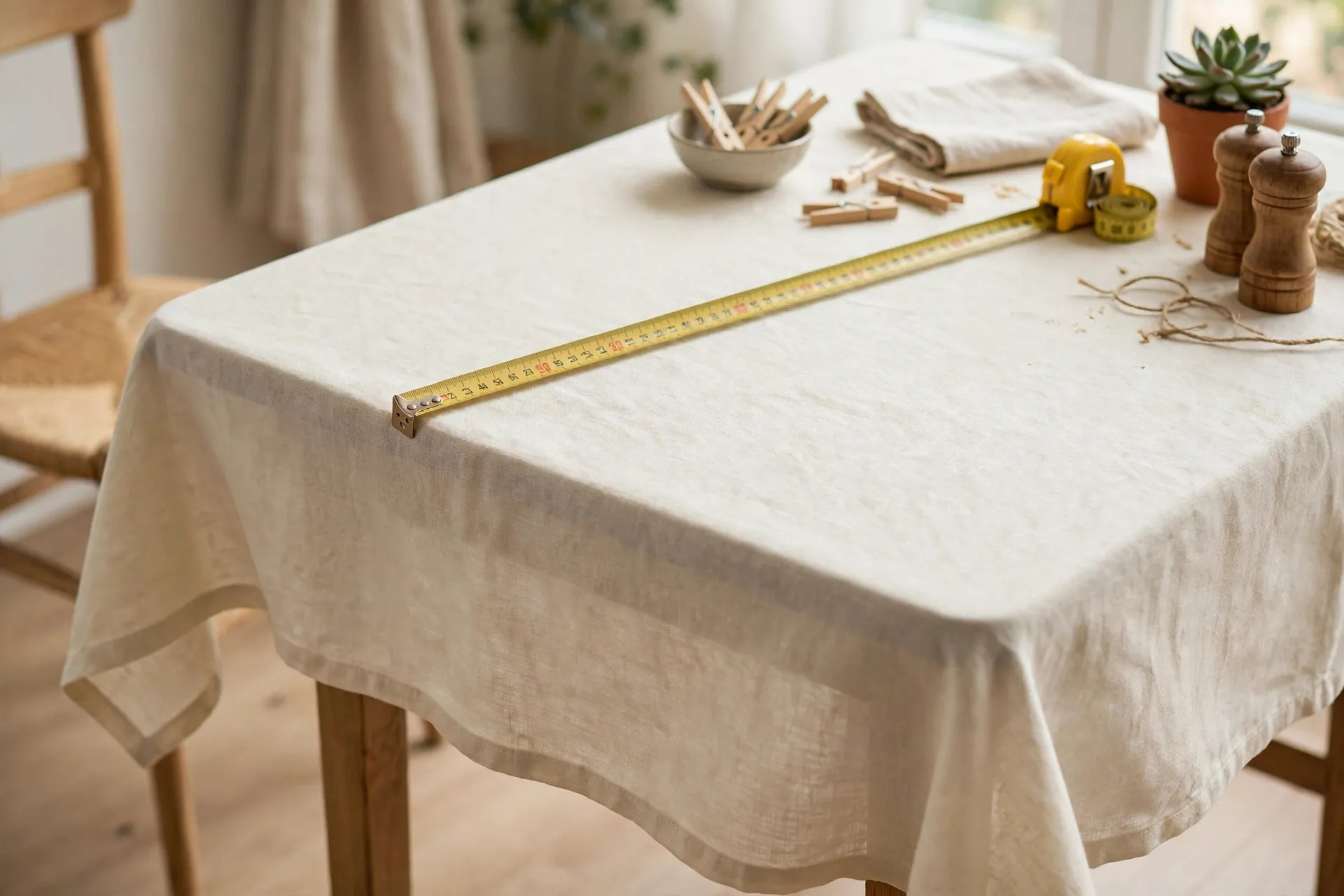
Measure the length and width of your tabletop before buying anything. For a tablecloth, add twice your desired drop to each dimension: a 12-inch drop is standard, so a 36 by 48 inch table needs a 60 by 72 inch cloth. Too short looks stingy; too long trips guests.
For a runner, add 12 inches to the table length so 6 inches hang over each end, and choose a width of 14 to 16 inches. For placemats, 12 by 18 inches is standard and anything much bigger crowds a small table. Write the measurements in your phone before you shop, because guessing in the aisle is how wrong sizes happen.
Tablecloths: When They Earn Their Keep
A tablecloth earns its keep when the tabletop is worn, mismatched, or an ugly folding table pressed into service. It also sets a formal tone instantly, which matters if the rest of your decor is casual. For a nice wood table, though, a cloth hides the best feature of the table.
The downside is laundry: a full-size tablecloth barely fits a home washer and needs ironing to look right. If you use one, choose a dark autumn color or a pattern that hides stains. White tablecloths and red wine are a combination that ends in regret.
Runners: The Small-Table Hero
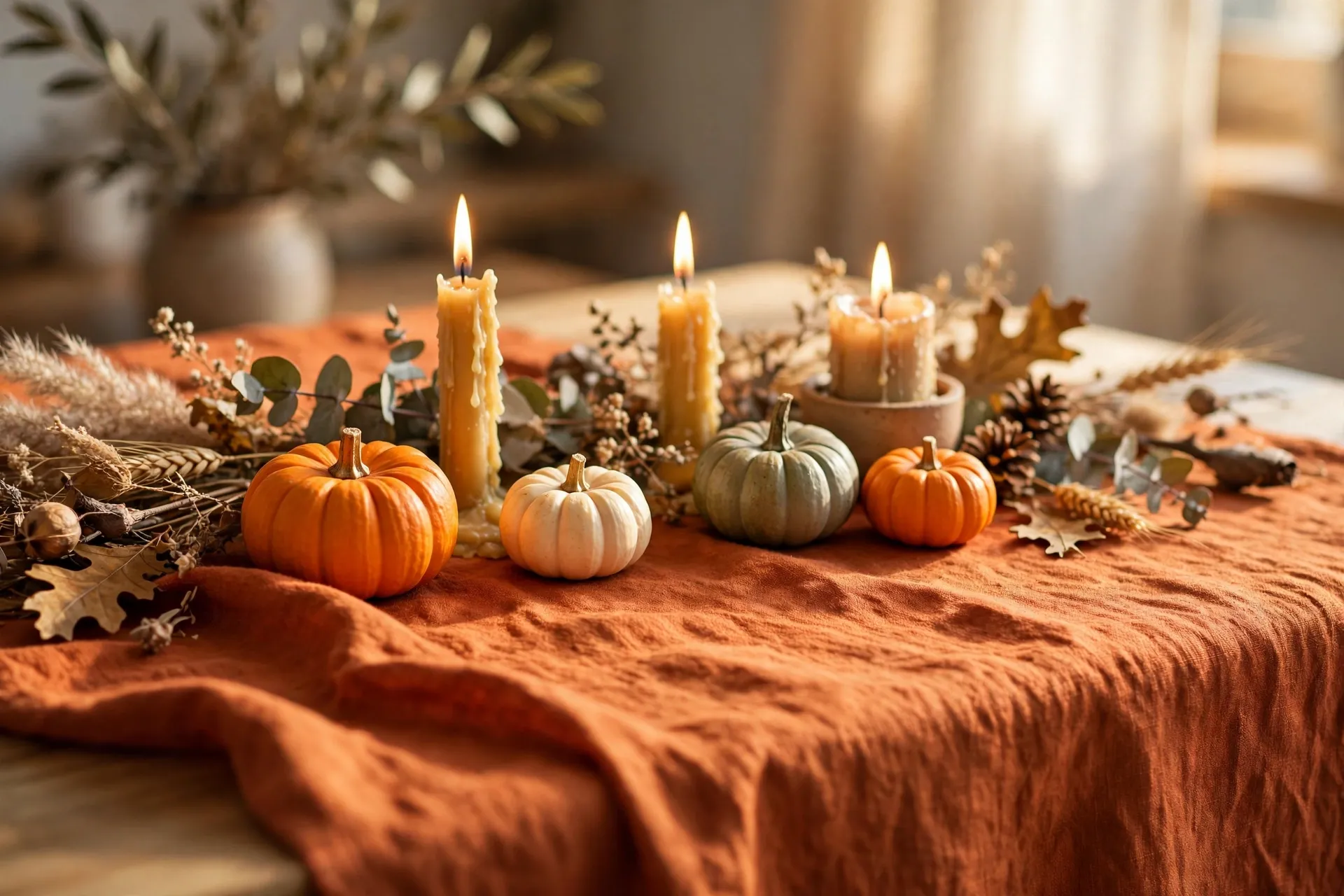
A runner is the best linen buy for a small table. It defines the center, protects against hot dishes, and leaves the wood visible at the edges so the table does not disappear under fabric. One good runner in an autumn tone handles Thanksgiving, and a different one handles Christmas.
Runners wash easily, store rolled in a drawer, and cost 15 to 30 dollars for a good one. Look for a finished edge and a weight that lies flat; curling runners are maddening. If you buy one linen this year, make it the runner.
Placemats: The Practical Choice
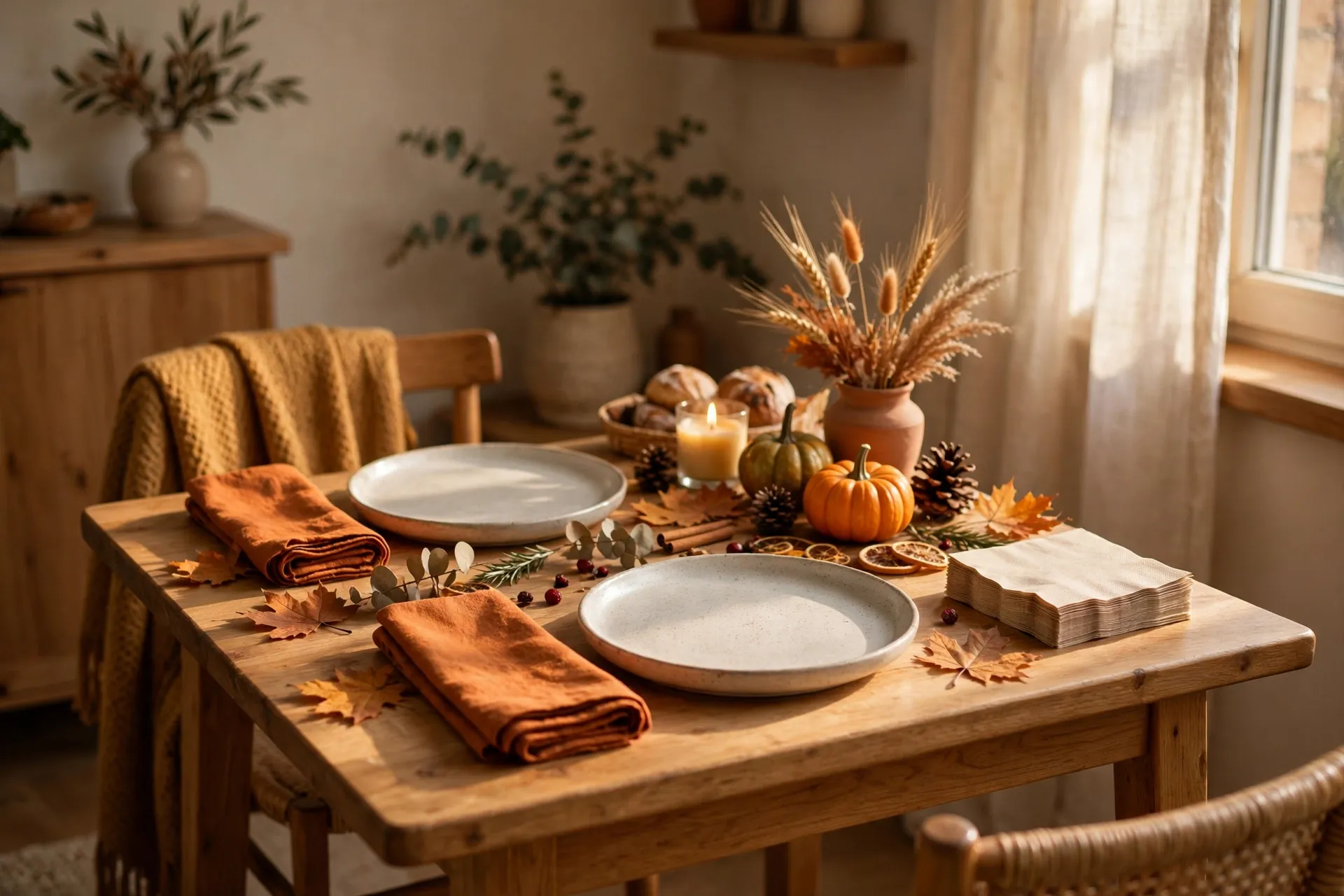
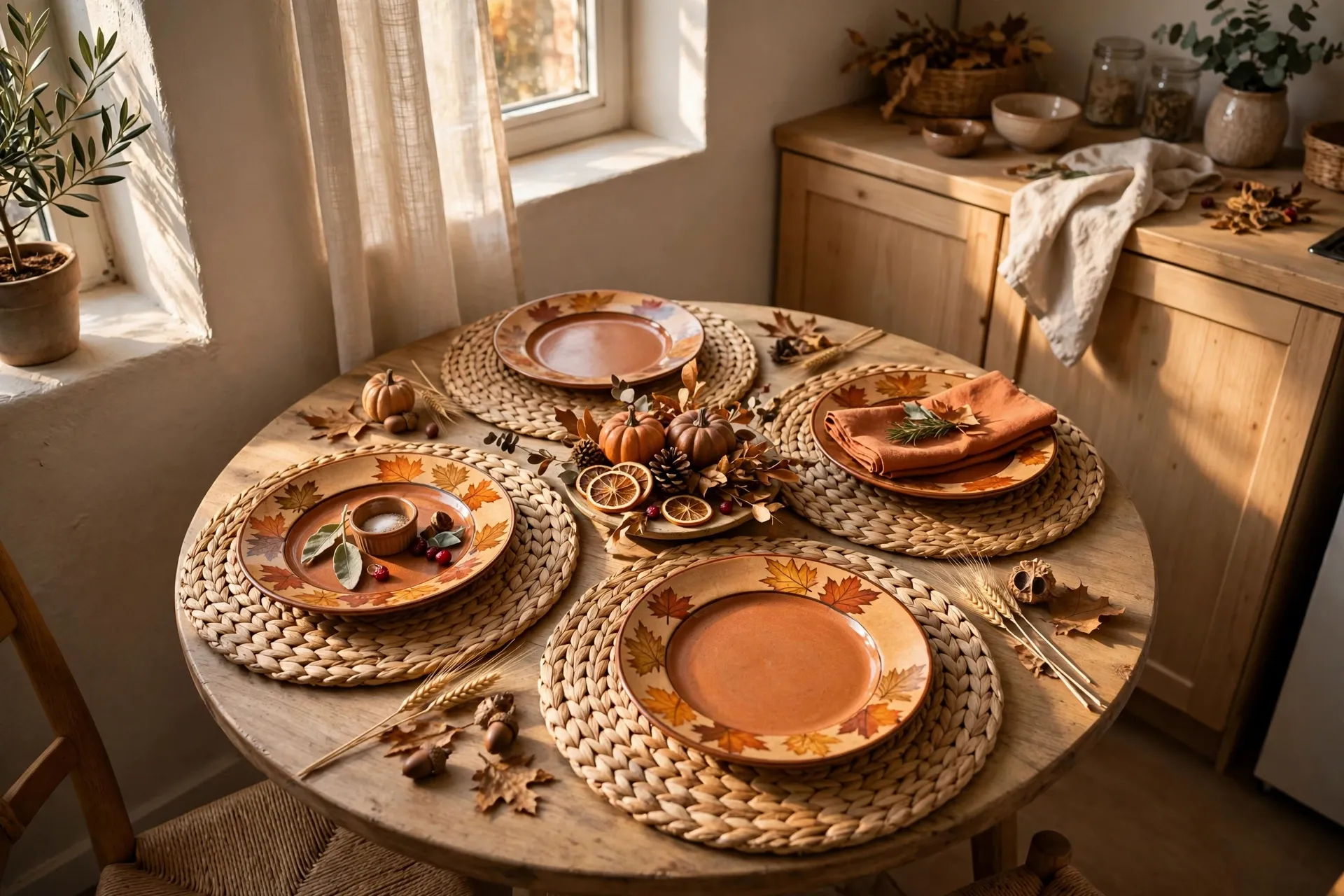
Placemats mark each seat, protect against heat and spills, and wash in seconds. Woven or vinyl placemats wipe clean, which makes them the practical pick for families with kids. Fabric placemats look softer but need laundering like napkins.
On a small table, placemats can crowd the surface if they are oversized, so stick to 12 by 18 inches and leave a couple of inches between settings. Round placemats suit round tables and soften square ones. If you are hosting Thanksgiving in a small home, placemats over a bare table are often the right call: less laundry, same structure.
Fabric Guide: Cotton, Linen, Polyester
Cotton is the workhorse: affordable, washable, softens with age, and widely available in autumn colors. Pure linen looks luxurious and wrinkles beautifully, but it costs three times cotton and needs ironing to look crisp. Linen blends split the difference nicely.
Polyester tablecloths are the gravy-proof option: spills bead up, they wash without ironing, and they cost little. The trade-off is feel; polyester looks fine from across the room and plasticky up close. For a kids’ table or a rental where stains are likely, polyester is the smart buy, aesthetics aside.
Color and Pattern: What Works for Thanksgiving
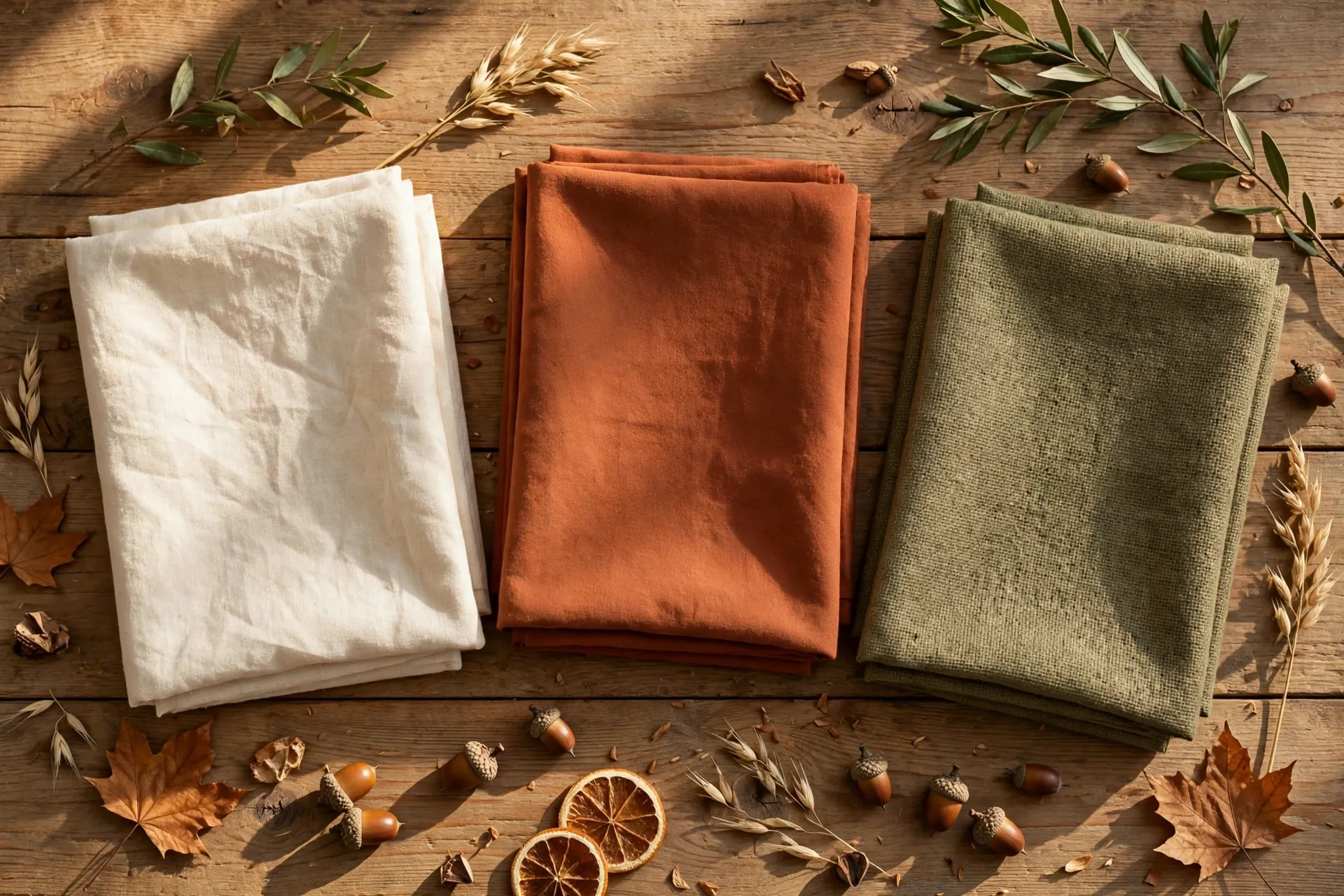
Solid autumn tones, rust, olive, mustard, deep brown, are the safest buy because they work for years and hide stains. A subtle pattern like a tonal stripe or a small harvest print adds interest without dating. Avoid anything with a giant turkey print unless it genuinely delights you; novelty prints age fast.
White and cream linens look stunning in photos and show every splash. If you love the look, reserve white for the runner and use darker placemats where the food sits. The layered approach gives the airy look with half the stain risk.
Layering Without Clutter
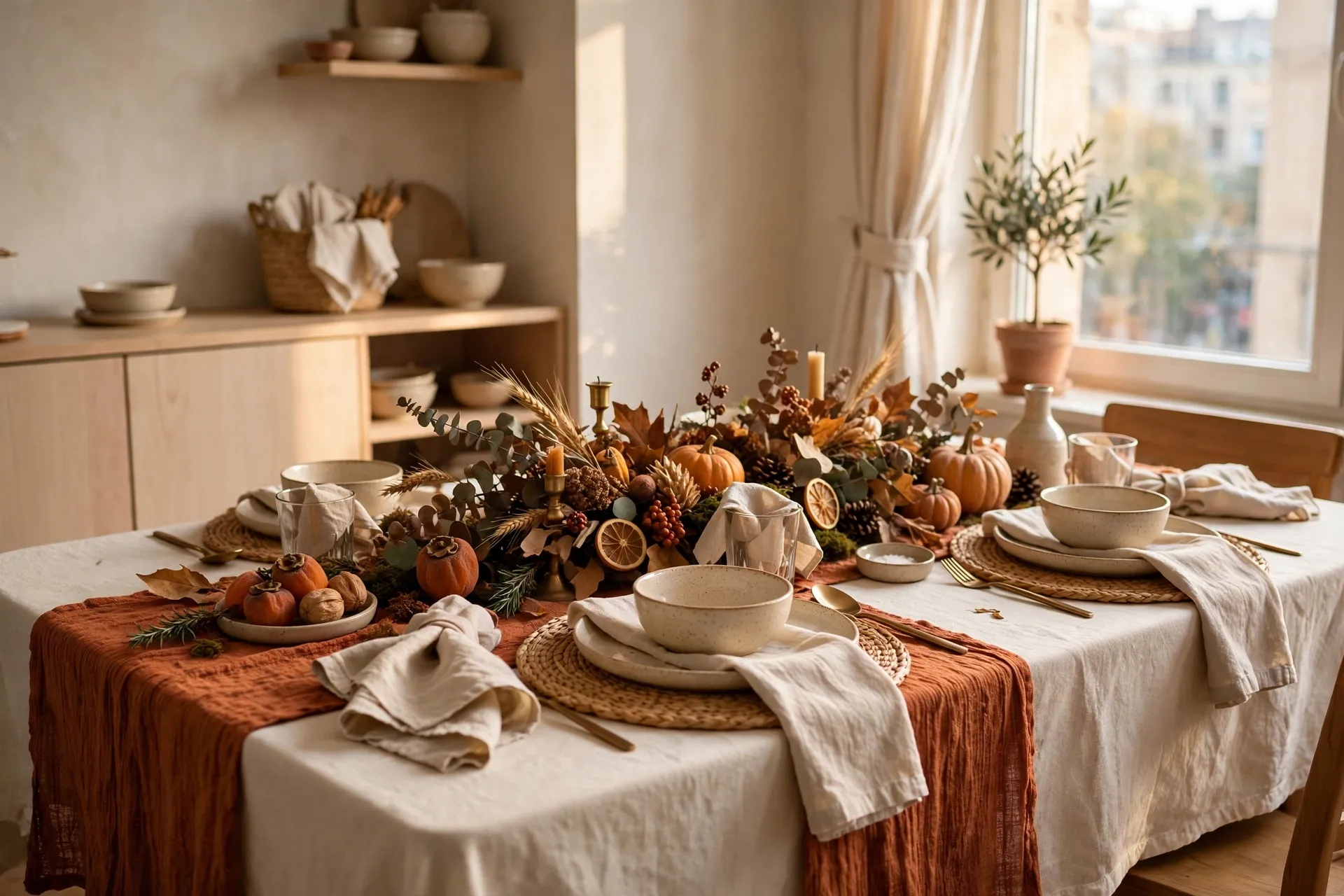
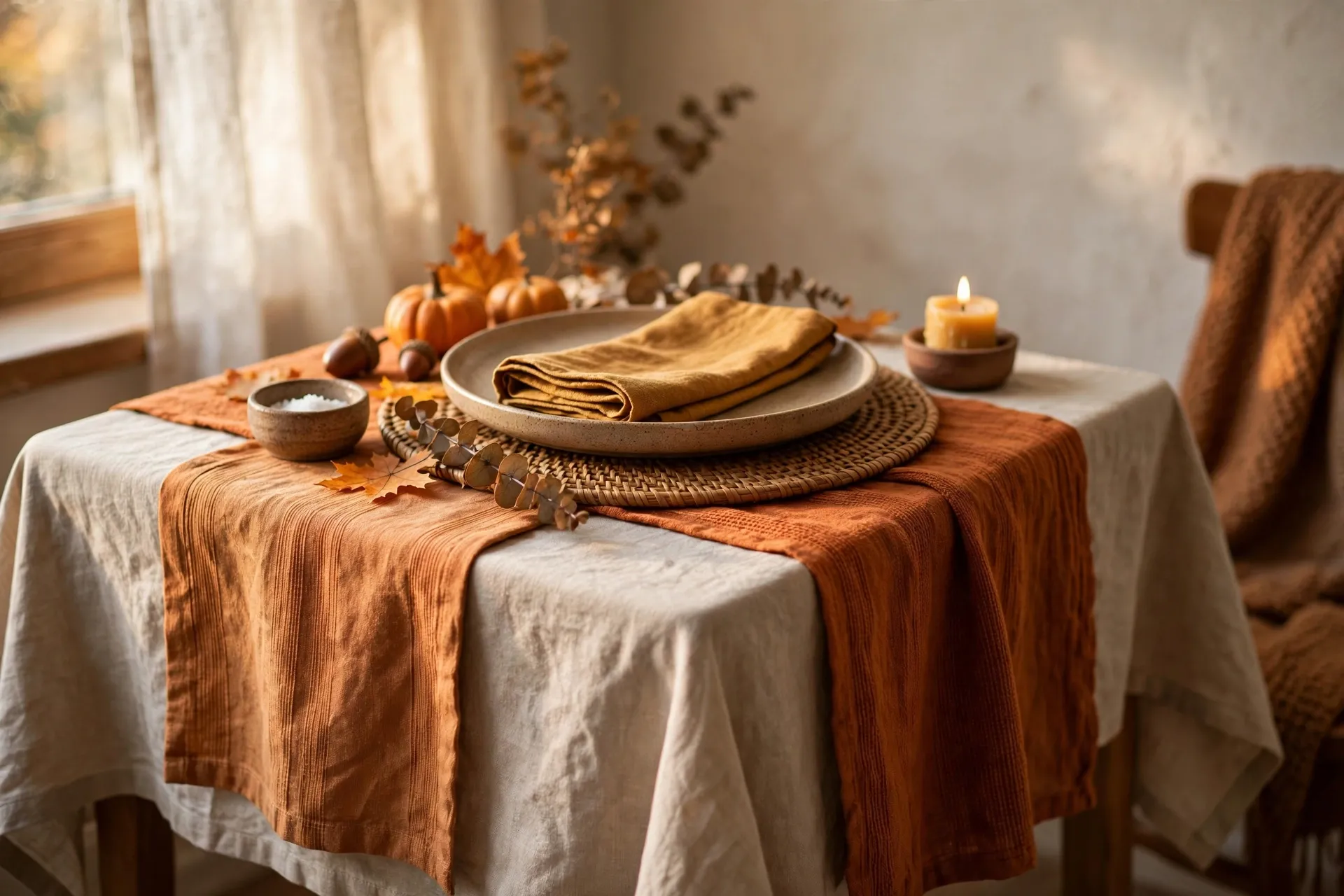
The classic layered look is a tablecloth plus a contrasting runner plus placemats, and it is too much for most small tables. Pick two layers max: a runner over a bare table, or placemats over a cloth. Three layers belong on long dining tables with room to breathe.
When layering, vary the textures: a smooth cloth with a nubby runner, or a flat runner with woven placemats. Same-color layering in different textures looks rich without being busy. And remember the napkins are a layer too; if the napkins are patterned, keep the other linens quiet. Our paper vs cloth napkin guide helps you match that final layer.
Washability: The Question Nobody Asks First
Check the care label before you buy, not after the gravy boat tips. Machine-washable cotton is the baseline; anything requiring dry cleaning does not belong at a family Thanksgiving. Dark colors and patterns forgive the stains that washing misses.
Treat stains the night of the dinner: scrape, cold rinse, soak. Dried gravy on linen becomes a permanent souvenir. Keep a stain stick in the kitchen drawer during the holidays; it takes ten seconds and saves the tablecloth.
How Many Sets Do You Actually Need?
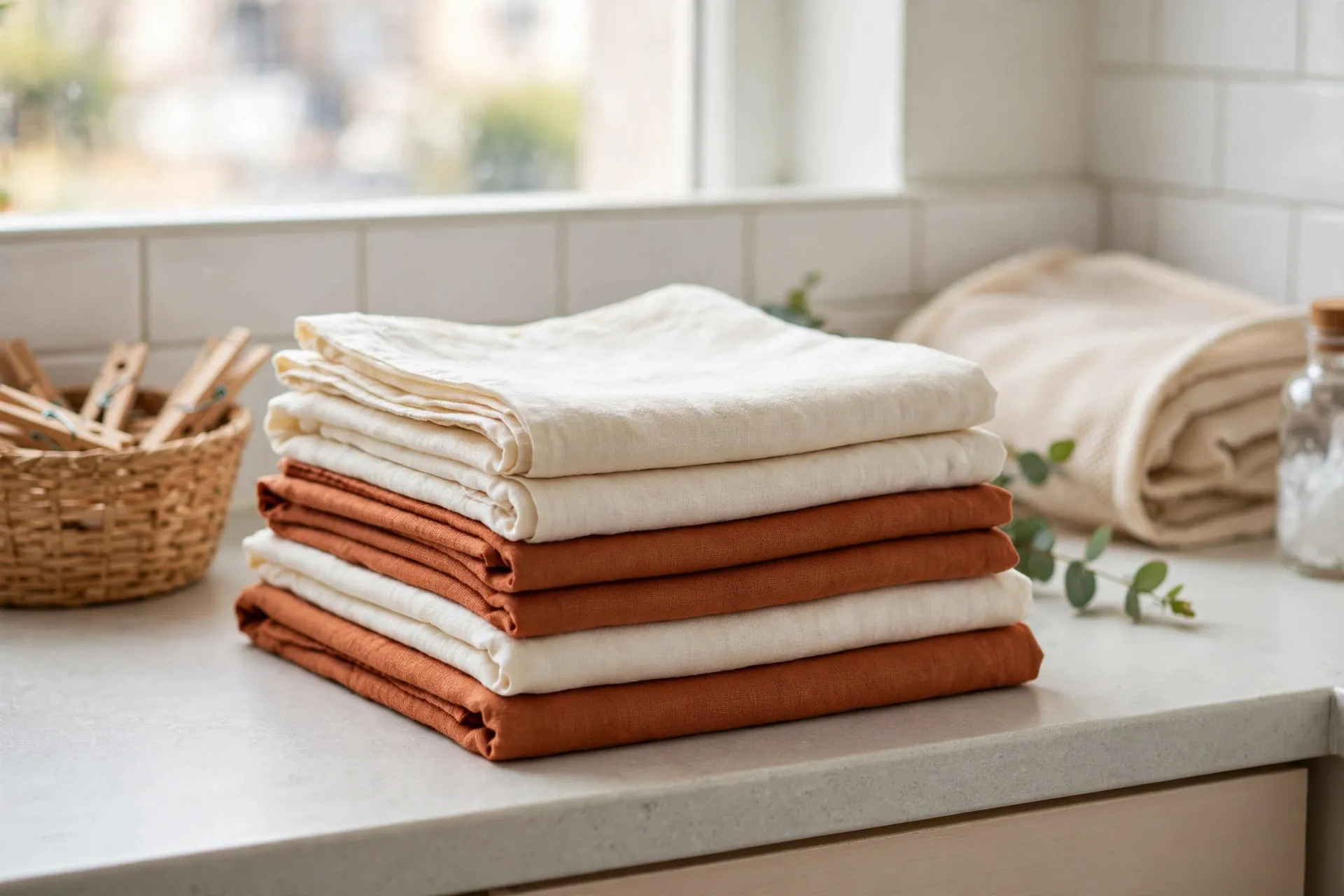
One. One good autumn runner or one set of placemats handles Thanksgiving, and you can add a Christmas runner in December if you want. The matched 12-piece sets in the store are for people with linen closets; apartment dwellers need versatility, not volume.
Buy pieces that work for multiple holidays: a rust runner suits Thanksgiving and Christmas, cream placemats suit everything. Seasonal specificity is what fills closets with single-use linens. Neutral with an autumn lean is the formula.
Storing Linens in a Small Home
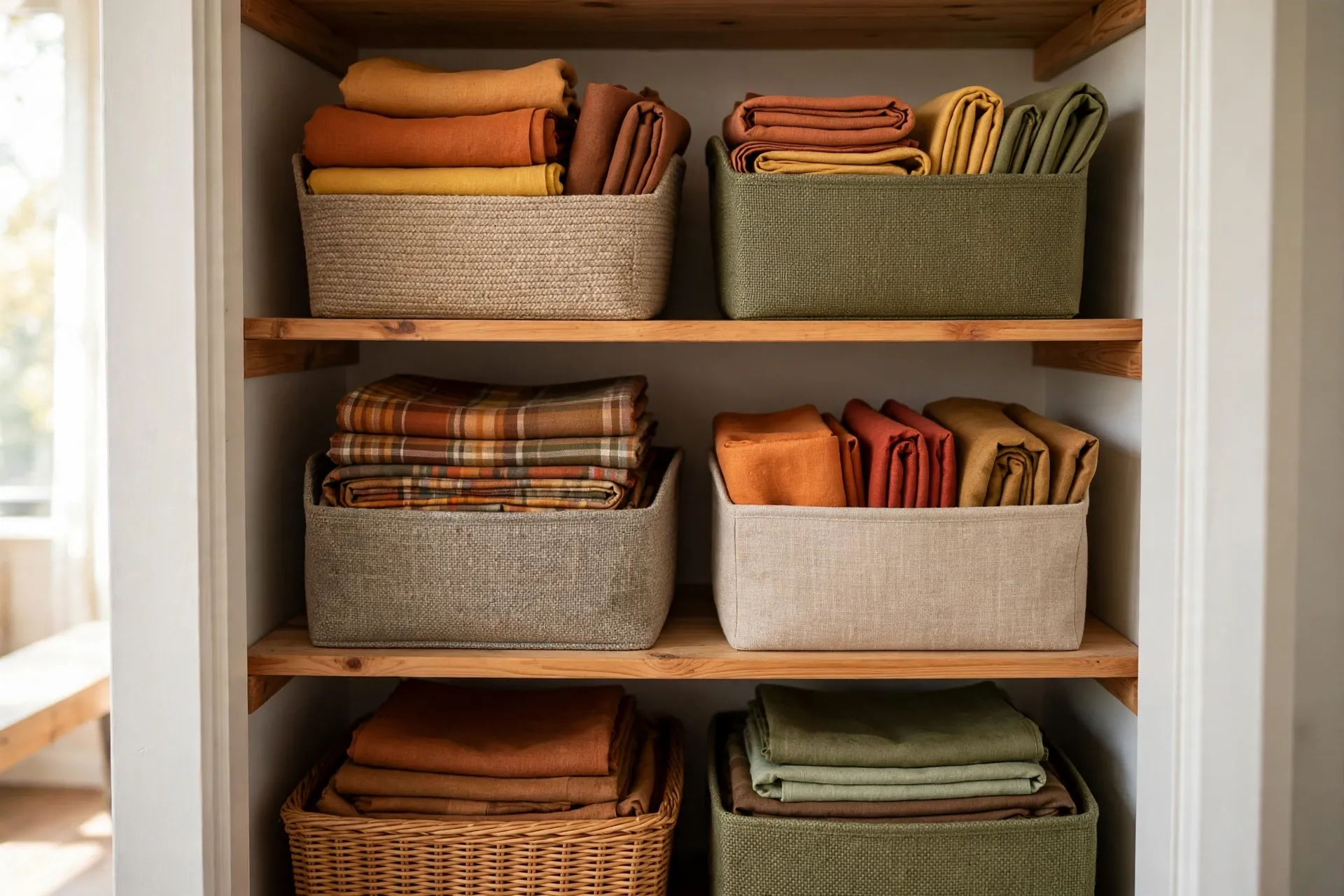
Roll runners around a cardboard tube to prevent creases; fold tablecloths along existing creases and store flat. A single fabric bin holds a runner, a set of placemats, and napkins for the whole holiday. Cedar blocks or lavender sachets keep stored linens fresh.
The real enemy is the ironing pile in January. Wash linens promptly after the holiday, fold them warm from the dryer, and put them away the same day. Linens that sit in a laundry basket for a month develop creases that need a full ironing session to fix.
When to Buy
Buy Thanksgiving linens in early October for the best selection; by mid-November the good autumn tones are picked over. After Thanksgiving, Christmas linens go on sale, which is the time to buy the December runner. After Christmas, everything holiday goes 50 to 75 percent off for next year.
If you are starting from zero, buy the Thanksgiving pieces now and the Christmas pieces on sale. Spreading the cost across the season is easier on the budget, and you will know by December whether you actually use the runner enough to warrant a second one. Small-space holiday planning continues with how to enjoy Christmas in a small space, which covers decorating when storage is tight.
Looking for more ideas? Browse our seasonal decor stories.
Save to Pinterest