In this article
- 1. Hang a garland in a doorway
- 2. Swag a garland across a window
- 3. Run a garland under the kitchen cabinets
- 4. Curtain open shelves with greenery
- 5. Garland the bathroom doorway
- 6. Dress the entryway closet
- 7. Frame the bed with a garland
- 8. Garland the kitchen window
- 9. Frame the balcony door
- 10. Run a garland along the stair rail
- 11. Divide a desk nook with a garland
- 12. Store the rods and garlands together
- How to keep a tension rod from falling
- What to buy once and reuse every year
A tension rod holds a garland with pressure alone, no nails, no hooks, no holes, which makes it the best friend a rented apartment has at Christmas. Twist the rod until it wedges tight between two surfaces, drape the garland over it, and the decoration hangs where nothing else can: across a doorway, inside a window frame, under a cabinet, across open shelves. These tension rod garland ideas all come down in January without a mark on the wall, and the rods themselves cost less than the garland they hold.
1. Hang a garland in a doorway
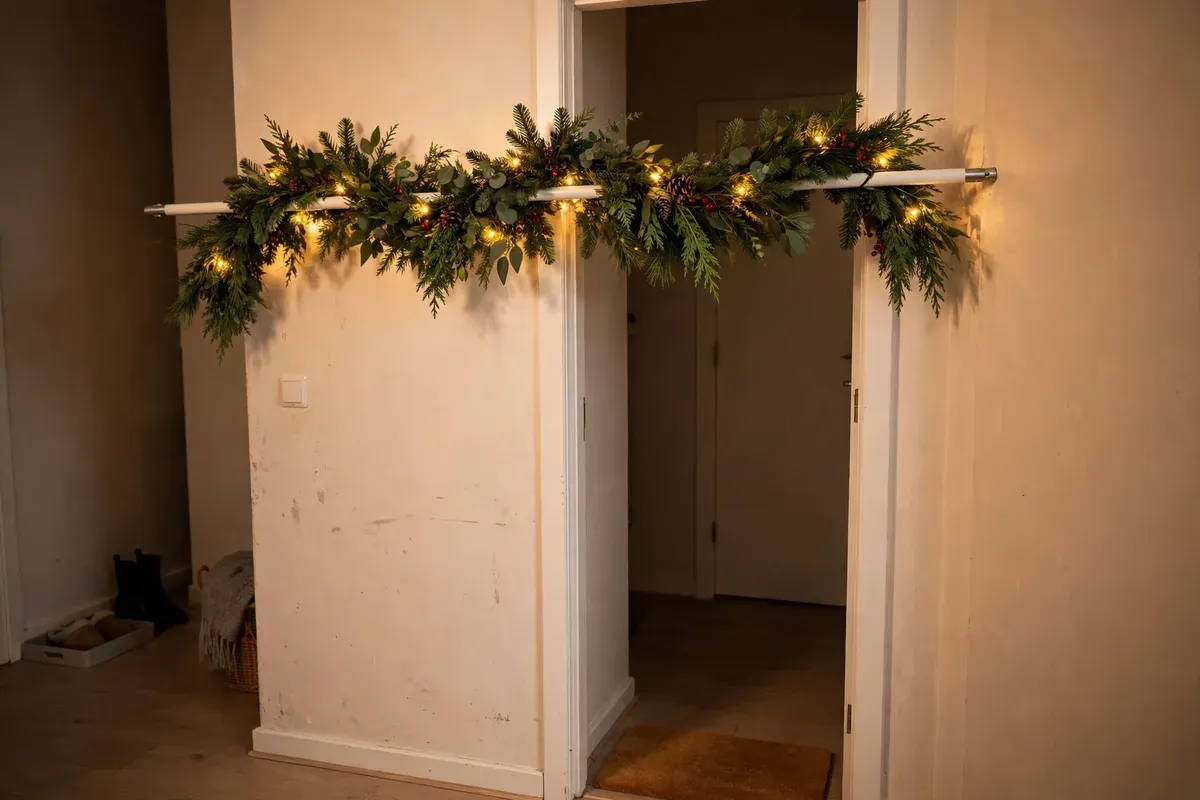
A garland hung from a tension rod across a doorway is the Christmas arch for an apartment with no mantel. Wedge a tension rod across the top of a doorway, drape a garland 4 to 5 feet long over it so it swags in the middle, and weave in a string of battery fairy lights. The garland frames everyone who walks through, it needs no hardware, and it costs 15 to 25 dollars for the rod and the garland together.
Measure the doorway before you buy the rod, since rods come in fixed ranges and a rod that is too short will not wedge, and a rod that is too long will not fit. Twist the rod until it is tight, then twist it one more quarter turn, since a rod that feels tight by hand loosens as the garland pulls on it. Hang the garland high enough that the lowest swag clears the tallest person in the household by 4 inches, since a garland that brushes heads will be pulled down within a week.
2. Swag a garland across a window
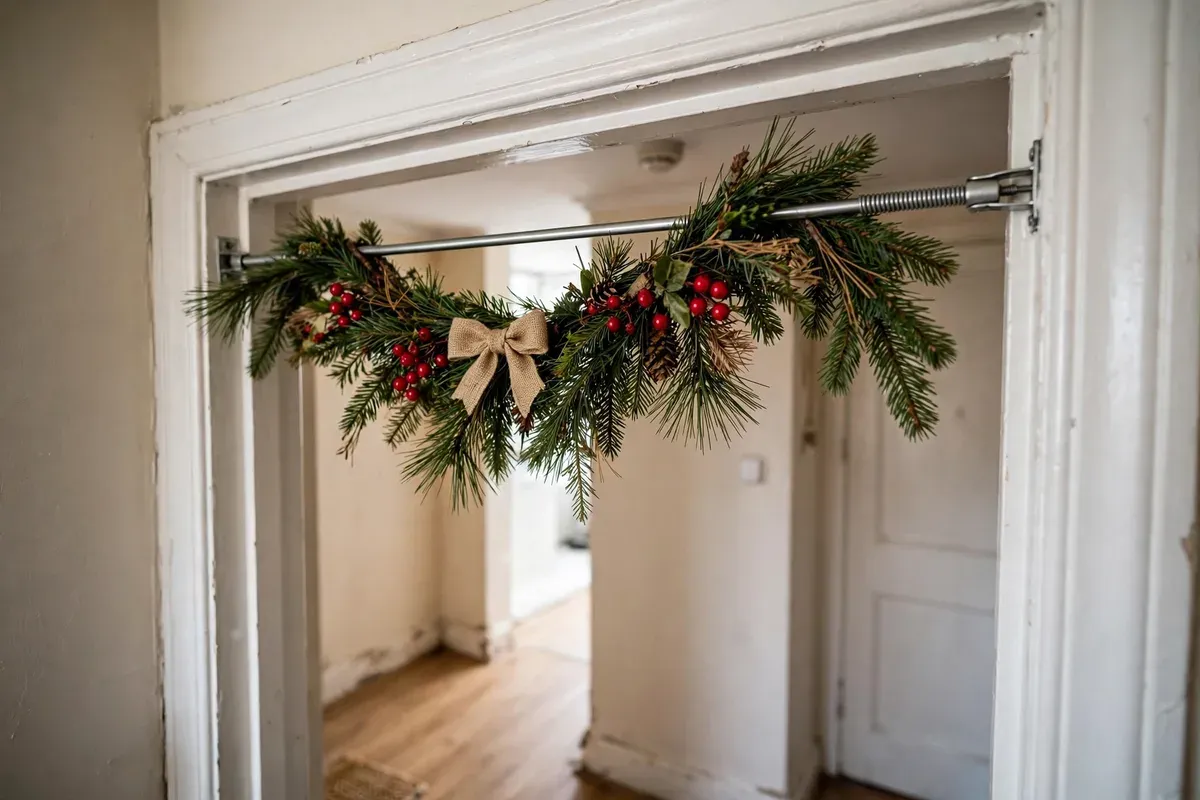
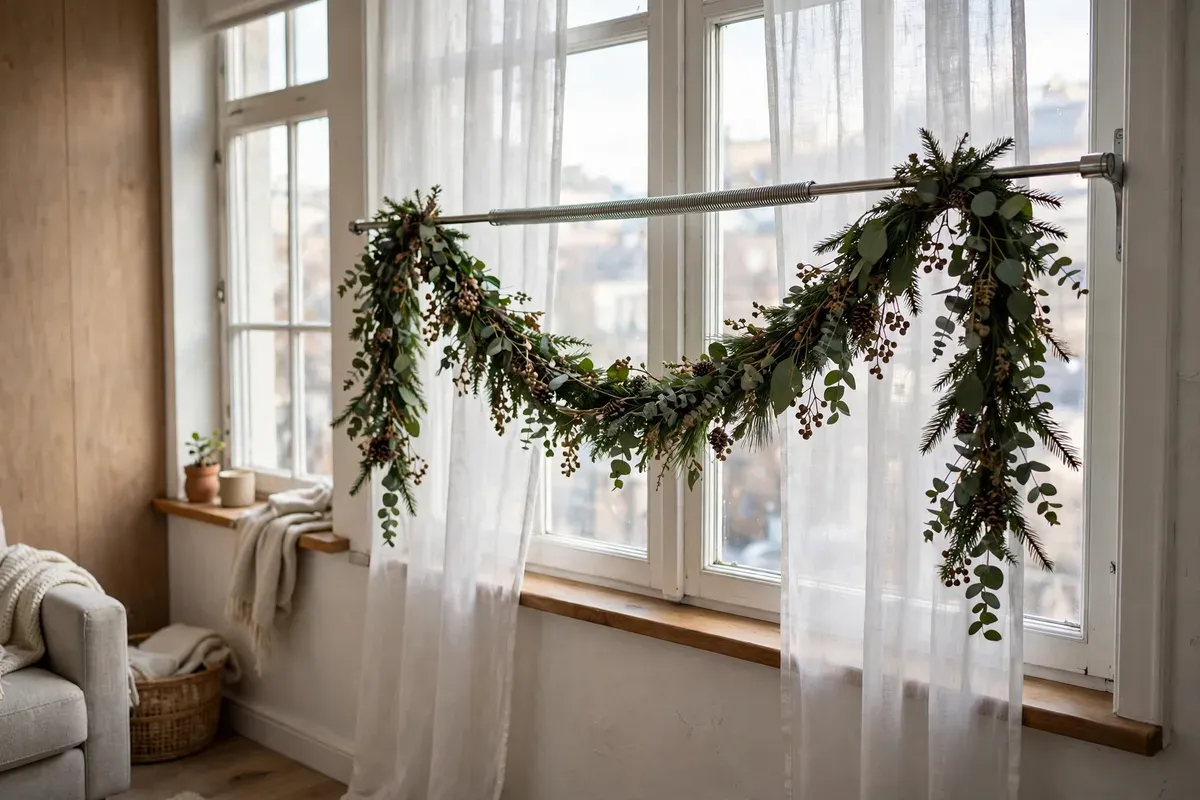
A garland swagged across a window on a tension rod is the Christmas window for an apartment where the windowsill is already full. Wedge the rod inside the window frame, about 6 inches below the top, drape the garland over it in a deep swag, and let the sheer curtains hang behind it. The garland is visible from inside and outside, it does not touch the glass, and it leaves the windowsill free for candles or plants.
Use a rod that fits inside the frame, not across the wall outside it, since a rod inside the frame hides its ends and looks built in. Keep the swag deep, at least 8 inches below the rod at the center, since a shallow swag looks like a straight line and a deep one reads as a proper drape. Choose a light garland, under 2 pounds, since a heavy garland pulls the rod down inside a smooth window frame. If the window is the only light in the room, keep the garland thin, since a thick garland blocks the light.
3. Run a garland under the kitchen cabinets
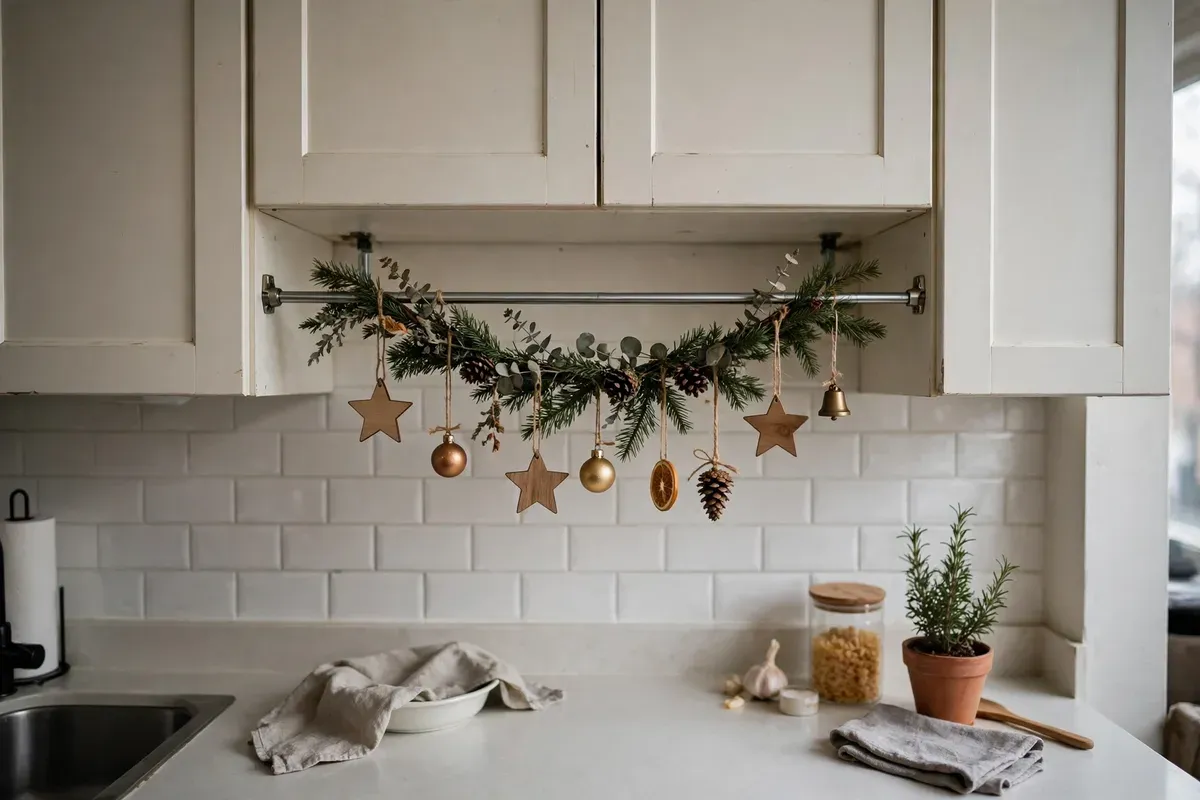
A garland under the kitchen cabinets on a tension rod is the Christmas decoration for the hardest room in the apartment to decorate, because the kitchen has no spare surface. Wedge a short rod under the cabinets, about 12 inches below them, and hang a small garland with a few hanging ornaments from it. The garland fills the empty space between the cabinets and the counter, it does not touch the food, and it comes down in January without a mark on the cabinets.
Measure the gap between the cabinets first, since most kitchen gaps are 18 to 24 inches and a rod made for a doorway will not fit. Use a light garland with small ornaments, since a heavy garland pulls a short rod down and the ornaments swing into the food. Keep the garland at least 6 inches above the counter, since a garland that touches the counter collects crumbs and grease. If the cabinets have no gap, wedge the rod between the side of a cabinet and the wall instead, which gives the same display in a smaller space.
4. Curtain open shelves with greenery
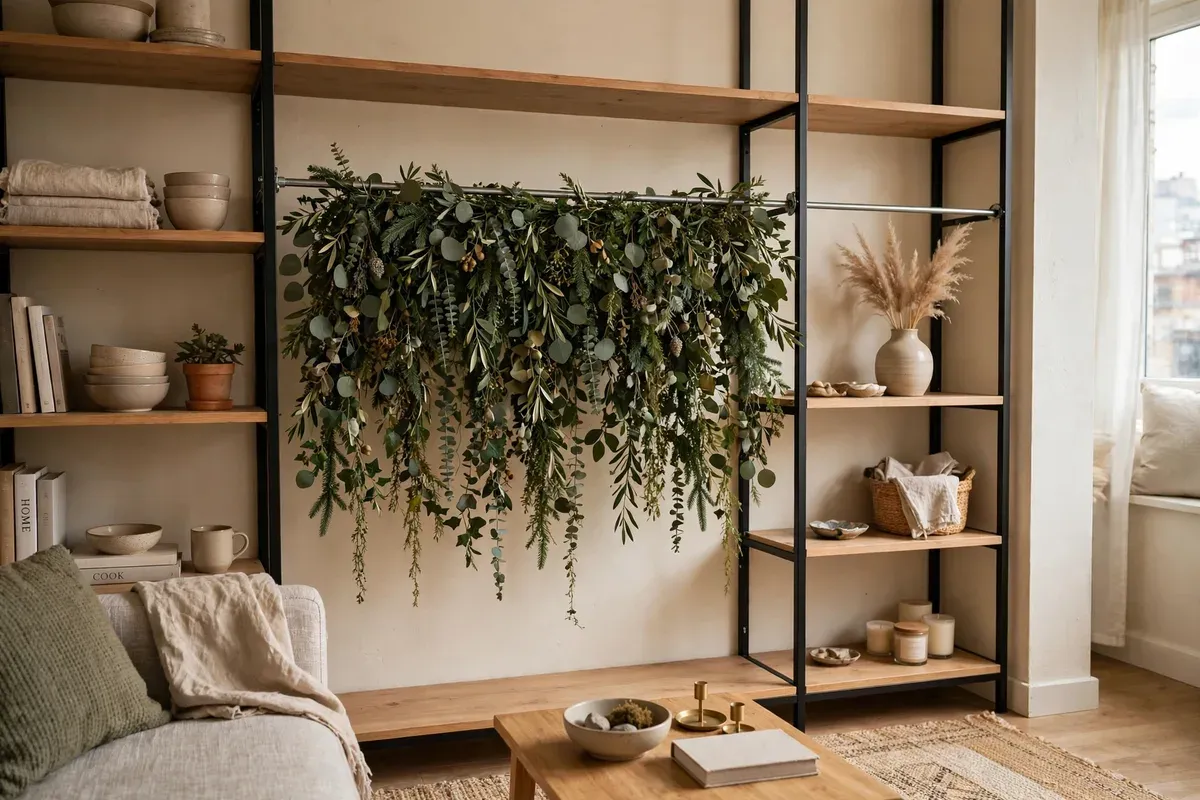
A greenery curtain hung from a tension rod across open shelves is the Christmas cover for shelves that are already full. Wedge the rod across the top of the shelving unit, hang strands of greenery from it so they fall in front of the shelves, and tuck a few small ornaments into the greenery. The curtain hides the clutter on the shelves, it adds Christmas color to a plain wall, and it lifts off in January without moving a single book.
Hang the greenery in strands 2 inches apart, since a solid curtain looks like a wall and spaced strands let the shelves show through. Use lightweight artificial greenery, not real branches, since real branches are heavy and a heavy curtain pulls the rod down. Keep the curtain 2 inches shorter than the shelving unit, since a curtain that brushes the floor collects dust and gets stepped on. If the shelves hold dishes, hang the greenery in front of the top shelf only, since a full curtain blocks access to the dishes.
5. Garland the bathroom doorway
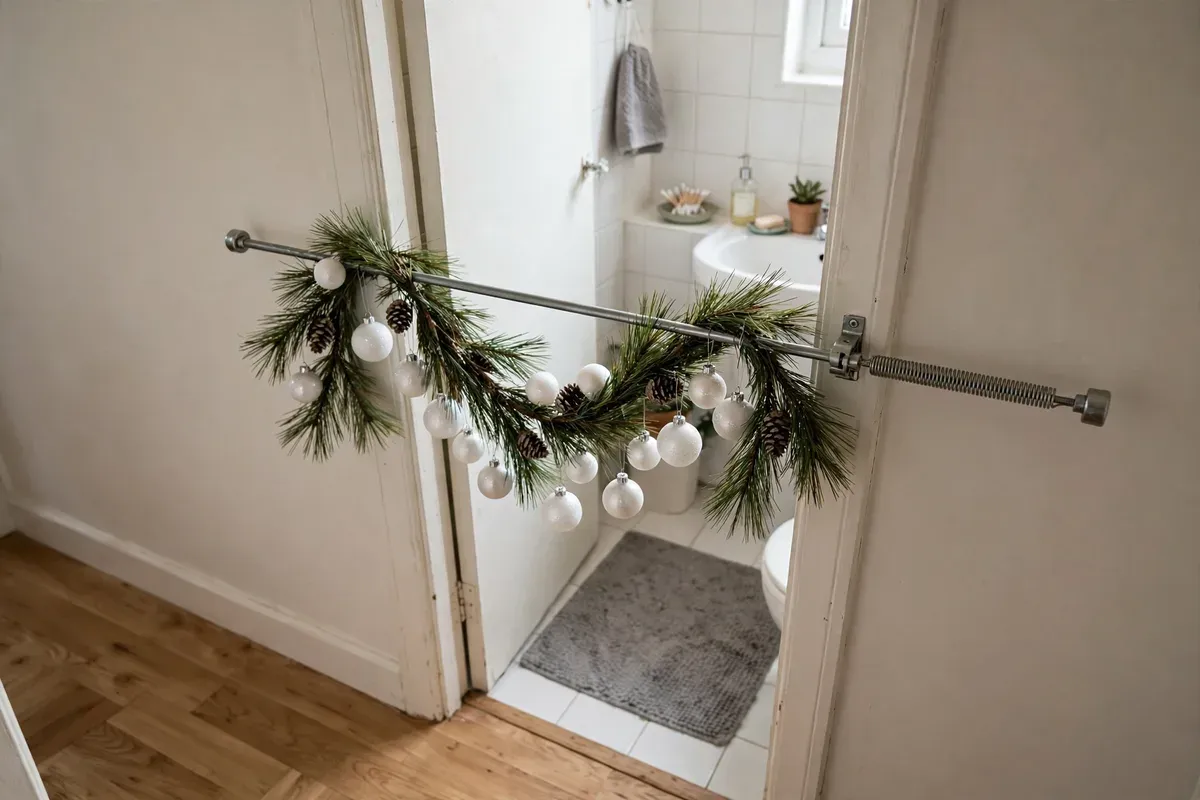
A garland on a tension rod across the bathroom doorway is the Christmas decoration for the room everyone forgets, and it takes no space in a room that has none. Wedge a rod across the bathroom door frame, drape a short garland with white ornaments over it, and the bathroom feels festive every time someone walks in. The garland survives the bathroom damp better than paper decorations, and it comes down in January without a mark.
Use an artificial garland, not a real one, since a real garland in a damp bathroom sheds needles within days. Choose white or silver ornaments, since the bathroom is small and dark colors disappear in it. Keep the garland high, at least 6 inches above the tallest person, since a bathroom doorway is narrow and a low garland will be pulled down by everyone who passes. If the bathroom has no door frame, wedge the rod across the shower curtain rail instead, which gives the same display over the bath.
6. Dress the entryway closet
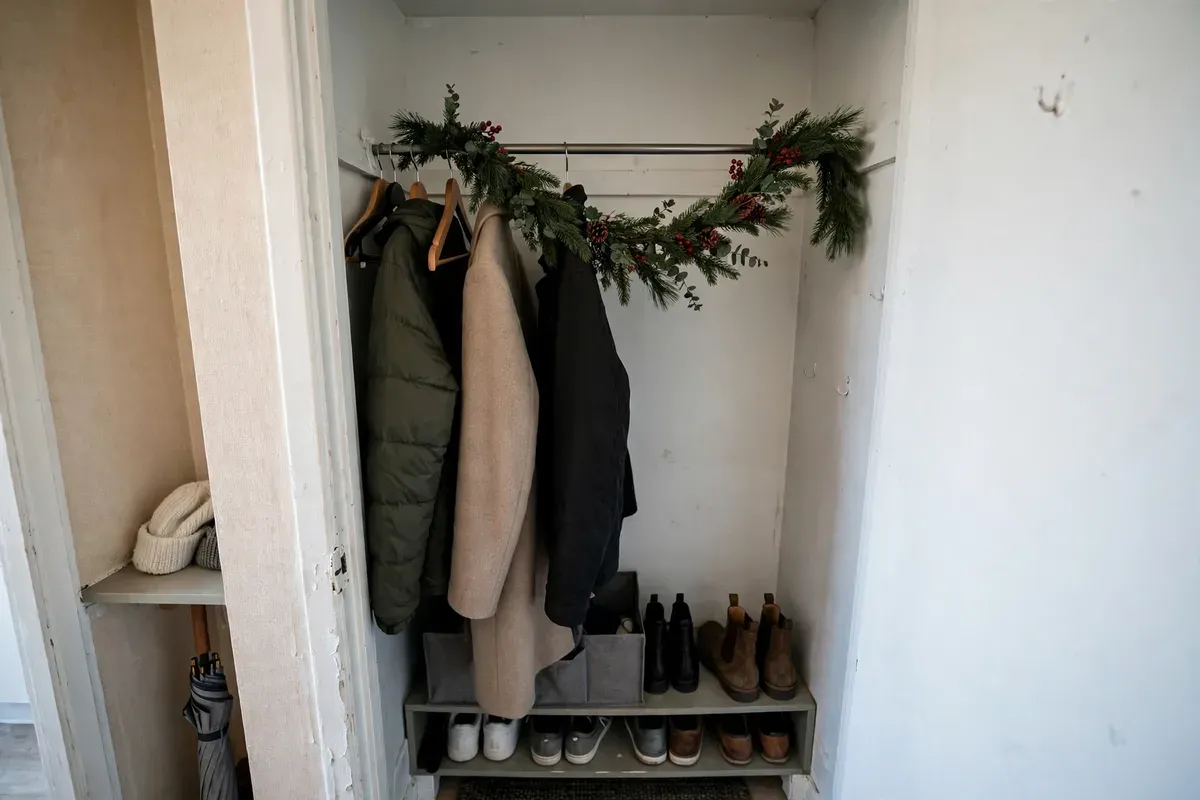
A garland on a tension rod inside the entryway closet is the surprise decoration guests see when they hang up their coats. Wedge a short rod across the inside of the closet, above the coats, and hang a small garland with a few ornaments from it. The closet opens onto the entryway, so the garland is visible every time the door opens, and it costs nothing beyond the rod and a short piece of garland.
Keep the garland short, about 2 feet, since a long garland in a closet tangles with the coats. Hang it above the coat hooks, not at eye level, since a garland at eye level will be caught by every coat that goes in and out. Use a rod that fits the closet width exactly, since a closet rod that is too long will not fit and a rod that is too short will fall when the closet door slams. If the closet has no door, the garland is visible all the time, so choose one that matches the entryway colors.
7. Frame the bed with a garland
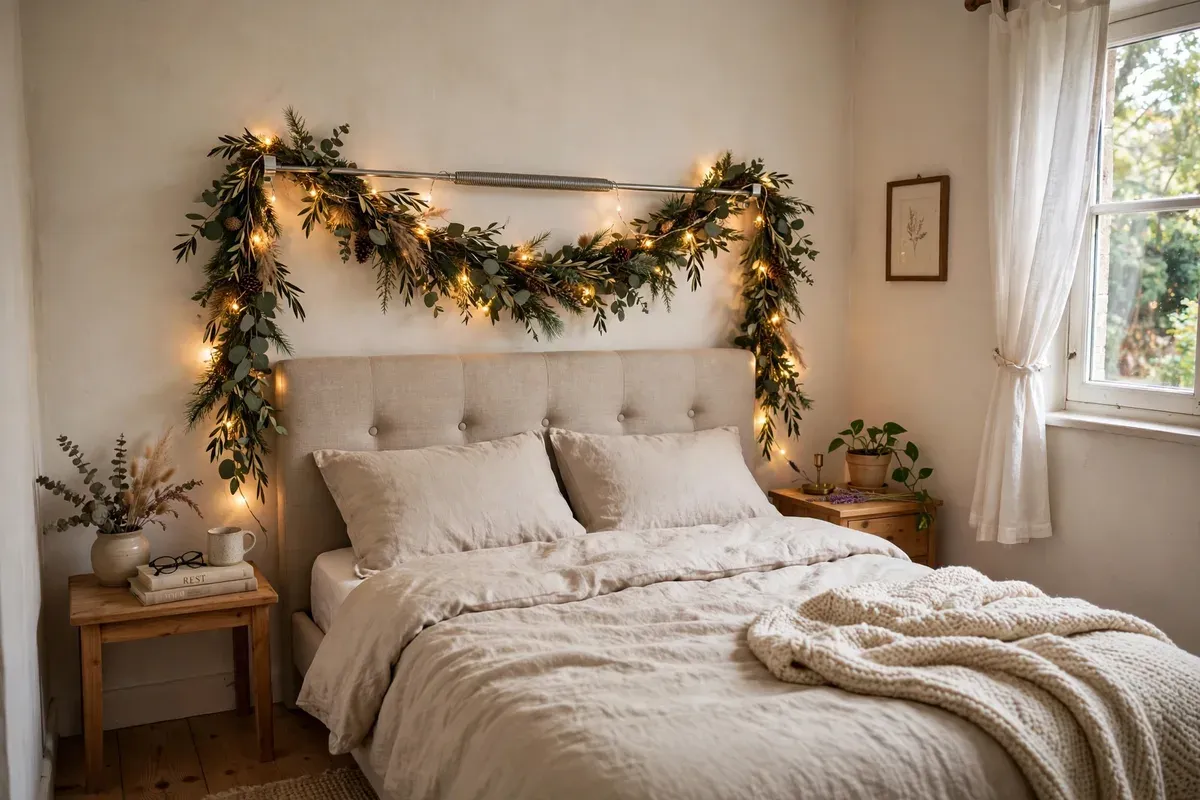
A garland on a tension rod above the bed headboard is the Christmas decoration for the bedroom, and it is the one you see last at night and first in the morning. Wedge a rod between two walls above the headboard, or across the headboard frame itself, and drape a garland with fairy lights over it. The garland frames the bed, it needs no wall fixings, and the lights make the bedroom glow at bedtime.
Use battery fairy lights, never plug-in ones, since the garland hangs above a bed and a plug-in string near bedding is a risk. Keep the garland at least 12 inches above the pillows, since a garland that hangs low will be pulled down in the night. Choose a light garland, under 2 pounds, since a heavy garland pulls the rod down onto the bed. If the bed has no headboard, wedge the rod across the wall above the bed instead, which gives the same frame without the furniture.
8. Garland the kitchen window
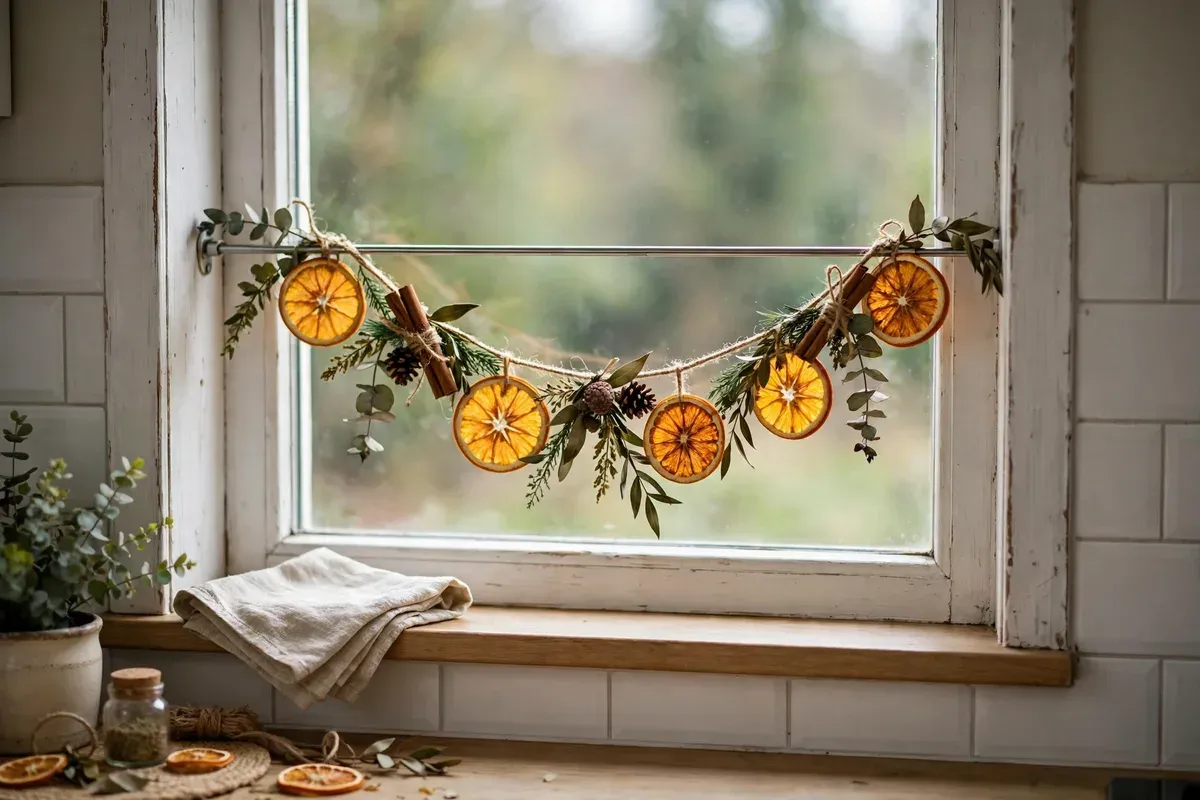
A garland on a tension rod across the kitchen window is the Christmas window for the room where everyone stands at the sink. Wedge the rod inside the window frame, drape a garland with dried orange slices over it, and the window becomes a decoration that smells faintly of oranges. The garland does not touch the food, it does not block the light, and it comes down in January without a mark.
Dry the orange slices first, since fresh slices rot within days and dried slices last the whole season. Slice the oranges a quarter inch thick, bake them at 200 degrees for two hours, and let them cool before you thread them onto the garland. Keep the garland thin, since a thick garland over a kitchen window blocks the light the sink needs. If the kitchen window is small, under 2 feet wide, use a short garland with three orange slices instead of a full swag, since a full swag crowds a small window.
9. Frame the balcony door
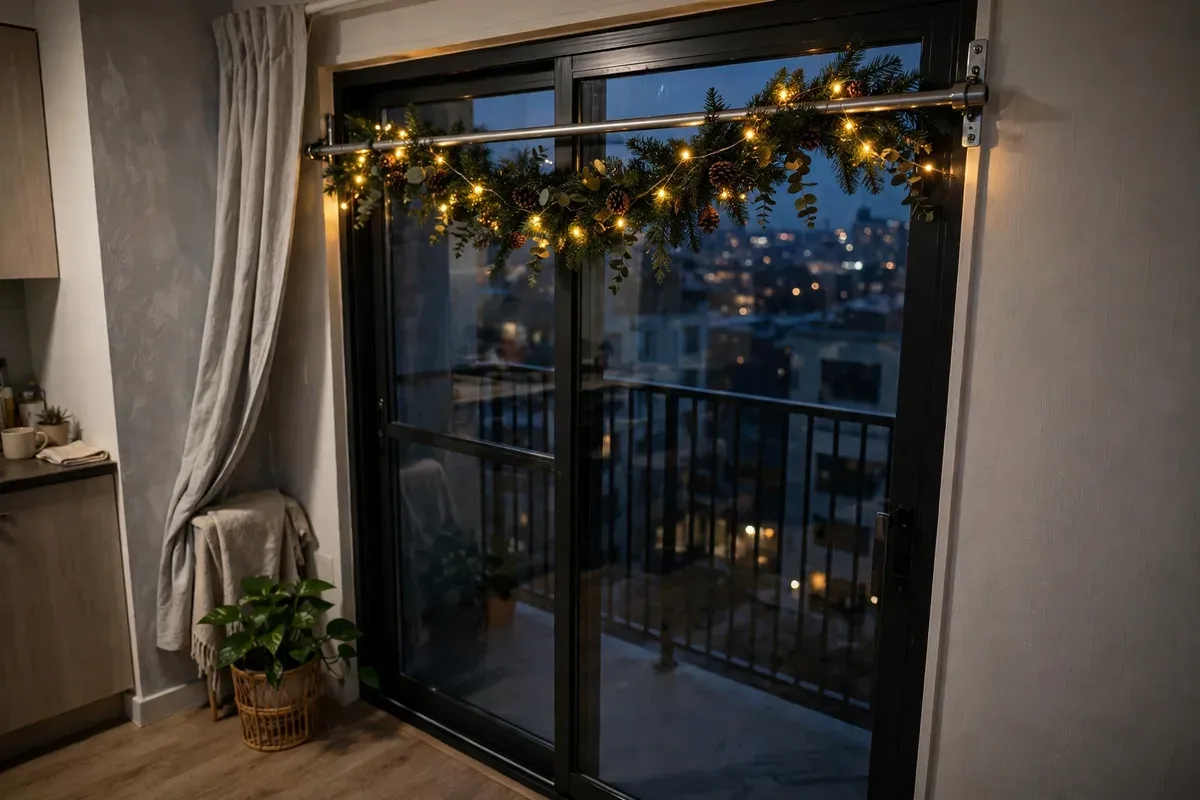
A garland on a tension rod in the balcony door frame is the Christmas decoration for the door that leads outside, and it is visible from the living room and from the balcony at once. Wedge the rod across the top of the balcony door frame, drape a garland with fairy lights over it, and the door becomes a lit frame in the evening. The garland stays inside, so the weather never touches it, and it comes down in January without a mark.
Use a rod that fits the door frame exactly, since a balcony door is wider than an interior door and a standard rod may be too short. Keep the garland high enough that the door opens freely, since a garland that blocks the door will be torn down the first time someone steps onto the balcony. Choose battery fairy lights, since the garland hangs over a door that opens to the cold and a plug-in string near a draughty door is a risk. If the balcony door slides, hang the garland on the fixed side of the frame, not the sliding side, since the sliding door will catch it.
10. Run a garland along the stair rail
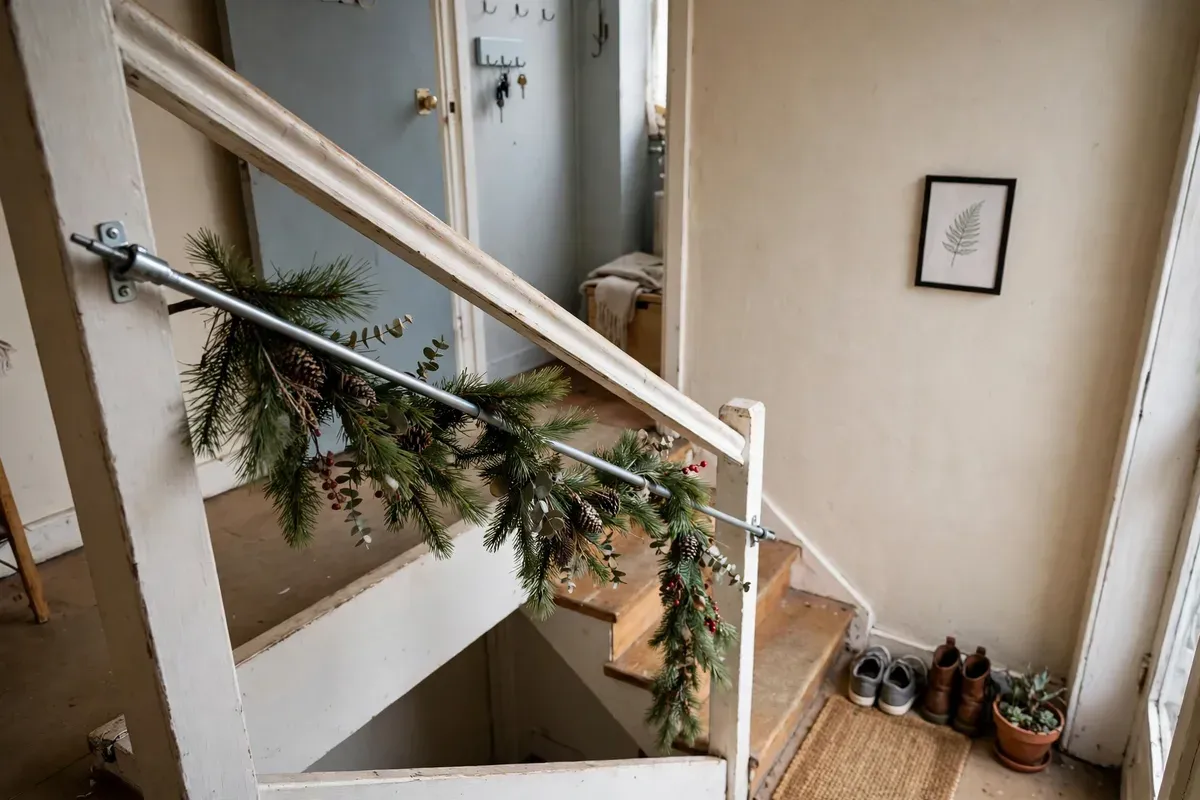
A garland on a tension rod along the stair rail is the Christmas decoration for a small apartment with stairs, and it is the one every visitor touches on the way up. Fix a short rod along the stair rail, or wedge one between the rail and the wall, and drape a pine garland along it with a few red berries. The garland follows the stairs, it needs no nails in the rail, and it comes down in January without a mark.
Keep the garland on the wall side of the rail, not the open side, since a garland on the open side narrows the stairs and people grab it for balance. Use a light garland, since a heavy garland pulls the rod down onto the steps. Tie the garland to the rod with twine every 12 inches, since a garland that hangs loose slides down the rail within days. If the stairs are steep, keep the garland short, since a long garland on steep stairs pools at the bottom and becomes a trip hazard.
11. Divide a desk nook with a garland
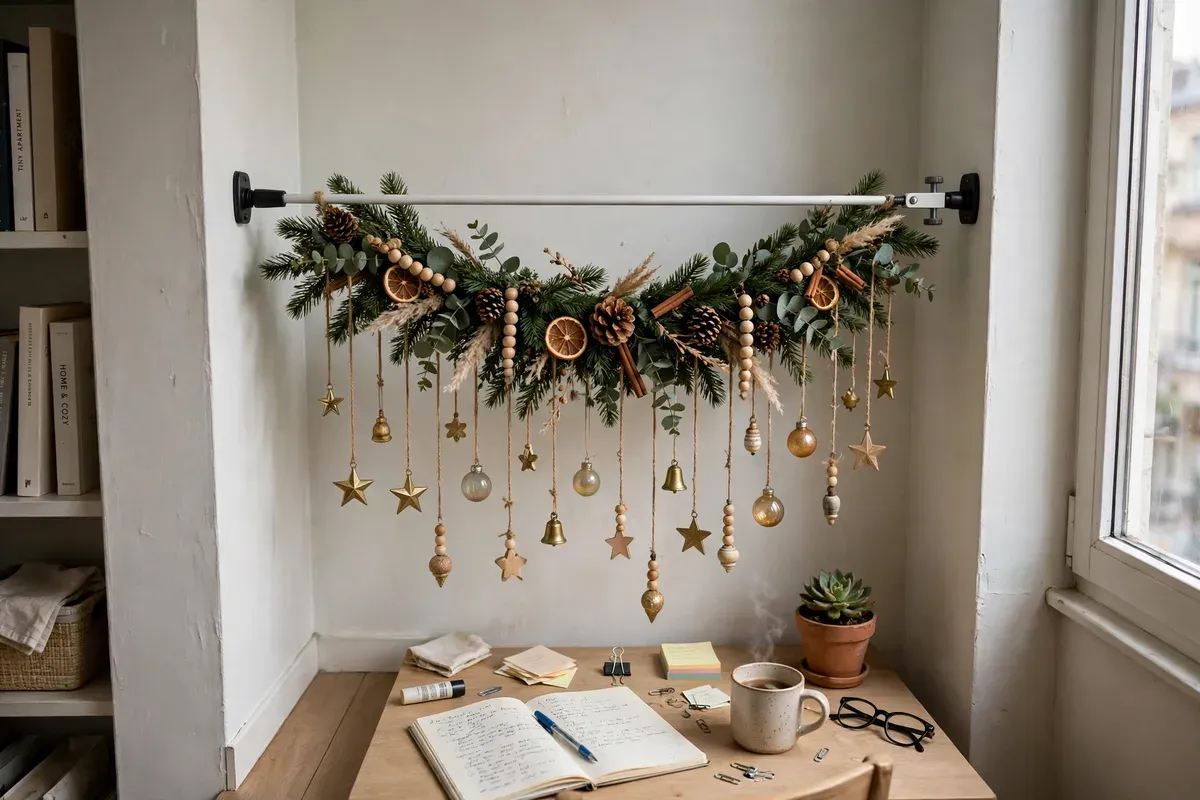
A garland on a tension rod across a desk nook is the Christmas divider for an apartment where the desk sits in the living room. Wedge the rod across the nook, hang a garland with small ornaments from it, and the desk becomes its own corner instead of part of the living room. The garland gives the nook privacy without a wall, it costs less than a screen, and it comes down in January without a mark.
Hang the garland high enough that it clears the monitor, since a garland that blocks the screen will be pushed aside daily. Keep the ornaments small, under 2 inches, since large ornaments swing into the keyboard. Use a rod that fits the nook exactly, since a nook rod that is too long will not fit and a rod that is too short will fall when the desk is bumped. If the desk nook has no side walls, wedge the rod between two bookshelves instead, which gives the same divider in an open room.
12. Store the rods and garlands together
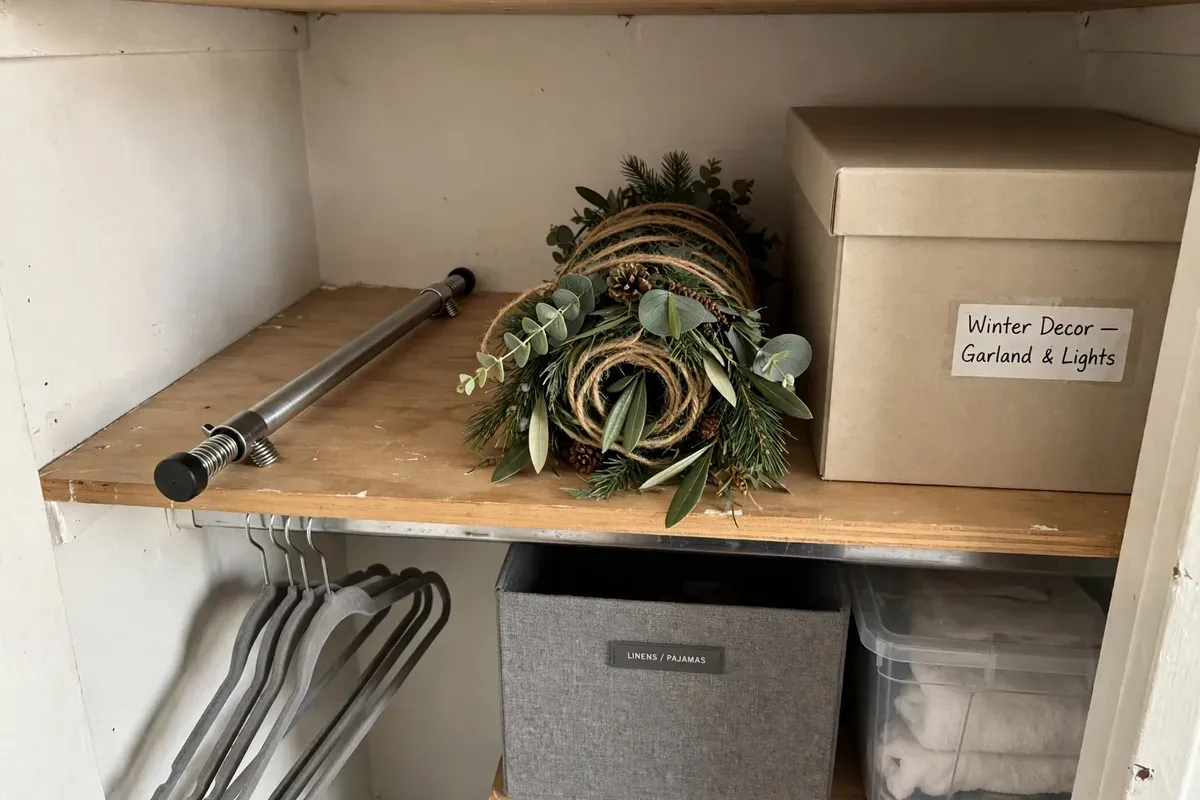
The last idea is storage, because a tension rod garland that stores well comes back next year and one that does not ends up in the bin. Roll each garland loosely and tie it with twine, lay the rods beside it, and put the whole set in a box with the battery packs and spare batteries in a small bag on top. Label the box with the rooms each garland belongs to, so next December you open one box and hang five garlands in an afternoon.
Roll the garlands, do not fold them, since a folded garland creases and a rolled one unrolls flat. Keep the rods extended to their shortest length, since a rod stored extended loses its spring over time. Store the box somewhere dry, since damp garlands smell musty by December. Photograph each garland in place before you take it down, so next year you know which rod goes in which doorway without measuring again.
How to keep a tension rod from falling
A tension rod falls for one reason: it was not tight enough. Twist the rod until it wedges firm, then give it one more quarter turn, and test it by hanging the garland and tugging gently downward. If the rod slips, take it down, clean the two surfaces with a damp cloth, and twist it tighter, since dust on the surface is the second most common reason a rod falls. Keep the garland under 3 pounds, since a heavy garland pulls any rod down over time, and check the rod once a week, since a rod that loosens slowly will fall suddenly.
Choose a rod with rubber ends, since rubber grips smooth surfaces and bare metal slides. If the surfaces are textured, like rough plaster, add a small piece of felt to each end of the rod, since felt grips texture where rubber slips. For more garland ideas that hang the same way, our Christmas garland ideas for small apartments cover five other hanging spots, and our Christmas fireplace decor ideas use the same no-holes approach on the mantel.
What to buy once and reuse every year
The tension rod kit fits in one box: four rods in different sizes, two garlands, a string of battery fairy lights, twine, and spare batteries. Bought once, it costs 40 to 60 dollars, and it hangs garlands in five rooms every December after that. The only things you replace are the batteries, about 5 dollars a season, and the twine, which costs pennies.
Buy the rods first and the garlands second, since the rods are the part that has to fit and the garlands can be cut to length. Keep a tape measure in the box, since every doorway measures differently and guessing the rod size wastes a trip to the shop. Store the rods at their shortest length so the springs stay strong. For window displays that pair with the garlands, our Christmas window display ideas use the same rods in the window frame.
Looking for more ideas? Browse our seasonal decor stories.
Save to Pinterest