In this article
- 1. Refresh the Bathroom Walls with a New Paint Color
- 2. Give an Old Bathroom Vanity a Fresh Finish
- 3. Replace Dated Hardware with Simple, Modern Details
- 4. Update the Bathroom Mirror for a More Finished Look
- 5. Improve the Bathroom Lighting
- 6. Replace the Shower Curtain for an Instant Refresh
- 7. Refresh Towels, Bath Mats, and Other Soft Details
- 8. Clean Up Old Grout and Refresh the Tile Finish
- 9. Give the Bathroom Floor a Cleaner, More Coordinated Look
- 10. Restyle the Vanity Countertop with a Few Coordinated Accessories
- How to Plan a Bathroom Makeover on a Budget
- 1. Identify the biggest problem
- 2. Set a realistic spending limit
- 3. Start with cleaning and repairing
- 4. Choose two or three main updates
- 5. Complete the functional work first
- 6. Add finishing touches last
- Common Budget Bathroom Makeover Mistakes to Avoid
- Frequently Asked Questions
- How can I makeover my bathroom on a small budget?
- What is the cheapest way to update a bathroom?
- Can I makeover a bathroom without replacing tiles?
- How can I make an old bathroom look modern?
- What should I update first in a bathroom makeover?
- How do I refresh a bathroom without renovating?
- How can I make a rental bathroom look better?
- Conclusion
A bathroom makeover does not have to involve replacing every tile, installing a new vanity, or spending a large amount on a complete renovation. Sometimes, a few carefully chosen changes can make an older bathroom feel much cleaner, brighter, and more inviting.
The easiest way to approach an affordable bathroom makeover is to look at the details that affect the room most. Dated cabinet finishes, tired lighting, worn towels, discolored grout, and outdated fixtures can make a bathroom feel older than it really is. For complementary styling tips, explore our guides on bathroom shelf decor ideas and bathroom wall decor ideas.
Rather than changing everything at once, focus on the areas that need the most attention. A freshly painted vanity, a new shower curtain, updated hardware, or warmer lighting can create a noticeable difference without a major construction project. For compact spaces, check out our practical small bathroom storage ideas and small bathroom organization ideas.
These bathroom makeover ideas are designed to help you refresh your space using practical updates, affordable materials, and things you may already have at home. Whether you are working with a small guest bathroom or a larger family bathroom, there are plenty of ways to give the room a more finished appearance without a full remodel.
1. Refresh the Bathroom Walls with a New Paint Color
Changing the wall color is one of the simplest ways to give a bathroom a fresh appearance. Old or dull paint can make the entire room feel tired, even when the vanity, bathtub, and flooring are still in good condition.
A new coat of suitable bathroom paint can make the space feel brighter and help the existing fixtures look more coordinated.
Warm white, soft greige, pale sage, and muted beige are all versatile options. They work with many common bathroom finishes, including white porcelain, chrome fixtures, natural wood, and neutral floor tiles.
For a more noticeable change, consider a muted blue or soft olive shade on a suitable wall. You do not need a dramatic color to make the bathroom feel different.
How to update the walls:
- Choose paint specifically suitable for bathroom conditions and humidity.
- Clean the walls and repair small imperfections before painting.
- Use a suitable primer when required by the existing surface.
- Test the color under both natural and artificial lighting.
- Protect tiles, fixtures, and flooring before starting.
If your bathroom has poor ventilation, address that issue as well. Even moisture-resistant paint needs an appropriate environment to maintain its finish.
Best for: Bathrooms with dull, dated, or unevenly colored walls.
Budget tip: Refreshing the paint is often more affordable than replacing wall finishes. Start with the most noticeable wall rather than automatically repainting the entire room.
2. Give an Old Bathroom Vanity a Fresh Finish
The vanity is one of the largest visual features in many bathrooms. When its finish looks scratched, yellowed, or outdated, the entire room can feel older.
Before replacing the cabinet, consider whether its existing structure is worth keeping. A sound vanity may only need cleaning, preparation, and a new finish.
A painted vanity in muted sage, warm white, soft gray, or deep olive can create a completely different look. If you prefer natural materials, a suitable wood finish can bring warmth to an otherwise plain bathroom.
The most important part is surface preparation. Vanity cabinets may have laminate, painted wood, veneer, or other finishes, so the correct preparation and coating depend on the material.
How to refresh a vanity:
- Remove the drawers and cabinet doors where practical.
- Clean the surfaces thoroughly to remove residue.
- Lightly prepare the finish according to the paint manufacturer’s instructions.
- Apply a suitable primer if required.
- Use a coating designed for the cabinet material and allow the recommended drying time.
- Reassemble the vanity after the finish has cured sufficiently.
A refreshed cabinet can look even better with simple hardware and a clean countertop.
Best for: Bathrooms with sturdy cabinets but dated or worn finishes.
Budget tip: Refinish the existing vanity before considering a replacement. Keeping the cabinet structure can reduce the cost of the makeover considerably.
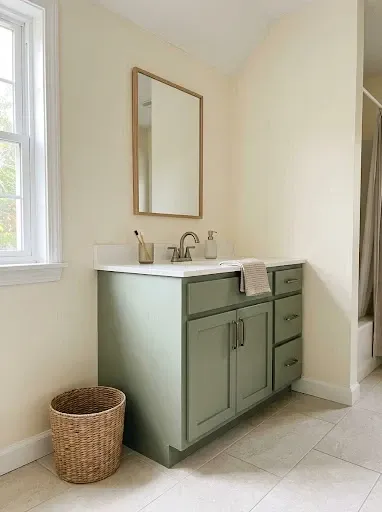
3. Replace Dated Hardware with Simple, Modern Details
Small hardware changes can make bathroom furniture feel much more current. Old cabinet handles, towel bars, robe hooks, and toilet paper holders may look out of place even when the main fixtures are still in good condition.
Replacing these details with a coordinated finish can make the bathroom feel more intentional.
For a modern look, consider matte black or brushed nickel. Brushed brass can add warmth, while chrome works well in many traditional and contemporary bathrooms.
You do not have to replace every fitting. Start with the pieces that are most visible or visibly worn, such as the vanity handles and towel bar.
How to update bathroom hardware:
- Choose a finish that complements the existing faucet and shower fixtures.
- Measure the distance between existing cabinet handle holes before purchasing replacements.
- Use suitable fixings for the wall or cabinet material.
- Keep the hardware style consistent throughout the room.
- Replace damaged or rusty pieces rather than trying to conceal them.
If the existing hardware is in good condition, a thorough clean may be enough to improve its appearance.
Best for: Bathrooms with dated cabinet pulls, towel bars, or mismatched accessories.
Budget tip: Replace the most noticeable hardware first. A coordinated set of handles and towel fittings can make a bathroom feel refreshed without changing the vanity or tiles.
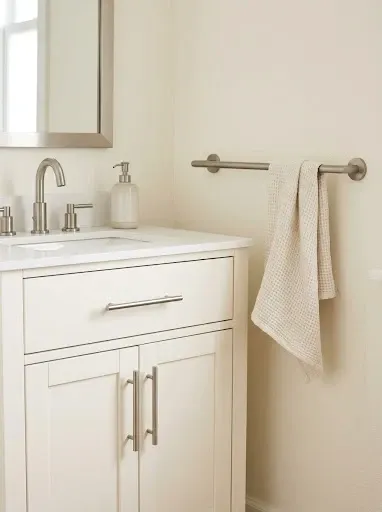
4. Update the Bathroom Mirror for a More Finished Look
A plain builder-grade mirror can make a bathroom feel unfinished. Replacing it with a framed mirror or adding a suitable frame around an existing mirror can introduce a more decorative element without changing the vanity.
The right mirror style depends on the room. A simple rectangular mirror with a slim wood frame feels warm and natural, while a black frame creates a more contemporary appearance. A rounded or arched mirror can soften a bathroom filled with straight tile lines and rectangular cabinetry.
Before choosing a mirror, check its dimensions against the vanity. It should feel balanced with the sink and surrounding wall rather than appearing too small or too large.
How to refresh the mirror area:
- Measure the available wall space above the vanity.
- Choose a frame finish that works with the hardware.
- Consider a rounded or arched design for a softer look.
- Check the reflection and lighting before fixing the final position.
- Use appropriate mounting hardware for the mirror’s weight.
If you want to keep your existing mirror, a suitable bathroom-safe mirror frame kit may be an affordable alternative. Check that the product is compatible with the mirror and wall conditions.
Best for: Bathrooms with large plain mirrors or vanity areas that feel visually unfinished.
Budget tip: Frame the existing mirror when its condition is good rather than paying to remove and replace it.
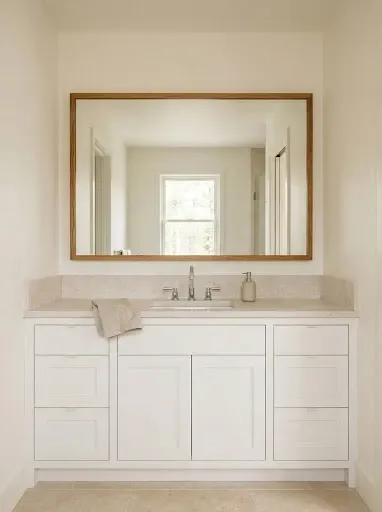
5. Improve the Bathroom Lighting
Lighting can change how the entire bathroom feels. An old yellowed fixture or harsh overhead bulb can make even a freshly decorated room look dated.
A lighting refresh does not always require a major electrical project. Replacing a suitable bulb, updating a compatible lampshade, or cleaning an existing fixture can make a noticeable difference.
For a warm and inviting appearance, consider lighting that provides a comfortable color temperature while still allowing you to see clearly when using the mirror.
If you want to replace the vanity light fixture, choose a design that suits the width of the mirror and the overall bathroom style. Simple glass shades, understated black fittings, and brushed-metal details can all work well.
How to improve bathroom lighting:
- Replace outdated bulbs with suitable energy-efficient options.
- Choose a comfortable light color that still provides practical visibility.
- Clean light covers and remove accumulated dust.
- Consider a fixture that complements the mirror and vanity.
- Use bathroom-rated lighting appropriate for its installation location.
Any changes involving wiring or electrical connections should be handled by a qualified electrician. Bathroom electrical fittings need to meet the requirements for their location and exposure to moisture.
Best for: Bathrooms that feel dark, harshly lit, or visually dated.
Budget tip: Start with compatible bulbs and cleaning before replacing an entire fixture.
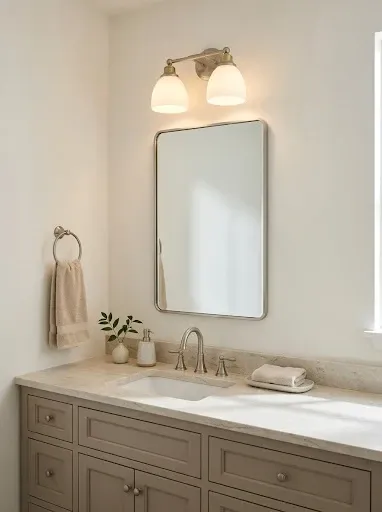
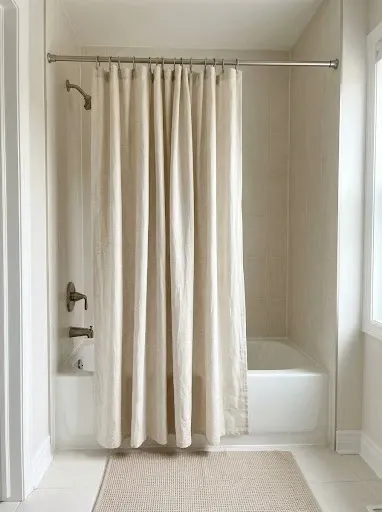
6. Replace the Shower Curtain for an Instant Refresh
A shower curtain takes up a large visual area in many bathrooms. If it is stained, faded, or too busy, it can make the room feel untidy even when the rest of the bathroom is clean.
Replacing it with a fresh curtain is one of the easiest bathroom makeover ideas because it does not require construction or complicated installation.
A plain white curtain creates a fresh, simple look. Linen-look neutrals feel softer, while subtle stripes or small geometric patterns can introduce some character.
If you want a more polished appearance, choose a curtain that falls to an appropriate length and use a neat rod and rings. Make sure the curtain is suitable for bathroom use and does not pool on the floor.
How to style the shower area:
- Choose a color that connects with the towels and wall finish.
- Use a water-resistant shower curtain suitable for the space.
- Select a liner appropriate for the bathroom and shower setup.
- Replace worn or rusty curtain rings.
- Keep patterns subtle when the bathroom already has decorative tiles.
Best for: Bathrooms with an old, faded, or visually distracting shower curtain.
Budget tip: A new curtain and a clean liner can change the appearance of the shower area without replacing the bath or shower enclosure.
7. Refresh Towels, Bath Mats, and Other Soft Details
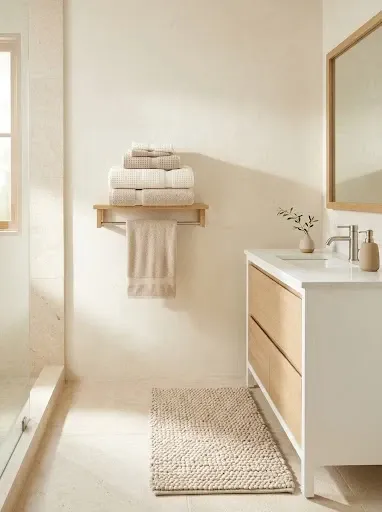
Textiles are easy to overlook, but they contribute significantly to how a bathroom feels. Worn towels, faded bath mats, and mismatched fabrics can make the room look less cared for.
A simple textile refresh can bring everything together. Choose two or three related colors and repeat them through towels, the bath mat, and a small fabric accessory.
For a calm spa-inspired bathroom, try warm white towels with beige or oatmeal accents. Muted sage and soft gray can create a fresher contemporary appearance, while dusty blue works well with classic white fixtures.
Texture matters too. Thick towels, soft cotton bath mats, and subtle woven details can add warmth without introducing unnecessary decoration.
How to refresh bathroom textiles:
- Remove towels that are badly worn or no longer absorb water properly.
- Choose a small coordinated color palette.
- Match the bath mat with the overall bathroom style.
- Keep spare towels neatly stored rather than displaying too many.
- Wash and dry textiles according to their care instructions.
Choose bath mats with a suitable non-slip backing and make sure they dry properly between uses.
Best for: Bathrooms that already have neutral walls and fixtures but lack a coordinated finish.
Budget tip: You may only need a new bath mat and a few matching towels. Reuse the rest of your textiles if they are still in good condition.
8. Clean Up Old Grout and Refresh the Tile Finish
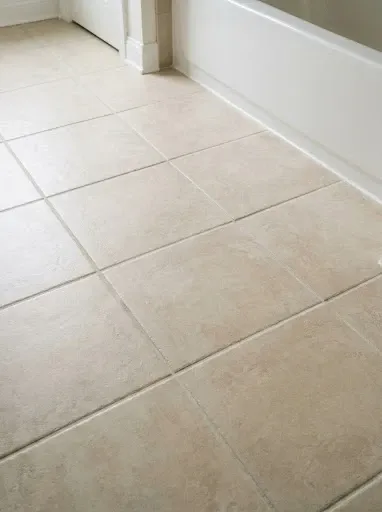
Discolored grout can make an otherwise attractive bathroom look old. Dirt and residue often collect around floor tiles, shower walls, and areas near the vanity.
Refreshing the grout can make the tile look noticeably cleaner without replacing the entire surface.
Start by identifying the type of grout and tile, then choose a cleaner suitable for those materials. Follow the product directions and test a small, discreet area before cleaning a larger section.
If the grout is structurally sound but uneven in color, a suitable grout colorant may help refresh its appearance. If it is cracked, missing, or deteriorating, the affected areas may need repair or replacement.
Check the caulk around sinks, bathtubs, and shower joints as well. Damaged sealant should be addressed with a product suitable for the application, rather than simply covered over.
How to refresh tile and grout:
- Inspect the grout for cracks, missing sections, or discoloration.
- Use a tile and grout cleaner compatible with the surface.
- Follow the cleaning product’s instructions carefully.
- Apply grout colorant only when appropriate for the existing grout.
- Replace damaged sealant using a suitable bathroom product.
- Allow repaired areas to cure before exposing them to water.
Never mix cleaning chemicals. In particular, avoid combining bleach with ammonia-based or acidic products. Follow product safety instructions and ventilate the room.
Best for: Bathrooms with sound tile but dirty, discolored, or uneven-looking grout.
Budget tip: A proper grout refresh can improve the appearance of existing tiles without paying for a full tile replacement.
9. Give the Bathroom Floor a Cleaner, More Coordinated Look
The bathroom floor can make the entire room feel dated, particularly when the tiles are dull or the space lacks a clear color connection.
Before considering expensive flooring changes, look at what can be improved without replacing the floor.
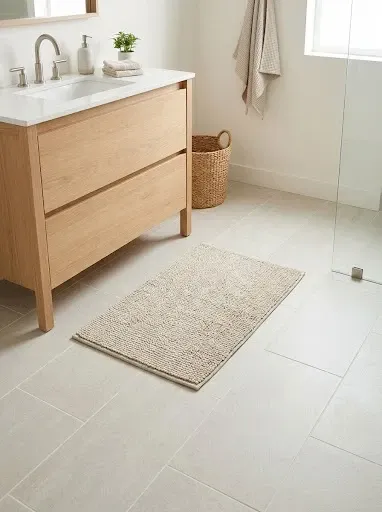
Thoroughly clean suitable tile surfaces, refresh grout where necessary, and introduce a properly sized bath mat or runner designed for bathroom use. A textured neutral mat can soften the floor and connect it with the towels and vanity finish.
If you are considering a new floor surface, choose a material specifically suitable for bathroom moisture and expected foot traffic. It should also provide appropriate slip resistance. Avoid using ordinary decorative rugs or unsuitable adhesive floor coverings in wet areas.
How to improve the floor:
- Clean the existing tile using a suitable product.
- Repair damaged grout or sealant where necessary.
- Choose a bathroom-appropriate bath mat with a non-slip backing.
- Use a color that relates to the vanity, towels, and walls.
- Consider replacement flooring only when the existing surface genuinely needs it.
Best for: Bathrooms with dull flooring or a visually disconnected color scheme.
Budget tip: A fresh non-slip bath mat and properly cleaned grout can provide an inexpensive visual refresh while keeping the existing tiles.
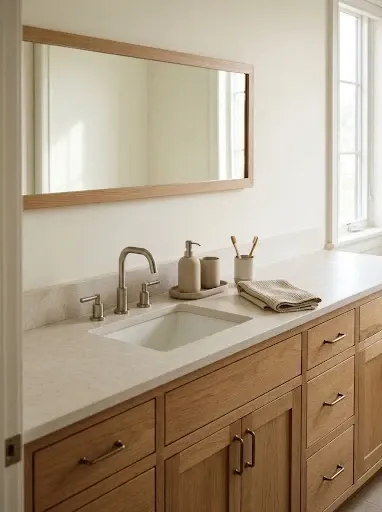
10. Restyle the Vanity Countertop with a Few Coordinated Accessories
A bathroom countertop often becomes a collection of everyday products, bottles, brushes, and small containers. Even when the bathroom is clean, the surface can look cluttered.
A simple countertop refresh can make the vanity feel more organized and attractive. Start by removing everything and keeping only the items you use regularly.
Then introduce a few practical accessories that connect with the bathroom’s style. A ceramic soap dispenser, a small tray, a matching tumbler, and a discreet container can be enough.
For a warm neutral bathroom, choose cream ceramics and a natural wood or stone-look tray. For a more contemporary space, try matte black accessories with a clean white countertop.
The aim is to make everyday essentials look coordinated, not to fill the counter with decorations.
How to restyle the vanity:
- Remove unused products and empty packaging.
- Keep daily essentials easy to reach.
- Use a tray to group small items.
- Choose a matching soap dispenser and tumbler.
- Store backup products inside a drawer or cabinet.
Best for: Bathrooms with a cluttered vanity or a countertop that looks unfinished.
Budget tip: Reuse a small tray from another room and replace only the most visibly mismatched accessories.
How to Plan a Bathroom Makeover on a Budget
A budget bathroom makeover works best when you decide what needs attention before buying anything. This helps prevent unnecessary spending and makes it easier to prioritize the updates that will have the biggest visual impact.
1. Identify the biggest problem
Look at the bathroom as a whole. Is the vanity outdated, is the lighting too harsh, or do the walls and textiles look tired? Choose the main issue rather than trying to update everything at once.
2. Set a realistic spending limit
Decide how much you are comfortable spending. Separate your budget into practical improvements and optional decorative purchases.
3. Start with cleaning and repairing
Before buying replacements, deep-clean suitable surfaces, remove clutter, and inspect the grout, sealant, and fixtures. Some problems may be solved with maintenance rather than new products.
4. Choose two or three main updates
Pick the changes that will make the greatest difference. For example, painting the vanity, changing the shower curtain, and refreshing the towels may be enough for one makeover.
5. Complete the functional work first
Repair damaged surfaces, address leaks, and make sure the lighting and ventilation are appropriate before concentrating on decorative details.
6. Add finishing touches last
Once the larger changes are complete, choose coordinated accessories and textiles. Avoid buying items just to fill empty surfaces.
Common Budget Bathroom Makeover Mistakes to Avoid
- Replacing everything instead of improving what you have: A vanity with a strong structure may only need a new finish. Existing tiles may look much better after a proper grout refresh. Assess each feature before deciding to replace it.
- Choosing paint without checking suitability: Bathrooms experience humidity and moisture. Use appropriate products for the wall or cabinet material, prepare surfaces correctly, and follow the manufacturer’s instructions.
- Buying accessories before choosing a color palette: Mismatched towels, soap dispensers, and hardware can make the room look less coordinated. Choose a simple palette before purchasing decorative items.
- Ignoring ventilation and moisture problems: A fresh coat of paint will not solve persistent condensation or water damage. Address ventilation, leaks, and moisture sources before cosmetic work.
- Using unsuitable products in wet areas: Not every wallpaper, rug, adhesive tile, or finish is suitable for bathroom conditions. Check product specifications and avoid materials that become slippery or deteriorate when wet.
- Attempting unfamiliar plumbing or electrical work: A makeover should not compromise safety. Use qualified professionals for work that requires specialist plumbing or electrical knowledge.
- Spending too much on small decorations: The most effective changes are often the larger visible updates: walls, vanity finishes, lighting, and shower textiles. Prioritize these before buying decorative accessories.
Frequently Asked Questions
How can I makeover my bathroom on a small budget?
Start by cleaning the existing surfaces and removing clutter. Then choose a few affordable changes such as painting a suitable wall, refreshing the vanity, replacing the shower curtain, updating towels, or changing cabinet hardware.
What is the cheapest way to update a bathroom?
Cleaning grout, replacing worn textiles, changing the shower curtain, updating handles, and restyling the vanity countertop are practical starting points. The best choice depends on which part of your bathroom currently looks most dated.
Can I makeover a bathroom without replacing tiles?
Yes. When the tiles are structurally sound, cleaning the surface, refreshing suitable grout, improving the sealant, and updating the surrounding finishes can make the room look much better without replacing the tiles.
How can I make an old bathroom look modern?
Use a coordinated color palette, simple hardware, updated lighting, clean-lined accessories, and uncluttered surfaces. A refreshed vanity and a more contemporary mirror can also make a noticeable difference.
What should I update first in a bathroom makeover?
Start with the feature that has the greatest visual or practical problem. For many bathrooms, this may be the vanity, wall finish, lighting, or shower area. Address leaks, damaged surfaces, and ventilation problems before cosmetic changes.
How do I refresh a bathroom without renovating?
Keep the existing layout and major fixtures. Focus on paint, vanity finishes, handles, mirrors, textiles, lighting, grout, and accessories. These updates can change the appearance of a bathroom without moving plumbing or replacing major fixtures.
How can I make a rental bathroom look better?
Use reversible updates where permitted, such as a new shower curtain, coordinated towels, a suitable freestanding storage accessory, and countertop styling. Check your rental agreement before painting, replacing fixtures, or making changes that affect the walls.
Conclusion
A bathroom makeover does not need to be expensive to make a meaningful difference. The right combination of fresh finishes, improved lighting, coordinated textiles, and small fixture updates can make an older bathroom feel much more inviting.
Start with the areas that look most tired, then work through the updates at a comfortable pace. You might only need a new vanity finish, a better mirror, and a few coordinated accessories to make the room feel refreshed.
The best budget bathroom makeover is one that improves how your bathroom looks and works while making the most of the features you already have.
Looking for more ideas? Browse our kitchen & bathroom stories.
Save to Pinterest